







Ramadan is one of the most important occasions in Islam, carrying profound significance both physically and spiritually. Taking place annually in the ninth month of the Islamic calendar, next year’s Ramadan will last from February 17th to March 19th. Ramadan is not only a time of fasting and purification, but also an opportunity for individuals to adjust their lifestyles and take care of their health.. Throughout the fasting month, the two main meals, Suhoor and Iftar, play a particularly important role, with Iftar being the time when the body replenishes energy after a long day of fasting.
However, creating an effective Iftar menu for Ramadan is a challenge for many families. Understanding this, ACM offers scientifically sound and easy-to-follow menu suggestions to help you prepare effective Iftar meals, maintain stable health, and fully enjoy Ramadan 2026.
The role of Iftar meals and principles of healthy eating.
In Islam, Iftar is the meal that takes place immediately after sunset during Ramadan. This is the time when the body replenishes energy and water after hours of complete fasting.

During Ramadan, the body must adapt to changes in circadian rhythms, meal times, and energy intake. Therefore, Iftar plays a crucial role in restoring physical strength, stabilizing blood sugar, and maintaining overall health. A proper Iftar meal helps reduce fatigue, aids digestion, and prepares energy for evening activities and the following day.
The important principle when eating Iftar is to start lightly, ensure nutritional balance, and most importantly, eat in moderation, as overeating can lead to bloating and discomfort. This also goes against the meaning of fasting – an act performed first and foremost for Allah (SWT).
Planning a daily Iftar meal during Ramadan can be a challenge. Therefore, when choosing dishes, you should prioritize a balanced diet, combining carbohydrates, protein, healthy fats, fiber, and essential vitamins and minerals to help restore energy and maintain good health throughout the fasting period.

Dates and Warm Water
Dates are often the first thing to eat when breaking the fast, combined with warm water to help the body absorb energy quickly and rehydrate effectively. The natural sugar content in dates helps stabilize blood sugar, while warm water supports gentle digestion after a long period of fasting.
Oatmeal, Brown Rice, or Whole-Wheat Bread
Foods like oatmeal, brown rice, and whole-wheat bread are sources of slow-release carbohydrates, providing stable energy and maintaining a feeling of fullness after breaking the fast. With simple preparation methods such as cooking until soft, steaming, or eating with lean protein, this is a suitable option to add to Iftar meals, supporting gentle recovery and maintaining health throughout Ramadan.
Lentil Soup or Vegetable Soup
Soup is made by slowly simmering lentils or vegetables with mild seasoning, making it easy to digest and warming the stomach. This dish provides plant-based protein, fiber, and minerals, making it ideal for “warming up” the body before the main meal.
Grilled chicken breast or steamed fish
Lean protein dishes like chicken breast or fish, prepared by grilling or steaming, provide high-quality protein without feeling heavy in the stomach. Protein plays a crucial role in body recovery and maintaining health throughout Ramadan.
Green salad with olive oil
A salad made from fresh greens with olive oil provides fiber, vitamins, and healthy fats. This dish helps balance the Iftar meal, aids digestion, and reduces bloating after breaking the fast.
Fresh fruit or yogurt
Low-sugar fruit or yogurt as a dessert provides vitamins, minerals, and probiotics. This is a light option, helping to end the Iftar meal in a healthy and pleasant way.
Tips for maintaining good health during Iftar in Ramadan.
To ensure Iftar truly helps your body recover and maintain a stable state during Ramadan, you need to pay attention to your diet and choose foods scientifically.
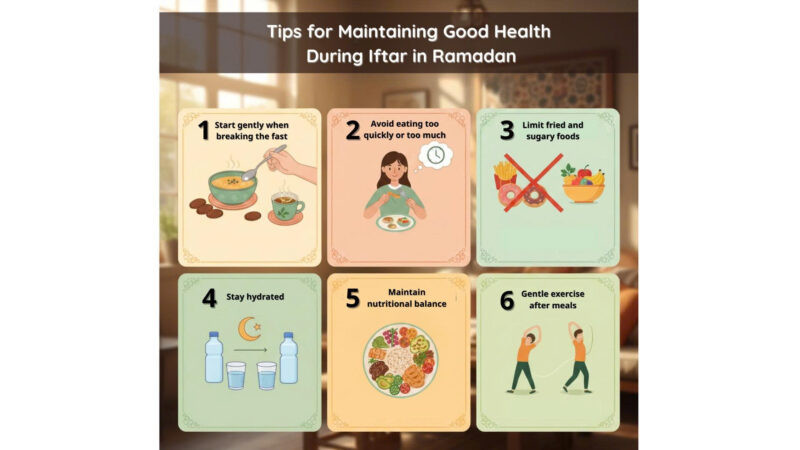
- Start gently when breaking the fast: Initially, prioritize dates, warm water, or light soups to allow your body to gradually adapt after a long period of fasting.
- Avoid eating too quickly or too much: Eating slowly and in smaller portions helps prevent bloating and indigestion.
- Limit fried and sugary foods: Foods that are too oily or sweet can easily cause fatigue, bloating, and weight gain.
- Stay hydrated: Drink water regularly from Iftar to Suhoor to avoid dehydration. If you find plain water unappealing, try adding a few slices of lemon or fresh mint leaves to your water.
- Maintain a nutritional diet: Include a variety of slow-release carbohydrates, protein, healthy fats, and green vegetables.
- Light exercise after meals: Slow walking or stretching helps support digestion and improve circulation.
A well-structured Iftar meal not only helps you break the fast smoothly but also contributes to maintaining health and sustained energy throughout Ramadan.