


 Français
 Español
 العربية
 한국어
한국어In the era of globalization and international economic integration, the beverage industry, especially fruit juice products, has abundant opportunities to expand into export markets. However, achieving success internationally requires more than production capacity alone. Specifically, brands must conduct thorough research and carefully select juice flavors that align with the preferences of each target market. Therefore, this article provides insights into juice flavor trends, effective methods to identify consumer preferences, and practical applications for developing export-ready juice products.
Why Is Choosing the Right Juice Flavor Important?
Each export market has unique cultural characteristics, consumption habits, and beverage flavor preferences. As a result, a juice product that performs well in one region may struggle in another if it does not match local taste profiles.
By selecting the right juice flavor, businesses can achieve several key benefits:
Increases acceptance of ready-to-drink beverages among local consumers
Enhances beverage brand value and customer loyalty
Reduces inventory risks and ineffective beverage marketing costs
Optimizes revenue from export beverage products
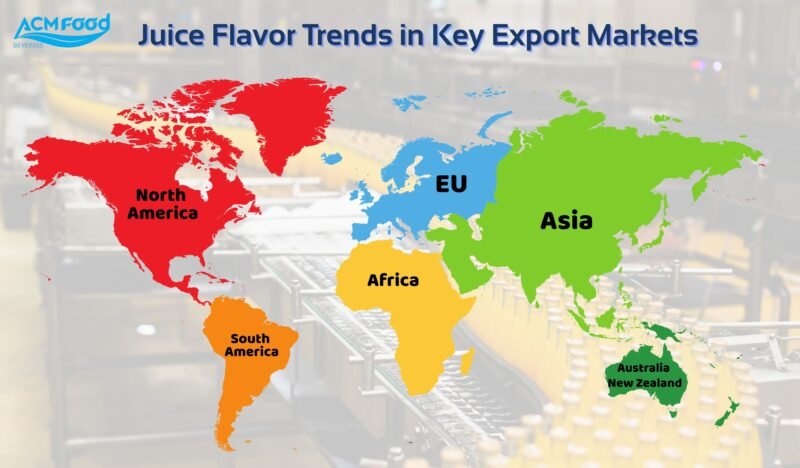
Juice Flavor Trends in Key Export Markets
North America (USA, Canada)
In North America, consumers prefer natural fruit juice, low-sugar beverages, and products with rich fruit flavor profiles. Popular options include orange juice, apple juice, blueberry juice, and tropical fruit juice blends. In addition, demand for organic juice, vitamin-fortified beverages, and functional drinks continues to grow.
Europe (EU)
European consumers favor organic fruit juice, low-sugar juice products, and clean-label non-alcoholic beverages. Preferred flavors include apple juice, pear juice, grape juice, pomegranate juice, and berry juice blends. Furthermore, products are often designed as convenient bottled beverages with smaller packaging sizes.
Asia (China, Japan, South Korea)
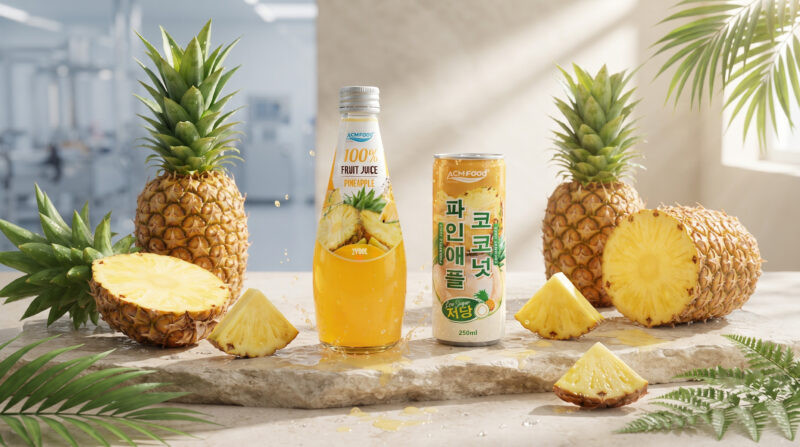
Asian markets show strong demand for balanced fruit juice flavors with mild sweetness. Common products include mango juice, pineapple juice, dragon fruit juice, and tropical juice blends. Additionally, functional juice drinks such as collagen-enriched beverages and digestive-support drinks are gaining popularity.
Australia and New Zealand
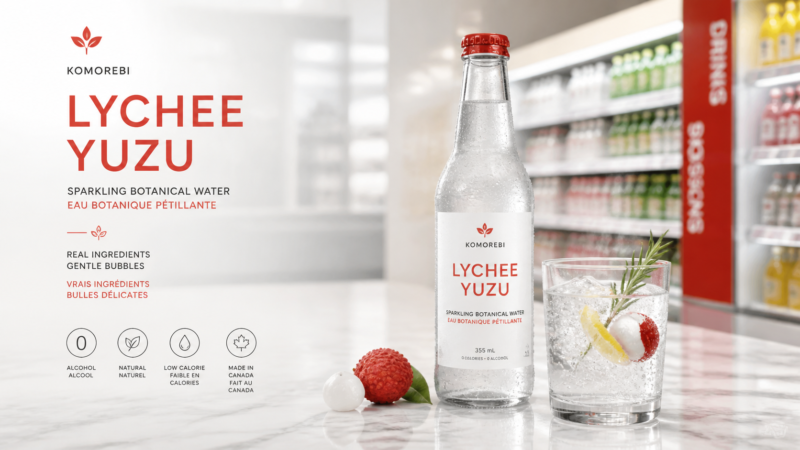
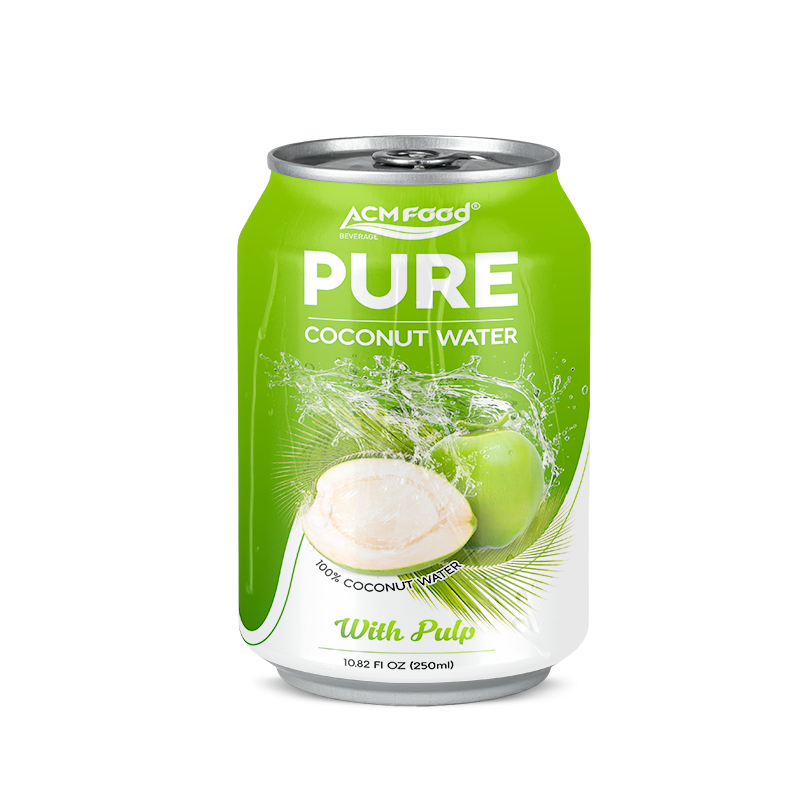
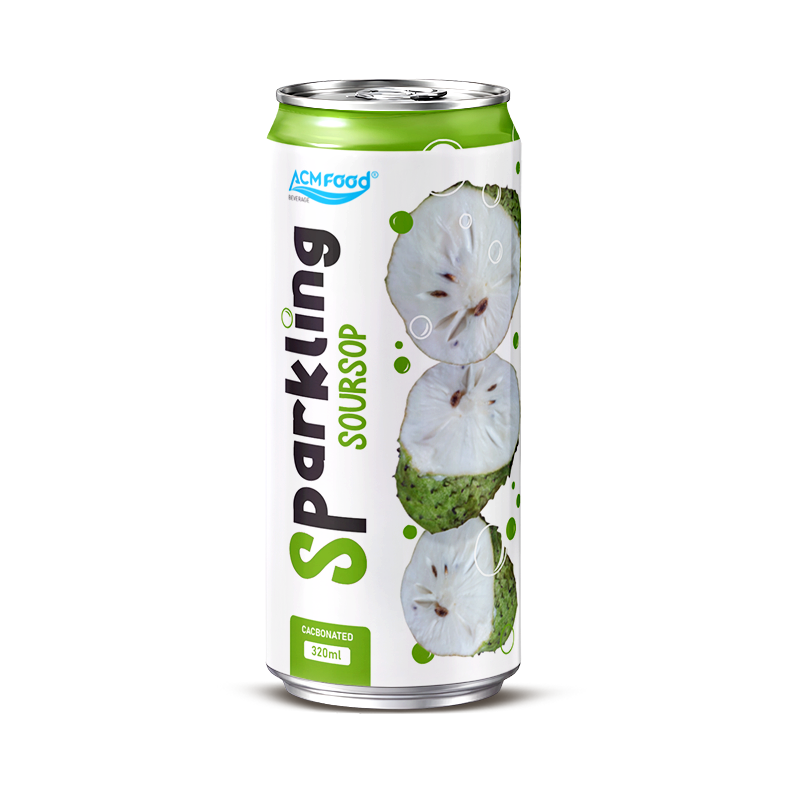
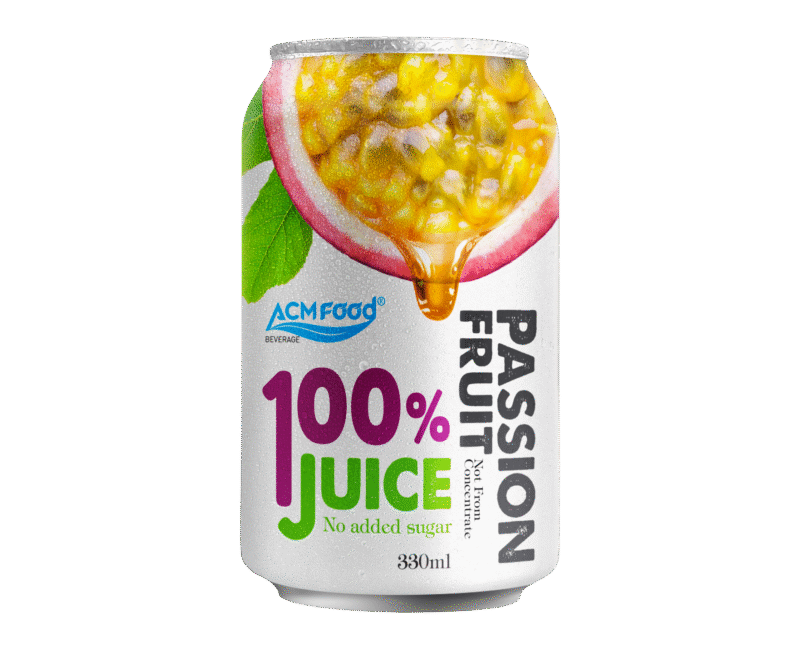
Consumers increasingly prefer coconut water beverages due to their natural hydration benefits. At the same time, sparkling fruit drinks, carbonated juice beverages, and flavored sparkling water are rapidly growing segments. Popular options include apple juice, orange juice, mango juice, passionfruit juice, and beverages made from native fruit extracts. Moreover, demand for cold-pressed juice and organic functional beverages continues to rise.
Middle East and Africa
In these regions, consumers often prefer sweet fruit juice drinks with aromatic profiles. Popular choices include lemon juice, pomegranate juice, orange juice, and locally sourced fruit beverages. Importantly, aseptic packaging, canned beverages, and bottled juice products that preserve freshness are essential due to hot climates.
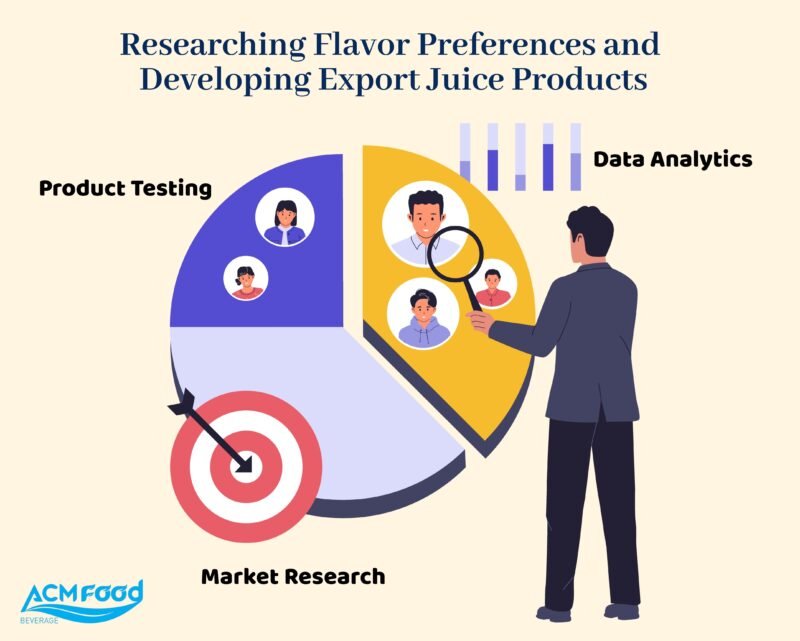
Methods for Researching Flavor Preferences and Developing Export Juice Products
Qualitative and Quantitative Market Research
Businesses should conduct beverage market research, including consumer surveys and focus groups, to understand juice taste preferences. In addition, analyzing sales data and feedback from juice distribution channels provides actionable insights.
Product Testing
Next, manufacturers should develop multiple juice samples and flavor prototypes based on research. Then, juice sample testing and sensory evaluation can be conducted with target customers. Based on feedback, formulas can be refined to reach optimal juice flavor profiles.
Sensory Technology and Data Analytics
Furthermore, companies can apply sensory analysis technology and AI tools to predict beverage flavor trends. At the same time, consumer data analytics helps track changes in demand for specific juice formulations across regions.
Practical Applications in Export Juice Product Development
Customize Formulas by Market
To meet market demands, OEM/ODM beverage manufacturers should offer flexible juice formula customization, including sugar level adjustment, fruit blending, and functional ingredient additions. For example, low-sugar orange juice may be suitable for Europe, while vitamin C–enhanced juice drinks are preferred in North America.
Packaging and Marketing Tailored to Local Taste and Culture
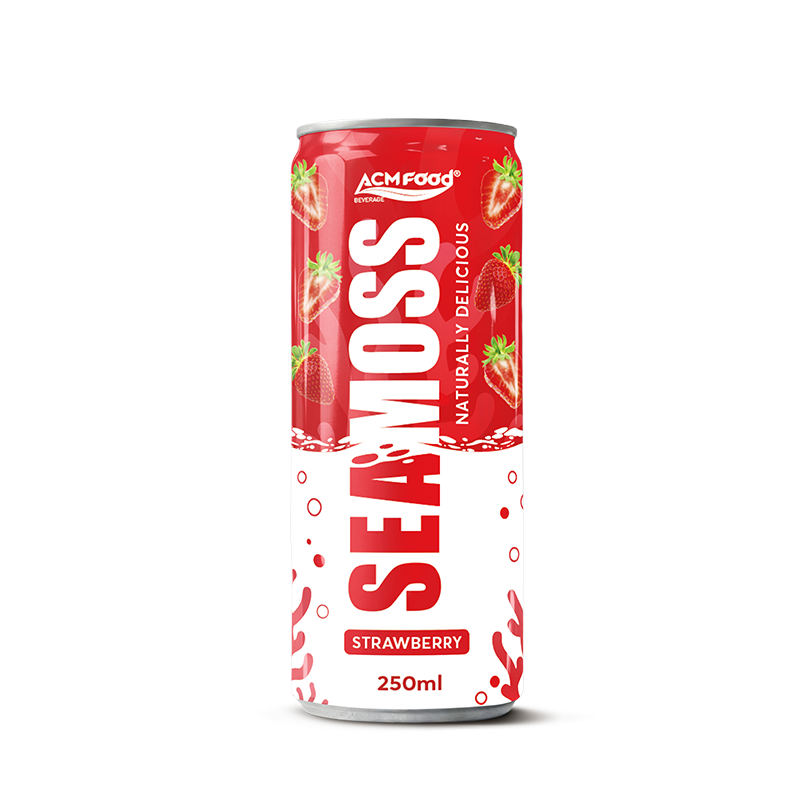
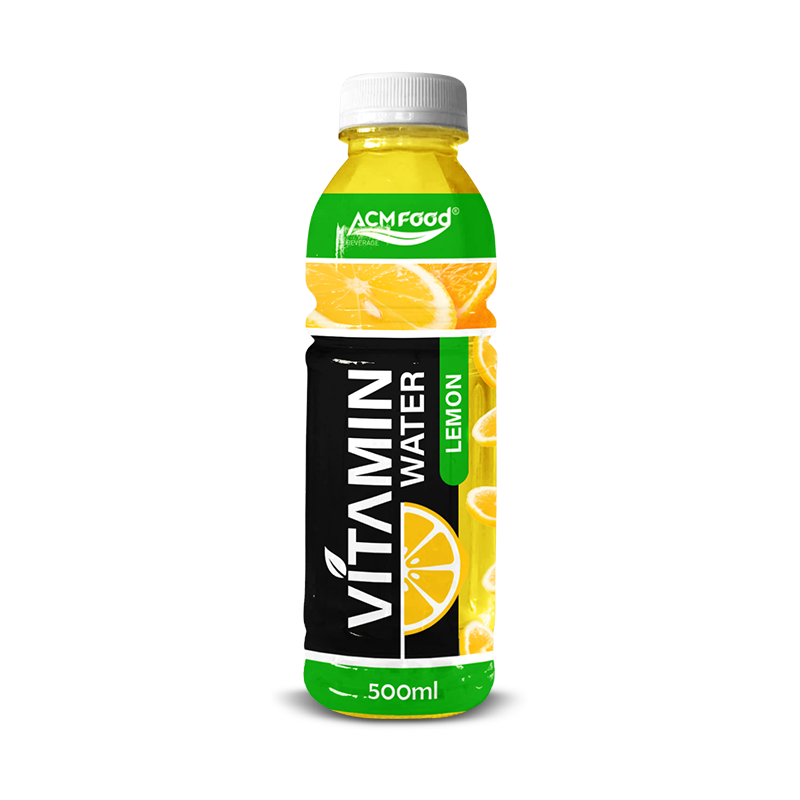
Equally important, juice packaging design should clearly communicate flavor profiles and benefits. Therefore, using market-specific visuals helps promote export beverage products more effectively.
Collaborate with Local Distributors
Finally, working with local beverage distributors and import partners enables brands to fine-tune juice products according to real consumer needs, improving market penetration.
Conclusion
In conclusion, selecting the right juice flavors for export markets is essential for building competitiveness in the global non-alcoholic beverage industry. By combining market research, juice sample testing, and OEM/ODM customization, businesses can successfully develop export juice products that meet international demand. Moreover, cooperation with beverage manufacturers and distribution partners significantly increases long-term success.
Turning a trend into a product
For the categories, formats and ingredients the factory can actually run, see beverage product capabilities. What the factory takes on is described in our OEM manufacturing programme; to launch under your own label, see private label beverages. Shipping terms and the document pack are covered in export and logistics. To brief a concept, request a quote.
Request a quote