


 Français
 Español
 العربية
 한국어
한국어
Have You Ever Wondered Why Some Canned Coconut Water Tastes So Fresh?
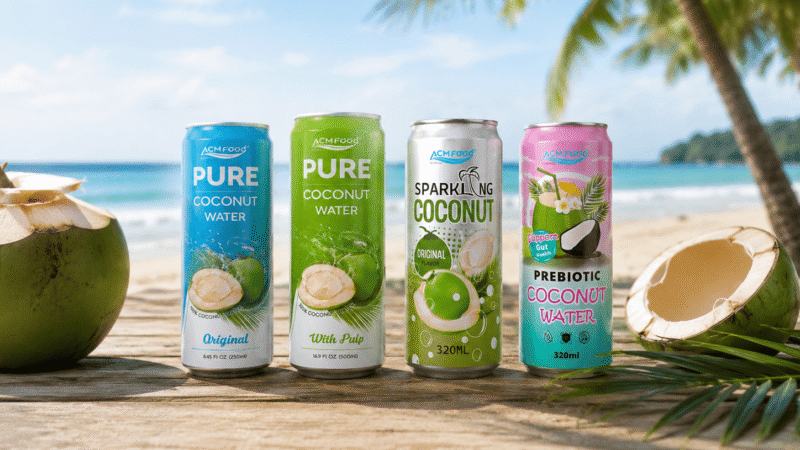
Have you ever picked up a can of coconut water, taken a sip, and felt surprised by its crisp sweetness and fresh coconut aroma—almost like drinking straight from a freshly cut coconut? In fact, this experience does not come from raw coconut water. Instead, it results from cold fill technology, one of the most advanced processing methods available today.
Specifically, cold fill technology helps canned coconut water retain 95–98% of its natural flavor and nutrients, closely matching the taste and quality of freshly harvested coconuts.
So, what exactly is cold fill technology? How does it work, and more importantly, why does it outperform conventional thermal pasteurization? Let’s explore these questions together with ACM Food.
1. What Is Cold Fill Technology?
Cold fill technology uses a low-temperature extraction and filling process that completely avoids heat. Instead of relying on thermal treatment, manufacturers apply high pressure or non-thermal sterilization methods to eliminate microorganisms.
As a result, this technology minimizes heat exposure and actively protects heat-sensitive compounds, including:
Natural aroma compounds
Essential nutritional components
Flavor compounds responsible for coconut water’s clean, natural sweetness

How the Cold Fill Process Works :
The cold fill process follows several carefully controlled steps:
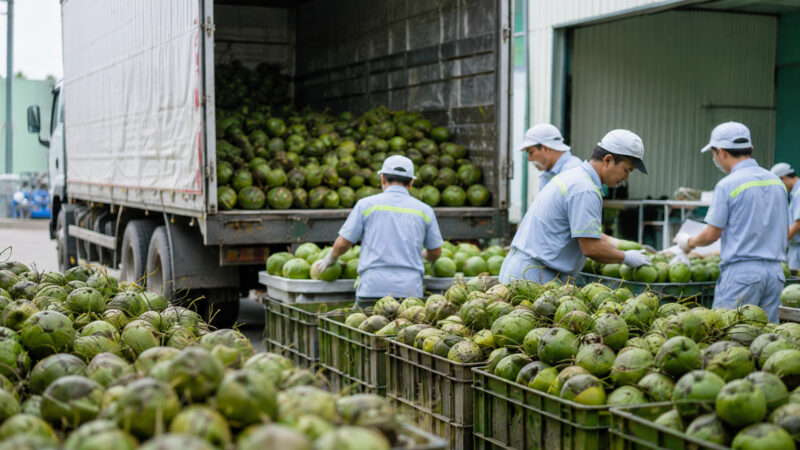
Harvesting and fresh processing: Producers extract coconut water directly from fresh coconuts while minimizing air exposure to prevent oxidation.
Rapid cooling: Next, they quickly chill the coconut water to stabilize its molecular structure and preserve flavor.
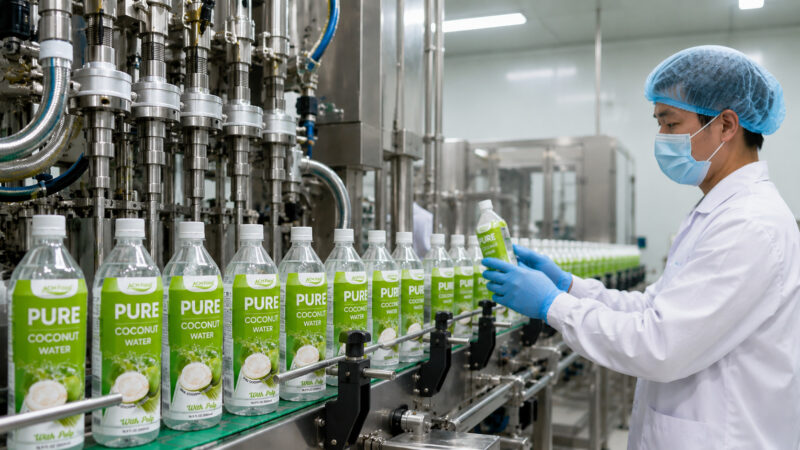
Aseptic cold filling: Then, they fill the liquid into cans or bottles using a cold system inside a sterile environment, without applying high heat.
Non-thermal sterilization: Finally, manufacturers apply advanced techniques such as HPP (High Pressure Processing), UV sterilization, or other mild, non-degrading treatments.
Because of this controlled process, cold fill technology allows coconut water to maintain its freshness, aroma, clarity, and natural sweetness, closely resembling water taken directly from the coconut.
2. Cold Fill vs. Traditional Hot Fill: Key Differences
To better understand the advantages of cold fill, it is important to compare it directly with conventional hot filling methods.
| Criteria | Cold Fill Technology | Traditional Hot Filling |
|---|---|---|
| Temperature | Low (≤ 10 °C) | High (80–90 °C) |
| Impact on flavor | Retains natural aroma | Natural aroma easily degrades |
| Nutrient retention | Minerals and enzymes remain stable | Heat causes nutrient loss |
| Color | Clear and natural | Often slightly yellowish |
| Shelf life | 6–12 months with aseptic systems | Long, but flavor declines |
| Production cost | Higher investment | Lower investment |
Overall, this comparison clearly shows that cold fill technology excels at preserving flavor and nutritional quality. However, it also requires higher initial investment. Therefore, manufacturers must choose between hot or cold extraction based on raw materials, desired flavor profile, nutritional goals, and business strategy.
In practice, each method offers its own advantages. Consequently, companies should carefully evaluate their priorities to achieve optimal quality while meeting market expectations.
3. Why Does Cold Fill Make Coconut Water Taste Freshly Harvested?
Cold fill technology delivers several critical benefits that directly influence taste and quality.
First, it retains fresh, natural aroma by keeping delicate aromatic compounds intact. As a result, the coconut water tastes clean and refreshing.
Second, it preserves natural sweetness. Fresh coconuts naturally contain a gentle sweetness. In contrast, hot filling can slightly caramelize sugars, which may create harsh or imbalanced flavors. Cold fill, however, maintains this sweetness almost entirely.
In addition, cold processing maintains a clear, pristine appearance. By minimizing oxidation, it helps coconut water remain bright and naturally transparent.
Finally, cold fill protects essential nutrients. Minerals such as potassium, along with beneficial plant compounds and enzymes, remain more stable because the process avoids heat. Consequently, the product delivers higher nutritional value and a sensory experience closer to freshly cut fruit.
4. The Future of Cold Fill Technology
Cold fill technology continues to emerge as a breakthrough solution for beverage processing. Compared with heat-based methods, it consistently delivers superior freshness, aroma, and nutritional retention.
Moreover, as global consumers increasingly prefer natural and minimally processed beverages, cold fill provides brands with a strong technological advantage. It supports long-term competitiveness while reinforcing trust in product quality.
Ultimately, by preserving the original value in every drop, cold fill technology bridges the gap between brands and consumers—through purity, authenticity, and convincing quality.