





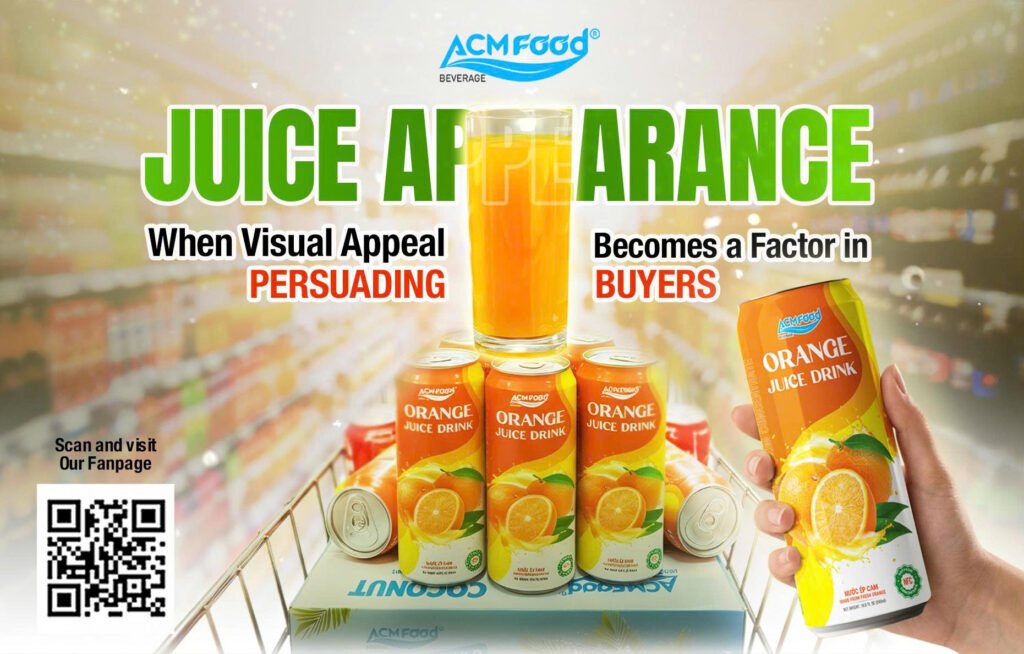
How does color influence consumer purchasing decisions?
In the beverage industry, color is not simply a decorative element but also the first visual language used to communicate with consumers. Before tasting, buyers often rely on the juice’s appearance to infer freshness, flavor, and nutritional value. Therefore, color is not only aesthetically pleasing but also plays a crucial role as a sales tool if applied correctly.
The influence of color on purchasing decisions

The truth behind the cloudy color of juice
Besides color, clarity is also an important sensory factor that contributes to the attractive appearance of juice, but it can also easily mislead consumers. Many people believe that the clearer the juice, the purer and higher the quality; however, this is not entirely accurate. In the minds of consumers, clear beverages often evoke associations with cleanliness, freshness, and well-controlled processing, especially in the fruit juice and functional beverage categories. Consumers therefore tend to appreciate products with high clarity and minimal sediment.
However, in many high-quality product lines, turbidity is actually a measure reflecting natural nutritional value. Cloudy juice usually retains the pulp, fiber, and beneficial micronutrients. Therefore, cloudy or turbid liquid is not a defect but a natural characteristic of the product. Thus, clarity or turbidity needs to be understood correctly according to the product type, market preferences, and brand positioning. This is not an absolute criterion for judging the quality of juice.
