


 English
 Français
 Español
 العربية
A 100% rPET bottle is a beverage bottle made entirely from recycled polyethylene terephthalate resin, rather than virgin PET. In practice, this refers to the bottle body being produced from post-consumer recycled PET (PCR PET), while closures and labels are typically made from other materials unless specified otherwise.
This guide explains what 100% recycled PET means, how rPET is produced, how bottles perform versus virgin PET, and what brand owners should consider for sourcing, quality, design-for-recycling and consumer communication. Outcomes can vary widely by feedstock quality, recycling technology, and bottle design choices, so pilot trials and market-specific compliance checks are essential.
What is a 100% rPET bottle?
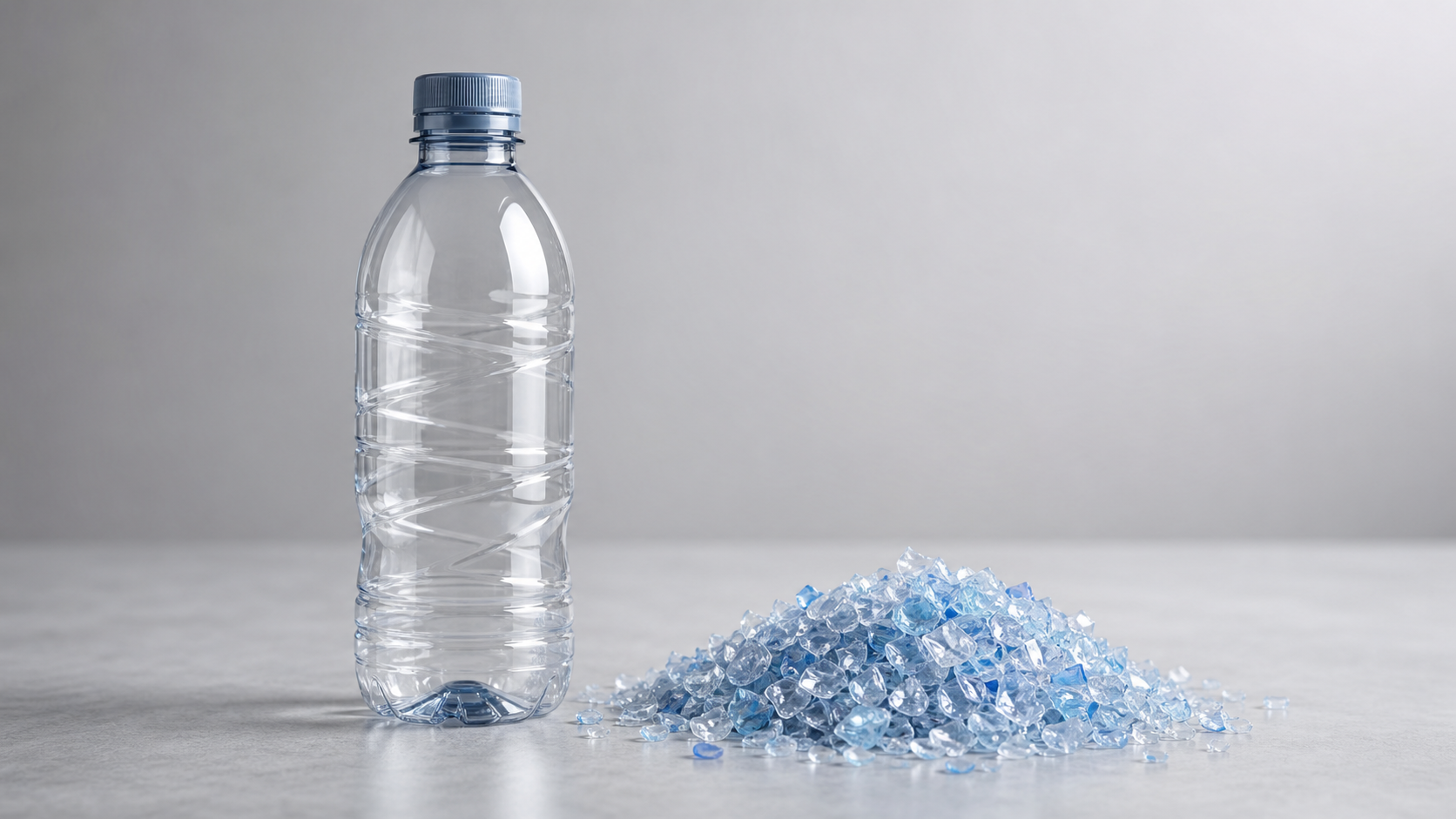
A 100% rPET bottle is a container whose PET resin content in the bottle body comes entirely from recycled PET, typically collected as used beverage bottles. It is distinct from partial rPET (e.g., 25% or 50%) and from virgin PET. Caps, labels, and liners are usually not rPET unless clearly specified, and market labeling rules vary by region.
When suppliers and brands say “100% recycled PET bottle,” they generally mean the bottle wall resin is 100% PCR PET. The term PCR refers to post-consumer recycled content that has been collected after consumer use, sorted, cleaned, and reprocessed back into food-grade rPET. Some programs also use post-industrial PET (regrind or scrap from manufacturing) or blends, so verify definitions in your market.
In beverage packaging, 100% rPET is increasingly used for still water, ready-to-drink teas, juices, and other cold-fill categories. Adoption depends on the availability of food-grade rPET, the required bottle performance, color and clarity expectations, brand positioning, and local recycling infrastructure.
How is rPET made from used bottles?
Most food-grade rPET for bottles is produced through mechanical recycling combined with advanced decontamination. Exact processes vary by supplier, but the general steps are:
- Collection: Used PET bottles are gathered via curbside systems, deposit-return schemes, or commercial channels.
- Sorting: Bottles are sorted by material type and color. Non-PET items, liquids, and contaminants are removed.
- Preparation: Labels, caps, and rings are detached; bottles are ground into flakes and thoroughly washed.
- Purification: Flakes are further cleaned and filtered to remove residual contaminants.
- Decontamination: Food-contact decontamination technologies help ensure flakes or pellets meet strict purity criteria suitable for bottle-to-bottle use, subject to market regulations.
- Pelletizing: Clean rPET flakes may be melted, filtered, and repelletized into uniform pellets; some processors supply high-spec flakes directly to preform manufacturers.
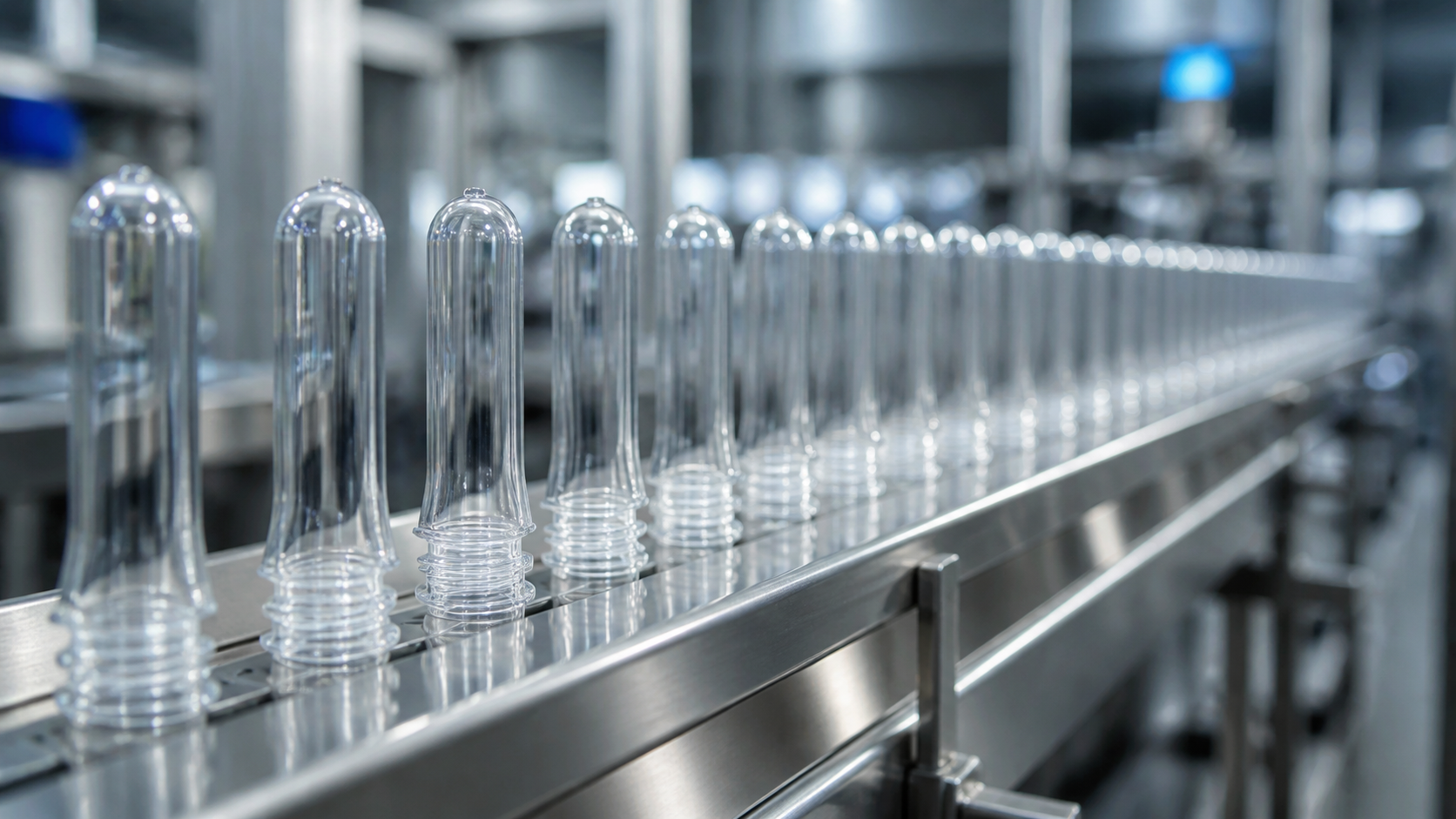
- Preform & bottle: rPET pellets or flakes are used to mold preforms, which are then reheated and blown into final bottles.
Chemical recycling routes exist (e.g., depolymerization to monomers), but availability, scale, and certification approaches differ by region. If you source rPET derived from chemical recycling, confirm how content is accounted for (e.g., mass-balance programs) and whether your market accepts such claims for on-pack communication.
Does a 100% rPET bottle perform like virgin PET?
For many cold-fill beverages, properly specified 100% rPET bottles can deliver comparable performance to virgin PET. However, clarity, color tone, intrinsic viscosity targets, top-load strength, and barrier behavior can vary by feedstock, processing, and bottle design, so application-specific testing is important.
Key considerations brands typically evaluate include:
- Clarity & haze: rPET may show a faint tint or slight haze depending on feedstock and decontamination quality.
- Color management: Some preform suppliers use approved colorants to offset gray/blue-green casts. Verify recyclability impacts before specifying color.
- Mechanical performance: Top-load and creep resistance depend on preform design, stretch ratios, and resin properties. Trial with your actual product, fill line, and logistics conditions.
- Barrier & shelf-life: For oxygen-sensitive products, confirm shelf-life targets with rPET through accelerated and real-time tests. Additives or multilayer designs may affect recyclability in certain markets.
- Organoleptics: Sensory neutrality is essential for water and delicate flavors. Specify decontamination performance and conduct migration/organoleptic testing per your market’s requirements.
What influences bottle appearance and color?
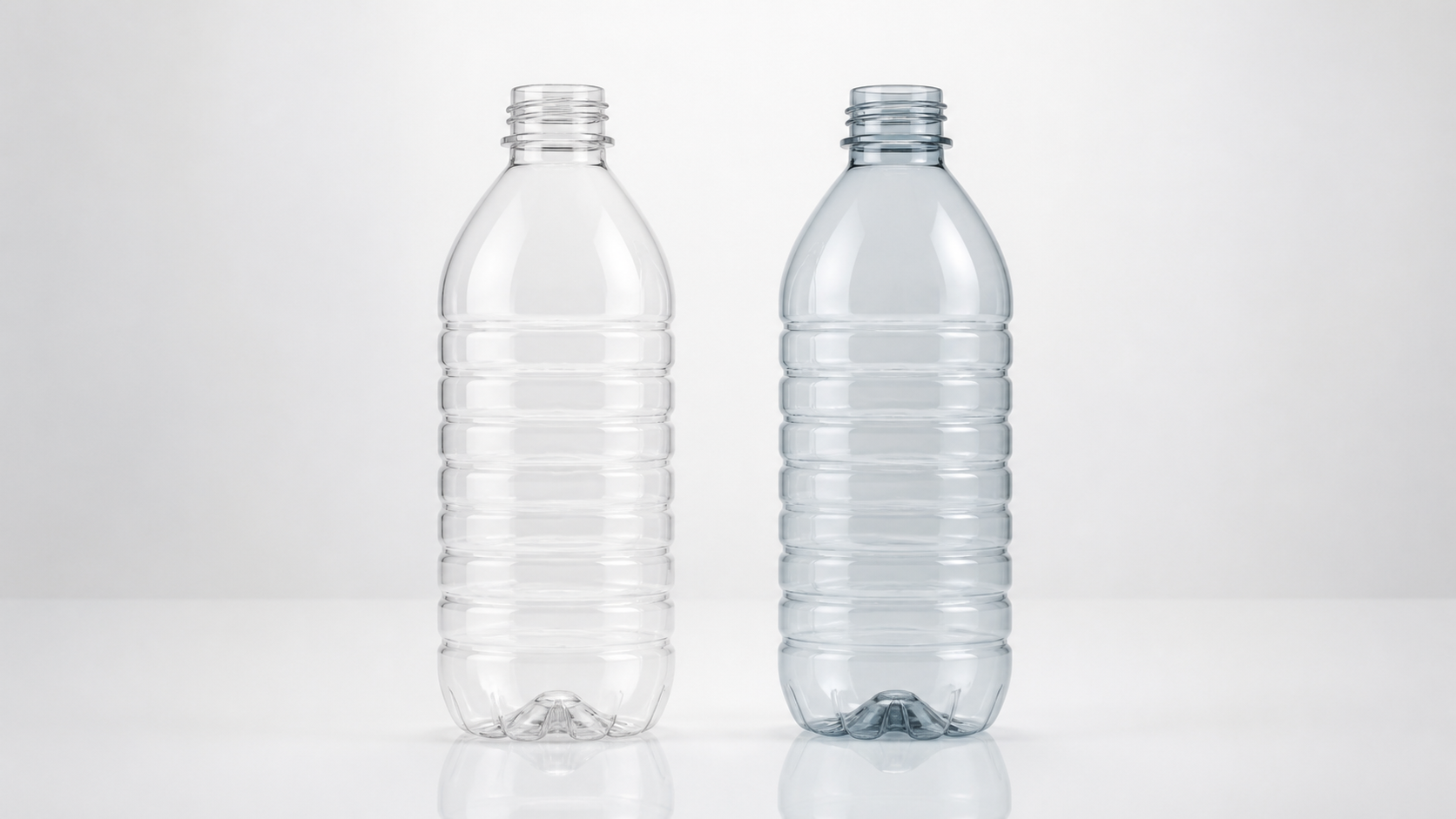
Appearance in 100% recycled PET bottles is driven primarily by feedstock quality, the proportion of clear versus colored bottles collected, residual contaminants, and the recycling technology used. A slight bluish or gray-green hue is common in high-PCR content formats; mastering bale selection, flake cleaning, filtration, and color correction helps control this.
What brands often do:
- Lean into recycled aesthetics: Accept a subtle tint as a visual cue of circularity.
- 명확한 기대치를 설정하세요: 마케팅, 사진, 소매 조명 계획을 실제 병 색조에 맞추세요.
- 신중한 색상 전략을 사용하세요: 색상을 중화하기 위해 착색제를 도입하는 경우, 해당 시장의 재활용 설계 지침과의 호환성을 확인하세요.
병 미학을 비용 및 성능과 조화시키는 방법에 대한 지침은 PET 병 혁신 자료를 참조하세요.
100% 재활용 PET 병은 지속가능성과 어떤 관련이 있나요?
100% rPET를 사용하면 PET가 순환 상태를 유지하고 버진 PET 수요를 줄일 수 있습니다. 전반적인 영향은 지역 수거율, 재료 수율, 에너지원 및 운송 거리에 따라 달라집니다. 잘 설계된 병-투-병 시스템은 소비자의 적극적인 참여와 명확한 폐기 경로가 뒷받침될 때 순환성을 지원할 수 있습니다.
- 재료 순환성: 병으로 만든 병은 많은 소비자가 인식하는 폐쇄 루프 접근 방식을 나타냅니다.
- 자원 효율성: rPET는 기존 재료 흐름을 활용하므로 견고한 인프라가 뒷받침될 때 유리할 수 있습니다.
- 시스템 의존성: 영향 결과는 지역, 선별 기술 및 정책에 따라 다릅니다. 예를 들어, 보증금 반환 프로그램은 고품질 베일의 공급을 늘릴 수 있습니다.
- 재활용 우선: 라벨, 접착제, 안료 및 차단재에 대한 설계 선택은 실제 재활용성과 하류 수율에 큰 영향을 미칩니다.
100% rPET 병의 재활용 설계
재활용 설계(DfR) 선택은 100% rPET 병이 쉽게 재활용 가능하고 재활용업체에 매력적으로 유지되는지 여부를 결정합니다. 시장별로 지침은 다르지만, 브랜드는 일반적으로 다음 사항을 고려합니다:
- 라벨: PET에 부유 가능한 라벨을 선호하며, 세척 및 광학 선별을 돕도록 크기를 조정하세요. 감지 가능한 기능이 포함되어 있고 현지 선별 관행과 호환되지 않는 한 용기를 가리는 전체 랩 슬리브는 피하세요.
- 잉크 및 접착제: 뜨거운 가성 세척 후 PET 플레이크에 잔류물을 남기지 않는 세척 가능한 잉크와 접착제를 지정하세요.
- 색상 및 효과: 투명 PET가 가장 광범위하게 재활용 가능합니다. 불투명 및 진한 색조 설계는 가치를 낮출 수 있으므로 시장별 허용 여부를 확인하세요.
- 마개 및 링: 일반적으로 HDPE 또는 PP입니다. 재활용 과정에서 깨끗하게 분리되는 밝은 색상과 재료가 선호됩니다.
- 첨가제 및 차단재: 다층, 산소 제거제, UV 차단제 또는 PCR 색상 보정을 목표 시장의 DfR 호환성에 대해 평가하세요.
- 테더드 캡: 일부 지역에서 점점 더 요구되고 있습니다. 소비자 편의성, 생산 라인 성능 및 재활용 결과의 균형을 확인하세요.
100% rPET vs 부분 rPET vs 버진 PET
적절한 옵션은 카테고리, 브랜드 포지셔닝, 공급 안정성 및 생산 라인 성능에 따라 달라집니다. 초기 단계 결정에서 자주 사용되는 정성적 비교는 다음과 같습니다:
| 옵션 | 재활용 함량 | 외관 | 성능 | 가용성 | 가격 변동성 | 포지셔닝 및 참고 사항 |
|---|---|---|---|---|---|---|
| 버진 PET | 0% | 일반적으로 물처럼 투명 | 대부분의 용도에 일관됨 | 광범위 | 수지 시장에 연동 | 중립적 지속가능성 메시지; 가공업체에 널리 수용됨 |
| 부분 rPET | 일반적으로 25–50% | 대개 투명에 가까움 | 지정 시 비교 가능 | Generally good | Moderate | Step toward circularity; easier color control |
| 100% rPET | 100% in bottle wall | May show slight tint/haze | Application-specific | Region-dependent | May fluctuate | Strong circularity signal; verify DfR & supply |
Sourcing and quality checklist for beverage brands
Before committing to 100% rPET at scale, teams often build a structured brief and qualifying protocol:
- Define usage: Beverage category, fill type (cold-fill/hot-fill), carbonation level, expected shelf-life, and distribution environment.
- Material specs: Intrinsic viscosity targets, contaminant thresholds, organoleptic requirements, and optical properties aligned with brand standards.
- Food-contact compliance: Obtain supplier documentation appropriate for your markets (e.g., declarations that processes are intended to meet applicable food-contact regulations). Confirm with your regulatory team.
- Decontamination & testing: Understand the recycling process, decontamination method, and typical quality metrics. Conduct migration and sensory testing on finished bottles.
- Traceability: Request lot-level traceability and clear definitions of recycled content (PCR vs. post-industrial) and any accounting approaches used.
- Converter readiness: Confirm preform supply, color management strategy, and blow-molding parameters for your bottle geometry.
- Line trials: Test preforms on your lines for blow ratio, top-load, cap application, label application, and downstream case packing.
- Logistics & storage: Check pallet stability, creep, and environmental exposure (heat, UV) effects through transit testing.
- Contingency supply: Qualify secondary sources or flexible content thresholds in case of market tightness.
Cost, supply, and risk management
rPET pricing and availability are influenced by collection rates, bale quality, demand from multiple sectors, and policy changes. Periods of tight supply can occur, especially for clear, food-grade bottle-to-bottle streams. Build resilience by:
- Dual-qualifying suppliers: Maintain approved alternates where possible.
- Considering geographic diversity: Balance proximity with the need for consistent quality.
- Aligning claims with availability: If supply pressures rise, plan how to maintain on-pack statements or adjust content responsibly.
- Forecast collaboration: Share rolling forecasts with suppliers to help secure feedstock and production slots.
What product types fit 100% rPET best?
100% rPET is commonly explored for:
- Still water and flavored water: High clarity expectations; pilot for organoleptics and slight tint acceptance.
- Juices, functional drinks, and teas: Often more forgiving on slight tint; confirm oxygen and light protection needs.
- Carbonated beverages: Validate top-load, creep, and CO2 retention; bottle design and resin specs are critical.
- Hot-fill or pasteurized products: 열 저항성과 치수 안정성을 평가하세요. 모든 rPET 사양이 고온 충전에 적합한 것은 아닙니다.
소비자 기대치는 시장에 따라 다릅니다. 특정 지역에서 재활용 함량을 도입하는 방법에 대한 관점을 보려면 최근 호주 음료 트렌드.
100% rPET를 사용한 포장 개발 워크플로우
지속가능성 목표와 제조 가능성 및 브랜드 기준을 결합하는 구조화된 워크플로우를 고려하세요.
- 브리프 및 목표: 재활용 함량 목표, 병 형상, 성능 KPI, 마케팅 주장을 정의하세요.
- 프리폼 선택: rPET 특성 및 블로우 성형 장비와 호환되는 프리폼과 몰드를 선택하세요.
- 소재 검증: rPET 공급업체 사양, 오염 제거 단계, 식품 접촉 문서를 평가하세요.
- 프로토타입 생산: 소량 배치를 블로우 성형하고 제품을 충전하여 투명도, 색상, 상부 하중, 토크, 라벨 부착을 평가하세요.
- 유통기한 및 관능 검사: 현실적인 보관 조건에서 산소 유입, 탄산 손실(해당 시), 관능 특성을 테스트하세요.
- 운송 테스트: 물류 체인 전반에 걸쳐 팔레트 안정성, 크리프, 충격 저항성을 검증하세요.
- 재활용 설계(DfR) 확인: 라벨, 잉크, 접착제, 마개 및 첨가물을 해당 시장의 재활용 설계 가이드라인과 대조하여 검토하세요.
- 주장 및 라벨링: ‘100% 재활용 PET 병'(또는 이와 유사한) 문구가 대상 시장에서 정확하고 규정을 준수하는지 확인하고, 필요에 따라 범위(병 본체 vs. 마개/라벨)를 명확히 하세요.
- 스케일업 및 모니터링: 생산을 단계적으로 확대하고, 일관성을 모니터링하며, 공급 변동에 대비한 비상 계획을 유지하세요.
자체 브랜드 로드맵을 구축 중이라면 포장 선택을 제품 배합 및 채널 전략과 함께 조정하세요. 북미 시장 발전에 대한 맥락은 미국 브랜드를 위한 자체 브랜드 음료.
재활용 함량을 소비자에게 전달하기
명확성은 신뢰를 만듭니다. 품질 팀이 입증할 수 있는 범위 내에서 메시지를 정확하고 간결하게 유지하세요.
- 정확하게 표현하세요: 병 본체만 100% rPET인 경우 그렇게 명시하세요. 마개와 라벨이 rPET가 아닌데 rPET인 것처럼 암시하지 마세요.
- 순환 고리를 보여주세요: 환경적 이점을 과장하지 않으면서 순환성을 강화하는 시각 자료를 사용하세요.
- 지역별 규정에 유의하세요: 포장 문구와 기호는 규제 대상이므로 각 대상 시장의 요구 사항을 확인하세요.
자주 묻는 질문
100% rPET 병은 식품에 안전한가요?
식품 접촉 적합성은 재활용 공정, 오염 제거 성능, 해당 시장의 규정 준수에 따라 달라집니다. 많은 공급업체가 병-투-병 용도를 위한 rPET를 생산하지만, 브랜드는 공급업체 문서를 검토하고 완성된 병에 대한 자체 이행 및 관능 테스트를 실시해야 합니다.
100% rPET 병이 약간 색이 있는 이유는 무엇인가요?
rPET 색상은 수거된 병 혼합물, 청결도, 가공 공정의 영향을 받습니다. 고품질 100% rPET도 옅은 파란색이나 회녹색 빛을 띨 수 있습니다. 일부 브랜드는 이를 순환성의 신호로 받아들이고, 다른 브랜드는 재활용성을 고려하면서 이를 관리하기 위한 호환 색상 전략을 사용합니다.
100% rPET가 일반 PET보다 더 비싼가요?
가격은 지역, 계절, 페트 베일 공급, 여러 산업의 수요에 따라 다릅니다. 때로는 식품 등급 rPET가 일반 PET 대비 프리미엄을 가질 수 있고, 때로는 그 격차가 좁아집니다. 조달 부서와 함께 시나리오를 구축하고 가능한 경우 대체재를 검증하세요.
탄산음료에도 100% rPET를 사용할 수 있나요?
네, 신중한 사양과 테스트를 통해 가능합니다. 제품, 마개 시스템, 물류 프로필에 따라 상부 하중, 크리프, 탄산 유지력을 검증하세요. 병 형상, 프리폼 설계, 라인 조건이 결과에 결정적인 영향을 미칩니다.
화학적 재활용과 질량 균형 주장은 어떤가요?
일부 재활용 스트림은 화학적 공정과 질량 균형 회계를 사용합니다. 이러한 주장의 수용 여부는 시장에 따라 다릅니다. 이러한 경로를 고려한다면 대상 시장에서 허용되는 정의, 인증 프레임워크, 주장 문구를 확인하세요.
음료 브랜드를 위한 핵심 요점
100% rPET 병은 강력한 순환성 신호를 제공하며, 적절히 사양을 갖추면 다양한 냉충전 음료 카테고리에서 효과적으로 성능을 발휘할 수 있습니다. 성공의 핵심은 원료 품질, 공급업체 역량, 병 설계, 철저한 테스트에 달려 있습니다. 포장 주장을 정확하게 유지하고, DfR 선택을 해당 시장에 맞추며, 탄력적인 공급을 확보하세요. 체계적인 브리프와 교차 기능적 시험을 통해 팀은 제품 품질과 브랜드 경험을 보호하면서 재활용 함량을 확보할 수 있습니다.