


 English
 Français
 Español
 العربية
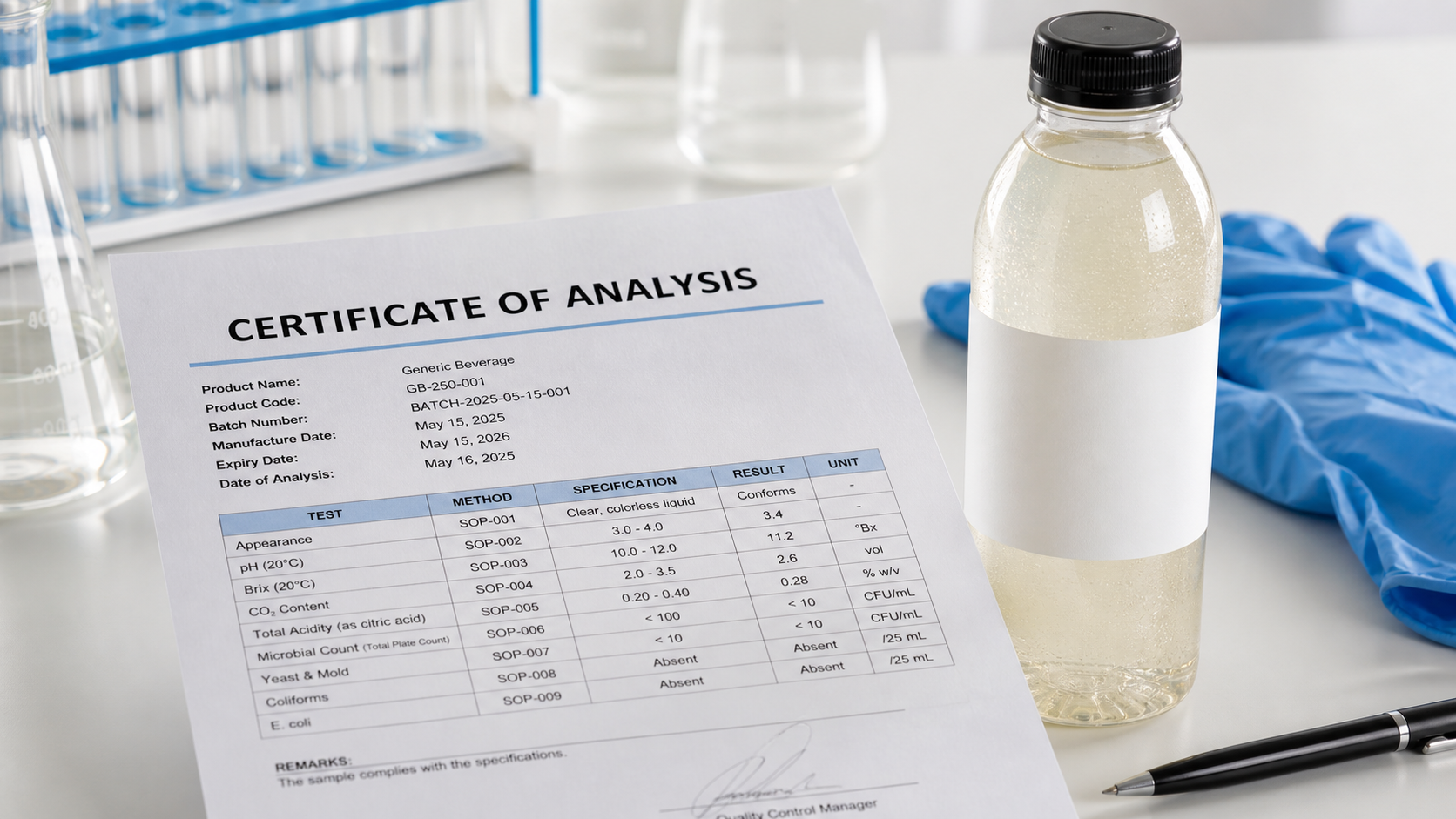
음료 COA(분석 증명서)는 완제품 음료 또는 원료에 대해 시험된 주요 품질, 안전, 규제 매개변수와 시험 방법 및 결과를 나열하는 배치별 보고서입니다. 이 가이드는 음료 COA를 단계별로 읽는 방법을 설명하여 정체성을 확인하고, 결과를 규격과 비교하며, 배치의 승인 여부를 결정할 수 있도록 도와줍니다.
“음료 분석 증명서”를 검색해 본 적이 있다면, 이 실용적인 안내서가 일반적인 COA 섹션을 해석하고, 탄산음료와 주스의 일반적인 시험 범주를 이해하며, 경고 신호를 식별하고, 문서를 라벨링 및 수입 요건과 연결하는 데 도움이 될 것입니다.
음료에서 분석 증명서(COA)란 무엇인가요?
COA는 제조업체 또는 공인된 시험소가 특정 음료 또는 원료에 대해 수행한 시험을 요약한 로트 또는 배치 단위 문서입니다. 시험 시점에 제품이 정의된 규격을 충족함을 확인하고, 배치 번호, 생산 날짜, 방법 참조를 통해 추적성을 제공합니다.
COA가 수입업체와 브랜드 소유자에게 왜 중요한가요?
COA는 구매 주문을 검증 가능한 품질 및 안전 결과와 연결합니다. 실사(due diligence)를 지원하고, 국경 또는 소매 감사에서 부적합을 예방하는 데 도움이 되며, 출하 결정에 정보를 제공합니다. 또한 제품 규격 및 공급업체 품질 계약과 결합할 때 인증 또는 고객별 요구 사항을 지원할 수 있습니다.
제3자 인증이 프로그램의 일부라면, COA가 인증 범위 및 관리 기준과 일치하는지 확인하세요. 관련 프레임워크의 개요는 인증.
음료 COA를 단계별로 읽는 방법
COA를 검토할 때 이 실용적인 순서를 따르세요.
- 정체성 확인: 제품명, 변형, 포장 크기, 브랜드/PL 라인이 주문 및 규격과 일치합니다.
- 배치 추적: 배치/로트 번호, 생산 날짜, 유통기한/소비기한이 표시되고 읽을 수 있어야 합니다. 이는 라벨 및 선적 문서와 일치해야 합니다.
- 범위 확인: COA가 완제품, 농축액, 베이스 또는 원료를 다루는지 명확히 명시합니다.
- 샘플링 검증: 배치를 대표하는 샘플링을 나타내는 샘플링 참조 또는 설명을 확인합니다.
- 시험 목록 검토: 매개변수는 규격 및 시장 요구 사항을 반영해야 합니다(예: 주스의 Brix, 해당되는 경우 카페인, 필요한 경우 미생물).
- 방법 일치: 각 매개변수는 인정된 또는 검증된 방법(예: AOAC, ISO, ICUMSA, 내부 검증 SOP)을 인용해야 합니다.
- 결과와 규격 비교: 각 결과에는 해당하는 규격 또는 한도가 있어야 합니다. 표시된 경우 상태 또는 합격/불합격을 검토하세요.
- 보고 용어 확인: ND (검출 안 됨), <LOQ (정량 한계 미만) 및 제공된 경우 반올림 규칙을 이해하세요.
- 서명 확인: 책임자의 이름, 직책, 서명(전자 또는 서면), 발행일, 시험소/제조업체 세부 정보.
- 파일 및 연결: COA를 배치 기록과 함께 보관하고 수령 로그, 라벨, 수출/수입에 사용되는 증명서와 연결하세요.
탄산음료 COA에 일반적으로 나열되는 매개변수는 무엇인가요?
COA는 제품 유형과 시장에 따라 다릅니다. 탄산음료와 주스에는 종종 정체성, 물리화학적, 미생물학적, 첨가물, 관능 검사가 포함됩니다. 선택은 규격 및 규제 요구 사항을 반영해야 합니다. 아래는 볼 수 있는 일반적인 범주입니다.
- 정체성 및 외관: 색상/투명도, 이물질 부재, 라벨/포장 검증.
- Brix 및 당 프로필: 주스/넥타 또는 가당 음료의 Brix 도수; 해당되는 경우 당 조성. 주스의 Brix 배경 정보는 과일 주스 Brix 설명.
- 산도 및 pH: 산미 균형 및 공정 관리를 위한 적정 산도와 pH.
- 탄산: 탄산음료의 CO2 용량/압력 확인.
- Additives/actives: Caffeine, sweeteners, colors, preservatives (e.g., benzoate/sorbate), vitamins or minerals where fortified.
- Microbiology: Aerobic plate count, yeast & mold, coliforms, pathogens where required by risk assessment.
- Chemical safety (as applicable): Heavy metals, contaminants, migration for packaging-contact risks per program.
- Sensory: Aroma, taste, mouthfeel, off-notes screening against a reference standard.
- Packaging integrity: Torque, seam/closure checks, fill volume, leak tests.
| COA section/parameter | What it indicates | Common references | What buyers verify |
|---|---|---|---|
| Product identity | Links result to exact SKU/variant | Spec sheet, artwork code | Name, flavor, pack size match PO/spec |
| Batch & dates | Traceability and shelf life window | Lot code format SOP | Lot, production, and best-before readable |
| Brix / sugar | Soluble solids/sweetness target | ICUMSA/AOAC methods | Result aligns with product positioning |
| pH / acidity | Acid profile for taste & safety controls | AOAC/ISO titration & pH SOPs | Within agreed specification range |
| Carbonation | CO2 level and shelf stability | Internal validated SOP | Matches label claims and QC settings |
| Microbiology | Hygiene and safety indicators | ISO/AOAC culture methods | Meets limits; “ND” where required |
| Additives/actives | Presence/level of declared ingredients | AOAC/ISO, HPLC/UV methods | Compliance with formulation & market rules |
| Sensory | Consistency with reference standard | Internal panel SOP | No off-notes; passes acceptance |
| Packaging checks | Container performance and fill | Torque/seam SOPs | Meets closure, seal, and volume criteria |

How do you interpret results vs. specifications?
Start by locating three fields for each parameter: Result, Specification (target, range, or limit), and Status (pass/fail). A parameter passes when the reported value meets the stated specification or is not detected where a “not detected” requirement applies. Where a spec is a range, evaluate the full interval. If the COA lists uncertainty or rounding rules, interpret results according to those rules.
- ND / <LOQ: “Not detected” or “below limit of quantitation” indicates the analyte was not measurable by the method used. It does not necessarily mean absolute zero.
- Method-specific context: Results depend on the method. For example, different sugar or acid methods can produce slightly different values; consistency of method is essential for trending.
- Units matter: Ensure units match your spec (e.g., mass per volume vs. percent). Unit mismatches are a common source of apparent failures.
- Out-of-spec (OOS): If a parameter fails, request an investigation, potential retest, and a corrective action plan. Hold the batch until disposition is agreed.
What should you verify about batch identity and traceability?
Batch identity ties the COA to physical goods. Ensure the lot number format on the COA matches the coding on cases and individual units. Record cross-checks during receiving and link the COA to inbound inspection logs.
- Batch/lot & production date: Match COA, case codes, and pallet labels.
- Quantity/packaging: The pack type, closure, and volume on the COA align with what shipped.
- Chain of custody: If testing is external, the COA should identify the laboratory and sampling responsibility.
- Document linkage: Align with your SOPs and the manufacturer’s documented Production Process to ensure sampling represents the full batch.
Understanding test methods and acronyms on a COA
COAs typically cite recognized or validated methods so buyers can assess reliability and comparability. You may see references to ISO, AOAC, ICUMSA, internal SOP numbers, or instrument techniques such as HPLC, GC, ICP, or spectrophotometry.
- Why methods matter: Results are method-dependent. Agree on methods in your specification and keep them consistent across batches and suppliers.
- Validation: Internal methods should be validated for accuracy, precision, and matrix suitability. COAs may note validation status.
- Revision control: Check issue dates and revision numbers to ensure the latest method version was applied.
Do COA parameters change by beverage type?
Yes. Your specification should define parameters by product style and risk profile. While core identity and microbiology checks are common, some tests are more relevant for certain categories:
- Fruit juices & nectars: Emphasis on Brix, juice content, acidity, and sensory alignment with varietal profile. See Fruit Juice Brix Explained for purchase-level context.
- Carbonated soft drinks: Carbonation control, pH, sweetener verification, color stability, and closure/torque testing.
- Coconut water: Identity, mineral profile where specified, clarity, and heat-process validation for shelf-stable formats. For sourcing context, see Vietnamese Coconut Water: Why Vietnam Is the World’s Top Source.
Common red flags and how to resolve them
When a COA raises questions, act quickly and document your review. Typical issues include:
- Missing batch identifiers: 공급업체에 올바른 로트 번호와 생산 날짜로 COA를 재발행하도록 요청하세요.
- 규격 컬럼 없음: 각 파라미터의 한계를 포함하는 제품 규격서 또는 COA 형식을 요청하세요.
- 단위 불일치: 단위를 확인하고 일관된 보고 방식으로 수정된 COA를 요청하세요.
- 규격 이탈 결과: 보류를 시작하고, 재시험 또는 근본 원인 분석을 요청하며, 품질 계약에 따라 재작업, 교체 또는 면제를 합의하세요.
- 불명확한 방법: 비교 가능성을 뒷받침하기 위해 방법 참조 또는 검증 요약을 요청하세요.
- 서명/날짜 없는 COA: 역할 및 연락처 정보가 포함된 승인 서명을 요청하세요.
COA vs. 제품 규격서 vs. 적합성 증명서
이 문서들은 함께 작동합니다. 이 비교를 사용하여 기대치와 감사를 조정하세요.
| 문서 | 목적 | 발행 주체 | 사용 시점 |
|---|---|---|---|
| 분석 증명서(COA) | 실제 배치 시험 결과를 규격과 대비하여 보고 | 제조업체 또는 공인된 실험실 | 배치별, 출하 및 입고 승인 지원 |
| 제품 규격서 | 목표 값, 범위, 방법 및 포장 정의 | 브랜드 소유자 및 제조업체 | 개발 시점; COA 검토의 기준 |
| 적합성 증명서 | 배치가 합의된 요구 사항을 준수함을 선언 | 제조업체 | 종종 COA와 함께 제공되어 적합성을 확인 |
COA를 라벨링 및 수입 문서와 연결
COA는 아트워크 승인, 원재료 목록 및 시장별 진술을 포함하는 더 넓은 컴플라이언스 파일의 일부입니다. 미국 행 제품의 경우 결과 및 배합을 라벨링 및 수입 검사와 일치시키세요:
- 배합 및 시험 결과를 다음 문서와 함께 검토하세요: 미국 음료 영양 성분 표시 라벨.
- 완제품 서류를 다음 문서와 대조 확인하세요: 미국 수입 음료 식품 라벨 체크리스트.
- 추적성 필드와 로트 코드가 선적 문서 및 품질 프로그램과 일치하는지 확인하세요.
인증 정렬 및 깔끔한 감사 추적을 위해 COA를 승인된 규격서 및 관련 인증서와 함께 동일한 배치 파일에 보관하세요. 공급업체의 프로그램이 인증된 경우, 인증 을(를) 참조하여 범위와 증거를 이해하세요.
FAQ
모든 음료 배치에 COA가 필수인가요?
요구 사항은 고객 프로그램, 소매업체 및 관할권에 따라 다릅니다. 많은 구매자가 모든 선적에 대해 배치별 COA를 요구합니다. 법적으로 필수는 아니더라도 COA는 출하 결정, 실사 및 감사 준비를 지원하는 데 널리 사용됩니다.
COA는 전자식일 수 있나요?
예. eCOA는 일반적입니다. 품질 계약에 따라 승인 서명, 발행일 및 방법 참조 또는 첨부 파일에 대한 안전한 링크가 포함되어야 합니다.
COA에서 “ND” 또는 “<LOQ”는 무엇을 의미하나요?
“ND”는 명시된 방법으로 검출되지 않음을 의미하고, “<LOQ”는 방법의 정량 한계 미만을 의미합니다. 이는 테스트 조건에서 분석 물질을 측정할 수 없었음을 나타내며, 반드시 절대 0을 의미하는 것은 아닙니다.
COA는 얼마나 최신이어야 하나요?
COA는 일반적으로 배치별로 생산일 근처에 발행됩니다. 제품이 재작업되거나 장기간 보관된 경우, 위험 및 유통기한 고려 사항에 따라 프로그램에서 검토 또는 재시험을 요구할 수 있습니다.
음료 구매자를 위한 주요 요점
잘 구성된 COA는 배치 ID를 확인하고, 결과를 규격과 비교하며, 컴플라이언스를 문서화할 수 있게 합니다. ID 필드, 방법 참조 및 합의된 한계에 대한 합격/불합격에 초점을 맞추세요. ND 및 LOQ 보고를 명확히 하고, 서명과 날짜가 있는지 확인하며, COA를 배치 및 라벨링 기록과 함께 보관하세요. 질문이 있는 경우 명확화 또는 재시험을 요청하고 해결 내용을 문서화하세요.
표준 검토 체크리스트를 작성하고, 제품 사양에 맞춘 후, COA를 라벨링 및 수입 파일과 연계하여 강력하고 감사에 대비된 프로세스를 구축하세요. 더 넓은 운영 맥락을 위해, 공급업체의 문서화된 생산 공정 및 인증 범위를 인증.
AC MFOOD에서의 컴플라이언스 및 배송
For the certificates and food safety systems buyers and customs ask us to produce, see 인증 및 식품 안전 시스템. For shipping terms, the document pack and container planning, see 수출 및 물류. To discuss a specific market, 견적 요청.
Request a quote