
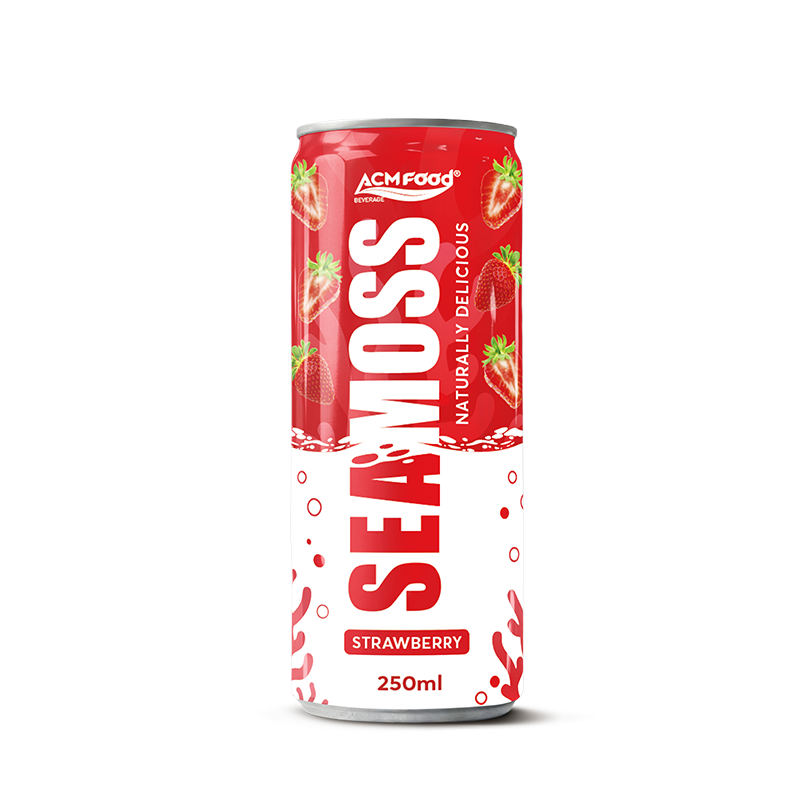
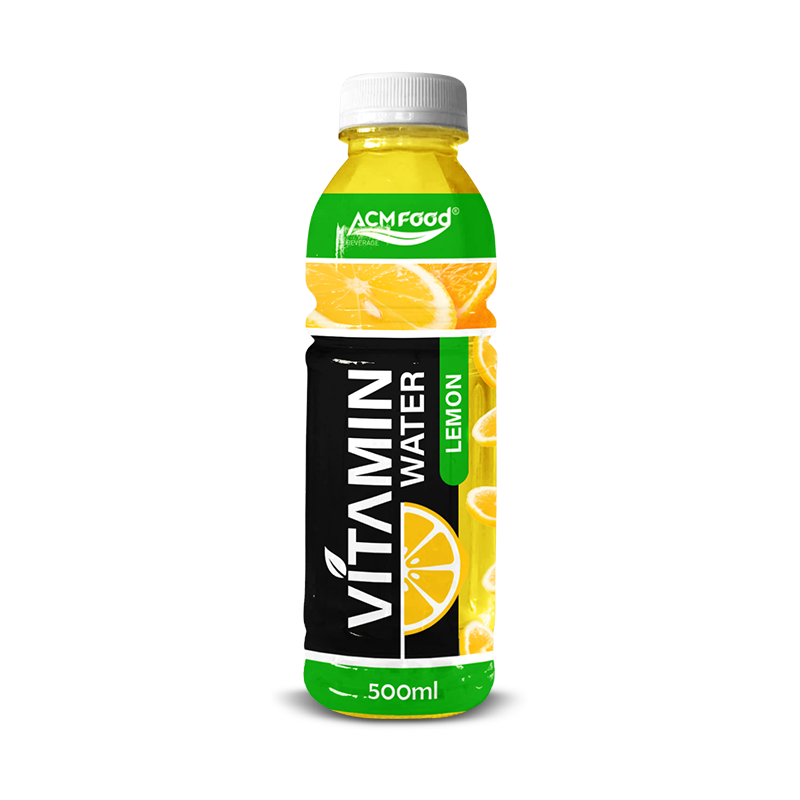
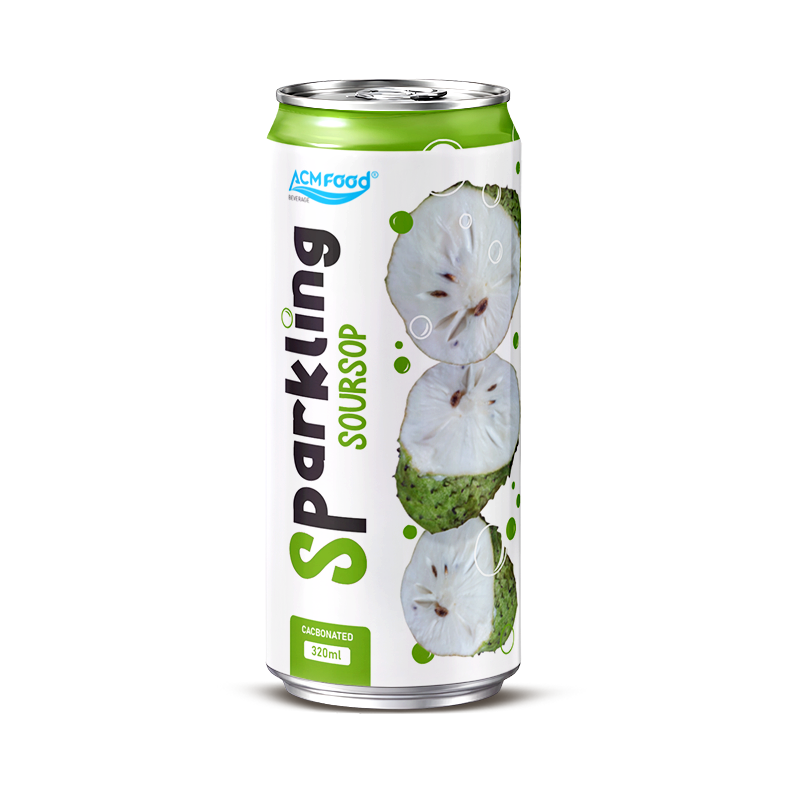
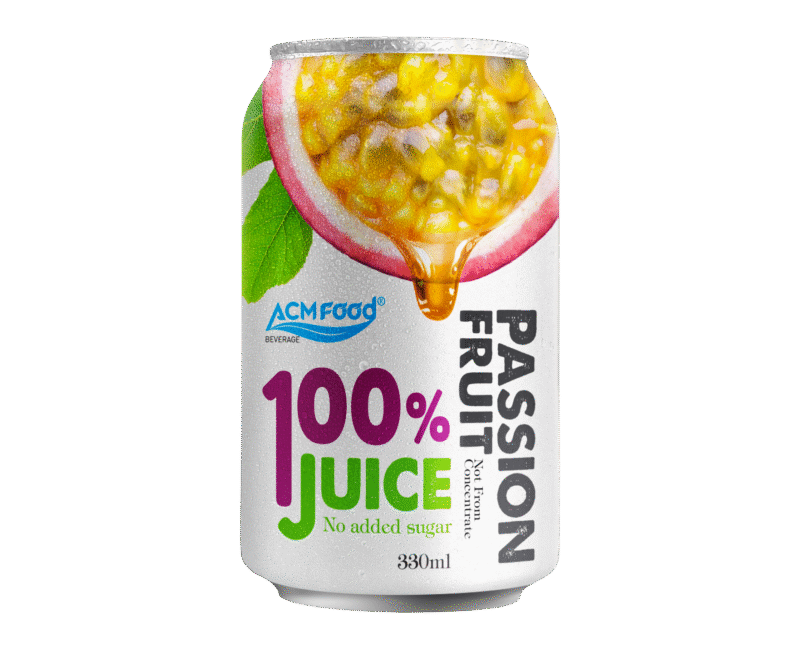
Canned fresh coconut water is no longer a niche product sitting in the “ethnic foods” aisle of specialty stores. Walk through the beverage sections of supermarkets in Dubai, London, Seoul, or Los Angeles today, and you’ll see it positioned front and center — next to sports drinks, sparkling water, and energy beverages. That shift didn’t happen by accident.
For importers who are evaluating this category now, the timing matters. Markets rarely telegraph their turning points this clearly.

What’s Actually Driving Global Demand — And Why It’s Different This Time
The coconut water category has seen waves of enthusiasm before. What makes the current growth cycle more durable is that it’s built on structural changes in consumer behavior, not just trend cycles.
The global packaged coconut water market was valued at approximately USD 5.4 billion in 2025 and is projected to reach USD 30.9 billion by 2033 — a compound annual growth rate above 24%. That number matters because the CAGR reflects not just market size but acceleration. The category is growing faster now than it was five years ago, which is unusual for a product that has already achieved mainstream awareness.
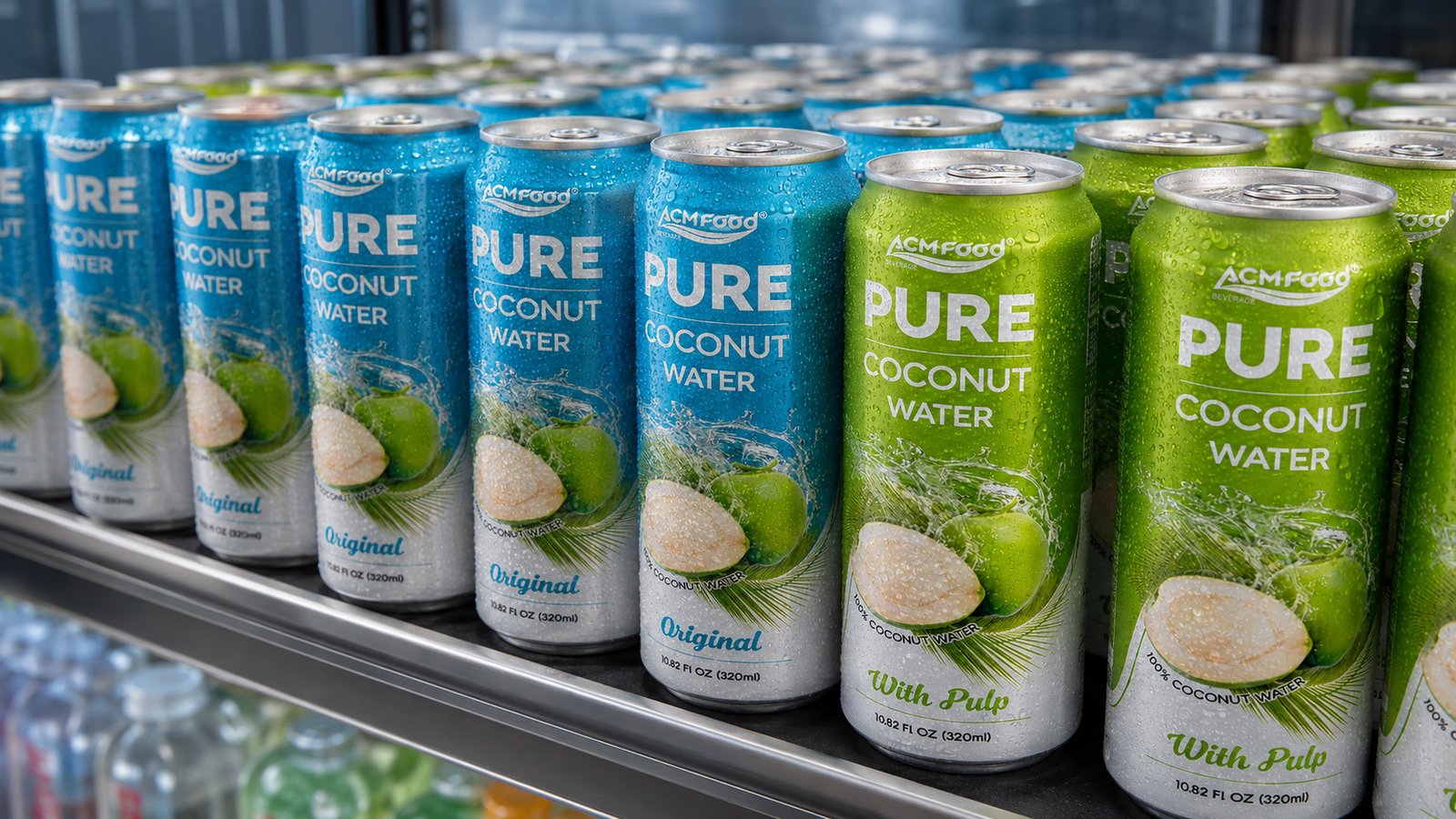
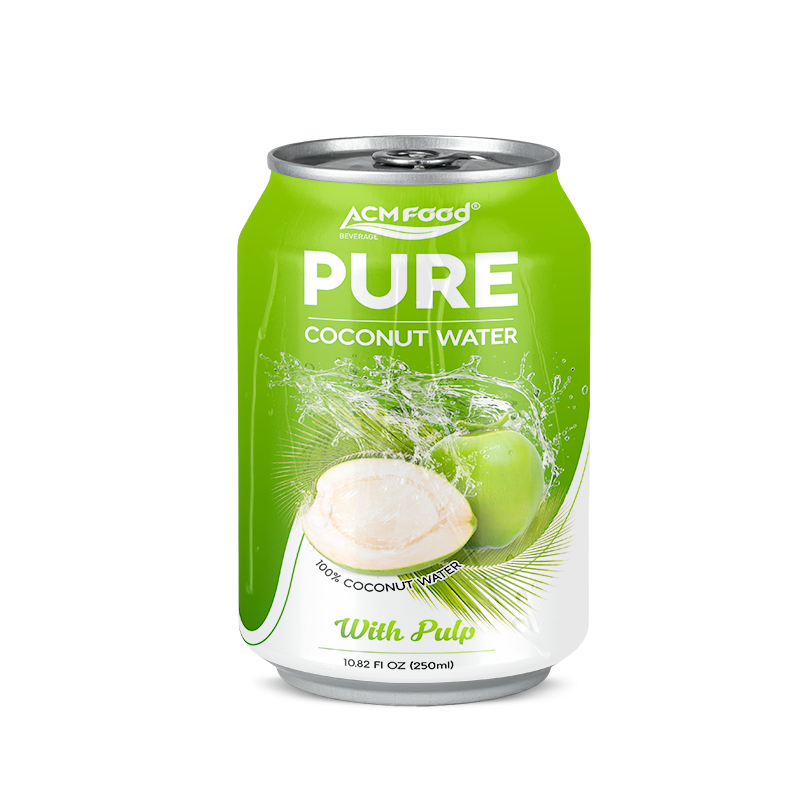
Within that broader market, the canned format deserves specific attention. The canned segment is projected to grow at a CAGR of 20.5% from 2026 to 2033. That’s one of the fastest growth rates within any beverage sub-format. Why cans specifically? Cans provide excellent protection against light and air, helping preserve flavor and nutritional quality for longer periods. The lightweight nature of cans also reduces transportation costs, and increasing consumer preference for sustainable packaging drives demand for widely recyclable aluminum cans.
For importers, this matters at the logistics level. A 24-month shelf life in a can changes the economics of long-distance shipping entirely. You’re not racing against a 12-month expiry from a production date while clearing customs, clearing warehouses, and building retail distribution. You have room to build the business properly.

The other structural driver is consumer demographics. Health-conscious millennials and Gen Z are now the core purchasing demographic in North America and Europe. They’re not buying coconut water because it’s exotic anymore — they’re buying it because it fits how they think about hydration: natural electrolytes, no added sugar, clean label, recognizable ingredients. This is the same segment that has driven oat milk, kombucha, and functional water into the mainstream. Coconut water in a can is their next everyday staple.
Canned vs. Other Formats: What the Comparison Actually Reveals

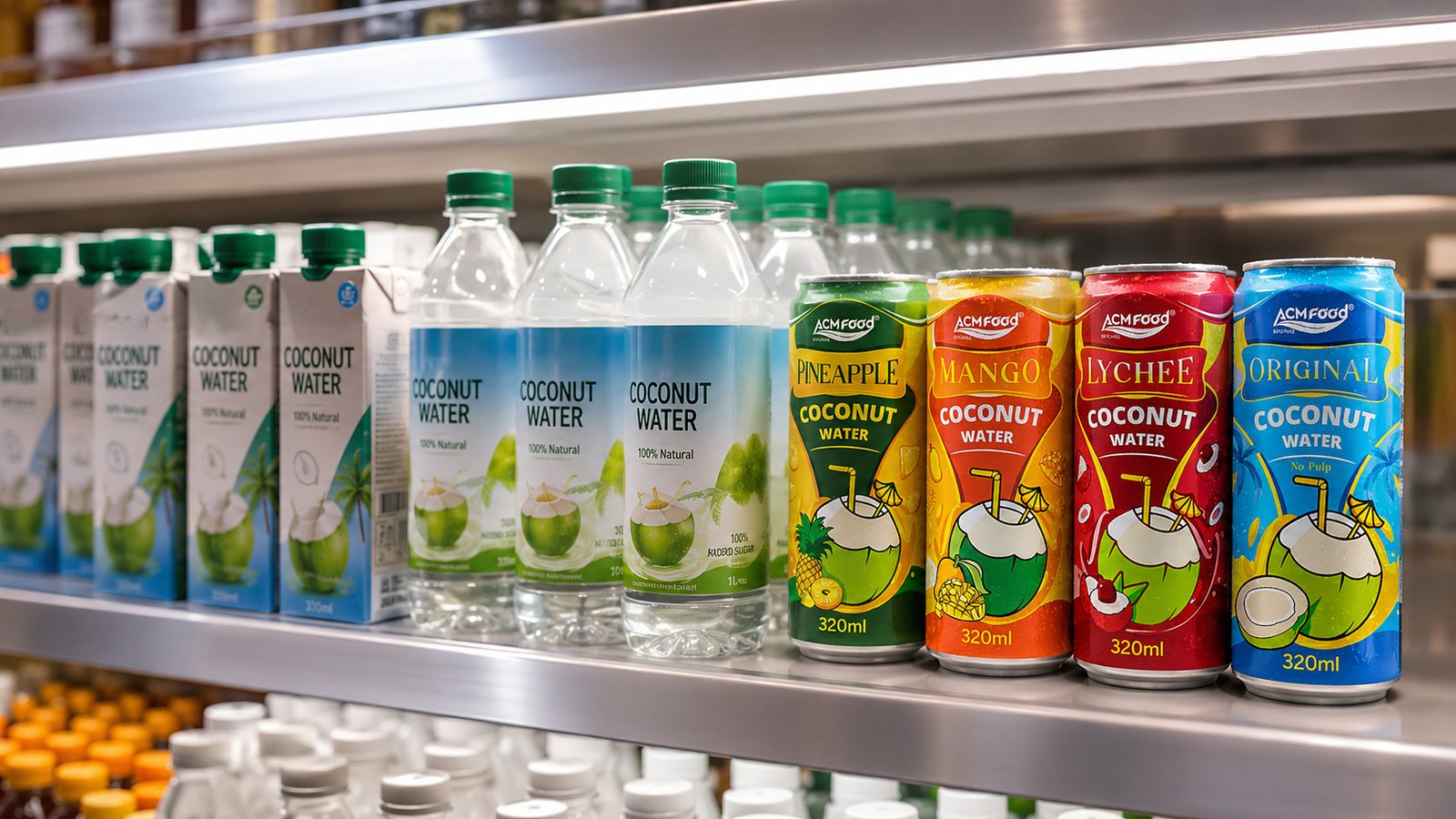
Importers frequently ask whether to position coconut water in Tetra Pak, PET bottles, or aluminum cans. The answer isn’t the same for every market, but the pattern across high-growth markets is becoming clearer.
Tetra Pak dominates value-tier retail and bulk formats — it’s the workhorse of the category and still holds significant volume share. PET bottles perform well in markets where consumers associate the format with fresh, chilled products and where cold-chain distribution is reliable. But the can format is gaining ground in a specific and valuable context: premium positioning, convenience channels, and on-the-go consumption.
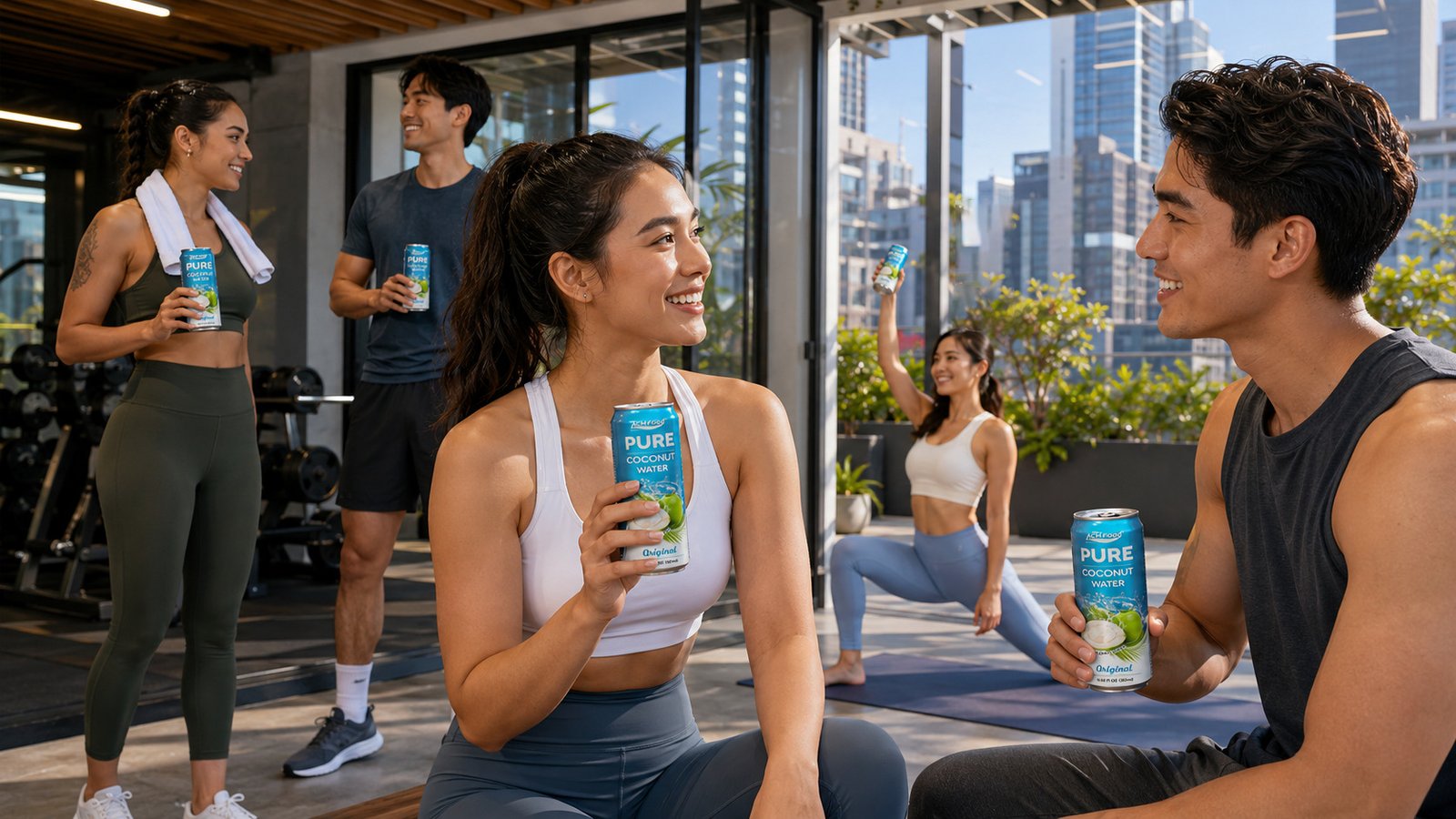
Think about where a consumer is most likely to grab a drink in London, Singapore, or New York. Convenience stores, gyms, vending machines, airport shops, corporate cafeterias. These channels favor cans because of durability in transit, the perception of freshness (“sealed and pressurized”), and the practical reality that cans fit in cupholders and backpack pockets. They also photograph well — which matters more than people in traditional trade admit, because social sharing has become a meaningful distribution channel for beverage brands.
From a B2B sourcing perspective, cans also offer manufacturing advantages. Modern canning lines in Vietnam — where the Mekong Delta produces some of the world’s most flavorful young coconuts — run high volumes efficiently, which translates into competitive unit economics at container-load quantities. Vietnam produces over 1.5 billion coconuts annually, making it one of the top five coconut producers globally. The country has transformed its natural advantage into a modern export industry, supplying finished beverages to over 100 countries.
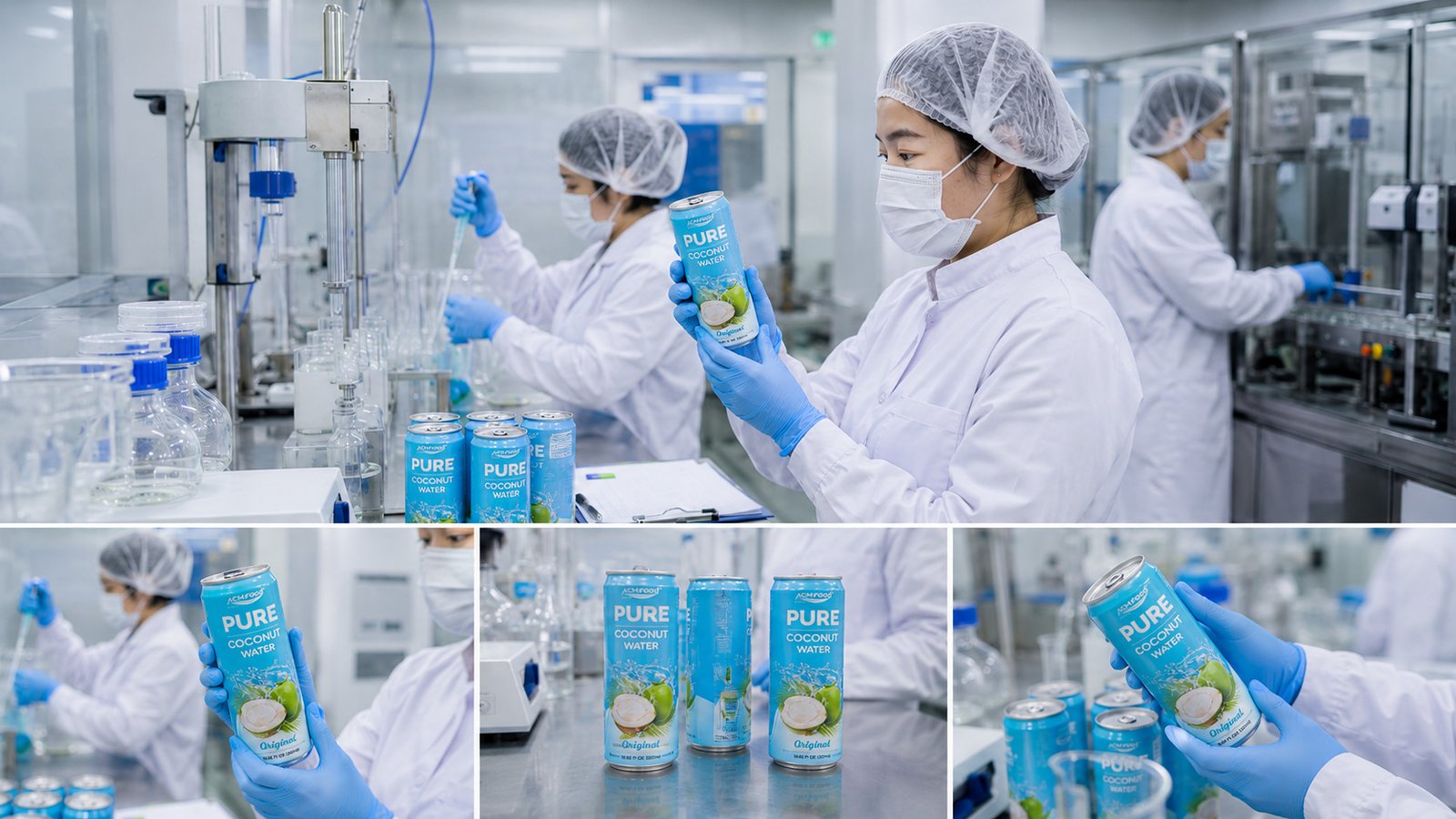
Working with experienced trade companies linked to these factories — rather than sourcing directly from fragmented small producers — also gives importers access to consolidated quality control, consistent batch specifications, and export documentation that meets the standards of regulated markets like the EU, US, and Gulf states.
What Importers Need to Know Before They Commit

This is where most articles stop at market size numbers and leave you without practical guidance. Let’s fix that.
Certifications come first, not last. If you’re importing into the US, you need FDA registration and a facility that can produce documentation for US Customs. The EU requires different labeling standards and may require specific food safety certifications depending on your country of entry. The Gulf markets typically require HALAL certification from an accepted body. These aren’t things to figure out after you’ve placed an order. Reputable Vietnamese exporters ensure compliance with FDA, HACCP, BRC, and ORGANIC standards. Ask for these documents before samples, not after.
MOQ and container math are linked. A standard first order for canned coconut water from Vietnam typically starts at one 20-foot container. Depending on can size (250ml, 330ml, or 500ml) and carton configuration, that’s roughly 20,000 to 40,000 units. That sounds like a large commitment for a first order, but here’s the practical reality: if you’re entering a market with retail distribution, you need enough units to handle initial placement, safety stock, and your first replenishment cycle without going out of stock in month two. Running out of stock before your brand gets traction is one of the most common and avoidable mistakes in category launches.
Lead time affects your go-to-market calendar. From order confirmation to port of departure, expect 25 to 35 days for standard production runs. Add transit time — 20 to 35 days depending on your destination port — and you’re looking at 45 to 70 days from order to availability in your warehouse. Plan your retail launch date backwards from that number, not forward from when you sign a supplier agreement.
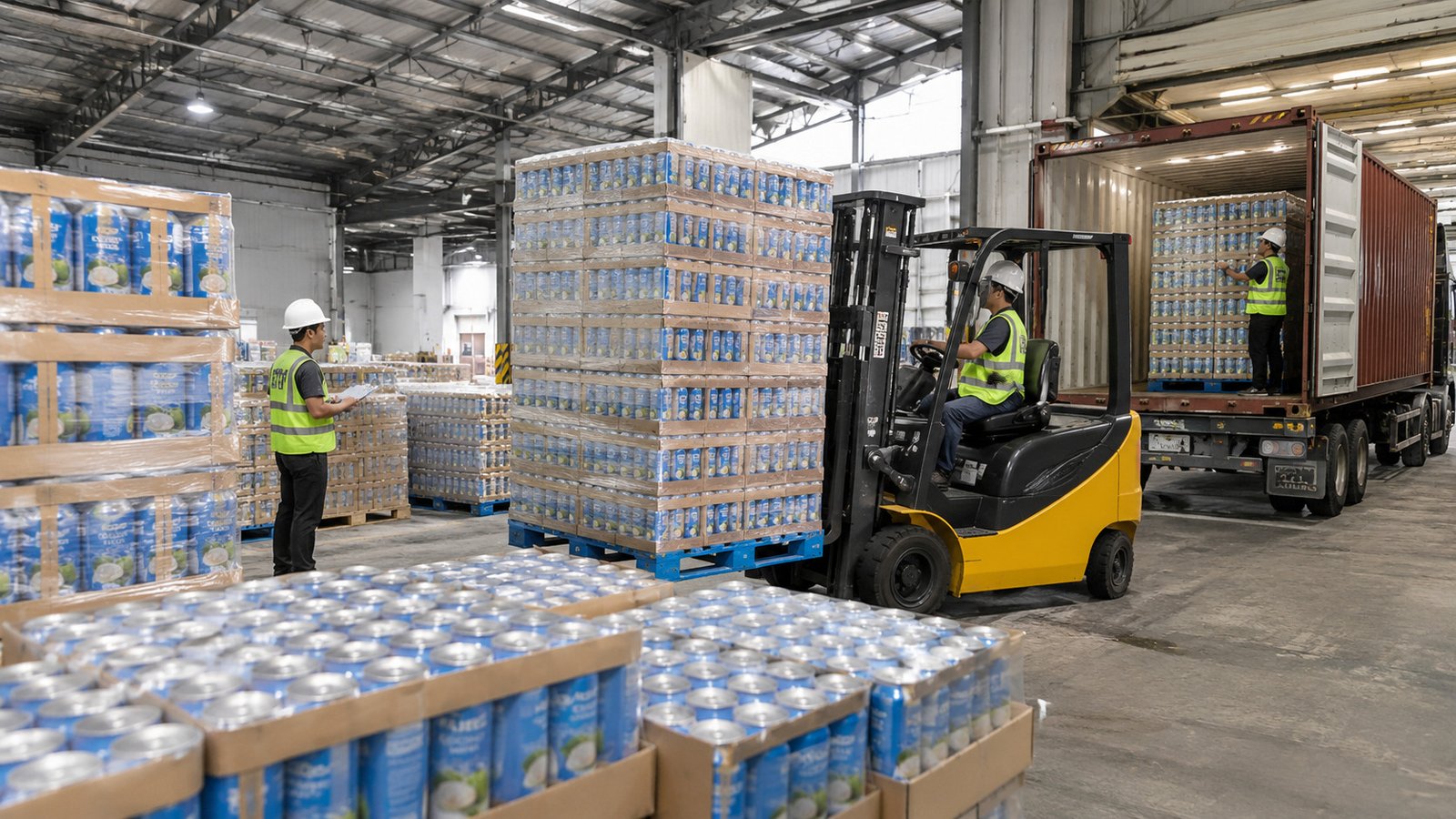
Private label is a real option, not just a talking point. One of the less-discussed advantages of sourcing from Vietnam is the depth of OEM capability. International buyers need a supplier who understands export operations: lead time discipline, packaging durability for long-distance shipping, clear documentation, and stable quality standards. Export success depends on details — carton strength, pallet configuration, container loading, and consistent labeling compliance. A trade company with direct factory relationships can coordinate these details on your behalf and serve as a single point of accountability for production quality, export documentation, and logistics coordination.
From our experience working with importers across Southeast Asia, the Middle East, and Europe, the buyers who move fastest and make the fewest costly mistakes are those who treat the supplier relationship as a partnership from day one — sharing target market information, shelf positioning goals, and volume projections early. That allows a knowledgeable supplier to recommend the right product specifications (sweetness level, can size, label language, certification scope) rather than simply fulfilling a generic spec.
The Category Window Is Open — But Not Forever

Natural beverage categories tend to follow a pattern: early adopters gain disproportionate shelf space and brand recognition, then the category gets crowded and margin pressure intensifies. Coconut water is past the early-adopter phase in major English-speaking markets but is still in early growth in Central Europe, the Middle East outside the GCC, Southeast Asian urban markets, and parts of Latin America.
The UK coconut water market dominated Europe in 2024, driven by robust consumer demand for health-oriented beverages and well-established retail infrastructure. That same trajectory is visible — but earlier-stage — in markets like Poland, Romania, and the Czech Republic. Importers who move into those markets now face a different competitive environment than those entering the UK or German market today.
The canned format, specifically, is where the most interesting white space exists. Most markets that have adopted coconut water are still primarily selling it in Tetra Pak. The premium canned format is underdeveloped relative to where consumer preferences are heading.
If you’re at the stage where you’re evaluating coconut water as a serious line addition — working through which markets to target, which format makes sense for your distribution channels, and what certification path your entry point requires — that’s exactly the moment where a conversation with an experienced coconut water supplier who understands both the product and the export mechanics can save you significant time and help you avoid the structural mistakes that often slow category launches down.