


 Français
 Español
 العربية
 한국어
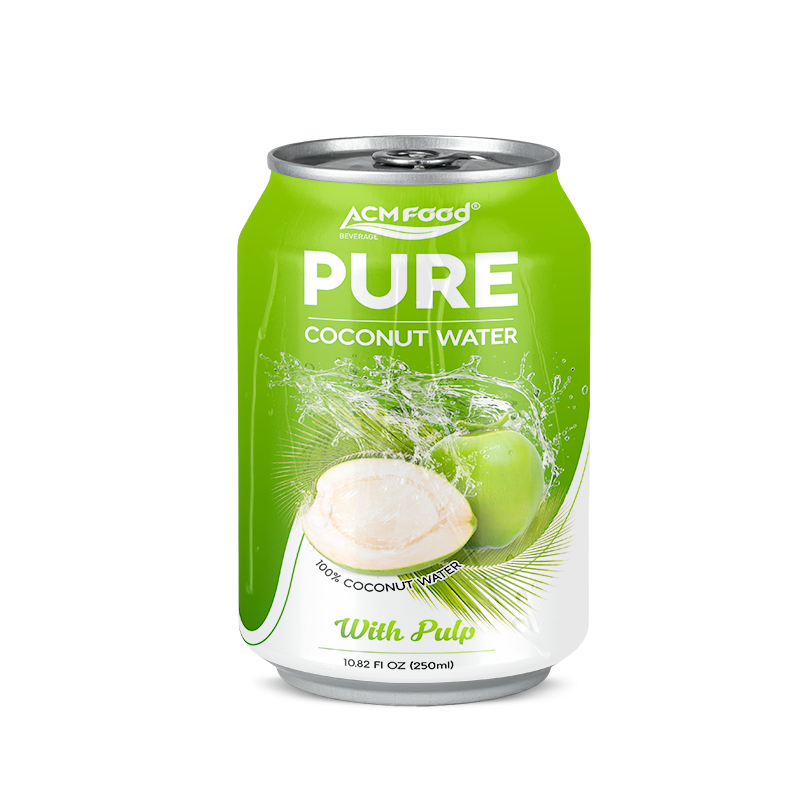
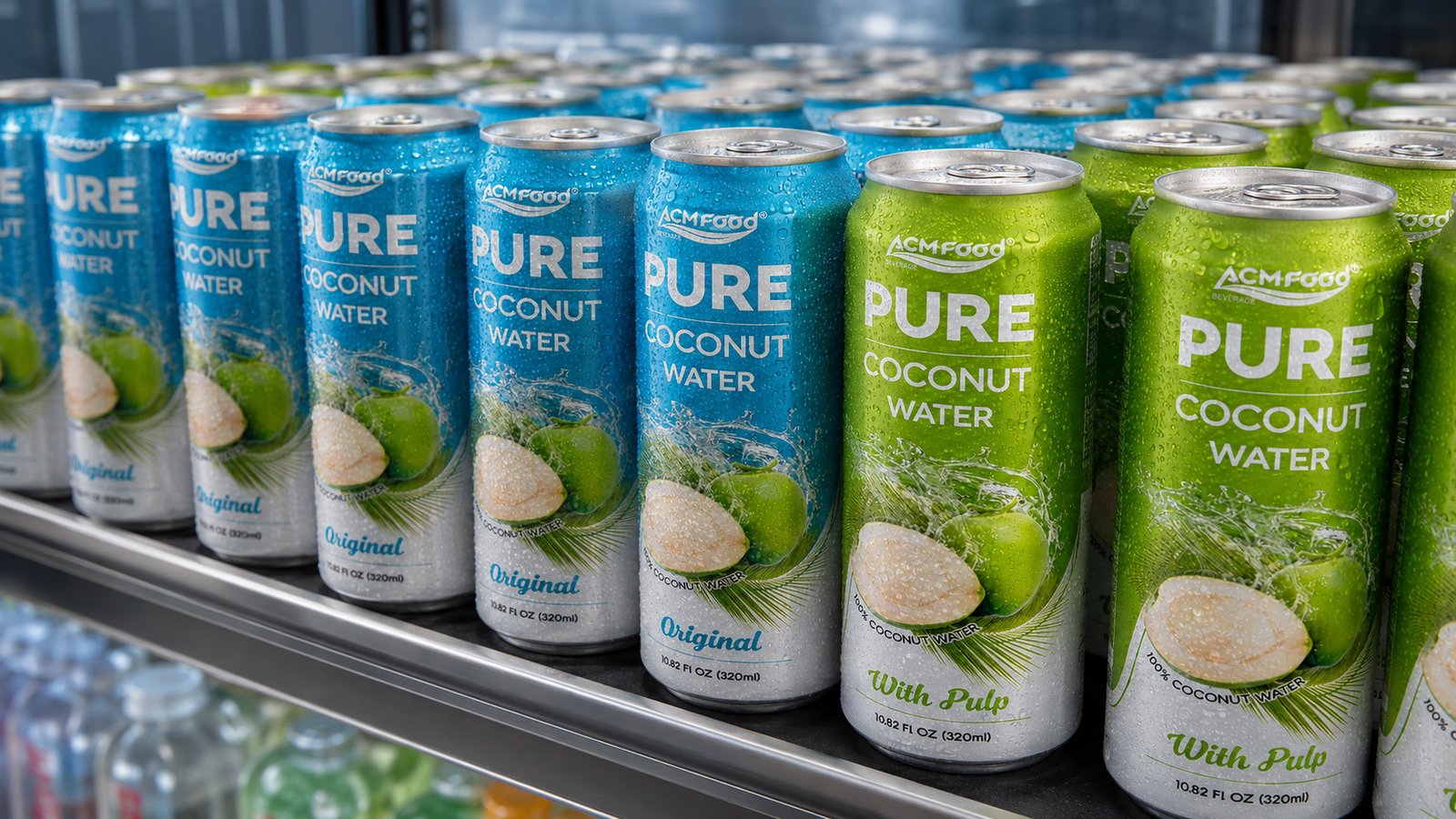
한국어Canned fresh coconut water is growing fast worldwide because it matches how health-conscious consumers now hydrate: natural electrolytes, no added sugar and a short label, in a portable can that protects flavour, travels well and is widely recyclable. It has moved from specialty shelves to the main beverage aisle in cities such as Dubai, London, Seoul and Los Angeles.
This guide explains what drives demand, how cans compare with other formats, and what importers should settle before committing to a first order.
What is driving global demand for canned coconut water?
The growth rests on lasting changes in consumer behaviour rather than a short trend, and market research firms forecast continued strong growth for packaged coconut water, with cans among the fastest-growing formats.
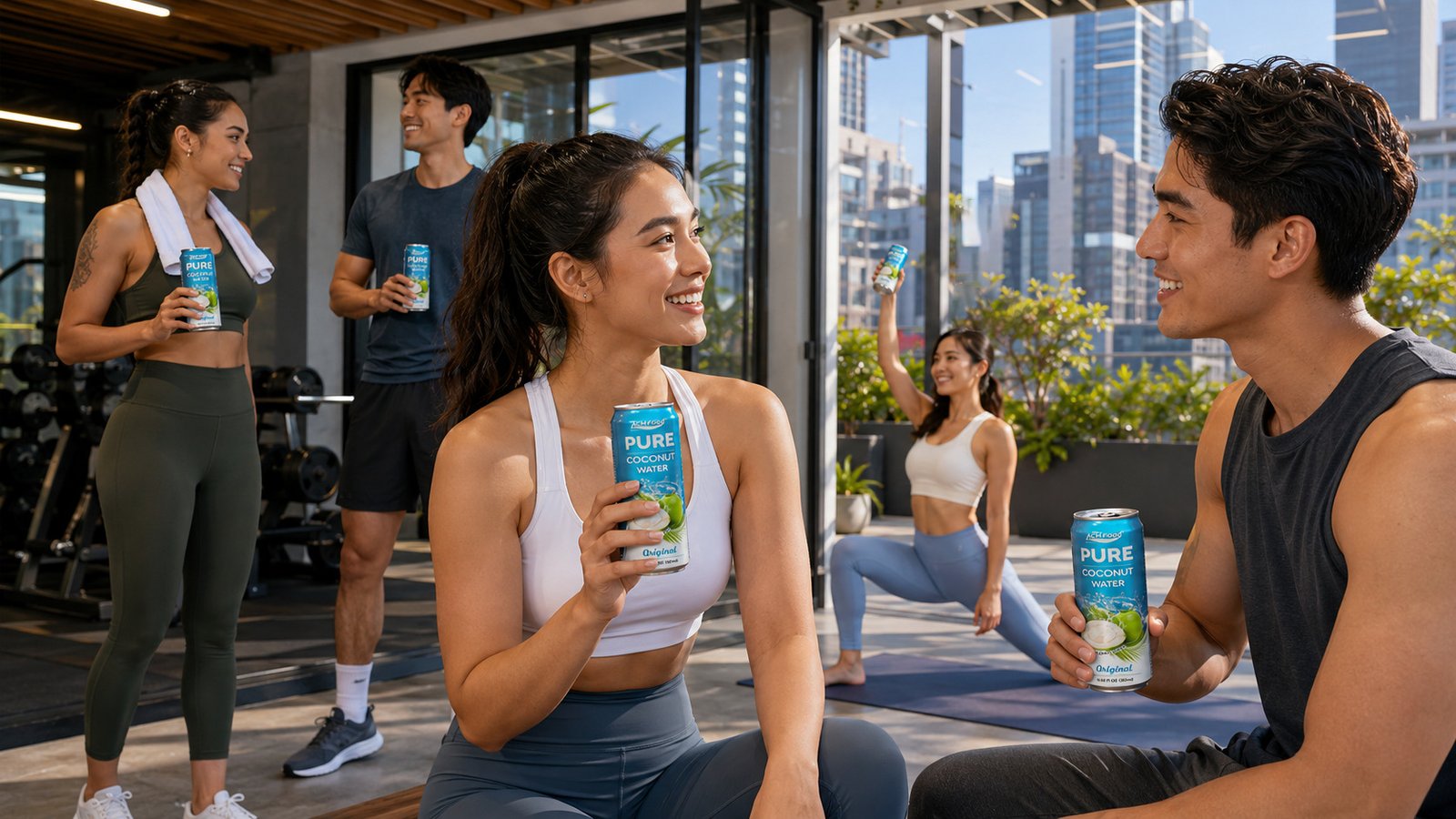
- Consumers: Millennials and Gen Z in North America and Europe buy coconut water as everyday hydration, the same group that made oat milk and kombucha mainstream.
- Clean label: natural electrolytes, no added sugar and recognisable ingredients.
- Can advantages: protection from light and air, light weight for transport, and recyclable aluminium.
- Shelf life: typically 12–18 months, giving importers time to clear customs and build distribution.
How do cans compare with cartons and PET?
Each format has a role; cans win in premium, convenience and on-the-go channels.
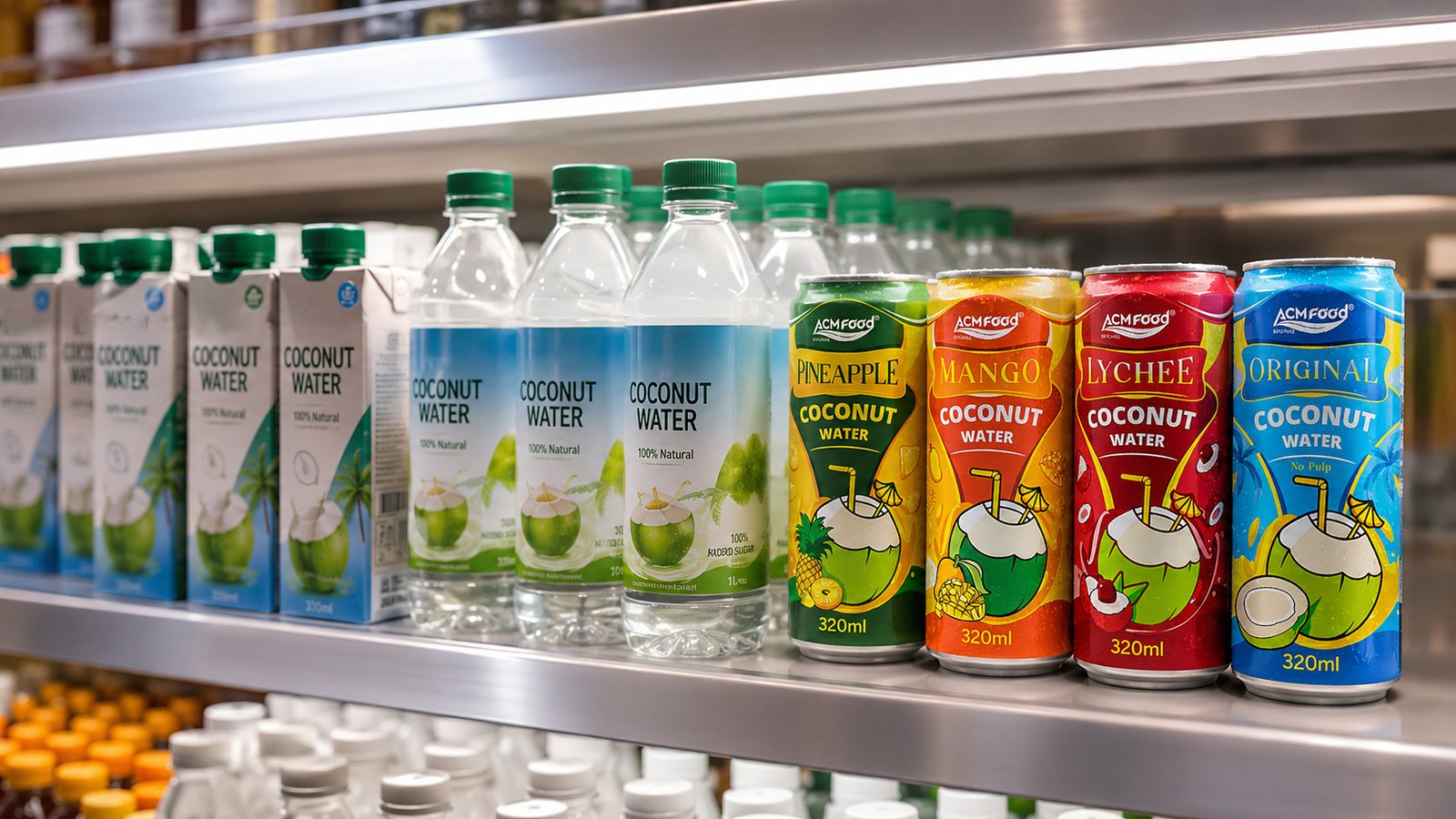
| Format | Where it performs best |
|---|---|
| Aseptic carton | Value retail and family packs; still the category’s volume workhorse |
| PET bottle | Markets with reliable cold chains and chilled positioning |
| Aluminium can | Premium retail, convenience stores, gyms, vending, airports, offices |
Cans are durable in transit, feel sealed and fresh, fit cup holders and bags, and photograph well for social media. Vietnam’s Mekong Delta supplies young coconuts at scale, and modern canning lines there run efficiently at container volumes.
What should importers know before committing?
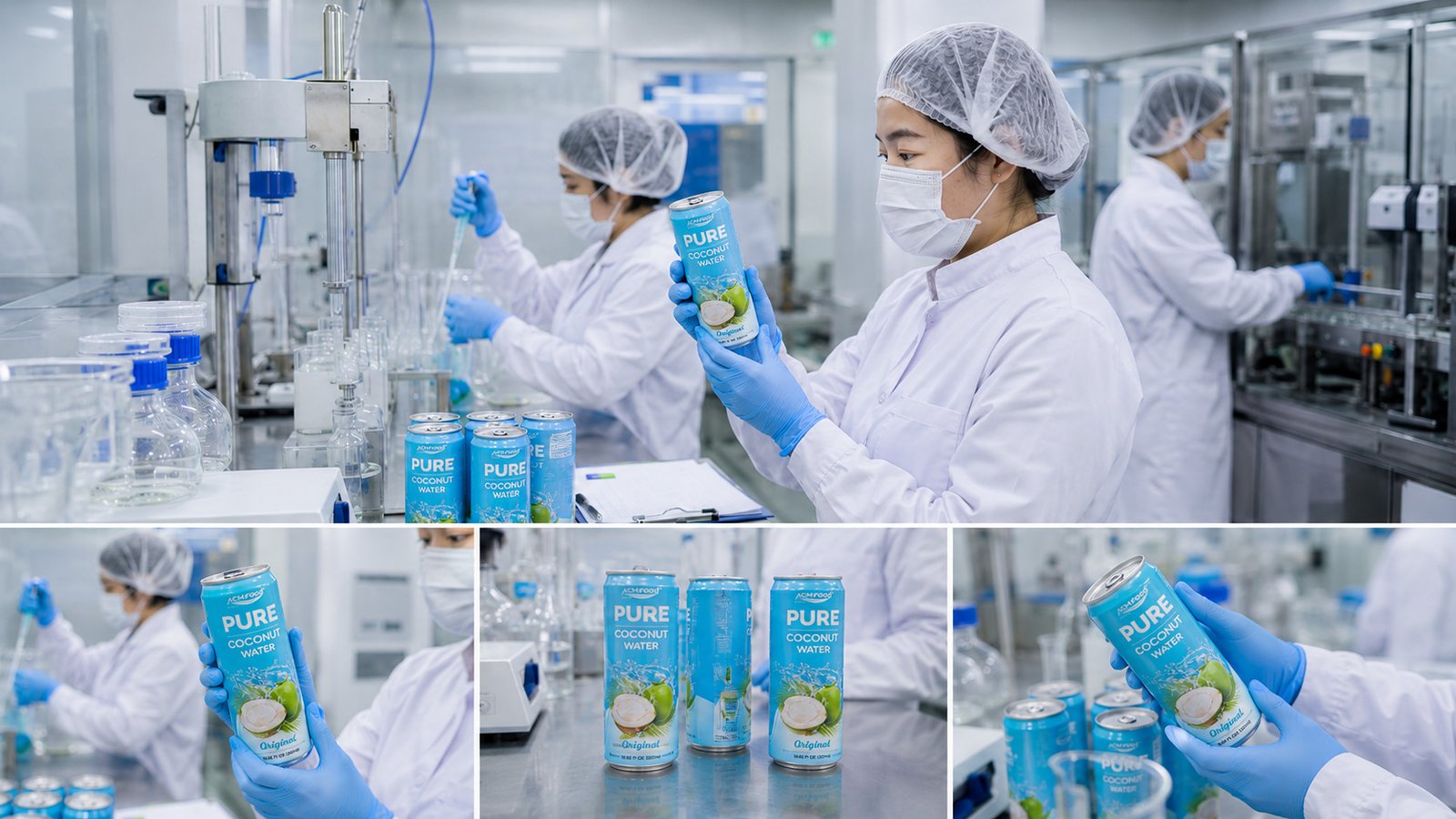
- Certifications first: FDA facility registration for the US, EU labelling and food safety requirements, Halal for the Gulf. Ask for documents before samples.
- Order size: at ACMFOOD, minimums start from 500 cartons per SKU, with several SKUs able to share a container. Order enough to cover initial placement, safety stock and the first replenishment, so you do not run out in month two.
- Lead time: allow for production, then roughly 20–35 days of ocean transit depending on the port. Plan your retail launch backwards from arrival.
- Private label: Vietnamese manufacturers offer deep OEM capability; share your target market, positioning and volumes early so the supplier can recommend sweetness, can size, label language and certification scope.
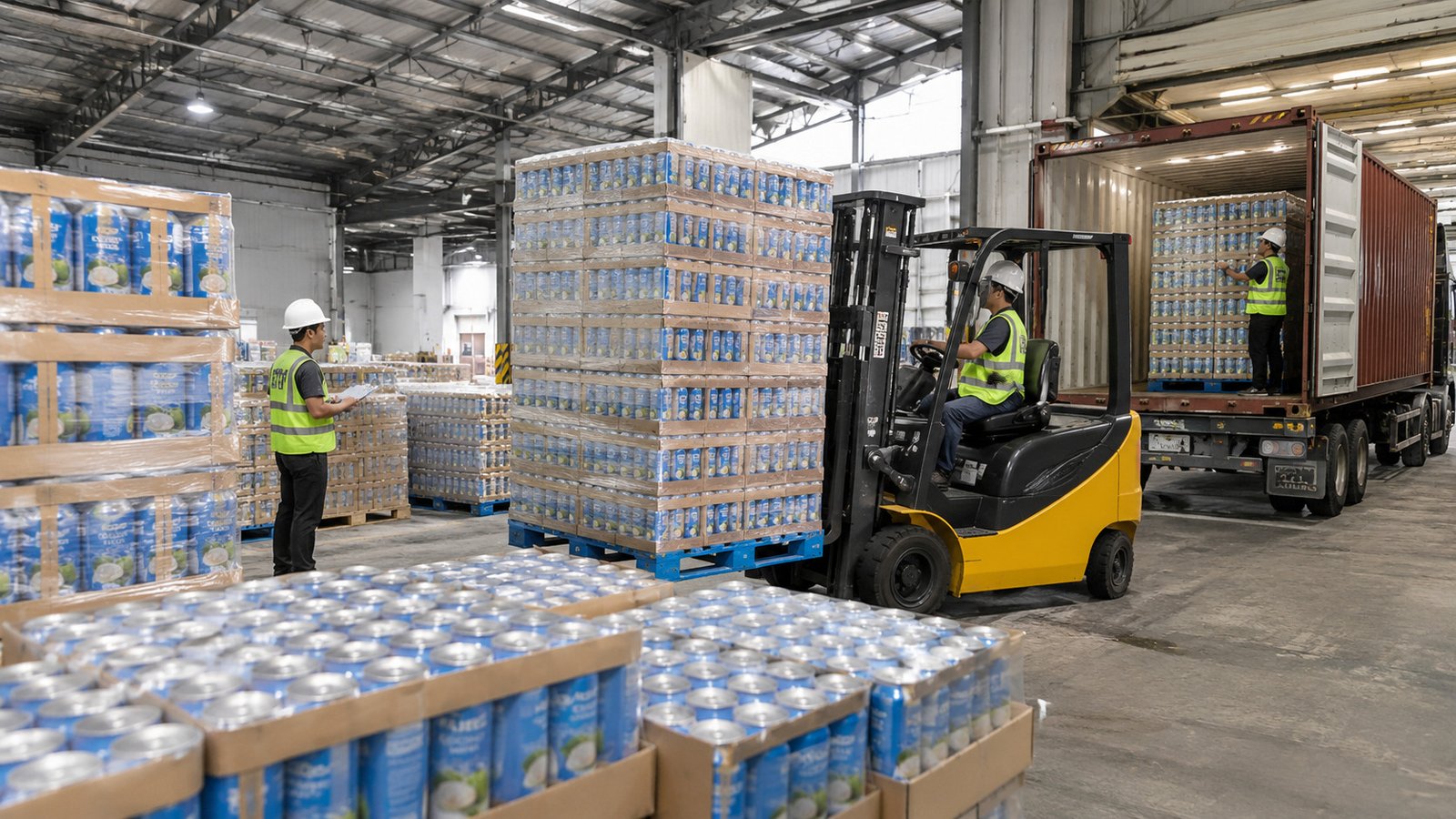
- Export details: carton strength, pallet pattern, container loading and consistent labelling decide how the product arrives.
Is there still room to enter the market?
Yes. Coconut water is mature in the major English-speaking markets but still early in Central Europe, parts of the Middle East, Southeast Asian cities and Latin America. Even where coconut water is established, most is sold in cartons, so premium canned coconut water remains underdeveloped relative to demand.
Frequently asked questions
How long does canned coconut water last?
Typically 12–18 months unopened, depending on processing and storage.
Why are cans growing faster than other formats?
They protect flavour, suit convenience and on-the-go channels, ship efficiently and are widely recyclable.
What certifications do I need to import canned coconut water?
It depends on the market: FDA registration for the US, EU food safety and labelling compliance, and Halal for the Gulf are the most common.
Conclusion
Canned fresh coconut water is growing because it fits modern hydration habits and modern retail channels. For importers, the opportunity is strongest in premium canned formats and in markets still early in the category, provided certification, order size and lead times are planned properly.
To discuss canned coconut water for your market, talk to an experienced coconut water supplier. See also beverage product capabilities, OEM beverage manufacturing services and private label beverages. To brief a concept, request a quote.
Request a quote