


 Français
 Español
 العربية
 한국어
한국어Buyers who search for best quality coconut water are rarely asking a vague question. They’re usually at a specific decision point: they’ve identified the category, they’ve seen the retail data, and now they’re trying to figure out whether the product they source will actually hold up — in transit, on shelf, and under the scrutiny of an increasingly quality-literate consumer base. That’s a precise question, and it deserves a precise answer.
Quality in canned coconut water isn’t a single variable. It’s a stack of decisions made at the farm, at the processing line, and at the packaging stage — and the gap between suppliers who get all three right and those who get two out of three right shows up clearly in market performance, return rates, and whether your retail buyer reorders.
What “Quality” Actually Measures in Coconut Water — and How to Verify It

The first thing worth establishing: coconut water quality is measurable. It’s not a subjective claim a supplier makes in a product brochure. The key parameters that define best quality coconut water in export contexts are Brix level (natural sugar content), pH stability, turbidity, microbial count post-processing, and electrolyte profile — specifically potassium, which is the nutrient your end consumers and retail buyers care most about.
Young green coconuts harvested at 7–9 months post-flowering hit a Brix range of approximately 4.5–6.5°, which represents the optimal balance of sweetness and electrolyte density. Harvest outside that window — too early or too late — and the flavor profile shifts noticeably. Potassium levels in properly harvested and processed coconut water should register between 150–200mg per 100ml. That number is commercially meaningful because it’s the figure that supports nutritional claims on label in the US, EU, and GCC markets, and it’s what health-focused retailers check when they’re evaluating whether to stock a new brand.
From our experience working with importers across three continents, the most reliable verification method isn’t a factory audit checklist — it’s a third-party lab test on a blind sample. Send a commercially representative can to an accredited food testing lab in your market (SGS, Eurofins, and Intertek all operate relevant programs), pay the $200–400 fee, and read the certificate. If the numbers match what the supplier quoted, you have a baseline. If they don’t, you’ve learned something important before you’ve committed to a container.
Why Origin and Processing Method Define the Quality Ceiling
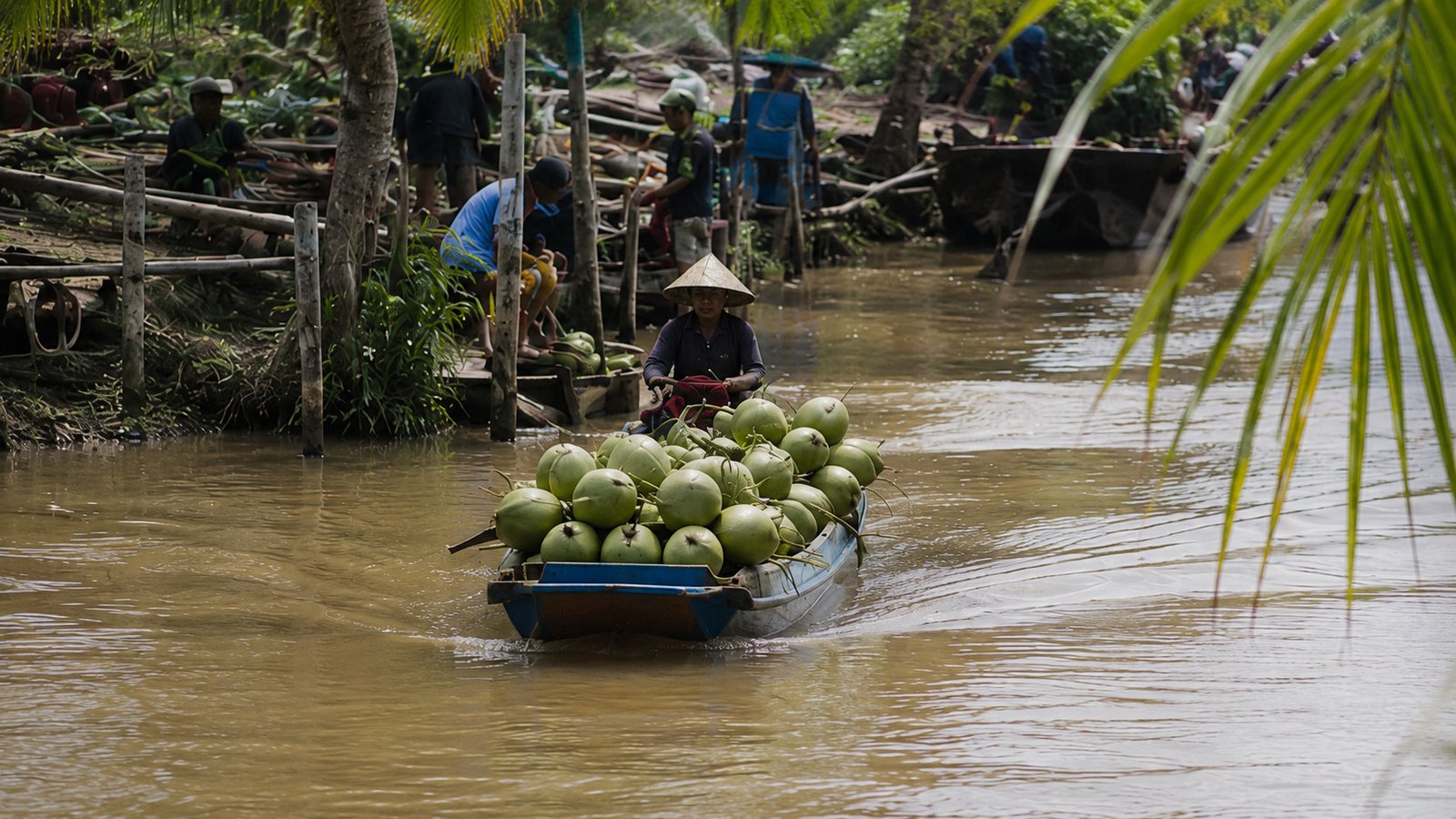
Geography matters here in a way that isn’t just sourcing nationalism. Vietnam — specifically the Ben Tre and Tien Giang provinces in the Mekong Delta — produces coconuts with a flavor profile that export markets consistently rate highly in blind sensory tests. The combination of alluvial soil, year-round growing conditions, and a harvesting tradition calibrated to the young-coconut stage produces raw material that starts closer to the quality ceiling.
But raw material is only half the equation. Processing method determines whether that quality is preserved or degraded. The two dominant technologies for canned coconut water are high-temperature short-time (HTST) pasteurization and aseptic cold-fill processing. HTST is faster and cheaper; it also introduces a mild cooked note to the flavor that experienced tasters detect and that shows up in consumer reviews as “slightly flat” or “not fresh-tasting.” Aseptic cold-fill — where the liquid is flash-pasteurized at a higher temperature for a shorter duration and then filled into pre-sterilized cans in a sterile environment — preserves the fresh, slightly sweet, faintly mineral character that defines best quality coconut water in the eyes of premium retail buyers.
The factories we work with in Vietnam have invested in aseptic lines specifically because the export markets they supply — premium supermarket chains in Western Europe, health food distributors in North America — have buyers who can tell the difference in a tasting panel. That investment shows up in the price: aseptic-processed canned coconut water runs roughly 12–18% higher per carton than HTST equivalents from the same origin. Whether that premium is worth absorbing depends entirely on your channel. For mass-market food service or economy grocery, HTST may be perfectly adequate. For any retail positioning above mid-market, the quality gap matters and your buyers will notice it.
The Commercial Realities Importers Need to Factor In
Let’s talk about what actually determines whether a best quality coconut water import project succeeds commercially — because quality certification and retail performance are necessary conditions, not sufficient ones.
Shelf life is the first practical constraint. Properly processed, nitrogen-flushed canned coconut water from a well-run Vietnamese factory achieves 12–18 months ambient shelf life. That sounds comfortable until you factor in transit time (18–25 days sea freight from Ho Chi Minh City to Rotterdam or Los Angeles), customs clearance (add 3–7 business days for a clean shipment, longer if documentation is flagged), and distributor holding time before the product reaches retail. A 15-month shelf life sounds generous; by the time the product is on a retail shelf, you may have 10 months of effective sell-through window remaining. Plan your ordering cycle accordingly, and ask your supplier for production date documentation — not best-before date — so you know exactly what margin you’re working with.
Minimum order quantities are the second constraint that catches first-time importers off guard. High-quality factories with full certification stacks — BRC, FSSC 22000, FDA registration, and relevant Halal/Kosher accreditation — rarely accept trial orders below 500 cartons per SKU. A more typical first order for a serious buyer runs 1,000–2,000 cartons, which fills roughly half to one full 20-foot container. The economics of that volume work when your unit economics are correct; they punish you when they’re not. If your landed cost including freight, duty, and customs brokerage puts the product at a price point where you can’t achieve at least 35% gross margin at wholesale, the category math doesn’t work regardless of how good the product is.
Certification timelines are the third variable — and the one most likely to create friction between your commercial timeline and your actual first shipment. If you’re importing into a market where your distributor or retail partner requires specific certification documentation (BRC Grade A for most major UK multiples, for example, or specific EU labeling compliance for markets with strict nutritional declaration requirements), verify that your chosen factory holds those certifications before signing a supply agreement, not after. Obtaining a BRC certification from scratch takes 4–6 months minimum. A factory that tells you they’re “in process” is telling you something important about their readiness to serve your market now.

What we’ve found is that buyers who move fastest through the qualification stage are those who come in with a clear channel brief: they know their retail partner, they know the certification requirements that partner demands, and they know their target retail price. With that information in hand, it takes 2–3 weeks of active supplier evaluation — not 3 months — to identify which factories can actually deliver what’s needed.
Reading the Market: Where Best Quality Coconut Water Is Gaining Ground
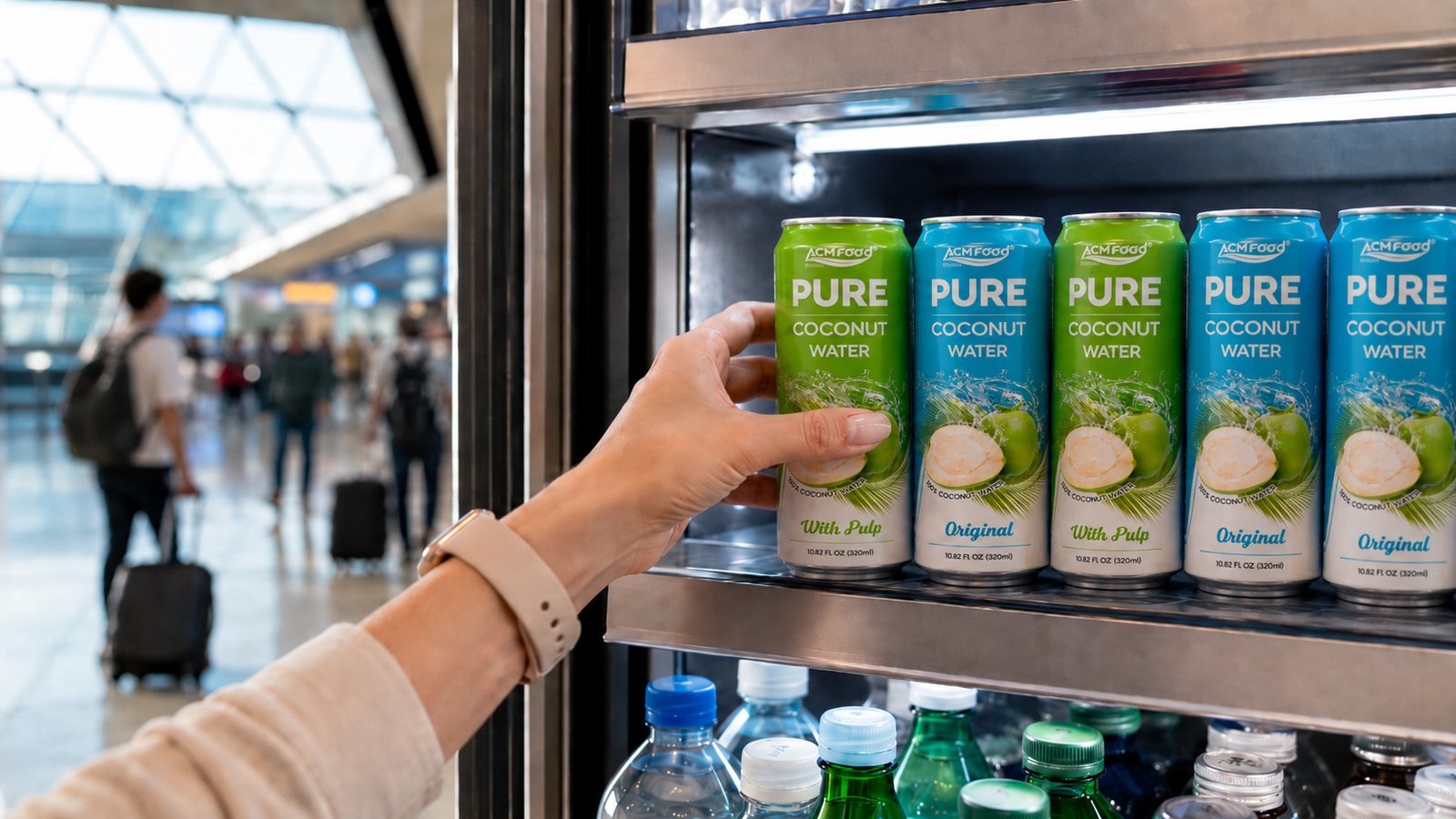
The category dynamics are worth understanding because they affect which quality tier makes sense for your specific entry point.
The global coconut water market crossed $7 billion in retail value in 2024, growing at roughly 14% compound annual growth rate over the preceding five years. That figure means something specific: this is a category that has moved past early-adopter status and into mainstream grocery in most developed markets, which changes the competitive dynamic. In 2018, stocking coconut water on shelf was a differentiation play for a retailer. In 2026, it’s a category management decision — meaning buyers at major chains are actively managing range, rotating out underperformers, and paying attention to unit-level velocity data.
For importers, that shift creates a specific opportunity and a specific risk. The opportunity: retail buyers are actively looking for quality differentiation at competitive price points, because the early wave of premium-priced brands has created price anchors that leave room for quality-equivalent products at more accessible retail prices. The risk: that same buyer scrutiny means a product that doesn’t perform on sensory quality — that tastes slightly cooked, or has visible turbidity, or feels thin on the palate — gets delisted faster than it used to.
The markets showing strongest growth for imported canned coconut water in 2025 and into 2026 are the GCC (particularly UAE and Saudi Arabia, where health beverage penetration is accelerating rapidly), Central and Eastern Europe (Poland and Czech Republic specifically, where natural beverage categories are growing faster than Western European equivalents), and food service channels in Southeast Asia serving the international hospitality sector. Each of these markets has slightly different quality and certification expectations, but all three reward consistent product quality over time in ways that build re-order volume — which is ultimately what makes an import program sustainable.
A Practical Note on Supplier Relationships
One thing that doesn’t show up in sourcing guides but matters enormously in practice: the quality of the commercial relationship with your supplier affects product quality over time. Factories prioritize their best-performing customers — not just by volume, but by the quality of communication, the predictability of orders, and the degree to which the buyer treats the relationship as a partnership rather than a pure price negotiation.
The importers we work with who consistently receive best quality coconut water across multiple shipments are those who’ve invested in understanding their factory partners’ production constraints — seasonal raw material variation, capacity scheduling around peak export periods (typically October through March for Vietnamese coconut processors), and the lead times required to secure specific can specifications or custom labeling. A buyer who understands those constraints and plans around them gets better results than one who places orders on 3-week lead times and then escalates when quality slips.
We position ourselves specifically as a bridge between that operational reality at the factory level and the commercial expectations of import buyers — because the translation work between those two worlds is where most quality problems originate, and where most of them can be prevented.
If you’re at the stage where you’ve done the category research, you understand your target market’s quality requirements, and you’re now trying to identify which suppliers can actually deliver consistently at the specification you need — that’s precisely the stage where a frank, no-sales-pitch conversation about the sourcing landscape is most useful.
The questions worth discussing with a coconut water manufacturer are often highly specific: which certification setup aligns with your retail partner’s requirements, what processing technology best supports your market positioning, and what order volume and shipment frequency make commercial sense across the supply chain. These aren’t one-size-fits-all decisions. They depend on your target channel, your destination market, and the business model you’re building.
If any of that maps to where you are right now, we’re happy to have that conversation.
Turning a trend into a product
For the categories, formats and ingredients the factory can actually run, see beverage product capabilities. For how contract production is structured, see OEM beverage manufacturing; to launch under your own label, see private label beverages. To brief a concept, request a quote.
Request a quote