


 Français
 Español
 العربية
 한국어
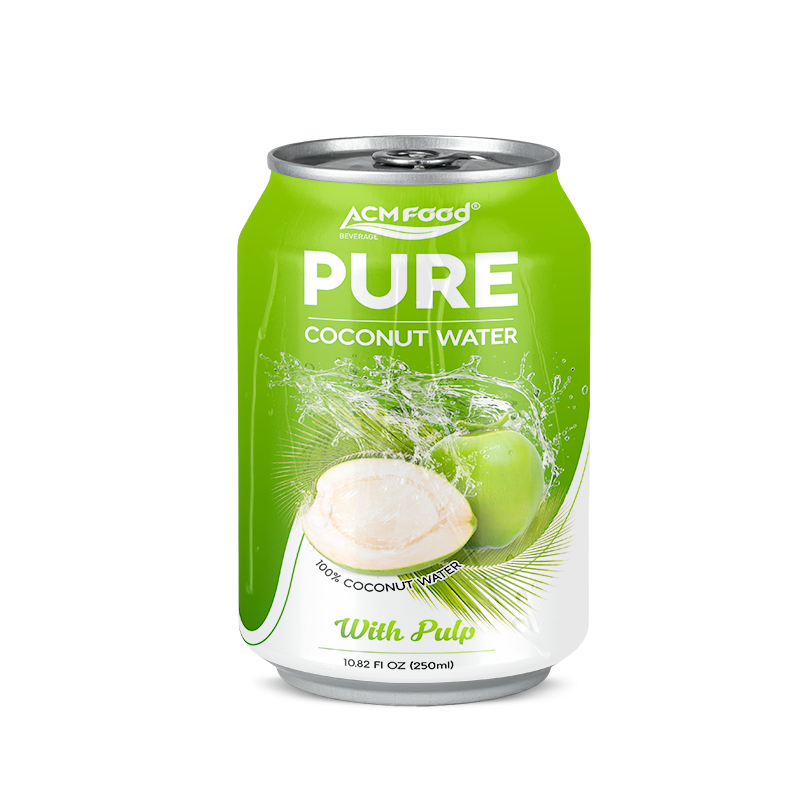
한국어The ready-to-drink beverage industry has been waiting for a product that could sit at the intersection of natural hydration and the sensory experience that sparkling water and soda have long owned. Carbonated coconut water is that product. It combines the clean-label credentials of traditional coconut water — natural electrolytes, no artificial additives, low calorie count — with the effervescence that drives impulse purchases at checkout aisles, gym vending machines, and convenience store coolers worldwide.
If you’re evaluating this category for import or distribution, the timing of that evaluation matters more than most people realize.
Why Carbonated Coconut Water Is Capturing a Different Kind of Buyer

Traditional still coconut water built its audience through health channels — sports nutrition, organic retail, wellness-oriented grocery. That audience is real and valuable, but it’s also relatively defined. Carbonated coconut water opens a second and considerably wider door: the consumer who drinks sparkling water or flavored soda and wants something that feels better about themselves for doing it.
This isn’t a minor distinction. The global RTD beverage market is projected to reach USD 315 billion by 2030, growing at a CAGR of 6.8%. Within that, the packaged coconut water segment alone was valued at USD 7.67 billion in 2023 and is projected to reach USD 22.91 billion by 2029 — a CAGR of 20%. That number reflects the broader coconut water category. The carbonated sub-segment, though smaller today, is growing faster than the base category because it appeals to a consumer who previously had no reason to choose coconut water.
Think about the shelf decision a consumer makes when choosing between a sparkling water, a craft soda, and a carbonated coconut water. The sparkling water offers no functional story. The soda carries sugar guilt. Carbonated coconut water positions itself as “the drink that’s actually doing something for you” while still delivering the bubbles and the refreshing sensation people associate with their favorite fizzy drinks. That framing is why brands like ZICO and Thirsty Buddha have moved aggressively into this format. When larger players invest in a sub-category, it signals that consumer pull is real and growing — not experimental.
The data from early movers supports this. Coaqua, a mid-market brand that introduced a sparkling variant alongside several flavored lines, reported 60% year-over-year growth in its Sprouts retail channels after adding the sparkling format to its portfolio. One SKU, meaningfully incremental growth. That’s the kind of signal that importers and distributors should pay attention to.
What Separates a Good Carbonated Coconut Water From a Forgettable One
This is a question that rarely gets answered directly in category overviews, so let’s be specific about it.
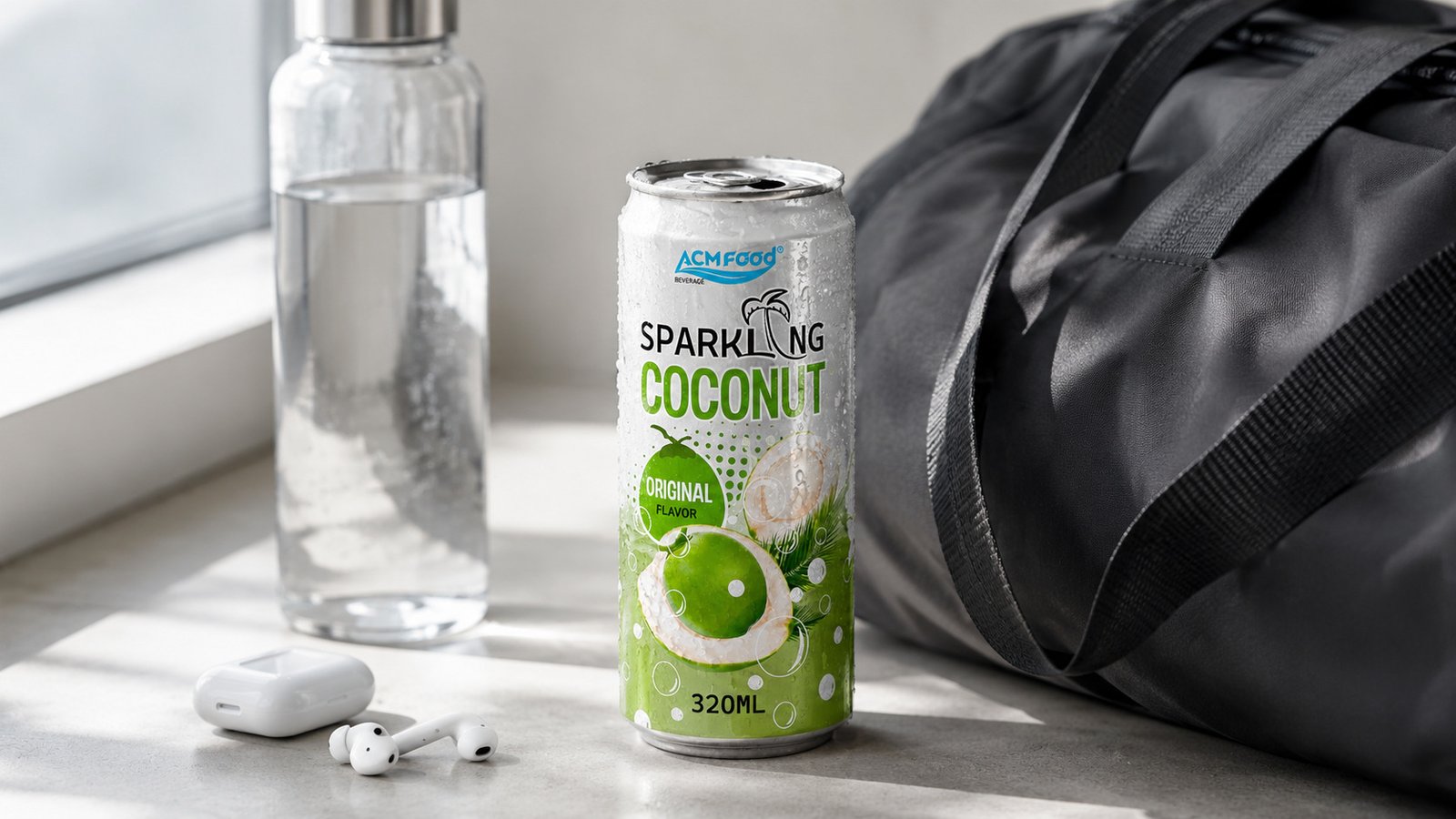
The core technical challenge with carbonated coconut water is that carbonation amplifies everything — including off-notes. Still coconut water can be processed to a point where minor flavor variations are masked. Carbonated coconut water cannot. The bubbles carry flavor compounds to the palate faster and more intensely, which means that the quality of the base ingredient matters far more in the sparkling format than in the still format. Coconuts from different growing regions produce water with meaningfully different flavor profiles. The Mekong Delta in Vietnam — particularly the provinces of Ben Tre, Trà Vinh, and Tiền Giang — is recognized for producing young coconuts whose water is naturally sweeter and less acidic than coconuts from many other producing countries. That baseline sweetness matters when you’re adding carbonation, because it reduces the need to compensate with added sugar or flavor masking agents, and it keeps the ingredient list clean.
The second variable is carbonation level. This is a product decision that many importers leave entirely to their manufacturer, and that’s a mistake. Carbonation level affects perceived mouthfeel, how quickly the product goes flat after opening, and how well the product survives distribution conditions — temperature fluctuations during transit, altitude changes during air freight, and handling variability in wholesale environments. Vietnamese manufacturers with OEM capability will typically offer customization of carbonation levels, which allows importers to calibrate the product to their target channel. A product going into premium fitness retail can carry a lighter carbonation that reads as “natural and gentle.” A product targeting convenience channels or younger demographics benefits from a more assertive fizz that competes directly with energy drinks.
The third consideration is packaging format. Carbonated coconut water in an aluminum can holds carbonation reliably through a 24-month shelf life, which is the format most operators in Vietnam’s export-oriented factories are optimizing for. Glass bottles carry a premium perception but add weight and fragility cost to international logistics. PET bottles work for domestic markets with strong cold-chain infrastructure but are less ideal for long-distance container shipping where temperature control is inconsistent. From a B2B logistics perspective, the aluminum can is the pragmatic choice for most import scenarios — and it’s the format that is growing fastest in convenience and off-trade retail internationally.
What Importers Need to Get Right Before They Place an Order
The commercial reality of bringing a carbonated coconut water to a new market involves several moving parts that are easy to underestimate from the outside. From our experience working with importers across Europe, the Middle East, and Asia-Pacific, the buyers who launch successfully have typically done their homework on four specific areas before placing their first container order.
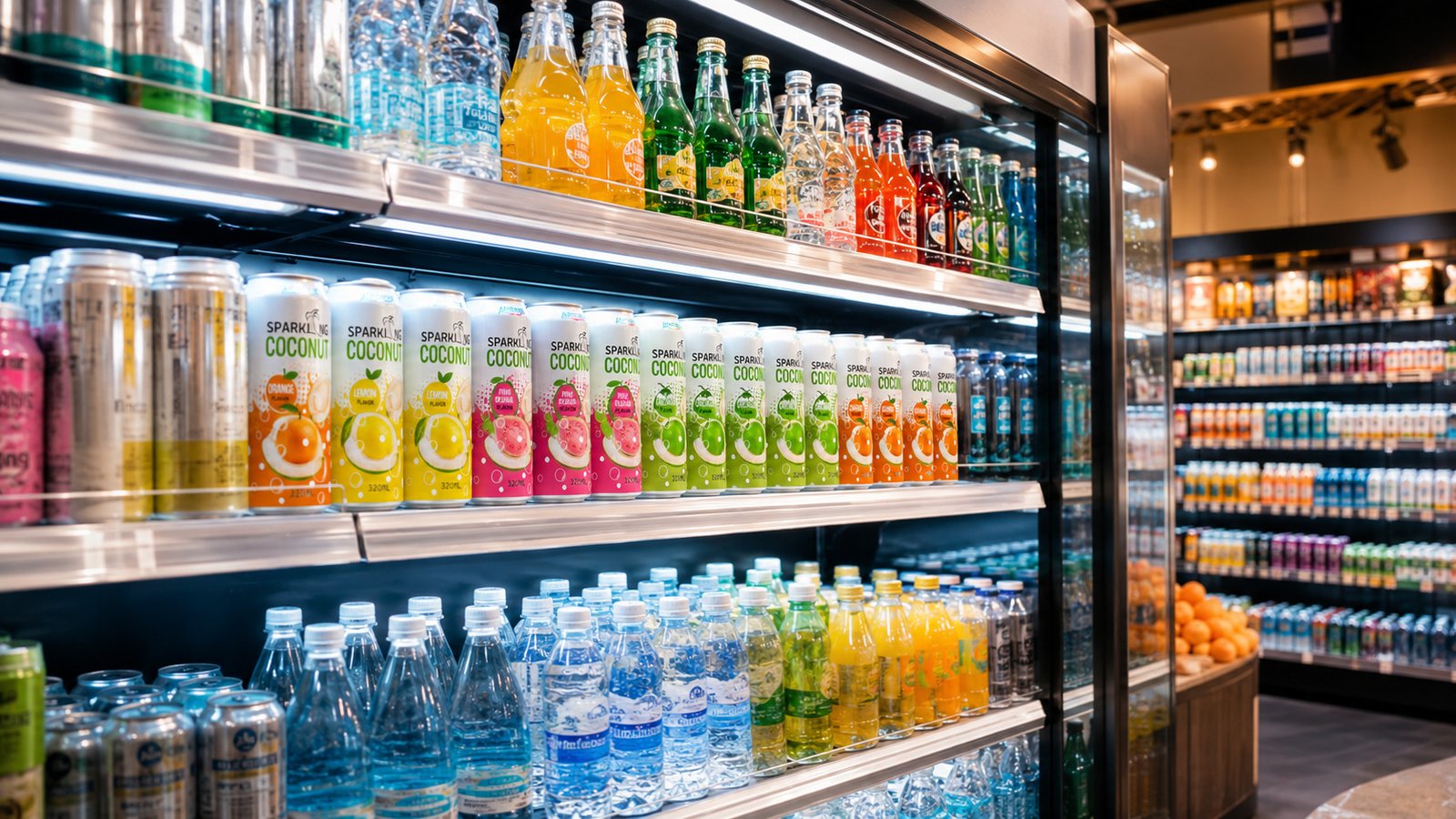
Regulatory fit comes before product selection. Carbonated beverages face scrutiny at customs across many markets that differs from still beverages. Some markets impose specific labeling requirements for carbonated drinks — carbonation level disclosures, sugar content thresholds that trigger different tax treatment, or health claim restrictions that vary between EU member states. If your target market applies an excise or “soda tax” and the product has no added sugar, you need documentation proving that clearly from the manufacturer. That documentation needs to be in the format your customs authority accepts, not just in a generic export certificate.
Carbonation stability during transit is a real variable, not a given. A well-specified product with a reliable carbonation level leaving Ho Chi Minh City port can arrive in Rotterdam or Jeddah with inconsistent pressure if the temperature management during transit was poor. Reputable Vietnamese export partners will specify storage and transit temperature ranges in their documentation, and experienced importers will confirm container booking with reefer options where climate dictates. This isn’t a minor operational detail — inconsistent product quality on first arrival can damage retail buyer relationships before your brand has built any equity.
MOQ and container economics need to be modeled before committing. A standard MOQ for carbonated coconut water from a Vietnamese OEM manufacturer typically starts at one 20-foot container. At a 330ml can format packed in 24-can cartons, that translates to approximately 18,000 to 22,000 units depending on carton stacking configuration. For a market launch into organized retail, that’s a reasonable first-placement quantity if you’re entering three to five SKUs across a small chain. For a single-SKU market test in foodservice or HORECA, it may be more than you can place efficiently without excess inventory aging. The solution is to build the channel plan before finalizing the order size, not after.
Private label decisions affect your long-term margin profile. Working with a trade partner who has direct access to certified Vietnamese factories allows importers to launch a private label product that carries their own brand from day one, rather than being locked into distributing another manufacturer’s brand with limited pricing control. The economics of private label carbonated coconut water improve significantly at scale — but the upfront investment in label design, certification documentation for your specific market, and retailer listing fees needs to be modeled against your first-year volume projections. Factories in Vietnam with full OEM capability — including custom carbonation levels, flavor variants, and packaging format flexibility — make this route increasingly accessible even for buyers placing their first container.
One practical note on certification timelines: if you need HALAL certification for Gulf markets or USDA Organic for the US, factor four to eight weeks into your pre-launch timeline specifically for certification documentation. This is a step that regularly surprises first-time importers and delays launches that were otherwise well-planned. Factories aligned with serious export partners will typically hold these certifications already — but verify the specific certification body and scope before assuming it covers your destination market.
The Window in This Category Is Narrowing, Not Widening
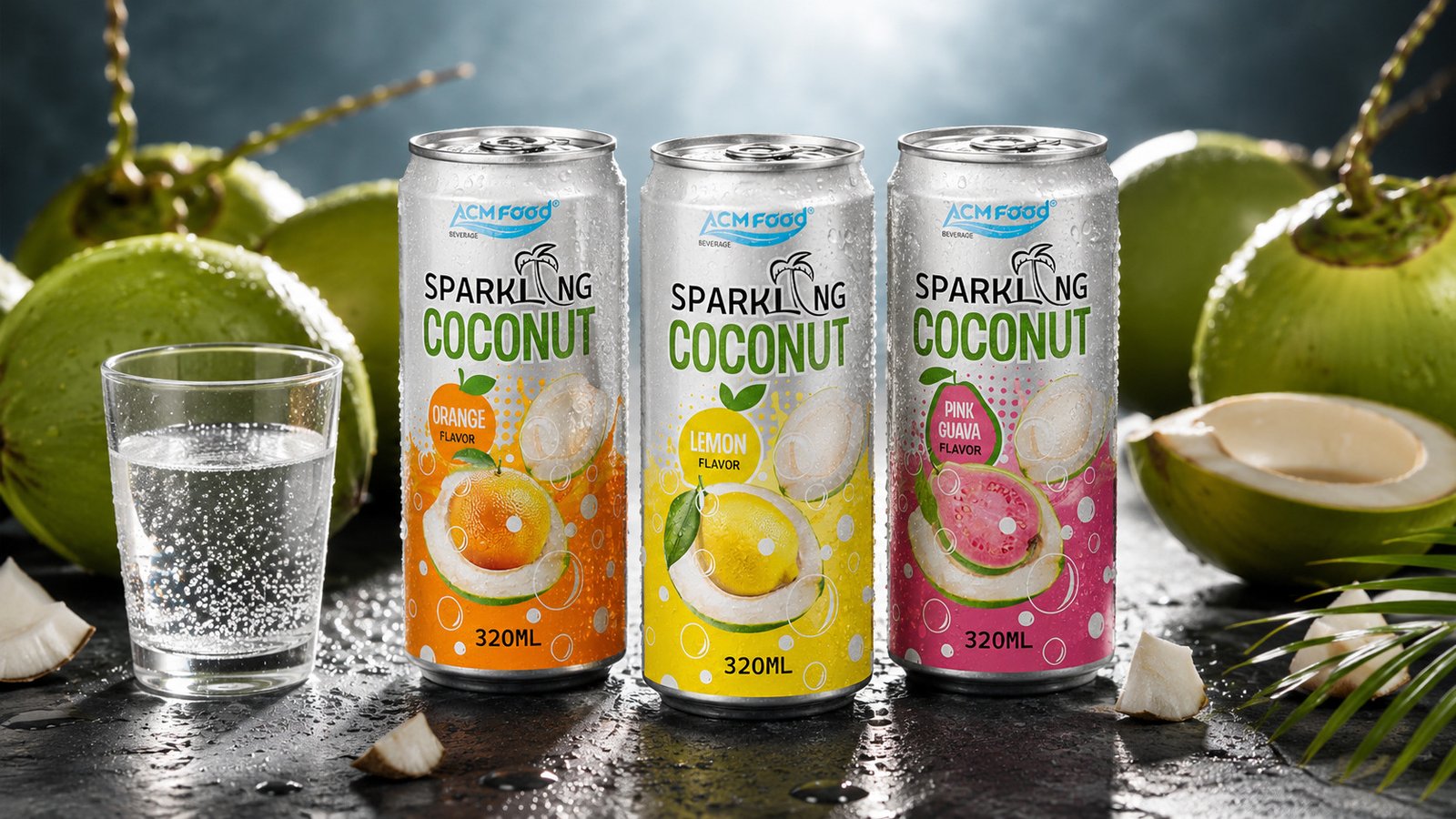
Still coconut water has reached broad retail distribution in North America, the UK, Australia, and the GCC. The category is maturing in those markets — not declining, but increasingly competitive, with shelf space allocated and margin pressure building. Carbonated coconut water is about 18 to 24 months behind that trajectory in most of those same markets. In Central and Eastern Europe, Southeast Asian urban centers, and parts of Latin America, it is earlier still.
That gap represents real opportunity for importers who move with intention rather than speed — who take the time to source from the right manufacturing partners, calibrate the product to their specific market, and build retail relationships before the category becomes crowded. Waiting for carbonated coconut water to “prove itself” in your market usually means waiting until the profitable entry window has already closed.
If you’re at the stage where you’re seriously evaluating carbonated coconut water as an addition to your portfolio — mapping which channels make the most sense, which format and carbonation profile fits your target consumer, and what the certification path looks like for your destination market — that’s precisely the moment where a conversation with an experienced carbonated coconut water supplier who understands both the product and the export mechanics can compress your timeline significantly and help you avoid the structural mistakes that slow category launches down.
Turning a trend into a product
For the categories, formats and ingredients the factory can actually run, see beverage product capabilities. For how a recipe moves into production, see contract beverage manufacturing; to launch under your own label, see private label beverages. The processing routes available are set out in processing technology. To brief a concept, request a quote.
Request a quote