


 Français
 Español
 العربية
 한국어
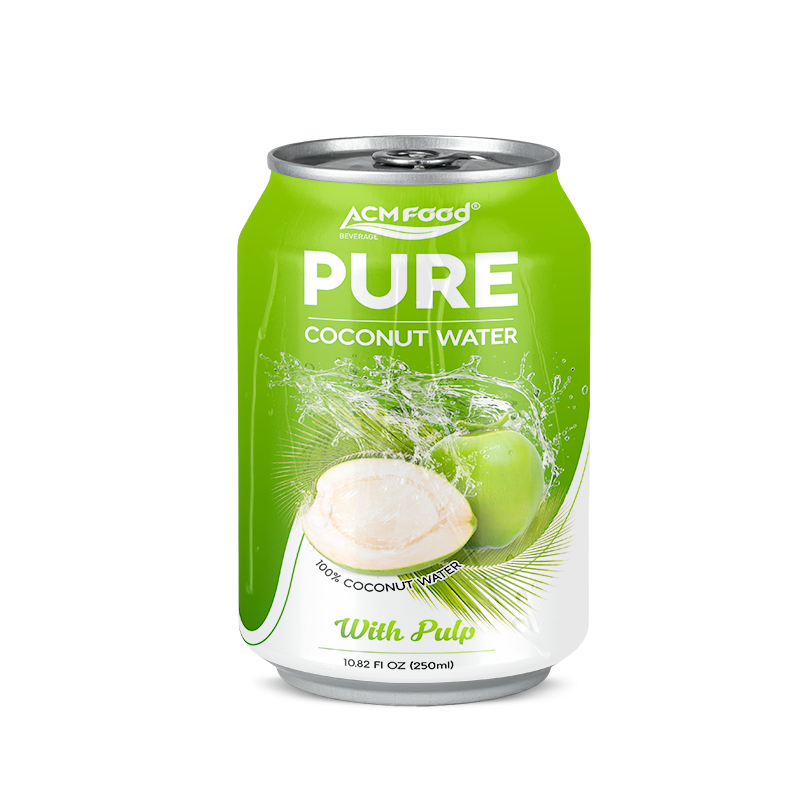
한국어The global market for pure coconut water has matured significantly — and that maturation is exactly what makes 2026 a more interesting moment to enter than 2025 ever was. When buyers come to us asking about sourcing canned coconut water from Vietnam, they’re rarely asking “does demand exist?” They already know it does. What they actually want to know is: where are the real sourcing risks, what does a defensible supply chain look like, and how do you avoid paying for mistakes that someone else already made?
Those are the right questions. Let’s work through them.
What “Pure” Actually Means on a Label — and Why It Matters to Your Buyers
There’s a quiet confusion in this category that costs importers money downstream. In most major markets — the US, EU, Australia, and increasingly the GCC — “pure coconut water” on a label carries a specific regulatory implication: no added sugar, no preservatives, no reconstituted concentrate. It means the liquid came from young green coconuts and was processed minimally before canning. That sounds simple. In practice, the gap between what a supplier calls “pure” and what your target market’s food authority will certify as such can be significant.
From our experience working with importers across Europe and North America, the most common sourcing friction point isn’t price. It’s documentation misalignment. A factory may produce a genuinely clean product — no additives, fresh-pressed — but if their process doesn’t meet the specific traceability and testing standards of your target market, the shipment sits in a port warehouse while you sort it out. That delay typically costs more than the price difference you negotiated in the first place.
The practical implication: before you lock in a supplier, get a sample of their existing export documentation. Not a promised template. Actual certificates issued for real shipments — FDA registration, EU food safety compliance records, Halal or Kosher if relevant to your market. A factory that exports regularly will have these on file. One that’s new to export will not.
Vietnam as a Sourcing Origin: The Commercial Reality Behind the Geography
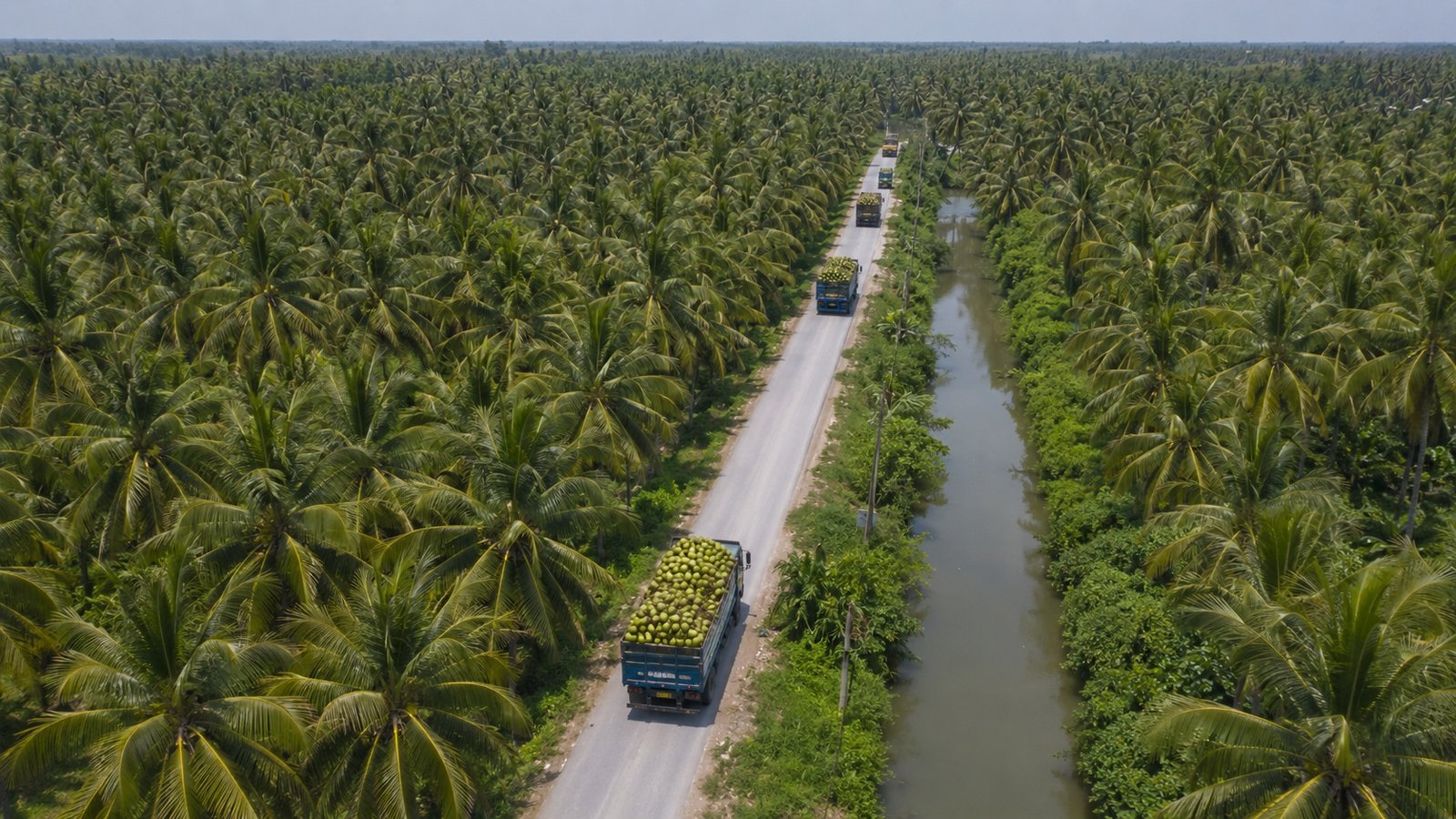
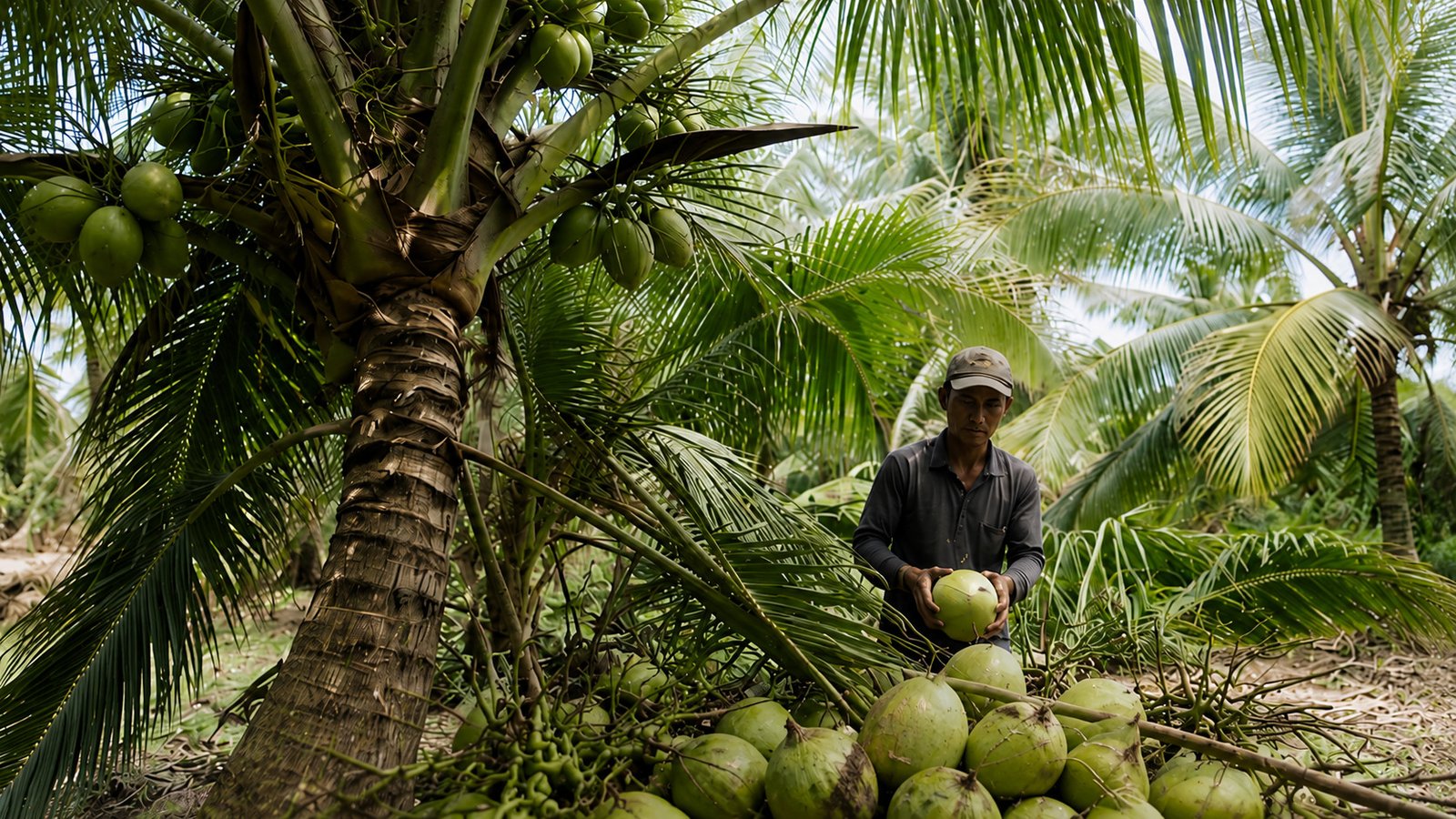
Vietnam has become one of the most competitive origins for canned coconut water, and there are structural reasons for that — not just marketing. The Mekong Delta region, particularly Ben Tre province, accounts for a disproportionate share of global coconut production. The coconuts are harvested young, when electrolyte content peaks and natural sweetness is balanced without additives. Proximity from farm to processing facility is often under 50 kilometers, which matters for freshness before thermal processing.
But geography is only part of the story. The more commercially relevant factor is that Vietnamese manufacturers have invested heavily in aseptic filling and nitrogen-flushing lines over the past seven years. That’s what makes the product shelf-stable at 12–18 months without preservatives — the result that your retail buyers care about when they’re evaluating the natural coconut water category against brands already on their shelves.
Minimum order quantities typically start at 1,000–1,500 cartons per SKU for established factories, though first-order trials at 500 cartons are negotiable with the right commercial introduction. A full 20-foot container carries roughly 2,000 cartons of 330ml cans (24 units per carton), which gives you a useful benchmark for calculating your landed cost before you open a serious negotiation. FOB pricing from Vietnamese ports in 2025 ranged from $8.50–$11.20 per carton depending on can specification, certification requirements, and order volume. That number is meaningful because it implies a landed cost in Rotterdam or LA that still supports healthy retail margins in the $2.50–$4.00 per unit range where this category competes.
What International Buyers Get Wrong About the Certification Timeline
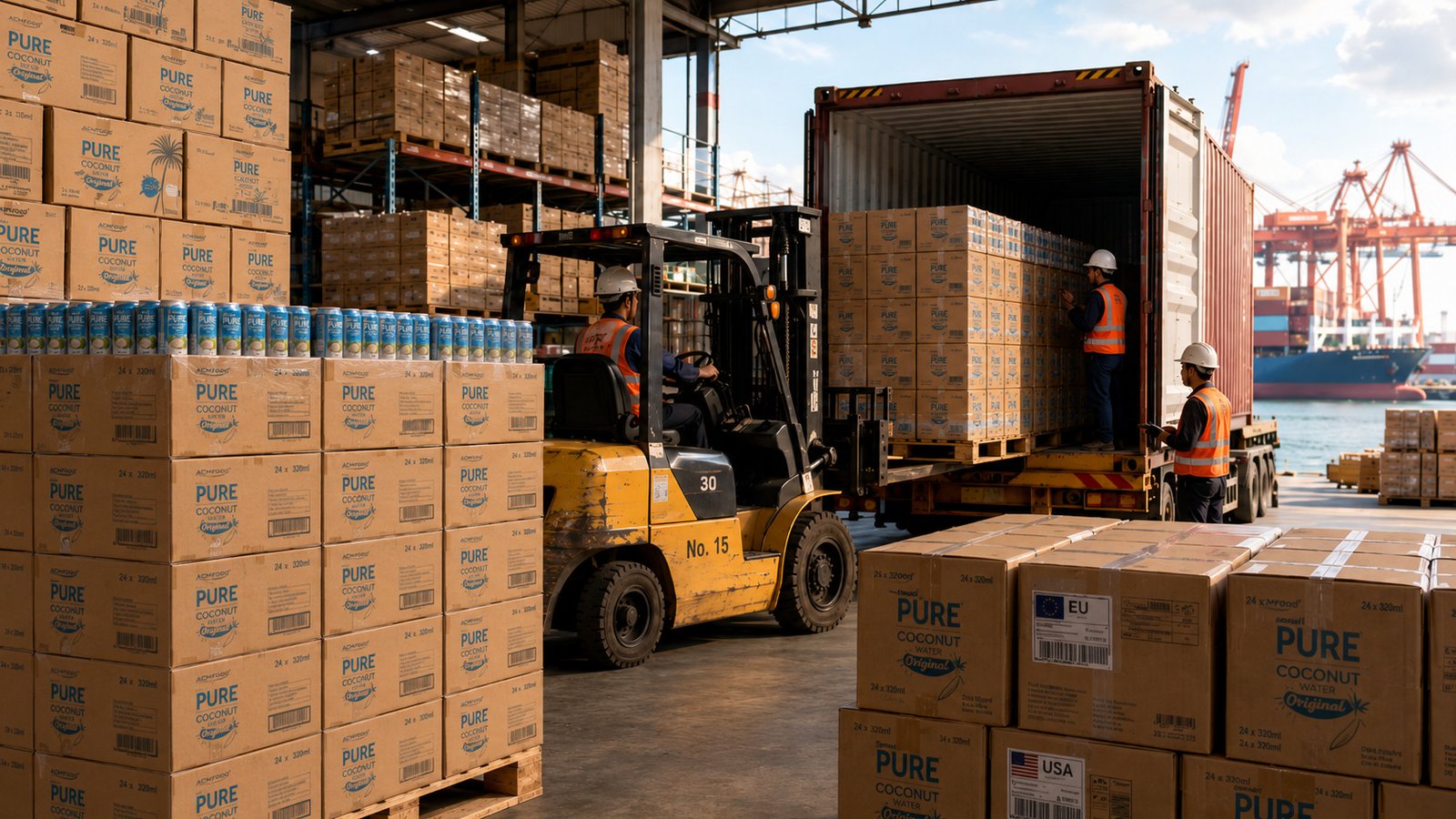
This is where deals fall apart — quietly, expensively, and almost always avoidably.
New importers consistently underestimate the certification gap between signing a supply agreement and receiving a shipment that can legally clear customs and enter retail channels. If you’re importing into the US for the first time, your supplier needs FDA facility registration (straightforward, but requires lead time), and you’ll need to be prepared for potential FSVP (Foreign Supplier Verification Program) documentation. In the EU, Novel Food assessments don’t apply to coconut water — that’s a common misconception — but labeling compliance, nutrition declarations in the correct format, and country-of-origin traceability do apply strictly. Budget 8–14 weeks from supplier confirmation to first cleared shipment, not 4–6.
The certification situation is actually more manageable than it sounds, provided you work with a supplier who has a track record of exporting to your target market. This is worth emphasizing: a factory that has exported 50 containers to Germany operates in a meaningfully different risk category than one that has exported two. The documentation muscle exists. The customs broker relationships exist. The QC protocols have been stress-tested by real shipments.
We’ve linked our trading operations directly to factories that have been exporting to EU, US, and Asian markets for 5–10 years. That’s not an accident of geography — it’s a deliberate sourcing decision because the certification infrastructure a factory builds over that period is genuinely difficult to replicate quickly. When a new importer asks us “why not just use the cheapest factory?”, the answer usually comes down to this: the cheapest factory frequently becomes the most expensive one by the time the customs hold, the relabeling cost, and the retailer penalty for late delivery are factored in.
Practical Considerations for Buyers at the Evaluation Stage
A few things that experienced importers tend to check, which first-time buyers often don’t:
Can specification matters more than it looks. Standard cans for this category run 330ml and 500ml. But the can material — aluminum vs. steel — affects both your freight cost (aluminum is lighter) and the premium positioning of your product on shelf. Some markets, particularly in Europe, also have packaging recycling compliance requirements that affect which can specification is permitted.
Flavor variants vs. pure. The coconut water with fruit juice segment (mango, pineapple, passion fruit) moves volume in certain markets but competes on different shelf placement and margin logic than pure. If your retail buyer is a health food chain, pure is almost always the right entry SKU. If you’re targeting mainstream grocery or food service, mixed variants sometimes perform better. Know your channel before you decide on your range.
Cold chain vs. ambient. Properly processed canned coconut water is ambient-stable, which dramatically simplifies logistics compared to the chilled tetra-pack formats that dominated the early US market. For new importers, this is often the single most important operational advantage of the canned format — you’re not coordinating refrigerated freight, and you’re not losing inventory to temperature breaks in transit.
Payment terms on first orders typically run 30% deposit on order confirmation, 70% against bill of lading. Once you’ve completed two or three clean transactions with a supplier, the leverage to negotiate extended terms (30-day net against LC, for example) improves significantly. That shift in payment structure matters for your working capital, especially as you’re building inventory depth in a new market.
If you’re at the stage where you’ve validated demand in your market — you’ve done the retailer conversations, you understand your target price point, you know roughly what container volume you can move in 90 days — then the next logical step is supplier qualification, not more market research. The variables that will determine whether your first import goes smoothly are almost entirely on the supply chain side now: factory certification history, documentation quality, and whether your commercial introduction to the supplier creates the right accountability structure from day one.
If you’re evaluating those questions and looking for a reliable coconut water supplier in Vietnam, we’re happy to have a practical conversation about the real sourcing landscape for your market and volume — not a sales pitch, just straightforward insight based on working regularly with international buyers at your stage.
Turning a trend into a product
For the categories, formats and ingredients the factory can actually run, see beverage product capabilities. For how contract production is structured, see OEM beverage manufacturing; to launch under your own label, see private label beverages. To brief a concept, request a quote.
Request a quote