


 Français
 Español
 العربية
 한국어
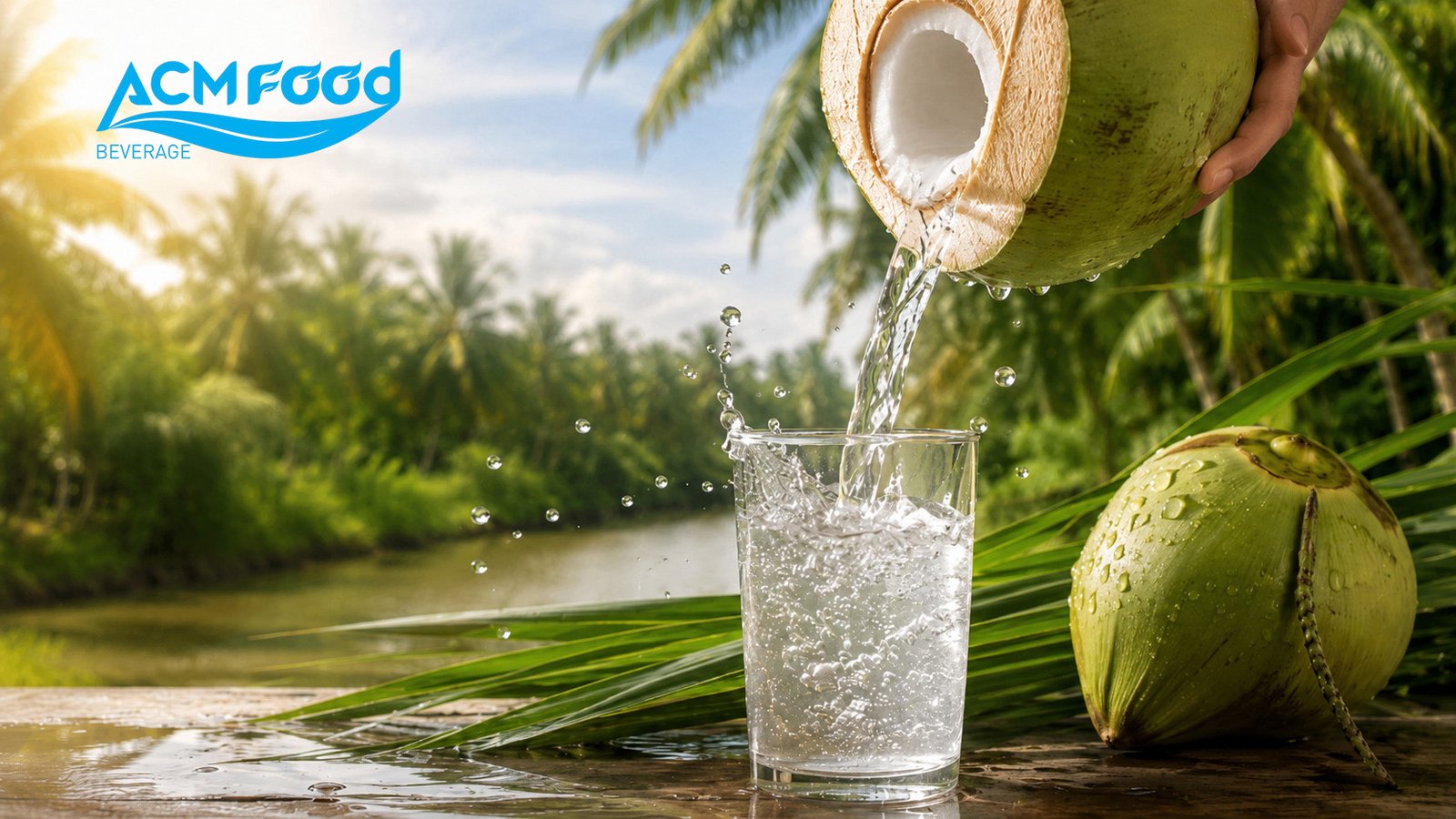
한국어Raw coconut water is the water of young coconuts that has not been heat-treated. It keeps the flavour and natural enzymes of a freshly opened nut, but it starts to oxidise and ferment within hours, so truly raw coconut water is only practical close to where coconuts grow.
For buyers far from the tropics, the realistic options are chilled high pressure processed (HPP) coconut water or gently pasteurised canned coconut water. This guide explains how raw coconut water differs from other types, what it contains, why it is hard to ship, and which format works for importers.
What is raw coconut water and how is it different from other types?
“Raw” describes the processing, not the coconut: raw coconut water has had no heat treatment. In practice, “raw” and “fresh” coconut water mean the same thing.
| Type | Treatment | Shelf life | Trade-off |
|---|---|---|---|
| Raw / fresh | None | Hours at ambient; a day or two chilled | Best flavour, impossible to ship far |
| HPP | High pressure (up to 600 MPa), no heat | Weeks to a few months, chilled | Close to fresh; needs full cold chain and costs more |
| Pasteurised | Heat, typically around 85–90°C | 12–18 months ambient | Easy logistics; some flavour change |
| From concentrate | Concentrated, shipped, reconstituted | Long | Cheapest to ship; flattest flavour |
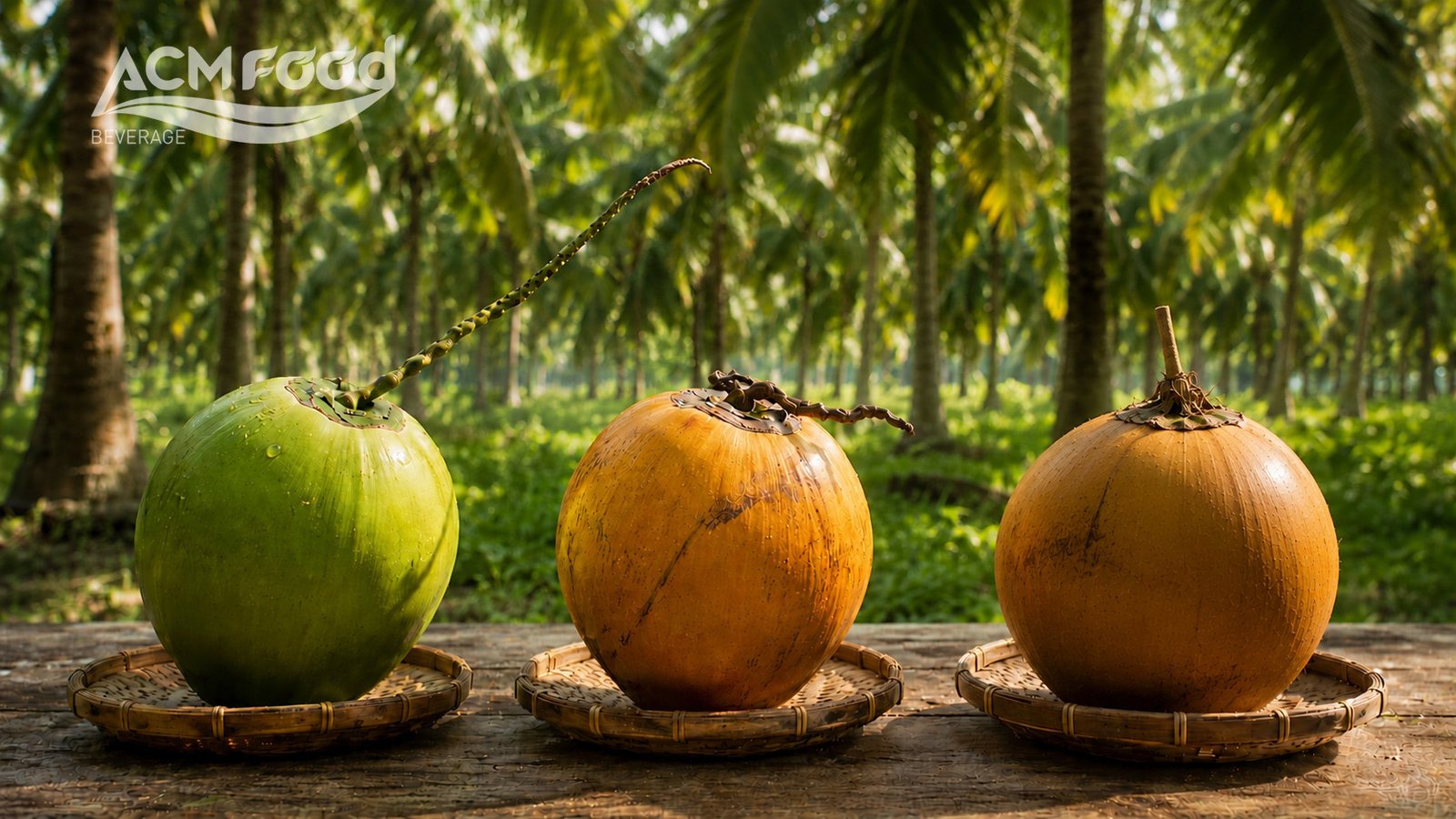
“100% coconut water” on a label only confirms nothing was added; it says nothing about heat treatment. Coconut age is a separate question: young nuts give lighter, less sweet water, while more mature nuts give a sweeter taste.
What nutrients does raw coconut water contain?
Coconut water is mostly water with natural sugars and electrolytes. Per 100 ml it typically provides around 250 mg of potassium and 4–6 g of natural sugar, with smaller amounts of magnesium, sodium, calcium and some B vitamins and vitamin C, based on USDA data. Values vary with variety and maturity.
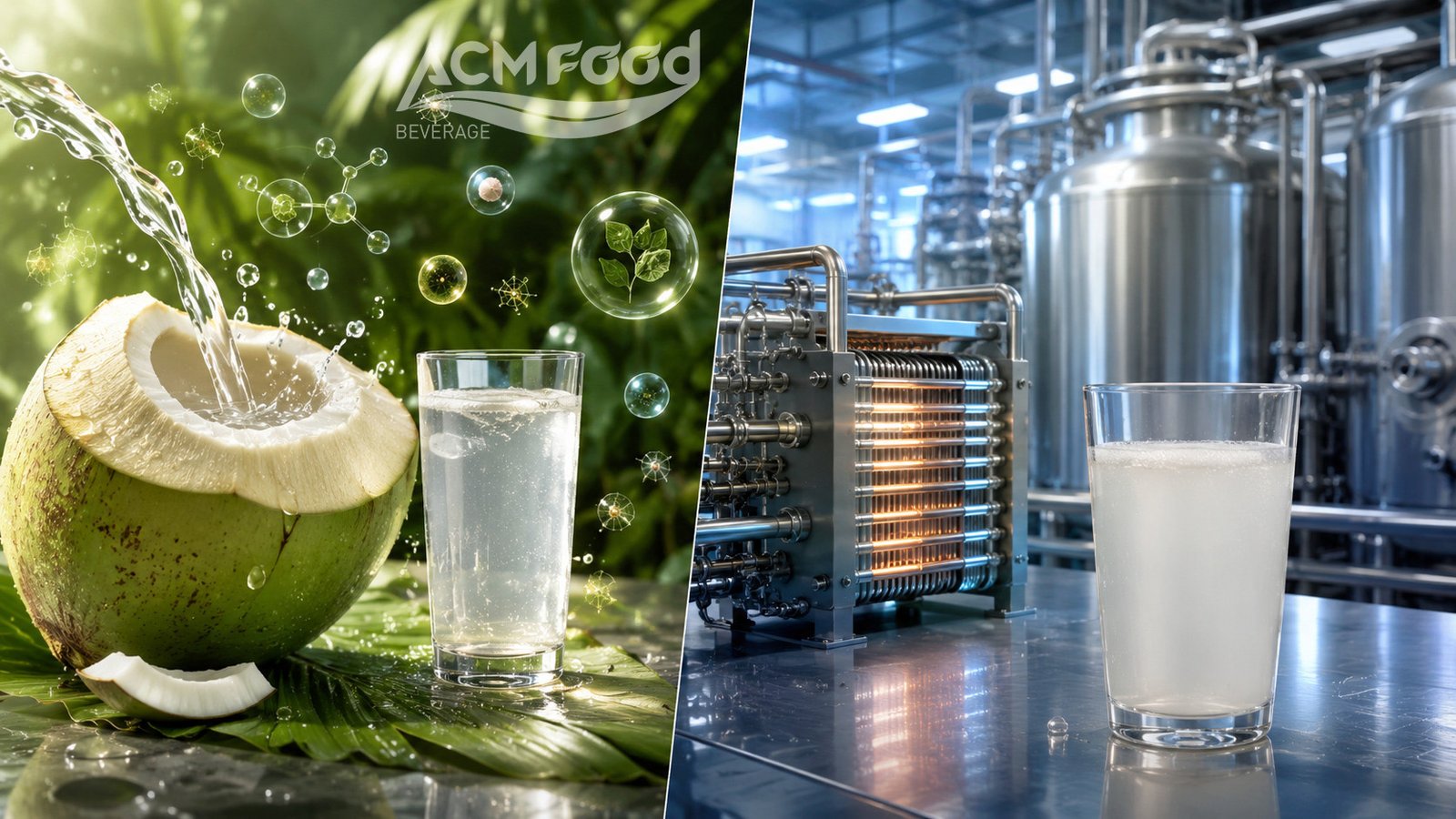
- Potassium: a good natural source, roughly comparable to a portion of banana per glass.
- Sugar: all naturally occurring, lower than most juices and sweetened sports drinks.
- Sodium: lower than in sports drinks designed for long exercise.
Most of these minerals survive pasteurisation. What changes most with heat is flavour and enzyme activity, which is why raw coconut water tastes fresher.
Why can’t raw coconut water be shipped internationally?
Unprocessed coconut water degrades within a day, while sea freight from Southeast Asia to Europe or North America takes weeks. Even with refrigerated containers and chilled warehouses, water arriving in Hamburg or Chicago after a month in transit is not the same as drinking it fresh in Bến Tre.
What is the best alternative to raw coconut water?
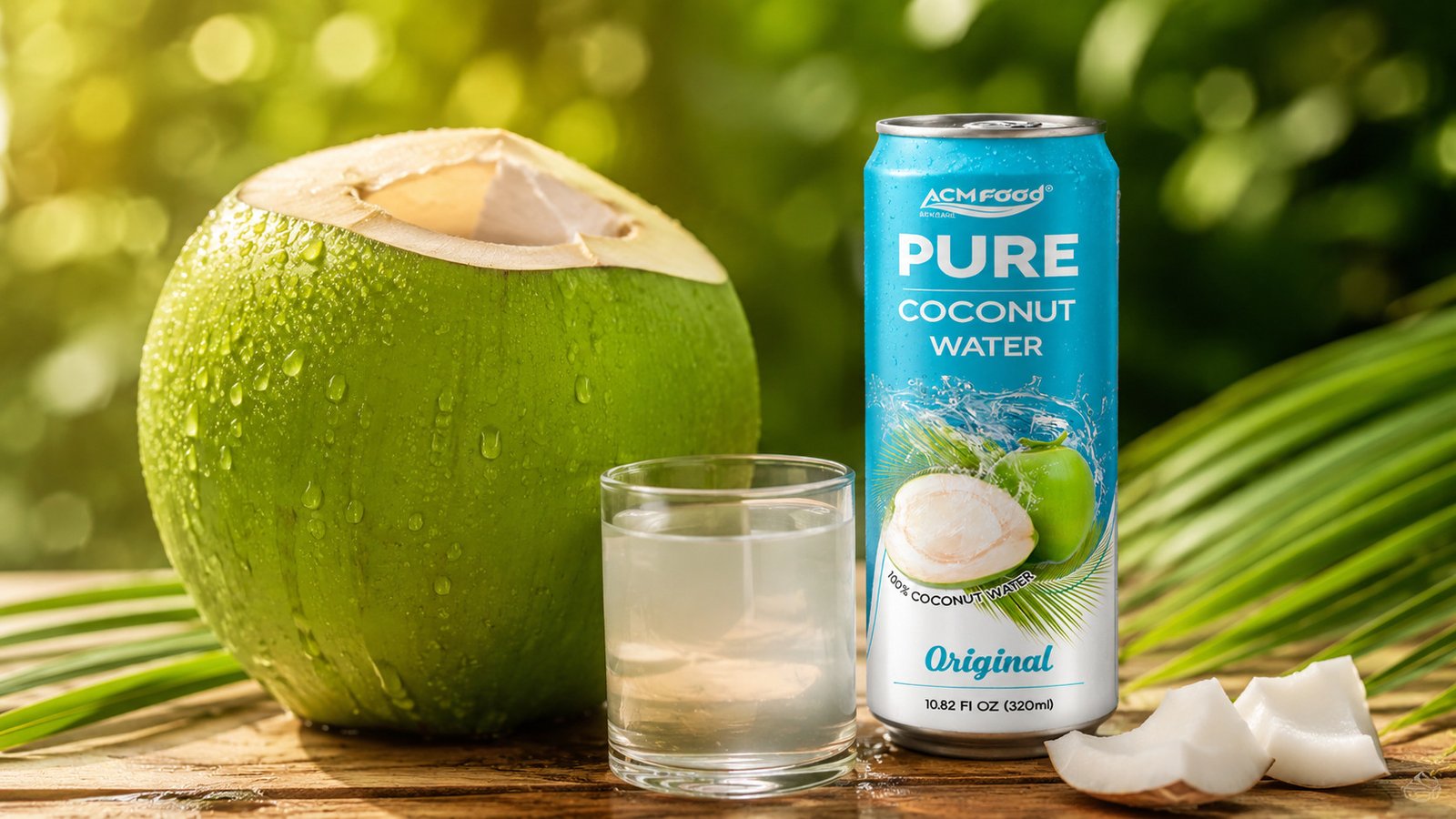
HPP coconut water is closest to raw, and gently pasteurised canned coconut water is the most practical for wide distribution.
- HPP: uses pressure instead of heat to neutralise pathogens, keeping much of the fresh flavour. It needs an unbroken cold chain and usually sells at a clear premium over shelf-stable coconut water.
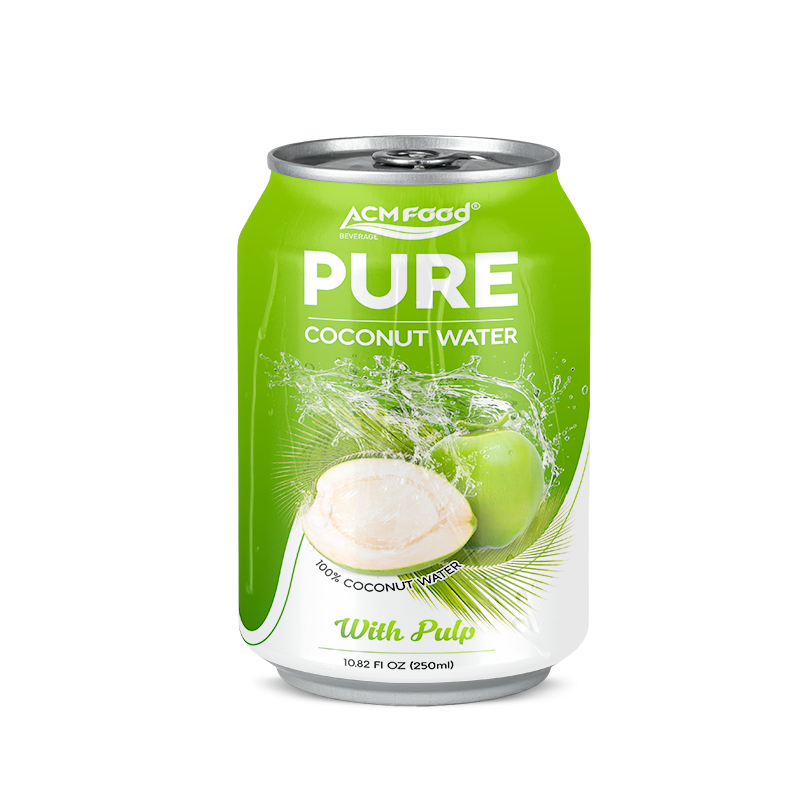
- Canned, gently pasteurised: short, controlled heat treatment and immediate sealing give a shelf-stable product that ships at ambient temperature. It is not identical to raw, but a well-made can of 100% coconut water with no added sugar is much closer than many people expect.
The real choice is not “raw or bad” but “raw, where available, or the best option that can actually reach your market”.
Who produces canned coconut water close to the source?
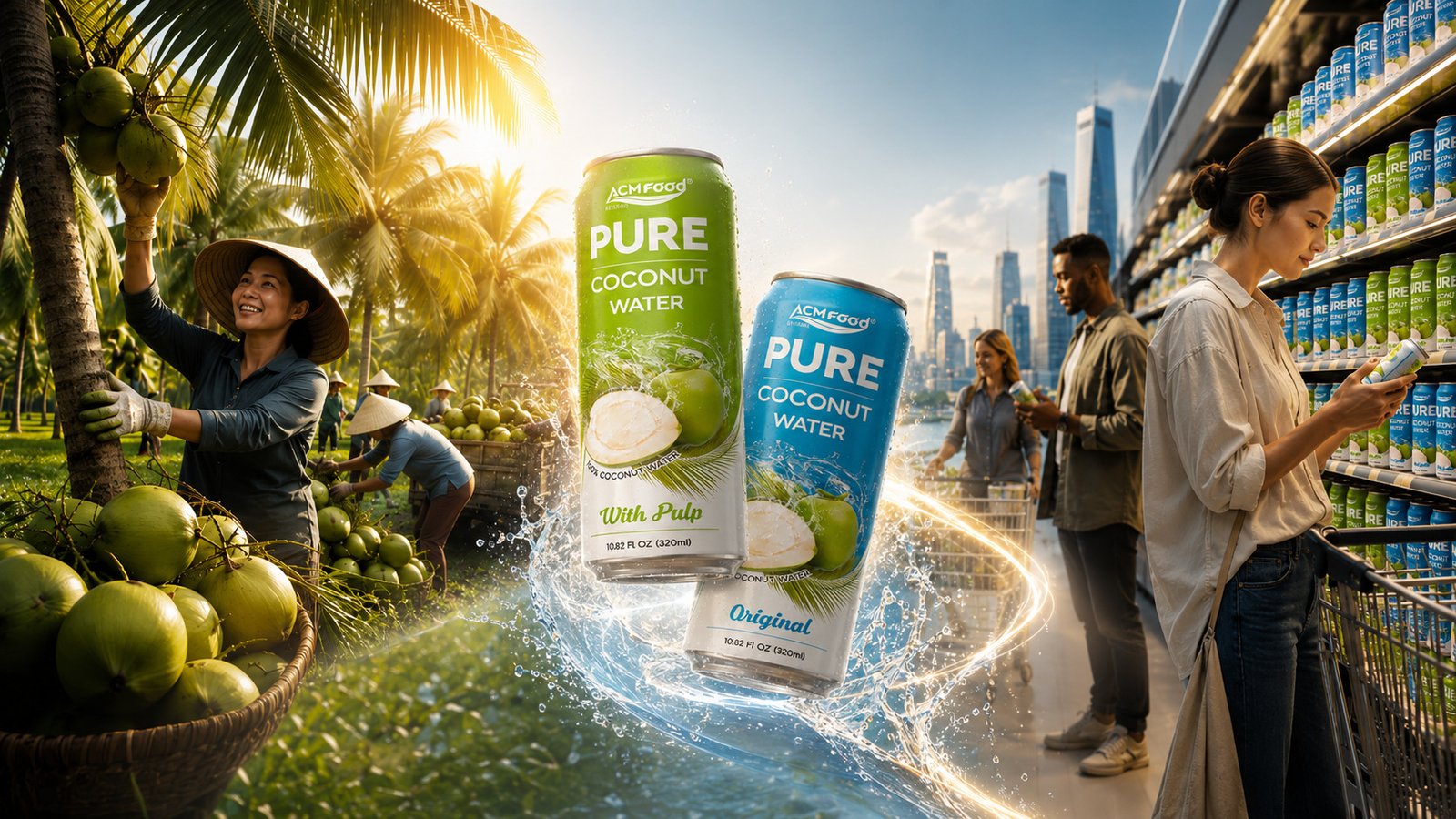
Vietnam’s Mekong Delta is one of the world’s most productive coconut regions, and ACMFOOD operates there as a coconut water manufacturer and direct exporter of canned coconut water, made from locally sourced young coconuts under HACCP and ISO 22000 certified conditions.
- Direct manufacturer: visibility into processing, certifications and QC, and no trading margin.
- Private label: minimums from 500 cartons per SKU, so importers can validate a market before committing to full containers.
- Export documents: certificate of origin, phytosanitary certificates where required, and third-party lab analysis for microbiology, heavy metals and nutrition.
- Lead time: about 15–25 working days from confirmed PO to loading; custom recipes, such as adjusted Brix, fruit blends, Halal or organic programmes, add around 2–4 weeks.
The first order is usually about verification rather than volume: confirming that quality, documents and communication match what the coconut water supplier promised.
Frequently asked questions
Is raw coconut water safe to drink?
Fresh from a clean, just-opened coconut, it is widely consumed. Once extracted, unpasteurised coconut water should be kept cold and drunk within a short time because it spoils quickly.
Is raw coconut water healthier than pasteurised?
The mineral content is broadly similar. Raw coconut water tastes fresher and keeps its natural enzymes; pasteurised coconut water is safer to store and ship.
Can you buy raw coconut water in Europe or the US?
True raw coconut water is rarely available far from growing regions. HPP coconut water in chilled aisles is the closest widely sold option.
Conclusion
Raw coconut water is simply unheated coconut water: the freshest version, but one that lasts only hours. For most markets, HPP or gently pasteurised canned 100% coconut water from a verified producer is the practical way to deliver its taste and nutrition at scale.
See beverage product capabilities, OEM beverage production and private label beverages. To discuss a specification, request a quote.
Request a quote