Français
 Español
 العربية
 한국어
한국어Lemongrass peppermint tea is a caffeine-free herbal infusion made from lemongrass (Cymbopogon citratus) and peppermint (Mentha × piperita). It tastes bright and citrusy with a cool minty finish, can be served hot or iced, and is popular as an after-meal drink and a caffeine-free alternative to coffee or regular tea.
This article explains the ingredients, the realistic benefits, how to brew it, who should be careful, and why the blend is interesting for beverage brands.
What is lemongrass peppermint tea?
It is a blend of dried or fresh lemongrass stalks and peppermint leaves steeped in hot water. Because it contains no Camellia sinensis, it is naturally caffeine-free. Lemongrass tea comes from tropical Asia, including Vietnam, Thailand and India; peppermint is a hybrid of watermint and spearmint grown worldwide.
What are the ingredients?
| Ingredient | Flavour | Key compounds |
|---|---|---|
| Lemongrass | Citrusy, lightly earthy and floral | Citral, geraniol, limonene (aroma compounds) |
| Peppermint | Cool, clean, slightly sweet | Menthol, menthone, rosmarinic acid, flavonoids |
Common additions include ginger, honey, lemon, chamomile, or green tea for those who want a little caffeine.
What are the benefits of lemongrass peppermint tea?
The realistic benefits are caffeine-free refreshment, hydration and a pleasant after-meal ritual. Evidence for specific health effects of this blend as a drink is limited.
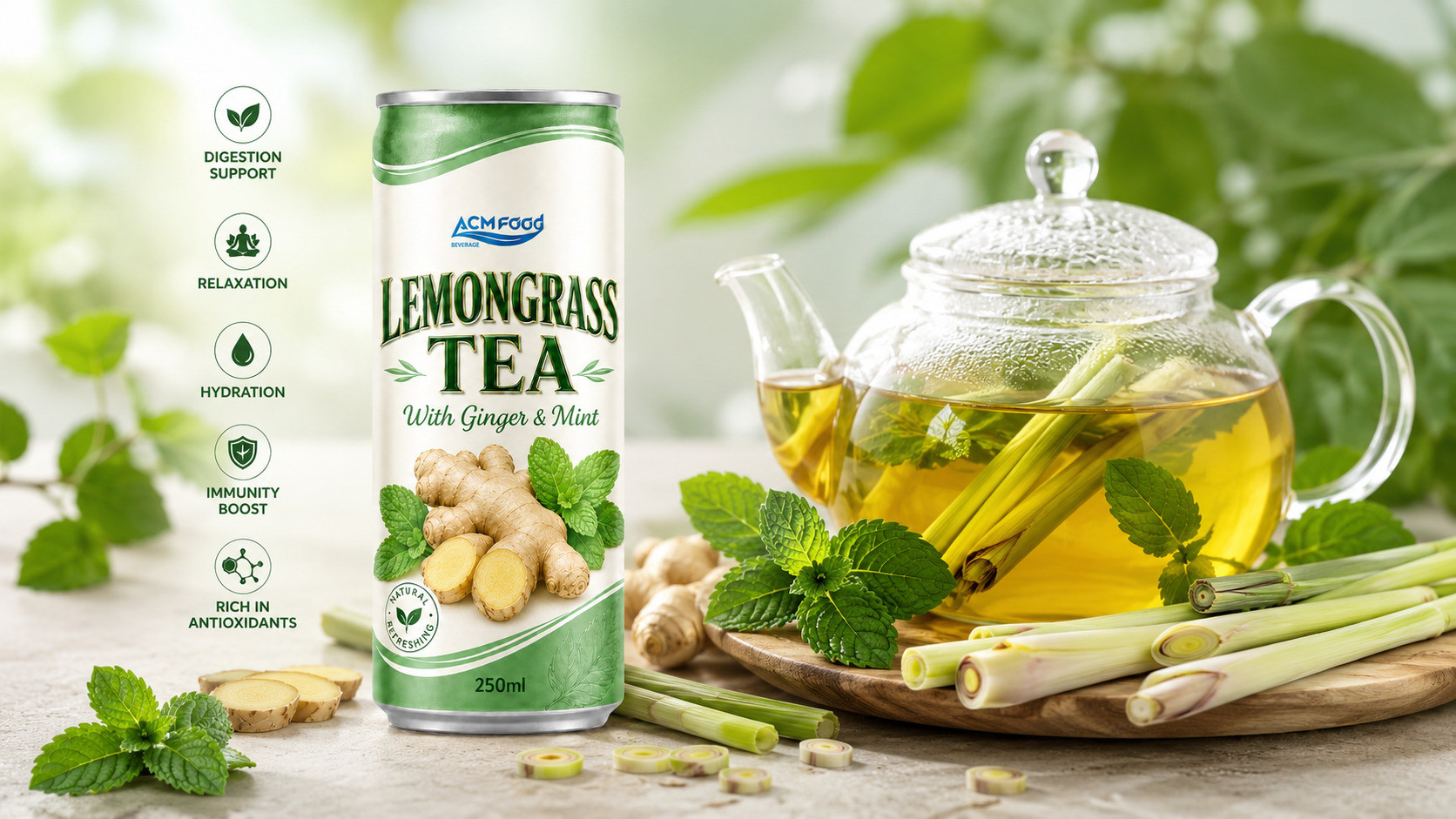
- Caffeine-free: suitable in the evening and for people cutting down on caffeine.
- Hydration: a flavourful way to drink more fluid without sugar.
- After meals: peppermint tea is traditionally drunk after meals, and many people find it comfortable for the stomach.
- Plant compounds: both herbs contain polyphenols and aromatic compounds.
- Fresh breath: menthol gives a cool, fresh feeling.
This article is for general information and is not medical advice.
How do you make lemongrass peppermint tea?
Hot tea
- Heat 240–300 ml of water to about 90–95°C.
- Add 1 tablespoon of dried blend or one tea bag.
- Steep for 5–7 minutes, then strain.
- Add honey, lemon or a slice of ginger if you like.
Iced tea
- Brew at double strength and let it cool.
- Pour over ice and garnish with lemon or fresh mint.
Avoid steeping longer than about 8 minutes, which can turn it bitter. Bruised fresh lemongrass gives a stronger flavour than dried, and dried blends keep best in an airtight container away from light and heat.
Who should be careful?
- People sensitive to menthol or lemongrass should limit intake.
- Peppermint can worsen heartburn in people with reflux.
- People who are pregnant or taking medication should check with their doctor before drinking herbal teas regularly.
- As with any herbal tea, moderation is sensible; a few cups a day is typical for adults.
Why is the blend interesting for beverage brands?
Lemongrass peppermint tea fits several growing segments at once: caffeine-free drinks, herbal and botanical teas, and ready-to-drink iced tea. It works as loose tea, tea bags, concentrate or RTD, which makes it a good candidate for private label and OEM development for retail, foodservice and export.
Frequently asked questions
Is lemongrass peppermint tea caffeine-free?
Yes. It contains no tea plant, so it is naturally caffeine-free unless green tea is added.
What does it taste like?
Citrusy and lightly grassy from lemongrass, with a clean, cool finish from peppermint.
How many cups can I drink a day?
For most healthy adults, two to three cups a day is a reasonable amount.
Can I drink it during pregnancy?
Ask your doctor or midwife before drinking herbal teas regularly during pregnancy.
Conclusion
Lemongrass peppermint tea is a refreshing, caffeine-free herbal blend that works hot or iced and suits after-meal and evening drinking. Enjoy it for its flavour and hydration rather than as a remedy.
For beverage brands, see beverage product capabilities, OEM beverage manufacturing, private label beverages and ingredients and sourcing. To discuss a specification, request a quote.
Request a quote