


 Français
 Español
 العربية
 한국어
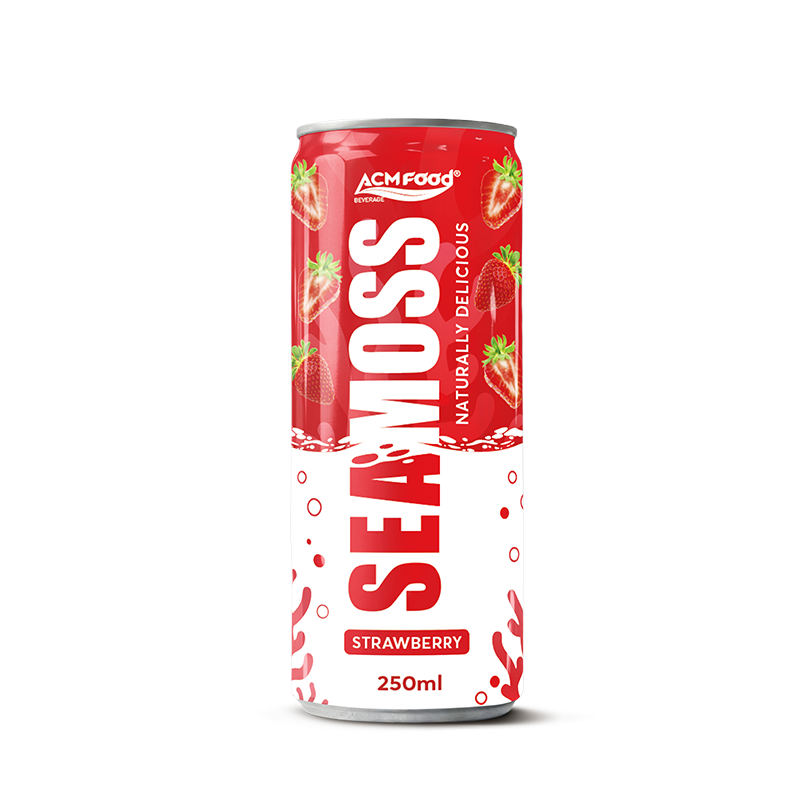
한국어A seamoss drink is a beverage made from Irish moss or related red seaweeds, usually blended with fruit juice, and it is popular because it is marketed as a plant-based source of minerals and natural thickening. For importers, the key issues are seaweed origin, heavy-metal testing (arsenic, lead, cadmium, iodine) and careful, evidence-based label claims.
The seamoss drink is not a fad invented by a wellness influencer last Tuesday. It has roots that run centuries deep — in Caribbean kitchens, West African coastal traditions, and Irish coastal communities who boiled Chondrus crispus into warm tonics long before anyone put the word “superfood” on a label. What is genuinely new is the scale. The global sea moss market was valued at $2.18 billion in 2024 and is projected to grow to $2.60 billion by 2030. That number matters because it tells you this is no longer a niche health-food-store category — it is a mainstream functional beverage segment with serious commercial gravity.
For importers and distributors watching the functional beverage space, understanding what a seamoss drink actually is — what is inside the bottle, why consumers buy it, and where the category is heading — is the first step toward making smart sourcing decisions. So let us start there.
What exactly is sea moss, and where does it come from?
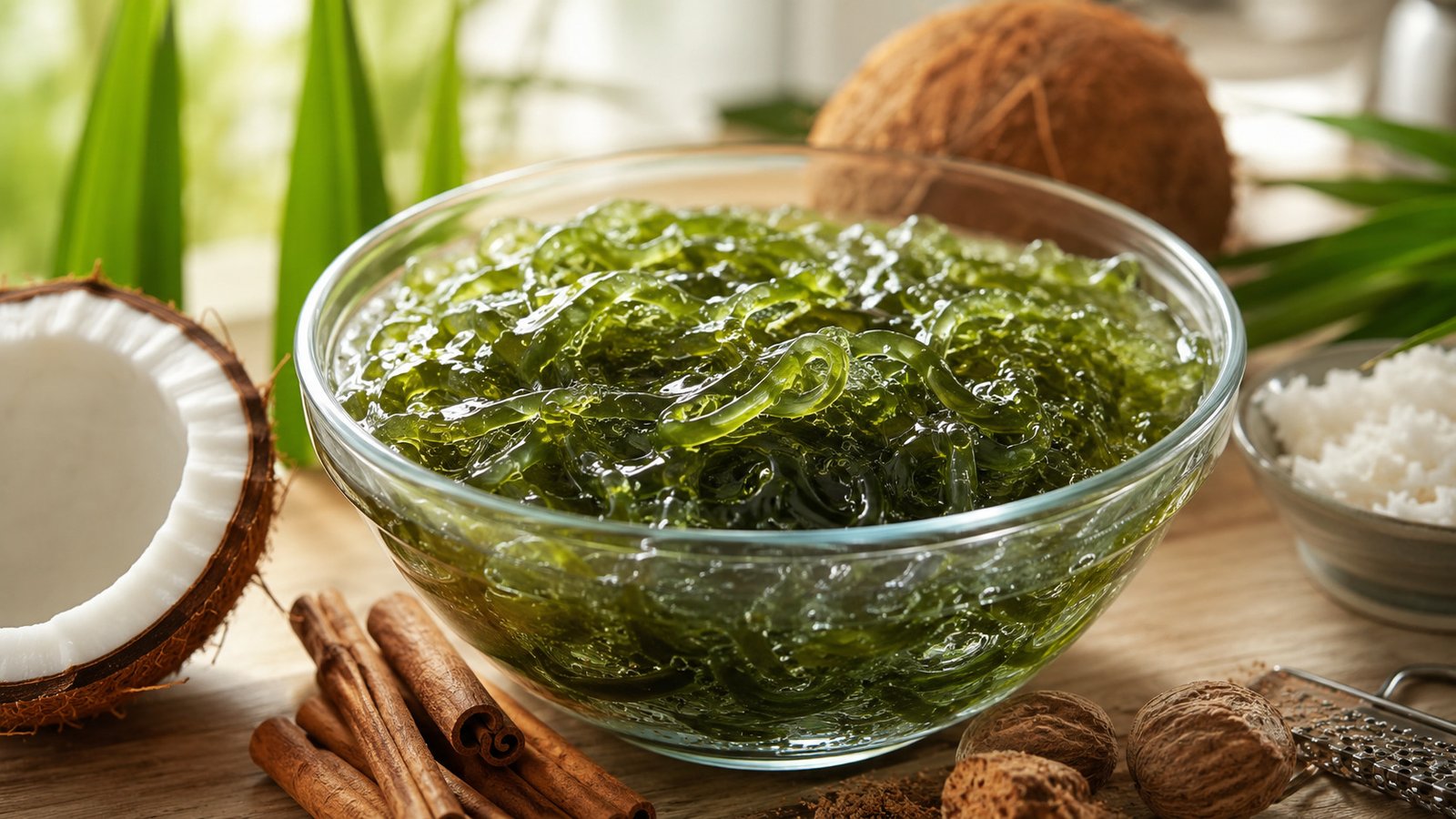 Sea moss is a species of red algae that grows along the Atlantic coast of Europe, the Caribbean Islands, and North America. You might also see it labeled as Irish moss — a nod to its long history in Ireland, where coastal communities harvested and consumed it for generations. It is the same plant, different names.
In its raw form, dried sea moss looks like stiff, tangled seaweed. When soaked in water, it absorbs several times its weight, softens, and can be blended into a thick gel. That gel has a texture similar to aloe vera, and it tastes like clams or oysters. That oceanic note disappears almost entirely when combined with coconut milk, almond milk, fruit juice, or warming spices like cinnamon and nutmeg — which is exactly how most commercial seamoss drink products are formulated.
Harvesting sources vary considerably, and this matters for anyone importing at scale. Wild-harvested Atlantic sea moss tends to carry higher mineral density but also greater contamination risk if source waters are polluted. Pool-grown or farmed sea moss — increasingly common from Jamaica, Trinidad, and West Africa — offers more consistent quality, lower contamination risk, and better traceability. All of that becomes critical when navigating food import regulations in the EU, US, or Southeast Asian markets.
The nutritional case: what makes it worth importing?
The claim you will see everywhere — that sea moss contains “92 of 102 minerals found in the human body” — is marketing shorthand that nutritional scientists push back on. Studies analyzing mineral content in macroalgae show it is rich in iodine, calcium, magnesium, potassium, and iron, but the “92 minerals” claim lacks scientific basis. The more accurate picture, confirmed by USDA FoodData Central, is that sea moss reliably delivers a meaningful and unusually broad mineral profile per serving. That is still a strong story.
Why does the mineral profile matter commercially? Because it places the seamoss drink squarely inside the functional beverage category — the fastest-growing segment in the non-alcoholic RTD market. Sea moss contains iodine for thyroid health, potassium for cardiovascular support, and mucilage for gut health — real claims, backed by real science, which pass regulatory review in most markets. Consumers are not buying these products out of nostalgia. They are paying a premium for a tangible nutritional benefit they can point to on the label.
There is a legitimate caveat worth flagging honestly. Seaweeds can absorb heavy metals such as arsenic, cadmium and lead, and some species carry very high iodine levels, so poorly sourced product can create safety and compliance problems. For importers, this is not a deal-breaker — it is a specification issue. Well-sourced, third-party-tested product from certified facilities handles this cleanly. It is precisely why supplier vetting matters more in this category than in, say, plain coconut water.
How does a seamoss drink actually taste — and what formats exist?
The traditional Caribbean seamoss drink is a creamy, lightly spiced beverage. Popular across islands like Jamaica and Trinidad and Tobago, it is enjoyed both for its flavor and its nutritional benefits — some take it as a health tonic, others as an indulgent drink, and some even use it as a cocktail base. Think somewhere between a milkshake and a chai latte.
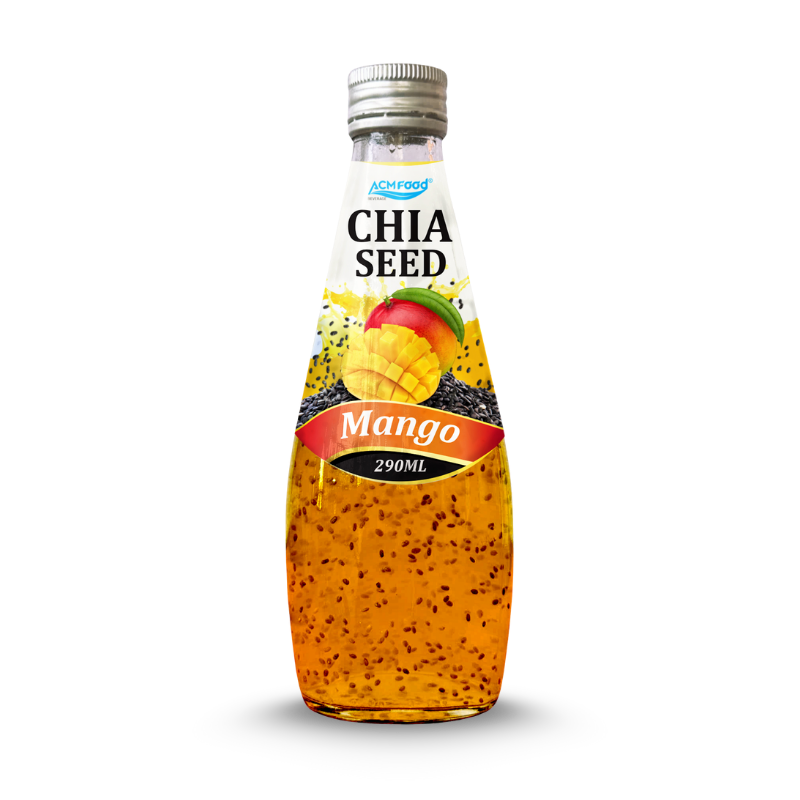
Modern commercial formats have diversified significantly beyond this base recipe. You will find seamoss drinks today as RTD wellness shots (30–60ml), full-size bottled beverages blended with coconut water or pineapple juice for a lighter profile, and powder sachets to be mixed on-demand. The last format is gaining traction because it solves the shelf-life problem that plagues gel-based beverages. Blended seamoss drink requires refrigeration and has a home shelf life of roughly three to five days. Commercially processed bottled versions with proper pasteurization and pH control can reach twelve to eighteen months at ambient temperature.
For importers, the RTD bottled format is the most commercially scalable. It fits existing distribution infrastructure, and it directly mirrors how coconut water achieved mass-market penetration. The structural parallels between coconut water’s trajectory in the mid-2010s and where seamoss drinks sit today are worth paying close attention to.
Who is actually buying seamoss drinks, and why now?
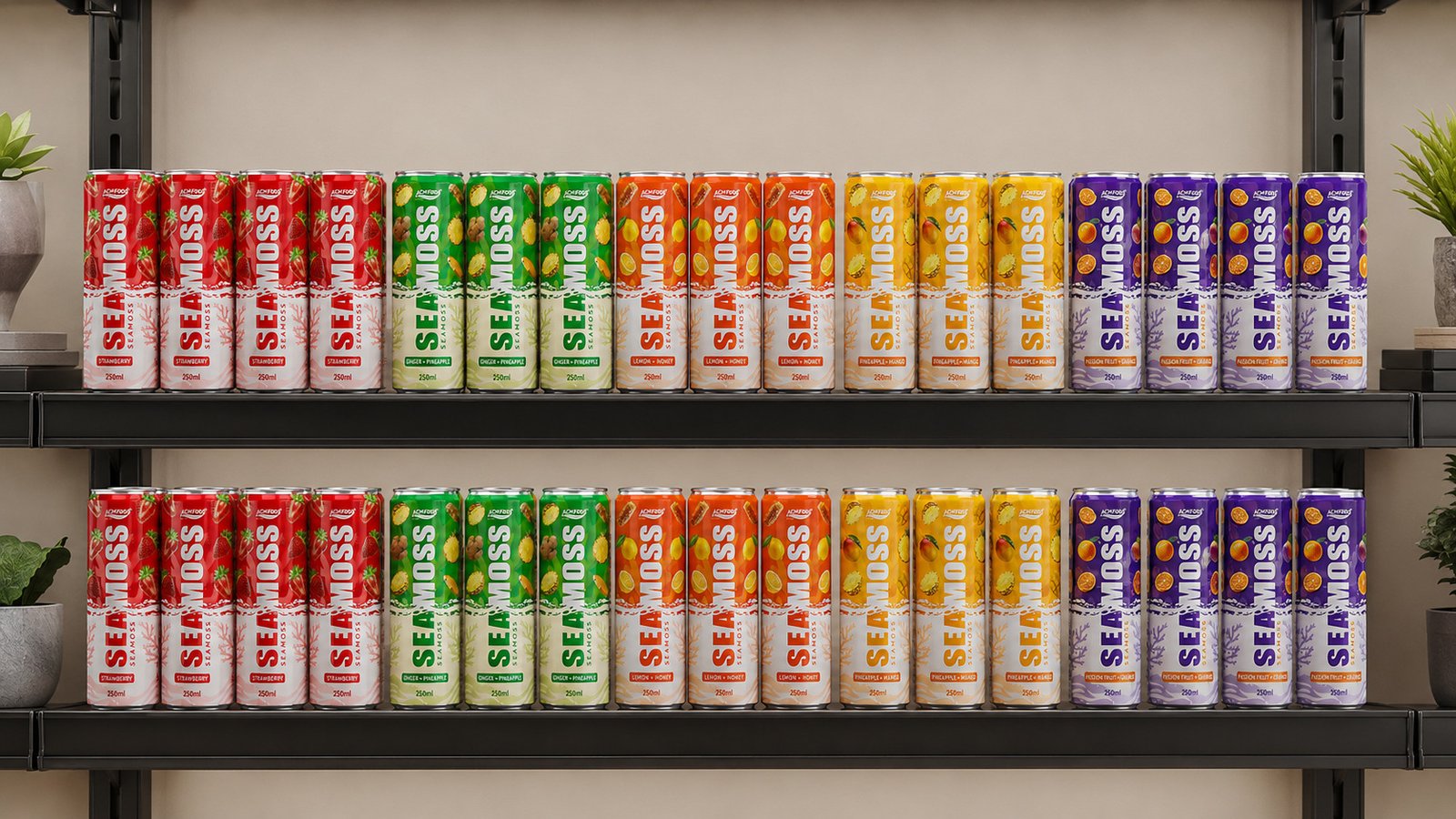
The consumer profile for seamoss drinks skews heavily toward health-conscious millennials and Gen Z buyers who came to the product through social media. TikTok and Instagram played a significant role in the category’s breakout: celebrities and wellness creators began posting seamoss routines publicly, and search interest followed — driving mainstream retail pick-up at a pace that typically takes a functional ingredient category years to achieve organically.
There is a second, less-discussed consumer group: diaspora communities who grew up drinking Irish moss punch or seamoss tonic at home. For Jamaican, Trinidadian, Dominican, and West African communities across the UK, US, and Canada, a quality commercial seamoss drink is not a novelty — it is a convenience product replacing a homemade staple. This group tends to be less price-sensitive and more brand-loyal when a product tastes authentic.
Whole Foods Market’s Trends Council, which develops annual trend predictions through a combination of deep industry experience and collaborative sessions with emerging and established brands, flagged aquatic ingredients as one of their top ten food and beverage trends for 2025. When a retailer with 500+ locations signals that publicly, supplier pipelines tend to move fast.
What importers need to evaluate before entering this category
Importing seamoss drinks requires a different diligence checklist than standard fruit juices or carbonated beverages. The category sits at the intersection of food and supplement regulation, and the rules vary by destination market.
Sourcing transparency. The single most important factor is documenting where the sea moss was harvested or cultivated, and what heavy metal and iodine testing results show. Seaweeds can accumulate excess iodine and heavy metals if waters are polluted, so source quality matters — European food-safety authorities and comparative regulatory reviews underline this variability. Caribbean and West African farmed sources are increasingly preferred precisely because they come with better documentation.
Product format and shelf stability. Gel-based beverages require either refrigerated shipping or high-pressure processing (HPP) or pasteurization to achieve ambient shelf life. The cost difference between these options is substantial. For large-volume B2B import, ambient-stable pasteurized products typically offer more practical economics and fewer cold-chain failures at customs clearance.
Label compliance by market. Health claims tied to iodine, thyroid support, or immune function are regulated differently in the EU (EFSA-governed), the US (FDA/FTC), and ASEAN markets. A product label that is legal in Jamaica is not automatically legal in Germany or Singapore. This is a genuine compliance risk that requires legal review per destination — and a strong reason to work with suppliers who already carry export experience in your target market.
The coconut water comparison. Many importers in this readership already have coconut water experience. The category dynamics translate well: tropical origin, natural positioning, a credible health narrative, an RTD format built for retail. The operational complexity of seamoss drinks is slightly higher due to gel processing and regulatory sensitivity around iodine. None of this is insurmountable — it is manageable with the right supplier partner.
What the market data actually signals for 2025–2030
The sea moss supplements market alone was valued at $285 million in 2024 and is projected to reach $596 million by 2033, reflecting a compound annual growth rate of 6.9%. That is a sustained, structural growth curve — not a spike that collapses after a viral moment. The broader sea moss market at $2.18 billion is roughly the size of the global cold brew coffee market five years before cold brew became a major retail category. Timing matters as much as the product itself.
The functional beverage segment is experiencing significant market growth due to increasing consumer demand for functional beverages, driven by a growing emphasis on health and wellbeing, as well as a desire for convenient, on-the-go solutions. The seamoss drink addresses both directly. That is not a trend argument — it is a category logic argument.
Where movement is fastest in 2025 is in the private-label segment. Several Caribbean and West African co-manufacturers are actively building export capacity for branded seamoss drink under private-label arrangements, targeting UK, US, and EU importers who want category entry without building production capability. This is the same model that scaled coconut water brands efficiently. For importers who already have distribution relationships in health food retail, it represents a relatively low-risk entry point.
Final perspective: is this worth a serious look?
The seamoss drink is past the inflection point where you could dismiss it as a social media moment. Sea moss has become a billion-dollar health trend — covered by National Geographic, flagged by Whole Foods, and picked up by data-driven supplement brands like MaryRuth Organics, which launched a premium liquid sea moss product in 2024. These are not signals from niche operators.
The category does carry real operational complexity: sourcing verification, regulatory compliance by market, and shelf-stability decisions that affect logistics costs. None of these are insurmountable. The importers who will do well here are the ones who move early enough to build supplier relationships and retail shelf space before the category becomes crowded — not the ones who wait until the outcome is obvious.
The question is not whether the seamoss drink is a real category. It clearly is. The question is whether you want to be in the market when it scales, or after it does.
Data source
- National Geographic
- The Urben Life
- WebMD
- NutriScan
- Virtuemarketresearch
- Banner Health
- businesswire
- Global Growth Insights
- Towardsfnb
Turning this into a product
For the formats, ingredients and processing routes the factory actually runs, see beverage product capabilities. For how contract production is structured, see OEM beverage manufacturing; for launching under your own label, see private label beverages. To discuss a specification, request a quote.
Request a quote