


 Français
 Español
 العربية
 한국어
한국어Every sourcing guide tells you to pick a “top” coconut water company. Almost none of them tell you how to prove one is. This article is the proving part: a stage-by-stage due diligence process you can run yourself, from the first document request through the factory audit and the sample protocol, ending in a scorecard you can put in front of your own management.
If you are still deciding which commercial model to use, read the coconut water supplier overview first. If you want to understand what happens inside the plant, see coconut water manufacturing and QC systems. This page assumes you have shortlisted two or three factories and now need to separate them.
What “top” means once you are the one signing the purchase order
A factory that looks excellent in a PDF can still fail you in three specific ways: it cannot hold a specification across batches, it cannot produce documents your customs broker will accept, or it cannot absorb a problem after the container has sailed. Ranking suppliers by price, response speed, or the polish of their brochure does not test any of those three.
Due diligence exists to convert claims into evidence. Every stage below is built around one rule: if it is not in writing, on a document with an issuing body, it does not count.
Stage 1 — Desk screening: the document pack to request before the first call
Send this list before you spend time on a video call. How a supplier responds to it is itself a filter — a factory with an export-oriented back office returns most of it within two working days.
- Business registration certificate and the export licence, so you know whether you are talking to a manufacturer or a trading house reselling someone else’s production.
- Food safety certificates in full — HACCP, ISO 22000, FSSC 22000, and any HALAL, organic or BRC certification. Ask for the complete scanned certificate showing the issuing body, certificate number, validity dates and scope. A logo on a slide is not a certificate.
- FDA facility registration number if the United States is a target market.
- Certificate of Analysis from a recent commercial batch, issued by a named third-party laboratory — not an internal report on factory letterhead.
- A specimen export document set: certificate of origin, health certificate, phytosanitary certificate, packing list and commercial invoice from a real shipment, with the buyer’s details redacted.
- Product specification sheet per SKU: Brix range, pH range, fill volume tolerance, declared shelf life and storage conditions.
Reading the certificate scope
This is the check most buyers skip. A certificate can be genuine and still not cover the product you are buying. Confirm that the scope text names the process (aseptic filling, thermal processing, canning) and the product family (coconut water and coconut-based beverages). A facility certified only for its juice line has told you nothing about its coconut water line.
Stage 2 — The technical questionnaire
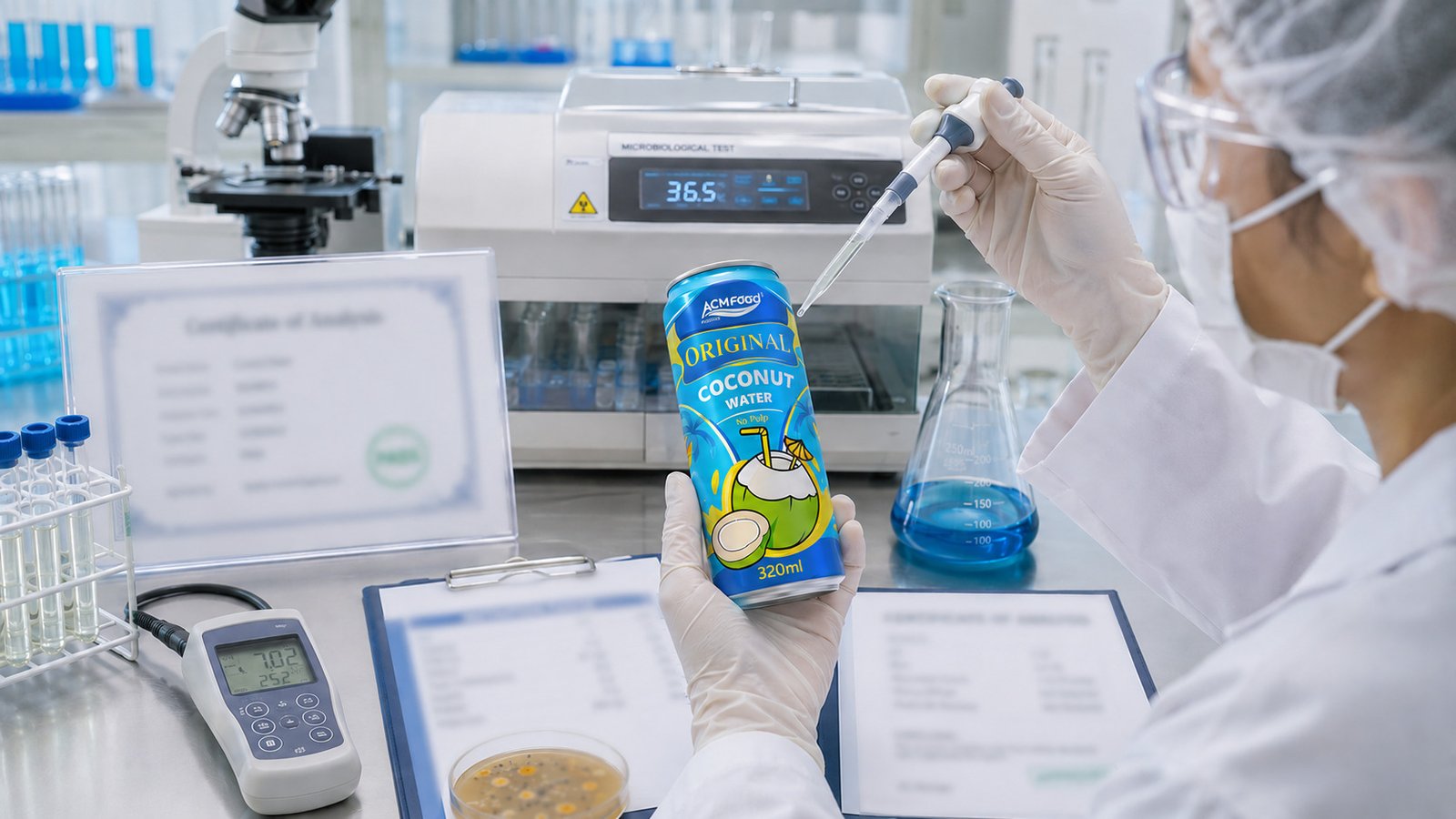
Ask these in a single written message and require written answers. Verbal answers on a call cannot be compared later, and cannot be attached to a contract.
- What exactly is the thermal process? Target temperature, hold time, and whether filling is aseptic or hot-fill. Request the time–temperature record from one recent production batch.
- Is the product from fresh coconut water or from concentrate? These are different products and must be declared differently on the label in most import markets.
- What is the Brix specification and the accepted tolerance? A supplier who answers “about 5” without a tolerance band has not been asked this by a demanding customer before.
- Show the Brix and pH values from the last five production runs. You are not checking whether they are good. You are checking whether they are consistent.
- Which third-party laboratory performs microbiological, heavy metal and nutritional testing, and at what frequency? Per batch, per lot, or per quarter — the answer changes your risk materially.
- What is the declared shelf life, and what stability data supports it? Ask whether accelerated or real-time studies were used.
- What is the monthly production capacity for this SKU, and what is lead time during the peak season? Capacity quoted in the low season is not a commitment.
- Where do the coconuts come from, and how many hours pass between harvest and processing? This drives flavour stability more than any downstream step.
- What happens when a batch fails specification — before shipment, and after? Get the remedy in writing: replacement, credit note, or nothing.
Stage 3 — The factory audit
An on-site visit is ideal. A recorded video walkthrough, unedited and led by you rather than by their marketing team, is an acceptable substitute for a first order. Either way, look for these things rather than general tidiness.
- Raw material intake. Are incoming coconuts logged, graded and rejected against a written standard? Ask to see this week’s rejection records — a facility that never rejects anything is not inspecting anything.
- Zoning and flow. Raw material, processing and packaging areas should be physically separated, with staff and material movement running one direction only.
- The filling line and its seam or seal integrity checks. For cans, ask how often seam teardown inspections are performed and ask to see the log.
- The in-house laboratory. Confirm which tests are done in-house and which are outsourced, and check that instruments carry current calibration stickers.
- Traceability. Pick a finished can at random and ask them to trace its lot code back to a raw material intake date. A capable factory does this in minutes. This is also exactly what a recall would require.
- Retention samples. A properly run plant keeps retained samples for the full shelf life of every batch. Ask to see the retention room.
Stage 4 — The sample protocol
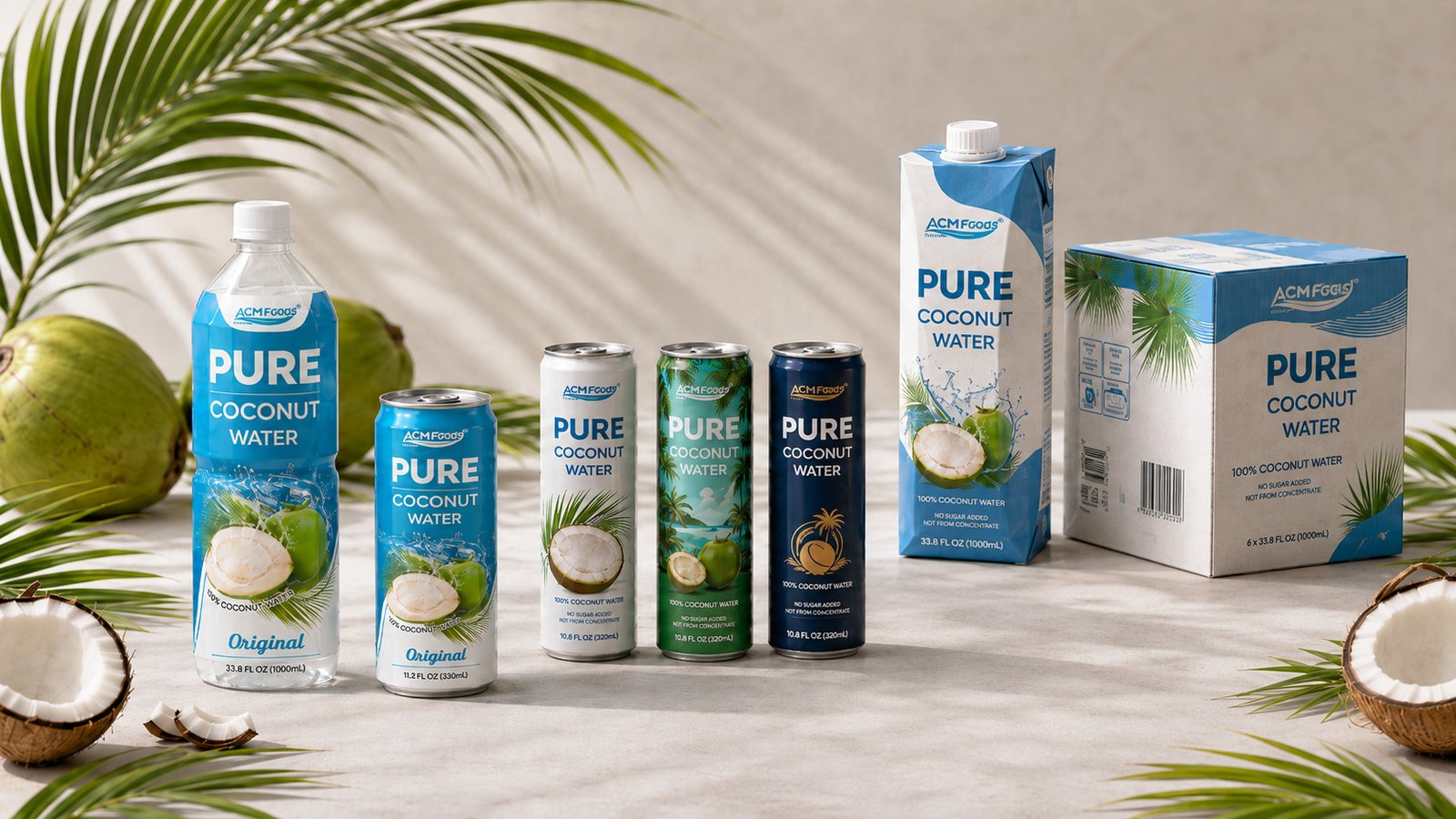
Most buyers taste one sample, like it, and order. That tests almost nothing. A sample proves that the factory can make the product once — your business depends on it making the product every time.
Request samples from three different production dates, not three cans from the same pallet. Taste them blind, side by side. If a supplier cannot supply samples from different lots, that is information in itself.
Then send at least one sample to an independent laboratory in your own market and test against the supplier’s own specification sheet. You are verifying that the declared numbers and the actual product agree. Finally, hold a few cans at ambient temperature and re-taste at three and six months. Shelf life claims are cheap to make and expensive to discover as wrong.
Stage 5 — Commercial terms that protect you
The contract, not the relationship, is what you rely on when something goes wrong. Pin down the following before the first order rather than after the first problem.
- The specification is an annex to the contract, with Brix, pH, fill weight, shelf life and packaging all named and tolerances stated.
- Inspection rights. Reserve the right to appoint a third-party inspector before container loading, at your cost. Experienced importers exercise this on the first three shipments.
- Incoterms and who holds which risk. FOB and CIF allocate cost and liability very differently once cargo is on the water.
- Payment structure. A deposit plus balance against a copy of the bill of lading is normal; full payment in advance to a new supplier is not.
- Non-conformance remedy. Write down what happens if the goods arrive off-spec, including who pays for destruction or return.
- Label and artwork ownership, and — if you are supplying a formulation — a clear statement that the recipe remains yours and will not be produced for another customer.
Red flags that should stop the process
- Certificates supplied as logos or cropped images rather than full documents.
- Refusal to name the third-party testing laboratory.
- Brix and pH figures that are identical across every batch — real production varies within a band; perfectly identical numbers suggest a template, not a record.
- A lead time quoted far below the market norm, which usually means shipment from existing stock that is not to your specification.
- Export documentation treated as an extra-cost service rather than a standard part of the shipment.
- An address that turns out to be an office rather than a production facility.
A scorecard you can defend internally
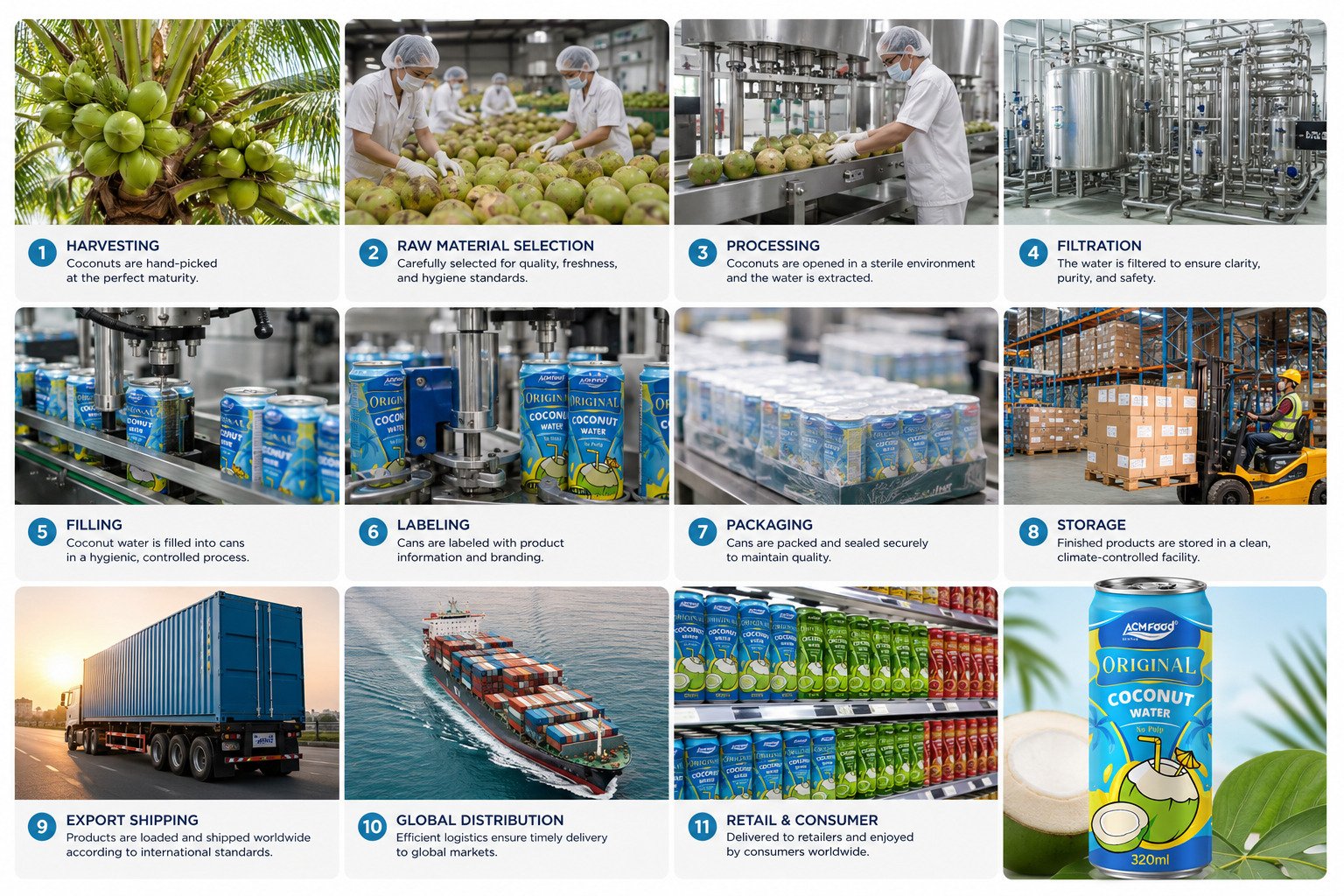
Score each shortlisted supplier from 1 to 5 on the criteria below, then weight them. The point is not the arithmetic — it is that the decision becomes reviewable by someone who was not in the meetings.
| Criterion | Weight | What a 5 looks like |
|---|---|---|
| Certification completeness and scope | 20% | Full certificates, scope explicitly covers coconut beverages, all in validity |
| Batch consistency evidence | 20% | Five consecutive batch records supplied, values inside a stated tolerance |
| Documentation capability | 15% | Complete specimen export set supplied unprompted |
| Traceability and recall readiness | 15% | Lot code traced to raw material intake during the audit |
| Sample performance across lots | 15% | Three lots taste consistent and match the spec sheet on independent test |
| Commercial flexibility | 10% | MOQ and Incoterms workable for a first validation order |
| Responsiveness and clarity in writing | 5% | Written answers within two working days, no evasion |
How ACMFOOD answers this checklist
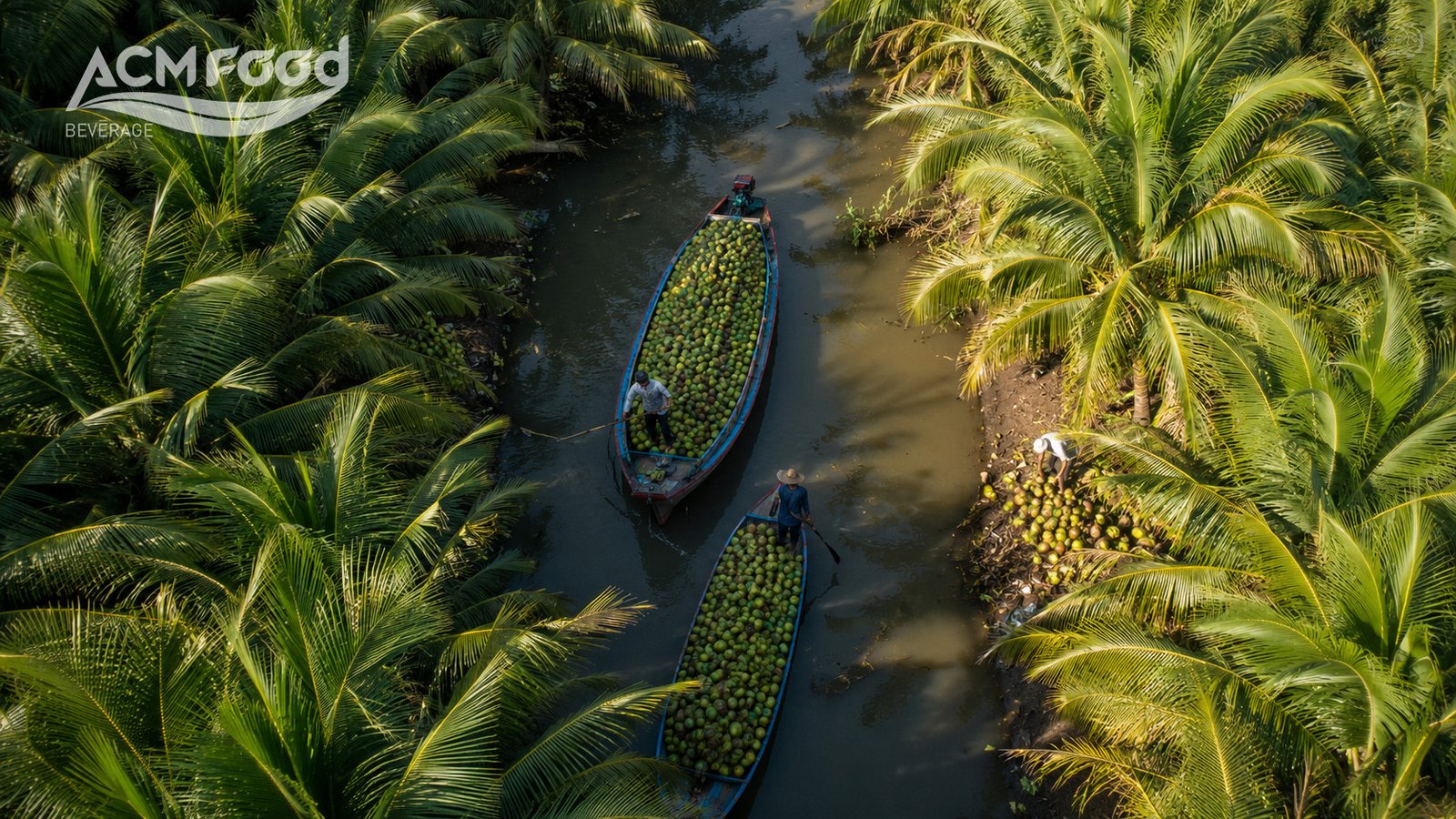
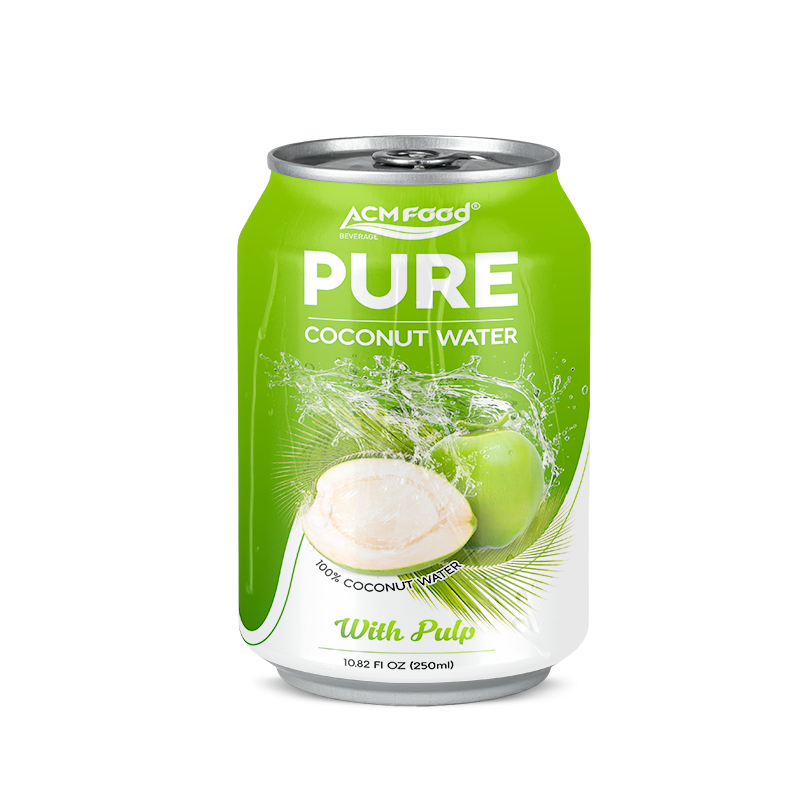
ACMFOOD Beverage Co., Ltd. is a Vietnamese manufacturer and direct exporter of canned coconut water, working with importers, distributors and retail chains across Europe, the Middle East, Asia and North America.
Rather than restate marketing claims, the practical position is this: the document pack in Stage 1 is supplied on request as a set, including full certificates with scope, third-party Certificates of Analysis and a specimen export document set. Batch records for Brix and pH are available for review. Samples can be supplied from different production dates so that consistency — not a single good can — is what you evaluate. Third-party pre-shipment inspection is welcomed rather than resisted.
If you are running this checklist against a shortlist right now, send the Stage 1 list to us and to every other candidate on the same day, and compare what comes back. That comparison will tell you more than any supplier page, including this one. To discuss a specific project, see our coconut water private label programme or contact the export team directly.
What we can put in front of an audit
The document pack described above maps to our certifications and food safety systems, and the plant checks map to our production process. For the full picture of what the factory produces, see our beverage product capabilities. To start due diligence on a specific product, request a quote.
Request a quote