


 Français
 Español
 العربية
 한국어
한국어Picking a stock SKU and putting your label on it is a fast, low-risk way to enter the category. Custom development is a different exercise: you are asking a factory to create a product that does not yet exist, and the work happens in a laboratory before it ever reaches a filling line. This article walks through that process as a manufacturer actually runs it — the brief, the bench work, the scale-up, the stability study — so you know what you are committing to and where projects usually go wrong.
If you want the commercial side of private label instead — margins, MOQ, artwork, contracts — that is covered in the coconut water private label guide. For plant and quality systems, see coconut water manufacturing and QC. This page is about product development only.
Stock SKU, adapted SKU, or true custom development
Three different things get called “custom”, and they carry very different timelines and costs. Being explicit about which one you are asking for prevents most of the friction in early conversations.
- Stock SKU with your label. The formulation is the manufacturer’s, unchanged. Fastest route to market; no development cost; no exclusivity.
- Adapted SKU. An existing base is modified — sweetness shifted, a fruit component added or removed, fill volume changed. Moderate development time, and the base recipe remains the manufacturer’s.
- True custom development. A new formulation built to your brief, with bench trials, pilot runs and a stability study. The longest path, and the only one where a meaningful exclusivity claim is possible.
Most brands overestimate how much customisation they need. If your differentiation lives in packaging, positioning and distribution rather than in liquid, an adapted SKU will reach shelf months earlier for a fraction of the effort.
Writing a formulation brief a factory can actually work from
A brief that says “natural, not too sweet, tastes fresh” produces three rounds of samples and no convergence. These are the fields a development team needs before bench work starts.
- Target market and channel. This determines permitted additives, labelling rules and the certifications the product must carry — all of which constrain formulation before flavour is even discussed.
- Base declaration. Coconut water only, coconut water with pulp, coconut water blended with fruit juice, or coconut water from concentrate. This is the single biggest fork in the process.
- Target Brix and acceptable range. If you do not have a number, name a reference product you want to sit near and let the lab measure it.
- Sweetness policy. No added sugar, added sugar to a stated level, or non-nutritive sweetener. Each option changes the process and the claim set.
- Sensory direction. Describe it against references: closer to fresh young coconut, or a rounder cooked note; clear or cloudy; with or without visible pulp.
- Pack format and fill volume, because carbonation, pulp size and thermal load all interact with the container.
- Shelf life required at ambient temperature, and the transit plus retail time you actually need to cover.
- Claims you intend to make on pack. Bring these to the lab at the start. Retro-fitting a claim to a finished formulation is far harder than designing for it.
- Landed cost ceiling. Unstated budgets produce samples nobody can afford to buy.
Brix, pH and why consistency is harder than flavour
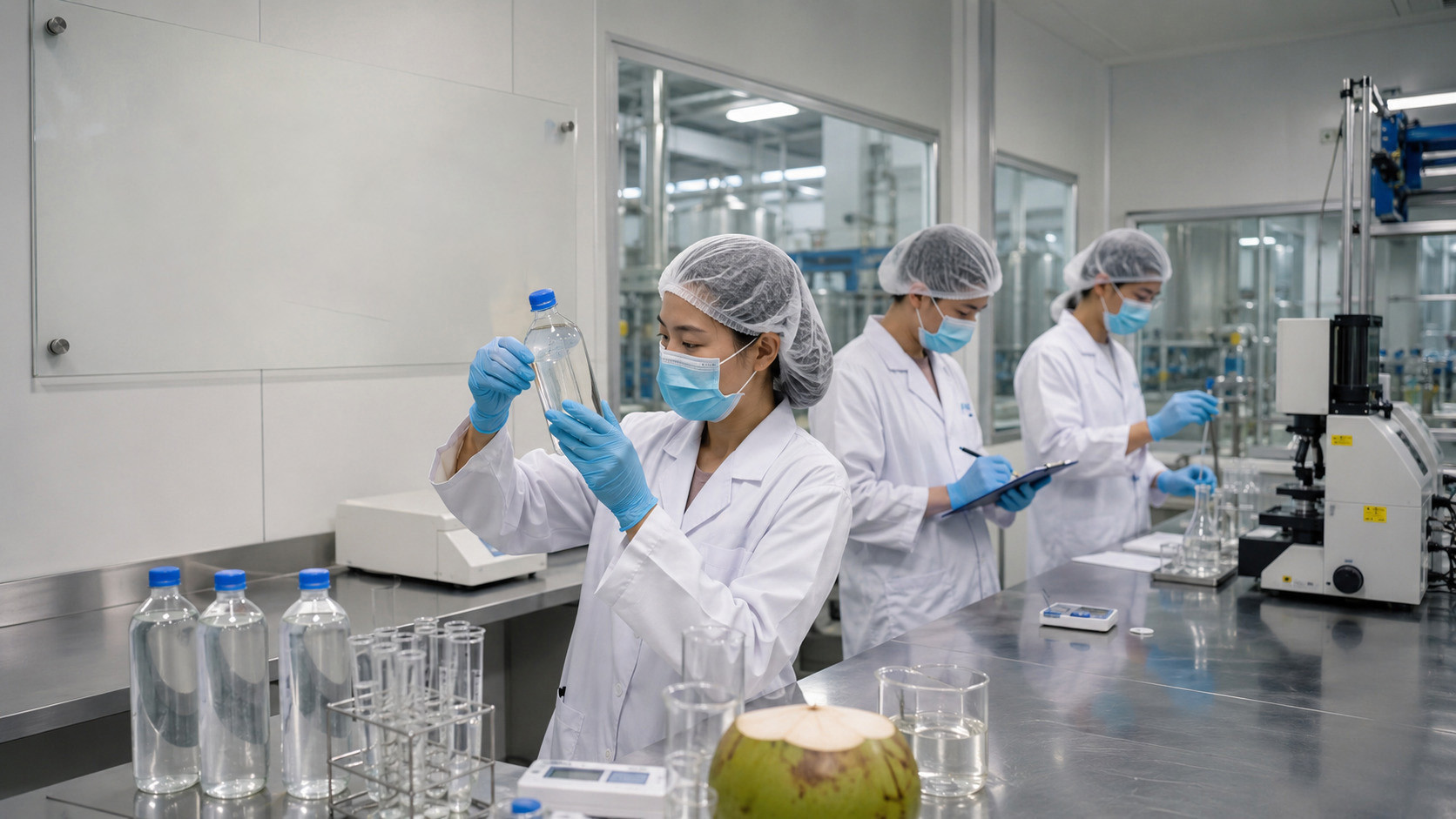
Coconut water is an agricultural liquid, not an engineered one. Sugar content and mineral profile vary with coconut variety, maturity at harvest, growing region and season. A formulation that hits a target on a bench sample in one month can drift in another if nothing is done to control it.
Development therefore has to specify a band, not a point. A workable specification names a target Brix with a tolerance either side, a pH range, and the standardisation method used to stay inside them. pH deserves particular attention because it drives the thermal process required for safety and stability — a formulation change that moves pH can change the entire processing regime, and with it the flavour and the cost.
Blends complicate this further, because the fruit component brings its own seasonal variation. This is where an honest development partner will push back on an over-tight specification: a tolerance too narrow to hold in production is not a quality standard, it is a future dispute.
Blend development
Fruit-blended coconut water is the fastest-moving part of the category, and the development questions are consistent across projects.
Ratio and identity. How much fruit before the product stops reading as coconut water? There is no universal answer, but the ratio decides both the sensory result and how the product must be declared on the label in most markets.
Colour stability. Several tropical fruit components darken over shelf life, especially in clear packaging. In an aluminium can this matters far less, which is one practical reason blends are often easier to commercialise in cans than in PET.
Flavour survival through thermal processing. Delicate top notes are the first thing lost to heat. Development normally compensates by adjusting the fruit component or the flavour system, and the correct way to judge the result is on a sample that has been through the full commercial process — never on a bench blend that has not been heat treated.
Regional preference. Pineapple and mango blends perform strongly in the Middle East and North Africa; passion fruit and lychee tend to travel well in Asia-Pacific; citrus-forward profiles suit European convenience. Let the target market set the shortlist rather than internal taste preference.
Functional fortification: what survives, and what does not
Adding a functional ingredient is easy to specify and hard to deliver. The constraint is that most shelf-stable coconut water goes through a significant thermal process, and not every ingredient tolerates it.
- Minerals such as added potassium or magnesium are heat-stable and generally straightforward, though they affect taste at meaningful inclusion levels.
- Vitamin C degrades over shelf life as well as during processing, so overage has to be calculated against the declared value at end of life, not at production. This must be designed in, not discovered at month nine.
- Live probiotic cultures do not survive standard thermal processing. Shelf-stable products in this space typically rely on spore-forming strains, and any such claim needs supporting count data at end of shelf life.
- Collagen and protein additions change viscosity and clarity and can cause sedimentation. They are feasible but should be expected to change the visual character of the product.
- Botanical extracts vary widely in heat stability and frequently introduce bitterness at functional doses.
For any functional claim, the question to ask the development team early is simple: what is the measured level at the end of the declared shelf life, and which laboratory measured it?
Sparkling coconut water
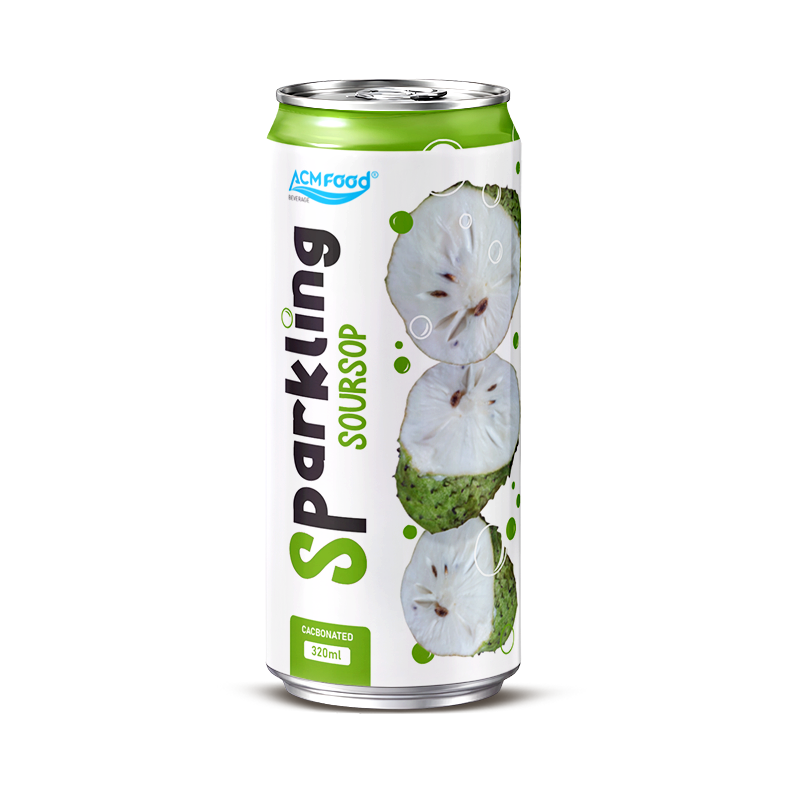
Carbonation is a genuine formulation project rather than a finishing step. Carbon dioxide alters perceived acidity and sweetness, so a still formulation carbonated without adjustment usually tastes thinner and sharper than intended. Carbonation level has to be specified and held, and it interacts with fill temperature, headspace and can specification. Cans handle carbonated coconut water well, which is why most commercial sparkling variants in the category are canned.
From bench sample to first production run
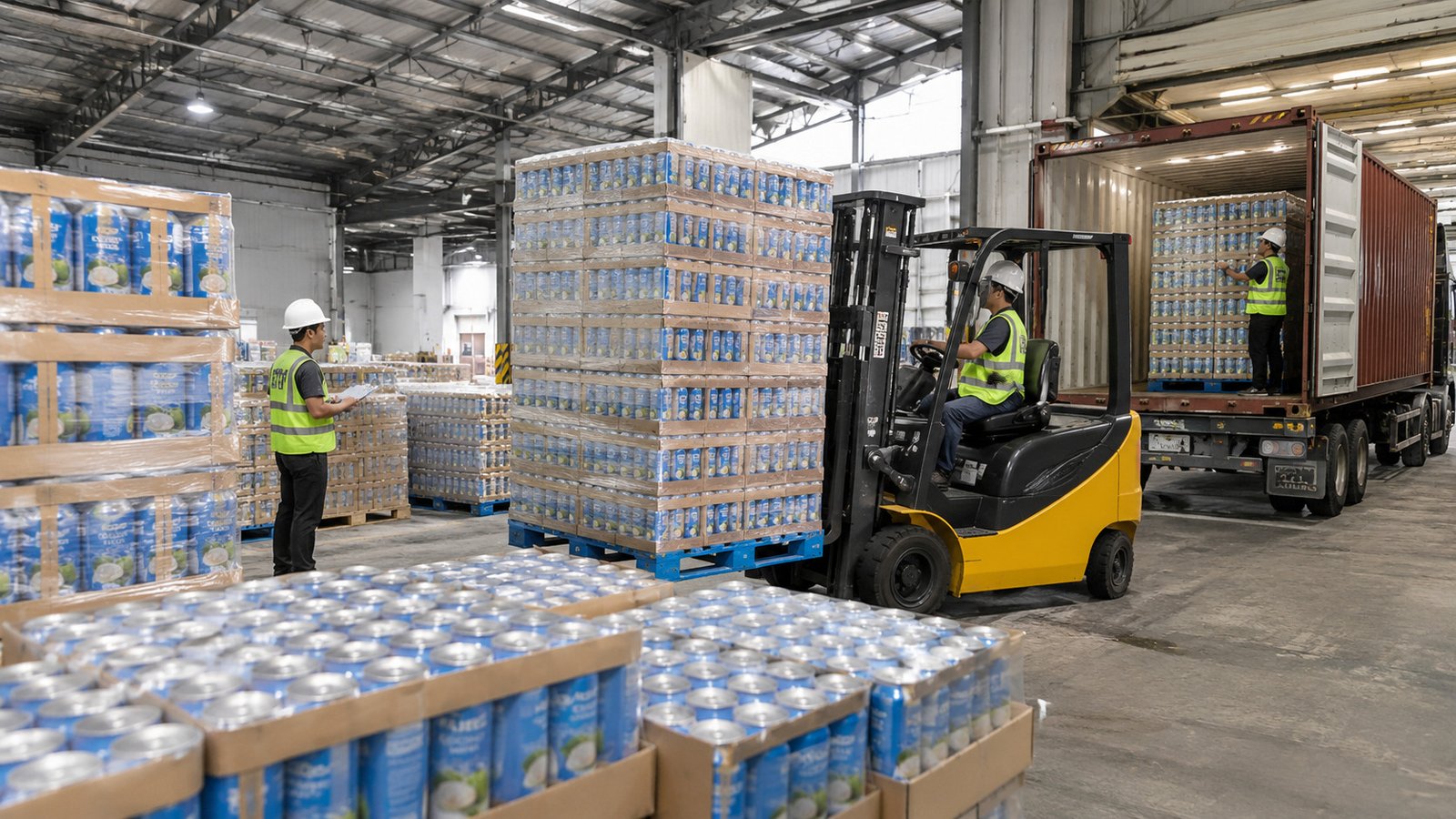
The stages below are where the timeline actually goes. Compressing any of them tends to move the risk downstream rather than remove it.
- Brief alignment. The written brief is converted into a draft specification and a feasibility assessment, including whether the claims requested are achievable with the intended process.
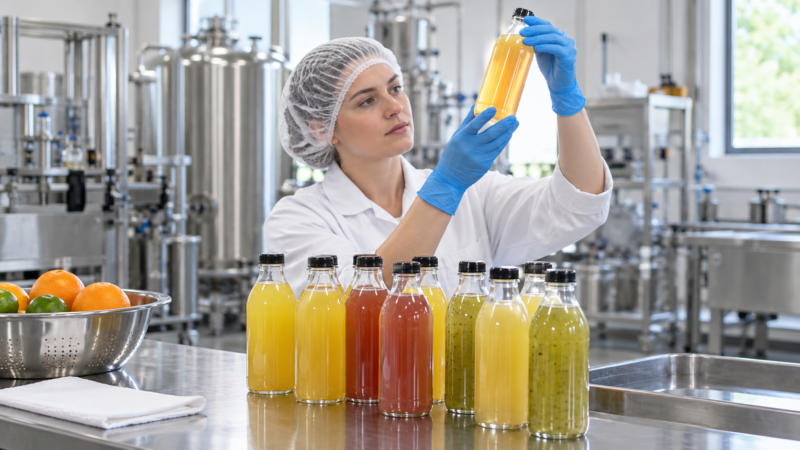
- Bench trials. Two to four candidate formulations are produced at laboratory scale for internal screening.
- Processed samples. Shortlisted candidates are produced through the actual commercial thermal process and packed in the intended container. This is the first sample worth judging seriously.
- Buyer evaluation and revision. Expect one or two revision cycles. More than three usually indicates the brief was underspecified.
- Specification sign-off. Brix, pH, sensory description, fill weight, shelf life and packaging are frozen into a document that becomes an annex to the supply agreement.
- Stability study. Samples are held under defined conditions and tested at intervals for microbiological safety, sensory quality, colour and any declared nutrient. Accelerated studies can support a provisional launch, but real-time data is what ultimately validates the claim.
- Pilot run. A limited production run confirms the formulation behaves on line equipment rather than in a laboratory.
- Artwork and regulatory review. The label is checked against the final specification and the destination market’s rules. Nutritional values must come from analysis of the final formulation.
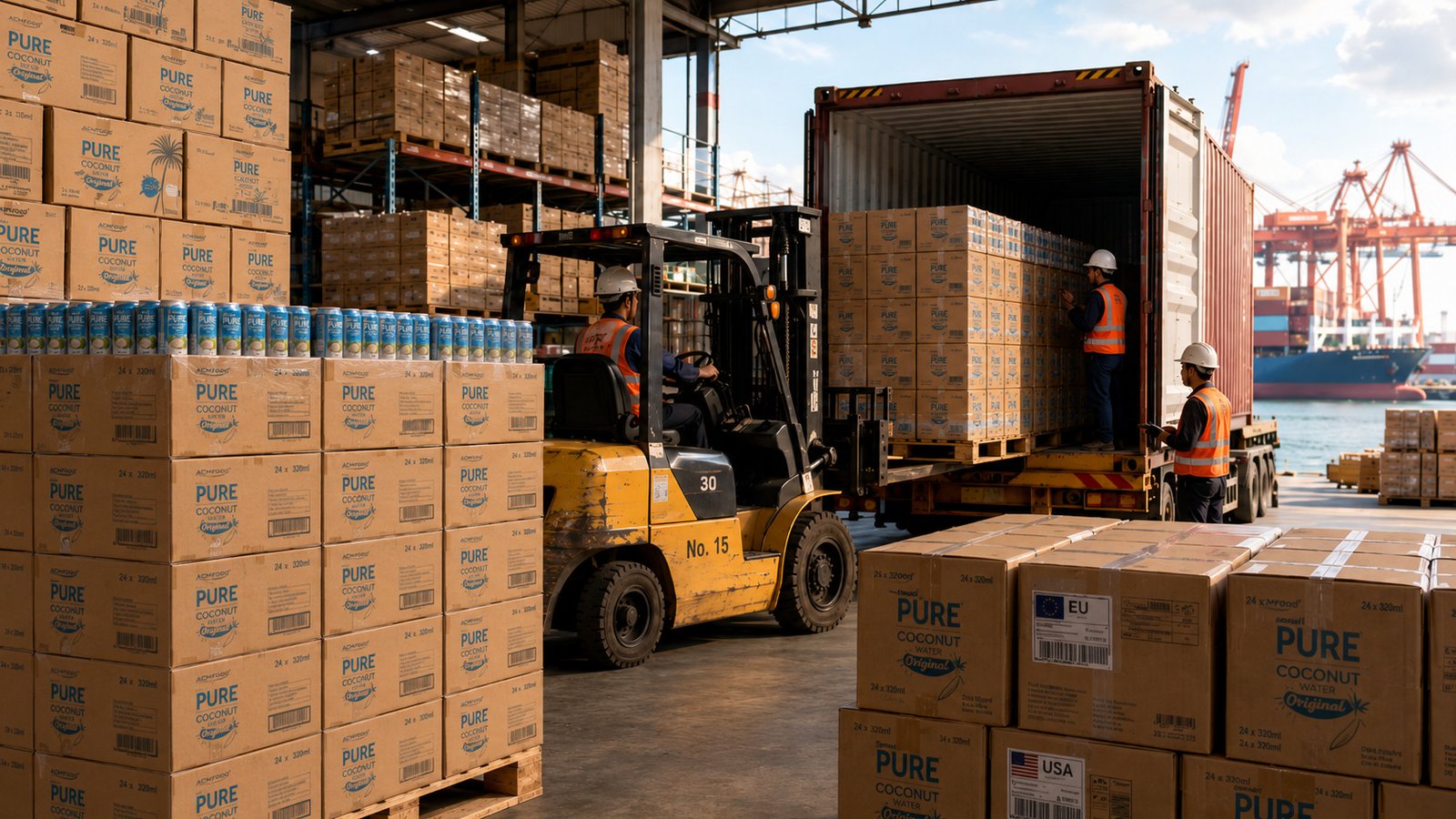
- First commercial production. Pre-production quality check, in-line monitoring, finished goods inspection, then loading.
Timeline, cost and what causes overruns
An adapted SKU can typically move from brief to first production in a matter of weeks. A true custom formulation with a stability requirement runs considerably longer, and the single largest variable is not laboratory work — it is the stability study, because time cannot be compressed out of it.
The overruns that recur across projects are predictable: claims introduced late that force reformulation; packaging selected after the formulation rather than alongside it; artwork approval treated as a parallel task and then becoming the critical path; and revision cycles driven by a brief that never named a sensory reference. Each of these is avoidable at the brief stage and expensive afterwards.
Who owns the formulation
Settle this in writing before bench work starts. Three arrangements are common: the recipe is developed by the manufacturer and remains theirs, available to other customers; it is developed jointly and held exclusively for you for a defined period or volume commitment; or you supply an existing recipe and it remains entirely yours. Exclusivity that costs the manufacturer capacity is normally tied to a volume undertaking, and that is a reasonable trade — but it needs to be a clause, not an understanding.
How ACMFOOD runs custom development
ACMFOOD Beverage Co., Ltd. develops and produces canned coconut water and coconut-based blends in Vietnam for importers, brand owners and retail chains, on both adapted-SKU and full custom bases.
The process follows the stages above: a written brief and feasibility assessment first, bench candidates next, then samples produced through the real commercial process and packed in the intended can — because a bench blend that has never been heat treated cannot tell you what your product will taste like on shelf. Specification is frozen and attached to the supply agreement before packaging spend is committed, and stability data is generated against the declared shelf life rather than assumed from a similar product.
If you have a product concept and want to know whether it is producible as specified, the useful first step is the brief. Send the fields listed above, and the development team will come back on feasibility, constraints and realistic timing before anyone discusses price.
Where this sits in our capability set
Custom development is one part of what the factory can do. For the full range of formats, ingredients and processes available, see our beverage product capabilities. To take a developed formulation into a branded launch, see private label beverage manufacturing. When you have a brief ready, request a quote.
Request a quote