


 Français
 Español
 العربية
 한국어
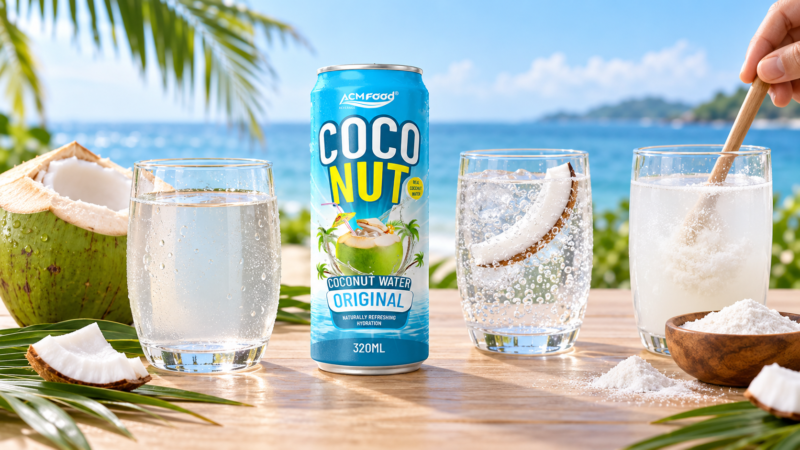
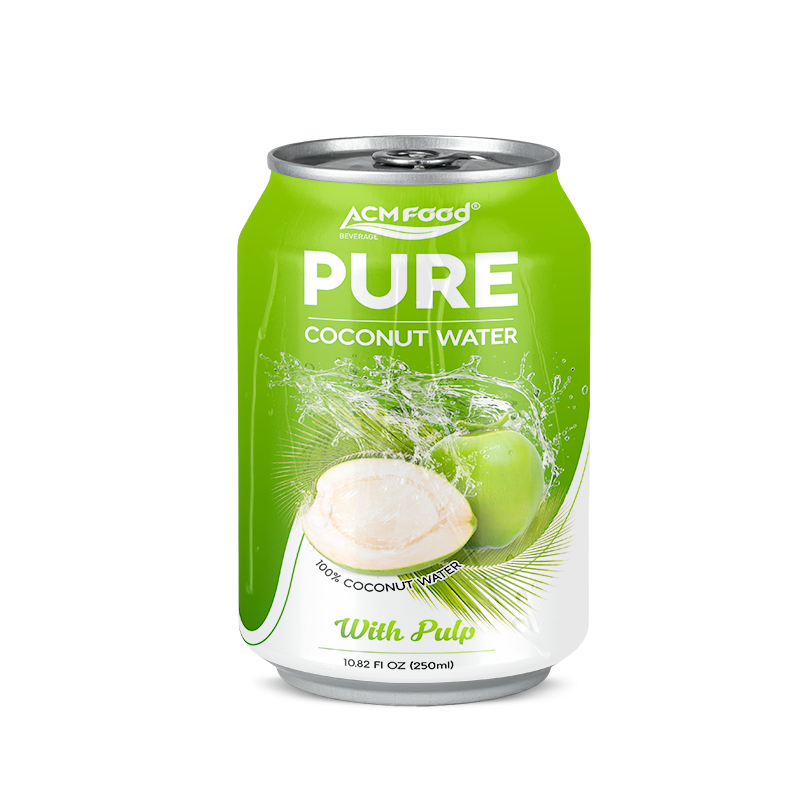
한국어100% coconut water is a drink made only from the liquid of young green coconuts, with no added water, sugar, flavouring or preservatives. For a beverage brand, the more useful label is “100% coconut water, not from concentrate”, because it confirms the liquid was never concentrated and reconstituted.
Products carrying the same “100%” label can still differ in harvest maturity, heat treatment and pack format. This sourcing guide explains what the term means, how coconut water is processed, why canned coconut water is the most practical B2B format, and what to ask a supplier. For product options, see 100% coconut water.
What does “100% coconut water” actually mean?
In the US, the EU and most of Southeast Asia, “100% coconut water” means the product contains only coconut water, with nothing added. It may still be made from concentrate unless the label also says “not from concentrate”.
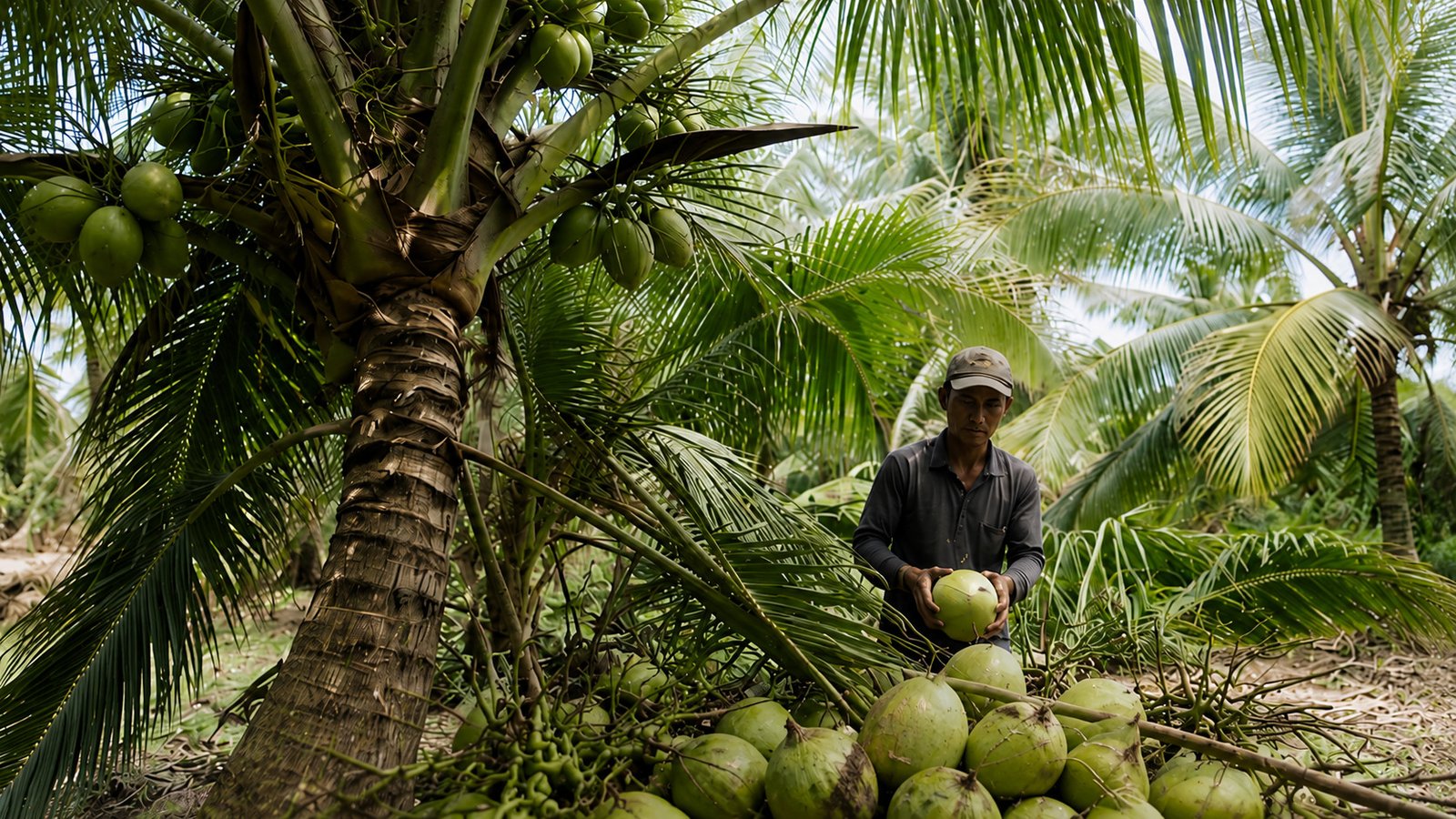
Harvest maturity matters too. Young green coconuts, harvested at roughly 6–9 months, give the clearest, most naturally sweet water; older nuts give flatter flavour. Vietnam and Thailand both grow coconuts suited to premium drinks, but the supplier’s harvesting and intake controls matter as much as the origin.
| Label | What it tells you |
|---|---|
| 100% coconut water | Only coconut water; nothing added |
| Not from concentrate (NFC) | Never concentrated and reconstituted |
| From concentrate | Water removed and later added back |
| Coconut water drink | May contain added water, sugar or flavours |
How is coconut water extracted and processed?
Coconuts are cleaned and opened in a controlled facility; the water is drained, filtered to remove shell and pulp fragments, and then treated to make it safe. Treatment is unavoidable for commercial products; what differs is how gently it is done.
- UHT processing gives long shelf life but has the strongest effect on flavour.
- Gentler pasteurisation combined with aseptic filling or proper can sealing keeps more of the natural taste while meeting food safety standards.
- Batch testing for Brix, pH and microbiological safety should happen before release.
Raw coconut water starts to ferment within hours at ambient temperature, which is why the distance between farm and factory matters.
What are the limits of fresh and bulk coconut water?
Fresh coconut water needs an unbroken cold chain, and bulk aseptic coconut water mostly suits manufacturers who fill their own drinks rather than brands selling finished products.

- Fresh, chilled: refrigerated sea freight from Southeast Asia to Europe, the Middle East or North America takes weeks, and any temperature break can spoil the product.
- Bulk aseptic (drums or bag-in-box): can be stored at ambient temperature but needs careful handling and a filling line at destination.
- Consistency: Brix and flavour vary with the season, so without strong intake QC the taste can shift from batch to batch.
Why is canned coconut water the best B2B format?
Canned coconut water arrives as a finished, shelf-stable, retail-ready SKU that needs no cold chain, no reconstitution and no co-packer at destination.
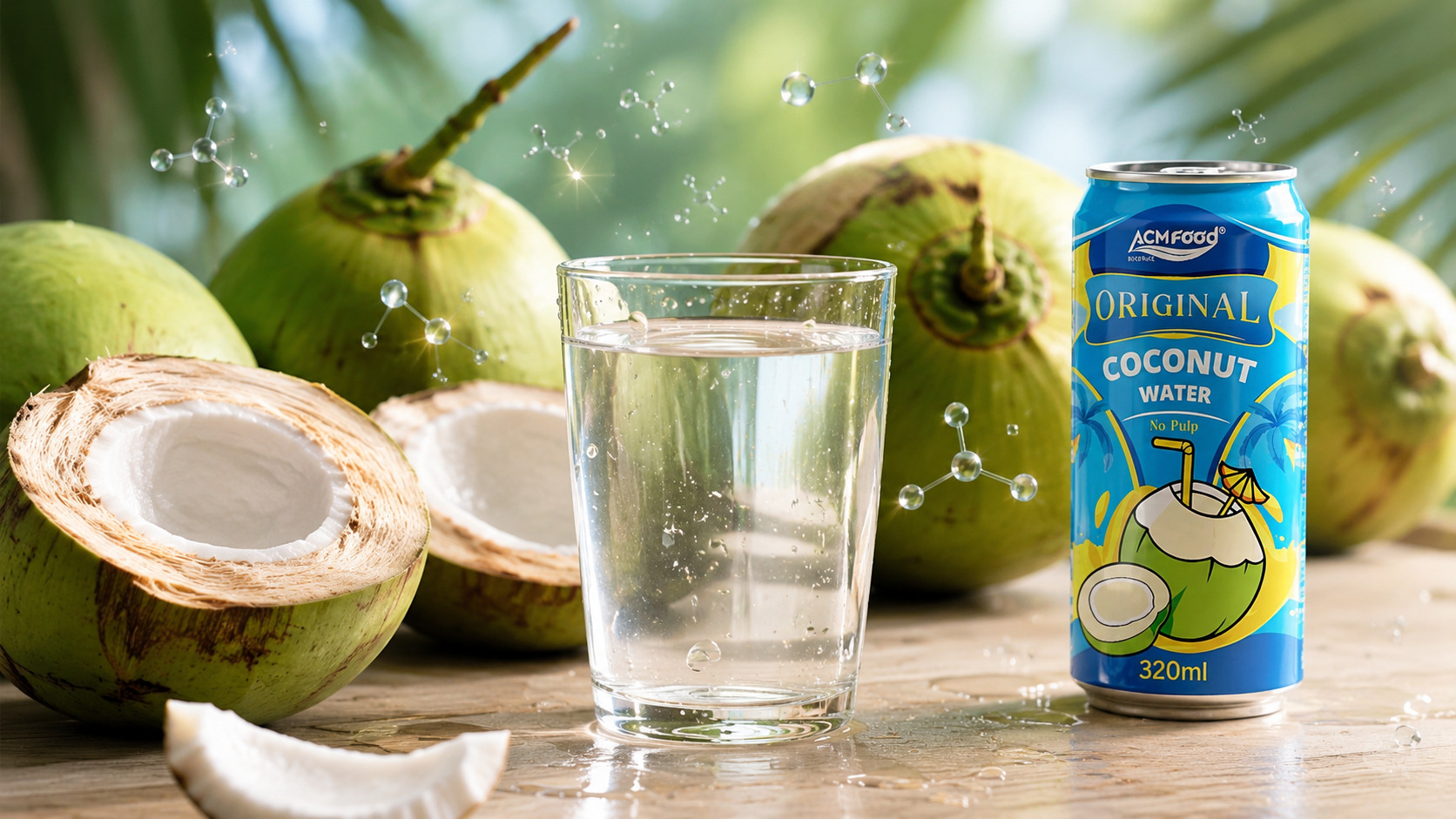
- Protection: cans block light and withstand the handling of international freight.
- Logistics: properly pasteurised and sealed cans store and ship at ambient temperature.
- Shelf life: typically 12–18 months, with a fixed nutritional profile for the label.
- Consistency: controlled Brix across production runs reduces taste complaints.
- Clean label: a can that lists only “coconut water” competes in almost every market.
Why source canned coconut water from Vietnam?
Vietnam is a major grower of young green coconuts, concentrated in the Mekong Delta, and its manufacturers have built the certifications, documentation systems and capacity to supply the US, EU and Middle East. Lead times are competitive and OEM/ODM options are broad, so a brand can launch without owning a factory.
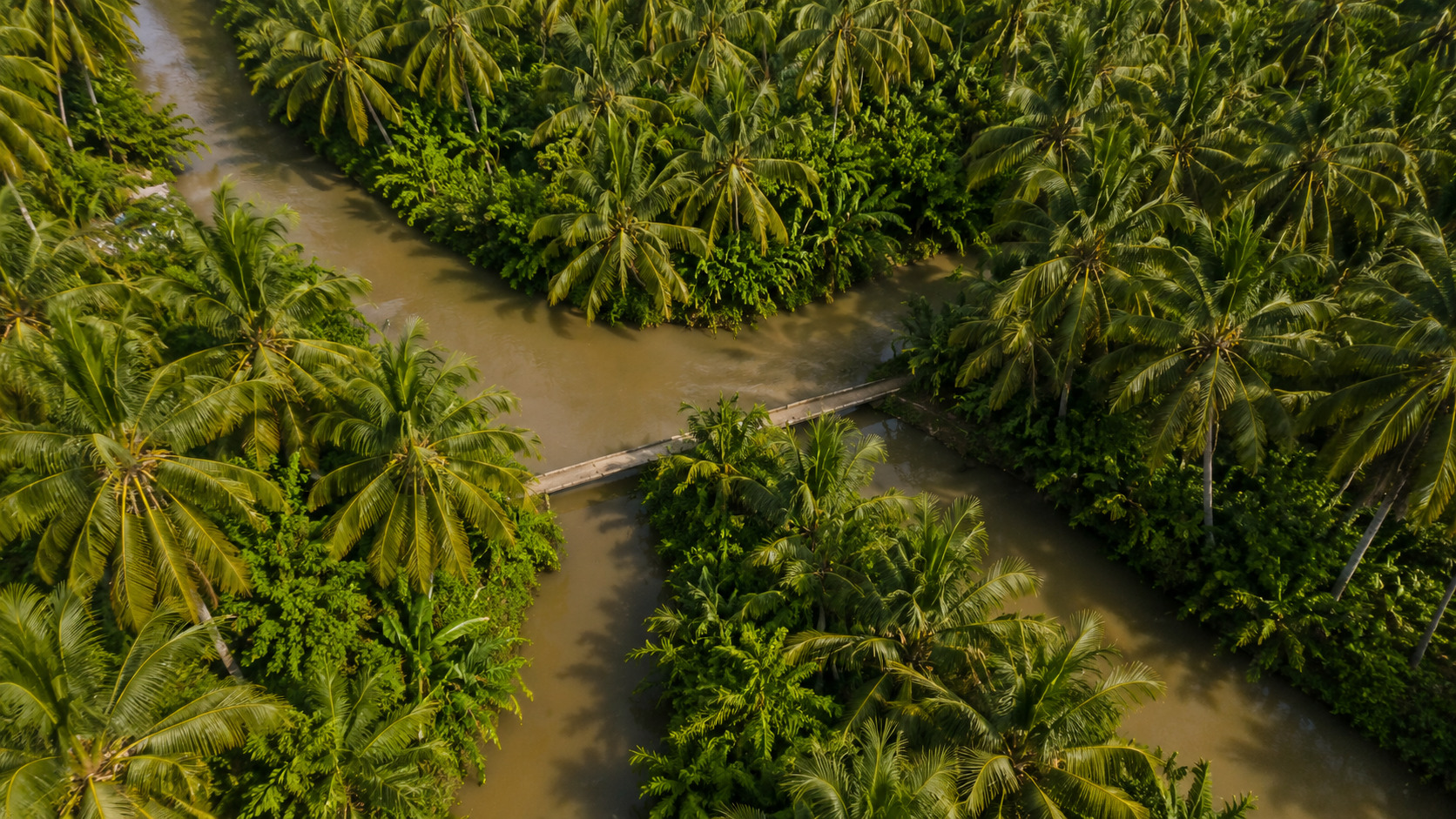
ACMFOOD Beverage Co., Ltd. is a Ho Chi Minh City OEM/ODM manufacturer of tropical beverages for export, with a factory in Tân Phú Trung Industrial Park, Củ Chi, and supply capacity of 20,000 cartons per day. Its range includes pure coconut water and blended coconut water with fruit flavours for private label, with formulation, packaging design and export production handled in one place, including adjustments to Brix or flavour for local markets.
What should you ask a canned coconut water supplier?
Five questions separate suppliers who can deliver from those who cannot:
- Is it from concentrate or not from concentrate? Get it in writing with lab documentation.
- What is the target Brix range and how is it controlled? Natural variation is normal; uncontrolled variation is a quality problem.
- Which certifications cover the facility and the product? Look for food safety management certifications recognised in your market.
- What are the lead time and minimum order quantity? Together they show whether the supplier fits your stage.
- Can you send samples from a recent production run? Not a specially prepared batch.
Frequently asked questions
Is 100% coconut water always not from concentrate?
No. “100%” means nothing was added; it can still be reconstituted from concentrate. Look for “not from concentrate” on the label.
How long does canned coconut water last?
Typically 12–18 months unopened, depending on processing and storage.
Does canned coconut water need refrigeration?
Not before opening, if it is properly pasteurised and sealed. Refrigerate after opening.
Conclusion
100% coconut water should mean only coconut water, ideally not from concentrate, from young nuts processed quickly and gently. For brands and importers, canned coconut water from a certified manufacturer is the simplest way to get a consistent, shelf-stable, clean-label product to market.
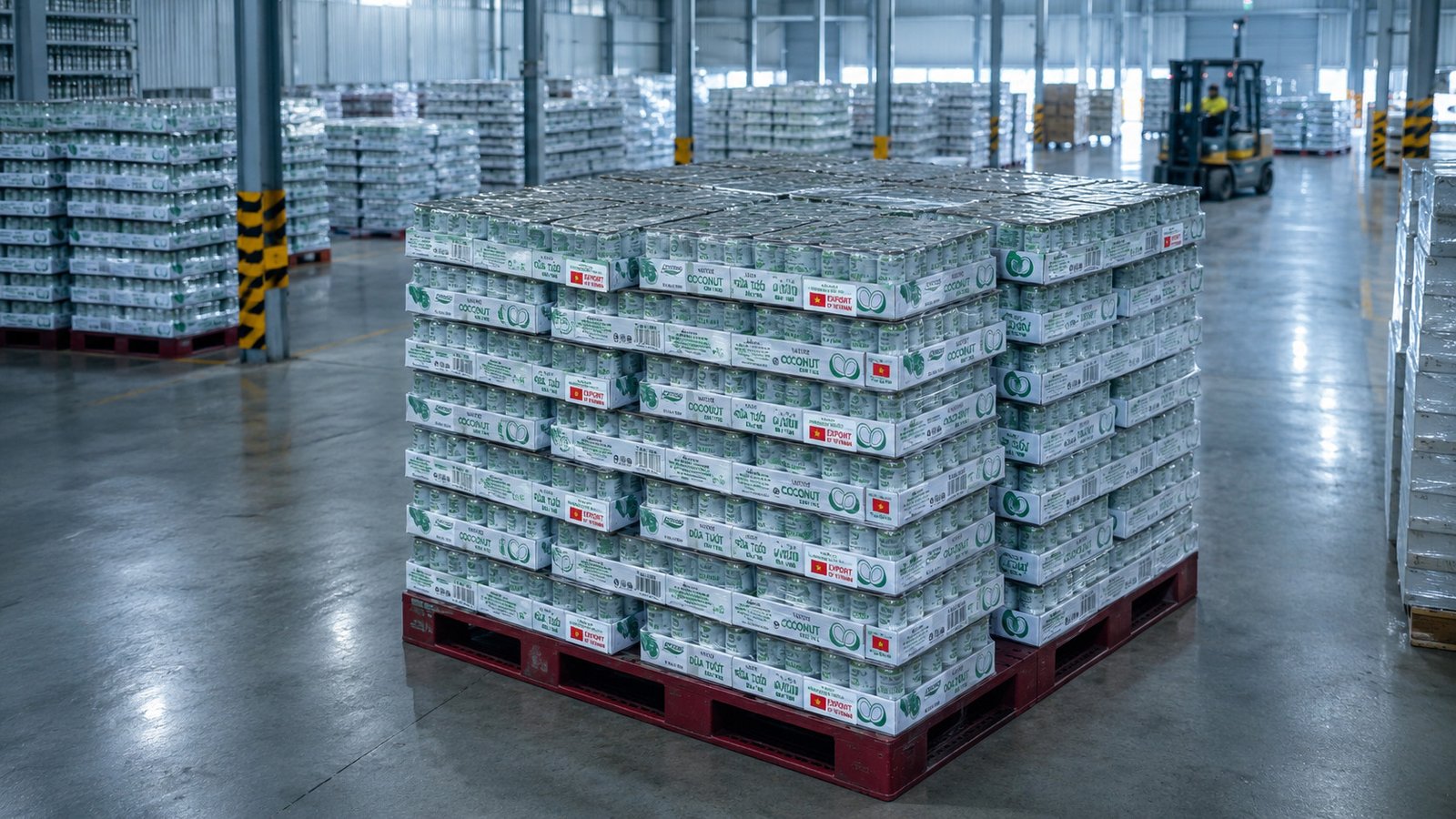
If you are evaluating suppliers, request production samples, review certifications and discuss your volume plan. See beverage product capabilities, our OEM manufacturing programme, private label beverages and ingredients and sourcing. To discuss a specification, request a quote.
Request a quote