


 Français
 Español
 العربية
 한국어
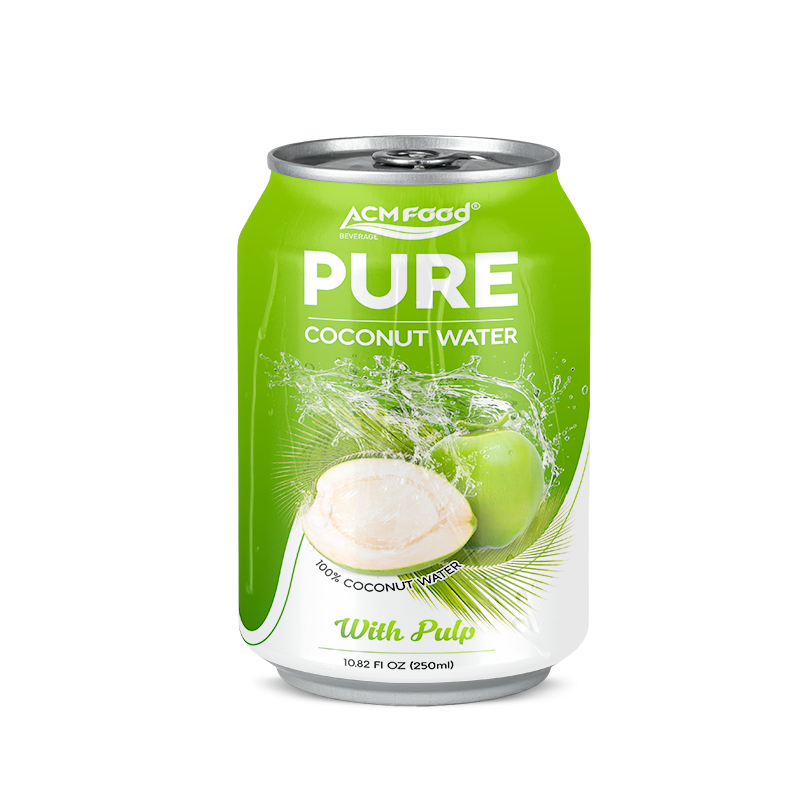
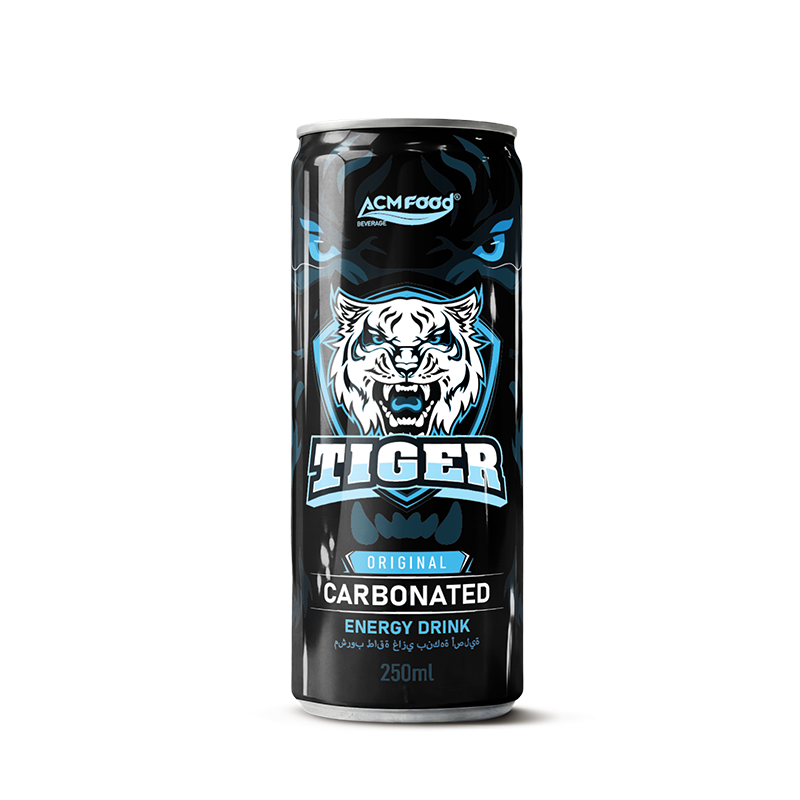
한국어A coconut water energy drink combines coconut water with a natural caffeine source such as green coffee beans, green tea or guarana. It appeals to Gen Z and wellness consumers because it offers energy with a short, recognisable ingredient list, natural electrolytes from the coconut water and no synthetic taurine or artificial colours.
Canned coconut water energy drinks now sit next to conventional energy drinks in health-focused retailers in North America and Europe. This article explains what drives the demand, what the drink typically contains, and what importers should consider when sourcing it.
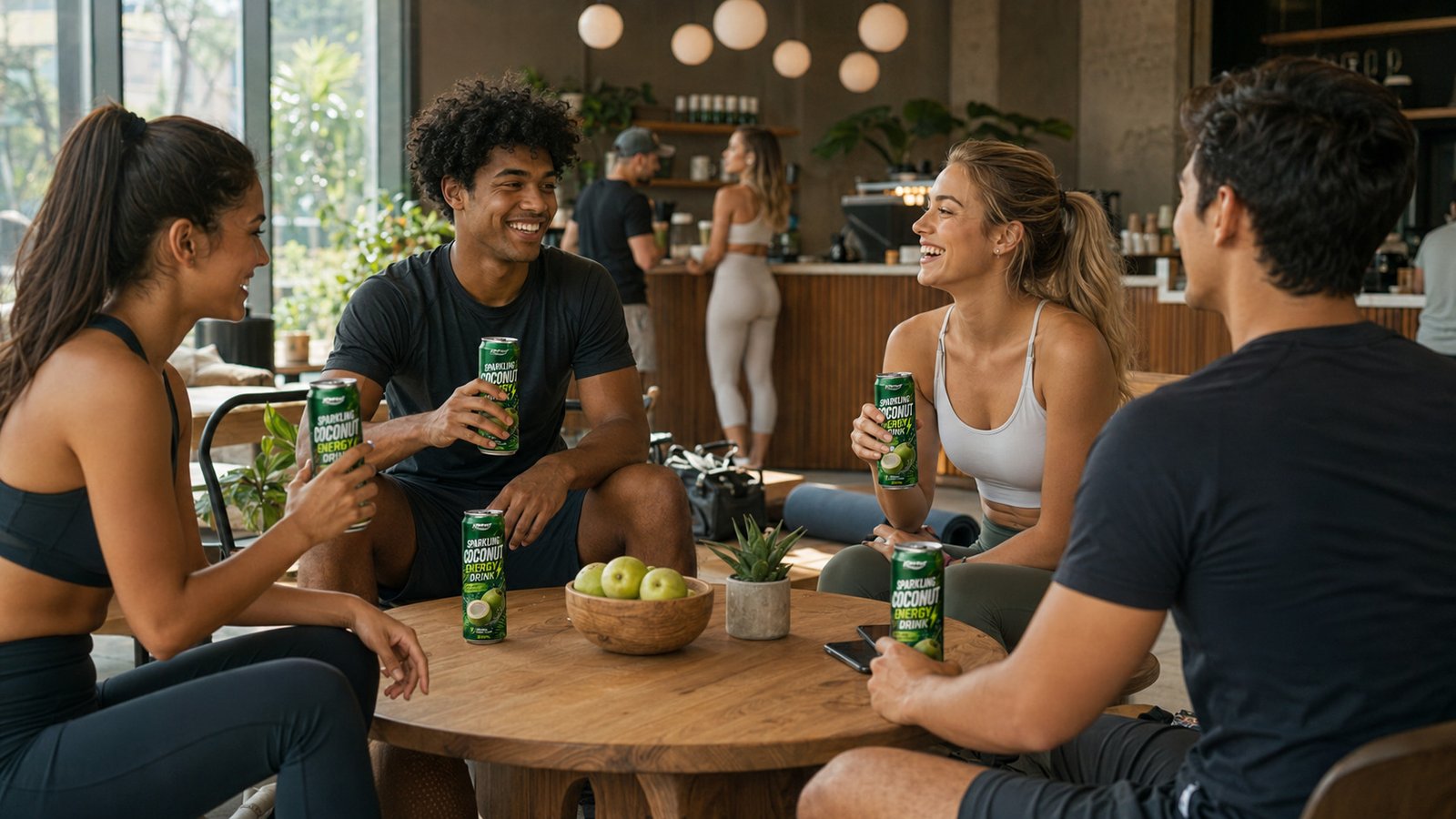
Why do Gen Z and wellness consumers choose coconut water energy drinks?
Younger consumers still want functional energy, but they read labels closely and prefer natural caffeine and clean ingredient lists over synthetic formulas and bold branding.
- Ingredient transparency: a label such as “coconut water, natural caffeine from green coffee beans, vitamin C” is easy to understand.
- Natural caffeine: green coffee, green tea and guarana are seen as gentler, more natural sources.
- Plant-based and clean label: no artificial colours or synthetic additives.
- Origin story: coconut water from Vietnam, Thailand or Indonesia gives the brand a narrative.
- Sustainability: recyclable aluminium cans fit eco-conscious buying habits.
What does a coconut water energy drink contain?
Most products combine a coconut water base with a moderate dose of natural caffeine, roughly comparable to a cup of coffee, and the electrolytes naturally present in coconut water.
| Component | Source | What to check |
|---|---|---|
| Base | Coconut water from young green coconuts | Not from concentrate; share of coconut water |
| Caffeine | Green coffee beans, green tea or guarana | mg per can, within local limits and labelling rules |
| Electrolytes | Naturally present: potassium (about 600 mg per 240 ml of coconut water, per USDA), sodium, magnesium, calcium | Declared values per serving |
| Extras | Vitamin C, fruit or espresso flavours, carbonation | Permitted additions and claims per market |
Coconut water is a light hydration base, but caffeine limits, warning statements and claims such as “hydrating” or “energy” are regulated differently in each country, so check every destination market.
Why is the can the right format?
Cans solve three problems at once: shelf stability through pasteurisation, portability for on-the-go consumers, and shelf presence that competes directly with conventional energy drinks. The format also makes flavour extensions easy, such as sparkling, citrus or espresso versions, which brands use to widen their range.
Which market forces favour importers?
- Energy is evolving, not shrinking: demand is shifting toward cleaner, plant-based formulas within the energy category.
- Coconut water keeps growing: research firms including Grand View Research and Fortune Business Insights forecast continued growth for coconut water.
- More channels: supermarkets remain the largest channel, while online retail lets new brands build a following before winning shelf space.
- Tropical and hybrid drinks: products that combine functional energy with natural, familiar flavours are among the fastest-growing segments.
What should importers evaluate?
Not every coconut water energy drink is the same product. The differences that matter are formulation, origin transparency, certification and the balance of calories, caffeine and electrolytes.
- Which wellness segment in your market is most active, and which channels reach it?
- What is the caffeine dose and source, and does it meet local rules?
- Is the coconut water base not from concentrate, and what share of the drink is it?
- Can the supplier provide consistent volume, quality and import documentation?
Frequently asked questions
How much caffeine is in a coconut water energy drink?
Typically a moderate amount, often similar to a cup of coffee, but it varies by product. Check the label.
Is a coconut water energy drink healthier than a regular energy drink?
It usually has a shorter, more natural ingredient list and no artificial colours. It still contains caffeine and should be consumed within recommended limits.
Where does the caffeine come from?
Usually green coffee beans, green tea or guarana.
Conclusion
Coconut water energy drinks meet Gen Z’s demand for energy with clean, plant-based ingredients and a clear origin. For importers, the category is still early in many markets; success depends on a well-balanced formula, correct labelling for each market and a reliable coconut water supplier.
For the categories, formats and ingredients the factory runs, see beverage product capabilities. For moving a recipe into production, see contract beverage manufacturing; to launch under your own label, see private label beverages. To brief a concept, request a quote.
Request a quote