


 Français
 Español
 العربية
 한국어
한국어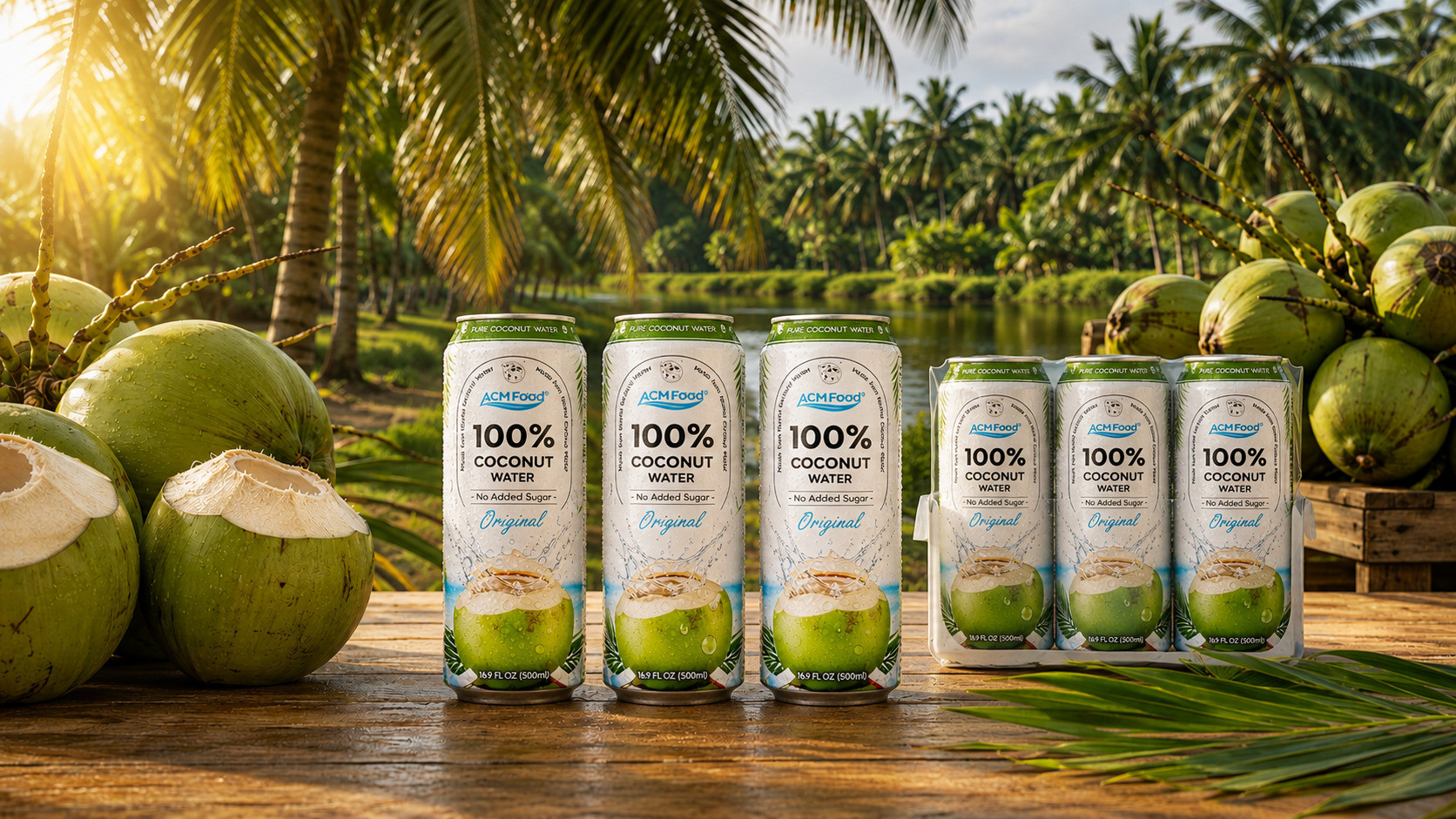
Here is the question that separates a supplier who can pass a retailer audit from one who cannot: pick a can of coconut water off a shelf in Rotterdam or Chicago, and ask the manufacturer to tell you which harvest the water in it came from. A factory with a real traceability system answers in minutes. A factory without one starts explaining.
This article follows 100% coconut water through every custody handover between the plantation and the retail shelf, and sets out what record should exist at each step, what breaks, and what to ask for when you are the one who will have to answer a recall.
For what happens inside the plant, see coconut water manufacturing and QC. For the export leg, see importing coconut water from Vietnam. This page is about the chain of custody that runs through both.
Why traceability has stopped being optional
Three pressures have converged. Retailers increasingly require documented traceability as a condition of listing, particularly own-brand products where the retailer carries the reputational risk. Regulators in major import markets expect a food business to identify its immediate supplier and immediate customer for any lot, and to withdraw product quickly when required. And shoppers now read origin claims as a quality signal, which means any origin story you tell has to be one you can actually substantiate.
For a brand owner the exposure is direct. If a problem emerges in a product carrying your name, the ability to isolate one lot rather than withdraw everything you have in the market is the difference between a manageable incident and a business-threatening one.
Step 1 — The plantation

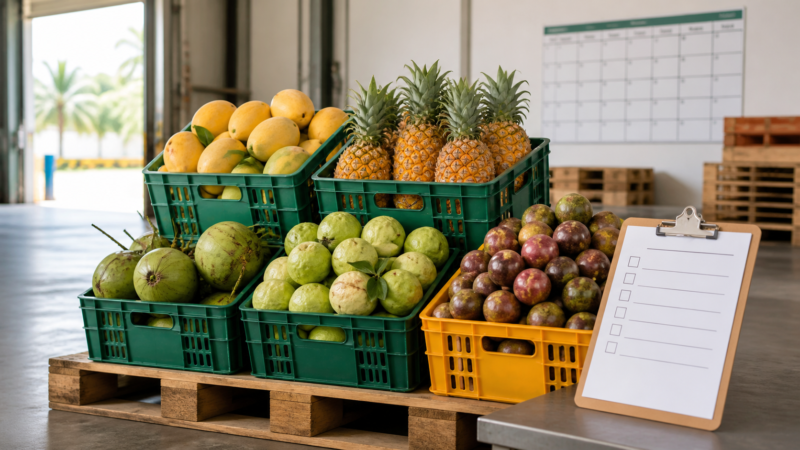
This is where traceability is either established or permanently lost. The critical distinction is whether the factory buys from identified farms under contract, or from consolidators who aggregate fruit from many unrecorded sources. Both models exist and both can produce good coconut water — but only the first can tell you where the fruit came from.
What to ask: does the factory hold a register of supplying farms with location and approximate area? Is fruit received with any farm or collection-point identifier attached? Are agrochemical practices documented, and how are residue controls managed? If the answer is that the factory buys from traders and does not know the farms, then any farm-level origin claim on your packaging is not supportable, and you should not make one.
Step 2 — Collection and transport
Between the tree and the factory gate, two things matter: elapsed time, because it drives the quality of the liquid you will eventually sell, and identity preservation, because fruit tipped into a common pile loses whatever farm identity it arrived with.
Ask how many hours typically pass between harvest and intake, and how that is recorded rather than estimated. Ask whether deliveries are kept as identifiable consignments through intake, or merged. Proximity between growing region and plant helps on both counts — fewer hours and fewer handovers — which is a genuine structural advantage for factories located inside a coconut-growing area rather than trucking fruit across a country.
Step 3 — Goods intake
Intake is the first point where a formal record should exist. A well-run facility logs each delivery with a date, a supplier or collection-point reference, a quantity, and the outcome of a quality assessment against a written standard — including rejections.
Ask to see recent intake records including rejected consignments. A facility whose records show nothing ever rejected is not inspecting fruit; it is receiving it. That is a meaningful finding, and it is visible in five minutes if you ask for the log rather than for a description of the process.
Step 4 — Extraction and batching
This is where the chain most often narrows to a single question: how many intake consignments feed one production batch? Coconut water from many deliveries is combined into a processing lot, and the traceability record has to capture that relationship. Without it, a problem traced to one production lot cannot be connected back to a raw material source, and a raw material problem cannot be connected forward to the lots that need withdrawing.
What should exist is a lot record linking the production batch to the intake references that fed it, with quantities. This is also the basis for mass balance — the reconciliation of raw material in against finished product out, which is what makes an origin or organic claim auditable rather than merely asserted.
Step 5 — Processing and filling

Through processing and filling, the record set should include the process parameters actually achieved for the lot, in-process quality checks, the packaging materials used with their own supplier lot references, and the lot code applied to the finished unit.
Packaging traceability is the part buyers most often overlook. Cans, ends, closures and labels all come from suppliers with their own lots, and a packaging integrity problem is traced through those records rather than through the liquid. Ask whether packaging lot references are captured against production batches.
On lot coding itself, ask what the code on your finished unit actually encodes and whether it can be read without contacting the factory. A code that resolves to a production date and line is far more useful to your own quality team than an opaque serial only the manufacturer can interpret.
Step 6 — Retention samples and finished goods
A properly run plant retains samples of every batch for the full declared shelf life, stored under defined conditions. This is what allows a complaint at month ten to be investigated against the actual product rather than against a similar one. Ask to see the retention store; it is one of the fastest ways to judge how seriously a facility takes its own records.
Finished goods records should link the lot to the shipment, so that a lot number identifies which container it left on and which customer received it.
Step 7 — Export, import and the shelf
Once goods leave the factory, custody passes through the forwarder, the vessel, the destination clearance, your warehouse and your customer. The traceability chain does not end at the port — it simply becomes your responsibility.
Two obligations sit with the brand owner here. Keep records that link the lots you received to the customers you sold them to, so a withdrawal can be targeted rather than total. And keep the storage conditions and dates on your side of the chain, because a quality problem originating in your own warehouse looks identical to a manufacturing problem until the records say otherwise.
Testing the chain: run a mock recall
Descriptions of traceability systems are cheap. Testing one takes an hour and tells you everything.
- Trace backward. Give the factory a lot code from a finished can and ask them to identify the production date, the process record, the packaging lots and the raw material intake references behind it.
- Trace forward. Give them an intake date and ask which finished lots it fed, and which shipments those went out on.
- Check the mass balance. Ask whether the raw material quantity in reconciles with the finished units out for that lot, allowing for normal losses.
- Time it. Retailer requirements commonly expect this within hours, not days. Note how long it actually takes and whether it is produced from a system or reconstructed by hand.
Ask also whether the factory conducts its own mock recalls and how often. Facilities holding recognised food safety certifications generally must; asking to see the last exercise report is a fair and revealing request.
Sustainability claims rest on the same records
If you intend to make claims about sourcing, farmer relationships or environmental practice, understand that they are audited through the same chain of custody. An organic or fair-practice claim requires certified status maintained at every step, with mass balance demonstrating that certified input matches certified output. A “directly sourced” claim requires the farm register from step one.
The honest rule is simple: do not put a claim on a pack that the chain of custody cannot substantiate. Origin region, harvest maturity, time-to-process and processing method are usually all documentable and all persuasive. Vaguer virtue claims are the ones that fail under scrutiny.
A traceability checklist for supplier evaluation
- Farm or collection-point register maintained, with fruit received against identifiable references.
- Documented time from harvest to intake, recorded rather than estimated.
- Intake log including rejections, available for review.
- Lot records linking production batches to raw material intake references.
- Packaging supplier lots captured against production batches.
- Lot code on the finished unit that resolves to a production date and line.
- Retention samples held for the full declared shelf life.
- Finished goods records linking lots to shipments and customers.
- Mock recall performed within the last year, with a report you can see.
- Backward and forward trace demonstrated on request within hours.
How ACMFOOD approaches chain of custody
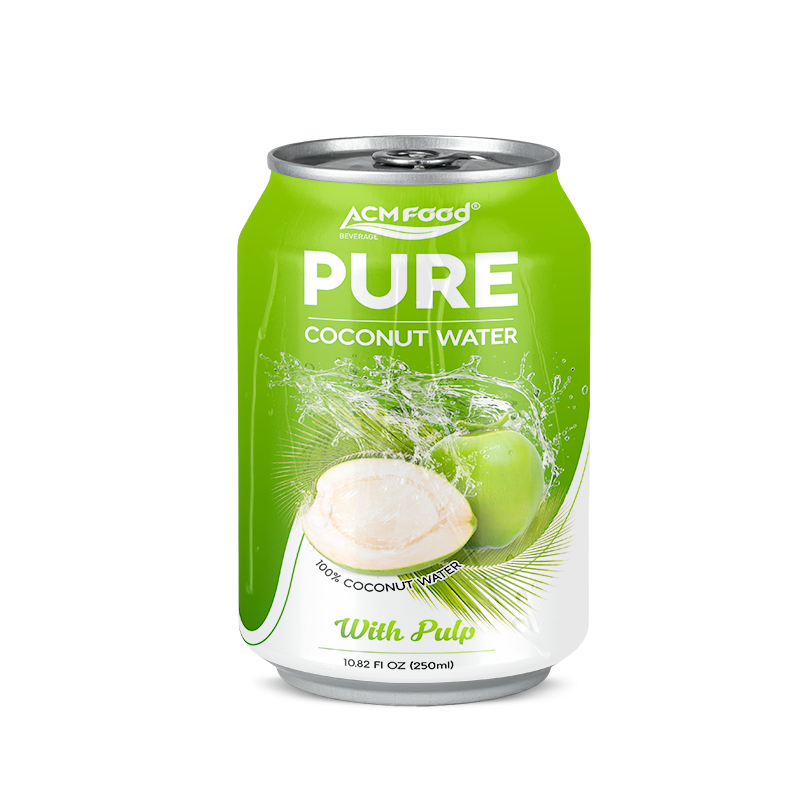
ACMFOOD Beverage Co., Ltd. produces canned coconut water in Vietnam, sourcing young coconuts from the Mekong Delta growing region — proximity that shortens both the elapsed time and the number of handovers between harvest and intake, which is where most traceability is won or lost.
The practical invitation is the one made throughout this article: rather than accept a description, run the test. Ask for a backward trace from a finished lot code and a forward trace from an intake date, and time both. That exercise will tell you more about a manufacturer’s systems than any certificate, and it is exactly what your own retail customers will eventually ask you to perform.
Related service pages
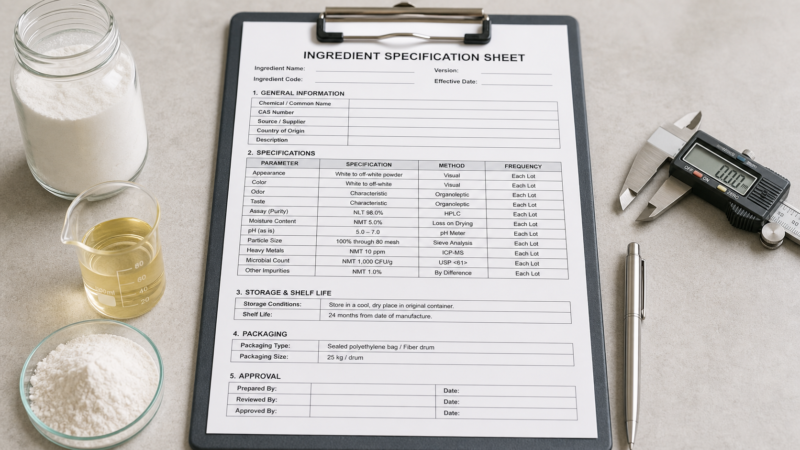
Traceability is evidenced through the same systems that carry our certifications — see certifications and food safety systems. For how the process itself is run and recorded, see our production process. To request the document pack for a specific product, request a quote.