


 Français
 Español
 العربية
 한국어
한국어Hibiscus beverages are drinks made from dried hibiscus calyces, known for their deep red colour, tart flavour and naturally caffeine-free profile. Importers source them from Vietnam as ready-to-drink teas, sparkling drinks and juice blends, evaluating suppliers on raw materials, certifications, sugar options and private label support.
The global beverage industry continues to evolve as consumers seek drinks that offer more than simple refreshment. Across supermarkets, convenience stores, cafés, and online retail platforms, buyers are seeing increased demand for beverages made from botanical ingredients. Among these emerging categories, hibiscus beverages have attracted growing attention thanks to their vibrant color, refreshing tart flavor, and broad consumer appeal.
For beverage importers, private label brands, distributors, and retailers, hibiscus beverages represent an interesting opportunity. The category fits several consumer trends at once. It is associated with natural ingredients, appealing visual presentation, and versatile product positioning. Yet sourcing the right hibiscus beverage supplier remains one of the biggest challenges for international buyers.
After working with beverage manufacturers and observing sourcing projects across different export markets, I have noticed that buyers often focus heavily on flavor development while overlooking manufacturing reliability. In reality, long-term success depends on both.
This article explores the growing market potential of hibiscus beverages and shares practical guidance for selecting a trusted supplier in Vietnam.
Why hibiscus beverages are gaining attention worldwide
Hibiscus has been consumed for centuries in different regions of the world. Today, it is appearing in modern beverage formats that appeal to contemporary consumers.
What makes hibiscus beverages stand out? The answer is surprisingly simple.
The ingredient naturally delivers a bright ruby-red color without requiring artificial coloring. At the same time, it provides a pleasant balance between tartness and floral notes. This combination allows manufacturers to create products that feel refreshing while maintaining a premium image.
Consumer preferences have also shifted significantly over the last decade. Many shoppers are reading ingredient labels more carefully and showing interest in botanical beverages. As a result, drinks made with hibiscus, ginger, lemon, honey, berries, tropical fruits, and herbal ingredients are appearing in more retail channels than ever before.
In many export markets, hibiscus beverages are no longer viewed as niche products. They are becoming part of the broader functional and wellness beverage category, which continues to attract investment from beverage brands and retailers.
The growing opportunities for beverage importers
For importers, finding a beverage category with room for differentiation can be difficult. Traditional soft drinks are highly competitive, and launching a new product often requires substantial marketing investment.
Hibiscus beverages offer a different path.
Because the ingredient is still relatively underrepresented compared to mainstream fruit juices or carbonated soft drinks, brands have greater flexibility when developing unique product concepts. A hibiscus beverage can be positioned as a premium herbal tea, a refreshing sparkling drink, a low-sugar beverage, or a functional wellness product depending on the target market.
I have seen distributors successfully introduce hibiscus beverages in convenience stores, premium supermarkets, health-focused retail chains, and hospitality channels. The category adapts surprisingly well to different consumer segments.
Another advantage is flavor compatibility. Hibiscus pairs naturally with many popular ingredients including lemon, passion fruit, pineapple, mango, ginger, mint, honey, and berry flavors. This gives beverage brands multiple options when developing a product portfolio.
Popular hibiscus beverage formats in international markets
The hibiscus beverage category has expanded well beyond traditional tea products.
Ready-to-drink hibiscus tea remains one of the most popular formats. These beverages are often packaged in aluminum cans, PET bottles, or glass bottles and are designed for convenient consumption.
Sparkling hibiscus drinks have also gained traction in recent years. The combination of carbonation and floral tartness creates a refreshing drinking experience that appeals to younger consumers.
Some manufacturers are developing hibiscus beverages blended with tropical fruits. This approach softens the natural tartness of hibiscus while introducing flavors familiar to a wider audience.
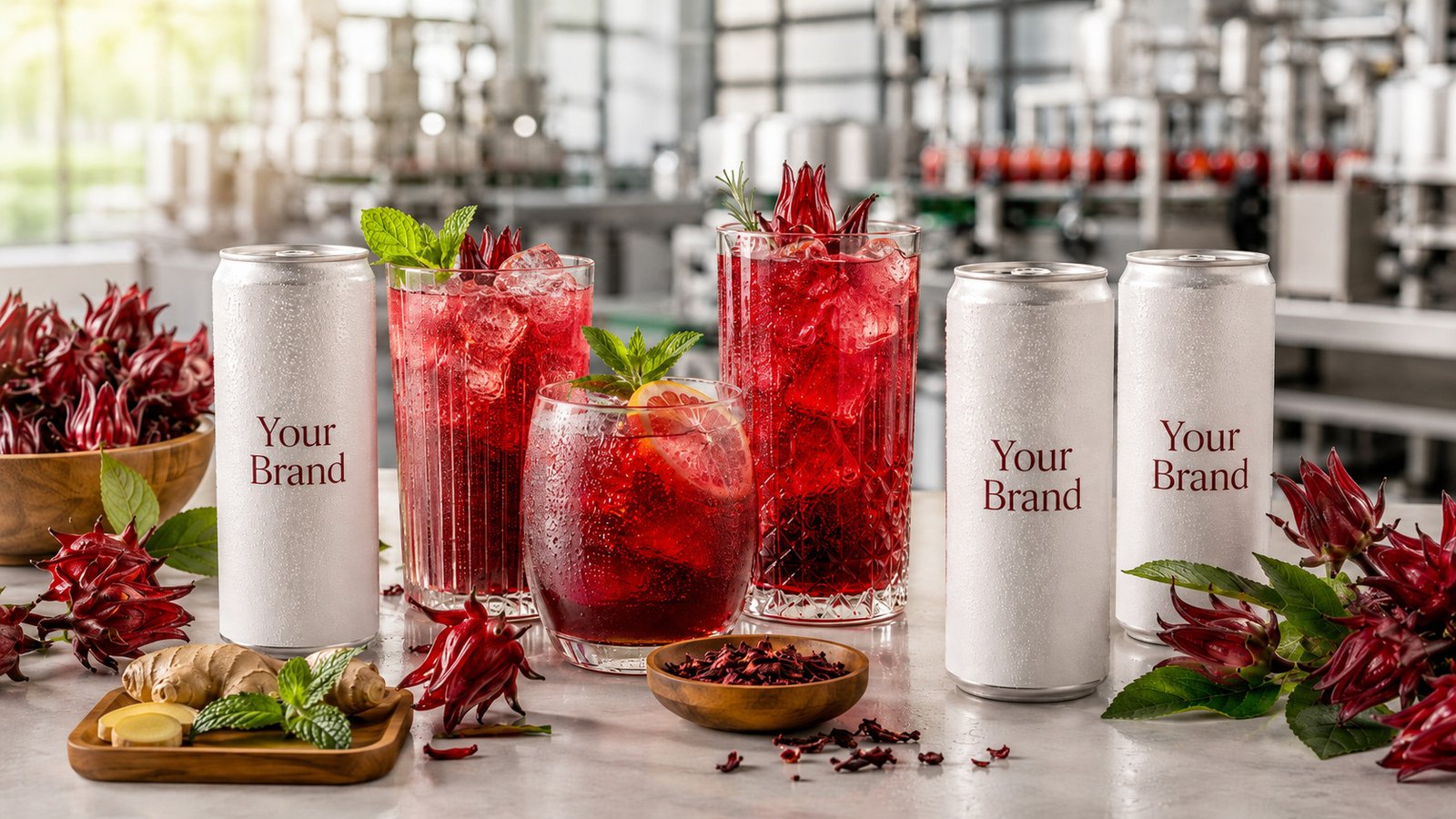
Private label buyers are also exploring low-calorie and reduced-sugar hibiscus beverages. In several markets, demand for these products continues to grow as consumers seek alternatives to traditional sugary soft drinks.
The variety of available formats creates opportunities for brands of different sizes. Whether a buyer wants to launch a premium wellness beverage or a mainstream retail product, hibiscus can serve as a flexible foundation.
Why Vietnam has become an attractive sourcing destination
When international buyers begin searching for hibiscus beverage suppliers, they often evaluate several manufacturing regions. Vietnam is increasingly becoming part of that conversation.
One reason is the country’s established beverage manufacturing industry. Many factories have experience producing drinks for export markets across North America, Europe, Asia, the Middle East, and Oceania.
Vietnam also offers strong capabilities in beverage packaging. Buyers can typically choose from aluminum cans ranging from 250ml to 500ml, PET bottles, glass bottles, and customized packaging solutions depending on market requirements.
Another factor is manufacturing flexibility.
Large multinational beverage producers often require high minimum order quantities that may not be suitable for emerging brands. Many Vietnamese manufacturers can accommodate lower volumes while still providing export-quality production standards. This creates opportunities for startups, distributors, and private label projects.
Cost competitiveness is another consideration. While buyers should never select a supplier based solely on price, Vietnam remains attractive compared to several alternative manufacturing locations.
Common sourcing challenges buyers face
Despite the opportunities, sourcing hibiscus beverages is not always straightforward.
One challenge is flavor consistency. A sample that tastes excellent during product development may not perform the same way in large-scale production if quality control procedures are insufficient.
Another issue involves documentation and export compliance. Different markets require different certifications, ingredient declarations, nutritional labeling formats, and product registrations.
I have seen buyers spend months developing a product only to discover later that important export documents were incomplete. This can delay product launches and increase costs.
Packaging quality is another area that deserves close attention. Beverage brands invest heavily in marketing and shelf presentation. If cans arrive damaged or labels do not meet printing standards, the brand image can suffer.
These challenges explain why supplier selection should involve more than reviewing product catalogs.
How to evaluate a hibiscus beverage supplier in Vietnam
The most successful sourcing projects usually begin with a structured evaluation process.
Start by examining manufacturing capability. Ask about production capacity, packaging formats, lead times, and export experience. A supplier that regularly ships products internationally will generally have stronger systems for handling logistics and documentation.
Next, review quality management procedures.
Buyers should understand how ingredients are sourced, how production batches are monitored, and what testing procedures are performed before shipment. Reliable manufacturers can clearly explain these processes.
It is also helpful to request multiple samples. One sample can demonstrate flavor quality, but several samples across different production periods provide better insight into consistency.
Factory certifications should be reviewed carefully as well. Depending on target markets, buyers may seek standards related to food safety management, manufacturing practices, or customer-specific requirements.
A supplier’s responsiveness often reveals valuable information too. Companies that communicate clearly during product development tend to provide smoother cooperation after commercial production begins.
The importance of private label expertise
Private label beverage development has become one of the fastest-growing segments within the beverage industry.
Many distributors and retailers prefer launching their own brands rather than competing solely with established products. This strategy provides greater control over pricing, positioning, and long-term market development.
However, private label projects require more than manufacturing capacity.
An experienced supplier can assist with flavor selection, packaging recommendations, labeling compliance, artwork adaptation, and export documentation. These services often reduce development timelines significantly.
When evaluating potential suppliers, buyers should ask to review examples of previous private label projects. This provides insight into the manufacturer’s ability to support brand development beyond simple production.
In my experience, suppliers that understand private label requirements often become long-term strategic partners rather than transactional vendors.
What makes a reliable long-term beverage manufacturing partner
A reliable supplier does not simply produce beverages.
The strongest manufacturing partnerships are built on consistency, transparency, and communication.
Consistency means delivering the same flavor profile, packaging quality, and production standards from one shipment to the next. For beverage brands, this reliability directly influences consumer trust.
Transparency involves open communication regarding ingredient sourcing, production schedules, and potential challenges. Buyers appreciate suppliers who identify issues early rather than waiting until deadlines are affected.
Communication remains equally important. International beverage projects frequently involve packaging revisions, regulatory updates, shipping coordination, and product adjustments. A responsive supplier can help prevent small issues from becoming expensive problems.
These factors may not appear on a quotation sheet, but they often determine the success of a sourcing relationship over several years.
Future outlook for hibiscus beverages
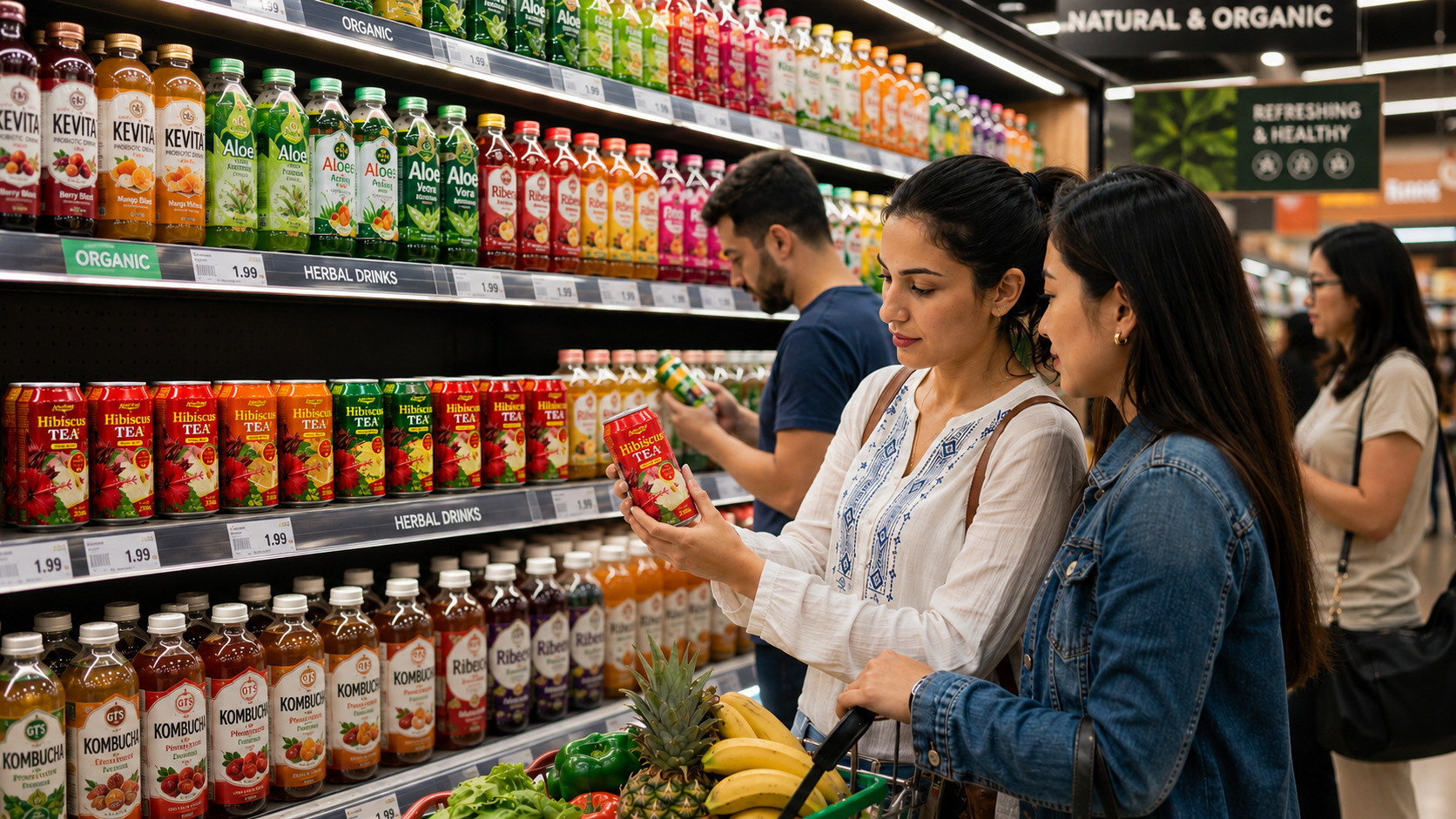
Market demand for botanical and herbal beverages continues to expand across multiple regions.
Consumers are increasingly exploring products that deliver distinctive flavors and memorable drinking experiences. Hibiscus beverages align well with these expectations thanks to their visual appeal, refreshing taste profile, and versatility.
The category also offers room for innovation. Manufacturers continue to experiment with sparkling formats, fruit combinations, reduced-sugar recipes, and premium packaging concepts.
For importers and beverage brands seeking new product opportunities, hibiscus beverages present a category with both current demand and future growth potential.
The key is selecting the right manufacturing partner from the beginning.
Hibiscus beverages have evolved from a traditional herbal drink into a modern beverage category with international appeal. Their vibrant appearance, refreshing flavor, and adaptability across multiple product formats make them attractive for distributors, retailers, and private label brands.
Vietnam has emerged as a competitive sourcing destination thanks to its beverage manufacturing expertise, flexible production capabilities, and growing export experience. However, successful sourcing requires more than comparing prices. Buyers should carefully evaluate quality systems, production consistency, certification standards, packaging capabilities, and private label support.
When these factors are considered together, the result is often a stronger product launch, smoother supply chain management, and a more productive long-term partnership. For companies exploring opportunities in hibiscus beverages, investing time in supplier selection may be one of the most valuable decisions they make.
Turning a trend into a product
For the categories, formats and ingredients the factory can actually run, see beverage product capabilities. For how a specification becomes a shipped container, see the OEM route; to launch under your own label, see private label beverages. Recipe development and sampling are described under formulation and R&D. To brief a concept, request a quote.
Request a quote