


 Français
 Español
 العربية
 한국어
한국어The sea moss beverage category is no longer a niche curiosity. It is moving into mainstream retail shelves, health-focused foodservice channels, and premium e-commerce platforms at a pace that is hard to ignore. If you are an importer, distributor, or retail buyer trying to decide whether this is the right moment to get in, this piece should help you build a clearer picture — not just of what the product is, but of what the commercial opportunity actually looks like in practice.
What sea moss is, and why it matters in a beverage format
Sea moss — also called Irish moss or red algae — is a marine plant harvested along the Atlantic coasts of Europe, North America, and the Caribbean. It contains 90% of the minerals found in the human body, including calcium, zinc, and magnesium, and is a natural source of iodine, which is crucial for thyroid function. That density of nutrients in a single plant is what has kept sea moss relevant in traditional Caribbean and West African diets for centuries, and what is now driving its entry into modern functional food products.
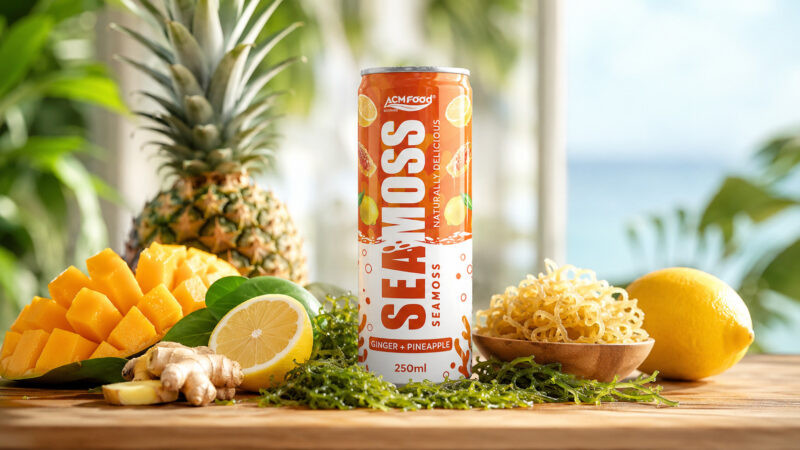
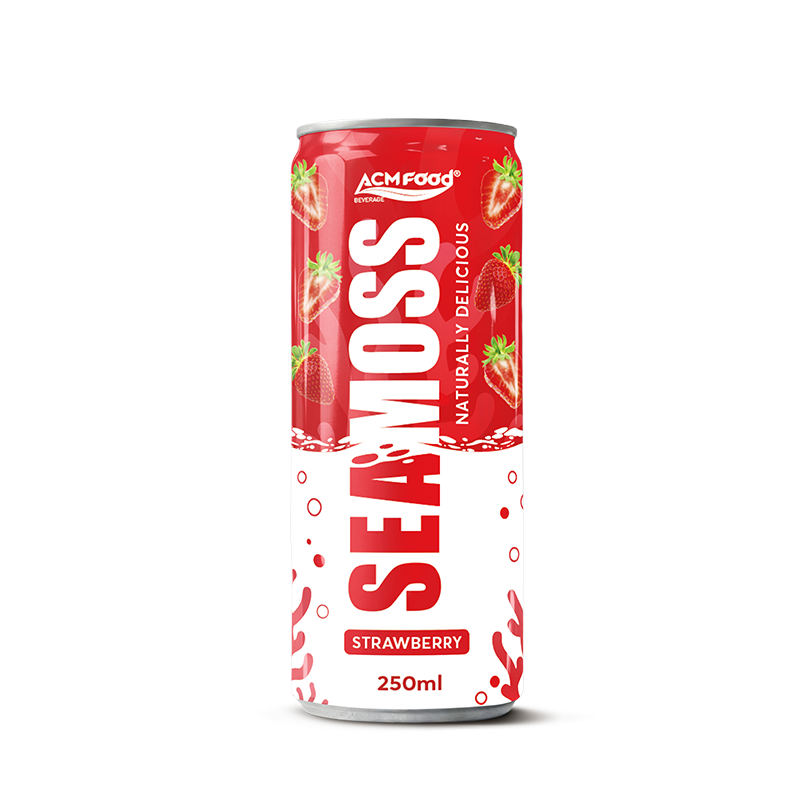
The beverage format specifically is gaining traction because it solves a real problem. Raw sea moss gel has a texture resembling aloe vera and a mild oceanic taste — not exactly convenient for most consumers. Bottled sea moss drinks typically combine sea moss gel or extract with fruit juice and herbs, which makes the product significantly more accessible. You get the minerals, you get the health credentials, and you get a format that works in a cooler or on a shelf next to kombucha and coconut water.
Carrageenan — derived from sea moss — has been a commercial ingredient in dairy, plant-based milk, and even infant formula for decades. Many buyers assume pure sea moss raises the same concerns as the highly processed derivative. It does not. That distinction matters when you are positioning a clean-label sea moss beverage to retailers and end consumers. The raw or minimally processed version carries a very different story.
The market numbers, in context
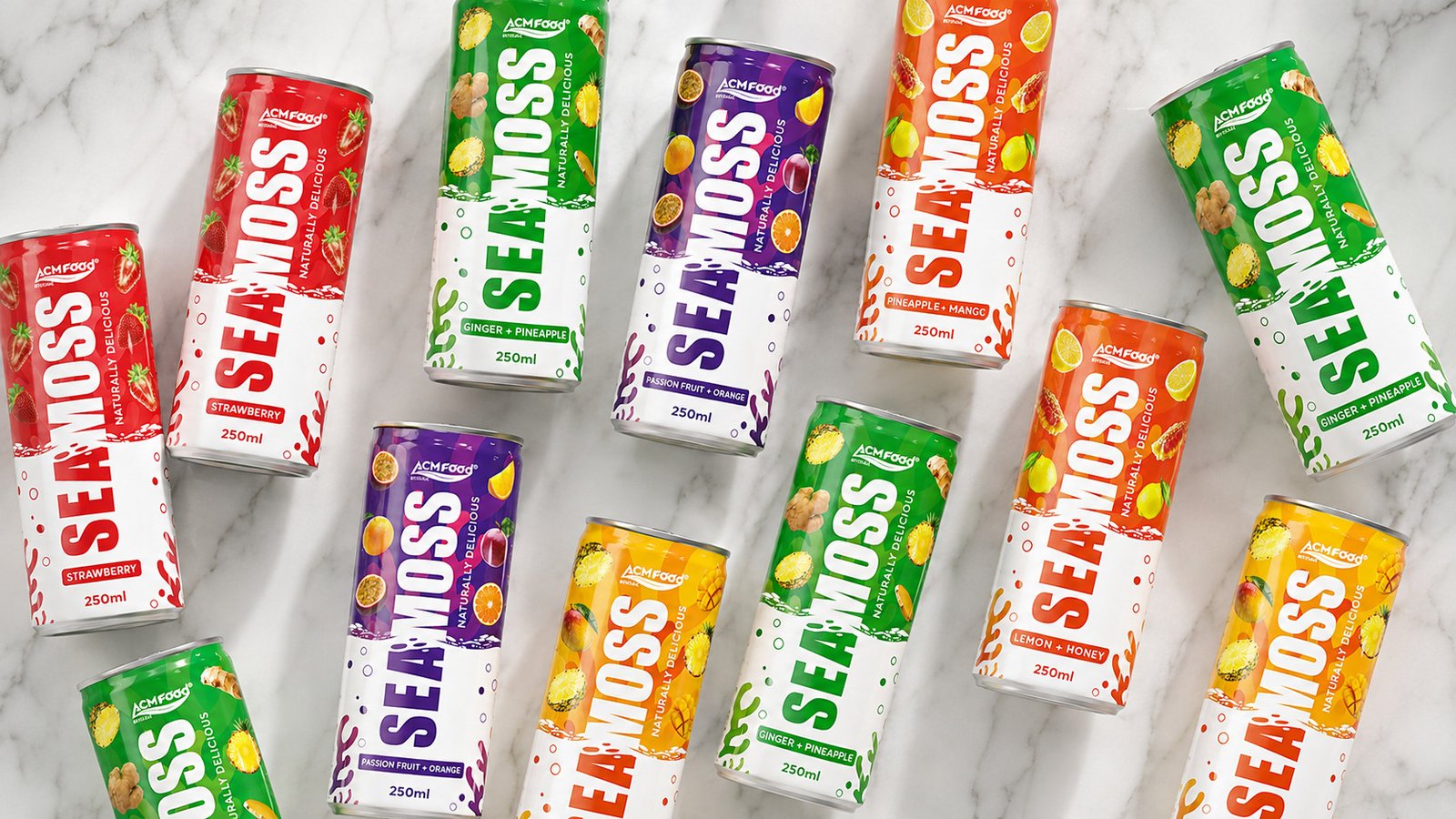
The global sea moss market was valued at USD 246.5 million in 2024 and is projected to grow at a CAGR of 25.50% from 2025 to 2034. That is a fast rate. The broader functional beverage category typically grows at 7–9% per year. The gap signals that sea moss is still in an early adoption phase — which means brand positioning and distribution timing still carry real weight.
Ready-to-drink sea moss beverages represent less than 5% of the total sea moss market in 2026, but are likely to grow to 10–15% as shelf-stable formulations improve. That number — under 5% today — might look modest. But it is also the number that signals how much runway is still available before the category gets crowded. Brands and distributors who enter at 5% market share tend to benefit more than those who join at 20%.
The food and beverages segment will capture an estimated 27.8% share of the sea moss market in 2025, and Asia Pacific is projected to dominate globally with a 47.5% share. For importers and distributors operating across Southeast Asia, the Middle East, or Europe, those numbers are worth paying attention to. The demand is not concentrated in one geography. It is spreading.
What buyers and retailers are actually asking for
When we look at what is winning shelf space and reorder cycles in health retail, a few patterns emerge. Flavor pairing matters. In January 2024, MOSS launched sea moss–infused beverages in flavors including Pure, Pomegranate, and Mango Ginger in U.S. retailers like Sprouts, combining sea moss with adaptogens like ashwagandha and ginseng for a functional wellness positioning. That product architecture — sea moss plus a botanical or adaptogen — has become almost a template in the category. Mango, berry, pomegranate, and tropical citrus profiles work well because they balance sea moss’s natural earthy notes without masking the ingredient story.
Shelf stability is equally important for international trade. A sea moss beverage that requires constant refrigeration is a logistics challenge for importers working across long supply chains. Products packed in aluminum cans or PET bottles with an 18–24 month ambient shelf life change that equation entirely. They can be shipped by sea freight at standard container costs, warehoused without cold infrastructure, and distributed through conventional grocery and health retail channels.
Certification is the final gate most serious buyers check. For markets in the EU, GCC, and Southeast Asia, a supplier that holds FSSC 22000, Halal certification (JAKIM or GCC standard), and BRC reduces compliance risk and shortens customs clearance timelines. Without those papers, a well-formulated product can sit at port while competitors move faster.
The product formats worth understanding
Not all sea moss beverages are positioned the same way, and the format differences carry real implications for margin, labeling, and target demographic.
Ready-to-drink (RTD) sea moss beverages
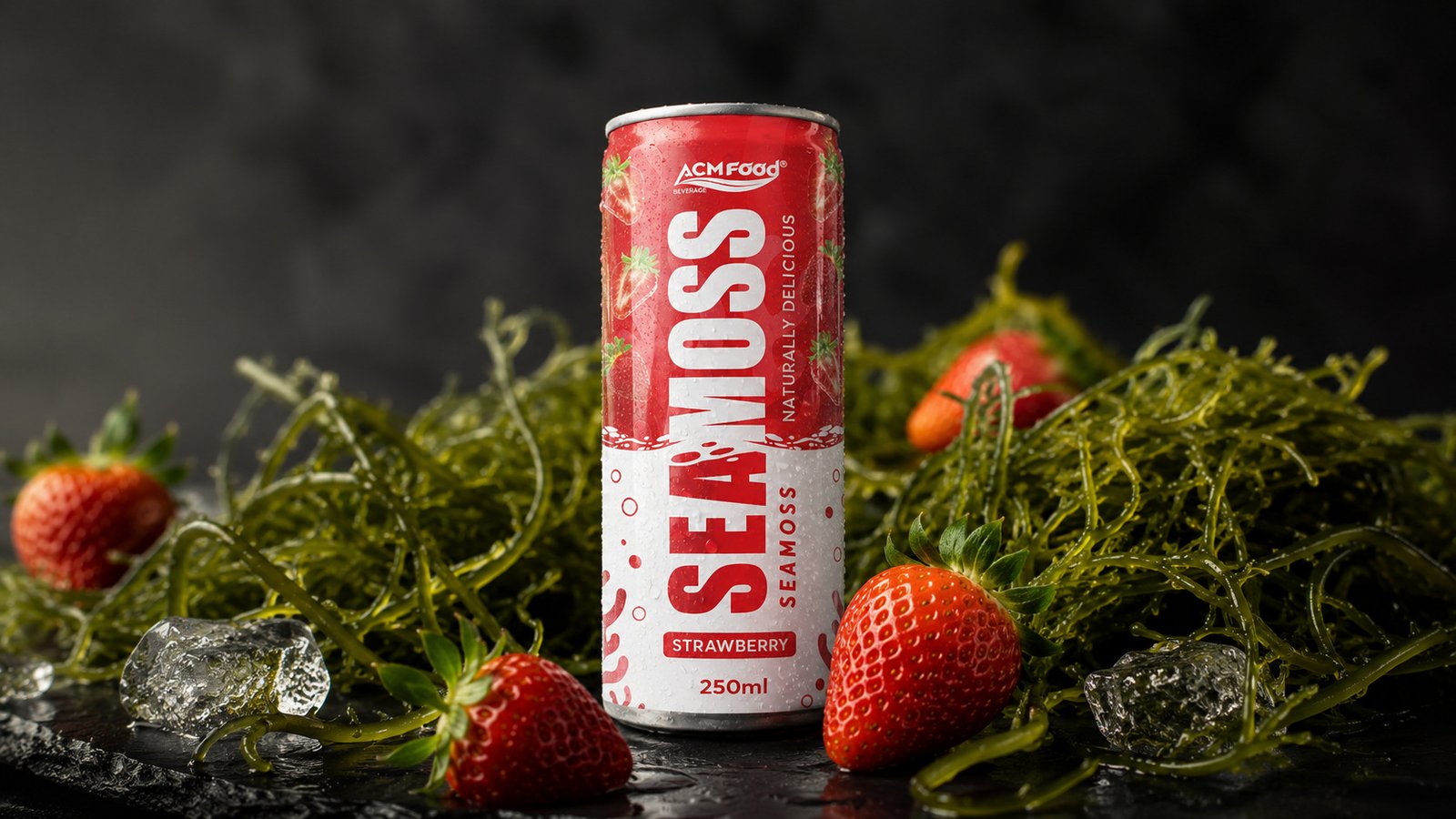
This is the fastest-growing format and the most accessible for mainstream retail. RTD products typically combine sea moss extract with fruit juice, electrolytes, or adaptogens. They are sold in 250–500ml portions at retail price points ranging from $3 to $6 in North American and European markets. The unit economics work at scale, and the category is well understood by health-forward grocery buyers.
Sea moss blended functional drinks
Blended superfood mixes — sea moss combined with spirulina, chlorella, ashwagandha, or turmeric — are a high-growth premium niche. They are priced at two to three times plain sea moss drinks, which means stronger margin profiles for both manufacturer and distributor. They also attract a more loyal repeat purchaser who is buying for specific health outcomes rather than general wellness.
Private-label sea moss beverages
For distributors and retail chains that want to build margin rather than pay brand premiums, private-label production is a practical path. The MOQ entry point for most established manufacturers starts at a full container load (FCL), though some offer lower volumes for initial trial runs. The key is choosing a manufacturer that can supply Certificates of Analysis (COAs) per batch, clearly document sourcing, and adjust formulation for local regulatory requirements — because sugar limits, permitted additives, and labeling standards vary meaningfully between the EU, GCC, and ASEAN markets.
What a retail buyer should evaluate before sourcing
This is where a lot of deals slow down or fall apart. The sea moss category still has quality variance problems. Some suppliers use a very low percentage of actual sea moss extract and compensate with flavoring. Others list minerals that may not be bioavailable at the concentration claimed. A buyer doing due diligence should ask for three things: a batch-specific COA from an accredited third-party lab, documentation of the sea moss species and harvest origin, and heavy metal test results. As an integrative medicine physician at Northwestern Medicine advises, buyers should prioritize brands that clearly identify species and sourcing, and provide heavy-metal testing and batch-specific certificates of analysis.
Taste testing matters more than most buyers admit. A sea moss beverage that does not taste good does not sell through, regardless of how strong the health claim is. Request samples before committing to any volume. Run them past your own team and, if possible, against existing products in your category for direct comparison.
Sea moss beverage supplier
ACMFOOD is a Vietnam-based manufacturer and exporter specializing in health-oriented beverages, including sea moss beverages formulated for international B2B buyers. Vietnam has emerged as a competitive production base for functional drinks — with established export infrastructure, access to tropical ingredients, and a growing cluster of manufacturers holding international certifications.
What differentiates a reliable B2B supplier in this category is not just production capacity. It is whether they can meet the compliance, formulation, and logistics requirements that real importers and distributors deal with. ACMFOOD develops sea moss beverage lines under OEM and private-label arrangements, meaning buyers can bring their own brand, their own flavor direction, or build from an existing formulation library. Products are available in shelf-stable formats suitable for long-distance shipping — an important detail for markets where cold chain adds significant cost.
For importers sourcing for the EU or GCC, ACMFOOD can support Halal certification requirements and provide the documentation that customs authorities expect. For retail chains looking to test a private-label sea moss beverage before committing to full production runs, smaller trial volumes are negotiable during early partnership stages. The factory works with FCL orders at scale but understands that a new category entry often requires a lower-risk onboarding path.
If you are evaluating suppliers for a sea moss beverage launch, the right conversation starts with three questions: What sea moss extract concentration can you guarantee per batch? What certifications do you hold for my target market? And can you provide a COA from your most recent production run? A supplier who can answer all three quickly and specifically is worth your time. One who cannot should not be on your shortlist.
The window for positioning is still open
In June 2025, OMOSS introduced the UK’s first ready-to-drink sea moss beverage and won “Best New Organic Drink Product” at the 2025 Natural & Organic Innovation Awards. That kind of recognition signals category momentum. New product awards tend to reflect what buyers and trade media are paying attention to — and sea moss beverages are clearly in that zone right now.
But the window does not stay open indefinitely. As more brands and private-label operators enter the category, the differentiation challenge gets harder. The importers and distributors who establish sourcing relationships and retail placements in 2025 and 2026 will be better positioned to hold shelf space than those who wait until the category is obviously proven. The sea moss beverage category is at that interesting inflection point where the risk of moving early is lower than it looks, and the cost of waiting is higher than it appears.
If you are actively evaluating this category for your portfolio, the next step is a product sample and a conversation with a supplier who can speak specifically to your market’s regulatory requirements. That is where the abstract opportunity becomes a concrete business decision.
Turning a trend into a product
For the categories, formats and ingredients the factory can actually run, see beverage product capabilities. What the factory takes on is described in our OEM manufacturing programme; to launch under your own label, see private label beverages. Shipping terms and the document pack are covered in export and logistics. To brief a concept, request a quote.
Request a quote