


 Français
 Español
 العربية
 한국어
한국어The global beverage industry continues to evolve in 2026, and orange juice OEM manufacturing has become one of the fastest ways for companies to launch high-quality juice brands without investing millions of dollars in their own factories. Whether you are a supermarket chain, food distributor, importer, or startup beverage company, OEM manufacturing allows you to enter the market with lower risk, shorter development cycles, and greater flexibility. At the same time, orange juice private label products are becoming increasingly popular as retailers seek to improve profit margins while offering consumers premium quality beverages.
But how does orange juice OEM production actually work? What certifications should you expect from a reliable manufacturer? Which packaging options are most suitable for different markets? This guide answers the most common questions buyers ask before selecting an OEM partner in 2026.
What is orange juice OEM production?
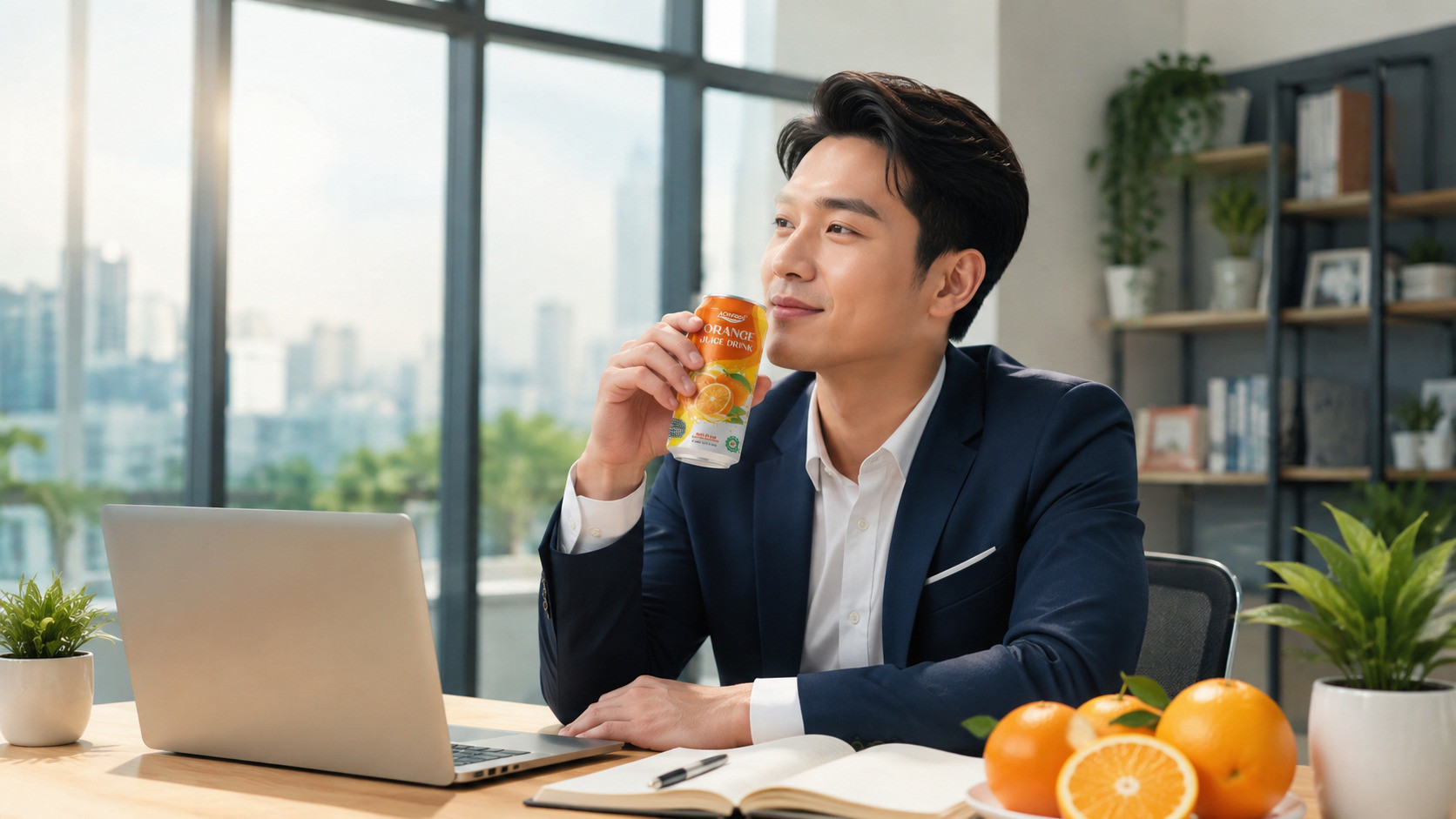
Orange juice OEM production refers to a manufacturing model where a specialized beverage factory produces orange juice according to a customer’s specifications while the finished products are sold under the customer’s own brand. Instead of building a production facility that may require an investment exceeding USD 10 million, businesses can leverage existing manufacturing infrastructure and focus on branding, sales, and distribution.
The OEM manufacturer handles critical operations including ingredient sourcing, recipe formulation, production, quality assurance, packaging, and export documentation. Customers remain responsible for brand identity, marketing strategy, and market expansion.
In 2026, many OEM manufacturers also provide complete development services that include packaging design, regulatory compliance consulting, nutritional labeling, barcode creation, and logistics support. This comprehensive approach significantly reduces the complexity of launching a beverage brand.
Why orange juice private label continues to grow in 2026
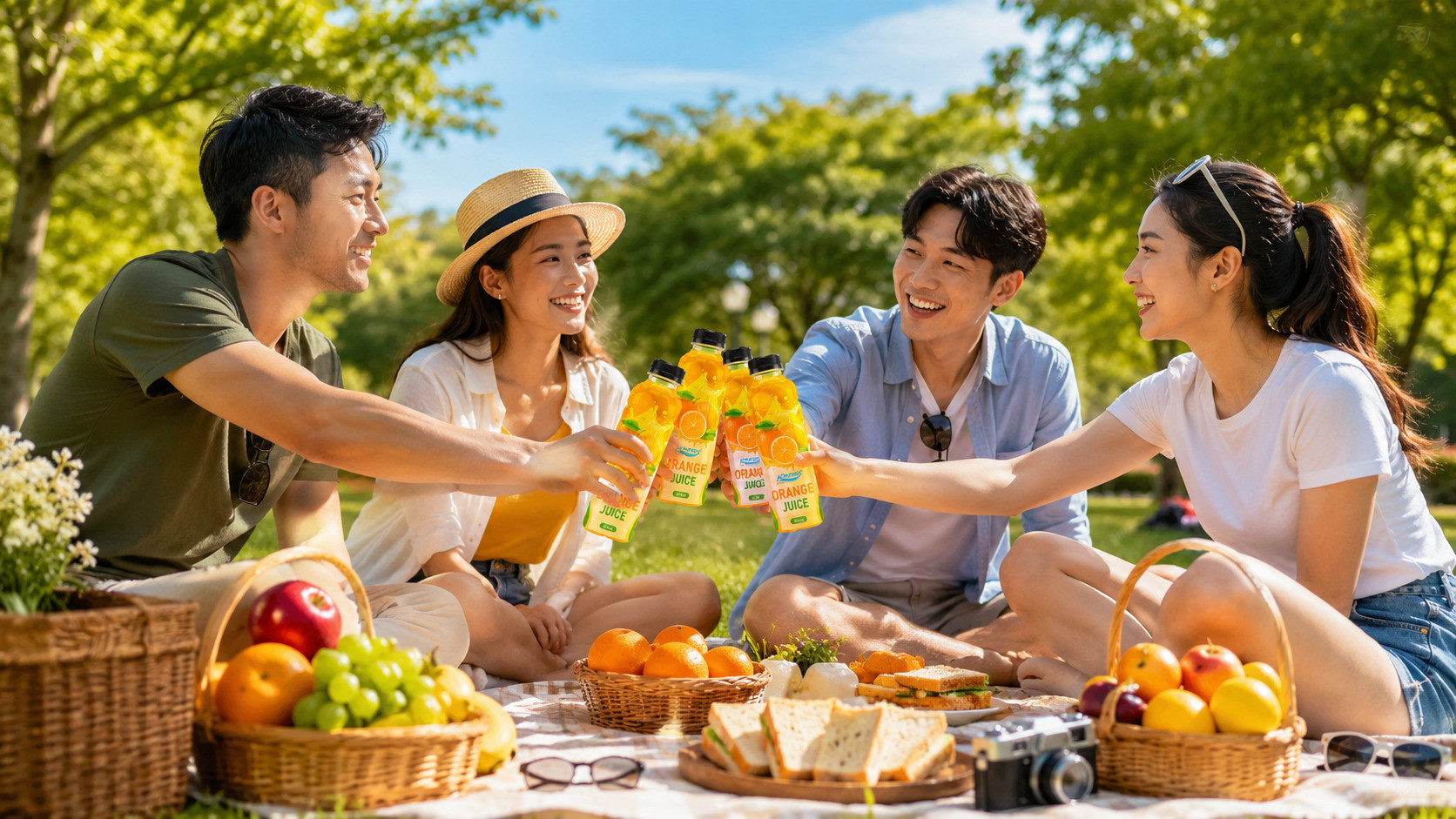
Private label beverages have experienced remarkable growth over the past decade. Industry reports show that consumers increasingly prioritize quality, freshness, and value over well-known brand names. As inflation continues to influence purchasing decisions across many regions, retailers are investing more heavily in private label products that deliver competitive pricing without sacrificing quality.
Orange juice remains one of the world’s most consumed fruit beverages due to its familiar taste, natural vitamin C content, and versatility. From breakfast tables in North America to hotel buffets in Europe and convenience stores across Asia, demand remains consistently strong throughout the year.
For importers, launching an orange juice private label brand often generates higher profit margins than simply distributing existing international brands. Instead of competing solely on price, businesses gain full control over product positioning, packaging design, and retail pricing.
How the orange juice OEM production process works
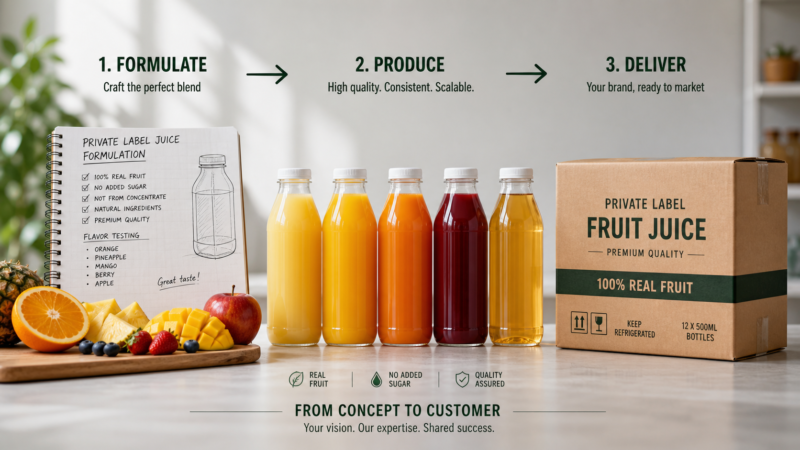
A professional orange juice OEM manufacturer follows a structured production process designed to ensure product consistency and food safety. Although each factory has its own workflow, most projects progress through several major stages.
Market consultation and product planning
The project usually begins with understanding the target market. Will the product be sold in supermarkets, hotels, restaurants, vending machines, or online marketplaces? Consumer preferences differ significantly between regions, making this initial discussion essential.
For example, buyers targeting Europe often request products with reduced sugar and clean labels, while Middle Eastern markets may prioritize premium packaging and larger family-size formats. Understanding these differences helps optimize product development from the beginning.
Recipe development
The manufacturer develops formulations based on customer requirements. Options may include:
- 100% orange juice
- Orange juice from concentrate
- Not From Concentrate (NFC)
- Low sugar recipes
- No added sugar
- Organic formulations
- Vitamin-enriched beverages
- Functional juice with added nutrients
Several sample batches are typically produced before final approval. This stage may require between 2 and 6 weeks depending on recipe complexity.
Packaging selection
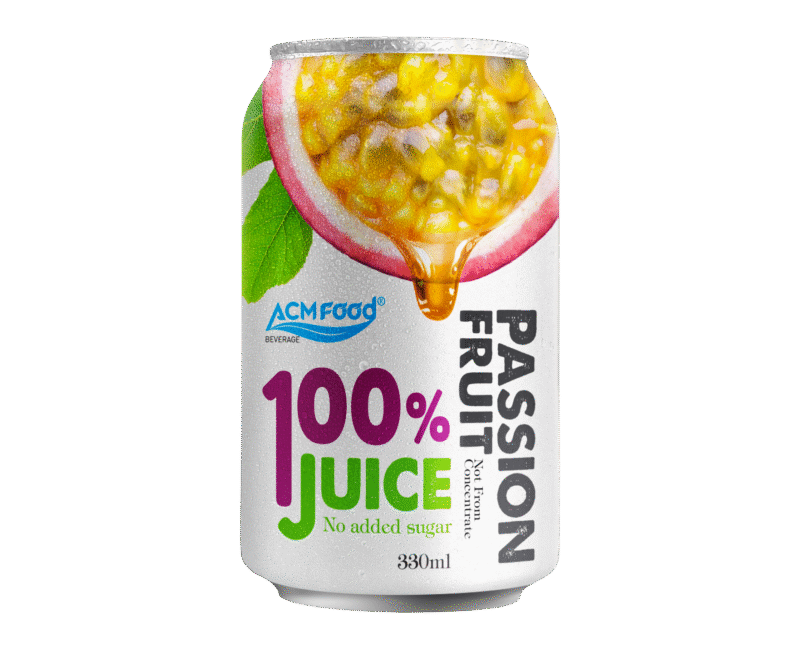
Packaging influences transportation costs, shelf life, consumer perception, and retail positioning. Common packaging options include aluminum cans, PET bottles, glass bottles, aseptic cartons, and stand-up pouches.
In 2026, aluminum cans between 250 ml and 330 ml continue gaining popularity because they offer lightweight transportation, excellent recyclability, and attractive shelf presentation.
Mass production
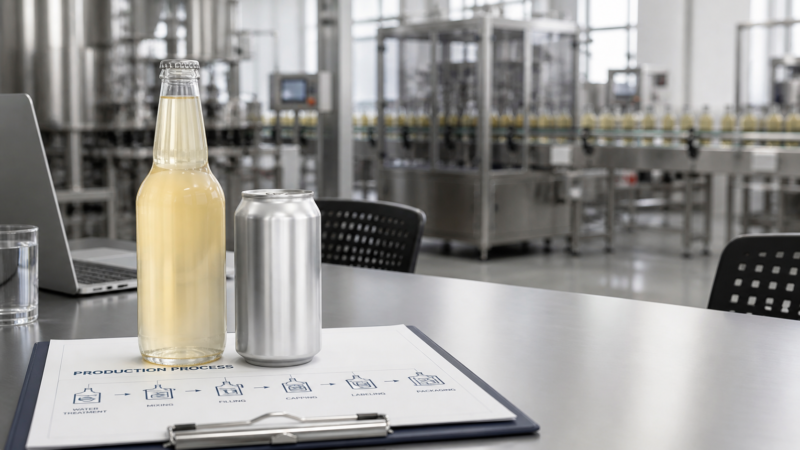
Once the formulation and packaging are approved, production begins. Modern factories equipped with automated filling lines can produce between 12,000 and 48,000 bottles or cans per hour depending on container size.
Automated systems reduce contamination risks while improving filling accuracy and production efficiency. Every batch undergoes microbiological testing, physicochemical analysis, and packaging inspections before shipment.
Export preparation
The manufacturer prepares export documents such as certificates of origin, health certificates, certificates of analysis, packing lists, commercial invoices, and shipping documentation. Experienced exporters also assist customers with destination-specific compliance requirements.
Orange juice concentrate vs NFC orange juice
One of the first decisions buyers must make concerns the type of orange juice they want to sell. Both concentrate and NFC products have advantages depending on the target market.
Orange juice from concentrate removes water during processing, making transportation more efficient and reducing production costs. Water is added back during manufacturing to achieve the desired taste and consistency.
NFC orange juice is processed with minimal concentration, preserving more of the original flavor profile. Consumers often perceive NFC products as more premium, although production costs and logistics expenses are generally higher.
If your brand targets luxury supermarkets or health-conscious consumers, NFC products may provide stronger differentiation. If affordability is the primary objective, concentrate-based formulations often deliver greater commercial flexibility.
Packaging options available for orange juice OEM
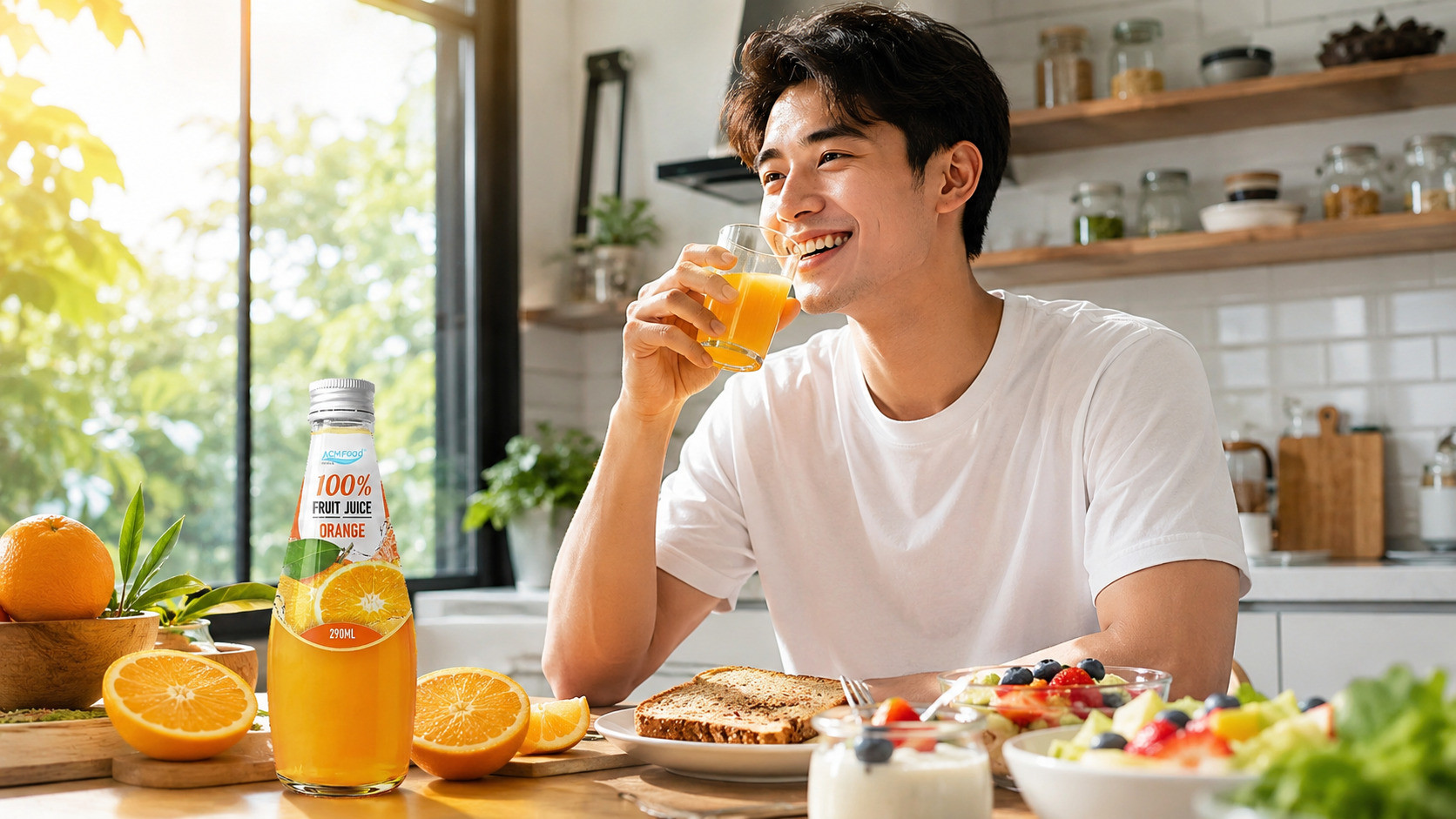
Packaging selection affects more than appearance. It directly influences shelf life, transportation costs, environmental impact, and purchasing decisions.
Aluminum cans
Aluminum cans provide excellent protection against oxygen and light, helping preserve flavor and nutritional quality. They are highly recyclable and increasingly preferred by younger consumers looking for convenient single-serving beverages.
PET bottles
PET bottles remain one of the most economical choices for supermarkets and convenience stores. Their lightweight design reduces shipping costs while offering excellent visibility of the product.
Glass bottles
Glass packaging creates a premium image and maintains excellent flavor stability. Many premium restaurants, cafés, and boutique retailers continue to favor glass despite higher transportation costs.
Aseptic cartons
Aseptic cartons can achieve shelf lives of up to 12 months without refrigeration before opening. This makes them particularly suitable for export markets where long-distance shipping is required.
Food safety certifications buyers should expect
Food safety has become a critical purchasing criterion in 2026. Buyers increasingly expect internationally recognized certifications before signing OEM agreements.
Reliable orange juice OEM manufacturers commonly maintain certifications such as ISO 22000, HACCP, GMP, BRCGS, FSSC 22000, FDA registration for the United States, and Halal certification for Islamic markets. Depending on export destinations, Kosher or Organic certifications may also be important.
These certifications demonstrate that production processes follow internationally accepted food safety management systems and undergo regular third-party audits.
Minimum order quantity for orange juice private label
Minimum order quantity, commonly known as MOQ, varies significantly among manufacturers. Some factories accept trial orders of approximately 3,000 to 5,000 units, while larger production facilities may require one full container consisting of more than 20,000 units.
Several factors influence MOQ, including packaging type, customized ingredients, printing requirements, and production scheduling. Digital printing technology introduced by some manufacturers has also made smaller production runs more economical than in previous years.
If you are launching a new brand, asking about flexible MOQ options can reduce financial risk while allowing you to validate market demand before expanding.
How long does orange juice OEM production take?
Most projects require between 30 and 90 days from the initial consultation to shipment. Product development usually takes several weeks, while packaging design, regulatory approval, raw material procurement, and production scheduling account for the remaining timeline.
Repeat orders often move much faster because formulations, packaging specifications, and compliance documents have already been approved. Many established OEM factories can complete repeat production within 20 to 35 days, depending on seasonal demand.
How to choose the right orange juice OEM manufacturer
Selecting an OEM partner involves much more than comparing prices. A manufacturer offering slightly lower pricing may ultimately create higher costs if product quality, delivery reliability, or regulatory compliance falls short.
Look for manufacturers with extensive export experience, transparent quality control systems, flexible product development capabilities, and responsive communication. Request production videos, certification copies, laboratory reports, and product samples before making a final decision.
It is also beneficial to evaluate production capacity. A factory capable of manufacturing several million units per month can better support future business growth without requiring supplier changes.
Emerging trends shaping orange juice OEM in 2026
The orange juice industry continues adapting to changing consumer preferences. Products with reduced sugar, clean-label ingredients, and functional nutritional benefits are becoming increasingly common. Buyers are also requesting more environmentally responsible packaging materials as sustainability becomes a purchasing priority.
Artificial intelligence is beginning to influence product forecasting, inventory planning, and quality monitoring inside modern manufacturing facilities. Digital traceability systems now enable importers to monitor production batches and raw material origins with greater transparency.
Another notable trend is regional customization. Instead of developing one universal recipe, brands increasingly tailor sweetness, pulp content, package size, and nutritional positioning for individual export markets.
Choosing the right orange juice OEM partner is one of the most important decisions when launching a successful beverage brand in 2026. A qualified manufacturer provides much more than production capacity. They contribute expertise in formulation, packaging, quality assurance, international regulations, and supply chain management, allowing your business to enter competitive markets with confidence.
As demand for orange juice private label products continues to grow across North America, Europe, the Middle East, Africa, and Asia, businesses that invest in reliable OEM partnerships are well positioned to expand efficiently while maintaining consistent product quality. By understanding the complete production process and selecting an experienced manufacturing partner, you can build a scalable beverage brand prepared for long-term success.
Frequently asked questions
Yes. Most professional OEM manufacturers offer customized formulation services that allow brands to adjust sweetness, pulp level, vitamin content, flavor profile, and functional ingredients according to market preferences.
Absolutely. Many manufacturers now offer flexible production programs for startups, regional distributors, and emerging beverage brands, making market entry more accessible than ever before.
Shelf life depends on formulation and packaging. Aseptic packaged products typically achieve 9 to 12 months, while refrigerated fresh juice products have significantly shorter shelf lives.
Experienced exporters generally provide complete documentation required for customs clearance, food safety compliance, and international shipping, simplifying the import process for buyers.
Taking this juice to market under your own brand
The OEM route for any fruit juice follows the same commercial path. For how contract production is structured, see OEM beverage manufacturing. To launch it under your own label, see private label beverages. Minimums are set per SKU — see minimum order quantity. When you have a specification, request a quote.
Request a quote