


 Français
 Español
 العربية
 한국어
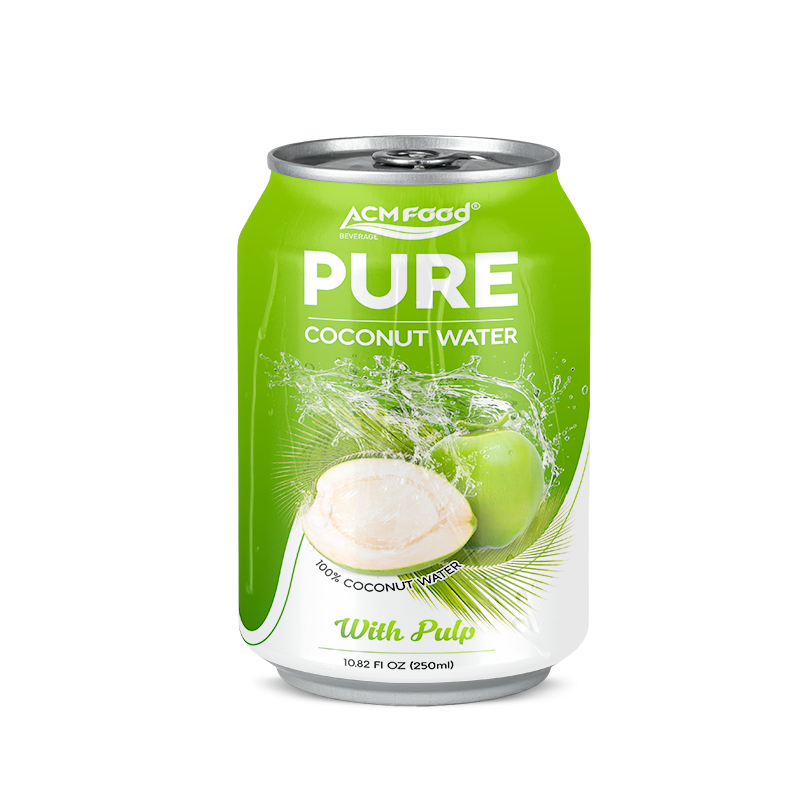
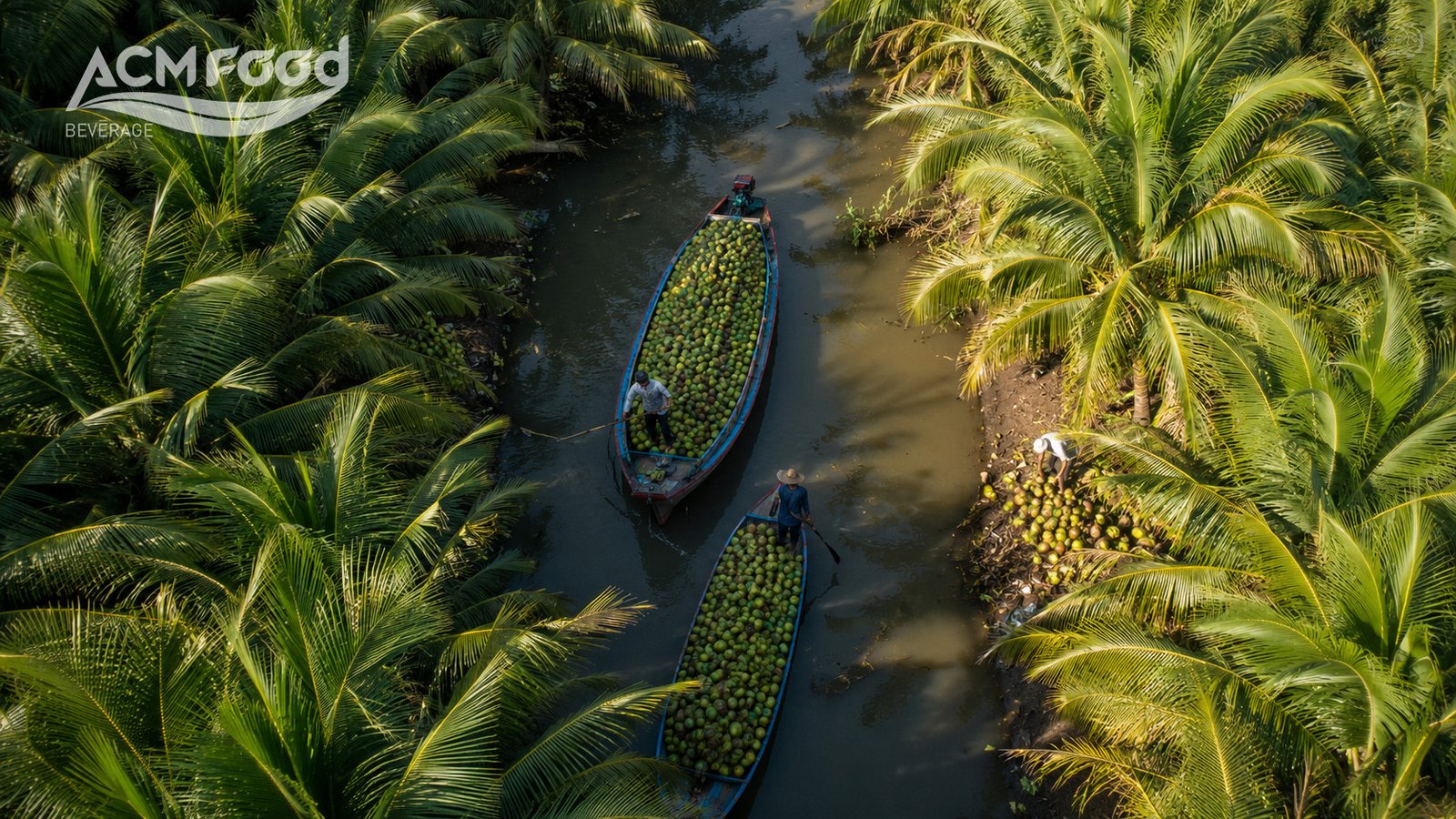
한국어Vietnamese coconut water is coconut water made from young coconuts grown mainly in the Mekong Delta provinces of Bến Tre, Trà Vinh and Tiền Giang. Buyers choose it for its clean, lightly sweet taste, competitive FOB pricing, two harvests a year and a processing base that sits close to the farms.
Consistency is the main challenge in coconut water sourcing: one shipment can arrive clear and fresh, the next oxidised with a different Brix. This guide explains what Vietnam offers, how the supply chain works, how it compares with other origins and what to verify before your first container. For product formats, see Vietnamese coconut water.
Why source coconut water from Vietnam?
Vietnam combines a large coconut base, lower costs and improving export infrastructure. It grows around two million tonnes of coconuts a year, with Bến Tre accounting for roughly 40% of the planted area, and the government has prioritised coconut exports, pushing factories to upgrade certification.
- Flavour: Mekong Delta young coconuts give a light, clean profile that many importers find needs little formula adjustment for private label.
- Price: FOB prices from certified Vietnamese processors are generally competitive with Thai origin at comparable quality.
- Supply: most plantations harvest twice a year, which helps year-round continuity.
- Infrastructure: Cát Lái and the Cái Mép deep-water terminal connect directly to the US, Europe and Asia.
Which certifications do Vietnamese coconut water exporters hold?
Established exporters typically hold FDA food facility registration, HACCP and ISO 22000 or FSSC 22000, with Halal (JAKIM or MUI recognised) for Muslim markets and, increasingly, USDA or EU organic. Whether a shipment clears smoothly depends on the specific factory, so qualify suppliers before ordering.
Adding a new certificate, such as organic, Fairtrade or Rainforest Alliance, usually takes around 6–9 months, similar to other origins.
How does the supply chain work from coconut to container?
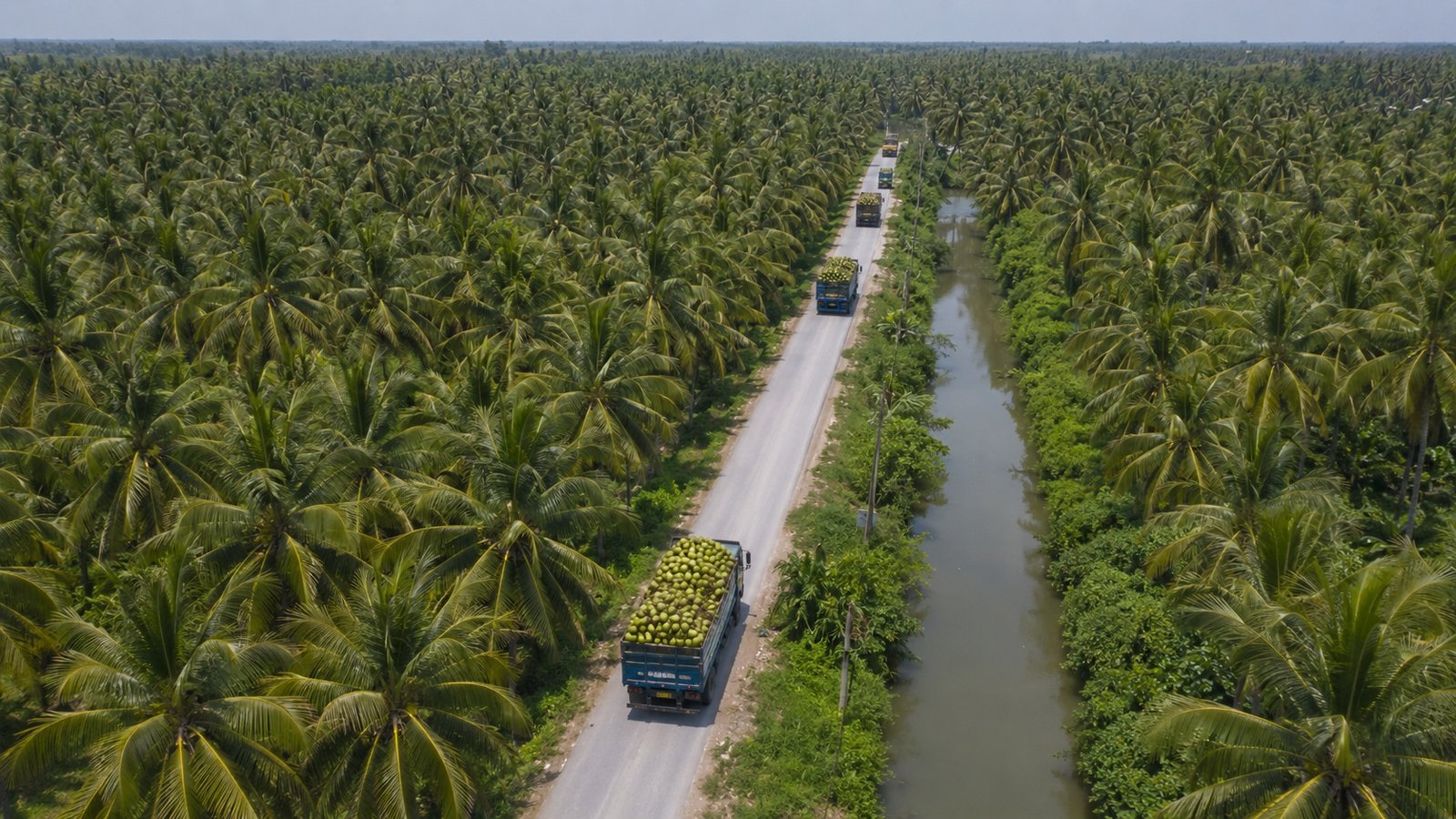
Young coconuts are harvested at about 6–8 months and delivered to the factory within hours. The water is extracted, filtered, treated and packed the same day, then held for quality testing before release.
| Stage | Typical time |
|---|---|
| Harvest to processing | Within hours; treated within 24 hours |
| Quality testing and release | Several days, depending on micro testing |
| Export documents and inspection | About 5–7 working days |
| Transit to Los Angeles or Rotterdam | Roughly 20–40 days depending on route |
Consistent suppliers test raw material for sweetness, clarity and microbial load before it enters the line, and reject nuts that fall outside specification, often around 8–12% of intake. That rejection rate is quality control working, not waste.
How does Vietnam compare with other coconut water origins?
Vietnam’s advantage is balance: competitive price, adequate scale and improving infrastructure. Each origin has strengths and weak points.
| Origin | Strengths | Watch-outs |
|---|---|---|
| Vietnam | Competitive pricing, two harvests, processing close to farms, growing certification base | Factory quality varies; qualify carefully |
| Thailand | High volume, long export history, well-known aromatic varieties | Rising raw material costs |
| Indonesia | Large geographic scale | Uneven manufacturing infrastructure outside main islands |
| Sri Lanka | High quality | Higher unit costs, limited capacity for large orders |
What order sizes and lead times should buyers expect?
Many importers start with one to a few containers a month, and Vietnamese suppliers can accommodate that. At ACMFOOD, minimums start from 500 cartons per SKU and several SKUs can share a container. Custom formulations, such as added electrolytes, flavours or new pack sizes, need more lead time for development and approval.
Vietnam is not the right origin for a standing arrangement that needs about ten days from order to vessel. The supply chain works best when buyers plan 45–60 days ahead and share quarterly forecasts. For a first shipment, allow extra time for documents such as FDA Prior Notice, the certificate of origin and any certificates your market requires; later shipments move faster once templates exist.
What should you verify before choosing a Vietnamese supplier?
Ask for four things before a trial container. A legitimate exporter will have them ready because existing buyers request them routinely.

- FDA registration number, verifiable with the FDA.
- A recent food safety audit report (HACCP, ISO 22000 or FSSC 22000) from the last 12 months.
- Certificates of analysis from three recent batches showing Brix, pH, microbial count and colour.
- At least two references from buyers in your target market.
Request a small sample shipment, typically 50–100 units, before a trial container. Serious exporters accommodate this.
Frequently asked questions
Is Vietnamese coconut water good quality?
It can be excellent, but quality depends on the factory. Check batch data, audit reports and certificates rather than relying on origin alone.
Which province produces most of Vietnam’s coconuts?
Bến Tre, in the Mekong Delta, accounts for roughly 40% of Vietnam’s coconut planting area. Trà Vinh and Tiền Giang are also important.
How long does shipping from Vietnam take?
Ocean transit to major US and European ports usually takes about 20–40 days, plus production, testing and export documentation time.
Conclusion
Vietnamese coconut water offers a clean flavour, competitive pricing and year-round supply from the Mekong Delta. The risk lies in supplier variability, so qualify factories on certificates, batch data and references, and plan orders 45–60 days ahead.
Coconut water products
For formats and processing routes, see beverage product capabilities. To produce to your own recipe, see OEM manufacturing in Vietnam; for your own label, see private label beverages and coconut water. To discuss a specification, request a quote.
Request a quote