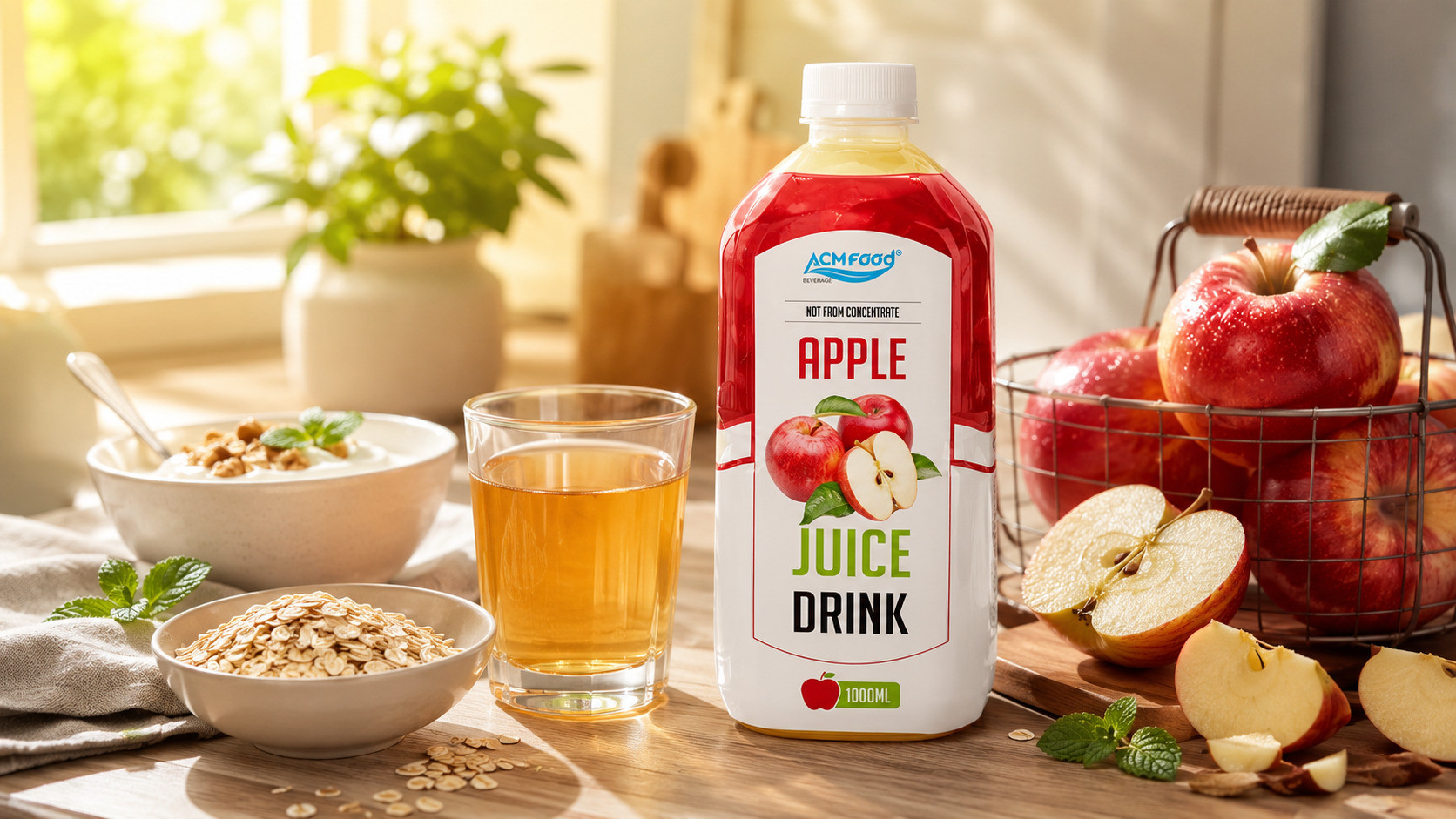







Apple juice is one of the most widely consumed fruit beverages. Its naturally sweet taste, mild acidity, and familiar flavor make it popular with both adults and children.
Quick answer: Apple juice can contribute to hydration and provide carbohydrates, potassium, and apple-derived polyphenols. Some products also contain added vitamin C. However, apple juice contains much less fiber than a whole apple and can provide a significant amount of natural sugar, so it is best consumed in a moderate portion as part of a balanced diet.
This guide explains the main apple juice benefits, the nutritional differences between apple juice and whole apples, the benefit of drinking apple juice in moderation, and the practical benefits of juicing apples at home.
Apple Juice Benefits at a Glance
- Contributes fluid to daily hydration.
- Provides carbohydrates that the body can use for energy.
- Contains a modest amount of potassium.
- Supplies apple-derived polyphenols.
- May provide vitamin C when fortified.
- Offers a convenient and easy-to-consume fruit beverage.
- Can be used in smoothies, recipes, and mixed drinks.
Key consideration: Apple juice should complement whole fruit rather than completely replace it because most juice contains substantially less dietary fiber.
What Is Apple Juice?

Apple juice is produced by crushing or pressing apples to separate the liquid from much of the solid pulp. Depending on the product, the juice may then be filtered, pasteurized, concentrated, reconstituted, blended, or packaged directly.
Common types of apple juice include:
- Freshly pressed apple juice: Juice extracted from apples for immediate or refrigerated consumption.
- Not-from-concentrate apple juice: Juice that is packaged without first being concentrated.
- Apple juice from concentrate: Juice from which some water has been removed and later restored before packaging.
- Cloudy apple juice: Juice that retains more suspended apple particles.
- Clear apple juice: Juice that has been filtered to create a transparent appearance and smoother texture.
- Fortified apple juice: Juice with nutrients such as vitamin C added during processing.
The nutritional profile varies according to the apple variety, ripeness, filtration method, heat treatment, storage time, fortification, serving size, and other ingredients used in the final beverage.
Apple Juice Nutrition Facts
Apple juice consists primarily of water and naturally occurring carbohydrates. It generally contains very little protein or fat and much less dietary fiber than a whole apple.
According to nutrient information available through USDA FoodData Central, the nutritional values of apple juice vary by product, processing method, fortification, and serving size.
| Nutrient or component | Role in the body |
|---|---|
| Water | Contributes to fluid intake and hydration. |
| Carbohydrates | Provide energy, mainly through naturally occurring fruit sugars. |
| Potassium | Supports normal muscle function, nerve signaling, and fluid balance. |
| Vitamin C | May be naturally present in modest amounts or added through fortification. |
| Polyphenols | Apple-derived plant compounds that may contribute antioxidant activity. |
| Dietary fiber | Usually low because most of the skin and pulp are removed during juicing. |
One cup of apple juice commonly provides approximately 110 to 120 calories, although the exact amount depends on the product. A smaller serving of 150 milliliters contains fewer calories and sugars than a large glass.
It is also important to understand that a product labeled “100% apple juice” is not necessarily low in sugar. It may contain no added sugar while still providing a meaningful amount of naturally occurring fruit sugar.
8 Potential Apple Juice Benefits
Apple juice is not a medicine and cannot guarantee specific health outcomes. Its value depends on the type of juice, serving size, frequency of consumption, and the quality of a person’s overall diet.

1. Apple Juice Contributes to Hydration
Water is the largest component of apple juice. Drinking it therefore adds fluid to the diet and can contribute to normal hydration.
This may be useful when someone wants occasional variety from plain water or has a temporarily reduced appetite. Its pleasant taste can also encourage fluid consumption in some situations.
However, apple juice should not become the main source of daily hydration. Water remains the preferred everyday beverage because it provides fluid without sugar or calories.
2. It Provides Readily Available Energy
Apple juice contains naturally occurring carbohydrates, including fructose, glucose, and sucrose. The body can use these carbohydrates as a relatively quick source of energy.
A small serving may be convenient before or after physical activity, during travel, or when solid food is temporarily difficult to consume. For a more balanced snack, apple juice can be paired with foods containing protein, fiber, or healthy fats.
Because liquid carbohydrates are easy to consume quickly, oversized servings can add more sugar and calories than expected.
3. Apple Juice Supplies Potassium
Apple juice provides a modest amount of potassium, an essential mineral involved in normal fluid balance, nerve communication, and muscle contraction.
It is not one of the most concentrated sources of potassium. Vegetables, beans, potatoes, dairy products, nuts, bananas, and other whole fruits usually provide a broader contribution to daily intake.
People with kidney disease or those who have been advised to restrict potassium should follow guidance from a qualified healthcare professional.
4. It Contains Apple-Derived Polyphenols
Apples naturally contain polyphenols, a group of plant compounds that can remain in the juice after pressing and processing.
The amount found in a finished product depends on factors such as apple variety, use of the peel, oxidation, clarification, heat treatment, and storage.
Cloudy apple juice may retain more suspended apple particles and certain plant compounds than heavily clarified juice. However, cloudiness alone does not determine whether one product is healthier than another.
5. Some Apple Juices Provide Vitamin C
Fresh apples and apple juice may contain vitamin C, but natural levels can be modest and may decrease during processing and storage. Some manufacturers therefore add ascorbic acid, also known as vitamin C, to the beverage.
Vitamin C contributes to normal immune function, collagen formation, antioxidant protection, and the absorption of iron from plant-based foods.
Consumers should check the nutrition label because an unfortified juice may contain considerably less vitamin C than a fortified product.
6. Apple Juice Is Convenient and Easy to Consume
Apple juice requires no peeling, cutting, or chewing. This makes it convenient for travel, food service, packed meals, and occasions when fresh fruit is not readily available.
Its smooth texture may also be easier to consume for some people experiencing a temporary difficulty with solid food. In medical situations, however, juice should only be used according to professional advice.
Convenience does not make juice nutritionally identical to a whole apple. Whole fruit normally provides more fiber and tends to be more filling.
7. It Can Add Variety to a Balanced Diet
A healthy eating pattern depends on a variety of foods rather than one particular beverage. A small serving of apple juice can add flavor and variety when consumed alongside vegetables, whole fruits, whole grains, protein sources, and healthy fats.
Apple juice can be served with breakfast, mixed with sparkling water, added to a smoothie, or used as an ingredient in marinades and sauces.
8. It May Be a More Nutrient-Dense Choice Than Some Sweetened Drinks
One hundred percent apple juice can provide potassium and apple-derived plant compounds that may not be present in a soft drink made primarily from water, added sugar, flavorings, and colorings.
This does not mean apple juice should be consumed without limits. Both juice and sugar-sweetened beverages can provide substantial amounts of sugar when consumed in large portions.
Consumers should compare serving size, juice percentage, total sugar, added sugar, nutrient content, and frequency of consumption rather than relying only on front-label claims.
What Are the Benefits of Drinking Apple Juice?

The main benefit of drinking apple juice is that it provides fluid, fruit-derived carbohydrates, potassium, and selected apple plant compounds in a convenient beverage.
Apple juice is most useful when:
- The product contains 100% juice.
- It contains no unnecessary added sugar.
- The serving is moderate rather than oversized.
- It is consumed with a meal instead of being sipped continuously.
- Whole fruit remains part of the diet.
- Water remains the primary source of hydration.
Drinking more apple juice does not necessarily produce greater benefits. Larger portions increase sugar and calorie intake without providing the same amount of fiber or fullness as whole apples.
Is It Healthy to Drink Apple Juice Every Day?
Many healthy adults can include a small serving of apple juice in a balanced diet. Whether daily consumption is appropriate depends on serving size, total sugar intake, dental health, metabolic health, activity level, and the rest of the diet.
The UK National Health Service recommends limiting the combined intake of unsweetened fruit juice, vegetable juice, and smoothies to approximately 150 milliliters per day. The NHS also advises drinking juice with a meal because juicing releases sugars from the fruit and can increase exposure of the teeth to sugar and acid. See the NHS fruit juice guidance.
A practical approach is to:
- Choose a small glass instead of a large bottle or cup.
- Drink juice as part of a meal.
- Avoid repeatedly sipping it throughout the day.
- Choose products without added sugar.
- Continue eating whole apples and other whole fruits.
- Alternate juice with water and unsweetened beverages.
People with diabetes, kidney disease, insulin resistance, digestive conditions, or medically prescribed diets should seek individualized guidance from a doctor or registered dietitian.
Benefits of Juicing Apples
The practical benefits of juicing apples include convenience, control over ingredients, flavor customization, and the ability to combine apples with other fruits, vegetables, herbs, or spices.
Potential advantages include:
- Using ripe apples that might otherwise go unused.
- Adjusting sweetness and acidity by combining different apple varieties.
- Creating a smooth beverage for people who prefer liquids.
- Combining apples with ingredients such as ginger, lemon, carrot, cucumber, or berries.
- Controlling whether additional sweeteners are used.
- Serving fresh apple flavor without artificial flavoring.
However, conventional juicing removes much of the pulp and fiber. It can also make it easy to consume the sugars from several apples within a short period.
People who want to retain more of the fruit can blend whole apple pieces instead of separating only the juice. Blending can preserve more pulp and fiber, although the total sugar and calorie content still depends on the amount of fruit used.
Apple Juice vs. Whole Apples

Apple juice and whole apples come from the same fruit, but they are not nutritionally equivalent.
| Feature | Whole apple | Apple juice |
|---|---|---|
| Fiber | Contains soluble and insoluble fiber, especially when the skin is eaten. | Usually contains little fiber, particularly when clarified. |
| Fullness | Chewing and fiber generally make it more filling. | Can be consumed quickly and may be less satisfying. |
| Natural sugar | Contained within the physical structure of the fruit. | More readily available after pressing and juicing. |
| Convenience | Portable but requires chewing and may require washing or cutting. | Easy to drink, serve, store, and use in recipes. |
| Hydration | Contains water but is eaten rather than drunk. | Provides fluid directly. |
| Portion control | One apple creates a visible and defined portion. | A large glass may contain juice extracted from several apples. |
| Plant compounds | Includes compounds from the flesh, pulp, and skin. | Levels vary according to filtration and processing. |
For most people, whole apples are a stronger everyday choice because they provide more dietary fiber and tend to support greater fullness. Apple juice can still be consumed as a smaller complementary beverage.
Fresh Apple Juice vs. Commercial Apple Juice
Freshly pressed and commercially packaged apple juice each have advantages and limitations.
Freshly Pressed Apple Juice
Fresh juice allows consumers to control the fruit and additional ingredients. It can also provide a bright aroma and freshly pressed taste.
However, fresh juice can spoil quickly and may become contaminated through unwashed fruit, hands, equipment, or storage containers. It should be prepared hygienically, refrigerated promptly, and consumed within an appropriate period.
Unpasteurized juice can contain harmful bacteria. The US Food and Drug Administration warns that unpasteurized juice may present a greater risk to children, pregnant women, older adults, and people with weakened immune systems. See the FDA juice safety guidance.
Commercial Apple Juice
Commercial juice can provide consistent flavor, convenient packaging, longer shelf life, and standardized quality. Pasteurization and controlled filling processes can help reduce microbiological risk.
However, product composition varies. Some beverages contain 100% apple juice, while others are juice drinks containing added water, sweeteners, flavorings, or other ingredients.
Consumers should read the ingredient list and nutrition panel rather than relying only on the images or claims printed on the front of the package.
Cloudy Apple Juice vs. Clear Apple Juice
| Comparison | Cloudy apple juice | Clear apple juice |
|---|---|---|
| Appearance | Opaque because it retains more suspended apple particles. | Transparent because more particles have been filtered out. |
| Texture | May have a fuller mouthfeel. | Usually has a lighter and smoother texture. |
| Plant material | May retain more suspended apple material. | Contains less suspended material after clarification. |
| Flavor | May provide a less-filtered apple character. | Often provides a cleaner and more consistent flavor. |
| Product quality | Depends on ingredients, processing, serving size, storage, fortification, and sugar content—not appearance alone. | |
Cloudy apple juice may retain more apple particles and certain plant compounds, but this does not automatically make every cloudy product healthier. The complete formulation should still be evaluated.
Possible Downsides of Apple Juice
Apple Juice Is Low in Fiber
Most of the fiber in an apple is found in the pulp and skin. Conventional juicing removes a substantial amount of this material.
Fiber contributes to fullness, supports normal bowel function, and helps slow the digestion of carbohydrates. Apple juice therefore does not provide the same fiber-related advantages as eating a whole apple.
It Can Provide a Significant Amount of Sugar
Pure apple juice contains naturally occurring sugar even when no sugar has been added. Because it is easy to drink, a person may consume the juice from several apples without feeling as full as they would after eating the whole fruit.
“No added sugar” should therefore not be interpreted as “sugar-free.”
Large Portions Add Calories Quickly
A small serving can fit into many balanced diets. However, multiple large glasses can add substantial calories without providing the fullness of a fiber-rich food.
Serving size is one of the most important factors when deciding how apple juice fits into a daily diet.
Frequent Sipping May Affect Dental Health
Fruit juice contains both sugars and acids. Repeated exposure can contribute to tooth decay and enamel erosion, especially when juice is sipped slowly between meals.
The NHS recommends limiting juice to a small serving and consuming it with a meal rather than drinking it repeatedly throughout the day.
Apple Juice Does Not Replace a Balanced Meal
Apple juice does not provide sufficient protein, fat, fiber, or micronutrient diversity to replace a complete meal.
Juice-only diets and “detox” programs are unnecessary for normal waste processing and may result in an unbalanced nutritional intake.
How to Choose a Healthier Apple Juice
Look for 100% Apple Juice
A 100% juice statement indicates that the fruit component of the beverage is entirely juice. It may still be made from concentrate and will still contain naturally occurring fruit sugar.
Check the Added Sugar Information
Review both the ingredient list and the nutrition facts panel. Added sweeteners may be listed as sugar, syrup, glucose, fructose, or other terms depending on local labeling regulations.
Compare Equal Serving Sizes
Two products may display different nutrient values because they use different reference serving sizes. Compare products using the same quantity, such as per 100 milliliters.
Check Whether Vitamin C Is Added
If vitamin C is important to you, review the amount on the nutrition panel. Fortified apple juice may provide considerably more vitamin C than an unfortified product.
Read the Complete Ingredient List
A product labeled “apple drink” or “apple-flavored beverage” may contain less juice than a product labeled “100% apple juice.” The ingredient list helps clarify the actual formulation.
Choose an Appropriate Package Size
Single-serving packages can make portion control easier. Larger containers may be more economical but require consumers to measure their serving consciously.
How to Drink Apple Juice Wisely
- Choose a moderate serving. Avoid treating an oversized bottle as a single portion.
- Drink it with a meal. Pair apple juice with foods containing protein, fiber, and healthy fats.
- Use water as the main beverage. Apple juice should not replace regular water intake.
- Continue eating whole fruit. Whole apples provide more fiber and greater fullness.
- Avoid continuous sipping. This reduces repeated exposure of the teeth to sugar and acid.
- Check the label. Review juice percentage, serving size, sugar, added sugar, and fortification.
- Consider individual health needs. People managing diabetes, kidney disease, weight, or other medical concerns should follow professional advice.
Is Apple Juice Good for Children?
Apple juice is popular with children, but it should not replace water, milk, whole fruit, or nutritionally complete meals.
The American Academy of Pediatrics advises that fruit juice should not be given to infants under 12 months unless there is a specific medical reason. For older children, only limited, age-appropriate servings of 100% juice are recommended, while whole fruit remains preferable. See the American Academy of Pediatrics guidance.
Parents and caregivers should:
- Choose pasteurized juice.
- Use an age-appropriate serving.
- Avoid products containing unnecessary added sugar.
- Serve juice with a meal rather than throughout the day.
- Avoid putting juice in a bottle or cup used for continuous sipping.
- Continue offering whole fruit in a safe, age-appropriate form.
Can People with Diabetes Drink Apple Juice?
Apple juice contains carbohydrates that can raise blood glucose. Some people with diabetes may be able to include a measured portion within an individualized meal plan, while others may need to limit or avoid it.
Because most apple juice contains little fiber, its carbohydrates are usually consumed more quickly than those in a whole apple.
People managing diabetes should consider serving size, total carbohydrates, medications, personal glucose response, and the other foods consumed during the meal. Individual advice should come from a doctor or registered dietitian.
Does Apple Juice Help with Constipation?

Apple juice is sometimes used as a dietary approach for constipation because it provides fluid and naturally occurring sugars, including varying amounts of sorbitol.
However, apple juice contains much less fiber than a whole apple, and its effect differs among individuals. Excessive intake may cause bloating, abdominal discomfort, or loose stools.
Persistent constipation, severe abdominal pain, vomiting, blood in the stool, unexplained weight loss, or a significant change in bowel habits should be evaluated by a healthcare professional.
Apple Juice vs. Orange Juice
| Comparison | Apple juice | Orange juice |
|---|---|---|
| Taste | Mild sweetness and gentle acidity. | Stronger citrus flavor and acidity. |
| Vitamin C | Amount varies and may be higher when fortified. | Generally provides more naturally occurring vitamin C. |
| Potassium | Provides a modest amount. | Also supplies potassium. |
| Fiber | Low compared with whole apples. | Low compared with whole oranges. |
| Plant compounds | Contains apple-derived polyphenols. | Contains citrus flavonoids and other plant compounds. |
Neither juice is universally better. The appropriate choice depends on taste, ingredients, serving size, nutritional needs, and the overall diet.
Frequently Asked Questions About Apple Juice Benefits
Is apple juice healthy?
Apple juice can be included in a balanced diet when consumed in a moderate portion. It supplies fluid, carbohydrates, potassium, and some plant compounds, but it contains much less fiber than a whole apple.
What are the main apple juice benefits?
The main potential benefits include contributing to hydration, providing readily available carbohydrates, supplying a modest amount of potassium, and delivering apple-derived polyphenols. Fortified products may also provide vitamin C.
How much apple juice should I drink per day?
The NHS recommends limiting the combined total of fruit juice, vegetable juice, and smoothies to approximately 150 milliliters per day. Recommendations may vary by country, age, and individual health needs.
Is 100% apple juice sugar-free?
No. One hundred percent apple juice can contain no added sugar while still containing naturally occurring fruit sugars released during pressing and juicing.
Does apple juice contain fiber?
Most clear apple juice contains very little dietary fiber because the skin and pulp are removed. Cloudy juice may retain more suspended material but still usually contains less fiber than a whole apple.
Is fresh apple juice better than bottled apple juice?
Fresh juice offers control over ingredients and a freshly pressed taste. Commercial pasteurized juice generally provides greater convenience, consistency, food safety, and shelf life. Either option should be consumed in an appropriate portion.
Can apple juice replace a whole apple?
No. Whole apples provide substantially more fiber, require chewing, and are generally more filling. Apple juice is better treated as a complementary beverage rather than a complete replacement for whole fruit.
Is apple juice good for hydration?
Apple juice contributes fluid to the diet because water is its main component. However, water should remain the primary everyday beverage because it hydrates without providing sugar or calories.
The Bottom Line
The potential apple juice benefits include contributing to hydration, providing readily available energy, supplying potassium and apple polyphenols, and offering a convenient way to enjoy apple flavor. Fortified products may also provide vitamin C.
However, apple juice contains much less fiber than a whole apple and can provide a substantial amount of natural sugar when consumed in large portions.
The most balanced approach is to choose an appropriate product, keep the serving moderate, drink it with a meal, use water as the main beverage, and continue eating whole fruits.
For importers, distributors, and beverage brands evaluating product formulations and packaging options, explore ACMFOOD apple juice solutions.
Editorial Sources
- USDA FoodData Central – Food and nutrient composition reference data.
- NHS: 5 A Day – What Counts? – Fruit juice portion and consumption guidance.
- NHS: Water, Drinks and Hydration – Guidance on hydration and sugary beverages.
- US Food and Drug Administration: Juice Safety – Food safety information about pasteurized and unpasteurized juice.
- American Academy of Pediatrics: Fruit Juice for Children – Age-specific guidance on fruit juice consumption.
Editorial note: This article is intended for general educational purposes and does not replace personalized medical or nutritional advice. Nutritional values and product characteristics vary according to apple variety, recipe, processing method, fortification, package size, and local regulations.