


 Français
 Español
 العربية
 한국어
한국어Choosing a fruit juice manufacturer for your brand means matching your product vision with a factory’s real capabilities, quality systems, packaging platforms, regulatory know-how, and commercial fit. The right partner can take you from brief to shelf with fewer surprises; the wrong one can lock you into compromises, delays, and hidden costs.
This guide shows you how to choose a fruit juice manufacturer step by step. You’ll learn the differences between common juice formats, what to validate in processing and quality control, how to compare OEM vs. ODM vs. co-pack models, and what to include in a practical supplier checklist before you commit.
What does a fruit juice manufacturer actually do?
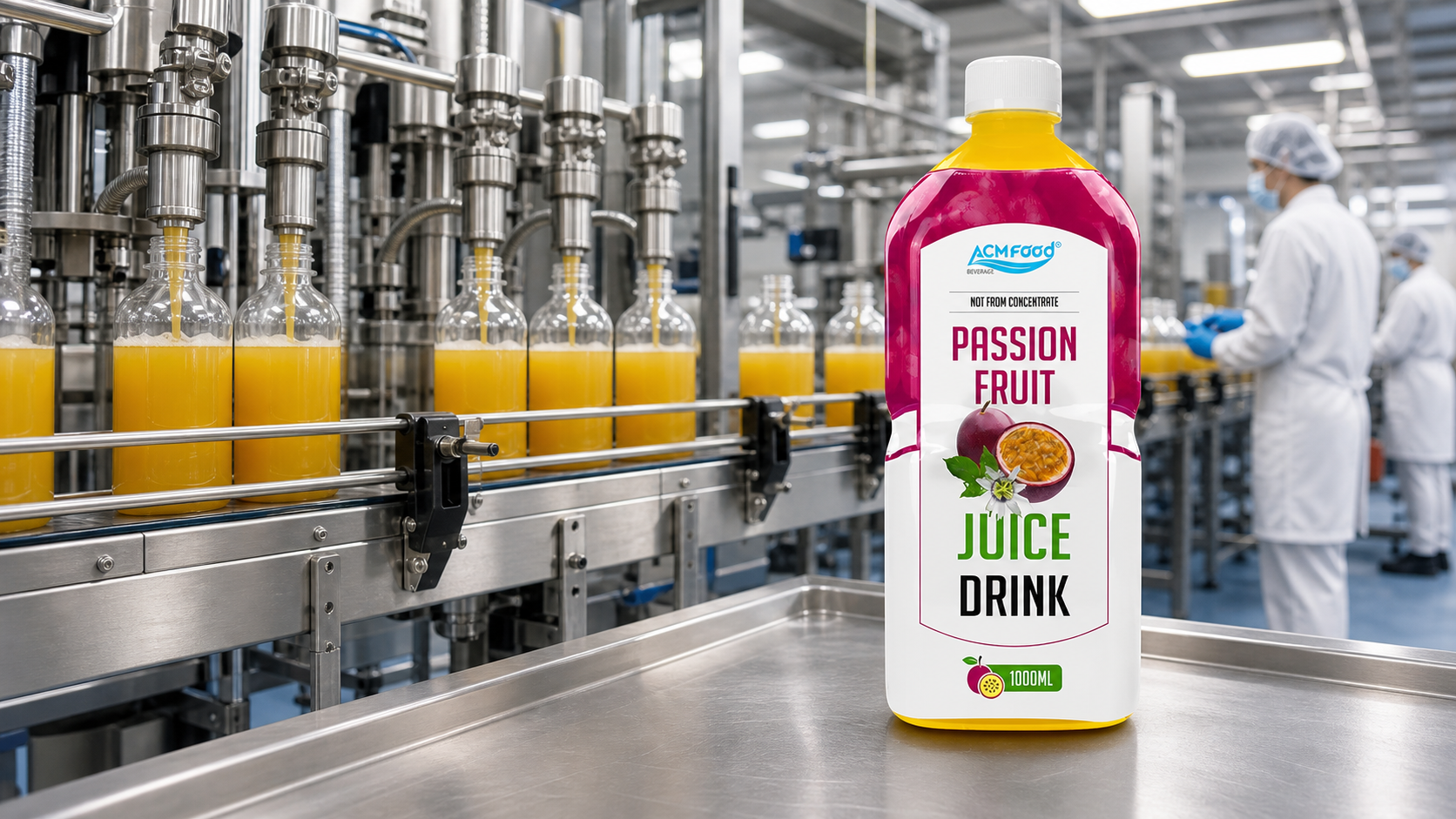
A fruit juice manufacturer converts raw fruit inputs (fresh fruit, NFC juice, concentrates, purees, flavors) into finished beverages through controlled processing, filling, and packaging. Depending on scope, they may offer product development, pilot trials, shelf-life studies, labeling support, and export documentation in addition to production.
Core activities typically include: receiving and qualifying fruit inputs; blending and standardizing Brix and acidity; pasteurization or aseptic processing; filling into PET, glass, cans, or cartons; packaging inspections; batch records; and shipment preparation. Many manufacturers also run private label/OEM projects or collaborate on ODM concepts where they provide a base formula you can customize.
How to choose a fruit juice manufacturer?
Shortlist factories by the specific products you want, their processing platforms (e.g., hot-fill vs. aseptic), packaging capabilities, quality control systems, and their ability to support formulation, compliance, and logistics. Then validate with samples, pilot runs, documentation reviews, and clear commercial terms before your first PO.
To make your evaluation concrete, build around these pillars:
- Product scope & process fit: NFC vs. concentrate-based, 100% juice vs. nectar/juice drink, heat treatment, and filling method.
- Raw material sourcing: consistent fruit origins, verified specs, and seasonality planning.
- Quality & food safety: documented controls, traceability, and competent in-house or third-party labs.
- Packaging platforms: available formats, closures, and line speeds that match your volumes.
- Regulatory & labeling: experience supporting the target market’s requirements.
- Commercial terms: MOQs, pricing structure, lead times, freight model, and after-sales support.
100% juice, nectar, and juice drink: which one fits your brief?
Choose the format that matches your brand positioning, price point, and regulatory market. 100% juice emphasizes single-ingredient purity; nectar or juice drink formats allow added water, sweeteners, or flavor systems that enable cost, calorie, and taste flexibility. Align your claim language and labeling to the final formula and destination market rules.
If you’re early in concepting, use this quick comparison, and see the broader beverage landscape in Types of Beverages: A Complete Guide to Popular Drink Categories.
| Format | What it typically is | Sugar & sweeteners | Positioning & notes |
|---|---|---|---|
| 100% juice | Single juice or blend standardized by Brix/acidity; NFC or reconstituted from concentrate | Only fruit sugars naturally present in the juice; no non-juice sweeteners | Purity-focused; higher juice content cost; formulation and labeling tightly regulated |
| Nectar | Juice and/or puree diluted with water; may include permitted sweeteners | May include added sugars or sweeteners per market rules | Balances taste, mouthfeel, and cost; popular for tropical purees |
| Juice drink | Lower juice percentage with water, flavors, acids, and optional sweeteners | Often sweetened; may use flavor systems | More cost-flexible; broad flavor options; check local juice-content declarations |
| Juice blend | Combination of two or more juices/purees (can be 100% or nectar/drink) | Depends on chosen format above | Used to balance color, acidity, aroma, and cost |
OEM juice manufacturer vs ODM vs co-packer: what’s the difference?
OEM manufacturers produce your proprietary formula and brand; ODM offer ready-to-customize base formulas; co-packers mainly fill and pack your provided recipe and ingredients. Choose the model that fits your team’s R&D resources, time-to-market, and IP strategy.
| Model | Who provides formula | Development effort | When to choose |
|---|---|---|---|
| OEM | Your brand (or co-developed under NDAs) | Moderate to high; custom trials and validations | When you need differentiation or specific sensory targets |
| ODM | Factory has base formula; you tweak flavor/juice percent | Lower; faster sampling and scale-up | When speed, proven processes, and budget are top priorities |
| Co-packer | You supply final formula and often materials | Low on R&D; high on process coordination | When you own R&D and only need reliable filling capacity |
Product development and quality control essentials
Robust development compresses timelines and reduces rework. Build your brief around inputs the factory can execute and verify in the lab.
- Define the sensory target: preferred fruit profile, sweetness level, acidity snap, and mouthfeel (especially for puree-rich nectars).
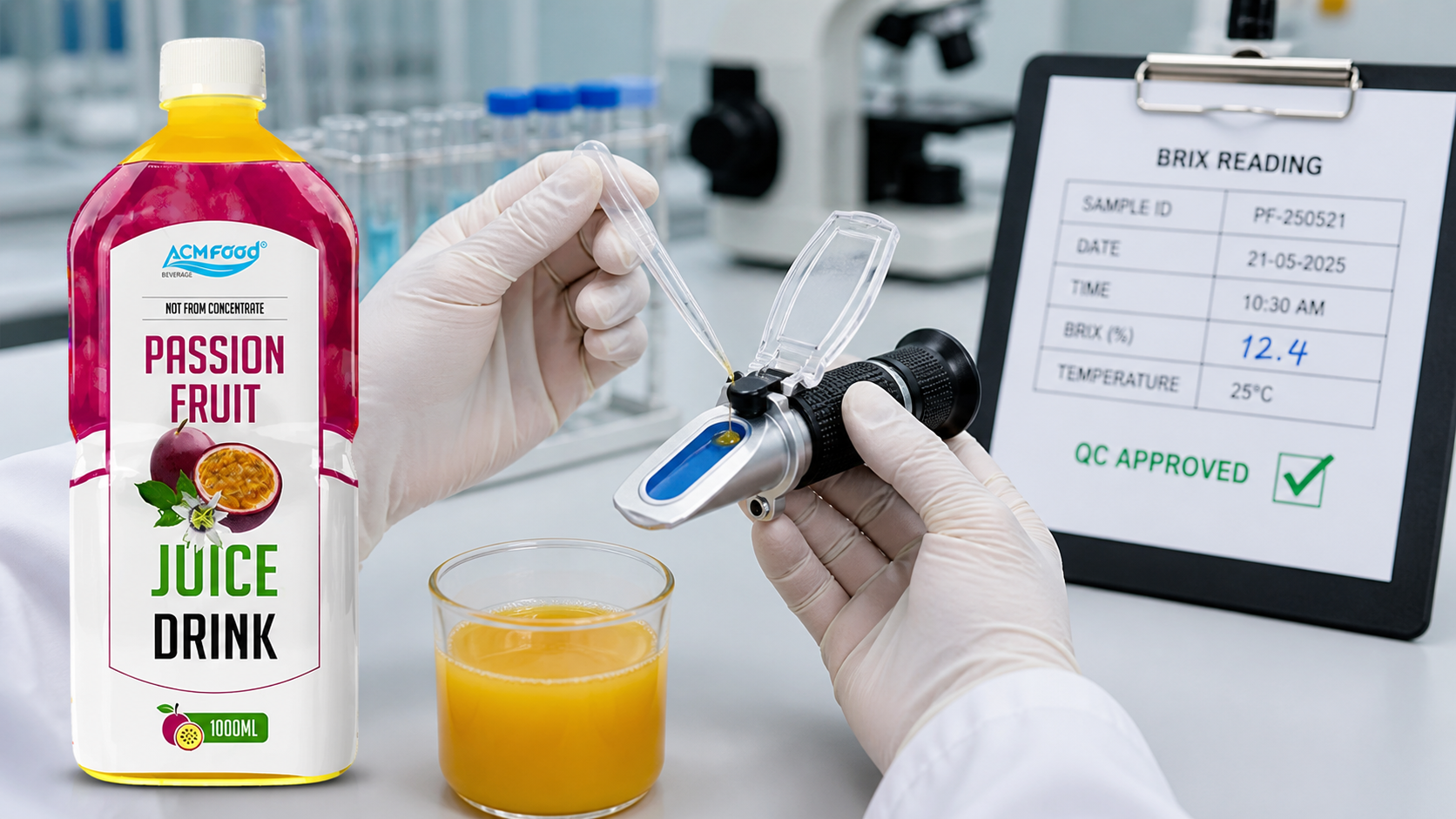
- Technical targets: Brix range, acidity, pH, color space, and clarity (clear vs. cloudy). Agree on acceptable ranges and how they’re measured.
- Stability choices: hot-fill vs. aseptic; clarify if you require pulp/no pulp, and whether you accept natural sedimentation.
- Flavor integrity: heat can mute top-notes. Discuss flavor-back or aroma recovery strategies compliant with your market.
- Micro and shelf-life plan: define tests (e.g., standard indicators per category), sampling frequency, and challenge/stability studies appropriate for your format.
- Change control: document how ingredient, processor, or spec changes will be communicated and approved.
Ingredient sourcing and seasonality
Fruit is agricultural: availability, color, acidity, and aroma shift by season and origin. Ask for typical origins and how the factory blends across lots to deliver year-round consistency. For example, coconut formats follow their own sourcing dynamics; see Coconut Water Supplier Vietnam: OEM, Private Label & Wholesale Manufacturing for category considerations.
- Inputs the factory handles: NFC juices, concentrates, purees, natural flavors, and acids.
- Specifications on receipt: how they verify Brix, acidity, sensory, and certificates from suppliers.
- Contingency: plan alternative origins or blend strategies to mitigate seasonal variation.
Packaging formats and shelf life planning
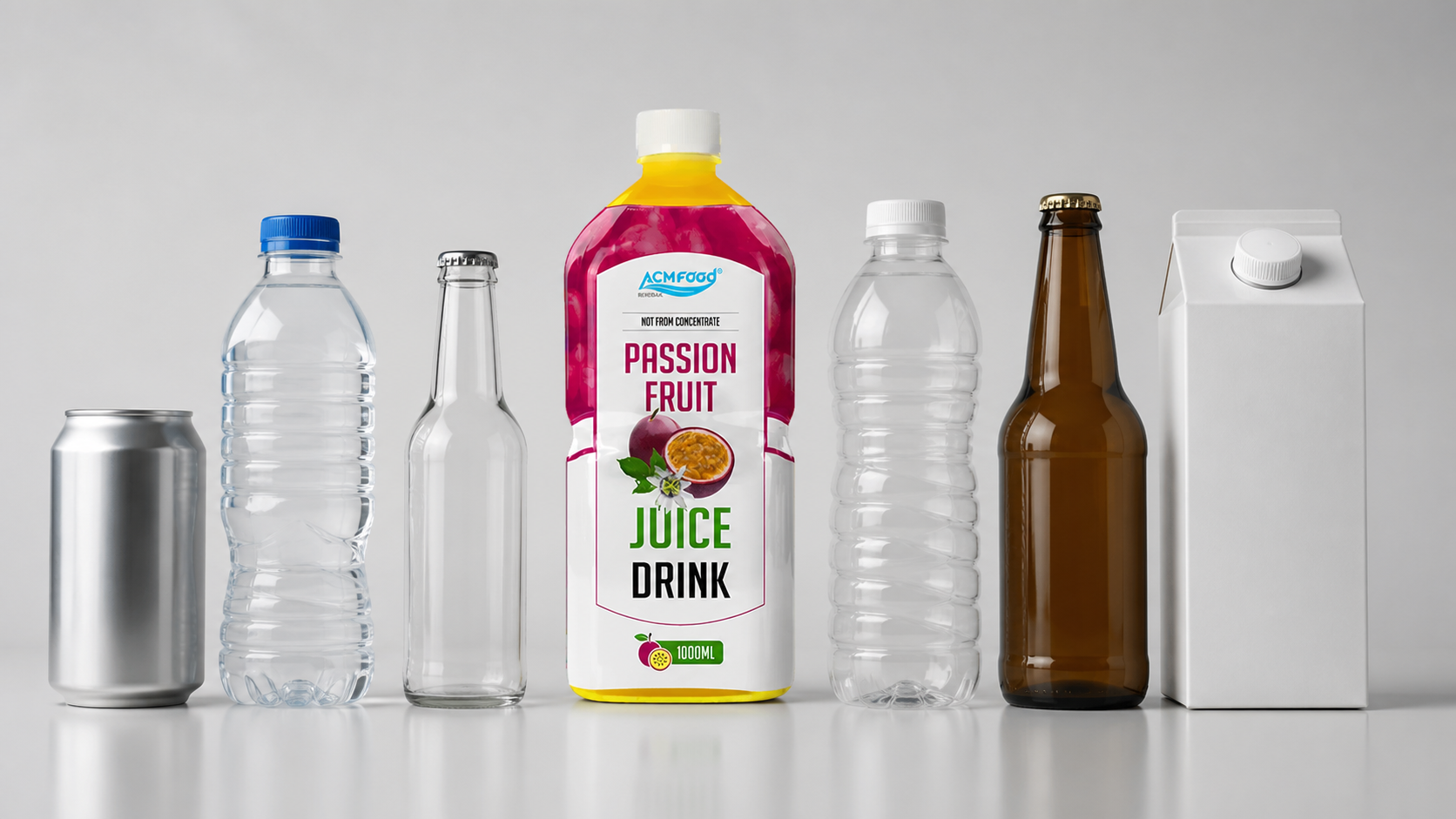
Packaging and process are inseparable. Your heat treatment, oxygen exposure, and closure system directly affect flavor, color, and shelf life. Select formats available on the factory’s lines and fit for your channel (ambient retail, chilled, e-commerce, or foodservice). For a deeper comparison, review Beverage Packaging Options: Cans, PET Bottles, Glass & Tetra Pak Compared.
- Common options: PET hot-fill, glass hot-fill, aluminum cans (retort or cold-fill with preservatives where allowed), and aseptic cartons.
- Stability vs. sensory: higher heat can protect shelf life but may round off bright aromas; aseptic can help preserve freshness-like notes.
- Channel demands: ambient retail requires robust stability; chilled channels support fresher profiles but with shorter shelf life.
- Operational readiness: confirm the factory’s closures, sizes, and any tooling needed for custom molds.
Cost, MOQ, and commercial terms to negotiate
Final cost reflects fruit markets, concentration level, packaging, process, line efficiency, and logistics. Build transparency early and avoid last-minute surprises by documenting every assumption in your quote request.
- Cost drivers: NFC vs. concentrate, single-origin vs. blended inputs, pack type and size, label/print method, case pack, palletization, and freight mode.
- MOQ & lead time: align batch sizes with line minimums and material MOQs. Confirm standard and peak-season lead times.
- Samples and pilots: clarify charges for R&D, pilot runs, and stability studies.
- Payment & delivery terms: agree Incoterms, payment milestones, and who books freight and insurance.
- After-sales & deviations: define how non-conformances and recalls are handled, including communication timelines.
Compliance, labeling, and documentation
Your label and claims must match the final formula and target-market rules. Factories can often share standard documents, but your brand is responsible for market-specific compliance. Engage qualified regulatory support as needed.
- Label elements: ingredient list order, juice-content declarations, nutrition information formats, and any required statements per market.
- Claim language: keep claims aligned to composition; what can appear on-pack depends on the finished product, serving size, verified lab results, and destination regulations.
- Documentation: product specs, certificate of analysis per batch, allergen statements where relevant, and export paperwork as applicable.
Supplier due diligence: audits, samples, and pilot runs
Due diligence protects your customers and your brand. Use a structured process before committing to the first commercial batch.
- Remote screening: review process flow, key equipment, packaging lines, lab capabilities, and sample COAs.
- Samples: taste across at least two batches where possible. Evaluate aroma, flavor balance, aftertaste, pulp level, clarity, and color drift over time.
- Pilot runs: simulate line conditions for your chosen pack. Confirm fill weights, closures, shrink, and transport tests.
- Audit: assess hygiene zoning, allergen management (if relevant), CIP records, traceability, corrective action processes, and training logs.
- Specifications & sign-off: lock final specs (Brix window, acidity/pH ranges, color and sensory descriptors) and sampling plans.
Juice manufacturer checklist
Use this concise checklist during juice supplier selection. Adapt it to your product, risk appetite, and market.
- Product definition: 100% juice vs. nectar vs. juice drink; NFC vs. reconstituted; single fruit vs. blend; with/without pulp.
- Sensory & technical targets: Brix, acidity, pH, color, clarity, aroma, and acceptable tolerances.
- Processing fit: hot-fill or aseptic; tunnel pasteurization or equivalent; oxygen management.
- Packaging fit: available formats and closures; sizes; custom tooling needs; transit testing plan.
- Quality controls: incoming-ingredient checks; in-process controls; finished-product COAs; micro/stability plan.
- Materials & sourcing: fruit origins; concentrate specs; flavor systems; supply continuity and alternates.
- Compliance & labeling: ingredient statements; juice content declarations; market-specific formats; document set readiness.
- Commercials: MOQs; lead times; pricing structure; Incoterms; payment milestones; R&D/pilot fees.
- Change control & communication: notification triggers; approval steps; batch-deviation handling.
- Service & support: account management; artwork handoff; pre-shipment inspections; after-sales process.
Common red flags when selecting a juice supplier
- Vague specifications: no written Brix/pH windows or undefined sensory targets.
- Limited packaging flexibility: the line can’t run your intended pack size or closure.
- Unclear origin or seasonality plan: no strategy for maintaining color and flavor year-round.
- Weak documentation: missing batch records, lab methods, or incomplete COAs.
- Inconsistent samples: large variation between trial samples without a clear cause-and-correct plan.
- Opaque pricing: hidden charges for materials, testing, or pallets; unclear freight responsibilities.
Working with overseas manufacturers: logistics and communication tips
Overseas partners can unlock cost and capability advantages, but distance adds complexity. Define communication rhythms, documentation standards, and logistics responsibilities up front. For a regional deep-dive, see How to Choose an Overseas Beverage Manufacturer and country-specific considerations in Beverage Manufacturer for Australian Brands.
- Time zones & approvals: set a weekly checkpoint, shared trackers, and clear approvers to prevent stalls.
- Samples & freight: plan sufficient sample cycles and shipping buffers for sensory and lab validation.
- Packing & pallets: confirm case pack, pallet patterns, labeling, and pre-shipment inspections to reduce receiving issues.
- Incoterms clarity: ensure everyone understands handover points, insurance, and responsibility for customs documentation.
FAQ
How long does development and first production usually take?
Timelines depend on formula complexity, packaging choice, and lab/line availability. Simple ODM adaptations can move faster; fully custom OEM projects add time for iterations, pilots, and stability checks. Build in buffers for artwork, materials lead times, and transport.
What documents should I request before placing a purchase order?
At minimum: a signed product specification, confirmed bill of materials, packaging details (sizes, closures, case pack), agreed quality plan, a sample certificate of analysis template, and your approved artwork files. For exports, align on the document set required by your destination.
Do I need to supply artwork and dielines?
Yes, unless you are using a standard label or sleeve provided by the factory. Request final dielines for your exact pack and closure. Align on color management, print method, and proof approvals to avoid reprints.
Can one factory make both NFC and from-concentrate juice?
Many can handle both, but verify how they standardize Brix and acidity across inputs, and whether the processing and filling platforms are appropriate for each format. Request samples of each to evaluate differences in aroma and mouthfeel.
How are flavor and color kept consistent year-round?
Factories blend across origins and lots, standardize Brix/acidity, and may use flavor-back or permitted natural flavors within your format’s rules. Agree on acceptable sensory windows and how deviations will be managed.
What is the difference between Brix on spec and sweetness on the palate?
Brix reflects soluble solids (largely sugars) measured instrumentally; perceived sweetness also depends on acidity, aroma, and temperature. Two juices at the same Brix can taste different if acidity or flavor top-notes vary.
Conclusion and next steps
Choosing the right fruit juice partner is about fit: process capabilities that match your format, quality systems that protect your brand, packaging that suits your channel, compliance aligned to your market, and commercial terms you can scale with. Lock these into a clear brief, validate with samples and pilots, and formalize specifications before your first PO. If you want a broader category view, start with popular beverage categories, then narrow down packaging via the packaging comparison guide, and adapt your supplier approach when sourcing abroad using this overseas manufacturer guide.
Turning this into a product
For the formats, ingredients and processing routes the factory actually runs, see beverage product capabilities. The manufacturing side is covered in contract beverage production; for launching under your own label, see private label beverages. To discuss a specification, request a quote.
Request a quote