


 Français
 Español
 العربية
 한국어
한국어Kiwi juice benefits relate mainly to its naturally occurring vitamin C, potassium, folate, vitamin K, and plant polyphenols, along with its refreshing, high-water profile. Kiwi juice is made by pressing or blending kiwifruit into liquid form; nutrition and taste vary by variety (green or gold), whether pulp is retained, and whether it is 100% juice, nectar, or a juice drink.
This guide explains nine potential nutrition-related advantages of kiwi juice, clarifies what influences its composition, and answers common questions. It also offers practical serving ideas and a concise section for beverage brands on product formats, color stability, and formulation choices. Because kiwi juice typically contains less fiber than whole fruit and may include added sugars in some formats, enjoy it mindfully as part of a varied diet.
What is kiwi juice?
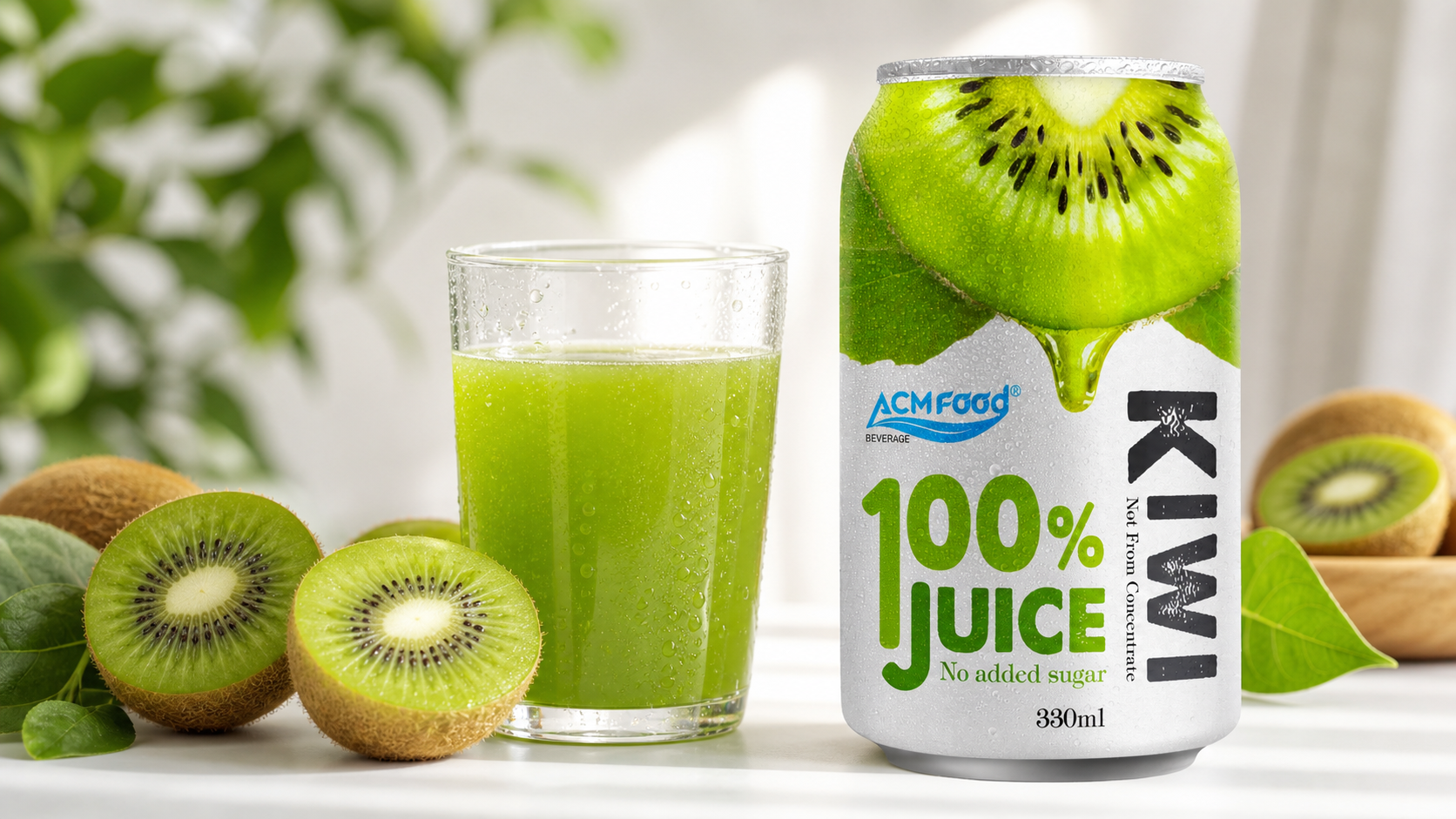
Kiwi juice is a beverage produced from kiwifruit (Actinidia deliciosa for common green varieties and Actinidia chinensis for many golden varieties). It may be prepared as 100% single-fruit juice, as a blend with other fruits, or as a nectar/juice drink that includes added water and sweeteners. Commercial products are commonly pasteurized for safety and shelf-life, which can influence color and heat-sensitive nutrients.
Are kiwi juice benefits real?
Yes—when you choose 100% juice and keep portions modest, kiwi juice can provide vitamin C, potassium, folate, vitamin K, and plant polyphenols. Actual values vary with cultivar, pulp level, processing, and whether sugar or water is added. Juice typically contains less fiber than whole fruit, so it complements rather than replaces whole kiwifruit in a balanced pattern.
What are the 9 kiwi juice benefits?
In short, kiwi juice can offer vitamin C, potassium, folate, vitamin K, and a range of antioxidant compounds, while also contributing to hydration and flavor variety. Benefits differ by product type and serving size. The list below is framed for everyday use and does not replace professional dietary guidance.
- Vitamin C and antioxidant capacity: Kiwi juice naturally provides vitamin C, an antioxidant that helps protect the quality of foods and beverages during exposure to oxygen. From a diet perspective, vitamin C contributes to your overall intake when juice is part of a varied eating pattern. Exact amounts depend on variety, processing, and storage.
- Potassium and electrolytes: Kiwifruit contains potassium. In beverage form, kiwi juice can contribute potassium to your diet alongside hydration. Levels vary widely with recipe and fruit maturity, and they may differ between 100% juice and diluted juice drinks.
- Folate content: Kiwi juice can provide folate derived from the fruit. Folate levels are influenced by cultivar, ripeness, pulp retention, and processing. Because pasteurization and storage can change sensitive nutrients, the label and formulation matter.
- Vitamin K presence: Kiwi typically contains vitamin K. When processed into juice, some of that vitamin can remain, though amounts may shift with filtration (clear vs. pulpy) and heat. If vitamin K intake is a personal consideration, review product labels and consult a professional when needed.
- Polyphenols and carotenoids: Kiwi contains diverse plant compounds, including polyphenols and carotenoids, which contribute to color, aroma, and antioxidant properties in food systems. Retention in juice depends on fruit variety, pulp level, processing steps, and oxygen exposure.
- Hydration from high water content: Like most fruit juices, kiwi juice is predominantly water. Enjoyed in small servings, it can complement daily fluid intake while adding a bright, tangy flavor option to your beverage routine.
- Option to retain some pulp (texture and small fiber content): Unfiltered or lightly filtered kiwi juice can keep a small amount of pulp, which may carry more texture and a little fiber compared with fully clarified juice. Most commercial clear juices contain minimal fiber relative to whole fruit.
- Flavor intensity in small portions: The tart-sweet profile of kiwi brings strong flavor even in modest servings. That intensity can make it a satisfying way to add fruit taste to sparkling water, mocktails, smoothies, and culinary applications without relying on large volumes.
- Versatile for blends and culinary use: Kiwi juice pairs well with apple, pear, pineapple, citrus, cucumber, spinach, herbs like mint, and even ginger. Its acidity can brighten other flavors in drinks and recipes, adding variety to fruit intake patterns.
Nutrition facts at a glance
Specific numbers vary by product and are not included here. Instead, use this qualitative overview to understand what typically appears in kiwi juice and what might change from brand to brand:
- Macronutrients: Mostly water and carbohydrates (from natural fruit sugars); usually very little fat and protein.
- Vitamins: Commonly includes vitamin C; may contain folate and vitamin K; other vitamins may appear in small amounts depending on formulation and pulp retention.
- Minerals: Potassium is usually present; trace minerals (for example, magnesium or copper) may appear in small amounts.
- Plant compounds: Polyphenols and carotenoids contribute to color and aroma; retention depends on processing and storage.
- Fiber: Typically low in clarified juices; may be slightly higher if pulp is retained.
- Acidity: Naturally tangy; acidity influences flavor brightness and can support beverage stability.
What influences kiwi juice nutrition and color?
Several variables shape the nutrition, taste, and appearance of kiwi juice. These do not make one product universally “better” but help explain differences between labels and sensory profiles:
- Fruit variety: Green vs. gold kiwifruit differ in acidity, sweetness, color, and aroma, which affects taste and perceived sweetness in juice.
- Pulp level: Unfiltered or pulpy juice can carry more aroma, body, and a little fiber; clarified juice looks cleaner but is usually lower in fiber and cloudiness.
- Heat treatment: Pasteurization helps safety and shelf-life but can reduce some heat-sensitive nutrients and may shift color over time.
- Oxygen exposure: Oxidation can influence color and aromatic notes; careful processing and packaging help manage these changes.
- Blends and dilution: Adding water, sweeteners, or other fruits (e.g., apple) changes the overall nutrient profile, flavor, and Brix.
- Storage: Time, temperature, and light can affect color and certain nutrients; follow on-pack storage guidance.
Green vs. gold kiwifruit in juice
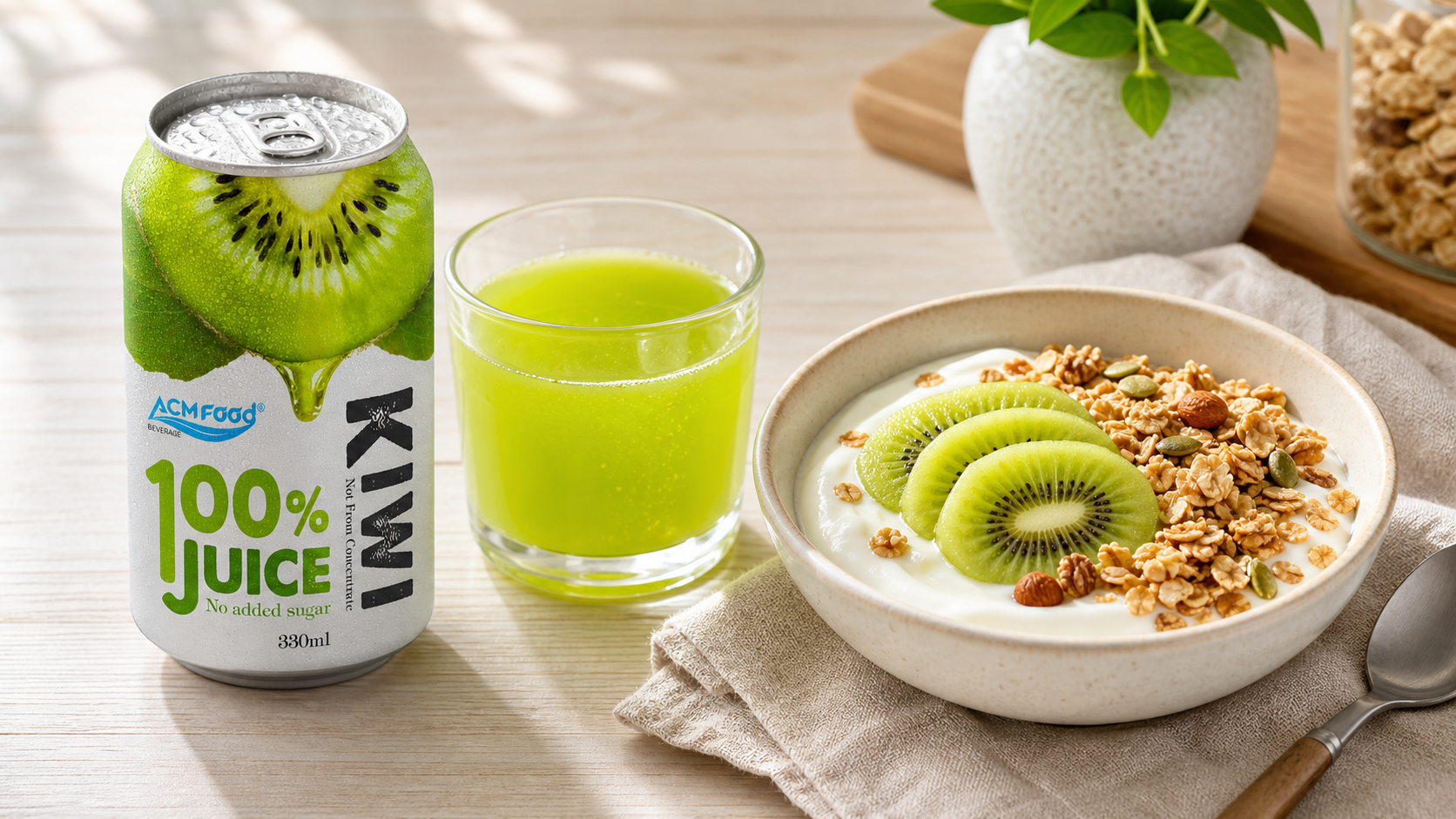
Both green and gold kiwifruit can make excellent juice. Green typically feels more tangy and aromatic; gold often tastes gentler and sweeter. This qualitative table compares common sensory and formulation notes; exact outcomes depend on fruit origin, ripeness, and processing.
| Attribute | Green kiwifruit | Gold kiwifruit | Formulation notes |
|---|---|---|---|
| Acidity & bite | Brighter, more tangy | Milder, softer tang | Green can lift blends; gold can reduce need for added sweetness |
| Perceived sweetness | Lower vs. gold | Higher vs. green | Adjust blend partners (apple, pear) to balance sweetness |
| Color | Vivid green to green-brown | Light yellow-gold | Manage oxidation; consider cloud and packaging to protect color |
| Aroma | Herbal-citrus, lively | Tropical, gentler | Green pairs with mint/citrus; gold pairs with pineapple/mango |
| Pulp & body | Can feel more textural | Typically smoother | Choose filtration level to match target mouthfeel |
Product formats: 100% juice, nectar, or juice drink?
Labels signal different compositions. This high-level comparison is qualitative and for general guidance; always check the ingredient list and nutrition panel on your market’s packaging.
| Format | Definition (typical) | Sweetening & water | Label cues | Positioning & notes |
|---|---|---|---|---|
| 100% kiwi juice | Only fruit juice (single-fruit or blend) without added sugars | No added sugars; water only if reconstituting from concentrate | “100% juice”; “from concentrate” or “not from concentrate” | Delivers fruit-derived nutrients; typically lowest in added ingredients |
| Nectar | Fruit juice/puree plus water and sweeteners | Contains added sugars and water | “Nectar” on front; ingredient list shows sweeteners | Smoother mouthfeel if puree-based; sweetness adjusted for taste |
| Juice drink | Lower juice content beverage with water, sweeteners, flavors | Usually includes added sugars and/or flavors | “Juice drink”; flavor-focused descriptors | Often lighter-bodied; check percent juice on pack |
Serving and pairing ideas for everyday use
Kiwi juice is intensely flavorful, which makes small servings feel vibrant. Try these ideas to enjoy variety without overdoing sweetness.
- Chilled and simple: Serve well-chilled in a small glass to highlight fresh aromatics.
- Kiwi spritz: Mix kiwi juice with sparkling water over ice; garnish with mint or a citrus twist.
- Smoothie balance: Blend with cucumber, spinach, and apple or pear for aroma, color, and acidity.
- Herbal lift: Add a light touch of ginger or basil to accentuate kiwi’s tangy notes.
- Fruit-to-fruit exploration: Compare flavors across fruits; for a contrasting antioxidant-rich profile, see Benefits of pomegranate fruits.
- Mocktail base: Shake kiwi juice with lime, mint, and crushed ice; top with soda for a bright aperitif-style drink.
- Kitchen uses: Use splashes of kiwi juice to brighten fruit salads, sorbets, or vinaigrettes (note that heating can change flavor and color).
Considerations for beverage brands and developers
For product teams, kiwi juice offers a distinctive color-aroma-acidity package, but it also presents technical choices. The notes below are directional and should be validated in your target market with pilot runs and sensory panels.
- Define the product type: Decide early among 100% juice, nectar, or juice drink. The choice shapes ingredient costs, sweetness targets, labeling, and margin.
- Fruit variety selection: Green vs. gold deliver different acidity, perceived sweetness, and color. Align variety and harvest maturity with the desired sensory map.
- Pulp and filtration: Pulpy styles feel more natural and aromatic; clear styles look premium and consistent. Filtration level affects cloud stability, fiber carryover, and fill behavior.
- Acid and Brix balance: Set a clear flavor target rather than chasing numbers. Consider how kiwi’s sharpness interacts with blend partners (apple, pear, pineapple) to reach the preferred profile.
- Color management: Kiwi tones can shift with heat and oxygen. Evaluate deaeration, antioxidant strategies suitable for your market, and packaging that protects color (e.g., light barriers).
- Thermal process design: Validate pasteurization that meets safety and shelf-life while protecting aroma and heat-sensitive nutrients. Rapid chilling and closed transfers can help.
- Ingredient interactions: Kiwi contains enzymes such as actinidin; in most pasteurized beverages, such enzymes are inactivated, but check interactions when formulating with dairy analogs or protein systems.
- Packaging: Select formats (aseptic cartons, PET, glass) to match channel, shelf-life, and light protection goals. Confirm cap, neck, and fill specs with the line capability.
- Regulatory and labeling: Confirm juice percentage declarations, ingredient naming, and any optional statements according to your target market’s regulations. Nutrition and claim language must reflect tested composition and local rules.
- Stability and shelf testing: Run real-time and accelerated studies for color, aroma, and cloud. Track any sediment, phase separation, or flavor fade.
FAQs
Is kiwi juice good for you?
Kiwi juice can be a refreshing way to add fruit-derived vitamin C, potassium, folate, vitamin K, and plant polyphenols to your overall diet. Choose 100% juice when possible and keep portions modest. Because juice usually provides less fiber than whole fruit, it works best alongside—not instead of—whole kiwifruit and other fiber-rich foods.
Is kiwi juice high in sugar?
All fruit juices contain natural fruit sugars. The amount in kiwi juice depends on the recipe and whether it is 100% juice, nectar, or a juice drink with added sweeteners. If you are comparing options, check the ingredient list and nutrition facts on the label for your market.
Does kiwi juice have fiber?
Clarified kiwi juice typically contains very little fiber. If some pulp is retained, fiber may be slightly higher, though still much lower than in whole kiwifruit. If fiber is a priority, include whole fruits and other fiber-rich foods in your routine.
Which is better: 100% kiwi juice or a kiwi blend?
Neither is universally better. 100% kiwi juice emphasizes varietal character, while blends can adjust sweetness, acidity, and aroma with apple, pear, citrus, or pineapple. Pick what fits your taste, ingredient preferences, and how you plan to enjoy it.
How should kiwi juice be stored?
Follow on-pack directions. Many products need refrigeration after opening and are best consumed within the suggested window. Limit heat and light exposure to help preserve color and flavor.
Can I cook with kiwi juice?
Yes. Use kiwi juice to brighten sauces, sorbets, or vinaigrettes. Note that heating and oxygen exposure can change color, aroma, and heat-sensitive nutrients; adjust techniques to preserve the qualities you value.
Conclusion
Kiwi juice offers a distinctive tart-sweet profile and can provide vitamin C, potassium, folate, vitamin K, and plant polyphenols, along with welcome hydration. Its nutrition depends on variety, pulp, processing, and whether it’s 100% juice, nectar, or a juice drink. Because fiber is typically lower than in whole fruit, moderate portions help kiwi juice fit comfortably into a varied diet. For beverage brands, selecting the right variety, managing color and aroma through processing, and aligning format with labeling rules are central to a successful launch. Keep these fundamentals in mind as you explore kiwi juice benefits at home or in product development.
Sourcing this as a product
This page is written for readers. If you are a brand, importer or retailer looking to put a drink like this on shelf, the commercial side is covered separately: beverage product capabilities for the formats, ingredients and processes we run, private label beverages for launching under your own label, and OEM beverage manufacturing services for the production side. To discuss a specification, request a quote.
Request a quoteKiwi in commercial beverage production
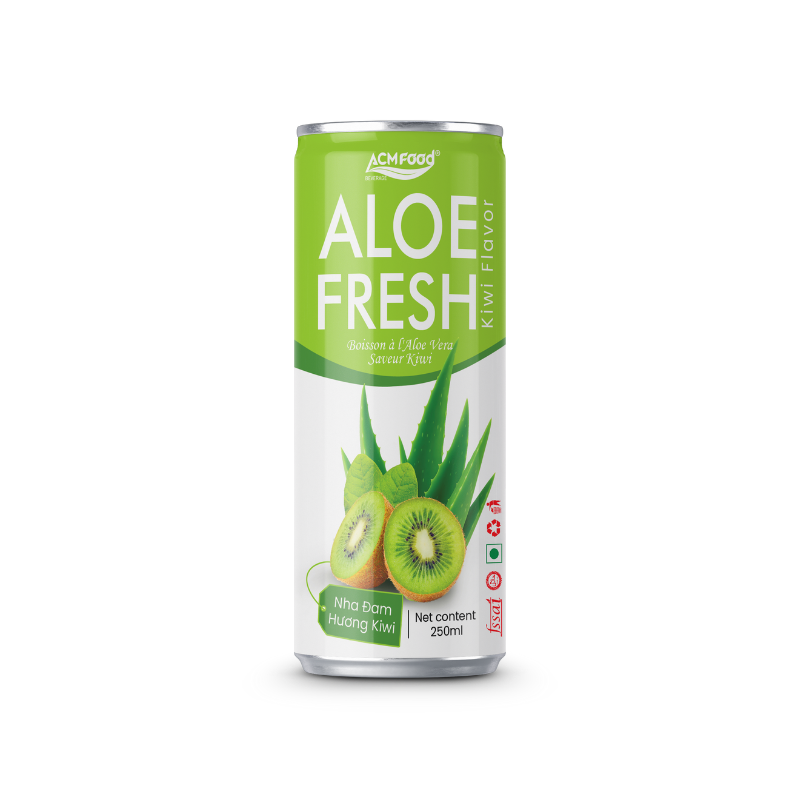
Kiwi rarely reaches shelf as a single-fruit juice. In practice it is used as a flavour inside a blended base — ACMFOOD runs kiwi in 250ml aloe vera slim cans rather than as a straight kiwi juice, and the fruit input is an imported base, not a Vietnamese crop. If you are planning a kiwi SKU, the flavour profile and the carrier base are the two decisions that come first.
- Matching a kiwi profile in a blended base — how the flavour is built and held.
- Brand an aloe vera and kiwi line — an existing SKU under your label.
- Minimums for slim-can formats — what a first run has to cover.