


 Français
 Español
 العربية
 한국어
한국어A fruit juice RFQ (request for quotation) is a structured document that tells a manufacturer exactly what to cost, sample and deliver for your beverage project. A clear, complete RFQ leads to faster quotes, more accurate pricing, fewer change orders and smoother commercialization.
This guide shows you what to include in a professional fruit juice RFQ, how to express technical and commercial requirements, and how to avoid common pitfalls that delay a juice manufacturing quotation. Use it as a checklist and a template for OEM juice quote requests.
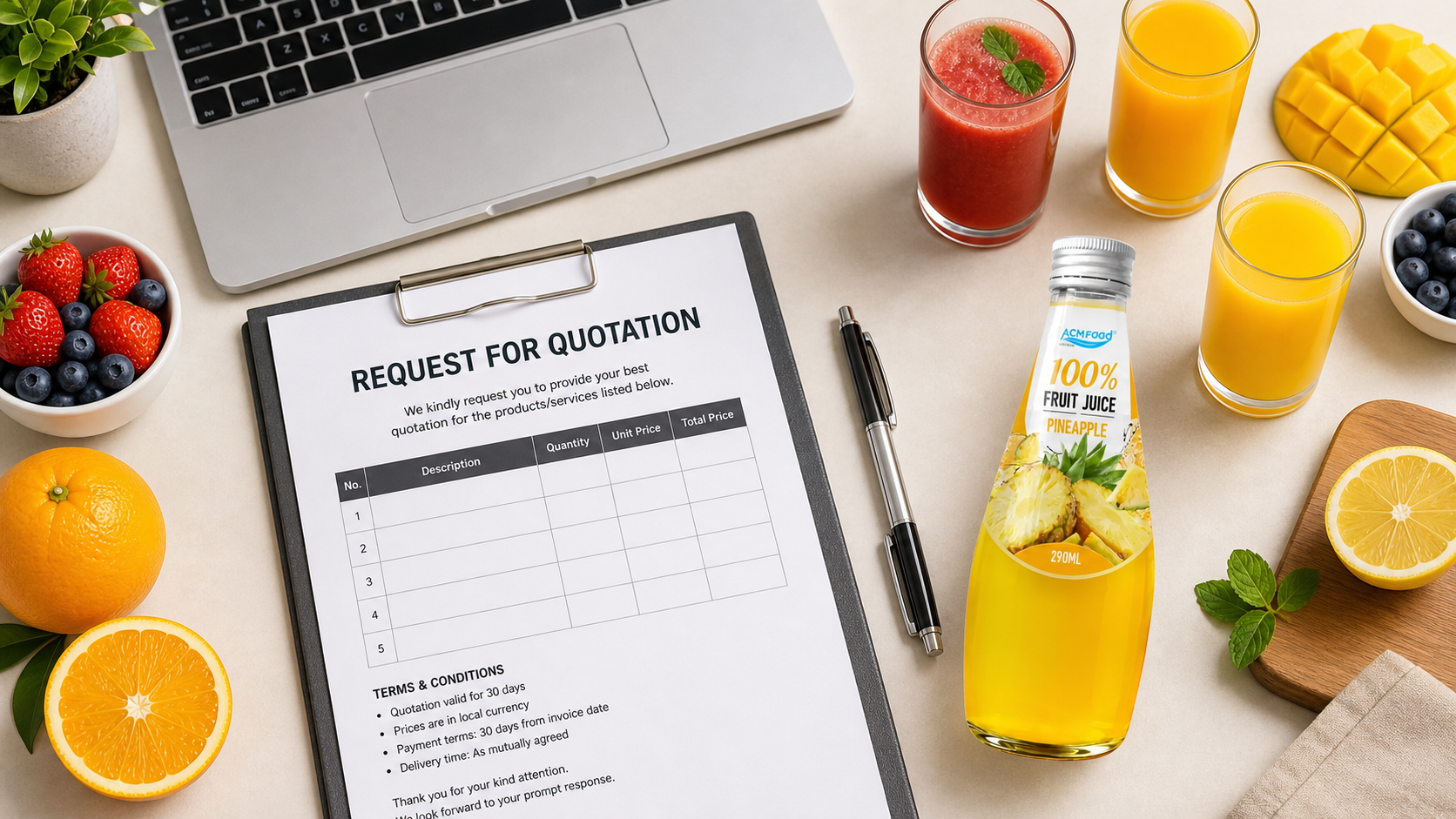
What is a fruit juice RFQ and why does it matter?
A fruit juice RFQ is the specification package you send to potential manufacturers so they can estimate feasibility, cost, lead time and sampling for your product. Good RFQs align expectations early, reduce back-and-forth, and help suppliers return a quote you can actually compare across vendors.
Without a robust RFQ, quotes often omit testing, packaging, logistics or compliance costs, causing surprises later. The goal is not to write a novel, but to share just enough clarity and constraints so a manufacturer can price and plan with confidence.
The essential RFQ checklist for fruit juice projects
Include these sections so a manufacturer can return an accurate OEM juice quote:
- Project overview & positioning: target consumer, use occasion, price tier, market(s).
- Beverage definition: 100% juice, nectar or juice drink; single fruit vs. blend; from concentrate (FC) vs. not-from-concentrate (NFC).
- Formula inputs: intended juices, flavors, sweeteners, acids, color, pulp/cloud level, allowed/restricted ingredients.
- Sensory targets: sweetness/tartness balance, aroma, mouthfeel, color, benchmark products.
- Processing & shelf life: hot-fill, pasteurized, aseptic, UHT or chilled; storage and distribution temperature; shelf-life goal.
- Packaging: format, size, material, closure, label type, case pack, pallet pattern, barcodes.
- Regulatory & labeling: destination market(s), language, ingredient naming rules, allergens, nutrition panel format, permissible additive list.
- Quality & testing: certificate of analysis (COA) parameters, stability/micro plans, lot traceability, documentation.
- Commercial terms: forecast and target volumes, RFQ quantity for pricing, Incoterms, shipping mode, payment terms, sample stages.
- Timeline: milestones for quotation, samples, pilot, production and artwork handoffs.
- Attachments: product brief, technical restrictions, artwork/dielines (if available), reference photos, and any brand guidelines.
Define the beverage: class, juice content and positioning
Start by stating what you are making and how it will be sold. Manufacturers cost and process very differently for 100% juice, nectar and juice drinks, so be explicit about the class and your positioning goals.
- Class: 100% juice, nectar or juice drink (terminology varies by market).
- Juice source: NFC vs. FC; single-fruit vs. multi-fruit; clarity (clear vs. cloudy) and pulp level.
- Positioning: mainstream vs. premium; family refreshment vs. functional refreshment; ambient vs. chilled.
- Benchmarks: 1–3 market products that capture your desired taste, sweetness, color or packaging style.
Use a simple table to align teams on product class implications:
| Product class | Core definition | Sweeteners | Labeling considerations | Positioning & notes |
|---|---|---|---|---|
| 100% juice | Only juice ingredients (from concentrate or NFC) | Typically none beyond juice sugars | Ingredient naming and claims vary by market | Often premium; processing choice drives shelf life |
| Nectar | Diluted juice with water; may include sweeteners | May use nutritive or non-nutritive, if permitted | Minimum juice content rules may apply | Broader cost and sweetness flexibility |
| Juice drink | Low-juice beverage with flavors and sweeteners | Commonly used within regulatory limits | Juice % declaration rules may apply | Accessible price points and profiles |
Formula details your manufacturer needs
Offer a directional formula so the supplier understands ingredient scope and boundaries. You do not need a finished recipe; list what must be included or excluded, and where flexibility is acceptable.
- Juices: intended fruits (e.g., apple, orange, grape, mango), FC vs. NFC preference, varietal preferences if relevant.
- Origins: any geographical preferences or restrictions for concentrates and purees.
- Sweetness approach: juice-only, sugar, or alternative sweeteners (as permitted in destination markets).
- Acidity & balance: preferred acids (e.g., citric, malic), target brightness vs. smoothness.
- Pulp/cloud: no pulp, light pulp, or extra pulp; clear vs. cloudy style; filtration preferences.
- Flavors & natural extracts: top notes (e.g., tropical, citrus zest), masking needs, and whether flavors are permitted.
- Colors: natural colorants permitted/not permitted; desired hue consistency.
- Other ingredients: salts, stabilizers, antioxidants, or botanical ingredients allowed/not allowed (subject to market regulations).
- Allergens & restrictions: list prohibited substances and cross-contact concerns according to your brand policy.
- Open parameters: where the formulator can optimize for cost, stability or taste within your guardrails.
If you have a preliminary nutrition or sweetness target, describe it qualitatively (e.g., similar sweetness to Benchmark A). Quantitative claims and on-pack statements must ultimately reflect tested values and comply with local regulations.
Sensory targets that guide R&D
Translate your brand intent into taste, aroma and appearance cues the lab can prototype against. Even simple scales can make expectations clear.
- Sweetness vs. tartness: preferred balance and finish (e.g., bright upfront, clean finish).
- Aroma: fresh-cut fruit, cooked jam, zesty citrus, floral or tropical top notes.
- Mouthfeel: light & refreshing vs. round & juicy; with or without pulp texture.
- Color: target hue and intensity; acceptable natural variation.
- Aftertaste: short vs. lingering; tolerance for notes from sweeteners or acids.
- References: 1–2 commercial products plus 2–3 descriptive words to anchor the brief.
Share what matters most (e.g., must keep fresh citrus top notes) and where compromise is acceptable (e.g., slightly less pulp if it improves clarity). Define how you will evaluate prototypes: side-by-side, triangle testing, or descriptive panels.
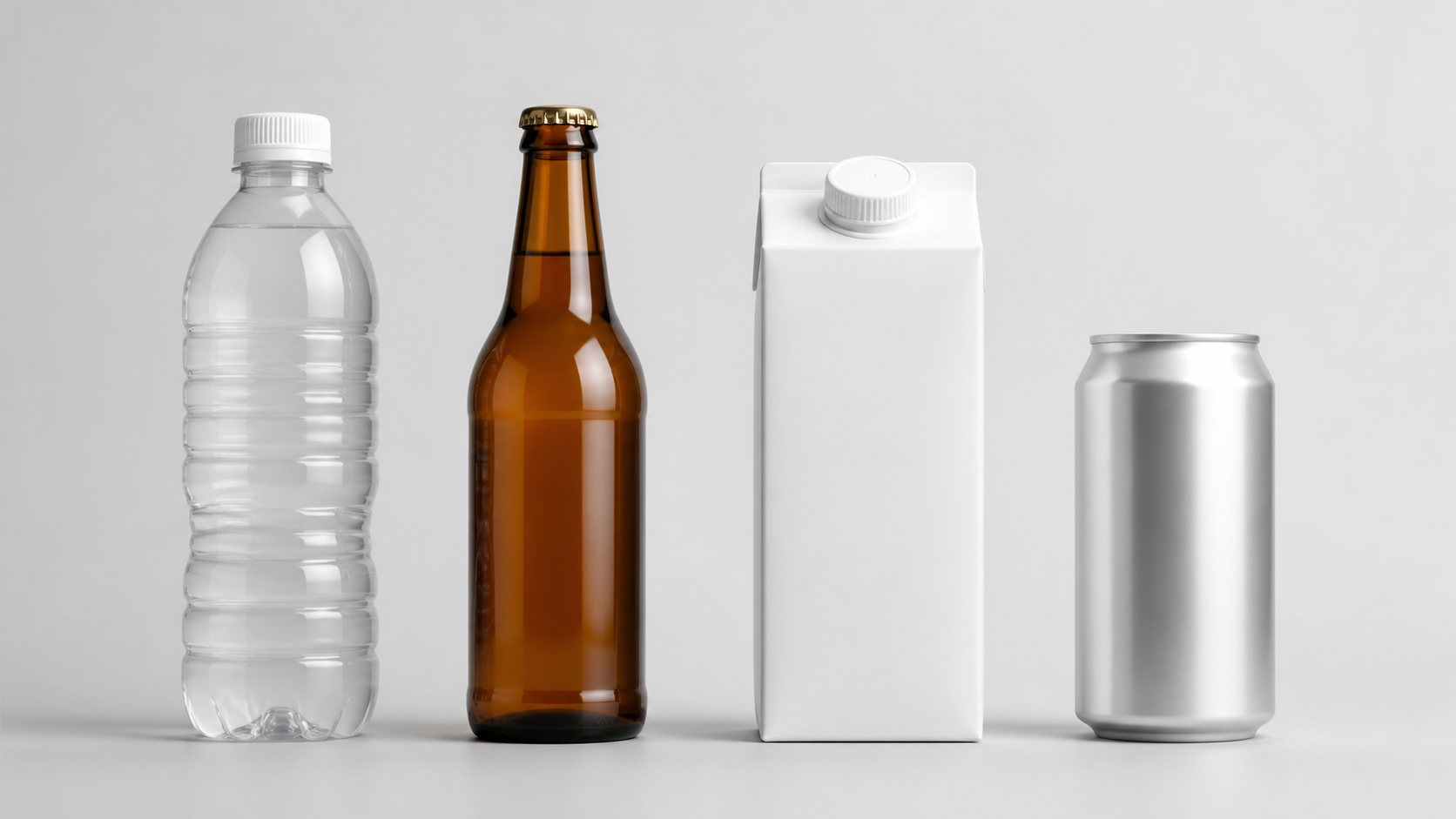
Packaging options and technical specs
Packaging affects processing choices, shelf life, logistics costs and shelf impact. Specify the primary format and the boundaries the supplier must respect.
- Primary format: PET, glass, aseptic carton, aluminum can, or pouch.
- Fill size: single-serve vs. multi-serve; exact nominal volume(s).
- Closure: cap type, tamper evidence, color, and liner preferences.
- Decoration: pressure-sensitive label, shrink sleeve, pre-printed can, direct print, or carton art.
- Secondary packaging: case count, tray/wrap, dividers, handle needs, and master carton specs.
- Palletization: pallet size standard, layer count, total height, and corner/strap requirements.
- Barcodes: GTINs and placement; any special retail marks.
Use a packaging comparison table to align options and trade-offs:
| Format | Key strengths | Considerations | Common uses |
|---|---|---|---|
| PET bottle | Lightweight, shatter-resistant, clear product view | Heat resistance and oxygen barrier need planning | Ambient hot-fill, value to premium |
| Glass bottle | Premium look & feel, excellent barrier | Heavier, breakable, higher freight cost | Premium lines, foodservice |
| Aseptic carton | Ambient shelf life, light block | Specific filling requirements, paneling control | Family packs, kids formats |
| Aluminum can | Great light & oxygen barrier, fast lines | Acidic product compatibility and lining | RTD refreshment, sparkling lines |
| Pouch | Portable, lightweight, differentiating shape | Spout/cap options, stacking and puncture | Kids pouches, travel formats |
Processing method, shelf life and distribution
Tell manufacturers how the product should be processed and stored so they can select equipment, ingredients and validation plans that fit your goals.
- Processing approach: hot-fill, pasteurization with cooling, aseptic filling, UHT, or refrigerated processing.
- Distribution temperature: ambient vs. chilled; expected retail environment.
- Shelf life goal: describe in months or weeks and tie to storage conditions.
- Stability expectations: cloud stability, pulp suspension, color retention, flavor evolution tolerance.
- Validation: outline desired shelf-life and transit testing plan.
Processing, packaging, and formulation are interconnected. For example, cloud stability systems, oxygen control, and headspace management may differ between hot-fill PET and aseptic carton.
Artwork, labeling and regulatory inputs
Even at RFQ stage, your manufacturer needs to know your destination market(s) and any labeling constraints that affect formula or pack design. Regulations differ between jurisdictions and can influence permitted additives, naming conventions and pack statements.
- Markets & languages: where you will sell and in which languages artwork is required.
- Ingredient naming rules: how juices, concentrates, flavors and sweeteners must be declared.
- Nutrition panel format: which standard applies in your market(s).
- Allergens & disclaimers: any mandatory statements based on your formulation.
- Claims intent: if you plan on nutrition or content claims, note that final eligibility depends on tested values, serving size and the rules of the target market.
- Artwork timing: when dielines are needed and when print-ready files will be supplied.
Quality criteria and documentation in the RFQ
Define the quality bar so the quote includes any testing and documentation you expect. Clarity here avoids late-stage add-on costs.
- COA parameters: typical items include Brix, acidity, pH, color, organoleptic notes, and microbiological status, expressed as ranges appropriate for your product class.
- Raw material standards: acceptance criteria for juice concentrates, purees, flavors and packaging components.
- Traceability: lot coding format and trace documents desired with each shipment.
- Production retain samples: how long retains are kept and how you can request them.
- Stability & micro plans: what studies the supplier should include in the quote.
- Certificates & audits: if your buyer or retailer requires specific documentation, state it (availability varies by manufacturer and market).
If you have brand or retailer guidelines, attach them or summarize the relevant testing and documentation so they can be costed into the RFQ response.
Commercial terms that impact a juice manufacturing quotation
Quotes depend on more than formula cost. Share the commercial context so suppliers can price accurately and propose viable lead times.
- Volumes: annual forecast, order pattern (monthly/quarterly), and the quantity you want priced in the RFQ.
- Incoterms & logistics: EXW, FOB, CIF or delivered; preferred port or delivery point; shipment mode.
- Lead-time expectations: desired windows from purchase order to ship date for repeat orders.
- Payment terms & currency: your standard terms and currency for quoting.
- Samples & pilots: how many rounds of lab samples and whether pilots should be included in the quote.
- Tooling & artwork: any one-time costs (e.g., sleeves, molds, or print plates) to be itemized.
- Confidentiality: state if you require an NDA prior to full disclosure.
Ask suppliers to separate line items (ingredients, packaging, processing, testing, freight, pallets, documents) so you can compare apples-to-apples across offers.
Samples, pilot runs and acceptance criteria
Define the path from lab to shelf so everyone scopes effort and timing realistically.
- Lab samples: number of prototypes per round, sample volumes, and feedback turnaround method.
- Acceptance criteria: sensory, appearance and key analytical targets that define a “go” decision.
- Pilot trial: whether a pilot or line trial is needed to validate processing, fill levels and stability.
- First production approval: golden sample or signed spec that production lots must match.
- Post-launch monitoring: complaint handling, corrective actions and change control expectations.
Timeline and RFQ package structure
Share dates so the supplier can plan resources and provide a realistic quote turnaround.
- Key milestones: RFQ release, questions window, quote due date, sample due dates, pilot, production, artwork lock, and ship dates.
- File organization: a single folder or link with clear subfolders for Brief, Specs, Packaging, Artwork, Compliance and Commercial.
- Naming convention: project-sku-version-date (e.g., Brand-AppleNectar-12x1L-v01-2026-08-10).
How manufacturers evaluate a beverage RFQ
Understanding the supplier’s lens helps you write a better RFQ. Most manufacturers look for:
- Clarity: well-defined class, processing, pack and market.
- Feasibility: fit with available lines, materials and supplier network.
- Risk: formulation complexity, stability risks, regulatory constraints.
- Volume & cadence: the business case for buying materials and allocating line time.
- Timeline realism: workable dates for development, validation and artwork.
- Completeness: enough info to cost testing, documentation and logistics properly.
Common pitfalls and how to avoid them
Prevent delays and change orders by sidestepping these RFQ missteps:
- Vague product class: simply saying “fruit drink” without class or juice content direction leads to rework.
- Missing processing direction: omitting hot-fill/aseptic/chilled expectations makes shelf-life assumptions risky.
- Underspecified packaging: not naming format, size or closure causes non-comparable quotes.
- Unclear markets: different rules apply; declare destinations early.
- Hidden restrictions: disclose “no artificial color/flavor” or additive policies up front.
- No acceptance criteria: without sensory/analytical gates, development loops can stall.
- Compressed timelines: leave buffer for samples, pilots and artwork proofing.
Simple RFQ email template
Use this starter and attach your detailed RFQ package:
Subject: RFQ – Fruit Juice Project [Brand/Code]
Hello [Supplier Name],
We are seeking a quotation and development plan for a fruit juice beverage. Attached is our RFQ package covering product class, formula intent, processing, packaging, quality, markets and commercial terms.
Please confirm feasibility, questions, and your timeline for quotation and first samples. We would appreciate itemized pricing (ingredients, packaging, processing, testing, logistics) based on the quantities noted.
Kind regards,
[Name, Title, Company, Contact]
FAQ
What should I send first when requesting a juice manufacturing quotation?
Send a concise RFQ brief covering product class, destination markets, processing preference, packaging format, and a directional formula with must-have and must-not-have ingredients. Add your estimated volumes, Incoterms, and timeline so the supplier can scope accurately.
Can I request multiple SKUs in one fruit juice RFQ?
Yes, group related SKUs into a single RFQ if they share process and packaging. Provide a clear matrix of differences (flavor, color, sweetener policy) and ask for itemized pricing so each SKU can be compared independently.
Do I need finalized artwork before I ask for an OEM juice quote?
No, but share the intended packaging format, label type and any space-critical statements (e.g., multilingual requirements). Dielines and final print files can follow once specs are stable and the supplier confirms feasibility.
How detailed should my formula be in the RFQ?
Provide direction and guardrails rather than a locked recipe: juices, sweetener approach, acids, pulp level, colors and flavor style. Highlight any prohibited ingredients. The manufacturer can then optimize within your boundaries and propose viable alternatives if needed.
When do stability and microbiological tests happen?
Outline your expectations in the RFQ so the quote includes relevant studies. Typically, suppliers will plan validation around the chosen process and packaging, then confirm shelf-life and product safety based on your target markets and distribution.
Final note: A thorough fruit juice RFQ aligns teams on definition, processing, packaging, quality and commercial terms. Share clear priorities, realistic timelines and acceptance criteria. That way, manufacturers can return precise quotes and focused prototypes, accelerating your path from brief to shelf.
Turning this into a product
For the formats, ingredients and processing routes the factory actually runs, see beverage product capabilities. How production is organised is set out in OEM beverage production; for launching under your own label, see private label beverages. To discuss a specification, request a quote.
Request a quote