


 Français
 Español
 العربية
 한국어
한국어A fruit juice supplier checklist is a structured set of questions, verifications, and evidence requests that helps importers objectively assess a juice factory before placing orders. This practical guide turns audit theory into action, so you can use one consistent framework across multiple plants and markets.
Below you will find a comprehensive, field-tested fruit juice supplier checklist designed for on-site and remote audits. It covers food safety systems, processing controls, laboratory testing, packaging, traceability, labeling, and commercial readiness—focusing on what to ask, what to see, and what documents to capture.
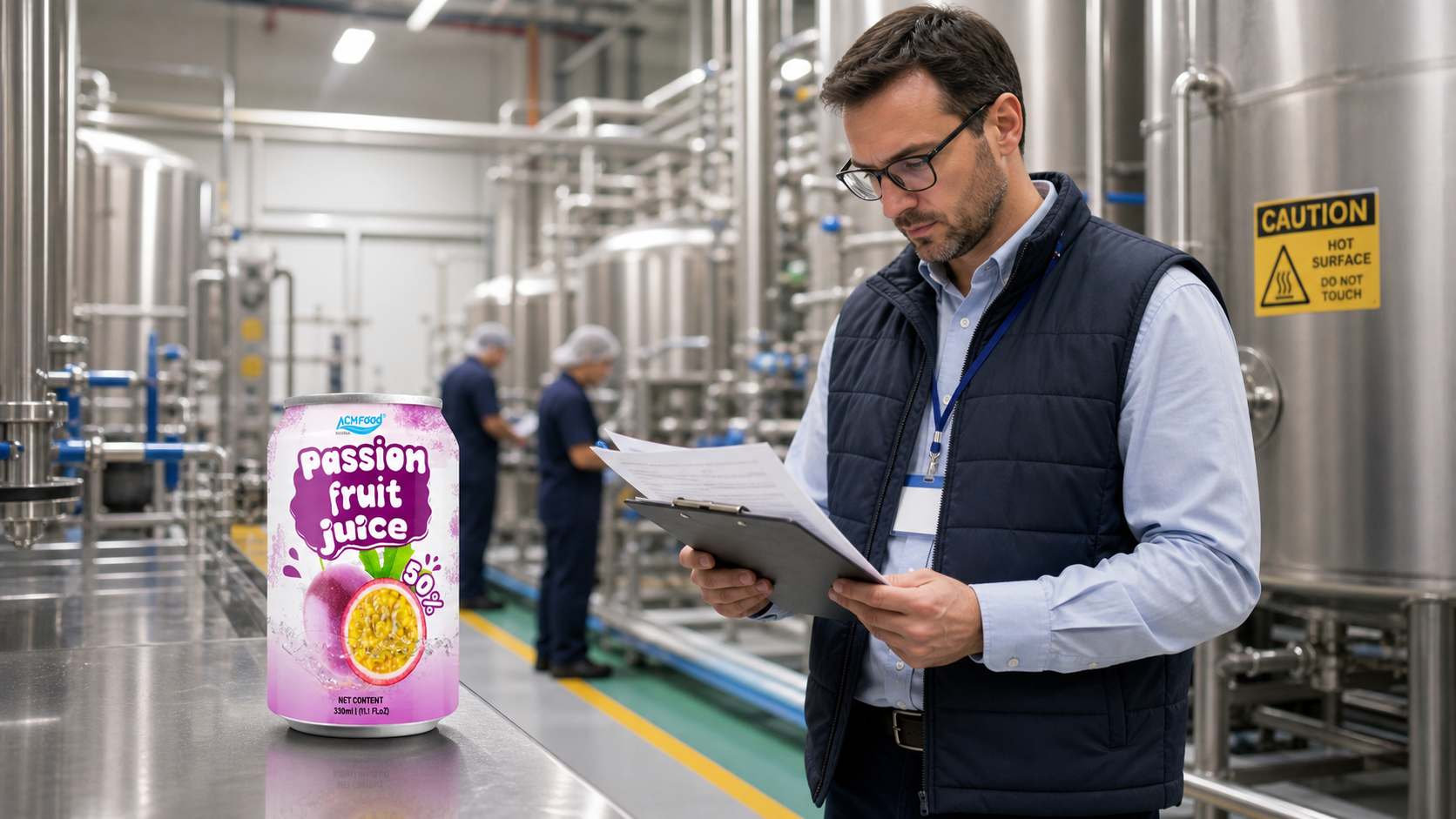
What is a fruit juice supplier audit checklist?
A fruit juice supplier audit checklist is a standardized tool that guides you through critical assessments of a juice manufacturer, ensuring consistent due diligence on food safety, product quality, compliance, and commercial capability. It helps gather objective evidence and reduce risk before, during, and after onboarding a supplier.
Unlike a general audit template, a juice-specific checklist highlights category nuances such as Brix targets, acidity management, pasteurization validation, reconstitution from concentrate, cloud stability, oxygen pickup, and sensory consistency across fruit origins and seasons.
Pre-audit preparation: what documents should you request?
Ask for key documents in advance to focus your on-site time on verification rather than discovery. Prior requests also reveal how organized the factory is and how quickly they respond.
- Company profile, factory address, and legal registration.
- Organizational chart covering Production, QA/QC, Maintenance, Warehousing, and R&D.
- Food safety certificates or scope statements (e.g., HACCP, ISO 22000, FSSC 22000, BRCGS), if applicable.
- Current product list with specifications and labeling examples.
- Master product specification for your target SKU(s) and draft commercial label mockups.
- Process flow diagram(s) for relevant product lines (NFC, reconstituted from concentrate, nectar, juice drink).
- List of approved raw materials and packaging suppliers with approval status.
- Typical Certificate of Analysis (COA) for finished juice and key inputs.
- Recall & traceability procedure summary and last mock recall report, if available.
- Testing plan (in-process, release, and shelf-life) for applicable products and formats.
Company legitimacy and trade compliance
Confirm the supplier’s legal standing and export readiness before you evaluate operations. This reduces the risk of administrative delays or regulatory blocks later.
- Verify business registration and tax status align with the factory location and export entity.
- Check that the physical site matches the paperwork (address, layout, production scope).
- Review export licenses or market-specific registrations if relevant to your route-to-market.
- Request evidence of product liability insurance and coverage limits, if applicable to your policies.
- Confirm HS codes used for your products and alignment with customs documentation practices.
- Clarify Incoterms used with typical customers and preferred freight arrangements (no need for exact lead times yet).
Food safety management system and HACCP verification
Prioritize verification that a documented and implemented food safety system exists and is maintained by trained personnel. You are looking for both policy and proof.
- Food safety policy, scope, and governance: who owns it, how often it is reviewed, and change control.
- HACCP study: hazard analysis, CCP identification (e.g., pasteurization), critical limits, monitoring, verification, and validation records.
- Prerequisite programs (PRPs): sanitation, allergen management (for blends), pest control, personal hygiene, glass & brittle plastic control, foreign body prevention, chemical control.
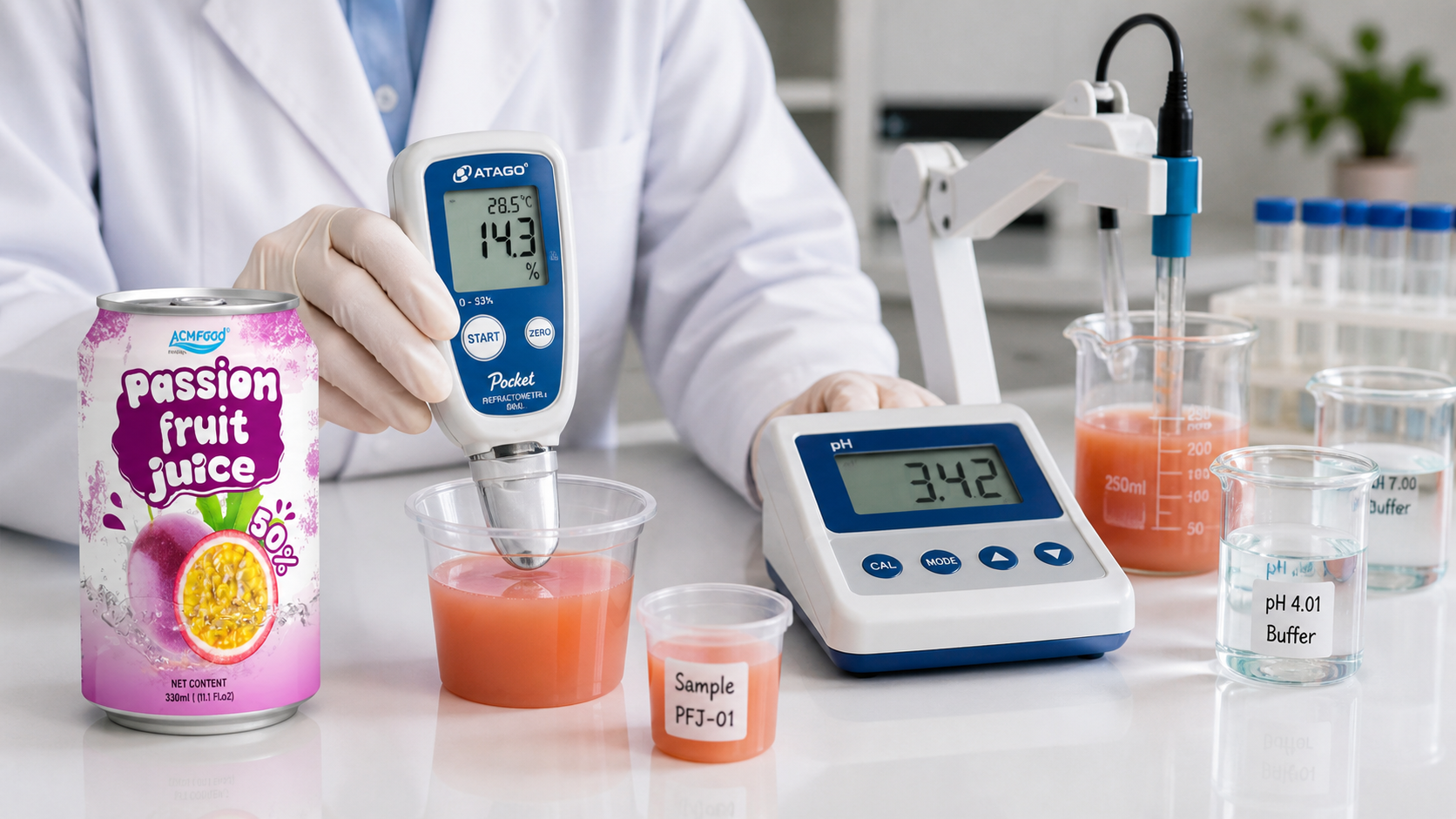
- Calibration program for thermometers, refractometers, pH meters, torque testers, scales, and data loggers.
- Internal audit schedule and most recent corrective and preventive actions (CAPA).
- Training matrix for operators, QC analysts, maintenance, and warehouse teams.
- Deviation handling: how out-of-spec batches are quarantined, investigated, and dispositioned.
Raw materials and agricultural inputs
Raw material control is central to juice quality and safety. Confirm the supplier’s approach to qualifying and monitoring fruit, concentrates, purees, water, and processing aids.
- Approved supplier program for fruit growers, concentrate suppliers, and sweeteners (if used).
- Incoming inspection criteria: appearance, sensory, Brix, acidity, pH, and temperature at receipt where relevant.
- Residue and contaminant programs for pesticides and heavy metals aligned with destination market regulations.
- Water quality standards and testing frequency for processing water and CIP final rinse.
- Documentation for concentrates: declared Brix, acidity, country of origin, and COA parameters.
- Allergen control where blends may include ingredients beyond fruit (e.g., botanicals).
- Storage conditions for chilled, frozen, or ambient inputs; FIFO/FEFO discipline and stock rotation records.
Processing controls specific to fruit juice
Fruit juice operations depend on tight control of Brix, acidity, pH, time–temperature treatment, oxygen, and mixing uniformity. Confirm that in-process checks match the declared specification and validated parameters.
- Reconstitution accuracy for concentrates (water-to-concentrate ratio, temperature control, and mixing uniformity).
- Brix and acidity adjustment steps and sign-offs before pasteurization or filling.
- Deaeration and filtration steps to manage oxygen and clarity/cloud profile as applicable.
- Pasteurization or equivalent lethality treatment with validated time–temperature curves and continuous monitoring.
- Filling temperature, headspace control, and closure application verified per specification.
- Online checks: fill volume, cap or seam integrity, label application, and code legibility.
| Processing checkpoint | What to verify | Evidence examples |
|---|---|---|
| Reconstitution from concentrate | Correct ratio, uniform mixing, temperature control | Batch sheet, operator sign-off, mixing log |
| Brix & acidity adjustments | Results within spec before heat treatment | In-process test records, calibrated meters |
| Pasteurization | Validated parameters and continuous records | Data logger charts, CCP monitoring log |
| Filling & closure | Target fill, headspace, seal integrity | Line QC sheets, torque/seam checks |
| Oxygen management | Deaeration or nitrogen dosing as needed | Process setting sheets, periodic verification |
Laboratory testing and release criteria
A robust lab plan supports consistent release decisions and reduces hold-and-release cycle risk. Align test plans with your spec and destination market expectations.
- Incoming tests (where applicable): Brix, pH, acidity, organoleptic checks, and contaminant programs aligned with regulatory requirements.
- In-process checks: Brix, pH, acidity, turbidity or cloud profile, temperature verification at critical steps.
- Finished product release: Brix, pH, acidity, sensory review, microbiological profile (e.g., standard plate count, yeast and mold), and absence of relevant pathogens where required by product risk.
- COA format: parameter list, methods where applicable, equipment ID, analyst sign-off, date, and batch/lot identification.
- Retention samples: labeled, stored under defined conditions, and held for the full shelf-life.
- Stability program: real-time and, if applicable, accelerated studies that reflect packaging format and distribution conditions.
Packaging and shelf-life
Packaging influences product safety, shelf-life, and label compliance. Verify material suitability, line controls, and post-fill handling to protect quality across the supply chain.
- Primary formats in scope (e.g., PET, glass, cans, aseptic cartons) and compatibility with heat treatment and closure systems.
- Packaging supplier approval and documentation such as compliance declarations for food contact.
- Critical controls: fill height, closure torque or seam, coding accuracy, and label legibility.
- Oxygen pickup, light exposure, and temperature management to protect color, flavor, and stability.
- Secondary and tertiary packaging integrity for palletization, transport, and export handling.
- Shelf-life justification built on stability data that matches product, package, and intended distribution.
Traceability, recalls, and product security
Effective traceability reduces time-to-containment if issues arise. Confirm the supplier can trace inputs forward to finished goods and customers, and backward to individual lots.
- Unique lot coding for raw materials, intermediates, and finished goods.
- Digital or paper traceability that connects batch records, COAs, and shipping documents.
- Mock recall frequency and performance summaries, if available.
- Quarantine procedures, controlled access to nonconforming stock, and destruction records if applicable.
- Tamper-evident packaging features and seal verification during production.
Specifications, change control, and documentation
Clear, controlled specifications prevent drift over time. You should see version control from first development to commercial scale-up.
- Signed product specification with ranges for key parameters and sensory descriptors.
- Approved artwork and label specs, including claims logic and ingredient order conventions by market.
- Documented change control for formula, materials, equipment, or process parameters, with customer notification triggers.
- CAPA workflow tied to deviations, complaints, or trend analysis, including effectiveness checks.
- Record retention policy aligned with shelf-life and regulatory expectations.
On-site factory walkthrough: what should you look for?
Move linearly from receiving to warehousing and observe people, equipment, flows, and hygiene. Trust what you see on the floor more than what is promised on slides.
- Controlled personnel and material flows; handwashing and gowning stations in use.
- Cleanable surfaces, CIP documentation, and no standing water around equipment.
- Glass & brittle plastic registers maintained; lights protected; tools shadow-boarded.
- Calibration stickers current on critical instruments.
- Operators following SOPs; QC checks performed at defined intervals and recorded contemporaneously.
- Clear defect segregation and labeled rework or hold areas.
- FIFO/FEFO in warehouses; correct storage temperatures and data logging where required.
Remote audits and desk-based alternatives
When travel is constrained, a desk-based audit can still yield meaningful risk insights. Set expectations for live video tours and document sharing with a defined agenda.
- Request live streaming through processing, filling, and warehouse zones with time for Q&A.
- Agree a secure file-sharing method for SOPs, batch records, and test reports.
- Use screen recordings (with permission) to annotate findings and action items.
- Plan a follow-up on-site audit to close high-impact gaps when feasible.
Scoring your beverage supplier audit
Use a simple risk model that prioritizes safety and legal compliance. Focus on severity and likelihood rather than chasing an arbitrary score.
| Finding type | Typical examples | Suggested action |
|---|---|---|
| Critical | Missing validated lethality step; inadequate traceability; falsified records | Immediate containment; halt approvals; require verified corrective actions |
| Major | Incomplete HACCP verification; inconsistent CCP monitoring; labeling nonconformity | Time-bound CAPA; management sign-off; verification of effectiveness |
| Minor | Housekeeping lapses; incomplete training logs; outdated SOP formatting | Correct during audit or within agreed timeline; monitor for trends |
Market-specific labeling and regulatory checks
Regulatory expectations differ by market, especially for product names (100% juice vs nectar vs juice drink), ingredient listing, allergens, claims, and nutrition labeling. Build these checks into your audit scope so the supplier understands destination requirements early.
- Confirm product naming and juice content rules match the target market.
- Check ingredient order conventions, allergen statements (if applicable), and net contents format.
- Align nutrition panel format and declarations to local rules; synchronize with COA parameters.
- Verify claim support files are documented, batch-verifiable, and market-authorized where required.
Useful internal resources for teams handling U.S. or Australia routes include the U.S. food label checklist, the Australian beverage label checklist, and guidance on the Nutrition Facts label for beverages.
Social, ethical, and environmental practices
While quality and compliance are essential, many importers assess responsible practices that can influence brand and retail acceptance.
- Documented code of conduct and ethical sourcing policy, if applicable.
- Working conditions, training, and health & safety programs for employees and contractors.
- Wastewater handling and fruit by-product utilization or disposal practices.
- Energy and water efficiency initiatives tied to line operation and CIP.
- Packaging stewardship and recyclability statements aligned with local regulations where products are sold.
Commercial readiness: capacity, planning, and service
Business continuity depends on realistic planning. Rather than demanding exact numbers in an initial audit, confirm the supplier’s approach and decision-making frameworks.
- How production scheduling prioritizes SKUs, seasonality, and preventive maintenance windows.
- Sampling policy for pilots and first production runs; who signs off and when.
- Complaint handling workflow from intake to root cause analysis and CAPA.
- Forecast collaboration practices and how demand signals are translated into procurement and production plans.
- Logistics coordination for export documentation, packing lists, and palletization standards.
Sample fruit juice supplier checklist (printable-style)
Use this condensed list during the audit. For each item, capture: observed status, document/photo reference, responsible person, and target closure date (if a gap exists).
- Company & legal: registration, insurance (if applicable), export readiness.
- Organization: org chart, roles for QA/QC, Production, Maintenance, Warehouse, R&D.
- Food safety: policy, HACCP study, CCPs, PRPs, internal audits, CAPA.
- Calibration: refractometers, pH meters, thermometers, torque/seam tools, scales.
- Supplier approval: fruit growers, concentrate suppliers, packaging vendors.
- Incoming control: specifications, COA verification, temperature checks, pest/contaminant programs.
- Water: potability and process water testing plan and records.
- Process flow: updated diagrams per product type; reconstitution steps where relevant.
- In-process controls: Brix, pH, acidity, temperature checks, oxygen management.
- Pasteurization: validated parameters, monitoring logs, deviations and corrective actions.
- Filling & packaging: fill volume, headspace, closure verification, coding, label accuracy.
- Lab: methods, reference standards, proficiency, retention samples, release protocol.
- Finished goods: COA, sensory, microbiology profile aligned with product risk.
- Stability: shelf-life protocol, data traceable to product/package/conditions.
- Warehousing: FIFO/FEFO, temperature control, pest control, stock rotation records.
- Traceability: lot coding, mock recall performance, documentation completeness.
- Nonconformance: quarantine, investigation, disposition, and CAPA linkage.
- Specifications: version control, customer approvals, artwork management.
- Change control: formula, material, process, or artwork changes with notification rules.
- Training: matrices, refreshers, role-specific competency checks.
- Hygiene & sanitation: SSOPs, chemical controls, verification records.
- Glass & brittle plastics: registers, inspections, breakage response.
- Maintenance: preventive plans, breakdown logs, lubricant controls for food-contact risk.
- Security: visitor control, tamper-evident measures, controlled access to holds.
- Social & environmental: policies, wastewater management, by-product handling.
- Commercial: forecasting, scheduling approach, complaint handling workflow.
- Market compliance: product naming, ingredients, claims, nutrition panel format.
Information for beverage brands and import teams
Before you audit, align your internal stakeholders on the product brief and success criteria. Clear direction helps the factory propose feasible parameters and speeds up approvals.
- Define product type (100% juice, nectar, or juice drink) and minimum juice content expectations.
- Agree target sensory profile, color, cloud level, and acceptable seasonal variation.
- Select packaging format and size, coding preferences, and case/pallet configurations.
- Outline labeling markets and languages so artwork and regulatory reviews start early.
- Clarify claims you plan to make and the data needed to support them in your destination markets.
If your route-to-market includes the United States or Australia, see our pages on choosing a beverage supplier for U.S. importers and a beverage supplier for Australian importers to plan supplier engagement and onboarding steps.
FAQ
Do I need a different audit for NFC versus reconstituted juice?
No. The core structure is the same, but you will emphasize different controls. For NFC, focus on cold chain and rapid processing. For reconstituted juice, verify reconstitution accuracy, concentrate COAs, and post-mix controls before heat treatment and filling.
Which tests are most important to check at release?
Prioritize identity and safety: Brix, pH, acidity, sensory confirmation to spec, and a microbiological profile suited to the product’s risk and shelf-life. Verify instruments are calibrated and results trace to the exact lot shipped.
Can a remote audit fully replace an on-site visit?
It can reduce risk and accelerate onboarding, but it rarely replaces an on-site audit for higher-risk products or first-time suppliers. Use remote reviews to close documentation gaps and plan a targeted in-person verification.
How should I handle minor findings discovered during the visit?
Document them with photos, assign owners, and set realistic timelines. Track closure through CAPA with an effectiveness check. Reassess if multiple minor findings indicate a systemic issue.
What if the supplier’s labels are not aligned with my market?
Ask the supplier to adapt artwork to the destination market and provide updated proofs for review before production. Use structured resources such as a U.S. food label checklist or an Australian beverage label checklist to guide revisions and sign-offs.
Conclusion
A structured fruit juice supplier checklist helps you verify food safety, processing controls, testing, packaging, traceability, and labeling before importing. Tailor the checklist to your product type, packaging, and destination markets, and anchor your evaluations in objective evidence. As your portfolio expands, refine this fruit juice supplier checklist to support consistent onboarding and long-term supplier performance.
Turning this into a product
For the formats, ingredients and processing routes the factory actually runs, see beverage product capabilities. What the factory takes on is described in our OEM manufacturing programme; for launching under your own label, see private label beverages. The certificates importers and retailers ask for are listed under certifications. To discuss a specification, request a quote.
Request a quote