


 Français
 Español
 العربية
 한국어
한국어Private label fruit juice cost is the unit price you pay to develop, manufacture, package, and deliver a fruit-juice beverage under your brand. That cost is not a single universal figure; it depends on your formulation, packaging, order size, production method, quality targets, and where the product ships.
This guide explains the drivers behind private label fruit juice pricing, how to build a clear RFQ brief, and ways to model total landed cost. It avoids speculative numbers and focuses instead on the choices that move cost up or down so you can forecast with confidence and get comparable quotes from manufacturers.
How much does private label fruit juice cost?
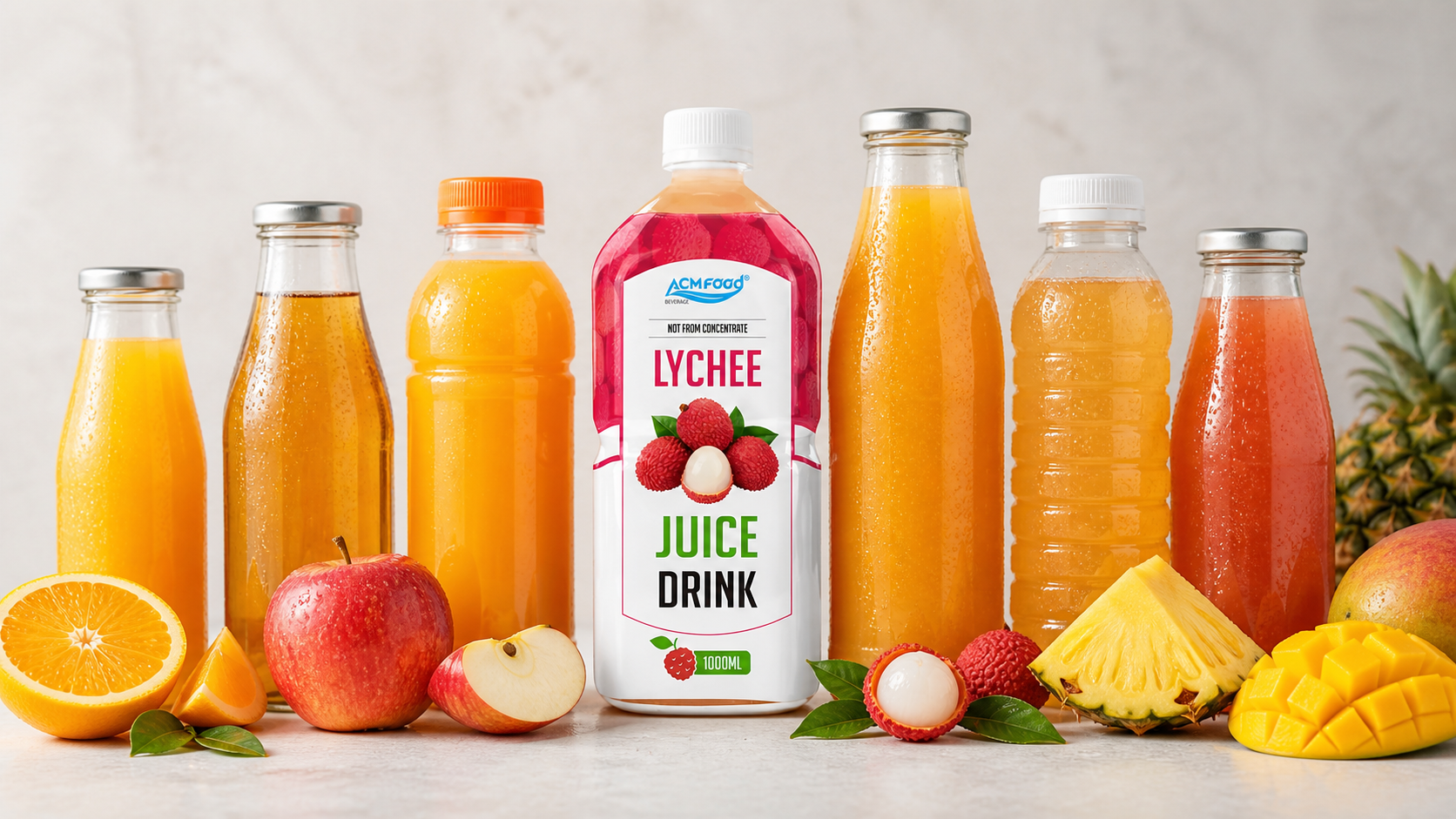
There is no single price for private label fruit juice. Unit cost varies by juice content and fruit type, packaging format, filling process, order quantity, logistics, and compliance work. To get a reliable figure, define your product spec in detail, then request quotes that include manufacturing, packaging, and end-to-end freight and customs to your delivery point.
In practice, two beverages that look similar on shelf can have very different cost structures. For example, a 100% juice in premium glass with aseptic filling and a long ambient shelf life will cost differently from a lighter juice drink in PET with hot-fill. Your price also hinges on minimum order quantities (MOQs), palletization, and the destination market’s regulatory requirements.
What determines private label juice pricing at a high level?
Conclusion first: The biggest levers are product category (100% juice, nectar, or juice drink), fruit selection (NFC or concentrate), packaging (PET, glass, can, carton), filling method (hot-fill, aseptic, retort, HPP), order size, and logistics. Compliance, testing, and artwork prep add setup or one-time costs that amortize across your first runs.
- Juice content & fruit type: Higher juice content, premium fruits, NFC (not-from-concentrate), and complex blends typically raise ingredient costs.
- Packaging: Bottle or carton material, size, closures, labels or sleeves, and secondary packaging affect material and freight costs.
- Processing & shelf life: Hot-fill, aseptic, HPP, or retort have different equipment, energy, and quality requirements that influence cost.
- Order quantity: MOQs and economies of scale impact per-unit pricing for ingredients, packaging, and line-time.
- Quality & certification: Additional audits, testing, and documentation can add cost.
- Logistics: Freight mode, duties, tariffs, pallets, and incoterms drive landed cost beyond ex-works pricing.
- Regulatory & labeling: Nutrition panels, claims review, and artwork changes add services and potential timeline impacts.
What goes into a per-unit juice manufacturing cost?
Short answer: Ingredients, packaging, processing, quality, overheads, and amortized setup form your ex-works unit cost. Landed cost then adds international freight, customs, duties, insurance, and local distribution.
Think in layers from ex-works to retail:
- Ex-works unit cost = Ingredients (juice base, additives) + Packaging (primary, closures, labels, secondary) + Processing (labor, energy, depreciation allocation) + Quality (in-line checks, release testing) + Overheads (plant & admin allocation) + Scrap/waste + Amortized setup (changeover, plates, pilot runs).
- Landed unit cost = Ex-works unit cost + International freight + Insurance + Customs clearance + Duties/taxes (if applicable) + Inland freight to your warehouse.
- Commercial unit cost = Landed unit cost + Distribution handling + Trade spend + Margins (distributor, retailer as applicable).
Each layer adds its own variability. For example, a lighter PET bottle can reduce manufacturing and international freight cost, while a heavy glass bottle may increase both but convey a premium image. Similarly, a simpler formula can speed up line-time and reduce changeovers, whereas a multi-part blend may require more dosing steps and checks.
Ingredient cost drivers for fruit juice
Bottom line: Juice content and fruit sourcing strategy set the base of your cost. Not-from-concentrate (NFC) juices and specialty fruits often carry higher prices than concentrates and mainstream fruits, and seasonality can influence availability and scheduling.
Juice category and labeling scope
Different markets define categories such as 100% juice, nectar, and juice drinks with distinct composition and labeling requirements. The higher the real fruit content and the more premium the fruit source, the more sensitive your cost will be to harvest conditions and supply variability. Align your category early, because it dictates ingredient choices, processing needs, and pack claims.
NFC vs concentrate
NFC juices emphasize minimal processing and may require cold-chain handling in some supply chains, which affects both ingredient and logistics strategies. Concentrates allow flexible storage and blending and can be more predictable for production planning. Your positioning and sensory targets decide which path fits.
Fruit variety, origin, and seasonality
Varietal differences (for example, apple types or tropical blends) drive color, aroma, acidity, and yield in production. Origin can matter for both taste and compliance. Seasonality impacts procurement timing and may affect lead times or the advisability of forward contracts.
Brix, acidity, and sensory targets
Desired taste and mouthfeel inform brix and acidity adjustments through standardized juice concentrates, natural flavors, or acids permitted for beverages. Tighter sensory tolerances may lead to more frequent in-process checks and potential adjustments, adding incremental operating cost.
Added ingredients
Sweeteners, botanicals, natural flavors, stabilizers, clouding agents, and functional additions add ingredient line items and documentation requirements. Each component also influences line setup, allergen controls, and testing plans.
Water quality and filtration
Where the formulation includes water, the filtration and mineral profile can affect taste as well as processing. Water treatment specifications are a minor but real contributor to the cost baseline.
Comparing product categories by cost tendency
Use this qualitative comparison when choosing a category for your brief. It avoids speculative numbers and instead highlights the relative cost tendency and implications.
| Category | Typical juice content | Cost tendency | Positioning & notes |
|---|---|---|---|
| 100% Juice | Highest real fruit content | Generally higher ingredient sensitivity | Clean-label focus; fruit quality & seasonality are key |
| Nectar | Moderate fruit content | Balanced ingredient costs | Often uses blends; smooth mouthfeel and flavor flexibility |
| Juice Drink | Lower fruit content | Generally more cost-manageable | Broader flavor space; more room for sugar or sweetener strategy |
Category selection should match brand promise, regulatory rules, and target channels. For foundational frameworks on manufacturing models, see private label vs OEM manufacturing and private label and OEM beverages compared.
Packaging choices that influence juice manufacturing cost
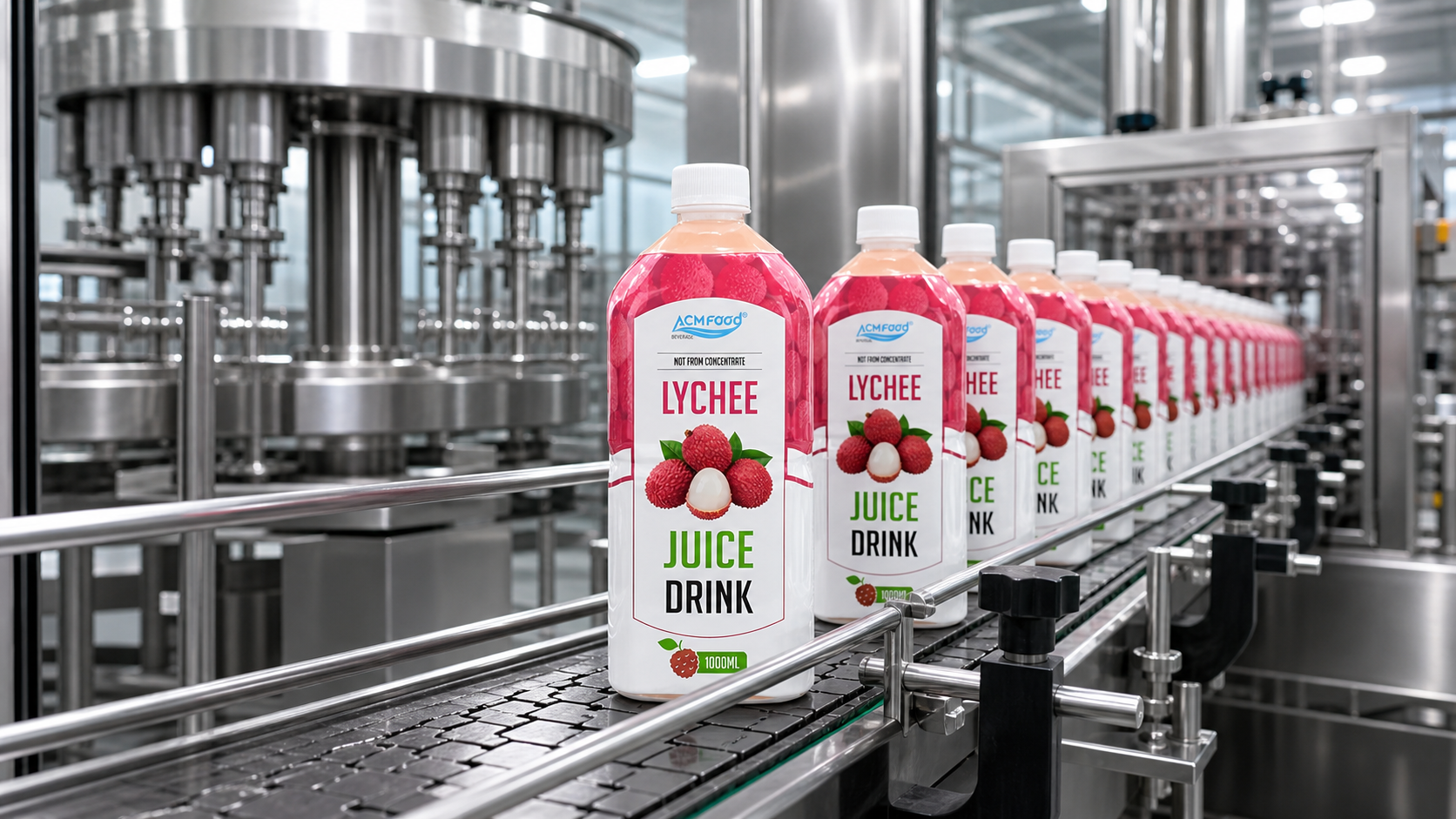
Quick take: Packaging can change both material cost and logistics by affecting weight, cube, and breakage risk. The label or sleeve system also shifts your artwork and changeover costs.
| Packaging | Cost considerations | Positioning & notes |
|---|---|---|
| PET Bottle | Lightweight; efficient freight; compatible with hot-fill and some aseptic lines | Common in mainstream & better-for-value segments; can look premium with the right design |
| Glass Bottle | Heavier; higher breakage mitigation; may require specific thermal treatment | Premium cues; strong clarity; often used for 100% juices and cold-pressed styles |
| Aluminum Can | Excellent light/oxygen barrier; retort or tunnel pasteurization options | Trendy formats; stackable; good for on-the-go channels |
| Carton (Aseptic) | Requires aseptic filling capability; efficient palletization | Ambient stability; family packs; sustainability discussions vary by market |
| Closures | Sport caps vs standard; tamper bands; liners; unit price and compatibility | Functional cues; child-friendliness; leak prevention |
| Labels & Sleeves | Pressure-sensitive labels vs full-body shrink sleeves vs direct print | Brand blocking, 360° design, recyclability implications |
| Secondary Packaging | Shrink bundles, trays, or RSC cases; print plates and die-cuts | Display readiness; warehouse handling; shelf pack-out speed |
Early packaging decisions also drive your pallet configuration, case count, and the master carton’s protective strength. These details affect both inbound component costs and outbound freight costs.
Filling method and shelf-life strategy
In brief: Your thermal or cold-chain strategy determines line type, energy profile, and microbiological controls. Hot-fill, tunnel pasteurization, aseptic, HPP, and retort offer different cost and positioning trade-offs.
- Hot-fill: Uses heat to pasteurize in-line and relies on container/closure compatibility. Common in PET and glass; supports ambient distribution.
- Tunnel pasteurization: After filling, sealed containers pass through a heat tunnel. Suited to certain glass and can formats.
- Aseptic: Product and container are sterilized separately and filled in a sterile environment. High precision; supports ambient stability and delicate flavors.
- HPP (High Pressure Processing): Post-pack pressure treatment helps preserve sensory characteristics. Typically used for refrigerated premium items.
- Retort (for cans and some pouches): High-temperature sterilization after filling; robust ambient stability.
Shelf-life targets influence preservatives, oxygen management, light barriers, and headspace considerations. Longer ambient shelf life can simplify distribution but may require stricter controls or specific packaging.
MOQs, lead times, and changeovers
Key point: Minimum order quantities and changeovers are practical constraints that shape per-unit cost. Each switch in flavor, bottle size, label design, or closure can create downtime and material waste, which manufacturers must recover within pricing.
- Component MOQs: Bottles, closures, sleeves, and cartons may each have MOQs distinct from the finished beverage MOQ.
- Lead times: Artwork approvals, print plates, die-cuts, and imported components extend timelines.
- Run strategy: Grouping SKUs on a line sequentially can reduce total changeover impact if planned with the factory.
- Forecasting: Better demand visibility enables more efficient purchase of components and production slots.
Hidden and one-time costs to budget
Beyond per-unit materials and processing, plan for setup and services that typically amortize across the launch:
- Bench-top R&D, pilot runs, and sensory panels
- Stability, shelf-life, and packaging compatibility studies
- Nutritional analysis and panel creation for target markets
- Artwork, dielines, print proofs, and photography
- Regulatory and claims review; barcodes and traceability systems
- Registration or market access documentation where required
- Third-party audits, if your customers request them
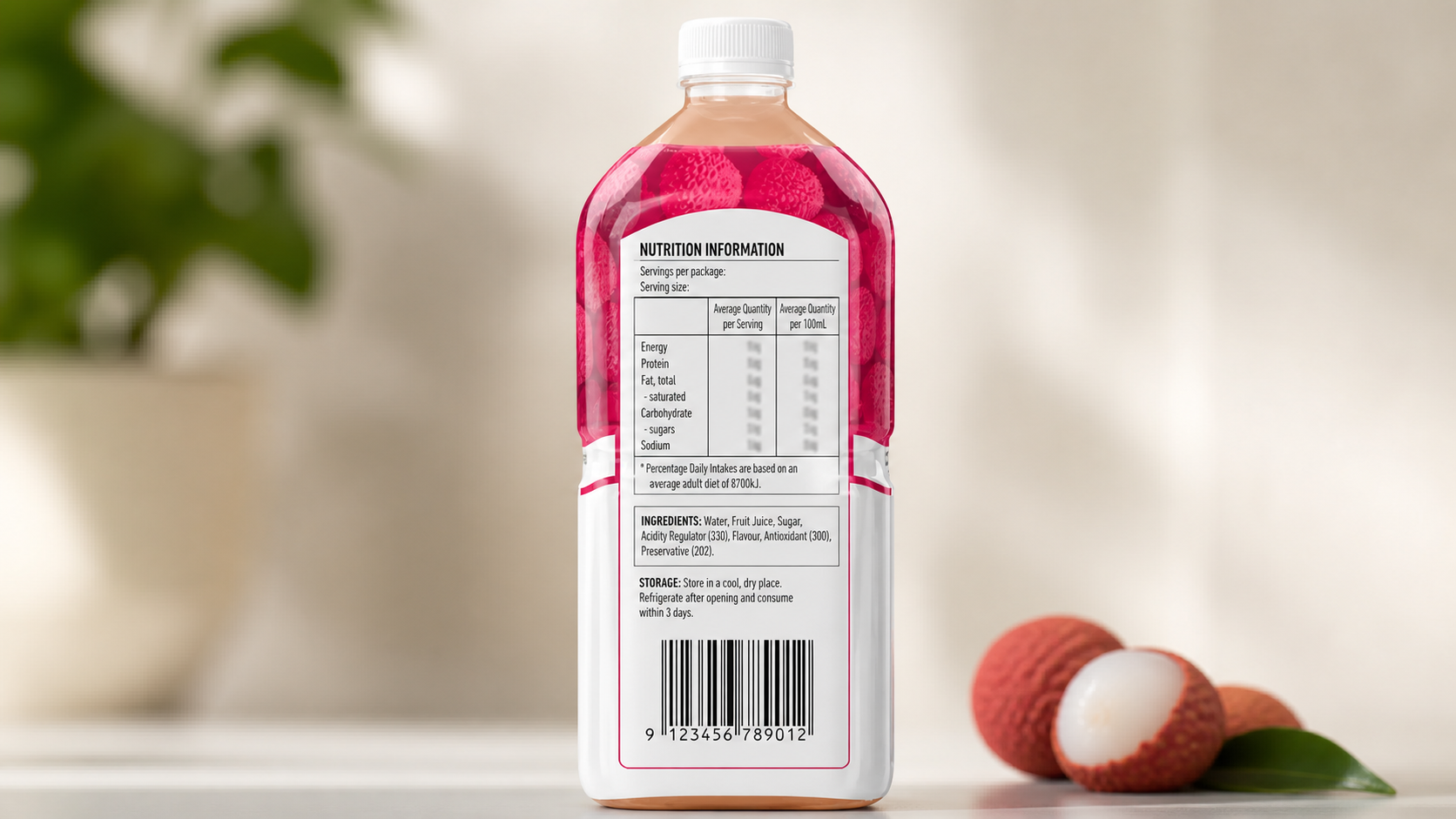
If you plan to sell in the United States, review Nutrition Facts label requirements and the broader U.S. food label checklist, because layout, language, and mandatory statements can impact artwork rounds and timing.
How to request an accurate OEM juice price
Short answer: Provide a precise product brief and ask for ex-works and delivered-to-warehouse quotes with clear incoterms. Keep variables constant across suppliers so you can compare like-for-like.
For foundational models and terminology, see private label vs OEM manufacturing and private label and OEM beverages compared. Then build your RFQ around the fields below.
| RFQ brief field | Why it matters |
|---|---|
| Product category & juice content scope | Sets ingredient strategy, processing, and label space |
| Flavor(s) and fruit source preferences | Guides sourcing, seasonality, and sensory targets |
| Juice base: NFC or concentrate | Impacts cost stability and logistics |
| Sweetener approach and acids | Defines taste profile and compliance specifics |
| Functional or botanical adds | Drives documentation and testing needs |
| Target brix/acidity/sensory notes | Determines in-process controls and adjustments |
| Packaging format, size, closure | Affects material, freight, and shelf presentation |
| Label type (PSL vs sleeve) | Changes artwork, print plates, and recyclability messaging |
| Filling method and shelf-life | Sets core line requirements and stability plan |
| MOQ per SKU and total volume | Impacts component buys and line efficiency |
| Quality standards and audits | Influences documentation, testing, and line release |
| Incoterms and destination | Clarifies who manages freight, customs, and risk |
| Timeline and launch window | Aligns component lead times and production slots |
| Regulatory market(s) and claims | Determines label elements and artwork paths |
If your target is the U.S., also see private label beverages for U.S. brands for market-specific considerations.
Example cost model templates (without speculative numbers)
Direct takeaway: Break costs into ex-works, landed, and commercial layers. Use the same structure across vendors so quotes can be compared side by side.
Ex-works model (per unit):
- Ingredients subtotal
- Primary packaging subtotal (bottle/can/carton, closure, label/sleeve)
- Secondary packaging subtotal (tray/shrink/case, dividers)
- Processing & labor allocation
- Quality & testing allocation
- Overheads allocation
- Changeovers & waste allocation
- Amortized setup (artwork, plates, pilot)
Landed model (per unit):
- Ex-works unit cost
- Export documentation & handling
- International freight & insurance
- Customs clearance fees
- Duties/taxes (as applicable)
- Domestic freight to warehouse
Commercial model (per unit):
- Landed unit cost
- Warehouse handling & outbound
- Trade spend and promotions
- Distributor and/or retailer margin structure
How to use the templates:
- Lock the product spec and packaging to minimize moving parts during quoting.
- Request line-itemized quotes following the models above with the same incoterms.
- Compare apples to apples by aligning volumes, pack sizes, and pallet configuration.
- Stress test scenarios: alternate packaging, different ship modes, or staggered launch volumes.
- Maintain a change log so all parties reference the same revision of your brief and artwork.
Cost reduction levers without hurting quality
Summary: Optimize where consumers won’t perceive a downgrade: operations, logistics, and materials that do not alter your brand promise.
- Right-size packaging: Choose a bottle or carton that improves pallet density without compromising shelf impact.
- Component harmonization: Standardize closures and labels across SKUs to reduce MOQs and changeovers.
- Run strategy: Sequence flavors to minimize sanitization and startup waste between SKUs.
- Formulation simplification: Reduce niche ingredients that drive separate quality checks or special handling.
- Supplier alignment: Leverage the manufacturer’s preferred packaging vendors to unlock better component pricing.
- Forecast and call-offs: Commit to rolling forecasts to help the plant plan raw materials and slotting.
- Ship mode optimization: Balance lead time and cost between ocean, intermodal, and air for urgent replenishment only.
- Artwork efficiency: Use modular templates to avoid full reworks for minor updates.
Regional and logistics considerations
At a glance: Destination rules affect labeling, shelf-life expectations, and pack language. Logistics adds variability based on mode, season, and route reliability.
- Labeling & language: Align front and back panels with the target market’s conventions and mandatory statements.
- Environmental conditions: Extreme temperatures during transit and storage may influence packaging choice and quality plans.
- Palletization: Confirm pallet type, height limits, and tie-sheet requirements for your retailers or distributors.
- Incoterms clarity: Determine the handover point and responsibilities for risk and insurance.
- Country-of-origin: Check whether origin statements are required and how they must appear, as discussed in country of origin labelling.
Artwork, nutrition, and compliance budgeting
Essential point: Compliance work has both time and cost implications. Build it into your critical path so labels, cartons, and ship dates remain aligned.
- Nutrition panel creation based on verified lab or database results
- Ingredient statement and allergen disclosure
- Font sizes, contrast, and placement checks
- Barcode registration and scannability testing
- Importer/distributor and contact details as required
- Claims vetting against market rules and formulation
Plan final proofreading after print proofs and ensure version control between dielines and master artwork files. The earlier you involve regulatory review, the fewer costly reprints you face.
Spec decisions that move cost most
In short: Five early choices typically shape most of your cost curve. Lock these before you price-shop vendors.
- Product category: 100% juice vs nectar vs juice drink.
- Fruit sourcing: NFC vs concentrate, origin, and seasonality approach.
- Packaging format: PET, glass, can, or carton and size(s).
- Filling method: Hot-fill, aseptic, HPP, retort, or tunnel pasteurization.
- Incoterms & destination: Ex-works only or door-to-warehouse landed pricing.
After these, finalize closures, label type, and secondary packaging, then clarify MOQs and pallet build to round out your briefing.
Common pitfalls that inflate OEM juice price
Heads-up: Avoid these issues to protect both timeline and budget.
- Changing bottle size or format after components are ordered
- Introducing new allergens mid-project without updating controls
- Ambiguous claims that trigger late-stage label rewrites
- Insufficient ship testing for the chosen packaging
- Underestimating artwork rounds and print lead times
- Not aligning on who owns freight, insurance, and customs tasks
Consistency and up-to-date documentation reduce surprises. When in doubt about which manufacturing route best fits your product, revisit private label vs OEM manufacturing to confirm your engagement model.
How to compare quotes fairly
Guiding rule: Normalize all inputs so each quote reflects the same spec and terms.
- Ask all suppliers to quote the same pack size, case count, and pallet height limits.
- Use the same artwork status across vendors (final or draft) to reflect real timelines.
- Request ex-works and delivered pricing on the same incoterms for direct comparison.
- Break out one-time costs separately from per-unit costs.
- Document assumed lead times and MOQs per component and per SKU.
When evaluating, look beyond the headline unit price. Consider service reliability, changeover flexibility, and quality data transparency—all of which influence lifetime cost and risk.
Takeaway: Premium packaging makes sense when it aligns to channel expectations and supports higher price points sustainably. If your retail partners expect a premium look and ambient stability, a glass or carton-aseptic route can justify its higher material and process complexity.
- Does the packaging materially improve shelf standout or perceived purity?
- Will the channel pay for the upgrade in a sustained way?
- Can freight and breakage risk be managed at volume?
- Do sustainability narratives align with your audience?
Testing and validation plan
Short version: A structured test plan protects your cost assumptions by proving the spec in the real world.
- Lab validation of brix, acidity, micro, and stability
- Transit simulations for your chosen pack and route
- Organoleptic checks after thermal cycles or HPP
- Retail-case opening and shelf presentation audits
- Barcode scans and traceability checks in a live setting
Only after these checks should you commit to full-scale component orders. This step reduces write-offs and production delays later.
Sustainability and its impact on cost
Reality check: Sustainable choices can both raise and lower costs depending on material availability and logistics. Lightweighting a PET bottle may reduce freight, whereas switching to a specialty recycled substrate might add unit cost but strengthen brand equity.
- Source certification or audit requirements may add documentation steps.
- Recycled content targets affect component options and lead times.
- Consumer expectations vary by channel; match claims to what you can verify.
Integrate sustainability objectives into your RFQ so suppliers propose compatible components and processes from the start.
From quote to launch: a staged approach
Recommended flow: Freeze your spec, pilot, validate, then scale.
- Define core spec and artwork brief.
- Obtain line-itemized quotes with timelines.
- Run pilot batches and refine sensory parameters.
- Lock label content and legal review.
- Place component POs aligned to the agreed lead times.
- Book production; confirm pallet configuration and case labels.
- Execute transit test on first commercial pallets; monitor quality KPIs.
This path makes costs more predictable and prevents last-minute changes that inflate the OEM juice price.
Frequently asked questions about private label fruit juice cost
Can I get a ballpark price without a full brief?
Suppliers can outline cost drivers, but meaningful pricing requires a clear spec: product category, flavor, packaging, shelf-life, and destination incoterms. Without these, estimates risk being misleading.
Is 100% juice always more expensive than juice drinks?
Typically, yes—because real fruit content and fruit sourcing dominate ingredient cost. However, premium packaging or a complex formula can make a juice drink comparable to some 100% juices.
What single change most reduces cost?
There is no universal lever. Broadly, optimizing packaging for pallet density and harmonizing components across SKUs tends to help without compromising taste.
Do aseptic lines always cost more than hot-fill?
They are different systems with distinct controls and capabilities. Whether aseptic is “more expensive” depends on your product’s sensory goals, shelf-life target, and the efficiencies of the chosen plant.
How do compliance and labels affect pricing?
Compliance adds services such as nutrition panel creation, claims review, and artwork checks. These are typically one-time or per-artwork costs that amortize across production runs.
Should I request both ex-works and delivered pricing?
Yes. Seeing both allows you to compare supplier capabilities against your freight strategy and to evaluate true landed cost to your warehouse.
Conclusion
Private label fruit juice cost is shaped by a handful of decisive choices: category, fruit sourcing, packaging, filling method, and logistics. By building a precise brief, requesting line-itemized quotes, and validating your spec through pilot runs and transit tests, you create clarity on both ex-works and landed cost. Keep compliance and artwork on the critical path to avoid rework. With a consistent RFQ template and the models outlined above, you can compare suppliers fairly and choose the mix that matches your brand promise, channel expectations, and margin goals for private label fruit juice cost.