


 Français
 Español
 العربية
 한국어
한국어Tamarind juice OEM is a contract manufacturing arrangement in which a beverage factory develops, produces and packs tamarind juice under your brand, so you can launch without owning a plant. The manufacturer handles recipe development, sourcing of tamarind pulp, processing, packaging, quality control and export documents; you handle the brand, sales and distribution.
Tamarind’s natural sweet-and-sour taste sets it apart from orange, apple and mango on the shelf, and it is already familiar in Asia, the Middle East, Africa and Latin America. This guide covers the product, the OEM process, customisation and packaging, quality control, and how to choose a manufacturer.
What is tamarind juice?
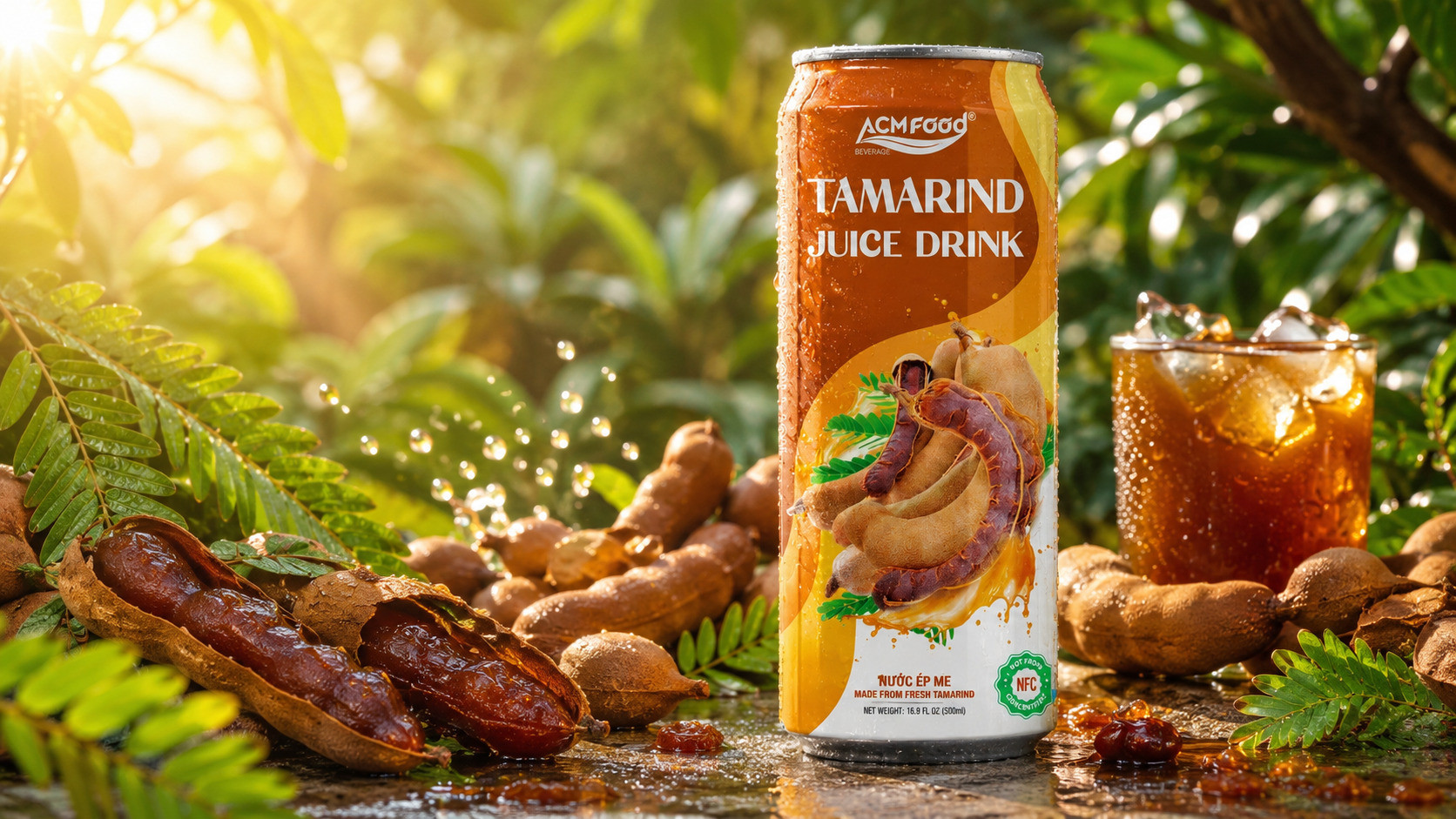
Tamarind juice is a drink made from the pulp of ripe tamarind pods (Tamarindus indica) blended with water, often sweetened to balance its natural tartness. It can be produced as 100% juice where the market allows, as a juice drink or nectar, as a concentrate, or blended with fruits such as mango, pineapple, lemon or ginger.
| Item | Typical options |
|---|---|
| Business model | OEM, private label, contract manufacturing |
| Product types | Juice drink, nectar, concentrate, sparkling, fruit blends, reduced sugar |
| Packaging | PET, glass, aluminium cans, aseptic cartons, pouches |
| Customers | Brand owners, start-ups, supermarkets, importers, distributors, foodservice |
| Customisation | Sweetness, acidity, fruit content, flavour, pack, label |
How does tamarind juice OEM manufacturing work?
An OEM project moves from brief to shipment in six stages, with samples approved before any commercial run.
- Brief and market analysis: target market, consumer, price point and channel set the recipe, pack and label.
- Recipe development: technologists adjust sweetness, acidity, fruit content and texture, and prepare several samples for approval.
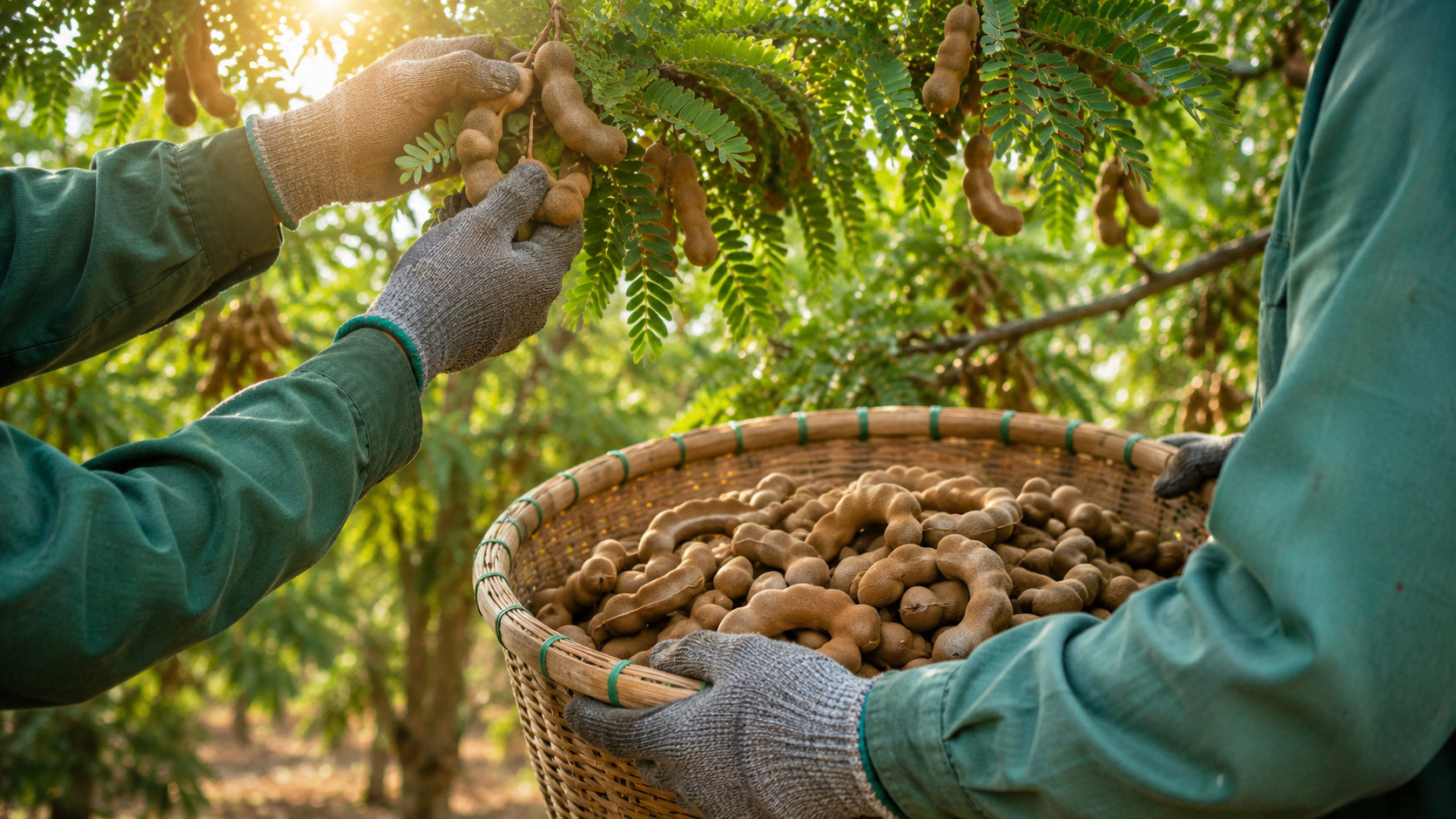
- Ingredient sourcing: tamarind pulp and other inputs are bought from qualified suppliers and inspected on arrival.
- Production: preparation, mixing, filtration, heat treatment, filling, sealing and cooling, with critical parameters monitored.
- Packaging and labelling: the pack, label, carton and pallet are set up to meet destination rules on ingredients, nutrition, allergens, barcodes and language.
- Final inspection and export: finished goods are checked and shipped with the documents the destination requires.
Why is demand for tamarind juice OEM growing?
- Interest in tropical flavours: shoppers are looking beyond orange and apple juice.
- Private label growth: supermarkets, convenience chains and online retailers want exclusive products.
- New beverage brands: start-ups prefer OEM to investing in equipment and staff.
- Multicultural and ethnic food channels: importers serving communities familiar with tamarind.
- E-commerce: niche drinks reach buyers without first winning mainstream shelf space.
What product variations are possible?
Most manufacturers can offer:
- 100% tamarind juice where technically feasible and allowed by local rules;
- tamarind juice drinks and nectars with adjusted fruit content;
- tamarind concentrate;
- sparkling tamarind drinks;
- blends with mango, pineapple, lemon, passion fruit or ginger;
- reduced-sugar recipes;
- bulk packs for foodservice.
Which packaging suits tamarind juice?
| Packaging | Typical use | Advantages |
|---|---|---|
| PET bottle | Everyday retail | Light, durable, cost-effective |
| Glass bottle | Premium brands | Premium look and feel |
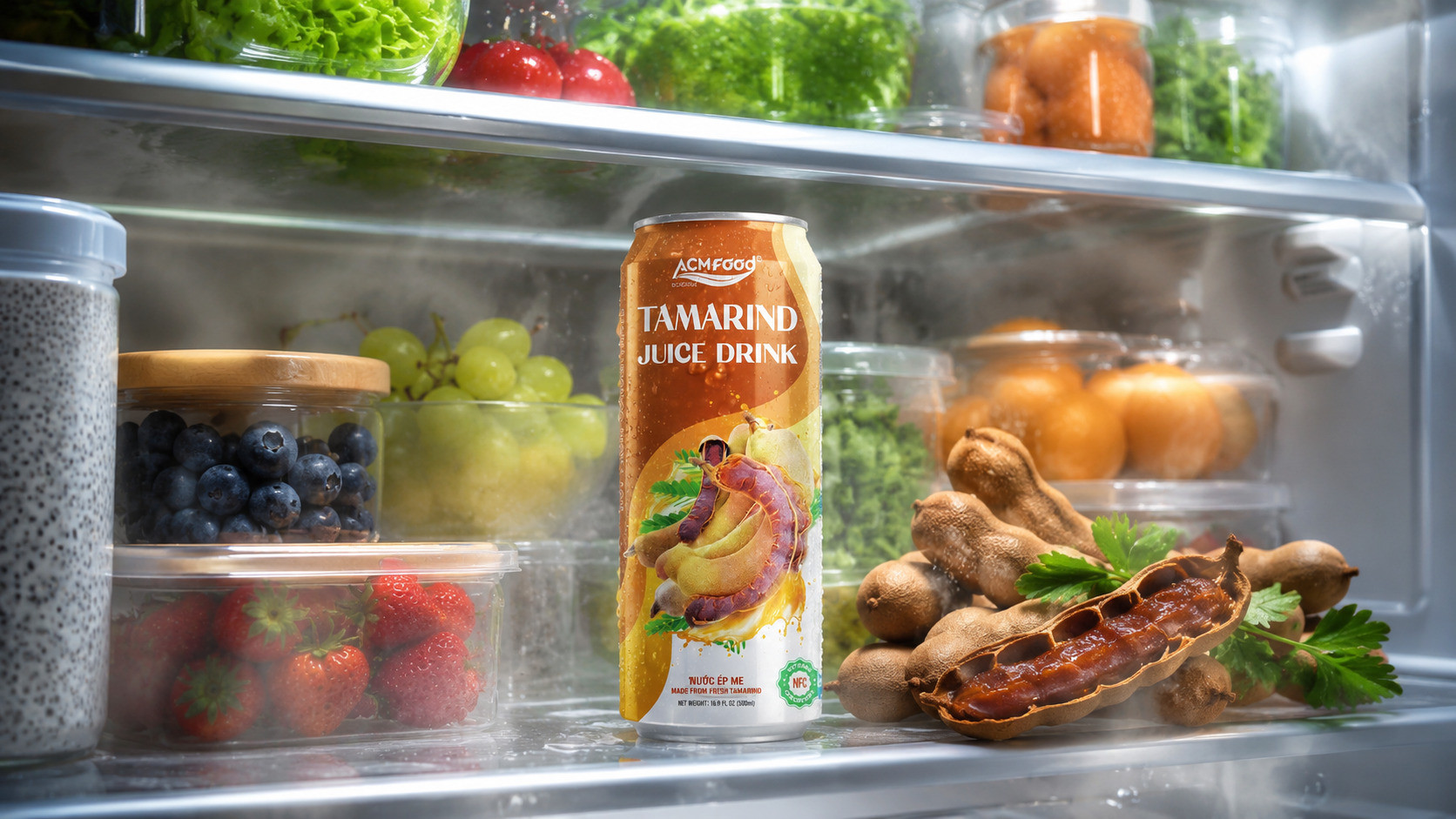
| Aluminium can | Convenience, ready-to-drink | Portable, recyclable, chills quickly |
| Aseptic carton | Long distribution chains | Efficient storage and transport |
| Stand-up pouch | Specialty and children’s products | Light, convenient |
Bottle shape, closure, label, carton print and pallet pattern can usually be customised.
How is quality controlled?
Quality control runs through the whole process, not only at the end:
- Raw materials: tamarind pulp, sweeteners and packaging checked against specifications before use.
- Production: mixing, heat treatment and filling monitored and recorded for traceability.
- Packaging: seals, labels, coding and pack integrity inspected.
- Release: final verification against the approved specification, with records kept for audits.
How do you choose a tamarind juice OEM manufacturer?
Evaluate capability, not just price. The table lists the questions that reveal it.
| Criterion | Question to ask |
|---|---|
| Experience | How long have you produced fruit drinks, and tamarind specifically? |
| Product development | Can you develop a custom recipe to our brief? |
| Quality management | Which food safety certifications and QC procedures do you use? |
| Capacity | Can production scale as our volumes grow? |
| Packaging | Which bottle, can, carton or pouch options do you run? |
| Export | Which markets do you currently ship to? |
| Supply | How do you secure tamarind pulp year-round? |
Request samples, visit the factory if possible, and confirm timelines and packaging specifications before signing.
OEM or your own factory?
OEM is the practical route for most new and growing brands because it lets you test demand before investing in equipment.
| Factor | OEM | Own factory |
|---|---|---|
| Initial investment | Low | Very high |
| Time to market | Fast | Long |
| Production expertise | Provided by the manufacturer | Must be built internally |
| Quality system | Already in place | Built from scratch |
| Your focus | Brand, sales, distribution | Production and plant management |
Frequently asked questions
Can I customise the tamarind juice recipe?
Yes. Sweetness, acidity, fruit content, flavour and blends can be adjusted, and samples are approved before production.
How much does tamarind juice OEM cost?
There is no fixed price. Recipe, fruit content, packaging, volume, labelling and destination all affect cost. Ask for a full quotation covering production, packaging, palletising and export services.
What is the minimum order quantity?
It varies by manufacturer, pack and customisation. At ACMFOOD, minimums are set per SKU; see the link below.
Which certifications are needed?
It depends on the destination market. Confirm the manufacturer’s food safety certifications and the documents your market requires.
How long does production take?
New recipes need development and sample approval first; repeat orders with an approved recipe and packaging are faster. Plan early for launches and fixed delivery dates.
Conclusion
Tamarind juice OEM gives brands a low-investment way to launch a distinctive tropical drink, with the manufacturer providing recipe development, production, packaging, quality control and export support. Choose a partner on capability, consistency and communication rather than price alone.
Tamarind is a Vietnamese crop with an established processing chain, and ACMFOOD already fills it as NFC juice in aluminium cans. See OEM beverage manufacturing services, private label beverages, the production process and minimum order quantity. When you have a specification, request a quote.
Request a quote