


 Français
 Español
 العربية
 한국어
한국어HACCP certification in beverage manufacturing confirms that a facility has implemented a structured, preventive food safety system built on hazard analysis and control. For buyers and product developers, it signals that the producer manages food safety risks methodically across ingredients, processing, filling, packaging, storage, and distribution.
For buyers searching for haccp certification beverage manufacturing, this guide explains what the certificate actually covers, how it is built, common beverage critical control points (CCPs), the documents auditors review, and how HACCP aligns with ISO 22000, FSSC 22000, and U.S. FSMA expectations.
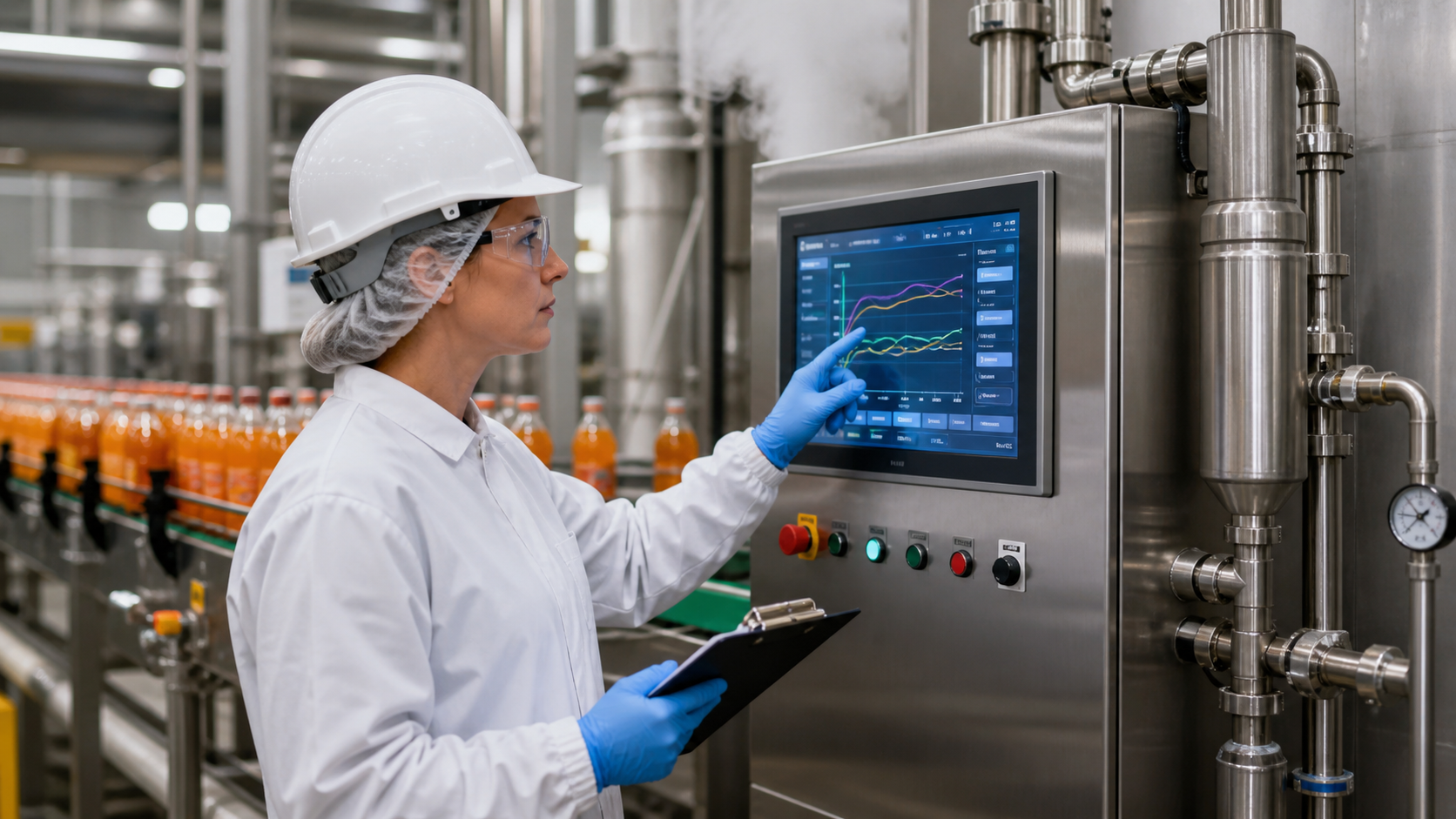
What does HACCP certification cover in a beverage factory?
HACCP certification typically covers the facility’s food safety management around hazard analysis, identification and control of critical control points, monitoring, verification, recordkeeping, training, and continual improvement. It spans the end-to-end process: incoming materials, processing steps, utilities like water and air, filling and sealing, packaging, warehousing, and shipment, plus traceability and recall readiness.
In practical terms, a certified beverage site demonstrates that it has:
- Defined products and processes with up-to-date descriptions, ingredients, and intended consumer uses.
- Mapped a process flow from receiving through processing, filling, packing, storage, and dispatch.
- Identified hazards (biological, chemical, physical, and allergens) at each step and evaluated likelihood and severity.
- Established CCPs where control is essential and measurable (for example, heat treatment or metal detection), with critical limits, monitoring, and corrective actions.
- Implemented prerequisite programs (PRPs) such as Good Manufacturing Practices, sanitation, water quality, pest control, equipment maintenance, personal hygiene, and training.
- Verification and validation of controls, including calibration, internal audits, and periodic review of the HACCP plan.
- Traceability and recall procedures tested at planned intervals.
Because certification scopes can vary by scheme and certification body, buyers should review the certificate scope statement and audit report summaries to understand exactly which processes, product categories, and sites are covered. For a broader compliance stack beyond HACCP, see the Certifications overview.
Which hazards matter most in beverages?
Key beverage hazards are typically microbiological (e.g., spoilage organisms), chemical (e.g., residues, cleaning chemical carryover), physical (e.g., glass or metal fragments), and allergens (from ingredients or cross-contact). The profile depends on product type (juice, tea, coffee, dairy alternatives, functional drinks), processing method, packaging, distribution temperature, and shelf-life.
- Microbiological: Yeasts, molds, lactic acid bacteria, and for some categories pathogenic bacteria; risk depends on pH, water activity, and processing.
- Chemical: Residual cleaning agents, migration from packaging, mycotoxins in certain botanicals, agricultural residues in juices or teas, and allergens.
- Physical: Glass splinters (especially in glass-pack operations), metal shavings, gasket fragments, or plastic pieces.
- Allergens: From added ingredients (e.g., milk derivatives in certain beverages) or from shared lines without adequate controls.
HACCP addresses these through validated controls, monitoring, sanitation, and verification activities tailored to each process and product.
Typical critical control points (CCPs) for drinks
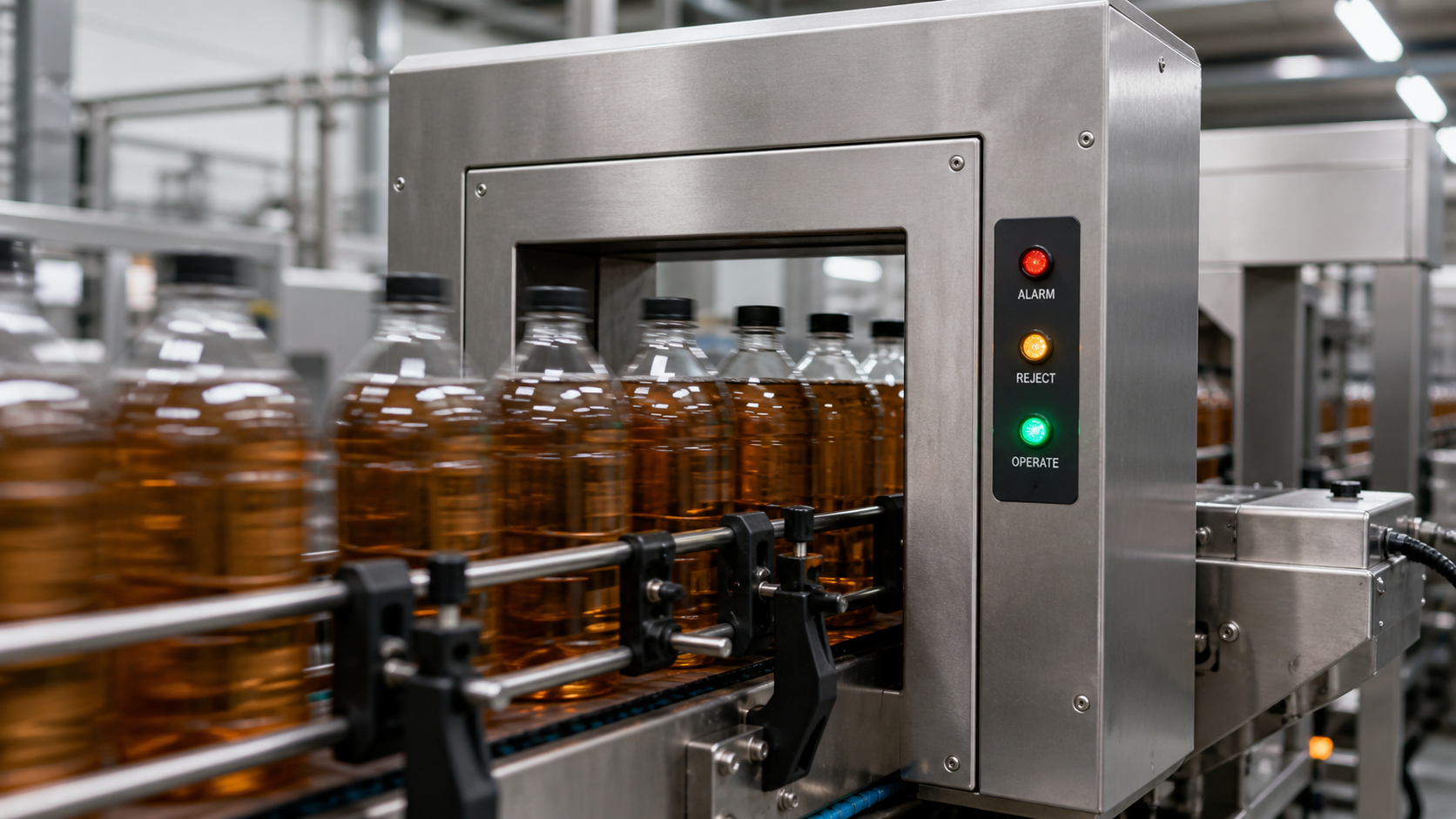
While CCPs are product- and process-specific, beverage factories frequently identify CCPs such as thermal processing or pasteurization (to achieve a validated time-temperature), filtration or UV for certain water systems, metal detection or X-ray after filling, and closure integrity checks where seal failure would compromise safety. The final CCP set must come from a documented hazard analysis.
Thermal processing or pasteurization
For many shelf-stable or chilled beverages, a heat step is validated to reduce target organisms. Critical limits may include minimum temperature, time, and flow conditions appropriate to the product and equipment. Monitoring often uses continuous chart recorders or validated digital systems, with defined corrective actions for any deviation.
Filtration or UV treatment of process water
Where process water is an ingredient or a contact utility, filtration grade or UV intensity can be controlled. Depending on the hazard analysis, these may be CCPs or controlled as operational prerequisite programs with set limits, monitoring, and maintenance.
Metal detection or X-ray inspection
Placement after filling and sealing helps detect ferrous, non-ferrous, or stainless fragments introduced upstream. The program includes test pieces, sensitivity checks, reject verification, and documented responses to any failure.
Filling and closure integrity
For aseptic or hot-fill processes, maintaining sterile conditions, correct headspace, torque or seam integrity, and vacuum levels may be controlled with measurable criteria. Some factories treat closure integrity as a CCP; others manage it as an operational prerequisite depending on the hazard assessment.
CIP sanitation and allergen changeovers
Clean-in-place (CIP) cycles, detergent concentrations, rinse verification, and allergen changeover confirmations are essential. These controls are commonly managed as prerequisites or operational prerequisites; whether they are CCPs depends on the site’s hazard analysis and validation evidence.
How is a HACCP plan built step by step?
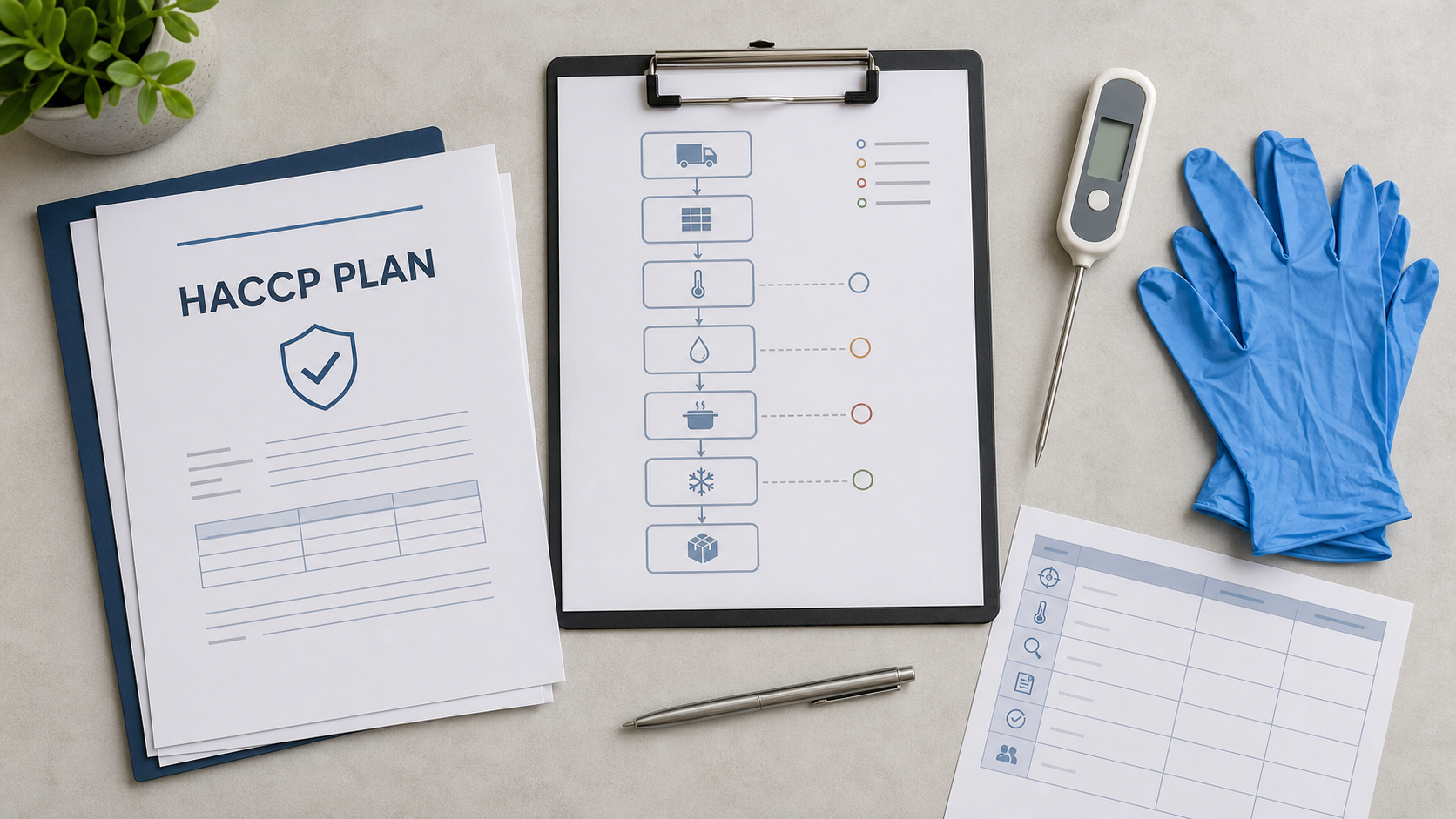
A robust HACCP plan is built by a multidisciplinary team who document the product, intended use, and process flow; confirm the flow diagram on-site; analyze hazards; and apply the seven HACCP principles to establish CCPs, limits, monitoring, corrective actions, verification, and records. The plan is maintained as a living document and reviewed whenever changes occur.
- Assemble the HACCP team: Production, quality, maintenance, procurement, and, where relevant, product development.
- Describe products and intended use: Composition, packaging, distribution temperature, target consumers, and shelf-life.
- Construct and verify the process flow diagram: From receiving to dispatch, confirmed by a plant walk-through.
- Conduct hazard analysis: Identify reasonably foreseeable hazards at each step and evaluate severity and likelihood.
- Determine CCPs: Use a decision tree or equivalent logic where control is essential and measurable.
- Establish critical limits: Quantified or clearly defined criteria for each CCP.
- Set up monitoring: Who, how, and how often monitoring is done; define records.
- Define corrective actions: Steps to control affected product and restore control when limits are not met.
- Verification and validation: Scientific or technical justification for limits, calibration, internal audits, review of records, and periodic plan review.
- Documentation and recordkeeping: Controlled documents, logs, and retention consistent with the certification scheme.
Alongside the plan, prerequisite programs (GMPs, sanitation, training, maintenance, supplier approval, water safety, pest control) underpin hazard control and are documented, monitored, and verified.
What documents and records do auditors expect?
Auditors typically review controlled documents and evidence that the system works as designed. Expect a focus on current versions, legibility, approvals, and that records demonstrate timely monitoring, corrections, and verification.
- HACCP plan set: Product descriptions, flow diagrams, hazard analysis, CCP determination, critical limits, monitoring forms, corrective actions, verification, and validation summaries.
- PRP documentation: Sanitation standard operating procedures, allergen management instructions, water quality specifications and tests, maintenance logs, pest control reports, and training records.
- Calibration and verification: Instruments used at CCPs, thermal profiles, detector checks, and independent verifications.
- Traceability and recall: Lot coding logic, mock recall results, and distribution records.
- Change control and review: Evidence the plan is updated when processes, ingredients, equipment, or regulations change.
How does HACCP relate to ISO 22000, FSSC 22000, and FSMA?
HACCP is the core method for hazard analysis and control. ISO 22000 integrates HACCP into a full management system; FSSC 22000 builds on ISO 22000 with additional program requirements recognized by GFSI; U.S. FSMA requires preventive controls-based food safety plans for many facilities. They share preventive concepts but differ in structure and regulatory context.
| Framework | Focus | HACCP Elements | Positioning and notes |
|---|---|---|---|
| HACCP (Codex-based) | Preventive hazard control at process level | Hazard analysis, CCPs, limits, monitoring, corrective actions, verification, records | Often certified by third parties; widely accepted across beverage categories |
| ISO 22000 | Food safety management system | Incorporates HACCP within management system requirements and operational PRPs | International standard; emphasizes leadership, risk-based thinking, and continual improvement |
| FSSC 22000 | GFSI-benchmarked certification program | ISO 22000 plus detailed PRPs and additional requirements | Common with global retailers and brand owners; scheme-owned certification |
| FSMA Preventive Controls | Regulatory compliance for U.S. market | Hazard analysis and risk-based preventive controls, monitoring, corrective actions, verification, documentation | Regulatory framework; beverage exporters to the U.S. align through supply-chain and process controls |
For market-specific expectations, see the U.S. beverage regulations guide and the page on Beverage certifications and FDA compliance for U.S. buyers.
Does HACCP certification include labeling, allergens, and export readiness?
HACCP addresses allergen hazards through controlled sourcing, changeovers, cleaning validation or verification, recipe governance, and label checks. It also normally includes label verification steps to prevent mislabeling as a safety risk. However, export readiness involves additional regulatory requirements, product standards, and documentation specific to each destination market and is assessed beyond HACCP.
- Allergen management: Ingredient approval, segregation, validated cleaning, and final label checks aligned to the plan.
- Label control: Bill of materials governance, artwork version control, and pre-production checks to avoid incorrect declarations.
- Market compliance: Nutrition, additive permissions, claims, and packaging rules depend on the destination’s regulations and may require separate evidence.
What HACCP does not cover
HACCP is powerful but not all-inclusive. Buyers should avoid assuming it guarantees every business or technical outcome.
- Product quality attributes like flavor profiles, color, clarity, or carbonation consistency are quality management topics, not core HACCP outcomes.
- Regulatory approvals for specific markets, additives, or claims are separate from HACCP and must be assessed per jurisdiction.
- Sustainability or ESG programs are out of HACCP’s scope.
- Business continuity and capacity planning are not addressed by HACCP certification.
Using HACCP when selecting and managing suppliers
HACCP certification is one input to supplier approval. Combine it with technical evaluations, pilot runs, and commercial due diligence. Request clear scopes, recent audit outcomes, and evidence of effective controls on your product category and packaging format.
- Obtain the current certificate and scope; confirm it covers your beverage category, packaging type, and process.
- Review hazard analysis and CCPs relevant to your formula, especially heat steps, water controls, and closure integrity.
- Check monitoring records and corrective action histories for similar runs.
- Verify PRPs supporting sanitation, allergen changeovers, and foreign-body control.
- Confirm traceability and mock recall performance meet your risk tolerance.
- Align your specification with their validated limits and line capabilities.
When you are exploring formats, capacity, and co-packing models alongside safety systems, you can review OEM beverage manufacturing and your contract manufacturing options in parallel with HACCP evidence.
FAQ
Is HACCP mandatory for beverages?
Requirements vary by country and product category. Many markets expect HACCP-based controls in beverage processing, whether as a regulatory requirement or as a condition of trade with retailers and brand owners. Certification is a third-party confirmation of implementation; whether it is mandatory depends on your target market and customers.
How long does HACCP certification last?
Certificate maintenance is governed by the scheme and certification body. Typically, certified sites undergo periodic surveillance and recertification audits. Buyers should request the certificate issue and expiry dates and, where available, high-level summaries of nonconformities and closures.
Is a HACCP plan the same as a food safety plan?
They share the same preventive logic. Some jurisdictions use HACCP terminology; others, such as U.S. preventive controls, use a food safety plan framework. The components overlap substantially (hazard analysis, controls, monitoring, corrective actions, verification, records) but differ in structure and legal context.
Who approves CCPs and critical limits?
The HACCP team proposes CCPs and limits based on hazard analysis and validation evidence, with management approval. Competence is essential; many sites involve qualified internal or external experts for validation.
Does HACCP cover packaging suppliers?
HACCP requires control of hazards introduced by materials and services. Packaging is typically managed through supplier approval, incoming inspection, and, where relevant, migration and suitability assessments. The beverage site remains responsible for how packaging is used within its process.
Conclusion and next steps
HACCP certification shows a beverage manufacturer has analyzed hazards and embedded preventive controls, monitoring, verification, and records into daily operations. It commonly addresses heat treatment, foreign-body control, closure integrity, sanitation, water quality, and allergen and label checks. Still, market-specific regulations, product claims, and quality targets require additional governance.
If you are aligning a new formula or private-label brief with a certified plant, review the HACCP scope, CCP validations, and line capability against your specification. For regulatory alignment, see the U.S. beverage regulations guide and the page on Beverage certifications and FDA compliance for U.S. buyers. To evaluate production pathways alongside safety systems, explore OEM beverage manufacturing and relevant contract manufacturing options. Finally, keep HACCP current by triggering reviews whenever recipes, ingredients, equipment, or packaging change.
Compliance and shipping at ACMFOOD
For the certificates and food safety systems buyers and customs ask us to produce, see certifications and food safety systems. For shipping terms, the document pack and container planning, see export and logistics. To discuss a specific market, request a quote.
Sources
HACCP originates in the Codex Alimentarius code of practice on food hygiene. The certification schemes built on top of it are owned and published by the bodies below.
- Codex Alimentarius (FAO/WHO) — Codes of Practice, including the General Principles of Food Hygiene and its HACCP annex
- Foundation FSSC — FSSC 22000 certification scheme
- Global Food Safety Initiative (GFSI)