


 Français
 Español
 العربية
 한국어
한국어A beverage factory audit in Vietnam is a structured review of a manufacturer’s legal compliance, food safety systems, and production controls to confirm they can reliably make your drink to specification. For many importers, a thorough beverage factory audit Vietnam helps reduce supply risk before issuing a purchase order or finalizing a long-term agreement.
This guide explains exactly what to check, how to run on-site and remote assessments, what evidence to request, how to evaluate process controls for different beverage formats, and what red flags to watch. Use it as a practical, B2B-focused checklist you can adapt to your product and target markets.
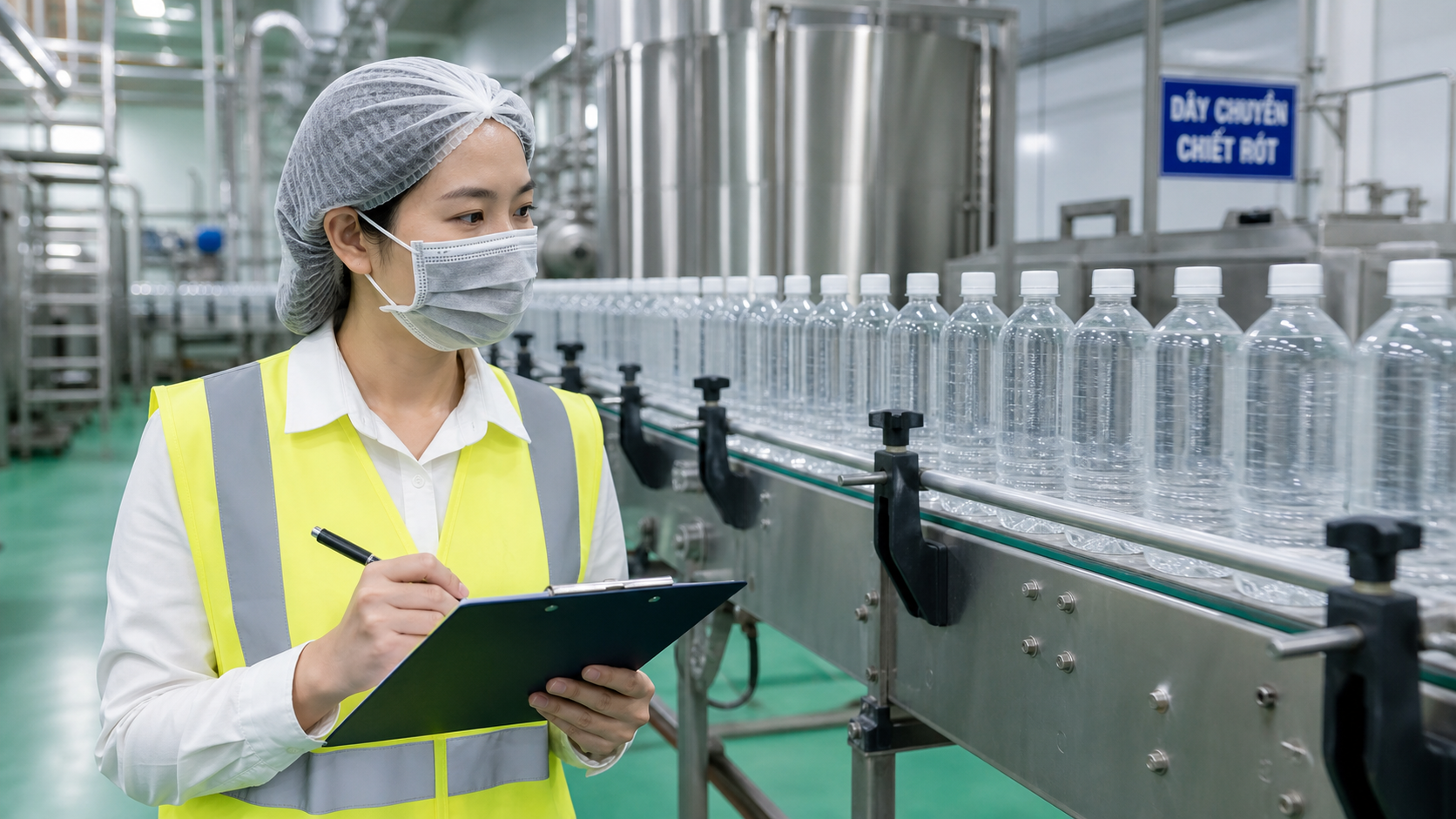
What is a beverage factory audit in Vietnam?
A beverage factory audit is a second-party or third-party evaluation of a Vietnamese producer against your buyer requirements and applicable regulations. It typically covers legal status, quality management, HACCP-based food safety controls, production capability, hygiene, traceability, testing, labeling workflows, and export readiness. The exact scope should reflect your product (for example, coconut water, juices, teas, coffee RTD, energy drinks) and intended markets.
What to confirm before you schedule an on-site audit
Start with alignment. Clarify scope and expectations so your audit produces objective, actionable findings rather than surprises.
- Define objectives: qualify a new vendor, approve a new product, re-approve a site, or investigate issues (complaints, deviations).
- Target markets: list countries and regulations your product must meet. If shipping to the U.S., see this overview of beverage certifications for U.S. buyers.
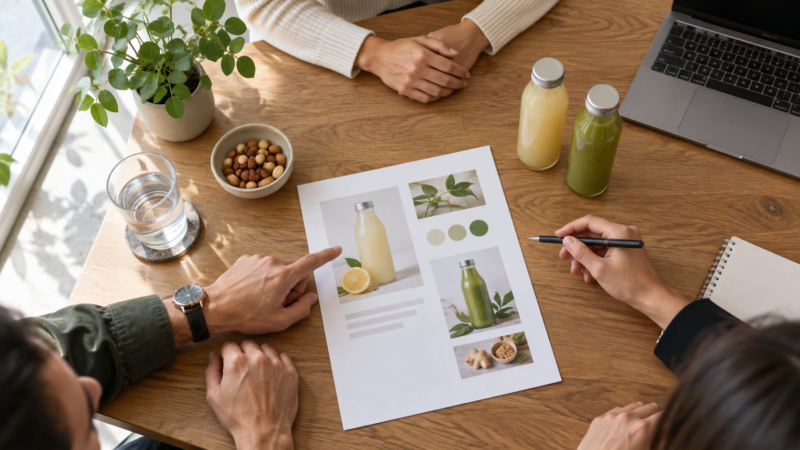
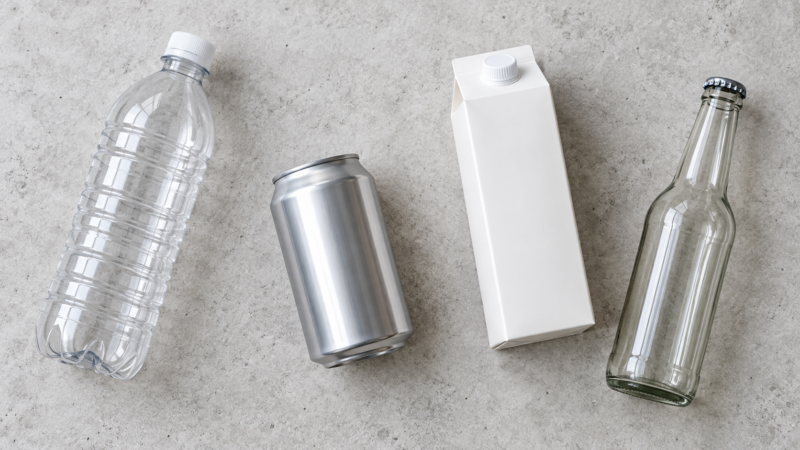
- Product brief: beverage type, Brix/acidity targets, sweeteners, flavors, preservatives, pack formats (can, PET, glass, aseptic), shelf-life goal, labeling languages, and intended claims (which depend on formula and local rules).
- Confidentiality: sign NDAs and agree document-sharing methods before requesting sensitive SOPs or specs.
- Pre-audit questionnaire: send a concise form covering licenses, certifications, line capabilities, CCPs, testing scope, and key contacts.
- Agenda and sampling: schedule line observation during an actual or simulated run of a similar product; plan retained-sample collection and lab testing if needed.
Which legal and licensing documents should you verify?
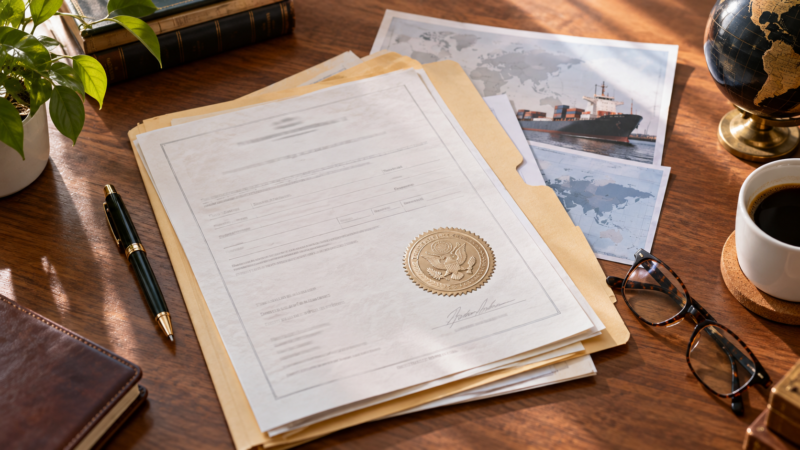
Always verify legal identity and operating scope. Request copies and, where necessary, certified English translations. The specific documents vary by jurisdiction and beverage type; consider consulting a compliance professional for your destination market.
- Business registration showing the legal entity name and address matching contracts and invoices.
- Food safety eligibility/license or equivalent documentation required locally to produce beverages.
- Manufacturing scope listing beverage categories and processes allowed at the site (for example, heat treatment, aseptic filling).
- Facility approvals such as fire safety, sanitation, and environmental permits where applicable.
- Export readiness and any registrations that may be required by the destination market (for example, certain markets require facility registrations). Requirements depend on product and jurisdiction.
- Traceability and recall policy that identifies the legal entity responsible for product release and withdrawal.
How to assess quality management and food safety systems
Look for a documented, implemented system—not just certificates. Your focus is whether the system is suitable for your product, consistently followed, and effective.
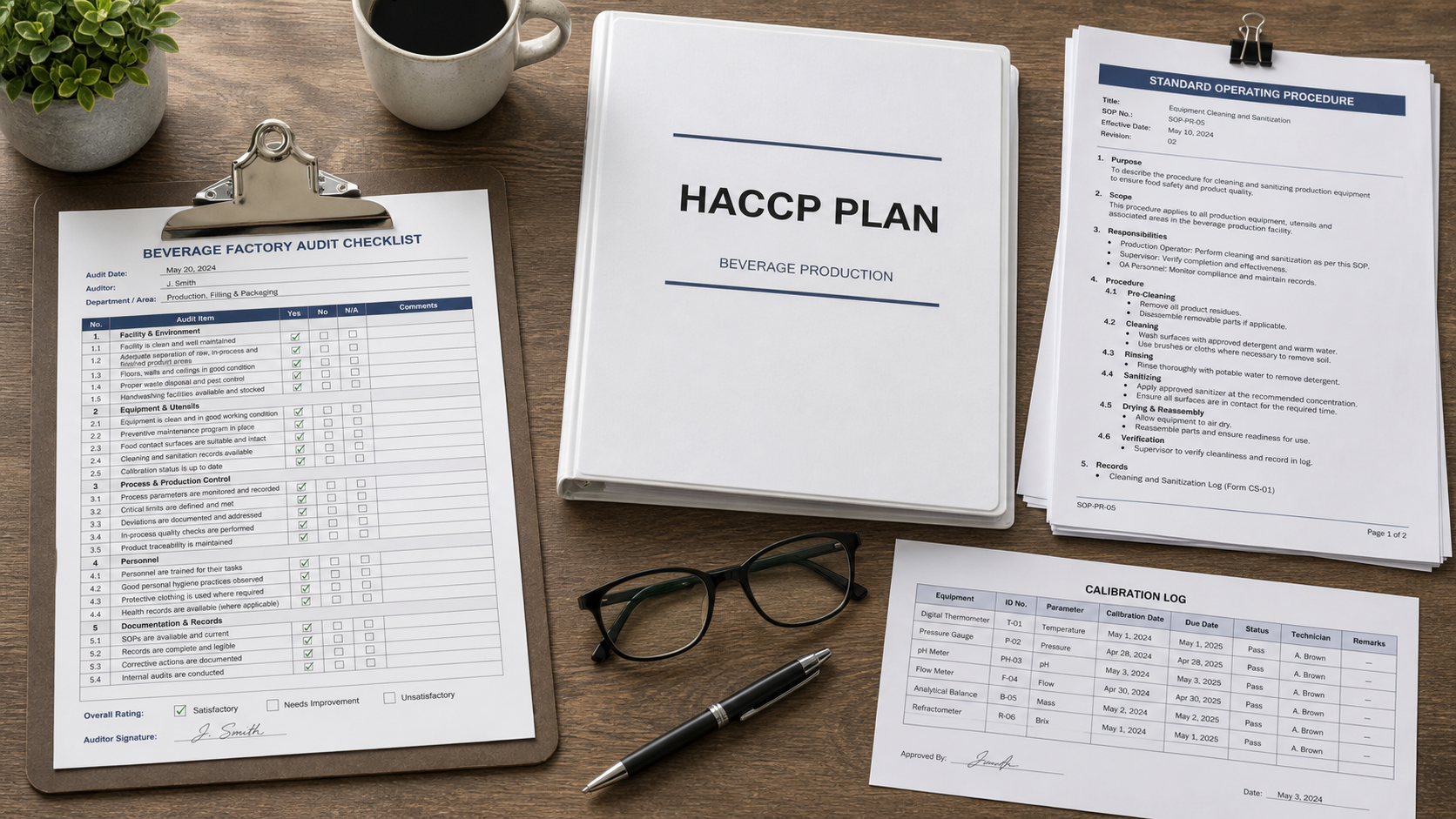
- HACCP-based food safety plan: product & process description, flow diagram, hazard analysis, CCPs with critical limits, monitoring records, deviations and corrective actions, verification and validation.
- Prerequisite programs: GMP, sanitation (SSOP), personal hygiene, allergen management, pest control, water safety, chemical control, foreign body control.
- Quality management: specifications, document control, change control, training, supplier approval, internal audits, management review, CAPA effectiveness.
- Calibration & maintenance: calibration master list, certificates, in-house checks, preventive maintenance schedule, breakdown records, parts traceability.
- Laboratory controls: micro and physicochemical testing scope, validated methods (internal or external lab), proficiency checks, out-of-spec handling, trending.
- Traceability & recall mock test: forward/backward trace within defined time, lot coding logic, distribution records, documented mock recall results.
Production process controls specific to beverages
Different beverage formats carry different risks. Verify that controls fit the product and packaging you plan to buy.
- Water treatment: source water quality, filtration, softening/RO if used, disinfectant control, periodic micro testing.
- Ingredient receiving: approved suppliers, COAs, storage conditions (ambient/chilled/frozen), allergen segregation, FEFO/expiration checks.
- Batching/syrup room: weighing accuracy, mixing order, in-process checks (Brix, pH, acidity), batch records, line clearance, rework policy.
- Thermal processing: pasteurization/UHT/retort parameters, validated heat penetration, hold times/temperatures, deviation handling, chart recorders or electronic logs.
- Filling method fit: hot-fill-hold (for suitable acidic products), aseptic filling (validated sterilization), retort processing (for applicable packs), or cold-fill with appropriate hurdles and validated shelf-life.
- Packaging controls: closure torque, seam integrity (for cans), vacuum level (for glass), leak tests, headspace oxygen if relevant, tamper evidence.
- Foreign body control: sieves/filters, magnets, metal detector or X-ray where appropriate, glass & brittle plastic policy with register and inspections.
- Cleaning and changeover: validated CIP/SIP, allergen changeover, swab results, visual inspection, line clearance sign-offs.
- Environmental hygiene: zoning, airflow, condensation control, drains, footbath/sanitation points, environmental monitoring if appropriate.
- Release & shelf-life: finished product specs, micro plan, stability data (real-time/accelerated), sensory panels, storage trials (including distribution temperatures).
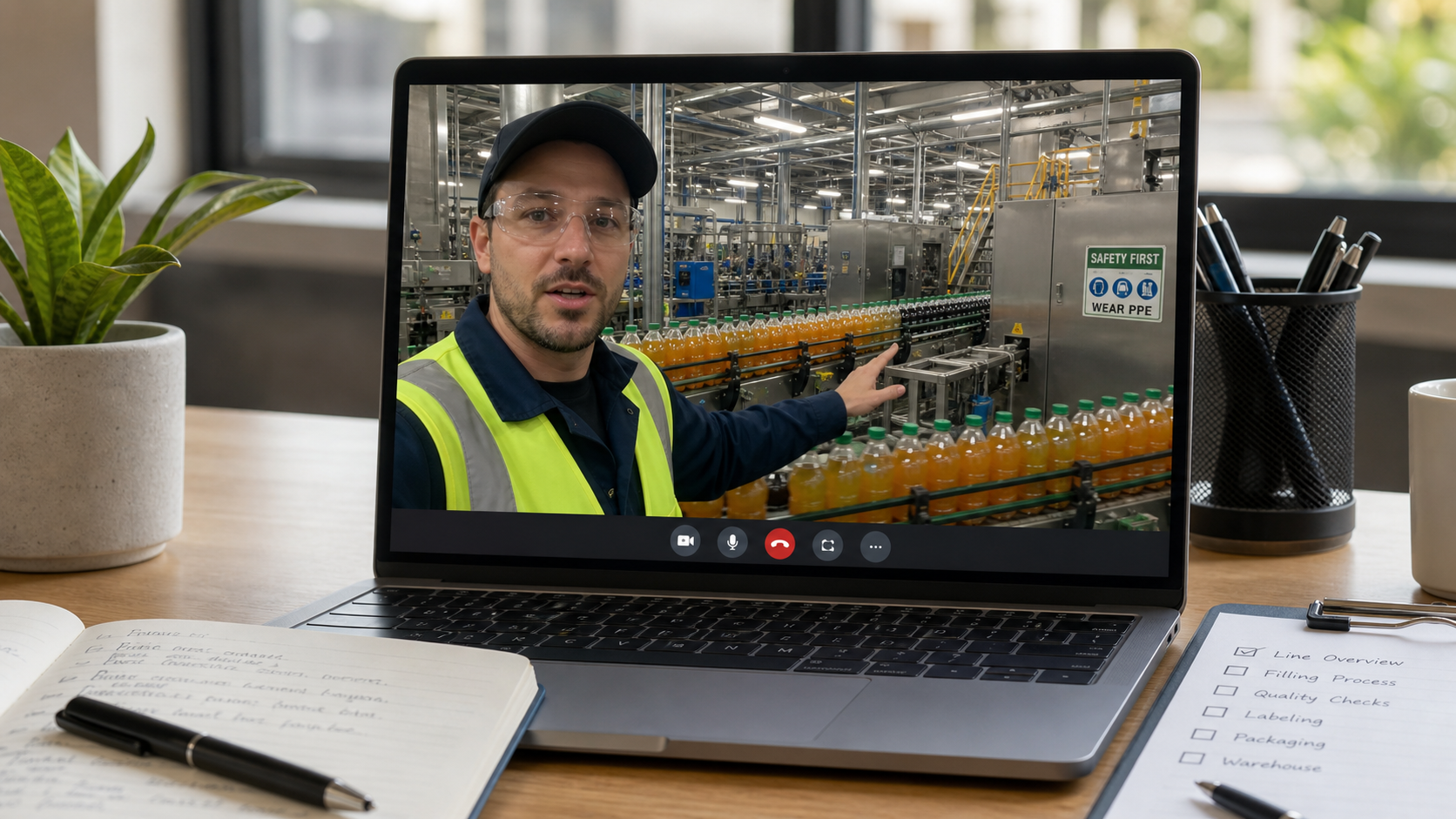
How to run a remote factory audit for drinks
A remote factory audit can work when travel is impossible or as a pre-screen. It relies on secure document sharing and live video to verify controls in real time, supplemented by independent sampling where needed.
- Secure document room: SOPs, HACCP plan, training matrix, calibration list, pest control maps, recent internal/external audit reports, key batch records.
- Live video walkthrough: guided tour of water treatment, batching area, filler, packaging hall, warehouse, chemical store, maintenance workshop, QA lab; ask to see line clearance, sanitizer labeling, and CCP monitoring in action.
- Sampling strategy: arrange couriered retains or third-party sample pulls for offsite testing; match samples to the lots viewed.
- Verification questions: request on-camera readings (for example, thermometer/pressure gauge), show instrument calibration stickers and expiry dates.
- Limitations: fewer sensory cues (odors, microclimate), constrained access; plan an on-site follow-up for higher-risk products or before major commitments.
Second-party audit vs third-party: what matters for buyers?
Second-party audits are performed by you or your appointed agent against your own requirements; third-party audits assess conformity to a published standard. Many buyers use both: a recognized certification for baseline assurance and a tailored second-party audit beverage to confirm product-specific risks.
- Customize criteria: weight controls that affect your product (for example, hot-fill validation for acidic juices, can seam control for carbonated drinks, or aseptic sterility for dairy-alternative beverages).
- Scoring & risk rating: classify findings as critical/major/minor; link corrective action deadlines to risk.
- CAPA follow-up: request root-cause analysis, corrective and preventive actions, evidence of effectiveness, and verification dates.
- Re-approval cadence: base re-audit intervals on risk, complaint trends, change history, and market requirements.
Compliance for exports to the U.S., EU and Australia: what to confirm?
Export compliance depends on product type, formulation, and destination market. Use your legal counsel or regulatory specialist to finalize requirements. As a practical audit step, confirm there is a responsible person who manages regulatory tasks and maintains current procedures for your markets.
- Facility and importer obligations: some markets require facility registrations or importer programs. U.S. buyers can review this overview: beverage certifications for U.S. buyers.
- Label development workflow: artwork control, ingredient statements, allergen declaration, nutrition panel format, claims substantiation, lot coding/expiry rules, and final label approval records.
- Country of origin: ensure procedures to apply and document origin statements per destination rules. See guidance on country of origin labelling.
- Logistics & export paperwork: commercial invoice, packing list, bill of lading, certificates as needed by the destination. For the U.S., align factory dispatch timing, temperatures, and paperwork with this guide to shipping beverages to the United States.
- Change control: documented process to notify you before ingredient, supplier, process, or packaging changes that could affect compliance or labeling.
Document list to request from a Vietnamese beverage manufacturer
Adapt the list to your product and markets. Focus on current, controlled versions and representative records (for example, last three months).
- Business registration and food safety eligibility/license.
- Site map and process flow diagrams for each beverage line.
- HACCP plan, hazard analysis, CCP validation and monitoring records.
- GMP/SSOP procedures, hygiene training matrix and recent attendance logs.
- Water potability test reports and treatment SOPs.
- Supplier approval list, material specifications, latest COAs for key ingredients.
- Batch records for representative SKUs, including in-process Brix/pH and release tests.
- Calibration master list and recent certificates for critical instruments.
- Pest control program, maps, service reports, and corrective actions.
- Foreign body control (metal detector/X-ray) verification logs where applicable.
- Finished product specifications, micro plan, stability/shelf-life studies.
- Complaint handling & nonconformance/CAPA records with trend analysis.
- Label control SOP, approved artworks, and print proof records.
- Mock recall or traceability test results.
- Internal audit reports and management review minutes.
On-site, remote and desktop audit: who does what?
Use the matrix below to plan your approach. Many buyers start with a desktop review, add a remote factory audit, then complete on-site verification before scale-up.
| Audit mode | Typical activities | Evidence to collect | Limitations |
|---|---|---|---|
| Desktop review | Document analysis, procedures, past records | Controlled SOPs, HACCP plan, sample records | No real-time observation; authenticity checks needed |
| Remote live audit | Video walkthroughs, interviews, on-camera checks | Live readings, visuals of CCP monitoring | Restricted access; sensory cues limited |
| On-site audit | Full plant tour, record sampling, line observation | Witnessed operations, random record pulls, samples | Travel/time cost; schedule alignment needed |
Line trials, validation and product testing
Before first commercial production, plan line trials that mirror final conditions, then validate critical parameters and confirm finished product performance.
- Process validation: confirm heat treatment, hold times, fill temperatures, seam/torque targets, and sanitizer concentrations meet defined limits.
- First production control plan: tightened sampling, extra micro checks, and heightened supervision for the first runs.
- Stability and shelf-life: real-time and, where appropriate, accelerated studies; monitor micro, sensory, Brix/pH, color, and packaging integrity.
- Challenge/risk studies: where justified by product risk (for example, preservative efficacy in cold-filled acidic drinks); scope and design depend on your product and regulations.
- Specification sign-off: joint approval of ingredient specs, in-process controls, and finished product limits prior to PO.
Common red flags during a beverage factory audit
These indicators suggest elevated risk and justify deeper probing or remediation before approval.
- HACCP plan that does not match the actual line or product flow.
- Incomplete CCP monitoring or missing corrective action documentation.
- Poor line clearance during changeovers; unlabeled intermediates or rework.
- Inadequate water treatment controls or overdue micro testing.
- Calibration lapses on critical instruments (temperature, pressure, torque, seam).
- Weak allergen management or no validated allergen changeover cleaning.
- Foreign body control absent or verification not performed at stated frequency.
- Label control gaps: uncontrolled artwork versions or last-minute edits on press.
- High complaint rates with superficial CAPA or repeated root causes.
- Warehouse hygiene issues: broken pallets, floor-contact packaging, pest evidence.
Information for beverage brands and importers
Translate audit findings into business decisions. An effective audit links technical controls to brand positioning, cost, lead time, and regulatory fit.
- Product brief discipline: define Brix/acidity, flavor profile, sweetener system, preservative strategy, and pack sizes before validation.
- Positioning and claims: nutrient or origin claims depend on verified content, serving size, and destination rules; do not finalize labels until verification and legal checks are complete.
- Cost-to-serve: understand MOQs, changeover times, and format flexibility that affect small-batch economics.
- Supplier portfolio: keep alternatives warm; assess capacity, seasonality (for fruit-based drinks), and contingency plans.
- Decision support: pair this audit with guidance on choose an overseas manufacturer (U.S.) or the Australia-focused guide choose an overseas beverage manufacturer (Australia).
- Category examples: if you source coconut-based drinks, review this process-focused overview: coconut water manufacturer process and QC systems.
FAQ
How long does an on-site beverage factory audit take?
Many qualification audits take one to two full days on site, depending on plant size, product risk, and whether you observe a live run. Complex scopes or multi-line sites may take longer.
Can I rely on a remote factory audit for drinks?
Remote audits are effective for pre-screening, document checks, and limited verification via live video. For higher-risk products or before large commitments, plan an on-site follow-up to confirm conditions and observe operations directly.
What documents should be available in English?
At minimum, the HACCP plan, key SOPs, specifications, and critical records should be accessible in English or translated for the audit. Contracts and labels for export markets should also be in the required language(s).
How often should I re-audit a Vietnamese beverage manufacturer?
Base the frequency on risk: product category, complaint/recall history, process changes, and certification status. Annual or biennial cycles are common, with targeted visits after significant changes.
Do small factories ever pass stringent audits?
Size alone does not determine suitability. What matters is whether documented controls are implemented, monitored, and effective for your product and market requirements.
Conclusion and next steps
A structured beverage factory audit in Vietnam helps you verify legal status, HACCP-based controls, and process capability before scaling. Tailor the checklist to your drink type and markets, confirm label development and change control, and use remote tools to reduce travel while planning an on-site verification for higher-risk launches. For U.S. importers, review beverage certifications for U.S. buyers and align your logistics with shipping beverages to the United States. Finally, turn audit findings into a clear product brief and supplier action plan using the guidance on how to choose an overseas manufacturer (U.S.) and choose an overseas beverage manufacturer (Australia).
Compliance and shipping at ACMFOOD
For the certificates and food safety systems buyers and customs ask us to produce, see certifications and food safety systems. For shipping terms, the document pack and container planning, see export and logistics. To discuss a specific market, request a quote.
Request a quote