
U.S. beverage regulations define how drinks are made, labeled, imported, marketed, and sold in the United States, with different pathways depending on whether a product is non‑alcoholic, alcoholic, refrigerated, shelf‑stable, juice, water, plant‑based, or functional. This practical guide maps the core agencies, labeling requirements, import steps, and category rules so brands can plan U.S. compliance from product brief to shelf.
The right path depends on product type, processing method, packaging, and claims. Most non‑alcoholic beverages fall under FDA rules, while alcoholic beverages are primarily regulated by the TTB. Imports add FSVP oversight for the U.S. importer and advance notifications. Because regulations evolve, treat this guide as a planning framework and verify details with current federal and state requirements before launch.

Which agencies regulate beverages in the U.S.?
Non‑alcoholic beverages are primarily regulated by the U.S. Food and Drug Administration (FDA); alcoholic beverages are primarily regulated by the Alcohol and Tobacco Tax and Trade Bureau (TTB). Customs and state authorities also play roles, and specific categories (e.g., bottled water, juice) have additional controls.
At a glance:
- FDA: Oversees most conventional (non‑alcoholic) beverages, facility registration, preventive controls, juice HACCP, labeling (identity, ingredients, allergens, Nutrition Facts, percent juice), and food contact materials.
- TTB: Governs most alcoholic beverage formulas, labeling approvals, domestic production permits, and excise tax administration.
- CBP (U.S. Customs and Border Protection): Manages import entry, tariffs, and country‑of‑origin marking on imported goods.
- USDA: Oversees the National Organic Program (use of the term “organic”), and certain ingredients (e.g., meat or egg) if present in hybrid beverages.
- States: May impose bottle deposits, recycling, or chemical disclosure requirements; alcoholic beverage distribution and retail licensing are also administered at the state level.
What documents and registrations do non‑U.S. beverage brands need?
Most non‑alcoholic beverage facilities that manufacture, process, pack, or hold food for U.S. consumption must register with the FDA and designate a U.S. Agent. Imports generally require a U.S. FSVP importer responsible for supplier verification, plus prior notice to FDA and entry filing with CBP. Alcoholic beverages require TTB pathways and state alcohol licenses downstream.
- FDA facility registration and U.S. Agent designation for foreign facilities engaged in manufacturing/processing, packing, or holding foods bound for the U.S.
- FSVP importer (under FDA oversight): A U.S. party that evaluates and documents that foreign suppliers and products meet applicable U.S. safety standards.
- Prior Notice to FDA and customs entry with CBP for shipments; ensure accurate product descriptions and harmonized tariff classification via your customs broker.
- Juice: Subject to Juice HACCP; juice processors must implement category‑specific controls. Imported juice must be produced under an equivalent system.
- Shelf‑stable hermetically sealed low‑acid or acidified beverages: Often require specialized process controls; certain processes are subject to additional FDA filings and oversight by qualified processing authorities.
- Alcoholic beverages: TTB governs permits, formulas (when required), and labeling approvals; state alcohol distribution and retail licensing applies after federal compliance.
The matrix below summarizes typical primary oversight. Always verify for your specific formula, package, process, and claims.
| Beverage type | Primary regulator | Core federal controls | Positioning & notes |
|---|---|---|---|
| Still or carbonated soft drinks, teas, coffees, flavored waters | FDA | Facility registration, preventive controls, labeling, food contact materials | Check any added caffeine disclosure policies and state considerations |
| 100% juice, juice blends, nectars | FDA | Juice HACCP, percent juice declaration, labeling, preventive controls | Declare juice % on principal display; address shelf‑life and processing validation |
| Dairy or plant‑based milks | FDA | Labeling, preventive controls, allergen disclosure | Allergen and fortification considerations; cold‑chain if refrigerated |
| Bottled water | FDA | Standard of identity, quality standards, labeling | Source claims and packaging integrity controls |
| Fermented & alcoholic beverages | TTB (with some FDA overlap) | Permits, formula (when applicable), labeling approvals | State distribution and retail licensing applies |
| Dietary supplements (liquid format) | FDA | Supplement labeling framework; different claim rules than conventional foods | Different category than conventional beverages; specialized compliance |
What must appear on FDA beverage labels?
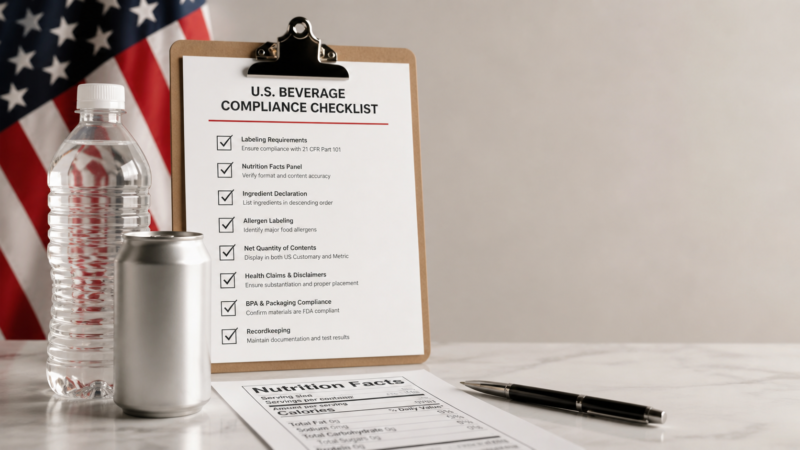
FDA‑regulated beverage labels generally require a statement of identity, net quantity, the responsible name and address, ingredients in descending order by weight, major allergen labeling when applicable, Nutrition Facts, and any category‑specific disclosures (e.g., percent juice for beverages with juice).
- Statement of identity: The common or usual name (e.g., “Sparkling Water”), or a suitable descriptive term when no standard exists.
- Net quantity of contents: In U.S. customary units (and often metric) placed in the correct area of the principal display panel.
- Name and address: The manufacturer, packer, or distributor; if not the manufacturer, include a qualifying phrase such as “distributed by” where appropriate.
- Ingredient list: In descending order of predominance by weight; sub‑ingredients listed in parentheses where required.
- Allergen disclosure: Major allergens must be declared using the required format when present.
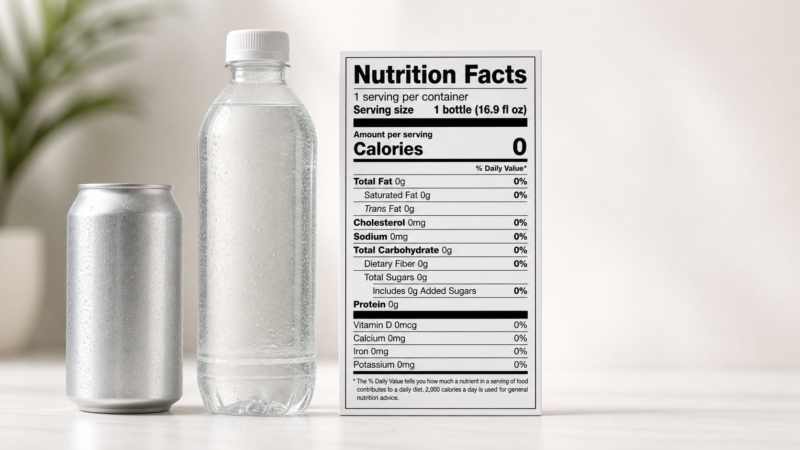
- Nutrition Facts: Required for most conventional beverages, formatted and sized per current rules.
- Category‑specific items: Percent juice declaration for beverages that contain juice; certain standards or disclosures for bottled water.
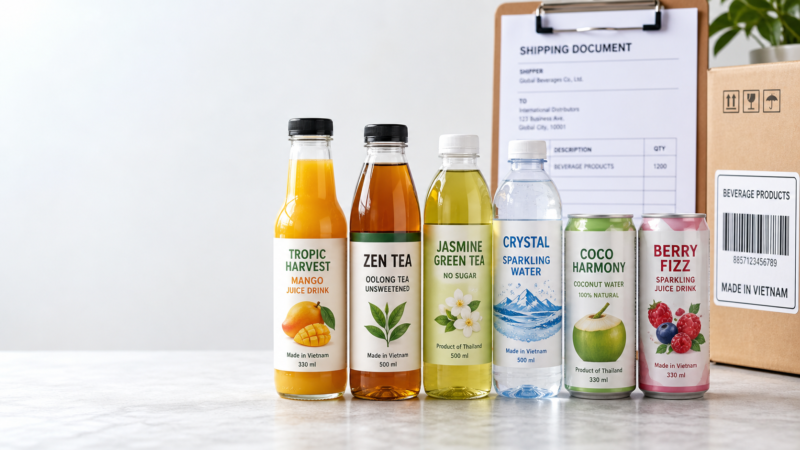
- Imported goods: Country‑of‑origin marking is required under customs law; verify placement rules with your customs professional.
Coordinate artwork so all mandatory elements are legible and located on the appropriate panels. Maintain a robust label control process to prevent version mix‑ups during production.
How do U.S. Nutrition Facts panels work for beverages?
Most conventional beverages require a Nutrition Facts panel showing calories and key nutrients per serving; current rules also include added sugars. Serving sizes are based on established reference amounts, and certain multi‑serve packages may need dual‑column presentation.
Practical considerations for beverage teams:
- Serving size: Based on how much people typically consume per occasion; confirm current reference amounts for your category during label development.
- Added sugars: Declaration is required when sugars are added during processing; plan your formulation and claims around this disclosure.
- Small packages: There are alternate formats and exemptions for limited label space; check if your container qualifies.
- Rounding and daily values: Ensure your nutrition data source and calculations match current FDA rounding and %DV rules.
- Stability: If nutrient fortification is used, validate levels through shelf life to support your label values.
Percent juice labeling: when and how?
If your beverage contains any juice, FDA requires a percent juice declaration on the label, typically on the principal display panel. This applies whether the juice is from concentrate or not. The percentage must reflect total juice content from all juice ingredients in the formula.
Good practice tips:
- Determine percent juice from verified formulation data and, if applicable, validated analytical methods.
- Use accurate names such as “from concentrate” when relevant; ensure flavor naming aligns with actual characterizing flavors.
- For products with negligible juice, ensure the label and visuals do not imply a higher juice content than is present.
What about sweeteners, colors, and other additives?
Ingredients used in beverages must be permitted for their intended use under U.S. law, whether via an authorized food additive regulation, a color additive listing, a GRAS conclusion, or an applicable standard. Maintain ingredient specifications and regulatory status documentation from your suppliers.
- High‑intensity sweeteners: Use only those permitted for beverage use and follow any conditions of use; ensure flavor balance accounts for acid and bitter modifiers where permitted.
- Colors: Some color additives require batch certification, while others are exempt; confirm listing status, naming on the ingredient declaration, and any limits for your application.
- Acids and buffers: Verify intended use, processing conditions, and sensory targets (e.g., pH for flavor and microbial stability) are supported by your safety plan.
- Processing aids: If used, verify whether and how they must be declared based on residual presence and applicable rules.
- Natural flavors: Source from suppliers with robust documentation; ensure flavor labeling (“natural” versus “artificial”) matches formulation and regulations.
Shelf stability, pasteurization, and process control
Regulatory obligations depend on the product s pH, water activity, packaging, and process. Refrigerated beverages typically rely on cold chain. Shelf‑stable beverages may be hot‑filled, tunnel‑pasteurized, or produced by other validated methods. Certain hermetically sealed low‑acid or acidified foods are subject to specialized controls and filings.
- Process validation: Use qualified experts to validate thermal or equivalent processes appropriate for your formulation, packaging, and target shelf life.
- Preventive controls / HACCP: Most FDA‑regulated facilities implement a preventive controls program; juice processors follow Juice HACCP with a process designed for pathogen reduction.
- Environmental & supplier controls: Monitor sanitation, allergens, foreign material risks, and supplier performance under documented programs and corrective actions.
- Distribution and storage: Document time‑temperature expectations and tamper‑evident packaging where appropriate; align coding and traceability with recall readiness plans.
Are caffeine and energy drink warnings required?
There is no universal federal requirement to declare caffeine content or place a specific caffeine warning on conventional beverages, but brands often disclose caffeine voluntarily. Some states, retailers, or policies may impose additional expectations, particularly for highly caffeinated products.
Practical steps:
- Decide whether to disclose caffeine quantity voluntarily and ensure it aligns with your QA testing program.
- Review marketing and imagery to avoid targeting young children for highly caffeinated products.
- Coordinate with retailers on any house requirements for placement, age gating, or signage.
- Keep claims, descriptors, and presentation truthful and not misleading in light of total caffeine content and serving size.

What claims can beverage labels make in the U.S.?
Nutrient content and other claims on conventional foods must be truthful, not misleading, and consistent with applicable definitions. Some claims have specific conditions (e.g., about sugars or calories). Any claims must be substantiated for the finished product as sold.
- Nutrient content claims: Phrases such as certain “free,” “low,” or “reduced” claims have defined conditions; verify eligibility and serving size implications before artwork lock.
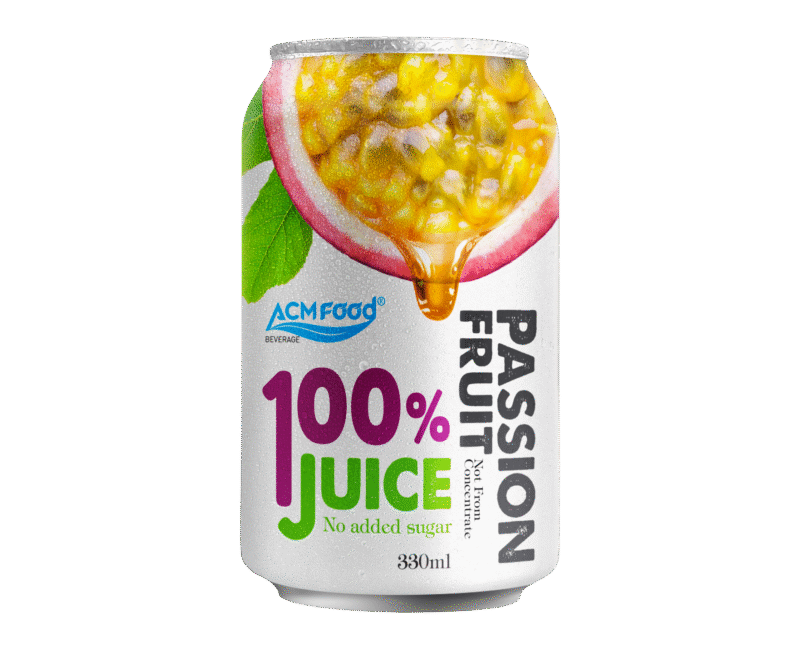
- “No added sugar”: Requires that no sugar or ingredient containing sugar was added; do not pair with a sweetness implication that contradicts the claim.
- “Natural” statements: There is no formal federal definition for “natural” in most contexts; ensure the term is used in a truthful, non‑misleading way that aligns with FDA guidance and your ingredient list.
- Organic: Use of “organic” is governed by USDAs National Organic Program; follow certification, composition, and labeling tier rules if you wish to make organic claims.
- Non‑GMO: If used, support with supplier documentation or appropriate certifications consistent with your target retailer or program.
- Structure or wellness impressions: Keep conventional food messaging conservative and consistent with the products nutrients and category; vet with regulatory counsel.
How do U.S. allergen rules apply to beverages?
Major food allergens must be declared when present. This commonly affects dairy beverages, plant‑based milks, nut‑containing drinks, and products using soy or wheat derivatives. Cross‑contact controls should be documented under your food safety plan and supplier program.
- Label declaration: Use the prescribed format for major allergens when ingredients or sub‑ingredients contain them.
- Suppliers: Obtain full sub‑ingredient and allergen statements from every ingredient supplier.
- Manufacturing controls: Implement validated cleaning, scheduling, or segregation to manage allergen cross‑contact risks.
Packaging, deposits, and recycling considerations
Packaging must be suitable for food contact and intended use. Some states operate container deposit programs, and several have additional packaging or chemical disclosure requirements. Plan for recyclability cues, deposit statements where applicable, and compatibility between package, closure, and process.
- Food contact: Confirm that all packaging components (resins, liners, inks, adhesives) are suitable for intended conditions of use under U.S. food contact frameworks.
- Deposit statements: If selling in deposit states, artwork may need specific abbreviations and values; coordinate early with your legal and sales teams.
- Recycling and EPR: Some states are moving toward extended producer responsibility; anticipate evolving on‑pack markings and reporting.
- Integrity: Validate seal, closure torque, carbonation compatibility, and tamper‑evidence as appropriate for your beverage and distribution.
Imported drink compliance in the USA: a practical checklist
For international producers planning U.S. entry, sequence your regulatory and commercial tasks so each decision informs the next. The checklist below reflects a typical route for conventional non‑alcoholic beverages; adapt as needed for alcoholic beverages or supplements.
- Define your product: Category (e.g., soft drink, juice, water, plant‑based), intended shelf life and storage, target packaging, and target claims.
- Confirm ingredient status: Obtain regulatory status documentation (food additive, GRAS, color additive listings) and allergens for every input; align with U.S. food contact suitability for packaging components.
- Select processing and validate: Choose pasteurization, hot‑fill, carbonation, or alternative validated methods; conduct process validation through qualified experts and establish shelf‑life studies.
- Build food safety plan: Preventive controls, supplier approval, and (for juice) HACCP as applicable; include allergen, sanitation, and environmental monitoring controls.
- Plan labeling early: Determine statement of identity, naming, flavor descriptors, percent juice (if applicable), serving size, Nutrition Facts format, and any claims with substantiation.
- Artwork execution: Lay out principal display and information panels; ensure legibility, contrast, net contents placement, responsible party, and any deposit or category‑specific statements.
- Testing and verification: Generate nutrition and analytical data that support label values through shelf life; if disclosing caffeine, verify levels.
- Register facility and designate U.S. Agent: Complete FDA facility registration for qualifying sites.
- Assign an FSVP importer: Identify the U.S. party responsible for foreign supplier verification; align on documentation and records.
- Prepare import paperwork: Coordinate prior notice, customs entry, and country‑of‑origin marking with your broker; ensure product codes and descriptions are consistent.
- Pilot run and QA release: Execute trial production, confirm label proofs on the physical package, and complete stability checkpoints.
- Retail and state readiness: Align on deposit statements for covered states, retailer‑specific requirements, and distribution temperatures.
Market context: align compliance with positioning
Regulatory choices (e.g., sweetener strategy, juice content, caffeine disclosure, packaging format) should reinforce your commercial story. For example, serving size and Nutrition Facts formatting often influence how consumers perceive calories and sugars per container. Keep your brand promise, regulatory requirements, and retail realities synchronized.
For category direction and innovation angles, review current beverage trends in the United States to ensure your formula and claims roadmap fit market expectations while staying within regulatory boundaries.
Common pitfalls and how to avoid them
Small gaps in early planning can cause costly relabels or shipment holds. These are frequent trouble spots for beverage launches and how to de‑risk them.
- Late label decisions: Finalizing claims after nutrition testing can force rework. Lock your claim set only after data support and legal review.
- Percent juice misalignment: Artistic fruit imagery that implies high juice content can conflict with a low percent juice declaration. Calibrate visuals to actual content.
- Caffeine ambiguity: Omitting any reference to caffeine in high‑caffeine products can clash with retailer expectations. Align disclosure with QA and marketing.
- Process assumptions: Choosing hot‑fill without validating acid targets and closures risks shelf instability. Validate early with your process authority.
- Supplier documentation gaps: Missing color additive listings or GRAS rationales slows FSVP review. Collect complete specs and statements upfront.
- Country‑of‑origin marking: Incorrect or missing origin marks can trigger relabeling at the port. Coordinate with packaging suppliers to print correctly.
- Deposit statements: Forgetting state deposit text causes relabels for those markets. Maintain state‑by‑state label templates as needed.
Putting it all together
U.S. beverage regulations center on product type, process, labeling, and import responsibilities. FDA governs most non‑alcoholic drinks; TTB governs most alcoholic beverages. Build compliance into your product brief: select permitted ingredients, validate the process, assemble a defensible label, assign an FSVP importer, and prepare customs documentation. Because rules and policies evolve, confirm final details with qualified U.S. regulatory counsel before production scale‑up.

FAQ
Do all beverages need a Nutrition Facts panel?
Most conventional beverages require a Nutrition Facts panel, with limited exemptions for certain small businesses or packages and specific categories. Confirm applicability for your product and container size before artwork lock.
Is percent juice required for flavored waters with a splash of juice?
Yes, beverages that contain any juice generally require a percent juice declaration. The declaration reflects total juice content from all juice sources in the formula.
Can I label a drink as “natural”?
There is no comprehensive federal definition for “natural” for most foods. Use of the term should be truthful and not misleading, consistent with FDA guidance and your ingredient list. Review with legal counsel.
Are caffeine warnings mandatory on energy drinks?
There is no blanket federal requirement for a caffeine warning on conventional beverages, but many brands disclose caffeine voluntarily, and some retailers or states may have additional expectations.
Who is responsible for FSVP on imports?
The designated U.S. FSVP importer is responsible for supplier verification and maintaining records that demonstrate products meet applicable U.S. safety standards.
Do I need special filings for shelf‑stable acidified beverages?
Some hermetically sealed low‑acid or acidified foods require specialized process controls and filings. Engage qualified process authorities to determine requirements for your product and package.