


 Français
 Español
 العربية
 한국어
한국어To import beverages into Morocco, you must obtain ONSSA approval, ensure Arabic and French labels, and clear customs through ADII via the PortNet single window. In practice, a 10–12 step workflow covers product definition, labeling, pre-approval, shipment, inspection and post-clearance record-keeping.
This guide explains each step, highlights Moroccan specifics (ONSSA, PortNet, Tanger Med and Casablanca ports) and aligns your documentation with EU-influenced standards without over-claiming health or nutrition.
Who regulates beverage imports in Morocco?
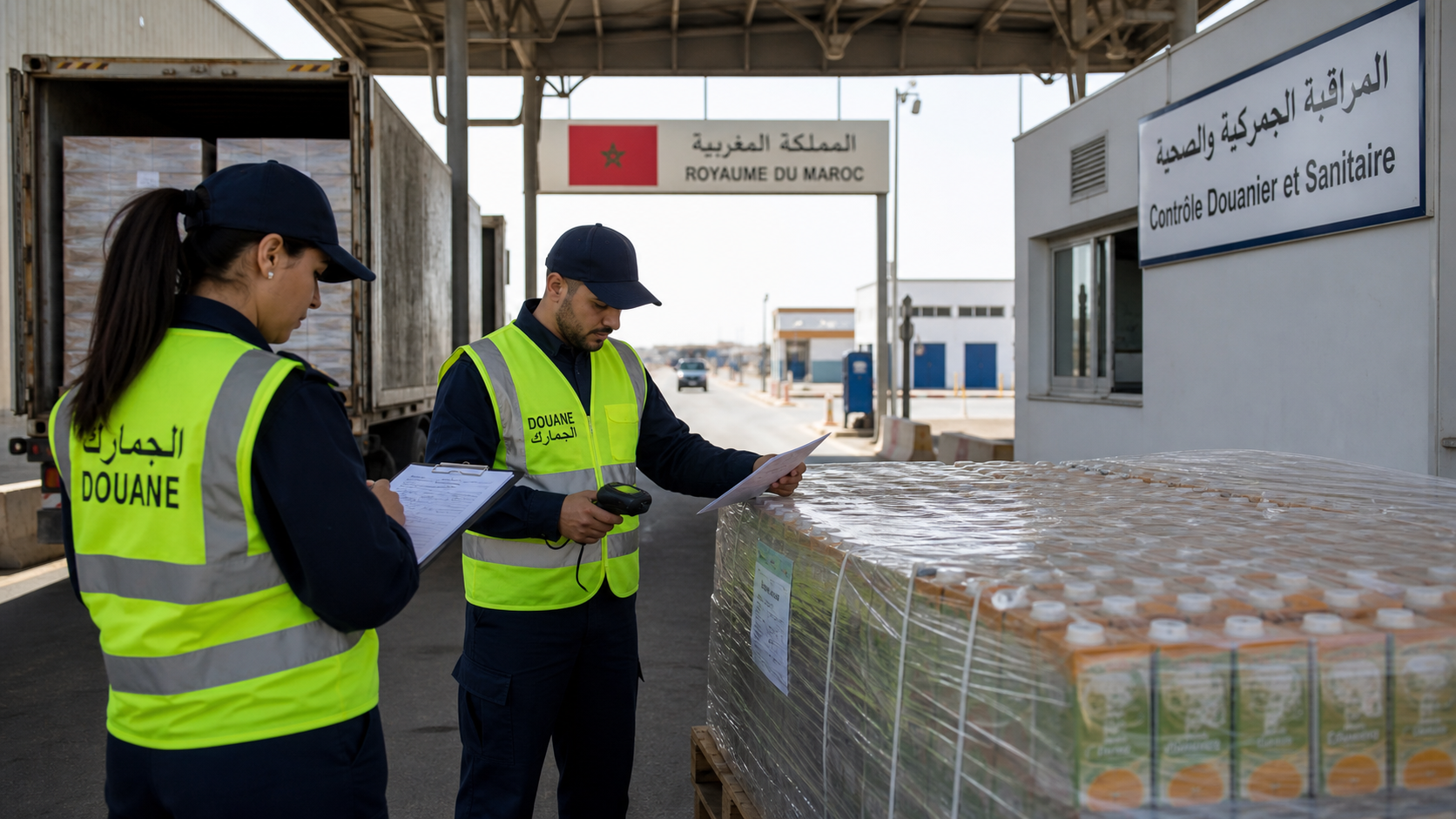
Morocco’s food safety authority ONSSA (Office National de Sécurité Sanitaire des Produits Alimentaires) oversees sanitary controls and approvals for imported foods and drinks, while ADII (Administration des Douanes et Impôts Indirects) manages customs clearance through the national single window PortNet.
Practically, importers coordinate ONSSA dossiers for product compliance and labels, and work with a customs broker to lodge declarations and arrange inspections at border inspection posts.
Which beverages are in scope?
Most non-alcoholic drinks are in scope: 100% juices, nectars, juice drinks, carbonated soft drinks, flavored waters, energy and sports drinks, RTD tea/coffee and dairy-based beverages. Alcoholic beverages follow separate rules and licensing; if you handle them, consult the relevant Moroccan authorities beyond the scope of this guide.
Moroccan regulations are influenced by EU-style composition, hygiene and labeling principles. However, authorization and labeling decisions rest with ONSSA and Moroccan law, not EU law directly.
Step-by-step: how to import beverages into Morocco
Follow this ordered sequence to minimize delays and rework.
- Define the product and HS code. Specify exact product type (e.g., 100% orange juice, soda with sweeteners, energy drink), packaging (PET/aluminum/glass), net content, shelf life, and intended storage. Align your HS code classification with your customs broker for ADII declarations.
- Confirm ONSSA category and compositional expectations. Check the drink’s category against Moroccan rules that are influenced by EU norms (e.g., juice vs. nectar vs. soft drink). Keep flavorings, additives and sweeteners within local allowances. Where claims are planned (e.g., “no added sugar”), ensure they are supportable under Moroccan practice.
- Appoint a Moroccan importer or establish a local entity. ONSSA typically requires a responsible operator in Morocco. Ensure the importer’s name and Moroccan address will appear on the final label.
- Create a PortNet account and appoint a customs broker. PortNet is Morocco’s national single window used for cargo community processes and customs. Your broker will file the pre-arrival and final declarations and coordinate ADII and ONSSA interactions.
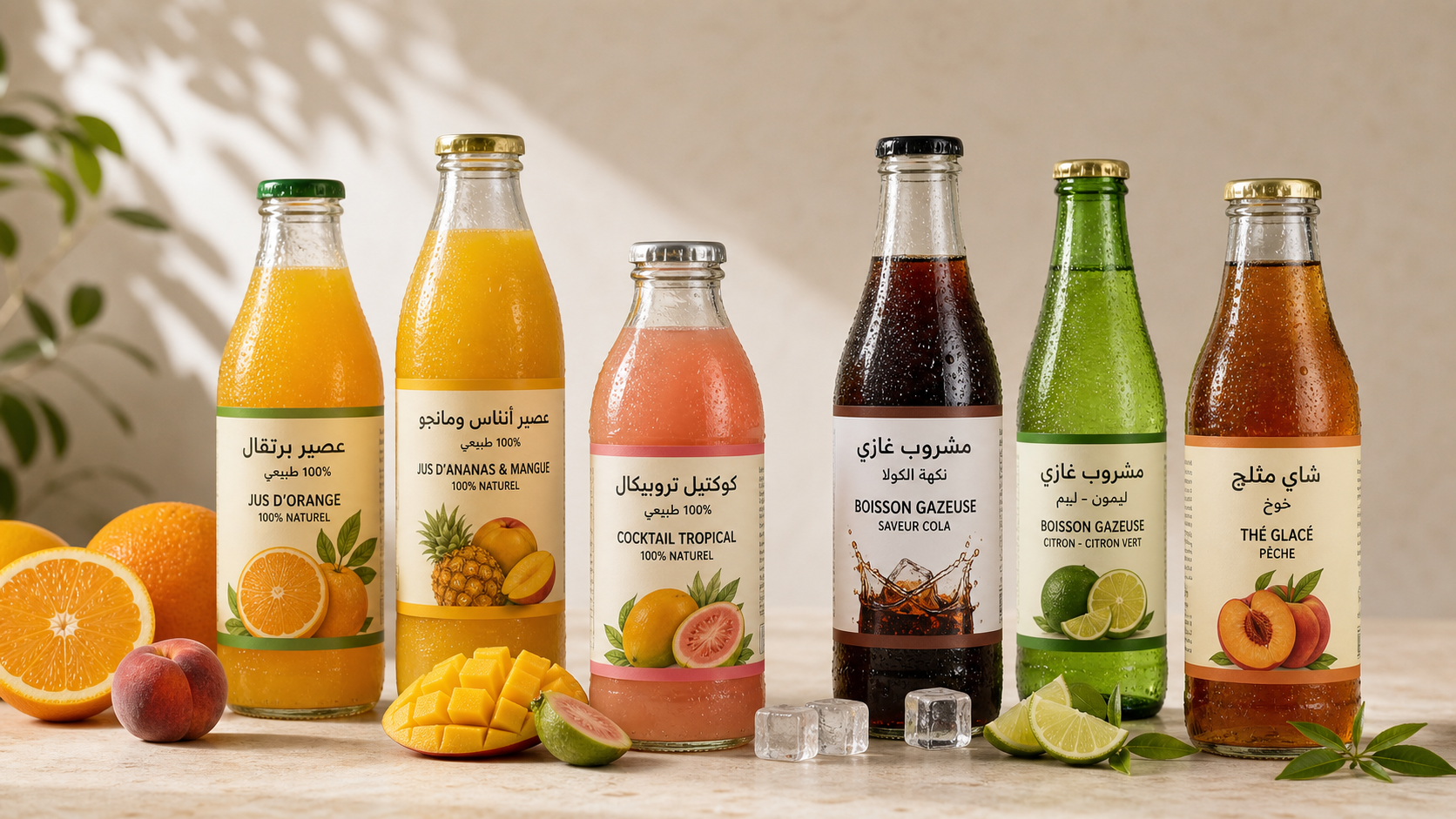
- Prepare compliant bilingual labels (Arabic and French). Morocco requires labels in Arabic and French. Prepare final or near-final artwork covering: product name, ingredient list in descending order, additives and sweeteners as applicable, net quantity (metric), manufacturer/brand owner, importer name and Moroccan address, lot code, date marking (best before/use by), storage conditions, country of origin, and instructions for use if needed. Include nutrition only when relevant to positioning or local expectations, and avoid unsubstantiated health or nutrition claims.
- Compile the technical dossier for ONSSA. Typical contents include label artwork, product specification (Brix/acidity for juices where relevant, pH, allergens), Certificate of Analysis for the batch or typical lot, manufacturing flow, microbiological criteria as applicable, and certificates from the country of origin (e.g., certificate of free sale when requested). Some products may require samples.
- Submit for ONSSA review/approval. Your importer or authorized representative files the dossier with ONSSA for the imported beverage(s). Await the registration/authorization outcome and any label or formula corrections before shipping.
- Book shipment to Moroccan ports. The main entry points for beverages are Tanger Med and Port of Casablanca. Choose Incoterms with your buyer/importer and confirm reefer or ambient containers per your product’s temperature stability. Include stability data if shipping through hot seasons.
- Arrange pre-shipment documentation. Prepare the commercial invoice, packing list, bill of lading/air waybill, product specification, certificates requested by ONSSA or ADII (e.g., origin), and insurance if applicable. Ensure data consistency (weights, counts, HS code) across all documents.
- Pre-arrival declaration via PortNet. Your broker submits pre-arrival information so ONSSA and ADII can plan inspections or documentary checks. Discrepancies between pre-arrival data and final paperwork commonly trigger delays—validate early.
- Border inspection and possible sampling. Upon arrival, ONSSA may conduct documentary checks, visual inspections, and selective sampling at the border inspection post. Keep sealed reference samples accessible and ensure lot codes match labels and documents.
- Customs valuation and duty/VAT payment. ADII assesses duties and taxes based on HS code and valuation. Rates depend on product and trade regime; clarify in advance with your broker. Retain payment receipts and release orders in your audit file.
- Release and inland transport. After sanitary clearance and customs release, arrange trucking from Tanger Med or Casablanca to the importer’s warehouse. Verify pallet integrity and temperature conditions during drayage.
- Post-clearance compliance. Maintain traceability records, complaint handling, and recall readiness. Keep ONSSA approvals, labels, and lab records aligned with the products on the market. Update labels promptly if ONSSA requests changes.
Document checklist for Morocco beverage imports
Use this as a working list. Some items are conditional; ONSSA or ADII can request additional evidence depending on product risk and category.
- Commercial invoice and packing list
- Bill of lading or air waybill
- HS code confirmation with broker
- Product specification and process flow
- Certificate of Analysis (typical lot and/or shipment lot)
- Certificate of free sale or manufacturer declaration (if requested)
- Label artwork in Arabic and French, matching the shipped product
- Allergen statement and additive/sweetener disclosure
- Country of origin statement
- Importer’s Moroccan name and address for label and dossiers
Morocco beverage labeling essentials
Label compliance is a frequent bottleneck. Build it right before you print and ship.
- Language: Arabic and French are required on imported beverage labels. Keep translations consistent and complete.
- Identity and ingredients: Clear product name, ingredient list in descending order; declare additives and sweeteners by their class and specific names where applicable.
- Net content: In metric units (mL/L).
- Business details: Name and address of the Moroccan importer; brand owner/manufacturer details.
- Lot coding and date marking: Lot/batch code and best-before or use-by date; storage conditions if necessary.
- Origin: Country of origin for the beverage.
- Nutrition and claims: Provide nutrition facts when aligned with positioning; avoid unsubstantiated claims. Any nutrition or “free from” claim must reflect the final formula and serving size and comply with Moroccan expectations.
- Visibility and permanence: Labels must be legible and indelible; over-stickers should fully comply in Arabic and French and not obscure mandatory information.
| Format | Alcohol status | Positioning & notes |
|---|---|---|
| 100% juice | Non-alcoholic | Expect fruit-only composition; ONSSA may review Brix/acidity specs. Label should not imply added sugar. |
| Nectar | Non-alcoholic | Fruit pulp/juice plus water and sweeteners permitted within category norms. Label must clearly state category. |
| Juice drink/soft drink | Non-alcoholic | Flavorings and additives allowed within limits; declare sweeteners and acids appropriately. |
| Energy drink | Non-alcoholic | Watch stimulant ingredients and caffeine statements; align warnings and serving advice with Moroccan practice. |
| RTD tea/coffee | Non-alcoholic | Flavorings, sweeteners and dairy components must be declared; manage shelf-life and storage claims carefully. |
| Bottled water | Non-alcoholic | Specific subcategory rules may apply (natural mineral, spring, table); branding should not imply medicinal effects. |
Logistics and ports for beverage imports
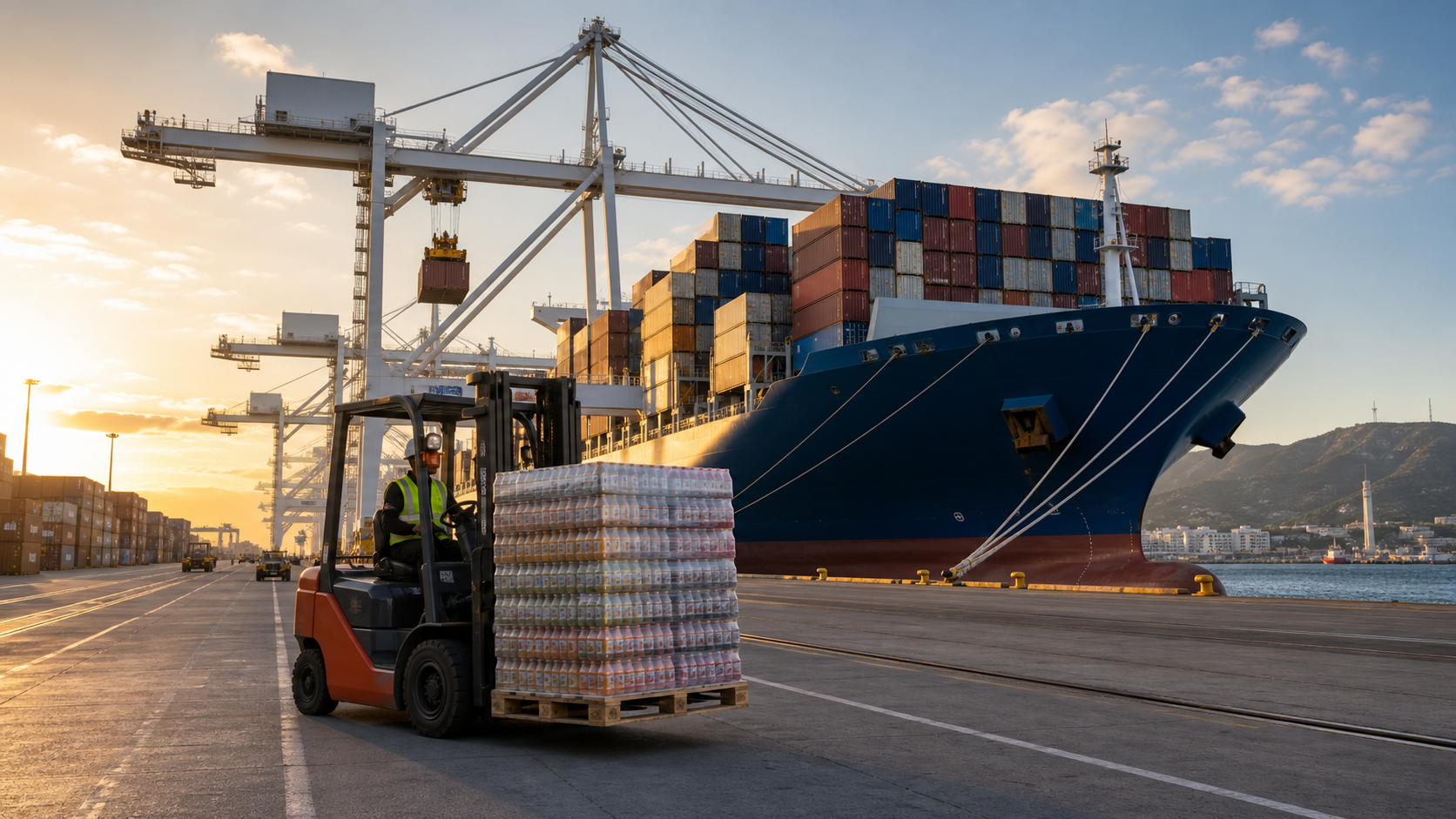
Most beverages enter via Tanger Med or the Port of Casablanca, Morocco’s key gateways with strong container connectivity. For time- and temperature-sensitive products, confirm reefer capacity and pre-cool protocols. Secure pallets, corner boards and slip sheets to prevent carton deformation in hot conditions.
Coordinate vessel schedules with PortNet milestones and inspection availability. In peak seasons, allocate extra lead time for sampling and lab turnaround when requested by ONSSA.
Duties, VAT and potential internal taxes
Import duty and VAT are determined by HS code and valuation under ADII. Some sweetened beverages may fall under internal taxes depending on Moroccan fiscal measures in force. Because rates and applicability change, align early with your broker and model landed cost scenarios before quoting the market.
- Confirm tariff treatment and any preferential origin schemes where applicable.
- Validate whether any internal consumption taxes apply to your beverage category.
- Capture all fixed fees and handling charges at Tanger Med or Casablanca in your cost build-up.
Common pitfalls and how to avoid them
- Incomplete bilingual labels: Missing Arabic or French segments, or partial translations (e.g., ingredients in only one language) lead to relabeling or refusal.
- Importer details absent: ONSSA expects the Moroccan importer name and address on the label; add it before printing.
- Inconsistent documents: Ingredient list, country of origin, or net content differs across invoice, spec and label. Keep a single source-of-truth and conduct a pre-shipment audit.
- Shipping before ONSSA review: Dossiers filed too late can push inspections to post-arrival, increasing storage and demurrage.
- Lot codes and date formats: Unclear coding or illegible ink-jet prints complicate inspection. Use durable codes and keep decoding keys ready.
- Temperature mishandling: Heat exposure on quays or during drayage can cause swelling, flavor deterioration or label glue failures. Plan cold-chain steps where needed.
Working timeline and coordination
Building a realistic plan is as important as preparing documents. Many importers target dossier and label validation before booking space. Buffer time for border sampling is prudent, especially during high traffic.
- Pre-approval phase: Tech dossier and label adjustments can take multiple rounds—keep artwork in an editable state.
- Transit and arrival: Share pre-arrival data via PortNet promptly and line up inspection windows with your broker.
- Post-clearance: Keep all approvals and testing on file for audits and reorders.
For strategic context, see our Morocco market overview to align format, pack size and price architecture with local retail realities.
Practical tips for beverage brands and importers
- Product brief discipline: Lock the exact sugar/sweetener system, acidity, color and flavor profile early; last-minute swaps can invalidate labels.
- Artwork layers: Keep bilingual text in separate layers and use professional translators for ingredient classes and additive names.
- Claims strategy: Prioritize clear, factual descriptions (e.g., fruit content statements). Ensure any claim matches lab-verified composition and serving size.
- Pallet patterning: Use robust cases and moisture-resistant inks; Morocco’s climate and port conditions reward better packaging specs.
- Reorder readiness: Preserve ONSSA approvals, final PDFs and COA templates to compress lead times for repeat shipments.
FAQ
Do I need ONSSA approval to import beverages into Morocco?
Yes. ONSSA oversees sanitary controls for imported food and drink, and can review labels, documentation and, where needed, samples before or at the border.
Are Arabic labels mandatory?
Yes. Labels must be in Arabic and French. Over-stickers are acceptable when they fully comply and remain legible and indelible.
Which ports are commonly used?
Tanger Med and the Port of Casablanca are the primary gateways for beverage imports, with strong container connectivity and inspection infrastructure.
How long does clearance take?
It varies with product risk, dossier quality, inspection queues and any sampling. Build contingency time and coordinate closely with your broker and ONSSA.
Can I import samples?
Samples are generally possible under specific procedures. Confirm volume limits, labeling expectations and documentation with your broker and ONSSA before shipping.
Sources
Office National de Sécurité Sanitaire des Produits Alimentaires (ONSSA) – official regulator for food safety in Morocco.
Administration des Douanes et Impôts Indirects (ADII) – Moroccan Customs administration.
PortNet – Morocco’s national single window for foreign trade procedures.