


 Français
 Español
 العربية
 한국어
한국어FORMULATION AND R&D
Beverage Formulation Specifications and Protocols
A beverage specification is a set of measured targets: brix, pH, titratable acidity, viscosity and colour, each with a tolerance. This page sets out the ranges used across our ten categories and the stability protocol behind the 18 to 24 month shelf life those specifications support.
18–24 MonthsShelf life validated by stability testing, not assumed from the process.
10 CategoriesEach with its own brix, acidity and viscosity envelope.
pH 4.6The threshold that links a formula to the processing route it can use.
2–3 Sample RoundsTypical number of iterations before a specification is locked.
THE PARAMETERS
What Actually Gets Written Down
A drink that tastes right is not yet a specification. These are the measured values that let a second batch taste like the first one.
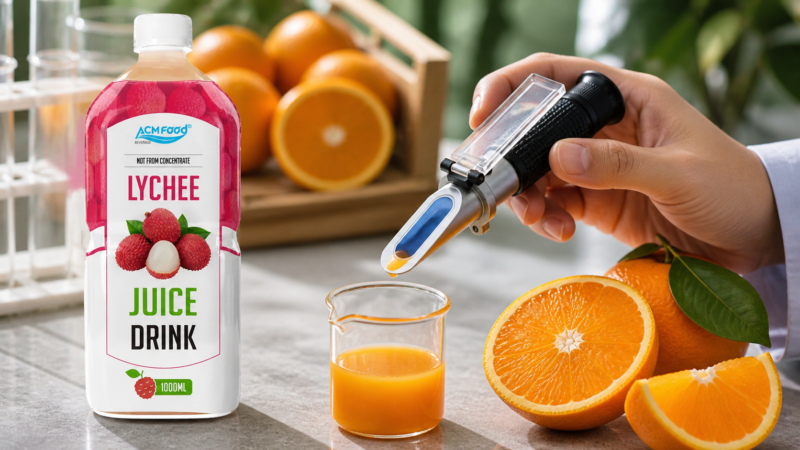
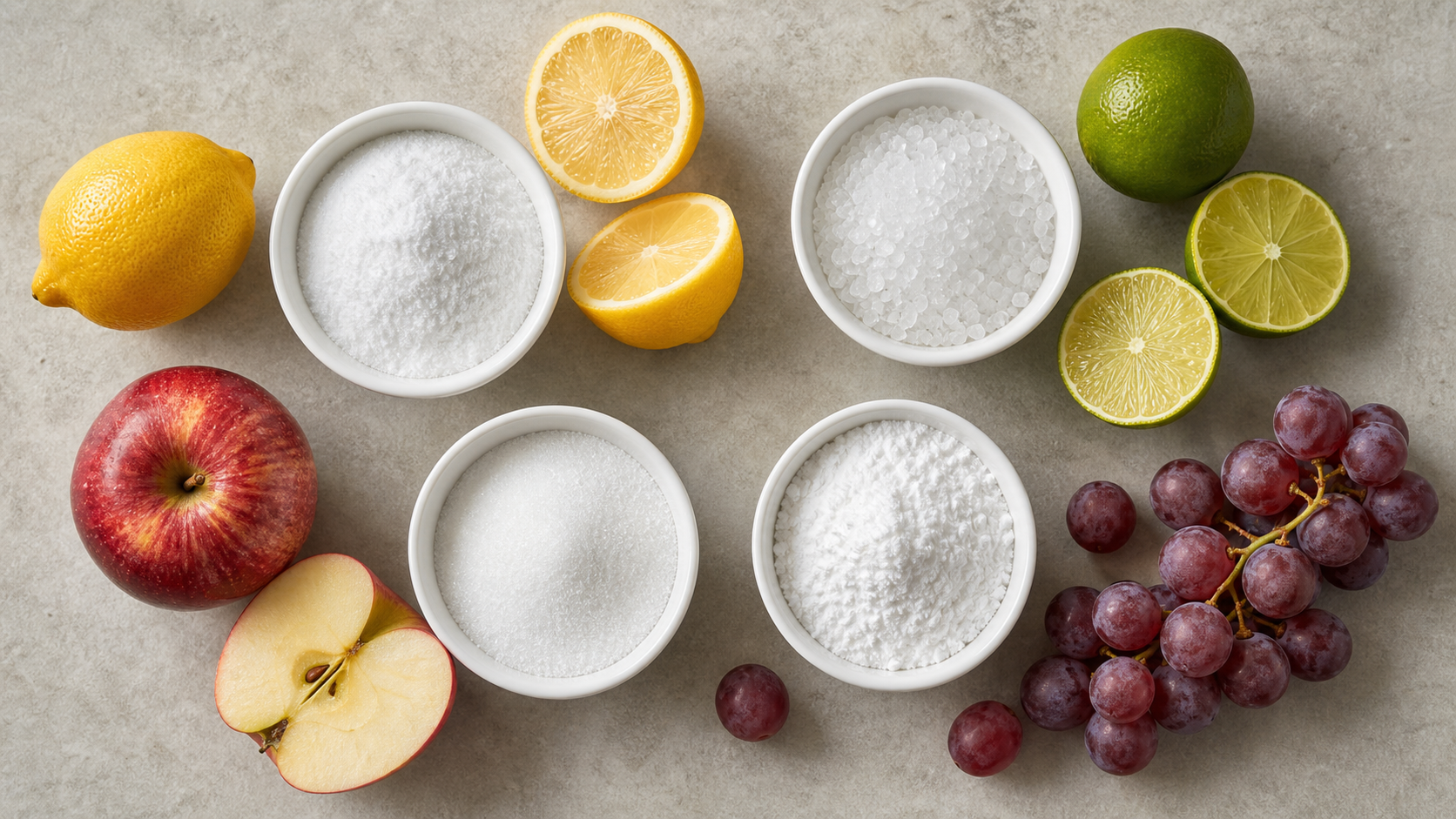
BrixSoluble solids, the primary sweetness measure. Set with a tolerance, typically a narrow band either side of target. Detail on fruit juice brix explained.
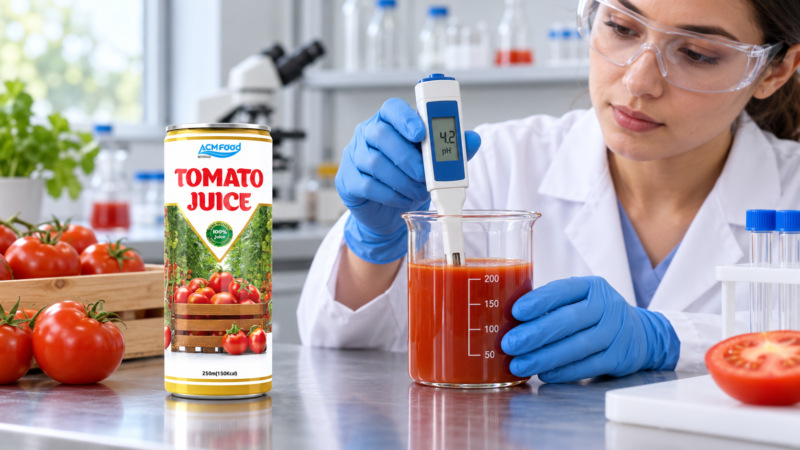
pH and AciditypH governs safety and processing route; titratable acidity governs perceived sourness. The two move independently and both belong in the spec.
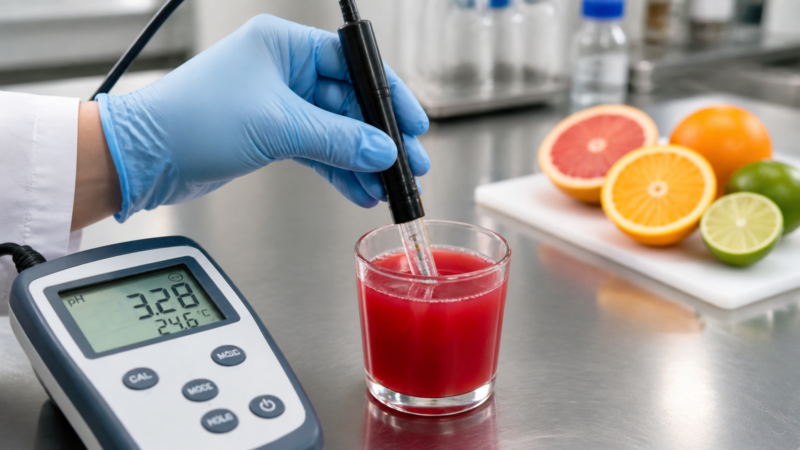
Brix-to-Acid RatioThe balance point that decides whether a juice reads as refreshing or flat. Often matters more to consumers than either number alone.
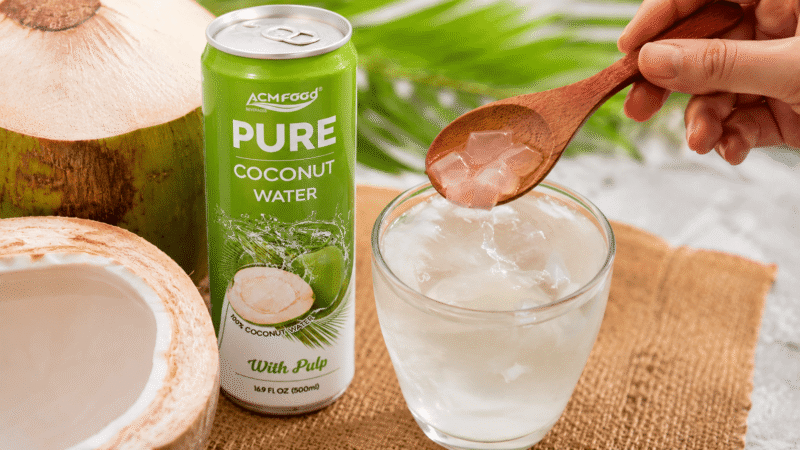
Viscosity and PulpMouthfeel, suspension of pulp or seeds, and whether the product settles in the pack. Directly affects filling behaviour.
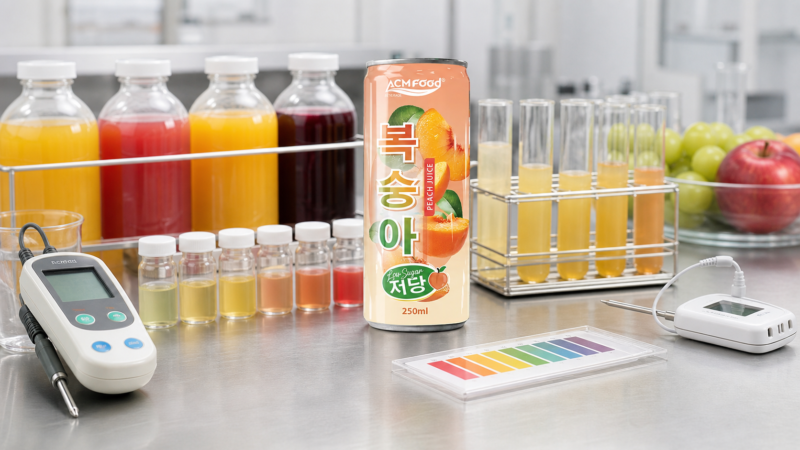
ColourMeasured against a reference, with an accepted drift range across shelf life. Colour is usually the first thing to move.
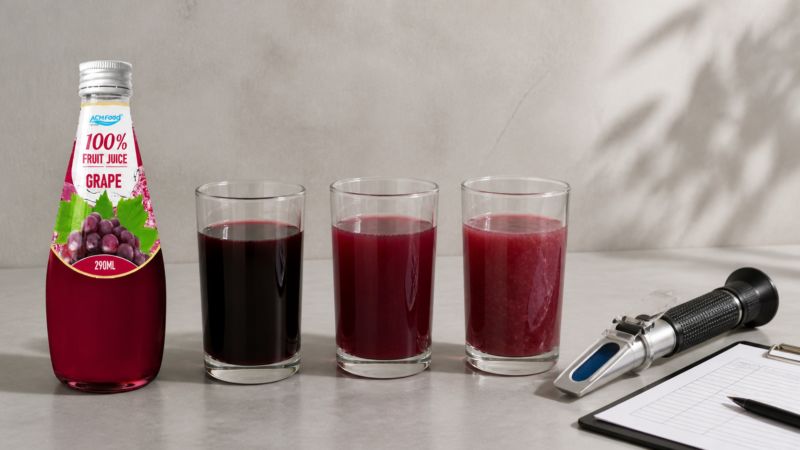
Sensory ReferenceThe approved sample every future batch is tasted against. Numbers alone never fully describe a drink.
STABILITY PROTOCOL
How 18 to 24 Months Gets Proven
Shelf life is a claim until a stability study supports it. The study runs on the actual formula in the actual pack, because the pack is part of the result.
- Real-time hold – samples stored at ambient and pulled at set intervals across the claimed life
- Accelerated hold – elevated temperature to surface colour and flavour drift early
- What is measured – brix, pH, colour, sensory, and microbiological status at each pull point
- Pack matters – the same formula behaves differently in can, PET and glass, so each format is validated separately
The processing route sets the ceiling on what any formula can achieve — see processing technology.
FREQUENTLY ASKED QUESTIONS
Formulation Questions
What product developers ask when locking a specification.
What tolerance is normal on brix and pH?
Tolerances are set per product and written into the specification before production. They have to be wide enough for the process to hold reliably across a full run and narrow enough that consumers cannot taste the difference between batches. Both limits are agreed with you, not imposed.
Why does the same formula taste different in a can and a bottle?
Because the pack participates. Oxygen ingress, light exposure and the heat the pack receives during processing all differ between can, PET and glass. That is why stability is validated per format rather than once per formula.
Can you match an existing product?
Yes. Send a reference sample and any specification you hold. We measure it, rebuild the formula against those values and iterate until the sample matches within an agreed tolerance. This is the usual starting point for an OEM project.
How long does formulation take?
Most projects settle within two to three sampling rounds. Timing depends on ingredient lead times and how far revisions move from the original brief. Formulation happens before the 15 to 30 day production window, not inside it.
Can you reduce sugar or build a clean label product?
Both are possible and we have products in these directions, though they are a small part of the current range rather than its centre. Reformulating for lower sugar changes mouthfeel and preservation margin, so it needs its own stability study rather than a simple substitution.
Who owns the formula that gets developed?
It depends on the commercial model, and it is agreed in writing before development starts. Under ODM the arrangement covers ownership and exclusivity explicitly. See ODM beverage manufacturing for how that route works.
Formulation is where an ODM beverage manufacturing project begins. What goes into the formula is covered in ingredient sourcing, and the categories these specifications apply to are listed under product capabilities.

Have a target profile in mind?
Send a reference sample, a target brix and acidity, or simply the taste you are aiming for. We will come back with a formulation approach and a sampling plan.