



 Français
 Español
 العربية
 한국어
한국어PROCESSING TECHNOLOGY
Beverage Processing Technologies and How Each One Shapes Your Product
Six processing routes dominate ready-to-drink beverages: hot fill, tunnel pasteurisation, cold aseptic filling, UHT, retort and HPP. The pH 4.6 line, packaging format and target shelf life decide which route fits, and that choice sets taste, colour retention and cost per unit long before packaging design does.
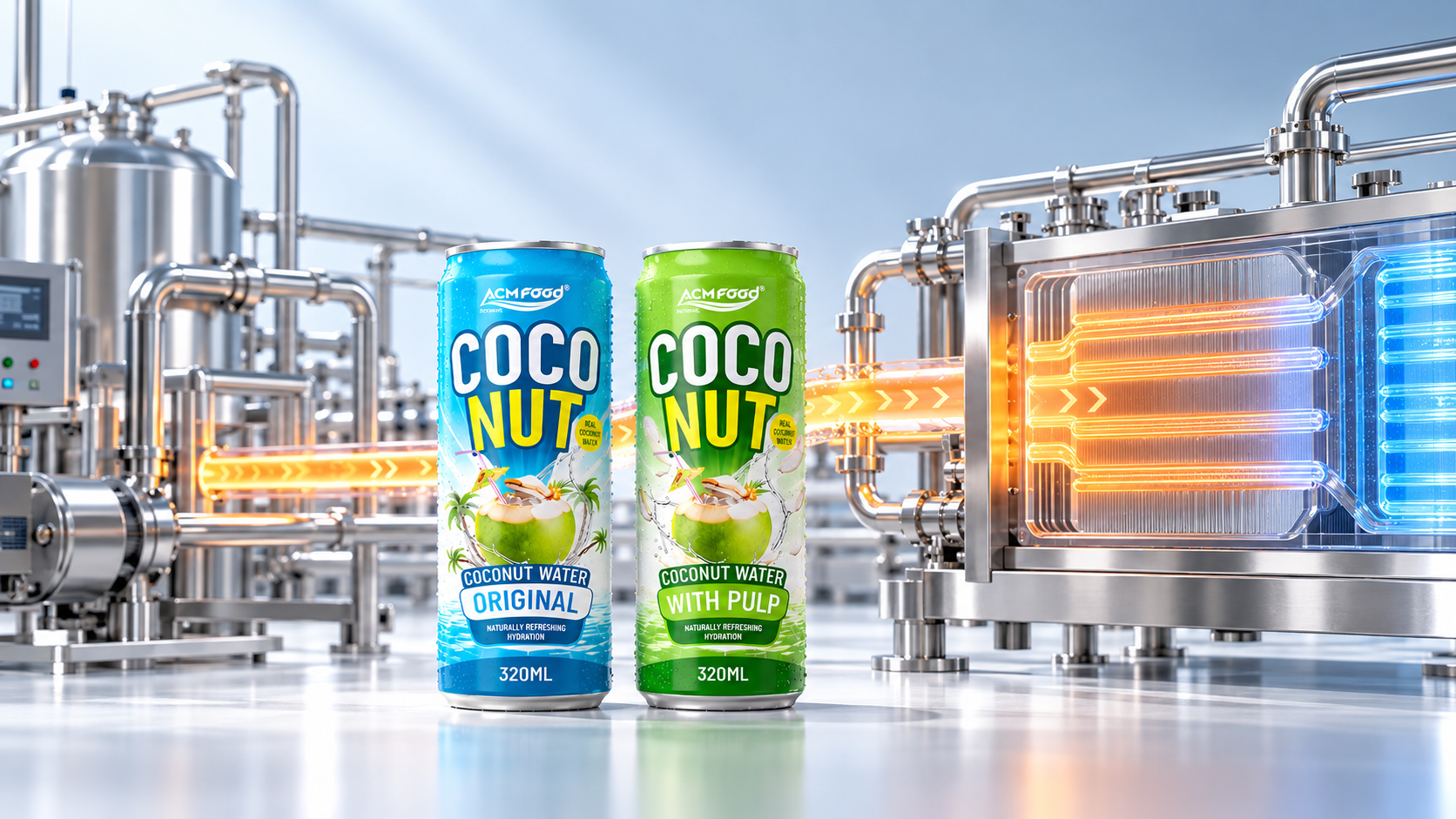
pH 4.6The line that separates acid from low-acid products and narrows the options immediately.
18–24 MonthsAmbient shelf life achieved across the categories we produce, without cold chain.
200ml – 1.5LFill volumes available. Format and volume constrain which routes are practical.
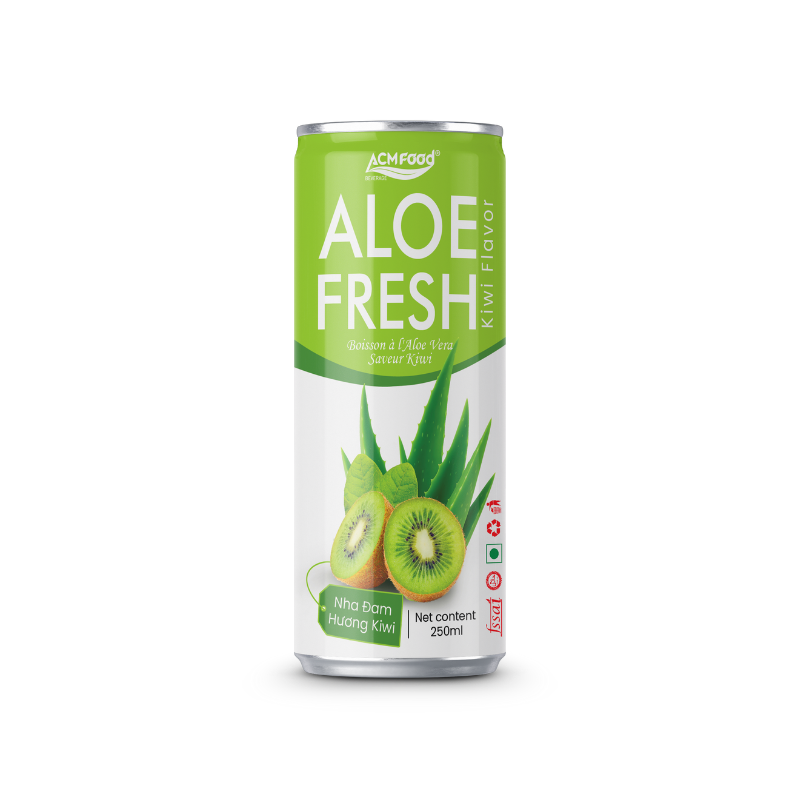
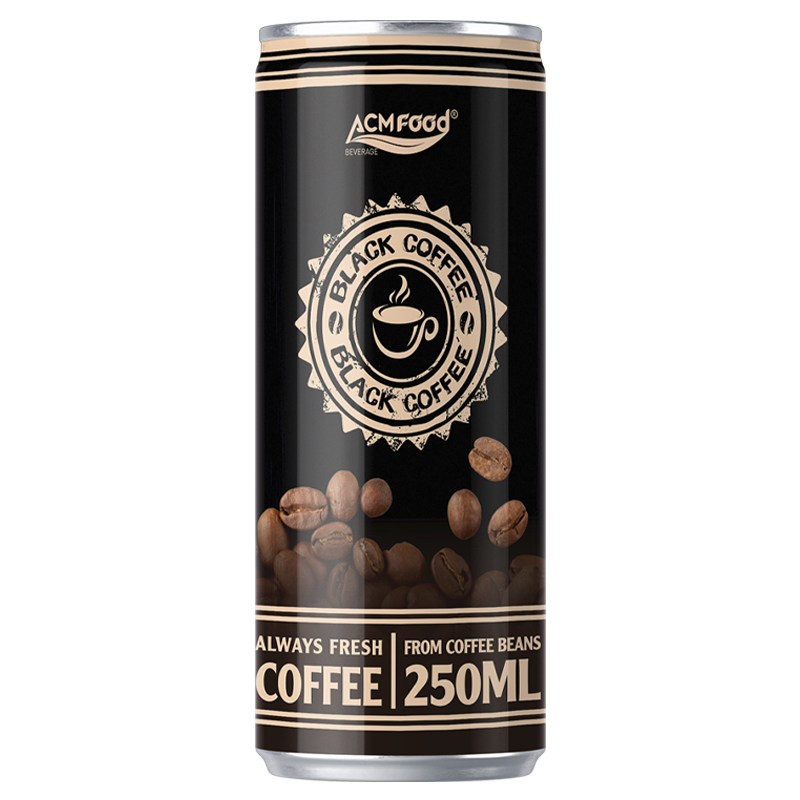
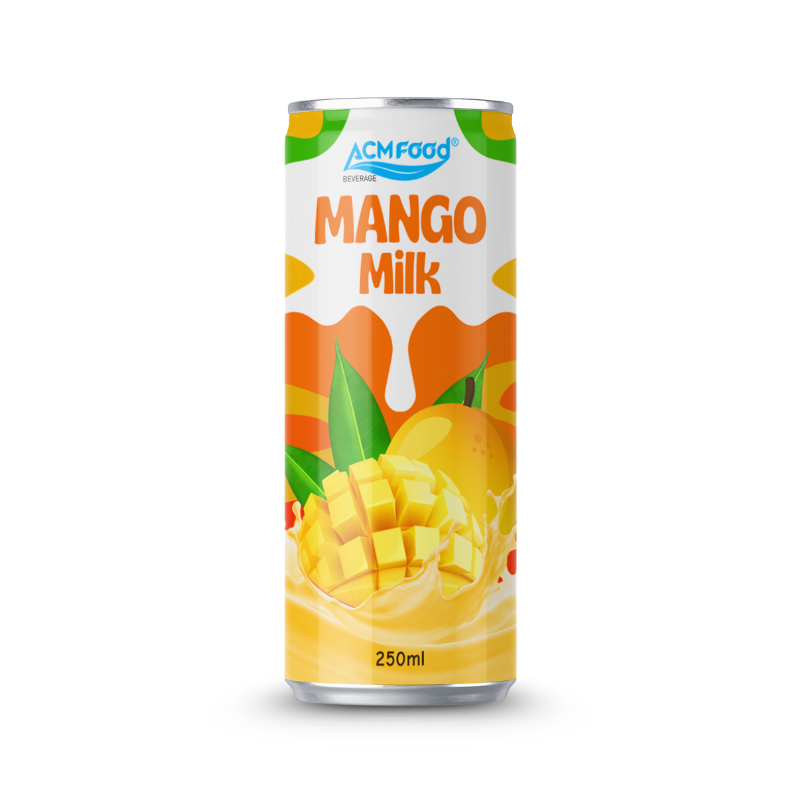
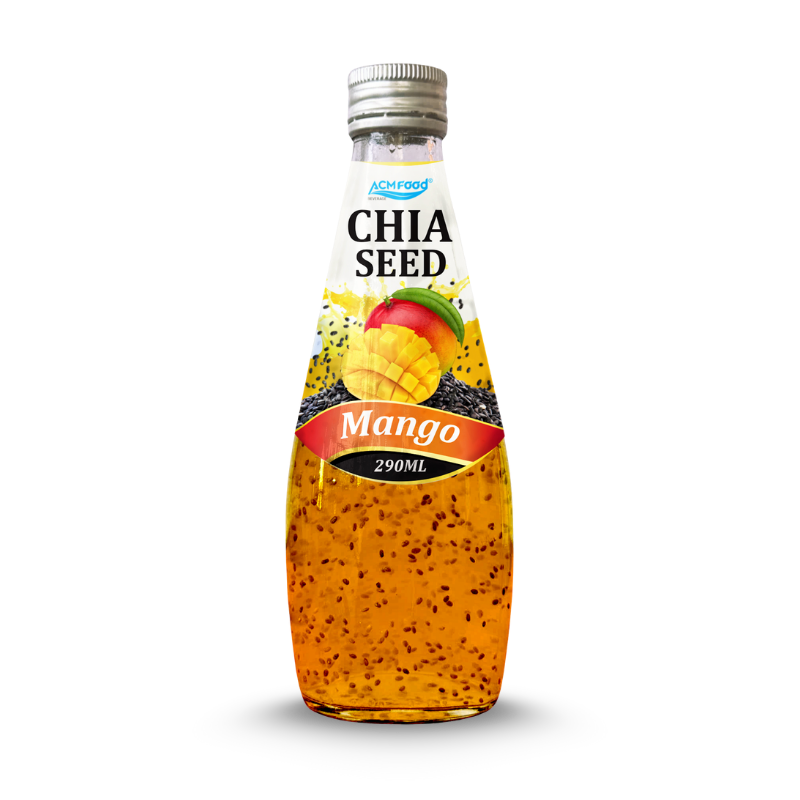
Can · PET · GlassPackaging families in production. Each pairs naturally with different processing routes.
THE OPTIONS
Processing Routes for Different Beverages and Packaging
Each processing technology is suited to specific beverage types and packaging formats. Understanding these options helps you identify the right production method for your product concept, ingredients, and packaging requirements.
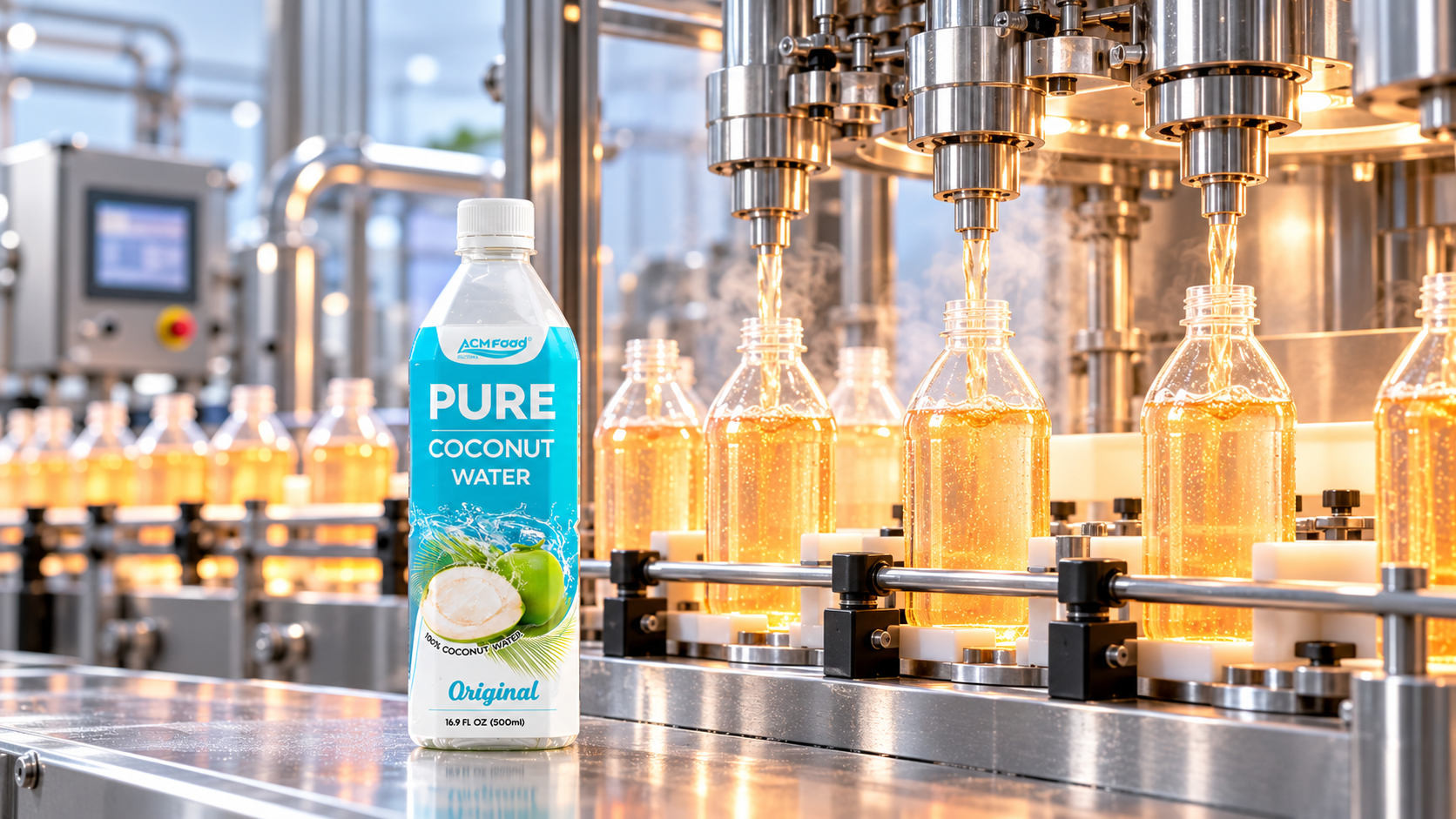
Hot Fill
Product is heated, filled hot and the pack is sterilised by its own heat. Suits acid drinks below pH 4.6 in heat-resistant PET or glass. Simple and proven, but the heat load shows in delicate flavours.
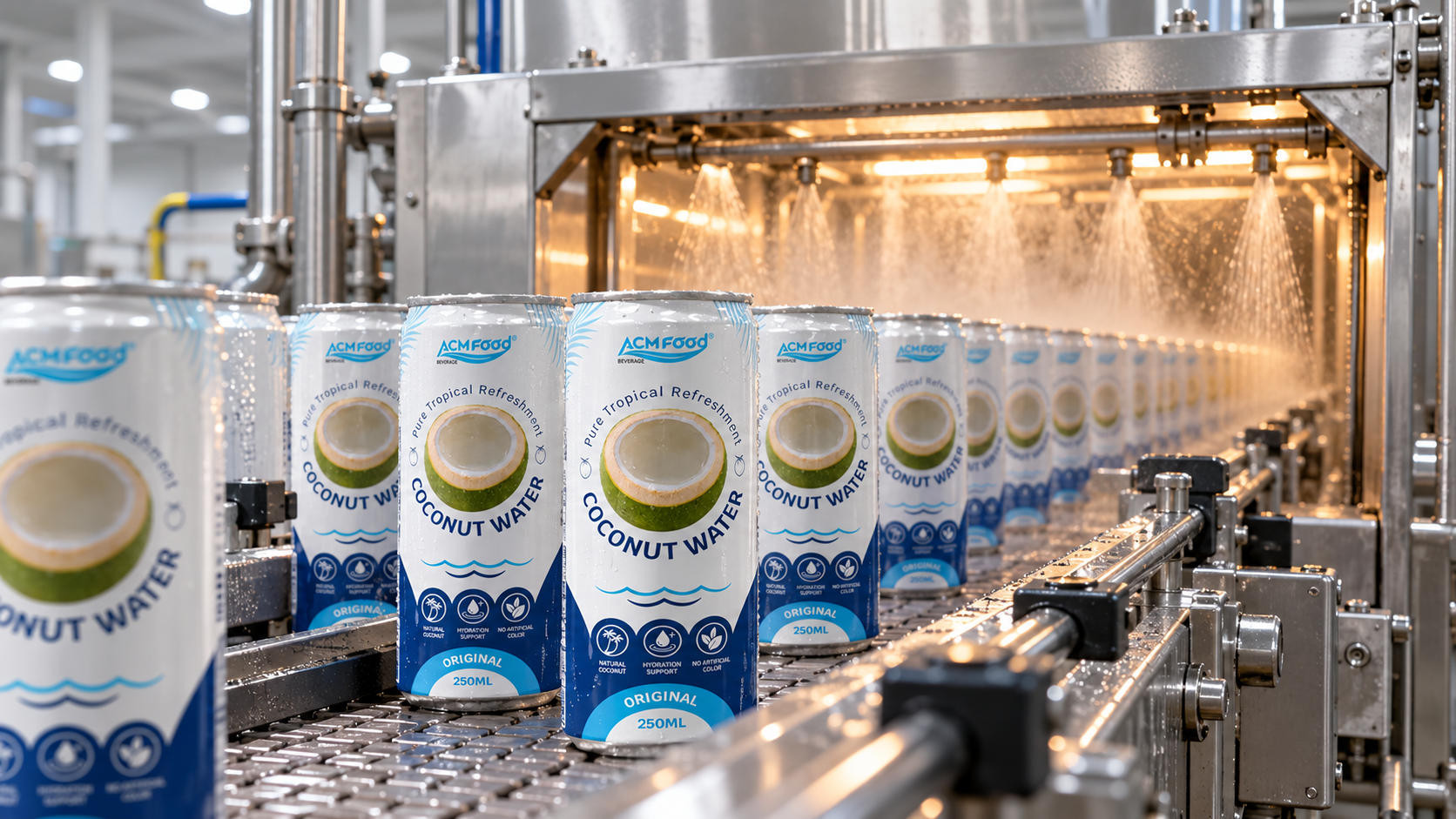
Tunnel Pasteurisation
Sealed packs pass through a heated tunnel and are pasteurised inside the pack. Common for cans and glass, measured in PU units. Gentler on the line than retort, heavier than aseptic.
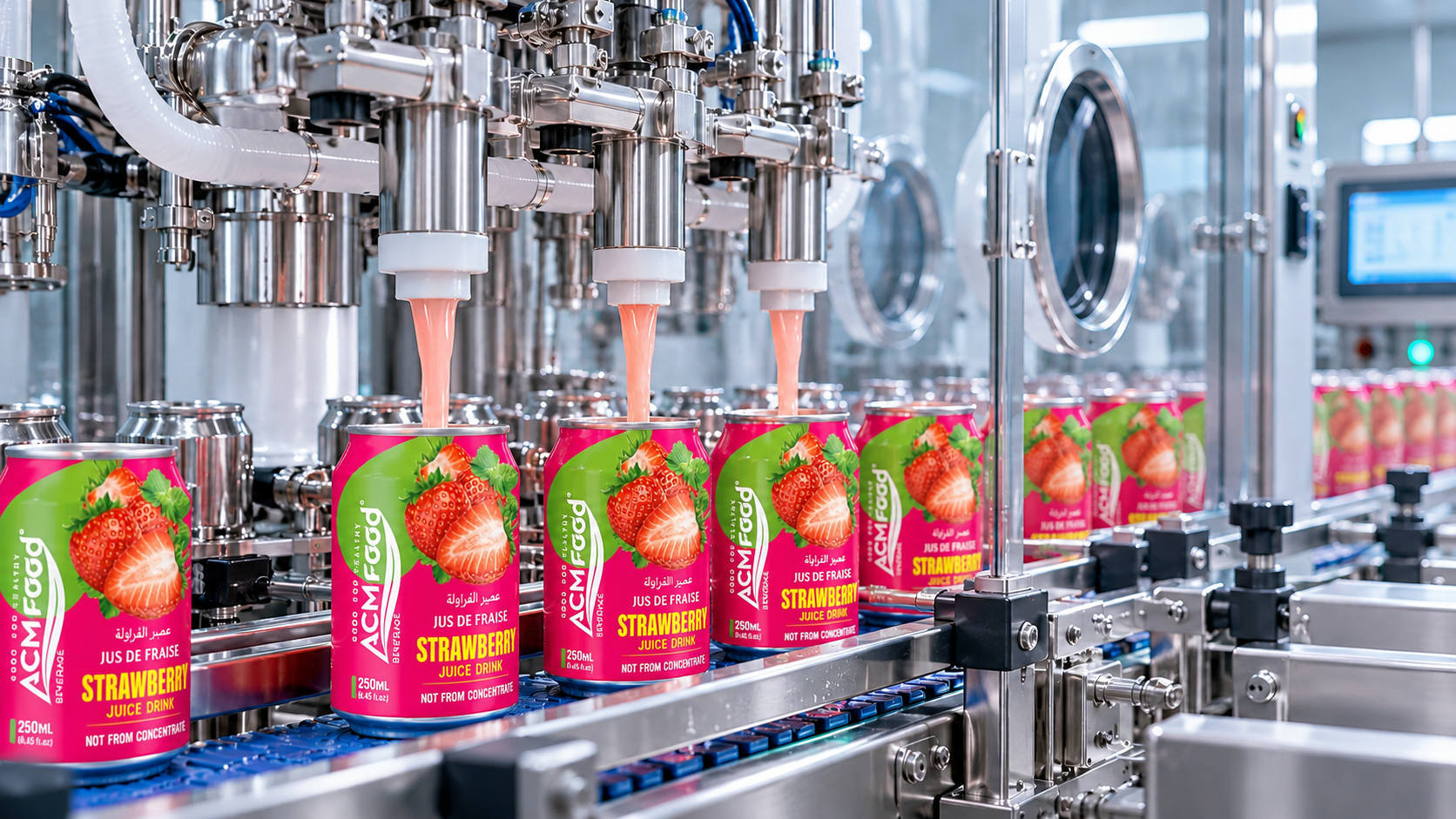
Cold Aseptic Filling
Product and pack are sterilised separately, then filled cold in a sterile zone. Best flavour and colour retention of the ambient routes, and the most demanding to run.
UHT
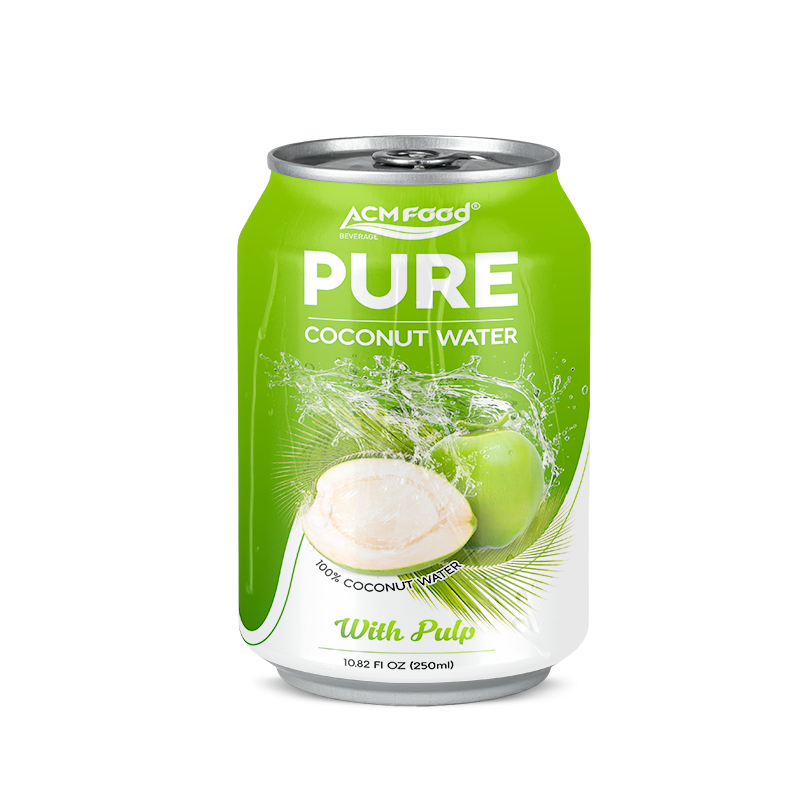
A very short, very hot hold that sterilises the product before filling. Opens up low-acid drinks such as milk and coconut-based products that hot fill alone cannot make ambient-stable.
Retort
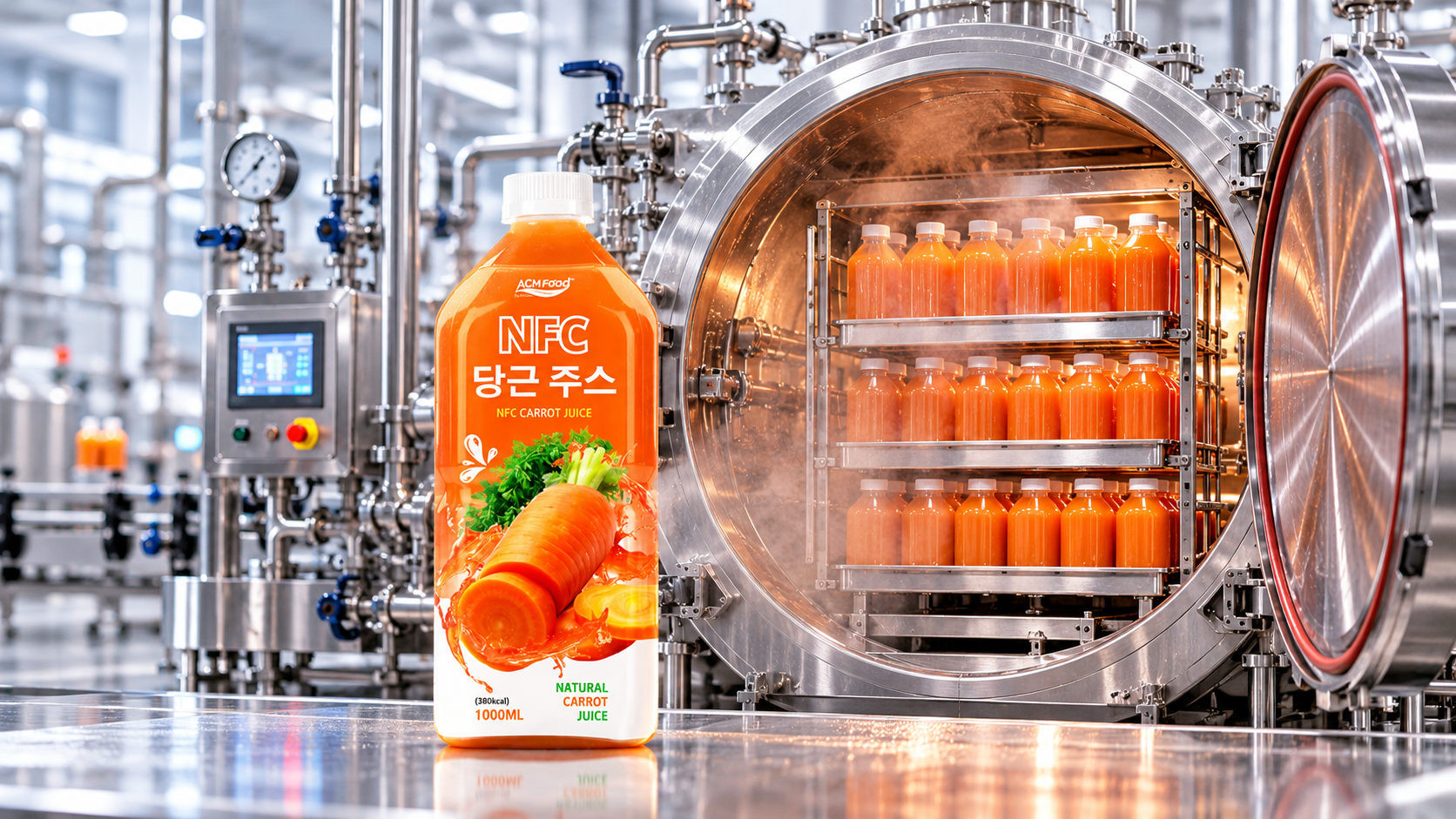
Sterilisation of the sealed pack under pressure, measured in F0. The most robust route for low-acid products with inclusions, and the hardest on colour and fresh character.
HPP
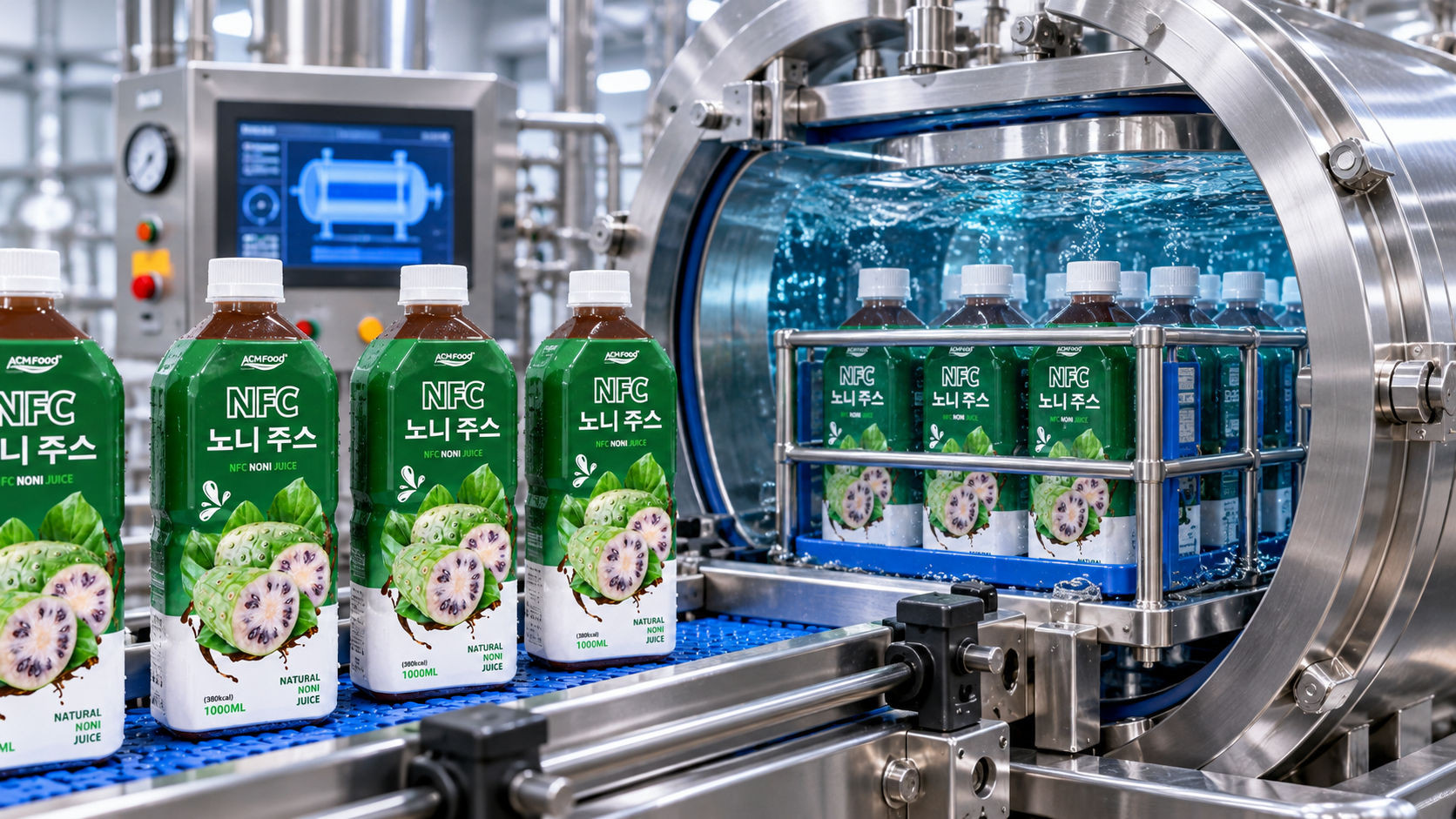
High pressure instead of heat, so fresh character survives almost intact. But it requires cold chain end to end, gives weeks rather than months of life, and carries the highest cost per unit of the six.
NARROWING IT DOWN
Four Questions That Decide the Route
Most projects resolve to one or two viable routes once these are answered. The rest is cost and capacity.
- 01What is the pH? Below 4.6 opens hot fill and tunnel pasteurisation; at or above it, UHT or retort become necessary.
- 02Which pack? Cans favour tunnel pasteurisation and retort; PET favours hot fill and aseptic; glass takes either heat route.
- 03Are there inclusions? Pulp, nata de coco and seeds change heat penetration and often push toward retort.
- 04Ambient or chilled? Ambient distribution rules out HPP for most export projects before cost is even discussed.
For a direct comparison of the two most common routes, see aseptic filling vs hot fill.
WHICH ROUTE FITS?
Which route applies to your product
This page explains the options; it does not decide them. Which line your product actually runs on is confirmed per project, once the specification, packaging format and destination market are known. Send those three and we will come back with the route, the shelf life it supports and what it means for cost.
FREQUENTLY ASKED QUESTIONS
Processing Questions
What brand owners ask when they first meet these terms in a quotation.
Why does pH 4.6 matter so much?
Below pH 4.6 the acidity itself prevents Clostridium botulinum from growing, so pasteurisation is enough to make a product ambient-stable. At or above pH 4.6 that safety margin disappears and the product needs sterilisation, which means UHT or retort rather than hot fill.
Which route keeps the most fresh flavour?
Of the ambient routes, cold aseptic filling retains the most flavour and colour because the product spends the least time hot. HPP preserves even more, but it needs cold chain and gives weeks of shelf life rather than months, which rules it out for most sea freight export projects.
Can the same recipe run on different technologies?
Rarely without adjustment. Heat load, dissolved oxygen and fill temperature all change how a formula behaves, so a recipe validated for hot fill usually needs reformulation and a fresh stability trial before it runs aseptic or retort.
Does processing route change the shelf life?
Yes, and it is often the single biggest factor. ACMFOOD ambient routes support 18 to 24 months depending on product and packaging. Any chilled route is measured in weeks. Shelf life is confirmed by stability testing on the actual formula, not assumed from the technology alone.
Do drinks with pulp or nata de coco need a different route?
Usually yes. Solid inclusions slow heat penetration and settle differently in the pack, so the process has to be validated for the particle size and load, not just the liquid. This often moves a product toward tunnel pasteurisation or retort.
Which route is cheapest per unit?
For acid drinks in PET, hot fill is generally the lowest cost. For cans, tunnel pasteurisation is usually the most economical. Aseptic and retort carry higher processing cost, and HPP is the most expensive of the six once cold chain is included.
Processing route applies across all four manufacturing models. See beverage manufacturing services to choose a commercial route, our production process for how a project moves from brief to shipped container, or product capabilities for the categories and formats available.

Not sure which process your product needs?
Send the product concept, target pH or reference sample, packaging format and destination market. We will confirm the viable routes and what each one means for shelf life and cost.