
The coconut water with aloe vera drink category sits at an interesting intersection. Both ingredients have earned strong consumer recognition independently — pure coconut water as a natural electrolyte source, aloe vera gel as a digestive and skin health ingredient with decades of wellness credibility. When formulated together into a single ready-to-drink beverage, they don’t just coexist. They complement each other in ways that make the combined product more commercially compelling than either one alone. For importers and private-label brands evaluating what to bring to market next, this combination deserves a serious look.
What coconut water with aloe vera actually is, and why the combination works

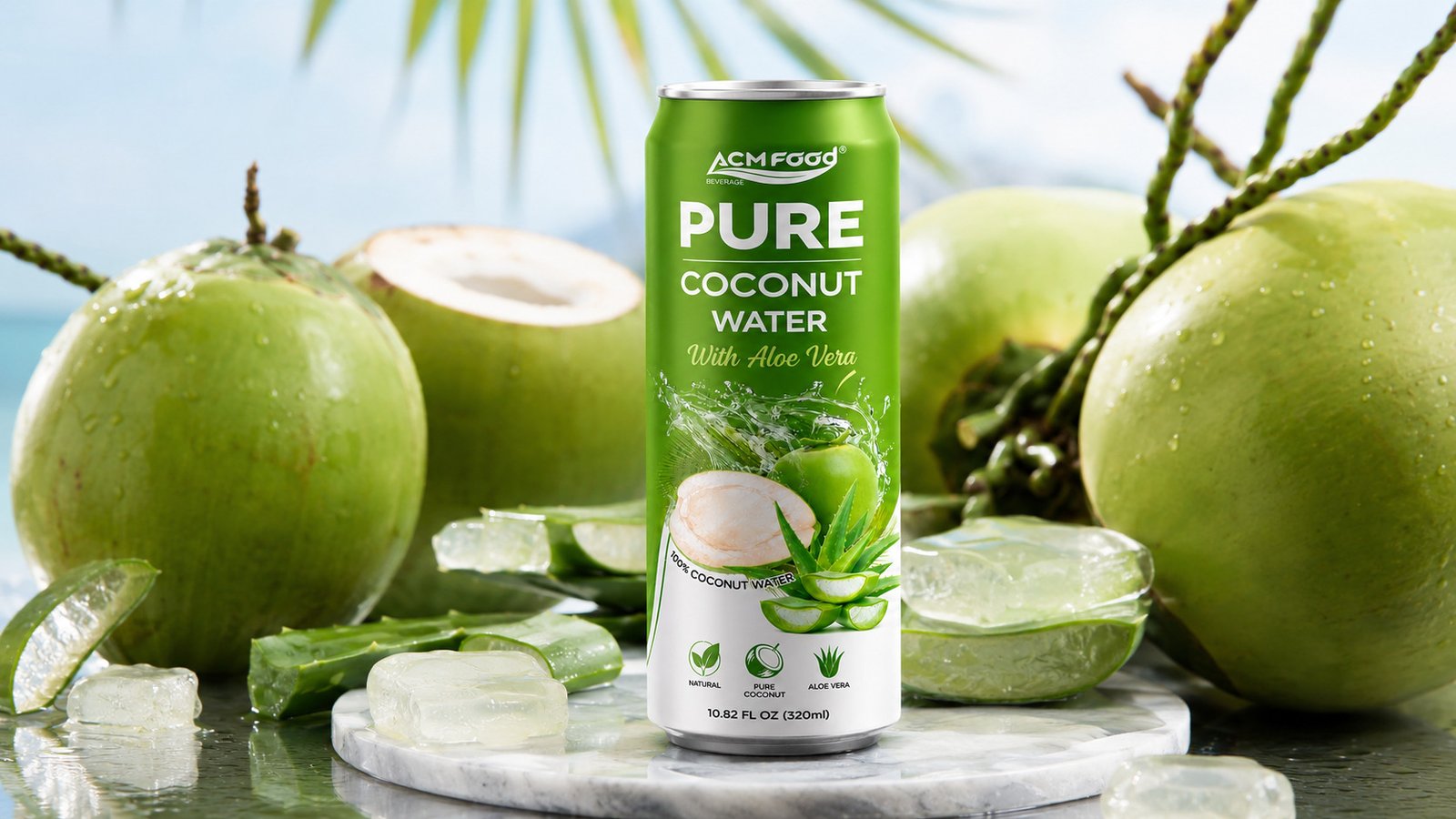
At its core, a coconut aloe vera drink is a beverage that blends fresh coconut water with soft aloe vera gel pieces — small, semi-transparent cubes or strips cut from the inner fillet of the aloe vera leaf, which contains the clear, bioactive gel rather than the bitter latex layer closer to the skin. The result is a mildly sweet drink with a distinctive soft-chew texture, a clean flavor profile, and a functional health story that resonates clearly with today’s consumer. In many markets, terms like coconut water aloe vera, aloe coconut water, and aloe vera and coconut water are used interchangeably to describe this increasingly popular beverage category.
The aloe vera component here is gel, not juice. That distinction matters both commercially and in formulation terms. Aloe vera gel pieces are visible in the can — they signal authenticity, naturalness, and a product that has clearly not been over-processed. Consumers in Asia, the Middle East, and increasingly in Western markets recognize this texture immediately and associate it with the original form of the ingredient. It gives the product a sensory differentiation that no amount of label copy can replicate.
The combination works because the two ingredients address different but complementary consumer needs. Fresh coconut water is recognized primarily as a hydration ingredient — it delivers natural electrolytes including potassium (roughly 600 mg per cup), sodium, magnesium, and calcium, which is why it’s positioned as a post-exercise recovery drink in most markets. Aloe vera gel adds a different dimension: its acemannan polysaccharide compound has well-documented soothing effects on the digestive tract, and the ingredient carries strong associations with skin health and anti-inflammatory benefits. Together, an aloe and coconut water beverage covers hydration, gut support, and wellness positioning in a single SKU. That’s a meaningful advantage in retail environments where shelf space is competitive and buyers want products that carry more than one benefit claim.
The flavor compatibility is real, not just a marketing construct. Raw coconut water has a delicate, slightly sweet taste that blends cleanly with aloe gel’s mild, almost neutral flavor. Neither ingredient overpowers the other. The soft bite of aloe gel pieces adds a textural experience that distinguishes the product from plain coconut water — and from every other beverage on the shelf — without introducing anything unfamiliar to the consumer. This is one reason why aloe and coconut combinations continue gaining traction among functional beverage developers worldwide.
Why this pairing is gaining traction in global markets
Consumer demand data supports what product developers have been observing anecdotally for several years. The global aloe vera drinks market was valued at approximately USD 131.67 million in 2024 and is projected to reach USD 254.83 million by 2030, at a compound annual growth rate of 11.7%. That figure matters because it represents consistent, demand-driven growth — not a spike driven by a single trend cycle. Alongside this, coconut water continues to grow at even faster rates, with the broader packaged coconut water market projected to exceed USD 5.1 billion in 2025. When you combine ingredients from two independently growing categories, the commercial opportunity compounds.
The trend toward fusion formulations is not incidental. Research from multiple market intelligence sources confirms that brands are moving beyond single-ingredient functional drinks into combination formulations that include coconut water, probiotics, plant extracts, and superfruits. Coconut water is consistently named among the most compatible pairing ingredients for aloe vera, both in terms of flavor and in terms of the health narrative it creates. In European markets specifically, blends of aloe vera and coconut water are gaining traction as post-exercise recovery beverages — a positioning that carries premium price potential and clear channel alignment with gyms, health food retailers, and wellness-oriented convenience formats.
There’s also a clean-label angle that importers should think about carefully. A well-formulated coconut water with aloe vera drink can carry an ingredient list of two or three items: coconut water, aloe vera gel pieces, and perhaps a touch of natural fruit juice for flavor balance. That kind of label simplicity is increasingly rare in the functional beverage space and increasingly valued by consumers across Europe, North America, the Middle East, and key Asian markets. Harmless Harvest’s 2023 launch of organic coconut water with aloe pulp — positioned as zero added sugar, minimally processed, and organically certified — demonstrated that this clean formulation approach can move meaningfully at retail.
Beyond the standard formulation, manufacturers are also experimenting with aloe vera juice coconut water blends and aloe vera juice and coconut water combinations that include tropical fruit flavors such as mango, pineapple, or yuzu. These variations allow brands to position the product across multiple retail segments while still maintaining the recognizable coconut aloe identity that consumers already understand.
Who is buying coconut water with aloe vera, and which markets are responding

The primary consumer is health-oriented, typically between 25 and 45, and already familiar with both ingredients individually. This is not a consumer who needs to be educated about what aloe vera is — they recognize the gel texture from drinks they’ve had in Asia or in Asian-format stores, and they recognize coconut water from the sports and wellness aisle. The coconut water with aloe vera combination reads to them as a natural upgrade: more functional, more interesting, same clean positioning.
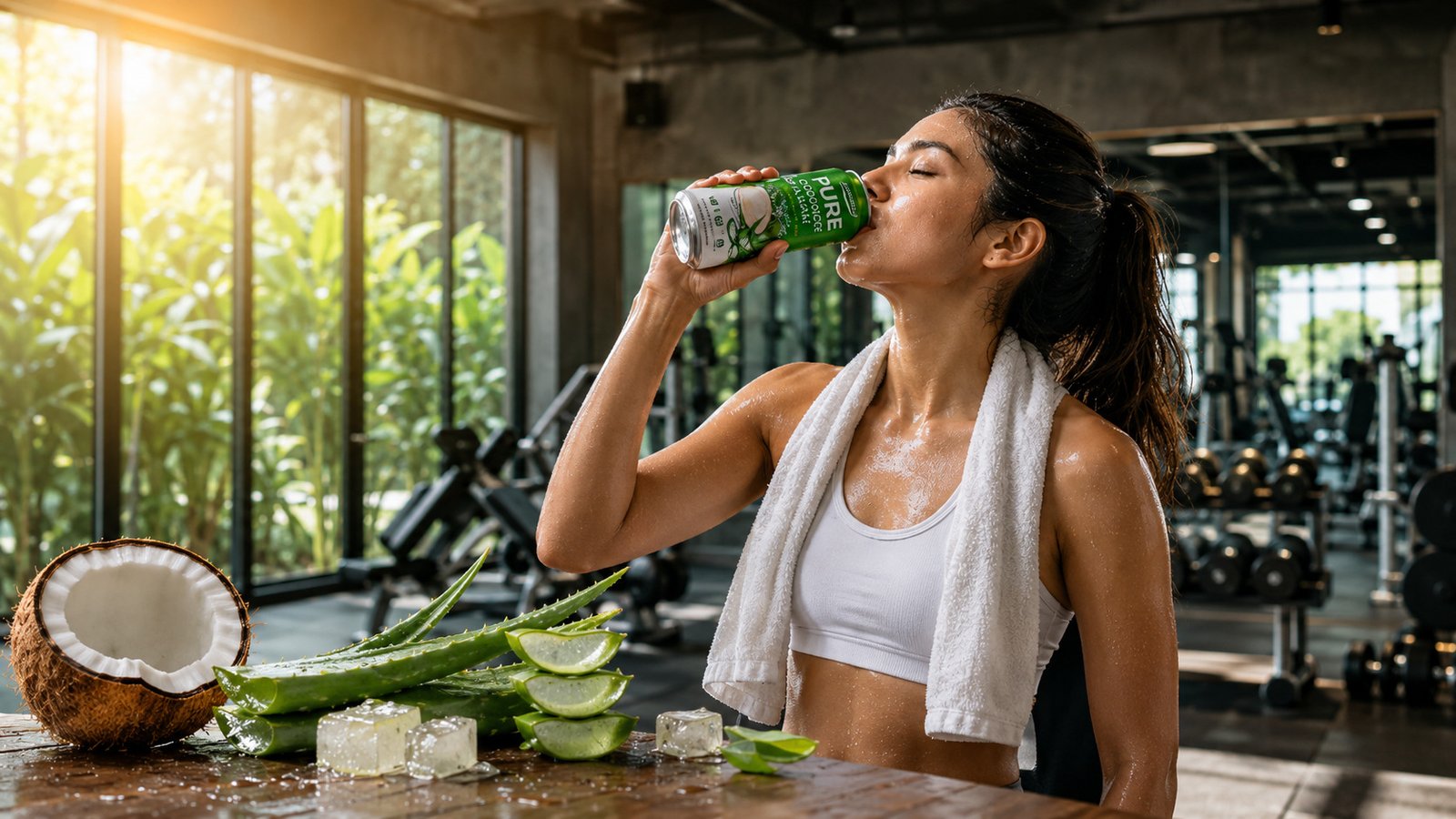
The fitness recovery occasion is the strongest current entry point. Coconut water’s electrolyte profile handles the post-workout hydration story; aloe vera gel’s anti-inflammatory properties extend the recovery narrative into gut and cellular health. For brands distributing through gym retail, sports nutrition specialty channels, or health food chains, this positioning is straightforward and credible. Products marketed as aloe coconut drinks or aloe vera coconut juice beverages are particularly effective in this space because they immediately communicate both hydration and wellness functionality.
But the category is broader than sports. In markets with strong Islamic consumer bases — the Middle East, Southeast Asia, parts of Africa — aloe vera and coconut juice combinations have been documented as a particularly strong option for Ramadan consumption, when rapid rehydration after long fasting periods is a priority. The digestive soothing properties of aloe vera gel are directly relevant to the fasting context. Distributors in these regions have a culturally resonant positioning opportunity that goes well beyond general wellness messaging.
The Asia-Pacific region currently leads the aloe vera drinks market with a 32.7% revenue share as of 2024. That dominance reflects both production infrastructure and consumer familiarity with aloe gel as a beverage ingredient — familiarity that has been built over decades in markets like South Korea, Japan, Vietnam, and Thailand, where aloe gel drinks are mainstream rather than niche. This creates both a strong home-market demand base and a production knowledge base for manufacturers in the region who export finished product globally.
Formulation and packaging considerations for importers
Before finalizing a sourcing agreement for a coconut water with aloe vera product, a few formulation decisions will shape the product’s commercial positioning and shelf performance.
Aloe vera gel piece size and concentration matter more than most buyers initially realize. A product with very low aloe vera content can still carry the ingredient on its label but won’t deliver a visible gel texture or enough acemannan — the bioactive polysaccharide — to support any meaningful functional claim. Reputable manufacturers will specify the aloe vera content as a percentage of total volume, confirm that inner fillet gel is used exclusively (rather than whole leaf extract, which can contain aloin compounds that affect both flavor and EU safety compliance), and define the standard gel piece dimensions so buyers know what the product will look and feel like before ordering a full run.
Gel piece size is also a consumer-facing decision that varies by market. Some markets prefer smaller, finely cut pieces that distribute evenly through the liquid; others prefer larger, more visible chunks that signal a generous aloe content and premium positioning. A capable OEM manufacturer can adjust piece dimensions to specification without changing the base formulation.
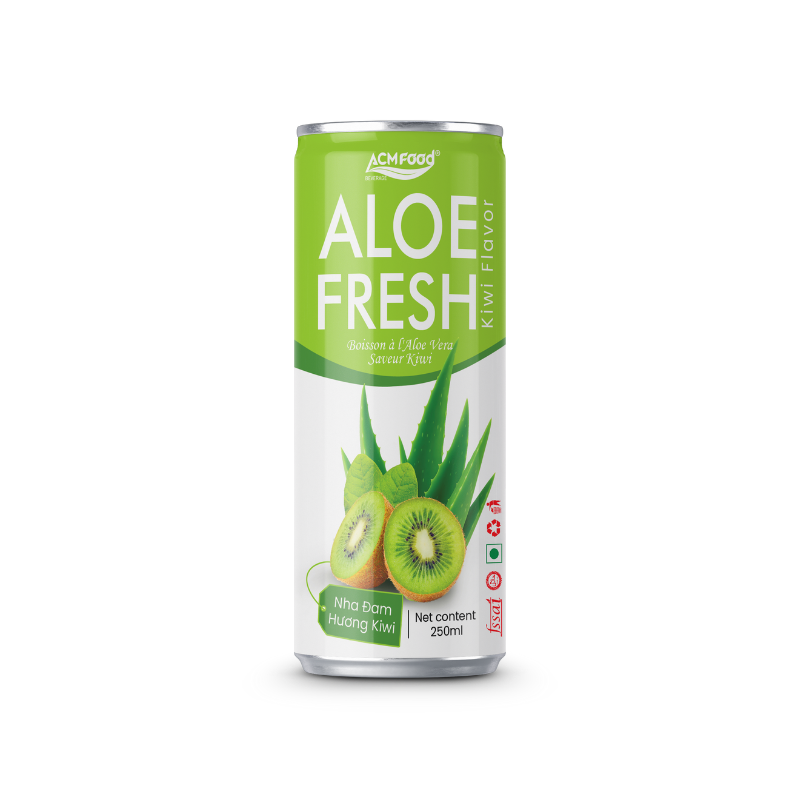
Canned format remains the strongest choice for international distribution of coconut water with aloe vera beverages. Cans protect the aloe gel pieces from light degradation, maintain the structural integrity of the gel texture through the pressure and temperature variations of multi-leg international freight, and arrive retail-ready without secondary packaging. They also carry a 12- to 18-month shelf life when properly sealed — giving importers sufficient margin for distribution and retail sell-through without time pressure.
In formulation discussions, buyers may also encounter variations labeled as aloe vera coconut juice, aloe vera and coconut, or aloe coconut water products. While the terminology changes slightly across markets, the core concept remains the same: combining coconut water or coconut juice with visible aloe vera gel for both texture and functional positioning.
Sourcing coconut water with aloe vera from Vietnam
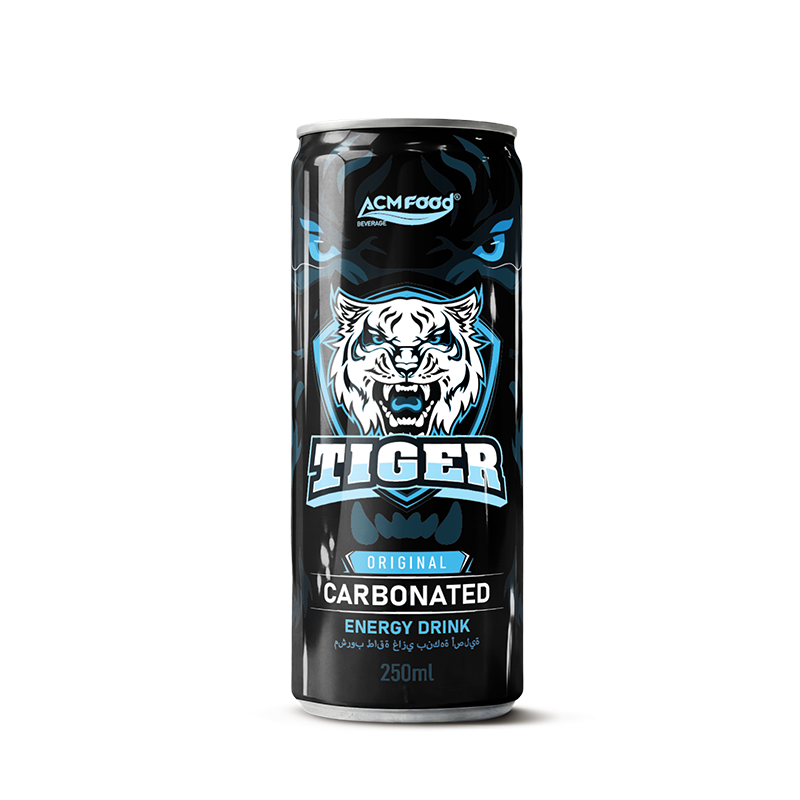
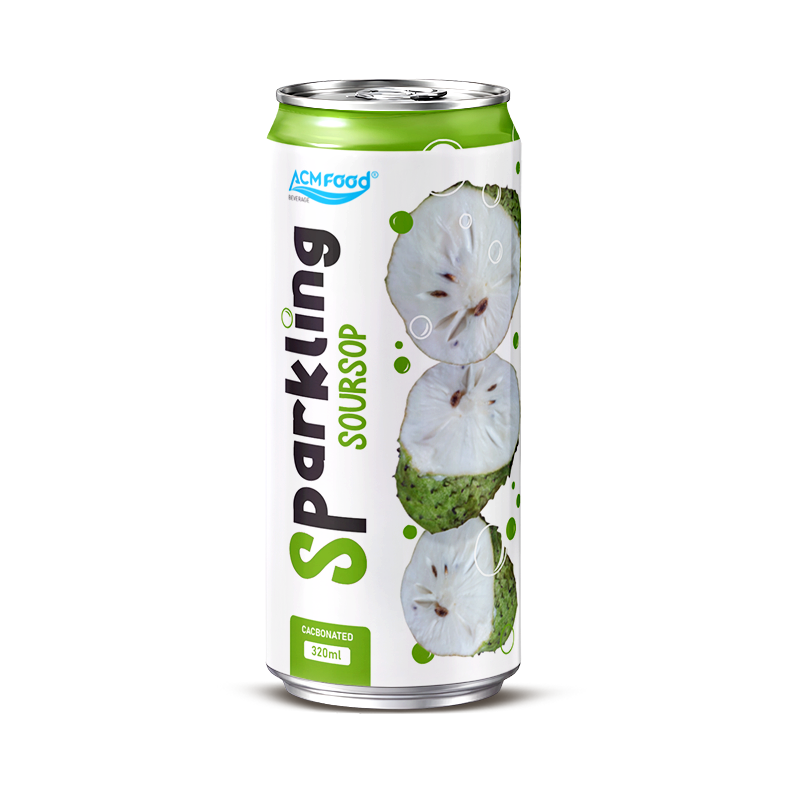
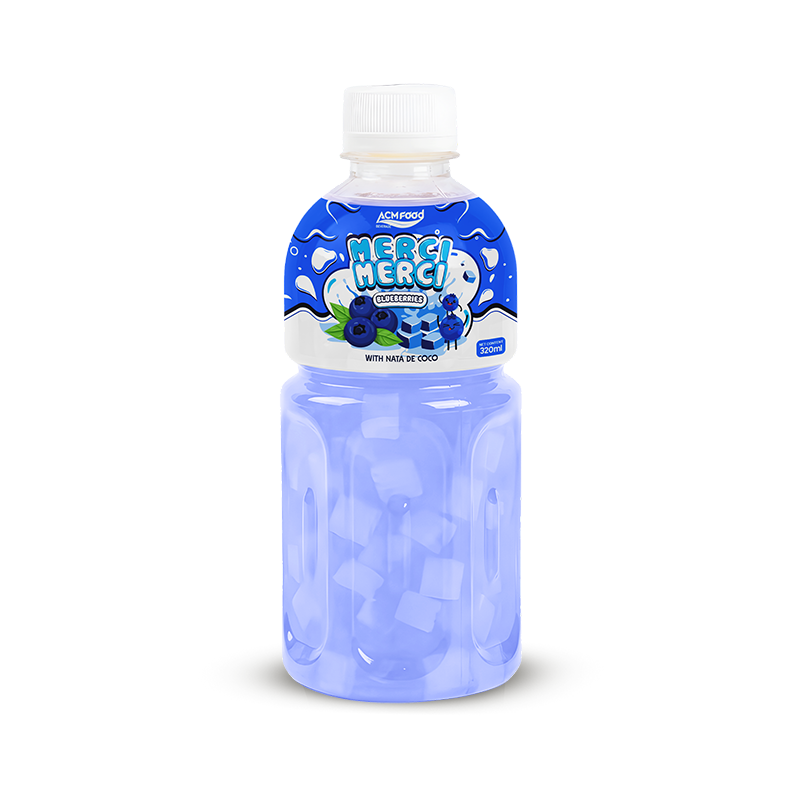
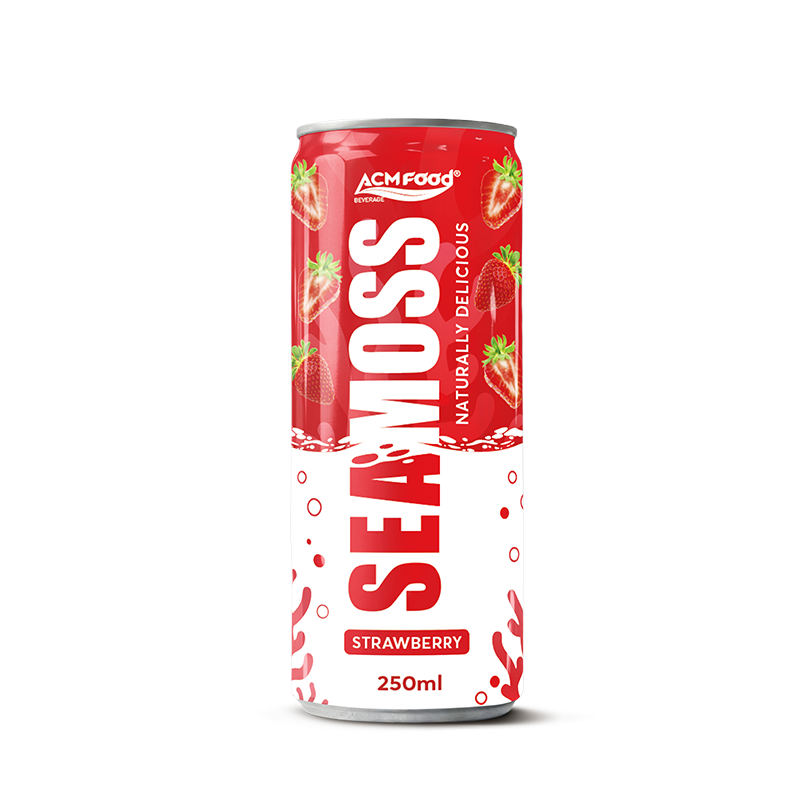
Vietnam is one of the stronger sourcing origins for this product — the Mekong Delta supplies high-quality young green coconuts, and aloe vera cultivation is established domestically, meaning both key ingredients come from the same supply base. ACMFOOD Beverage Co., Ltd., based in Ho Chi Minh City, is an OEM/ODM manufacturer that already runs both coconut water and aloe vera gel drink product lines, so the formulation capability and ingredient sourcing for a combined SKU are in place from day one. Their factory in Tan Phu Trung Industrial Park carries international certifications covering food safety, export compliance, and traceability — the documentation that regulated markets in Europe, North America, and the Middle East require — and with a production capacity exceeding 200 million bottles per year and an active export presence across 40+ countries, they can support a brand from initial market entry volumes through to full distribution scale without a supplier change mid-growth.
What to ask when evaluating a supplier for this product
A few questions that belong in any supplier qualification conversation for coconut water with aloe vera.
What is the aloe vera gel concentration by volume, and is inner fillet gel used exclusively? This determines whether the product can support any functional health claim and whether it will meet EU safety standards on aloin content.
What are the standard gel piece dimensions, and can they be adjusted? The size and density of aloe pieces directly affect the consumer’s texture experience — it’s a formulation decision, not just an aesthetic one.
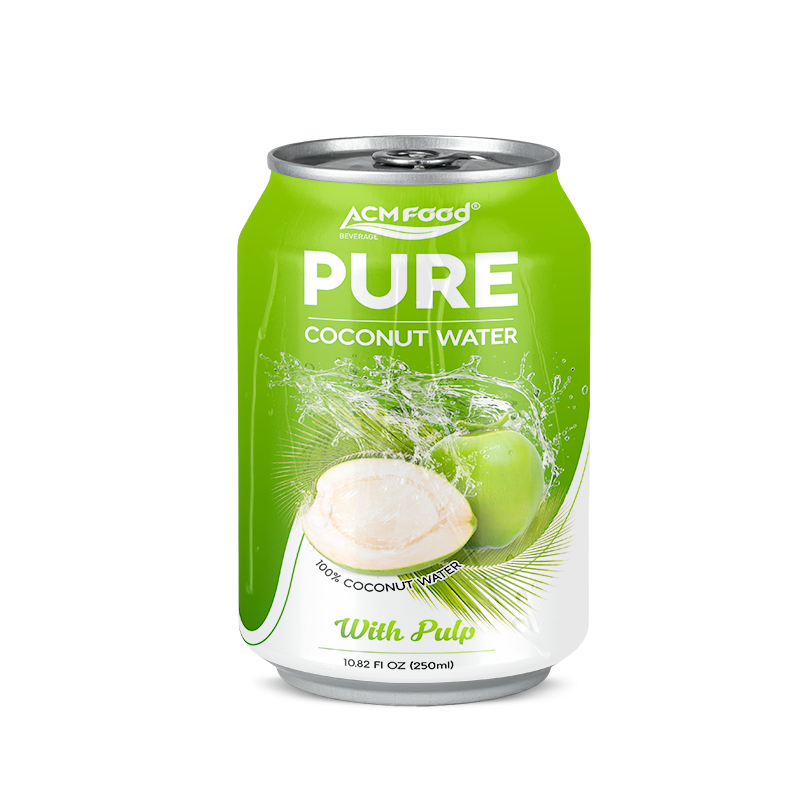
Is the coconut water base from fresh coconut water, not from concentrate? For clean-label positioning, this is the distinction that separates a premium product from a commodity blend — and it should be verified with lab documentation, not just a marketing claim.
What certifications cover the facility and the finished product for your specific target market? List them by name and confirm current validity.
Can they provide samples from a standard production run, not a specially prepared batch? The only accurate way to evaluate what your end consumers will actually receive is to taste what comes off the standard line, with the standard gel piece ratios intact.
The commercial case in brief
Coconut water with aloe vera is a product category with genuine consumer demand, a strong dual-ingredient health narrative, and a textural differentiation that no amount of branding alone can replicate. It’s not chasing a trend — it’s combining two independently growing ingredient categories into a formulation that is commercially differentiated without being unfamiliar.
For importers evaluating what to add to their beverage portfolio, the sourcing opportunity from Vietnam is real and accessible. Manufacturers like ACMFOOD offer the combination of certified production capability, formulation depth, and export experience that turns a product concept into a market-ready SKU — without requiring the importer to build ingredient or processing infrastructure from scratch.
Whether marketed as coconut aloe vera, aloe vera and coconut water, aloe vera juice coconut water, or a premium aloe coconut drink, the appeal comes from the same core strengths: hydration, wellness positioning, clean-label simplicity, and an enjoyable texture experience.
The ingredients work together. The texture sets the product apart. The question for any importer is whether this is the right moment to get positioned.
Data sources:
- USD 131.67M (2024) → USD 254.83M (2030), CAGR 11.7% → Source: Grand View Research — Global Aloe Vera Drinks Market report
- USD 5.1 billion (packaged coconut water market 2025) → Source: Global Growth Insights — Packaged Coconut Water Market Report
- 32.7% revenue share in Asia Pacific (2024) → Source: Grand View Research — same aloe vera drinks report as above
- 600 mg potassium per cup (coconut water) → Source: Remedy’s Nutrition blog, citing nutritional data