


 Français
 Español
 العربية
 한국어
한국어Aseptic filling vs hot fill describes two proven ways to make shelf-stable beverages, each shaping product quality, packaging choices, and operating costs in different ways. Hot fill sanitizes the container with product heat at the moment of filling, while aseptic filling sterilizes product and packaging separately and brings them together in a sterile environment.
This guide explains how each method works, what it does to taste, color, texture, and nutrients, how it limits or enables packaging, and how brands can choose the right path for juices, teas, functional drinks, plant-based beverages, and more. Where helpful, we link to deeper process resources relevant to fruit-based beverages and shelf stability.
What is the difference between aseptic filling and hot fill?
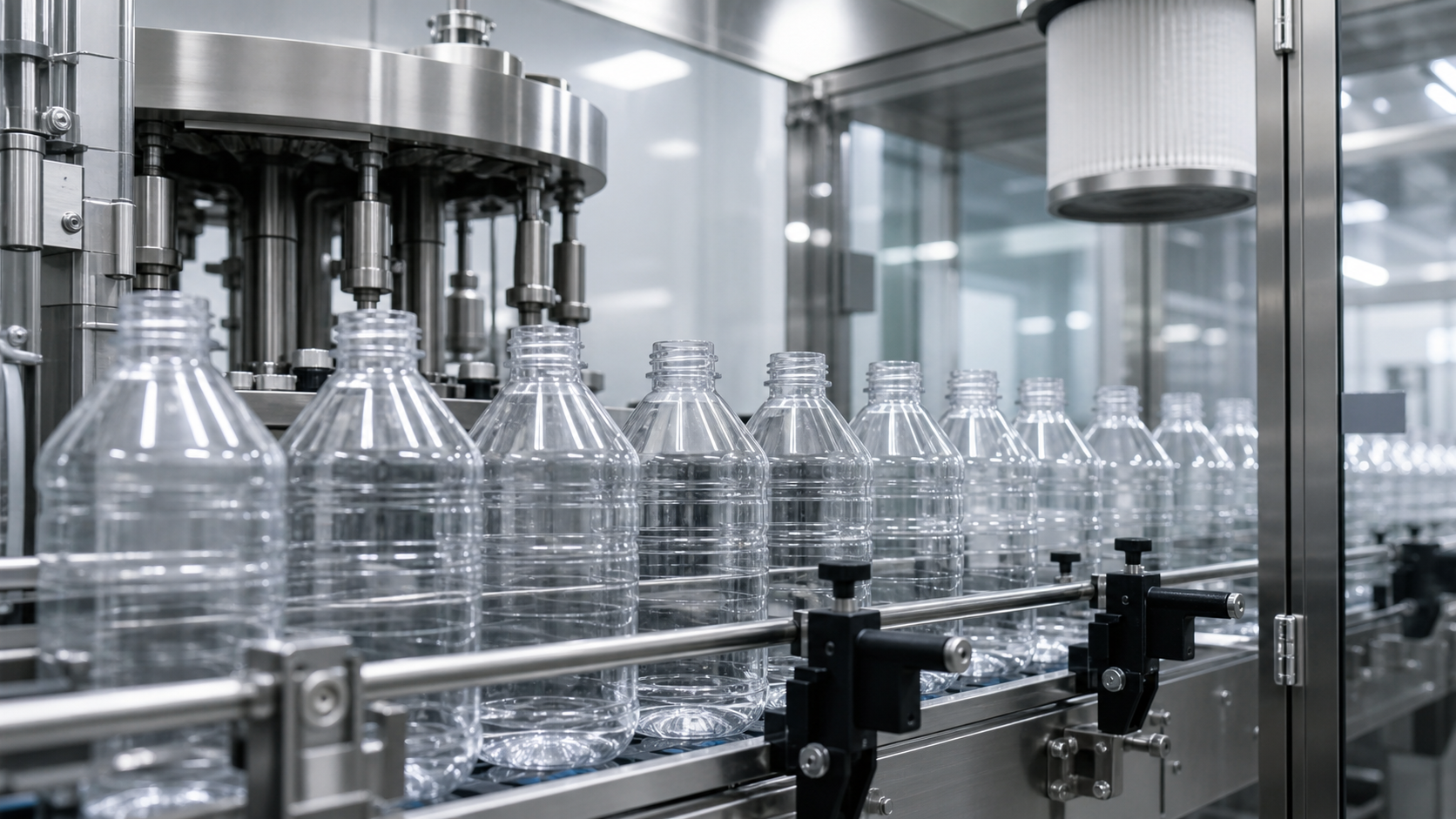
Aseptic filling sterilizes the beverage and the package separately, then fills in a sterile zone at ambient or cool temperature; hot fill relies on the hot product itself to sanitize the container at the moment of filling and capping. Both target commercial sterility, but they take very different routes.
At a high level, aseptic is a system: the product is thermally processed (often high-temperature–short-time), rapidly cooled, held sterile, and filled in a controlled enclosure with sterilized packages. Hot fill is an event: the product is heated, filled hot into clean containers, given a hold time to sanitize surfaces, then sealed and often inverted or tunnel-pasteurized/warmer-treated before cooling.
How each process typically works
These are simplified flows to highlight decision points for beverage developers. The exact steps and setpoints vary by recipe, equipment, and regulatory validation.
Aseptic filling: simplified flow
- Blend formulation with tight control of solids, acidity, and particulates.
- Deaerate and homogenize, if required for stability and texture.
- Rapid thermal process (e.g., HTST or UHT-equivalent) to achieve a validated lethality target.
- Instantaneous cooling to protect color, flavor, and nutrients.
- Hold in a sterile tank; maintain sterile barriers and pressure.
- Sterilize packaging (preforms, caps, closures, or cartons) with heat or chemical agents and verified residence time.
- Fill and cap in a classified sterile enclosure with HEPA-filtered air and environmental monitoring.
- Ambient storage and distribution once commercial sterility is confirmed for the lot.
Hot fill: simplified flow
- Blend and filter to target viscosity and particulates suited to hot fill performance.
- Heat the beverage to a validated hot-fill temperature for a defined time.
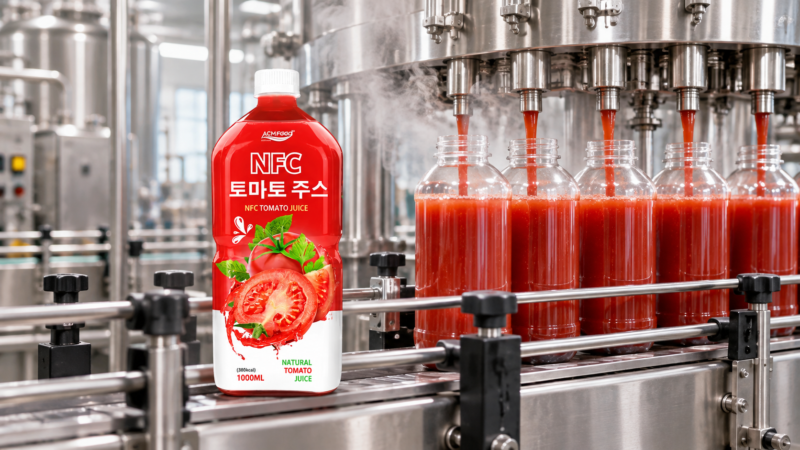
- Fill hot into clean containers; closure applied promptly.
- Optional inversion or short post-fill thermal step to ensure closure and headspace sanitation.
- Cool down (air tunnel or water spray) to protect package and retain quality.
- Ambient storage and distribution upon quality release.
For deeper background on thermal steps and fruit-base processing choices, see the overview of fruit juice processing methods and the step-by-step fruit juice manufacturing process.
What does aseptic filling do to your beverage?
Done well, aseptic filling often preserves fresher flavor notes, brighter color, and finer aromas because the thermal exposure can be shorter and cooling is fast. It also enables cold aseptic filling drinks with sensitive ingredients that are less tolerant of prolonged heat contact.
- Flavor & aroma: Rapid heating and immediate cooling can reduce cooked notes, helping delicate teas, citrus juices, and botanical blends keep livelier top notes.
- Color: Brighter appearance can be maintained when heat residence is minimized and oxygen pickup is controlled early.
- Texture & particulates: Aseptic systems can handle fine pulp and small inclusions, provided particle size, viscosity, and residence time are validated for lethality and flow.
- Nutrients & actives: Shorter exposure to elevated temperature may help retain heat-sensitive compounds, depending on formulation and processing conditions.
- Micro safety & shelf life: Commercial sterility is achieved through validated product lethality plus sterile packaging; finished goods are typically shelf-stable without refrigeration.
Considerations for developers:
- Formulation discipline: pH, water activity, solids, and particulates must stay within validated ranges; even small shifts can change lethality requirements.
- Deaeration and oxygen control: Removing dissolved oxygen upstream helps protect color, flavor, and sensitive botanicals.
- Enzyme and haze management: For some juices and teas, enzyme deactivation strategies are built into the heat step and need lab confirmation.
What does hot fill do to your beverage?
Hot fill uses product heat to sanitize the interior of the container, which can moderately cook or darken some beverages and soften certain top notes. When recipes are designed for hot fill, the result can be robust, stable, and cost-efficient.
- Flavor & aroma: May introduce rounded, cooked, or caramelized notes in sensitive juices or teas; spice and citrus top notes can soften.
- Color: Some darkening can occur; managing oxygen, solids, and hold time helps.
- Texture & particulates: Heavier pulp or large particulates can be challenging; many hot-fill lines prefer low to moderate viscosity with fine pulp.
- Nutrients & actives: Longer heat contact can reduce certain heat-sensitive compounds; recipes should be tuned accordingly.
- Micro safety & shelf life: Commercial sterility is achieved via validated hot-fill temperature/hold and closure sanitation; finished goods are shelf-stable.
Strengths of hot fill:
- Broad co-packer availability: Many plants worldwide offer hot fill for juices, teas, and sports drinks.
- Proven with compatible PET glass shapes: Standard hot-fill PET and glass formats have predictable performance.
- Simple packaging sterilization: Heat from the beverage sanitizes the container interior and closure interface.
Which products fit aseptic vs hot fill?
There is no one-size-fits-all choice. As a rule of thumb, more heat-sensitive beverages or formulations with fine particulates that need a gentler profile often lean aseptic; sturdy, high-acid profiles with simpler flavor top notes often work well with hot fill.
- Often good for aseptic: Delicate teas and botanicals; premium fruit juices and blends aiming for “just squeezed” character; dairy alternatives and protein beverages that need tight thermal control; sensitive functional drinks.
- Often good for hot fill: Many high-acid juices and nectars; isotonic sports drinks; robust tea profiles; spiced or cooked-note styles where added warmth is acceptable.
- Borderline cases: Pulp-in beverages and smoothies can work with either method depending on particle size, viscosity, and validated lethality.
For additional formulation context around fruit bases, see fruit juice blends for private label brands and broader types of beverages commonly produced at scale.
Impact on packaging, sustainability & costs
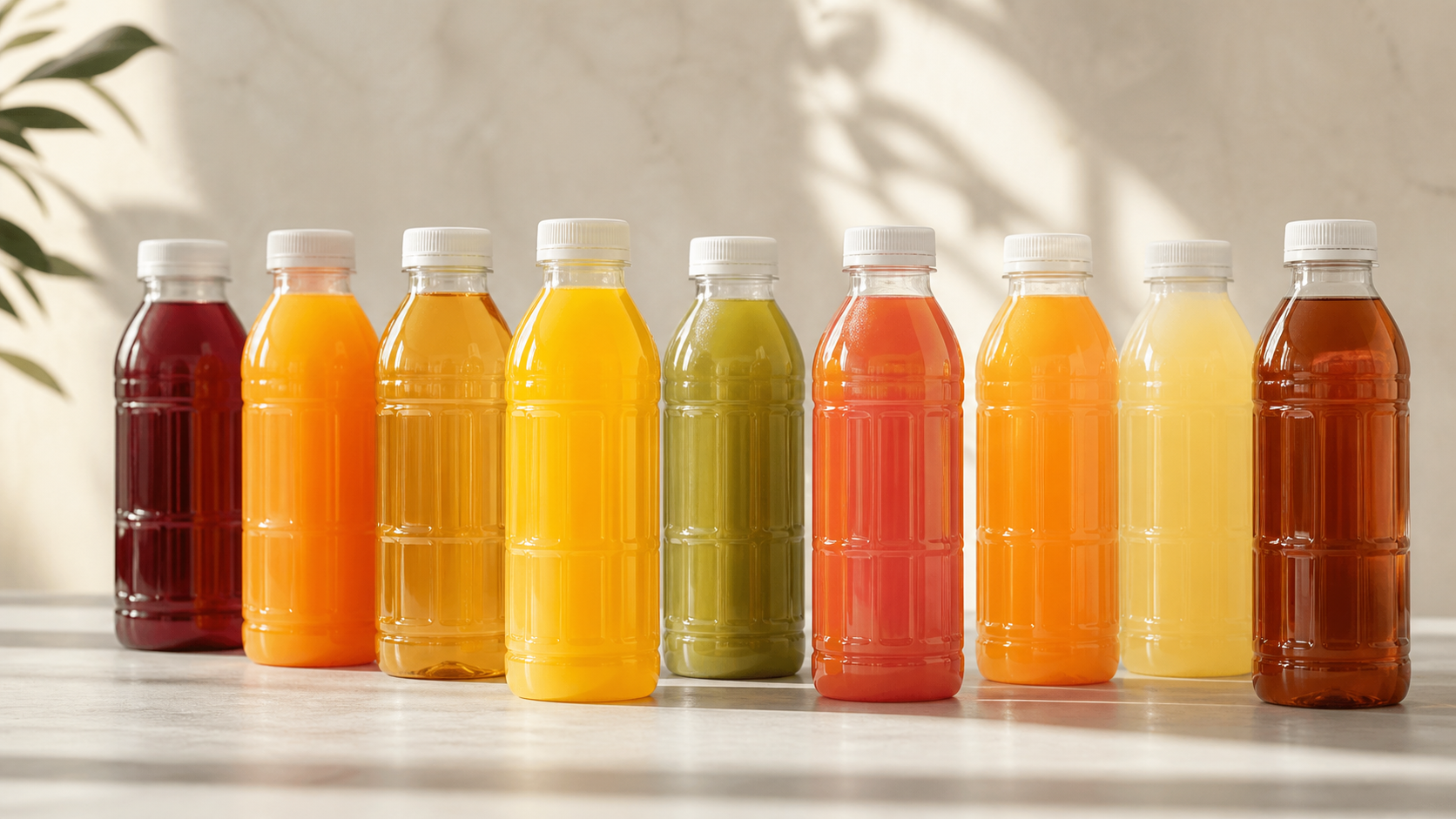
Packaging and cost signals often decide between aseptic filling vs hot fill as much as product quality does. Aseptic can unlock lighter packages and high clarity but needs sterile-ready materials; hot fill typically requires heat-tolerant containers and closures but can run with simpler front-end investments.
- Packaging options: Aseptic lines support sterilized PET, HDPE, or cartons designed for sterilant contact and barrier needs. Hot fill favors hot-fill–rated PET or glass that tolerates elevated filling temperatures and vacuum panels.
- Appearance and weight: Aseptic packaging can be lighter and clearer without hot-fill panels. Hot-fill PET often has reinforced geometry to manage deformation and vacuum.
- Energy profile: Aseptic concentrates heat in a fast thermal step and cools quickly; hot fill holds more energy in the product and container, then removes it during cooling. Actual energy balance depends on line design.
- Line speed & complexity: Aseptic requires sterile enclosures, packaging sterilization, and environmental monitoring. Hot fill can be simpler to operate but needs controlled handling during hot hold and cool-down.
- Changeover & cleaning: Aseptic involves validated clean-in-place and sterility requalification; hot fill changeovers can be shorter, but sanitation and allergen controls remain critical.
- Capital & availability: Aseptic lines are specialized and less common; hot fill is widely available among co-packers. Commercial terms vary by market.
| Dimension | Aseptic filling | Hot fill |
|---|---|---|
| Thermal approach | High-temperature–short-time, rapid cooling; sterile hold | Elevated fill temperature; product heat sanitizes container |
| Filling environment | Sterile enclosure with packaging sterilization | High hygiene; sterility achieved by hot product |
| Packaging | Sterilant-resistant PET/HDPE or cartons; clear, lightweight possible | Hot-fill–rated PET or glass; reinforced geometry common |
| Sensory impact | Gentler on delicate flavors, color, aromas | More cooked or rounded notes possible |
| Particulates | Supports fine pulp with validated sizes | Prefers low to moderate pulp, small particles |
| Oxygen management | Often integrated deaeration and low pickup | Variable; careful handling reduces pickup |
| Line complexity | Higher; sterile barriers and monitoring | Moderate; thermal control and cooling focus |
| Co-packer availability | More limited, specialized | Widespread globally |
| SKU flexibility | Strong for sensitive or premium profiles | Strong for robust, high-acid SKUs |
| Cost signals | Higher system complexity; package savings possible | Lower system complexity; heat-rated packaging costs |
To see how these choices play out in fruit-based supply chains for export, review our guide to shelf-stable juice manufacturing.
Quality and risk management checkpoints
Whether you choose aseptic or hot fill, commercial sterility and consistent quality depend on disciplined validation and routine monitoring.
- Validated lethality: Establish and document time–temperature profiles that achieve commercial sterility for your specific formulation and particulates.
- Packaging readiness: Confirm container and closure compatibility with either sterilants (aseptic) or hot-fill temperatures and vacuum (hot fill).
- Oxygen control: Deaeration, inert gas blanketing, and controlled headspace reduce oxidation and color shift.
- Environmental monitoring: For aseptic, verify sterile zone integrity, filtration, and sanitation effectiveness; for hot fill, track fill temperature, hold, and post-fill handling.
- Seam/closure integrity: Torque, application force, and seal checks prevent ingress.
- Retention samples & incubation: Hold back samples and follow your incubation regime to detect out-of-spec lots before release.
- Change control: Treat any formulation or process change (acidity, solids, particle size, equipment) as a revalidation trigger.
If you are qualifying a new co-packer, align on documentation and audit scope early. Use this checklist for supplier qualification documents and this guide to audit a beverage factory before pilot or first production.
Which is better: aseptic filling or hot fill?
Neither is universally better; the best choice matches your product’s sensory goals, formulation constraints, packaging vision, and commercial realities like co-packer access and MOQs. Start with product experience, then confirm feasibility and economics.
Decision questions to frame your choice
- What sensory target matters most? Bright, fresh, top-note–driven profiles tend to favor aseptic; rounded, cooked-friendly styles can succeed with hot fill.
- What’s your particulate plan? Validate sizes and viscosity for residence time and flow behavior in your chosen method.
- Which package is strategic? Ultra-clear, lightweight PET or premium cartons may point to aseptic; classic hot-fill PET or glass may align with hot fill.
- How available are lines? If timelines are tight, hot fill’s broader availability can de-risk launch; if differentiation is key, specialized aseptic partners may be worth the search.
- What are your sustainability levers? Consider total materials, energy, and secondary packaging across the system—not just container weight.
Transitioning from hot fill to aseptic (or vice versa)
Brands often shift methods as they scale or reposition quality. Expect a structured development and validation path.
- Define target experience: Lock the sensory brief and packaging intent before engineering tradeoffs.
- Audit process limits: Map thermal windows, particulate specs, oxygen targets, and packaging constraints for both methods.
- Pilot runs: Conduct small batches to compare flavor, color, and stability under your real distribution conditions.
- Micro validation: Reconfirm lethality for your exact formula, measuring the worst-case particulate and viscosity.
- Shelf-life program: Use real-time and accelerated studies with defined acceptance criteria.
- Commercial readiness: Align on change control, artwork statements, and any market-specific labeling impacts.
For fruit-forward SKUs, these steps align with the broader decisions outlined in fruit juice processing methods and export-focused shelf-stable juice manufacturing.
Labeling and claims considerations
Neither aseptic nor hot fill inherently grants specific marketing claims. Allowable on-pack statements depend on your final formula, verified nutrient levels per serving, and local regulations. If you plan quality or process cues on pack (for example, descriptions of heat treatment), verify their acceptability with your regulatory counsel and ensure they match your validated process.
Working with co-packers and equipment
Partner selection often decides feasibility, speed, and long-term cost. Aseptic partners bring sterile-packaging and validation expertise; hot-fill partners bring proven throughput and a wide choice of bottle geometries. In both cases, secure a clear product brief, line specifications, packaging drawings, and a shared validation plan before committing to a launch schedule.
- Run windows & MOQs: Confirm practical run rates, heat-up/cool-down time, and lot-size economics for each method.
- Packaging supply: Align on resin, preform or carton sterilization, closures, and barriers.
- Testing protocols: Agree on in-process checks and release criteria—fill temperature, Brix, acidity, oxygen, closure torque, sterility tests, and incubation.
- Changeover fees: Understand cleaning, sterilization, and allergen protocol impacts on scheduling and cost.
For teams new to fruit beverages, our process walkthrough on the fruit juice manufacturing process can help build aligned expectations before technical calls.
Practical examples (non-exhaustive)
These scenarios show why teams choose one method over the other, without implying universal rules.
- Premium citrus blend with bright aromatics: Often better protected by aseptic, given the sensitivity of top notes and color to extended heat.
- Classic apple juice with modest pulp: Commonly produced via hot fill in heat-rated PET or glass, with robust flavor stability across distribution.
- Delicate brewed tea with botanicals: Aseptic can help retain aromatic lift while keeping clarity and low haze, provided filtration and enzyme control are addressed.
- Spiced fruit drink for ambient retail: Hot fill may be sufficient and cost-effective if the profile embraces light cooking notes.
For coconut-water or similar light-bodied beverages, the choice depends on desired flavor brightness and packaging. As a reference for coconut-based projects, see our overview of coconut water supplier options and manufacturing paths.
Common pitfalls to avoid
Most launch delays trace back to misaligned expectations between the desired sensory profile and process realities. These pitfalls are preventable with early cross-functional work.
- Under-specifying particulates: Large or irregular pieces can invalidate lethality calculations or clog equipment—define maximum particle size and distribution.
- Ignoring oxygen until late: Once color browning or aroma loss is visible, it’s hard to recover—set oxygen specs and controls up front.
- Assuming packaging is plug-and-play: Sterilant resistance (aseptic) or heat & vacuum tolerance (hot fill) must be proven on your actual bottle or carton.
- Skipping incubation or retention plans: A robust hold-and-release system protects your brand and retail partners.
- Changing formulas mid-validation: Even small shifts in acidity or solids can require revalidation—freeze the recipe before the final plant trial.
For export-focused programs, align quality systems and documentation early. These checklists for supplier qualification documents streamline approvals and reduce surprises during audits.
FAQs about aseptic filling vs hot fill
Can I get the same flavor using either method?
You can get close, but not identical. Aseptic’s shorter thermal exposure can better preserve delicate top notes, while hot fill may round flavors slightly. Pilot both, then choose based on blind sensory and shelf-life results.
Does aseptic always cost more than hot fill?
Not always. Aseptic lines are complex, but potential savings from lightweight packaging and quality differentiation can balance higher line costs. Availability of co-packers, MOQ, and logistics will ultimately determine your total landed cost.
Is glass better for hot fill?
Glass tolerates elevated temperatures and is widely used for hot fill, especially for premium positioning. Many brands also use hot-fill–rated PET with vacuum-panel designs. The better choice is the one aligned with your brand, distribution, and cost model.
Can aseptic handle pulp and small inclusions?
Yes, within validated limits. Particle size, shape, and viscosity must be validated to ensure proper flow and lethality. Early bench work and pilot trials set the right specifications.
Which should I choose for export markets?
Start from your sensory and packaging goals, then check co-packer availability, logistics temperature profiles, and documentation needs. Our export-focused guide to shelf-stable juice manufacturing highlights typical decision points.
Key takeaways
– Aseptic filling often protects bright, delicate sensory profiles and opens lighter packaging, at the cost of higher system complexity and specialized partners.
– Hot fill is widely available and robust for many high-acid beverages, with some trade-offs in color and top notes.
– The right answer depends on your formulation, packaging strategy, and commercial constraints. Validate with pilots before committing.
If you are comparing suppliers or preparing for trials, align your technical brief, audit scope, and document pack early. Use our resources on how to audit a beverage factory and required supplier qualification documents to reduce time-to-launch and de-risk quality.