


 Français
 Español
 العربية
 한국어
한국어To import beverages into Colombia, you must obtain INVIMA sanitary registration or notification, comply with Spanish labeling (including front-of-pack warnings), and clear customs with DIAN under the correct HS code in Chapter 22. The practical path involves 12 steps—plan them early to avoid relabeling or port delays.
This guide focuses on operational details importers actually use, from dossier prep to the first commercial release. For context on demand and channel dynamics, see our Colombia market overview.
What does INVIMA require before beverages can be sold?
INVIMA generally requires a valid sanitary authorization—either a sanitary registration or a sanitary notification—before a beverage can be commercialized in Colombia. The exact route depends on product risk and category; the label must meet current Colombian rules, and documentation must match the approved formulation.
- Sanitary registration or notification: Required with INVIMA prior to sale. Scope and timelines differ by beverage type and risk classification.
- Labeling compliance: Spanish label must meet Colombian technical regulations and current nutrition/front‑of‑pack requirements. INVIMA can verify during market surveillance and document review.
- Traceability: Lot coding, shelf‑life, and manufacturer/importer identification are expected on pack and in records.
- Formula and specifications: Your dossier typically includes ingredients, processing overview, quality specs, and certificates from the country of origin aligned with the approved product.
How to import beverages into Colombia (step-by-step)
Follow these steps in order to reduce relabeling risk and speed up your first shipment.
- Define product scope and HS code candidate. Determine whether you are shipping 100% juice, nectar, energy drink, carbonated soft drink, water, or alcoholic beverage. Pre‑classify under the appropriate HS heading in Chapter 22 (e.g., 2202 for many non‑alcoholic beverages, 2009 for juices) to map duties, taxes, and permits.
- Appoint a Colombian importer and customs broker. The importer of record must be established in Colombia, typically with RUT registration at DIAN (Dirección de Impuestos y Aduanas Nacionales). Engage a licensed customs broker to prepare the Declaración de Importación and coordinate with terminals like Cartagena, Buenaventura, or Barranquilla.
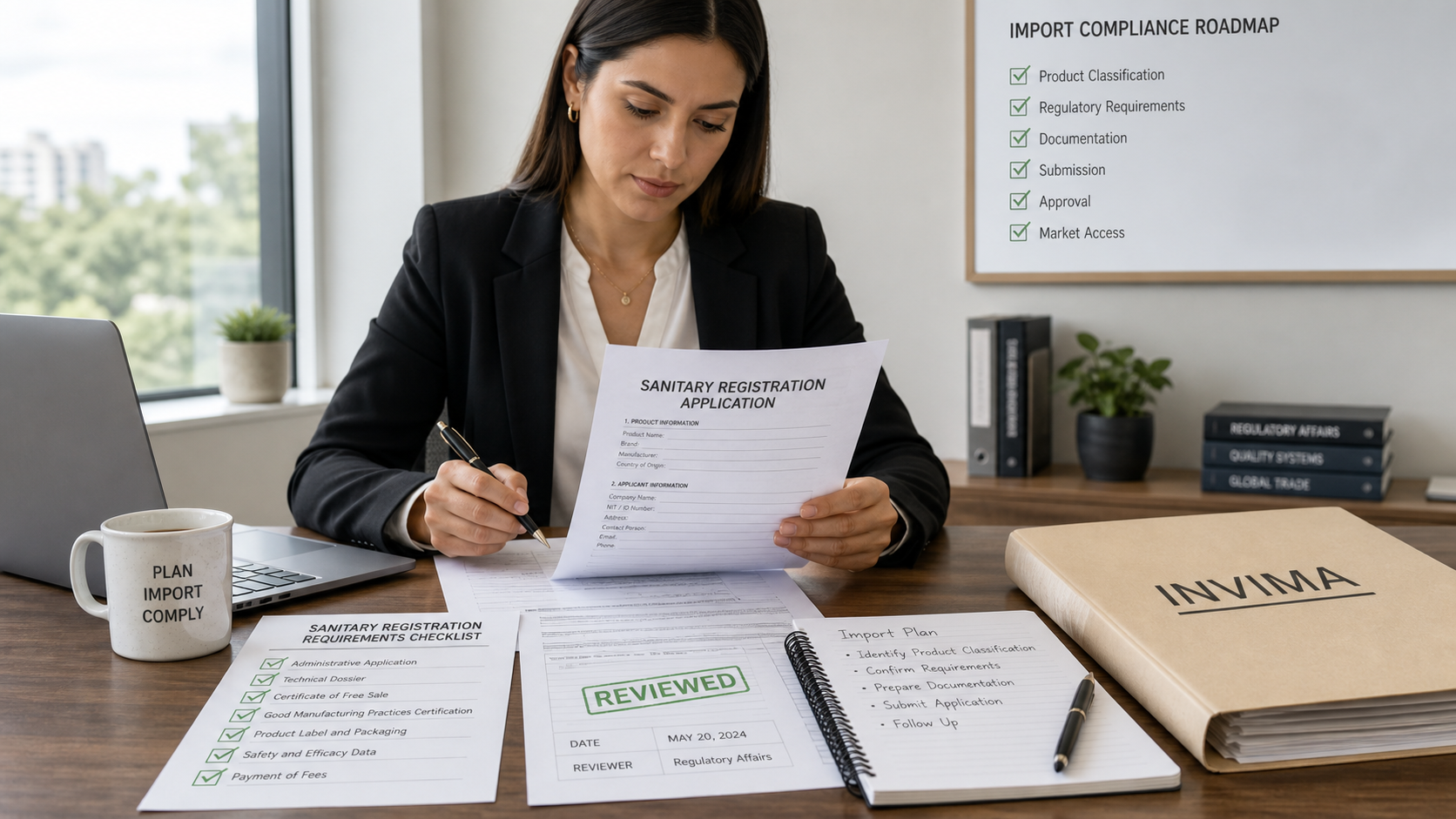
- Confirm regulatory pathway with INVIMA. Identify whether your beverage requires sanitary registration or sanitary notification. Clarify dossier content, testing needs (if any), and whether stability data or challenge studies are relevant to your category.
- Assemble the technical dossier. Prepare the formula, ingredient specs, manufacturing flow, quality standards, certificates of free sale/origin where applicable, and shelf‑life rationale. Ensure that supplier documents from the manufacturing site align with the product that will be shipped.
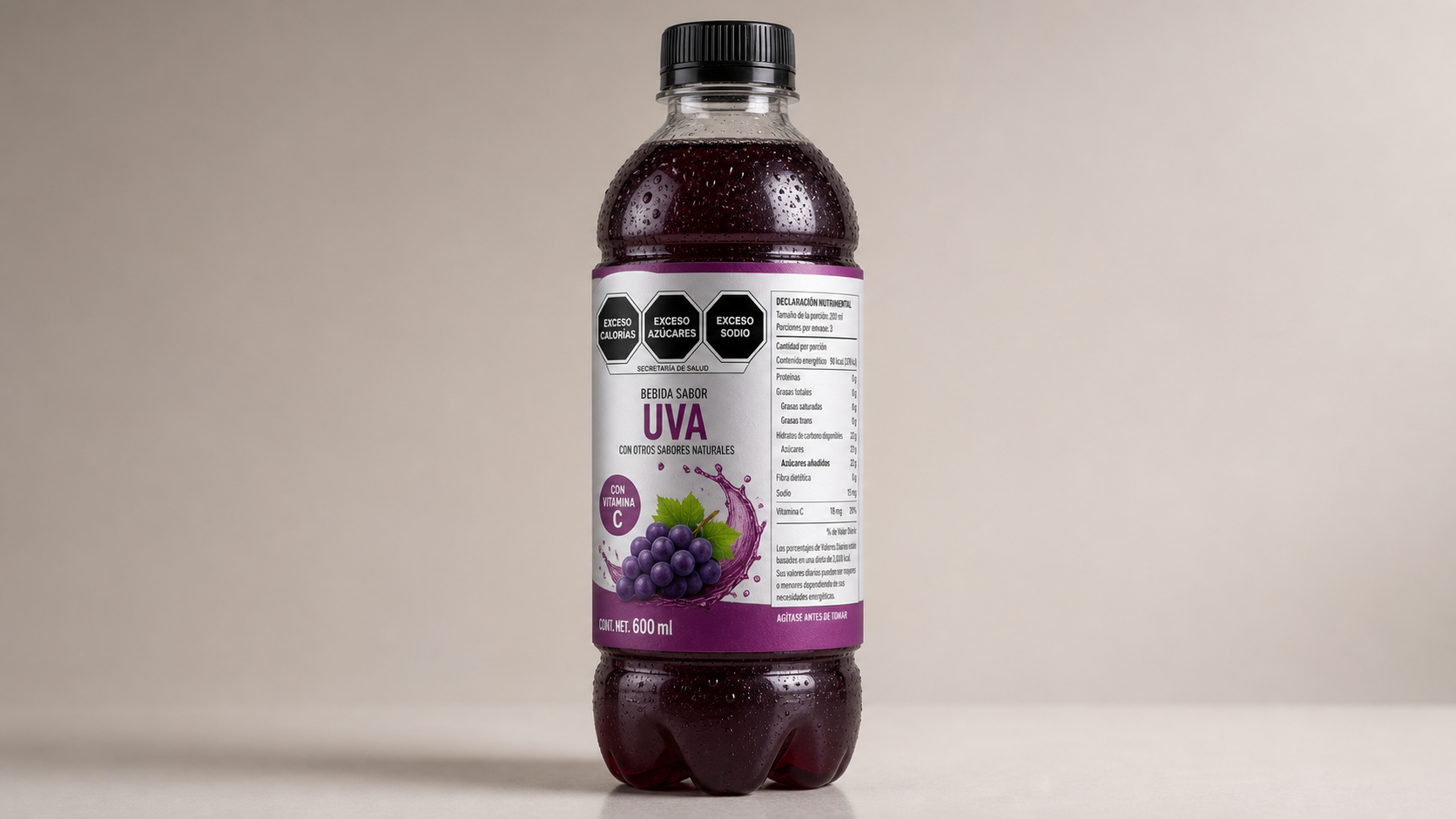
- Develop a compliant Spanish label. Build your label around Colombian requirements: product name, net content in metric, ingredient list and allergens, nutrition facts, lot and date marks, importer name and address in Colombia, and any mandatory front‑of‑pack warnings.
- Address front-of-pack warning labels. Colombia participates in the region’s move toward warning labels for nutrients like sugars, sodium, and saturated fat. Final shape, size, and nutrient thresholds are rule‑specific—review our regional primer Front‑of‑Pack Warning Labels in Latin America and confirm current Colombian specifics before artwork lock.
- File with INVIMA and monitor status. Submit the sanitary registration/notification via the appropriate channel and monitor for observations. Respond promptly with clarifications or updated documents if requested.
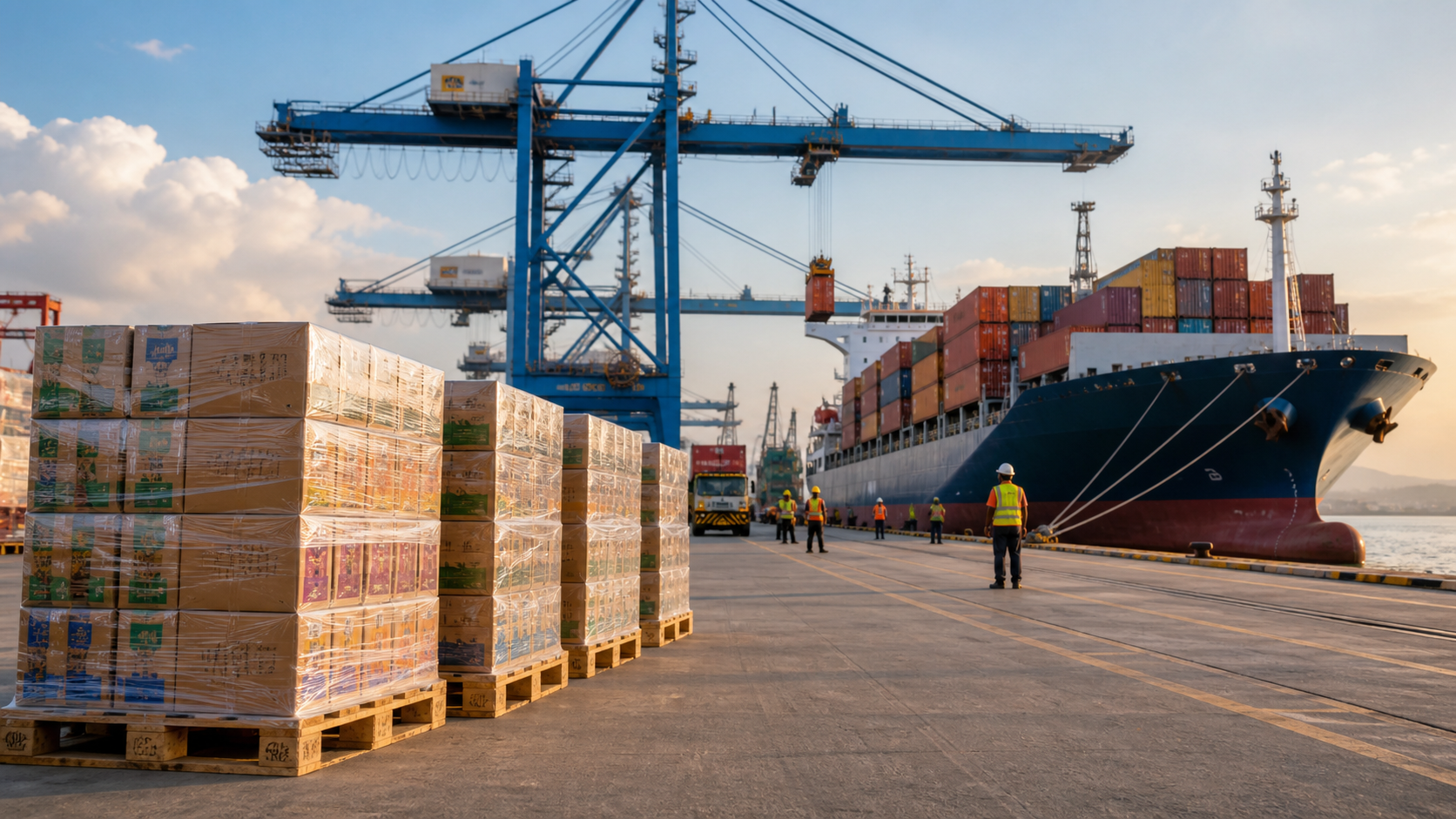
- Plan logistics and select port. Choose routing to a suitable terminal—Cartagena (Caribbean), Buenaventura (Pacific), or Barranquilla (Caribbean)—based on origin, carrier schedules, and your inland distribution plan. Align palletization, load security, and temperature control to the product’s needs.
- Prepare pre-shipment documentation. Typical sets include commercial invoice, packing list, bill of lading/air waybill, sanitary or free sale certificates (as relevant), and the label mockup or approved label. Match the final shipped goods to the approved formulation and label.
- File the DIAN import declaration. Your broker registers the import declaration (Declaración de Importación) and tariff classification, calculates duties and taxes, and schedules inspections if assigned. Keep data consistent across invoice, packing list, and the declaration.
- Customs & sanitary controls upon arrival. DIAN may assign physical or document inspection. INVIMA can perform sanitary verification, including label checks and, where applicable, sampling. Maintain cold chain or ambient stability through all terminal operations.
- Post-clearance release and market launch. Store under suitable conditions, retain traceability records, and ensure all sales units carry the compliant Spanish label. Keep your INVIMA authorization current and update it if formulation, manufacturing site, or labeling changes.
Colombia beverage import requirements and documents checklist
These are the documents and data points importers typically compile for beverages in Colombia. Use this as a working checklist with your broker and regulatory advisor.
- Importer’s RUT (DIAN) registration and broker appointment
- HS code confirmation for the specific beverage
- INVIMA sanitary registration or sanitary notification (as applicable)
- Spanish label artwork aligned to Colombian rules and front‑of‑pack warnings
- Commercial invoice and detailed packing list (units, net content, packaging)
- Bill of lading or air waybill; freight & insurance terms
- Certificate of free sale and/or sanitary certificate from country of origin, if required
- Manufacturer’s product specs, ingredient list, and shelf‑life statement
- Lot coding format, expiry/best‑before dating convention
- Power of attorney for customs broker, when required
- Any permits/authorizations routed via Colombia’s VUCE single window if applicable
Labeling for drinks in Colombia: what to plan into your artwork
Your Spanish label must reflect Colombian technical regulations and current front‑of‑pack warning rules, in addition to general claims, metrology, and presentation rules. Always confirm the most recent resolutions and guidance in force at the time of print.
- Language & identity: Product name in Spanish and appropriate sales description for the category.
- Net content: Metric units (e.g., mL, L) with typographic rules defined by Colombian metrology standards.
- Ingredient list: Order by weight; highlight allergens as required.
- Nutrition facts: Format per Colombian nutrition labeling rules; harmonize serving size with category conventions.
- Importer details: Legal name and address in Colombia; manufacturer site and country of origin where required.
- Lot & date marks: Legible lot code and expiry/best‑before aligned to shelf‑life validation.
- Front-of-pack warnings: Colombia applies warning labels within the broader Latin American framework. For scope, placement, and thresholds, review Front‑of‑Pack Warning Labels in Latin America and confirm the current Colombia‑specific parameters.
- Claims governance: Only make nutritional or other claims you can substantiate and that remain permissible under Colombian law.
Duties, taxes, and cost elements at a glance
Budget at SKU level and validate with your broker under the final HS code and valuation method. Figures vary by category, packaging, and trade programs.
- Import duty: Ad‑valorem rates depend on the 10‑digit tariff line assigned by DIAN.
- VAT (IVA): Many beverages are subject to VAT at the standard rate established in Colombia; confirm exemptions or reduced treatments for specific categories.
- Excise taxes: Alcoholic beverages have specific consumption taxes. Colombia has also legislated taxes related to sugar‑sweetened beverages; applicability depends on product profile and current enforcement.
- Port & terminal fees: Handling, storage, and inspection charges apply and differ by port (Cartagena, Buenaventura, Barranquilla).
- Logistics & compliance: Inland freight, label rework (if required), broker fees, dossier costs, and any testing.
Where should you land the cargo? Ports and routing tips
Choose the gateway that best fits your origin and distribution plan.
- Cartagena: Major Caribbean hub with frequent services and extensive container capacity; good connectivity to northern and central Colombia.
- Buenaventura: Pacific access for Asia‑Pacific routings; consider weather patterns and inland haulage to Bogotá and interior markets.
- Barranquilla: Caribbean option for certain services and regional distribution.
Coordinate reefer or insulated solutions for temperature‑sensitive SKUs. For broader logistics considerations, see our page on Colombia market overview and consult your forwarder for current schedules.
Product formats, permits, and labeling focus (quick comparison)
| Beverage category | Likely permits | Label focus | Positioning & notes |
|---|---|---|---|
| 100% juices (ambient) | INVIMA sanitary authorization | Spanish name, ingredient declaration, nutrition facts, lot/date | Check fruit content naming conventions and shelf‑life claims |
| Nectars & juice drinks | INVIMA sanitary authorization | Front‑of‑pack warnings if thresholds are exceeded | Clarify fruit content and sweeteners on label |
| Carbonated soft drinks | INVIMA sanitary authorization | Warnings if sugars/sodium/saturated fat exceed thresholds | Stability of carbonation and closure integrity |
| Energy & sports drinks | INVIMA sanitary authorization | Ingredient disclosure and applicable warnings | Evaluate caffeine and sweetener disclosures |
| Bottled water (still/sparkling) | INVIMA sanitary authorization | Source description, treatment, lot/date | Microbiological specs and packaging materials |
| Alcoholic beverages | INVIMA scope plus excise considerations | Alcohol by volume, health warnings per rules | Route specific excise and territorial rules |
Quality, shelf-life and climate: design for success
Colombia’s tropical climate and varied elevations can stress beverages during storage and distribution. Build stability into the product and pack from the start.
- Thermal & transport stability: Validate for heat and vibration across sea, port, and inland legs.
- Packaging selection: Choose closures and barrier materials suited to carbonation, acidity, and light sensitivity.
- Date coding: Make codes legible and durable through humidity and handling.
- Storage conditions: Document recommended ranges on label and trade materials; align with distributor SOPs.
Common pitfalls and how to avoid them
- Late label lock: Artwork finalized without Colombia‑specific warnings or importer address often triggers relabeling. Freeze art after a regulatory check.
- Mismatch between dossier and shipment: Ingredients or suppliers differ from the approved file. Keep strict change control and update your authorization when needed.
- HS code misclassification: Leads to under/overpayment of duty and clearance delays. Validate with your broker before production.
- Ignoring port reality: Terminal storage accrues quickly. Pre‑book inspections and arrange transport in advance.
FAQ: practical questions importers ask
Do I need a local importer of record?
Yes. The importer of record is a Colombian entity registered with DIAN and typically works with a licensed customs broker.
How long does the sanitary authorization take?
Timelines vary by product category, dossier completeness, and INVIMA workload. Plan lead time into your launch calendar and monitor for observations.
Can I ship samples before full registration?
Non‑commercial samples may be possible under restricted conditions and quantities. Coordinate closely with your broker and confirm what documentation INVIMA and DIAN will accept for sampling.
Are front-of-pack warnings mandatory for all drinks?
They apply when nutrient thresholds in Colombia’s rules are exceeded. Review our regional primer and confirm Colombia’s current thresholds and design parameters before printing labels.
Who enforces customs and taxes?
DIAN administers customs and taxation, including import declarations and applicable duties and VAT. INVIMA oversees sanitary aspects and market surveillance for foods and beverages.
Information for brands and buyers
Colombia is a regulated market with clear responsibilities split between DIAN (customs/tax) and INVIMA (sanitary oversight). Start with the right HS code, design labels specifically for Colombia, and secure the correct INVIMA pathway before production. For regional comparisons, see our Chile market page and our Colombia market overview. Align your brokers, forwarders, and regulatory advisors early—this prevents relabeling, storage charges, and missed launch windows.
Sources
- Instituto Nacional de Vigilancia de Medicamentos y Alimentos (INVIMA) – official sanitary authority for foods & beverages
- Dirección de Impuestos y Aduanas Nacionales (DIAN) – customs and tax authority
- Ministerio de Salud y Protección Social – technical regulations and labeling framework