


 Français
 Español
 العربية
 한국어
한국어Front-of-pack warning labels in Latin America are mandatory symbols that flag when a drink exceeds set nutrient thresholds. Today, six major markets—Chile, Mexico, Peru, Colombia, Brazil, and Argentina—require these warnings on beverages sold locally.
This guide explains how the systems work, how they differ, and what they mean for drink formulation, label design, and market entry. It compares the octagon-style warnings used in several countries with Brazil’s magnifying-glass symbol, and clarifies where rules do and do not apply—such as the absence of this system in Venezuela.
What are front-of-pack warning labels in Latin America?
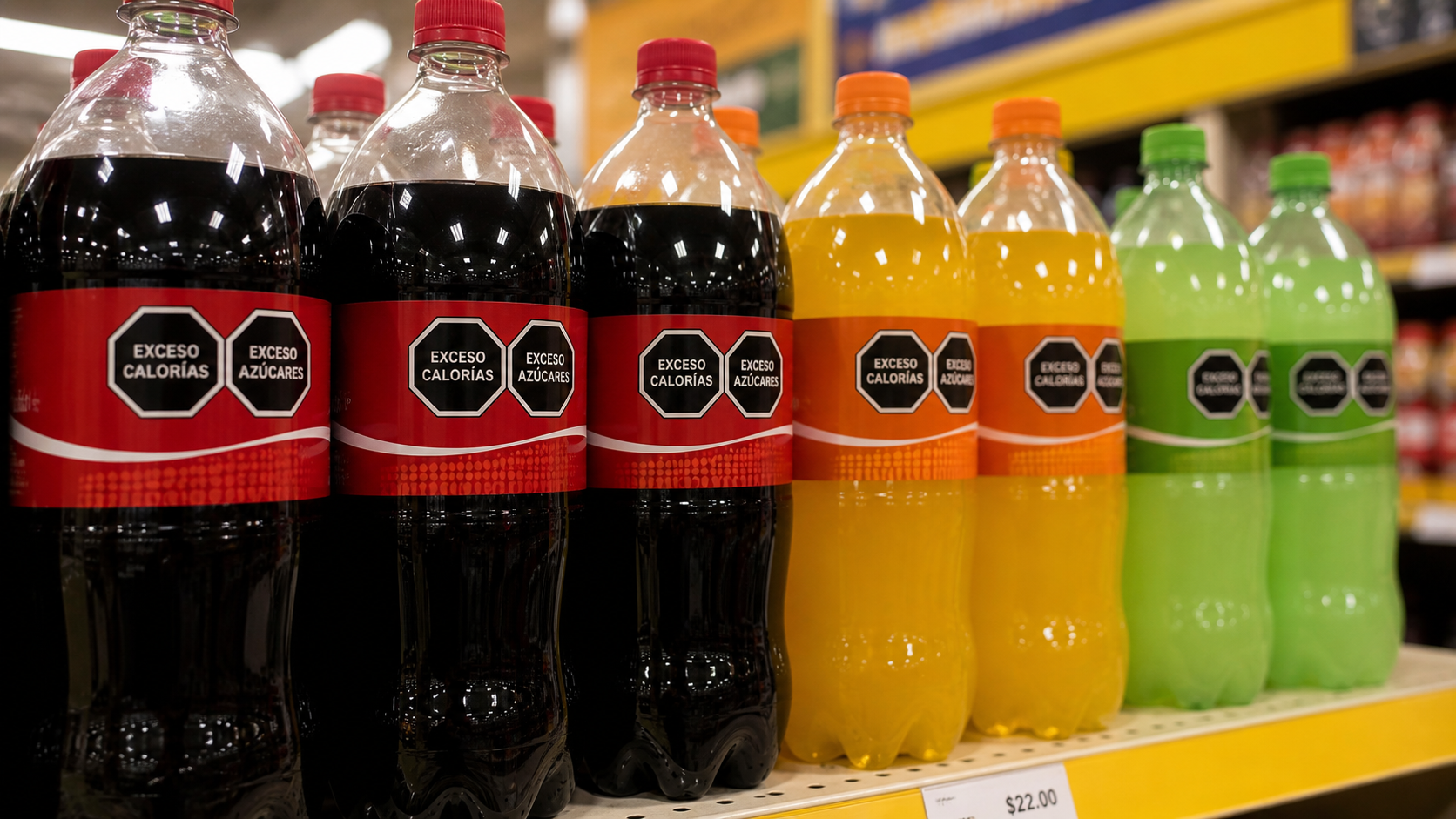
They are government-mandated symbols displayed on the principal display panel of packaged foods and drinks to signal when a product exceeds certain nutrient thresholds. Most systems highlight added sugars, sodium, saturated fat, and calories; some also require statements related to caffeine or sweeteners.
Although the underlying logic is shared—make high-risk nutrient content highly visible—each country sets its own criteria, wording, artwork, and enforcement scope. For beverages, this often centers on sugars and energy density, with additional rules for sodium (e.g., tomato juice or functional drinks), and, in some markets, conditions for sweeteners or caffeine.
How do these labels apply to drinks?
In practice, drinks are among the most frequently impacted categories because sweetened beverages can quickly exceed national thresholds for sugars and energy. Where applicable, products may carry one or more warnings depending on formulation (for example, “high in sugars” or “excess calories”).
Category definitions matter. Countries may distinguish between 100% juice, nectars, juice drinks, soft drinks, flavored waters, energy drinks, dairy-based beverages, and powdered drink mixes. Whether total sugar or added sugar is evaluated, and whether non-nutritive sweeteners or caffeine trigger separate legends or restrictions, depends on the market. Because these parameters differ across Latin America, brand owners should validate each SKU against the final formula, serving size, and the specific country’s regulations.
A quick comparison across six markets
The table below summarizes the core visual identity and practical implications for beverages. Exact thresholds, required legends, minimum sizes, and color specifications vary by country and product type; always verify your artwork and nutrition data against the current official regulation and importer guidance.
| Country | Symbol on pack | Core triggers for beverages | Claims & marketing limits | Notes for exporters |
|---|---|---|---|---|
| Chile | Black octagon symbols on the front panel | High sugars and/or energy; sodium may apply depending on product | Restrictions on child-directed marketing when warnings apply; limits on health & nutrition claims | First-mover in the region; clear octagon style widely recognized by consumers |
| Mexico | Black octagon warnings; additional legends may apply | Excess sugars and/or calories most common for drinks; sodium where relevant | Products with warnings face strict limits on front-of-pack claims; statements for caffeine/sweeteners may be required | Highly codified artwork rules; ensure Spanish phrasing and icon placement meet specs |
| Peru | Black octagons on the principal display panel | High sugar and energy especially relevant; sodium where applicable | Limits on promotional claims when warnings appear; child-focused marketing may be curtailed | Imported SKUs typically must arrive compliant; verify local language and artwork format |
| Colombia | Black octagon-style warnings | Sugars and energy most common beverage triggers; sodium possible by formula | Restrictions on certain claims and child-focused marketing for flagged products | Check current transition timelines and enforcement routines with import partners |
| Brazil | Magnifying-glass symbol highlighting nutrients of concern | High added sugar especially relevant for drinks; saturated fat or sodium per recipe | Front claims restricted when a warning is present; specific layout rules apply | Different visual language vs. octagons; artwork adaptation is usually required |
| Argentina | Black octagon warnings | Sugars and/or calories common beverage triggers; sodium where relevant | Limits on health & nutrition claims and child-directed marketing for warned products | Local Spanish phrasing and typographic contrast rules are important |
Important clarification: Venezuela does not currently mandate a front-of-pack nutritional warning system akin to the six markets above. Do not assume regional uniformity across all Latin American countries.
Where do the warnings appear, and how are they designed?
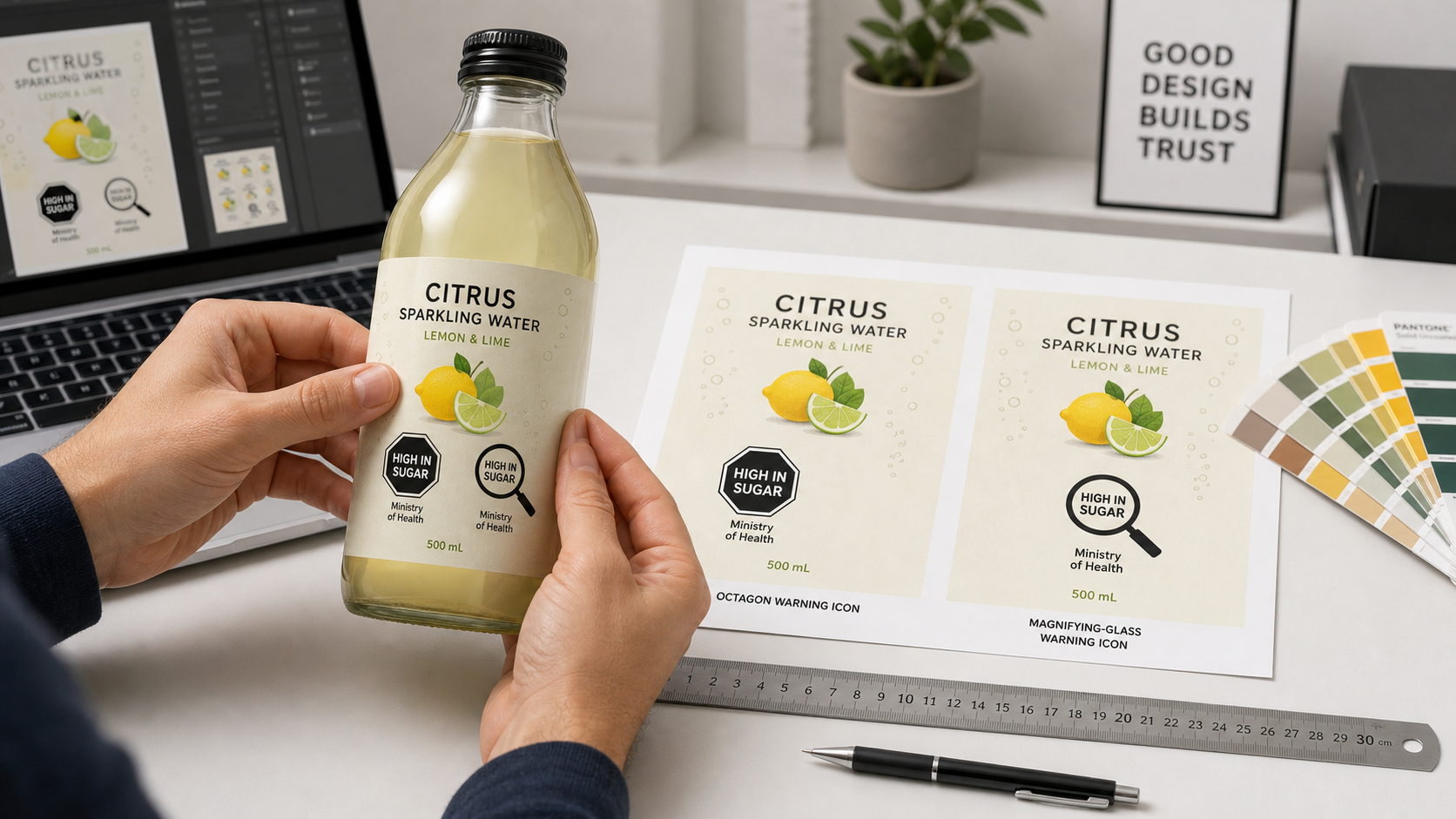
Placement, size, color contrast, and wording are specified in each country’s regulation. Generally, warnings must appear on the principal display panel and be clearly visible at retail. Black icons with white text are common for the octagon systems, while Brazil’s magnifying-glass symbol follows a different design grid and positioning logic.
Key artwork variables typically include:
- Icon type and exact graphic: black octagon(s) versus a magnifying glass.
- Minimum size relative to the front panel and allowed scaling on small packs.
- Color, border thickness, and clear space around icons.
- Local language wording and sequence when multiple warnings apply.
- Location hierarchy (e.g., upper right/left zones or stacked arrangement), depending on the country guide.
Because these elements are prescriptive, design teams should treat the warning icon like a mandatory label element with priority over brand marks, flavor cues, or promotional bursts. Expect to reflow typography and imagery to ensure compliance and legibility.
What do these labels mean for drink formulation?
Formulation strategy often determines whether a beverage carries one warning, multiple warnings, or none at all. While exact criteria differ, sugars and energy density are the most common triggers. Sodium can affect certain categories (e.g., vegetable-based drinks, functional RTDs), and in some markets, non-nutritive sweeteners or caffeine may require additional statements.
Typical formulation levers beverage teams explore include:
- Reducing added sugars: Adjusting Brix with careful flavor balancing. Consider flavor architecture (acids, bitters, fruit concentrates) to preserve taste at lower sweetness.
- Choosing carbohydrate sources: Evaluate juice content versus sweeteners and how each is classified locally (e.g., added vs. intrinsic), as this can influence warnings.
- Optimizing serving size and density: Portion-controlled packs can influence how values are expressed per serving or per 100 ml, subject to local rules.
- Evaluating sodium and acidulants: Mineral salts, electrolytes, and savory profiles may impact sodium-related triggers; assess alternatives where appropriate.
- Managing caffeine and sweeteners: If your concept includes these, confirm whether market-specific legends or additional restrictions apply.
There is no one-size-fits-all formula that avoids every warning in every market. Latam sugar labelling rules vary by jurisdiction, and what qualifies as added sugars, total sugars, or sweeteners can differ. Always validate a final formula with local regulatory text and importer confirmations before printing.
Label design and packaging implications
Front-of-pack warnings reshape brand architecture and messaging hierarchy. Expect to allocate permanent space for icons and, in some cases, accompanying statements. Plan for:
- Front-panel real estate: Dedicate a clean zone with sufficient contrast; avoid placing decorative elements that could reduce legibility.
- Language and phrasing: Use Spanish or Portuguese as required. Exact wording and capitalization are not optional style choices.
- Claim strategy: Nutritional warning seals on a beverage may limit or preclude certain front-of-pack claims. Reassess where and how you communicate benefits.
- Kid-appeal constraints: Several markets restrict child-directed characters, tie-ins, or premiums when a product carries warnings.
- SKU-specific artwork: Even small recipe differences can change warning outcomes. Avoid umbrella labels for multi-market SKUs without a compliance gap analysis.
Building an internal “compliance layer” into your packaging templates—locked placement guides, minimum icon sizes, and translation-approved text—reduces the risk of artwork rejections late in printing.
Advertising, promotions, and retail execution
Front-of-pack warning labels do more than alter packaging: they also affect what you can say in media, at shelf, and online. While details differ by country, common themes include:
- Limits on nutrition & health claims: Products bearing warnings may be barred from certain claims on pack or in ads.
- Child-directed marketing restrictions: When warnings apply, characters, giveaways, and kid-focused tactics may be prohibited.
- In-store signage and shelf talkers: Some claim language or comparisons may be restricted for warned products.
- Digital marketing: Rules can extend to e-commerce images and social media posts; ensure online visuals also reflect compliant artwork.
Plan promotional calendars with legal review and maintain a single source of truth for approved claims per market. Train distributors and merchandisers to recognize compliant assets.
Documentation and compliance workflow for export teams
To operationalize compliance across Latin America, beverage exporters typically establish a repeatable workflow that connects R&D, regulatory, artwork, and supply chain. A practical sequence might include:
- Regulatory scoping: Identify target countries and product categories. Gather the latest official texts and artwork manuals.
- Nutrition assessment: Calculate or lab-test the final formula against local criteria (added sugars, energy, sodium, etc.).
- Label strategy: Decide which SKUs will have tailored artwork per market versus shared designs with the strictest common denominator.
- Artwork development: Place icons per the country grid, lock minimum sizes, and finalize legally reviewed translations.
- Importer confirmation: Obtain written confirmation from local partners on artwork acceptability before print runs.
- Press proof & QC: Validate print contrast, icon clarity, and placement during pre-production and first runs.
- Post-market monitoring: Track regulation updates and consumer enforcement trends; schedule periodic artwork checks.
Document every decision: keep a dossier that ties nutrition data, translations, icon placement specs, and importer approvals to each batch of packaging files. This lowers risk during inspections or distributor on-boarding.
Country-by-country notes for beverage brands
The following notes summarize the character of each market’s system. Avoid assuming equivalence: language, iconography, thresholds, and claim restrictions differ and may continue to evolve.
Chile
Chile pioneered the region’s black octagon warning system, and the design has become highly recognizable to shoppers. Beverages high in sugars and/or energy are likely to carry one or more octagon warnings. Products with warnings face tighter limits on child-directed marketing and promotional claims. If Chile is on your route-to-market roadmap, see practical entry considerations for entering the Chile beverage market.
Mexico
Mexico uses black octagon warnings on the principal display panel. Beverages commonly trigger sugar- or energy-related warnings, and local rules tightly govern what claims may appear when a product is flagged. In addition, statements related to caffeine or sweeteners may be required depending on formulation and audience protections. Artwork manuals define icon size, spacing, and Spanish phrasing in detail.
Peru
Peru’s octagon warnings are displayed conspicuously on the front panel. Drinks that exceed sugar or energy thresholds typically show the relevant icon(s). Claim restrictions apply to warned products. Imported SKUs normally need to land with compliant Spanish wording and correct icon placement; coordinate artwork approvals with your local partner before shipment.
Colombia
Colombia has adopted an octagon-style FOP warning system. Sugars and energy drive most beverage warnings, with sodium relevant in select categories. Products with warnings encounter limitations on child-directed tactics and certain claims. Verify current transition timelines to plan packaging changeovers and depletion of old stock.
Brazil
Brazil stands out with a magnifying-glass warning symbol rather than octagons. The system flags nutrients of concern on the front panel, and for drinks, high added sugar is often the most pertinent trigger. Claim usage is restricted when the warning applies, and the graphic rules—placement, proportions, and contrast—follow Brazil’s specific template. Brands rarely reuse octagon-based layouts here; expect distinct Brazilian artwork.
Argentina
Argentina uses black octagon warnings on the front panel. Sugars and energy are frequent beverage triggers, with sodium depending on the recipe. Products with warnings face restrictions on claims and child-directed marketing. Certain formulations may require additional statements (e.g., about sweeteners or caffeine), so align your formula and phrasing early in development.
Special case: markets without these warnings
Venezuela does not currently require a front-of-pack nutritional warning labeling system analogous to the countries above. Nonetheless, general labeling, language, and nutrition declaration rules still apply. Always verify local regulations beyond FOP warnings when building regional SKUs.
How to plan a regional beverage portfolio under FOP warning systems
Because each country defines icons, triggers, and claim restrictions differently, portfolio planning often follows one of three routes:
- Country-specific SKUs: Optimize formula and packaging per market to minimize or manage warnings. Highest compliance precision, but increased complexity.
- Regional common denominator: Use the strictest shared criteria to standardize recipes and labels across several markets. Simplifies ops, may over-constrain innovation.
- Hybrid approach: Core formula with modular country add-ons (e.g., sweetener or flavor swaps) and layered artwork files. Balances speed and specificity.
Whichever path you choose, build lead time for regulatory review and printer schedules. Keep master files with locked icon positions and export per-market PDFs from a single source to reduce versioning errors.
Testing concepts without overcommitting to print
To de-risk innovation, teams commonly:
- Prototype several sweetness levels and acids to understand sensory trade-offs near sugar thresholds.
- Run small-batch pilots with compliant temporary labels to confirm market fit before mass print.
- Conduct claim risk assessments early to avoid developing benefit stories that are blocked by warnings.
- Maintain a change log linking every formula, nutrition panel, and FOP icon set used in testing.
Common pitfalls and how to avoid them
Brands new to the region often encounter avoidable setbacks. Watch for:
- Assuming all octagons are identical: Artwork, phrasing, and size rules differ—copy-paste layouts can fail compliance reviews.
- Overlooking serving-size nuances: How nutrient values are expressed can affect triggers; confirm local calculation bases before label finalization.
- Late-stage translation edits: Changing one word can reflow an icon and break minimum-size or contrast rules.
- Uncoordinated distributor stickers: Ad-hoc stickers risk misplacement or contrast failures; align on approved sticker specs if used.
- Claim conflicts: A nutritional warning seal on a beverage can nullify planned claims across pack and media—map claim viability early.
Regulatory maintenance and change management
Front-of-pack policies in Latin America continue to evolve. Maintain a tracker with:
- Official regulation references and artwork manuals per country.
- SKU-by-SKU matrices showing which warnings apply and why.
- Packaging version control, including printer proofs and approval emails.
- Market surveillance: shelf photos and online listings, updated periodically.
Schedule periodic internal audits to ensure labels in market still match current rules, especially after reformulations or supplier changes. If a formula change could alter warnings, recertify the nutrition calculations and artwork before the next print run.
Key takeaways for beverage teams
- Same logic, different rules: The six markets share a warning philosophy but diverge in icons, triggers, and claims policy.
- Design for compliance first: Treat the icon as a priority label element, not an afterthought.
- Formulation drives outcomes: Small shifts in sugars, acids, or sodium can change warning status.
- Localize language and artwork: Spanish or Portuguese text, exact phrasing, and contrast are mandatory details.
- Document everything: Keep a trail of nutrition data, artwork specs, and importer confirmations.
For brands planning multi-country launches, the most resilient approach is to synchronize R&D, regulatory, and packaging workstreams from the very first concept brief. That alignment saves time when adapting from octagon warnings to Brazil’s magnifying-glass system and reduces rework caused by claim or artwork conflicts.
FAQ: front-of-pack warning labels for drinks
These brief answers address frequent exporter questions. Always cross-check with current official texts and your importer.
Do 100% juices need warnings in Latin America?
It depends on the country’s definitions and triggers. Some systems focus on added sugars, while others evaluate total sugars and energy density. Confirm how your specific product is classified and calculated in each market before finalizing labels.
Can we apply compliant stickers after arrival?
Many importers prefer products to arrive fully compliant, but practice varies by market and channel. If stickers are allowed, they generally must meet the same placement, size, and contrast rules as printed labels. Obtain importer and, where applicable, authority confirmation before shipment.
Are English-only labels accepted?
Typically no. Local language (Spanish or Portuguese) wording is required for warnings and often for the broader label. Ensure translations match the official phrasing and typographic rules.
Does Venezuela require these front-of-pack warnings?
No. Venezuela does not currently mandate a system comparable to the octagon or magnifying-glass warnings used in Chile, Mexico, Peru, Colombia, Brazil, and Argentina. Still, verify general labeling requirements before sale.
Conclusion
Front of pack warning labels in Latin America now shape how beverages are formulated, labeled, and promoted. Six key markets deploy either black octagons or a magnifying-glass icon to highlight nutrients of concern, with different triggers, artwork rules, and claim restrictions. Plan early: align formulation with local definitions, design with icon placement and contrast in mind, and document approvals with importers. A structured, country-specific approach helps avoid delays at printing and launch while protecting brand equity at shelf.