


 Français
 Español
 العربية
 한국어
한국어To import beverages into Qatar, align your formula and labels to GCC GSO standards, secure Halal and a shipment health certificate, and obtain approvals from the Ministry of Public Health (MOPH) and Qatar Customs. Most consignments pass through 3 pillars: regulatory fit, complete documentation, and on-ground clearance at Hamad Port or Hamad International Airport Cargo.
This guide focuses on Qatar-specific procedures, authorities, ports, and paperwork sequencing so you can move from product brief to first shipment without avoidable holds. For foundational GCC/GSO rules and Halal scope, refer to the hub article linked below; here we detail the country steps that often decide your clearance timeline.

What makes Qatar different when you import beverages?
Qatar centralizes food import controls through the MOPH Food Safety authority at main entry points and runs customs via the General Authority of Customs on the Al Nadeeb single window. Expect Arabic labelling checks, document validation, and potential sampling at Hamad Port (Doha) or Hamad International Airport Cargo, with land entry via Abu Samra on the Saudi border.
Key Qatar-specific touchpoints you will encounter:
- Regulator: Ministry of Public Health (MOPH) Food Safety oversees imported food & beverage controls.
- Customs platform: Al Nadeeb (Qatar Customs single window) for declarations, duty/tax assessment, and release.
- Main entry points: Hamad Port (sea), Hamad International Airport Cargo (air), and Abu Samra (land).
- Shipment paperwork: A Halal certificate and a health certificate must accompany each lot, aligned to GCC rules.
For GCC-wide standards, Arabic label rules, and Halal scope, see the consolidated guidance here: GCC beverage import requirements. The rest of this article focuses on the Qatar steps and decisions.
| Entry point | Primary authority presence | Typical role in beverage import |
|---|---|---|
| Hamad Port (Doha) | Qatar Customs & MOPH Food Safety | Customs declaration, document review, potential MOPH sampling and lab hold, final release |
| Hamad International Airport Cargo | Qatar Customs & MOPH Food Safety | Faster air consignments, cold-chain sensitive imports, expedited checks when documents align |
| Abu Samra (land, Saudi–Qatar) | Qatar Customs & MOPH Food Safety | Truck entries, similar documentary controls, potential on-site inspection and sampling |
Step-by-step: how to import beverages into Qatar
The sequence below reflects how shipments typically flow through Qatar. Follow it in order to minimize rework and avoid holds.
- Confirm your product scope and any restrictions. Define whether the item is 100% juice, nectar, carbonated drink, energy drink, flavoured water, or dairy/plant-based beverage. Flag any alcohol content or functional additives. If your product falls under categories that may attract excise (e.g., energy or sweetened drinks), plan pricing and tax treatment accordingly.
- Align formulation and label with GCC/GSO & Halal requirements. Use GCC GSO standards for composition and Arabic labelling. Secure a Halal certificate for each shipment, especially when formulas include animal-derived ingredients or processing aids. For the consolidated GCC scope and label specifics, see GCC beverage import requirements.
- Arrange a shipment-specific health certificate. Obtain a health or sanitary certificate from the competent authority in the country of origin. Ensure product name, HS code, lot/production dates, and manufacturer details match the invoice, label, and any specification sheets.
- Confirm importer eligibility in Qatar. Your local importer or distributor must be licensed in Qatar, with an active account on Al Nadeeb (Qatar Customs). If you are a brand owner outside Qatar, coordinate the importer appointment and power of attorney early.
- Compile a Qatar-ready document pack. Include commercial invoice, packing list, certificate of origin, bill of lading/air waybill, Halal certificate, health certificate, Arabic/English ingredient list, label artwork, shelf-life/expiry statement, and product specs. Consistency across all documents is critical.
- Pre-arrival coordination with the importer. Share scans of the full pack before loading. Your importer drafts the customs declaration on Al Nadeeb and confirms HS classification, any excise applicability, and expected duties/fees. Pre-alignment reduces delays at Hamad Port or HIA Cargo.
- Ship with correct transport documents. Ensure the bill of lading or air waybill precisely reflects the consignee (Qatar importer), notify party, marks & numbers, and the same product descriptions used in the invoice and declaration.
- Port arrival and customs declaration. Upon arrival, the importer or customs broker submits/validates the Al Nadeeb declaration, attaches the document pack, and pays assessed duties/taxes and port/handling fees where applicable. Keep originals accessible in case physical verification is requested.
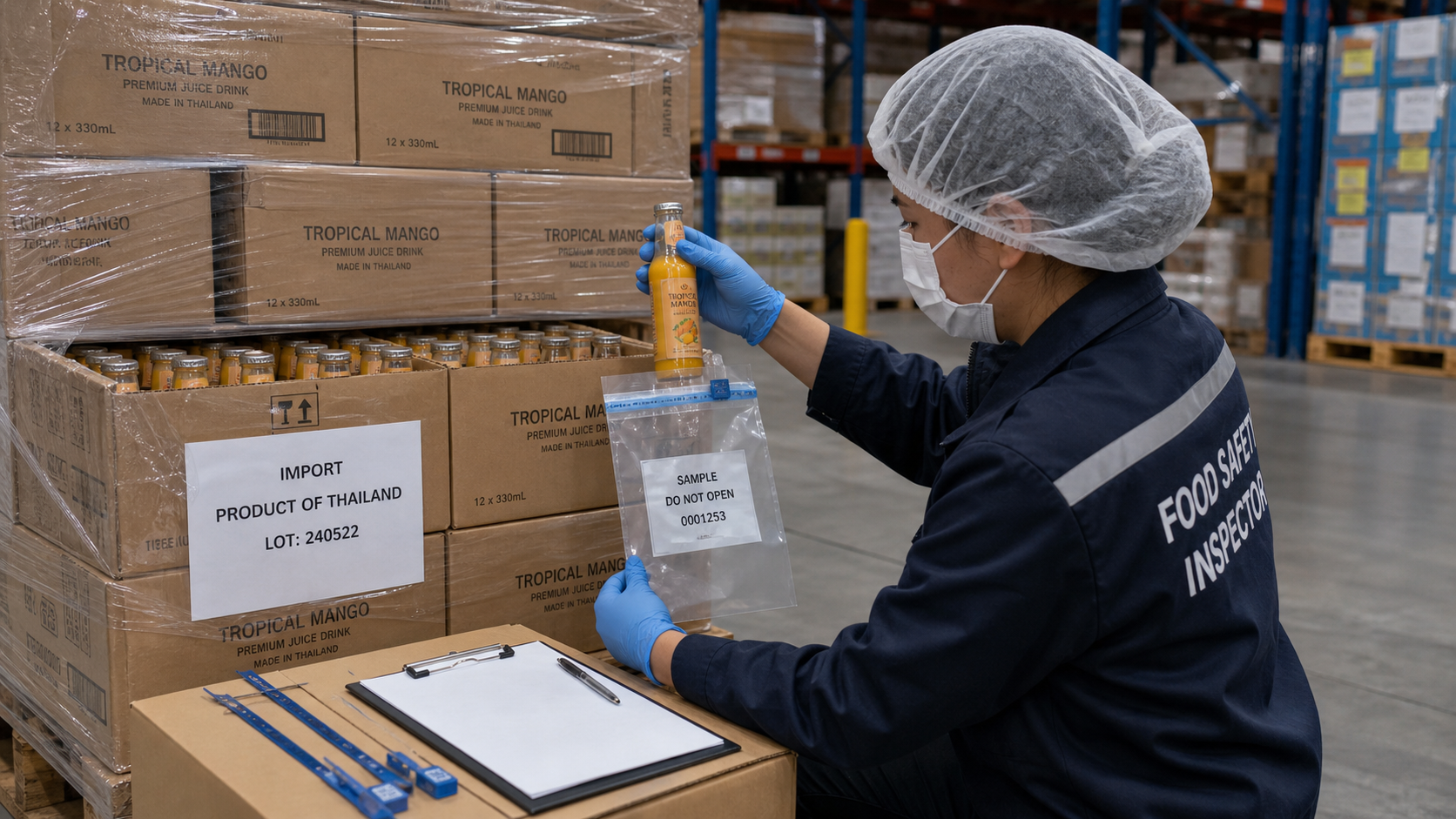
- MOPH Food Safety review and potential sampling. MOPH may review labels, dates, storage conditions, and documents, and can draw samples for lab testing. Maintain cold-chain integrity and allow for temporary holds if lab analysis is required.
- Resolution of queries/non-conformances. If MOPH or Customs raise queries (e.g., Arabic label gaps, mismatched dates, incomplete certificates), respond promptly with corrected documents or re-labelling plans under supervision as permitted.
- Release and delivery. After approval, arrange trucking from Hamad Port or HIA Cargo to your warehouse or distributor. Retain all clearance documents for traceability and future re-orders.
- Post-import compliance file. Keep a technical file containing final labels, specs, certificates, test results, and release notes. This supports faster processing on subsequent consignments and internal QA.
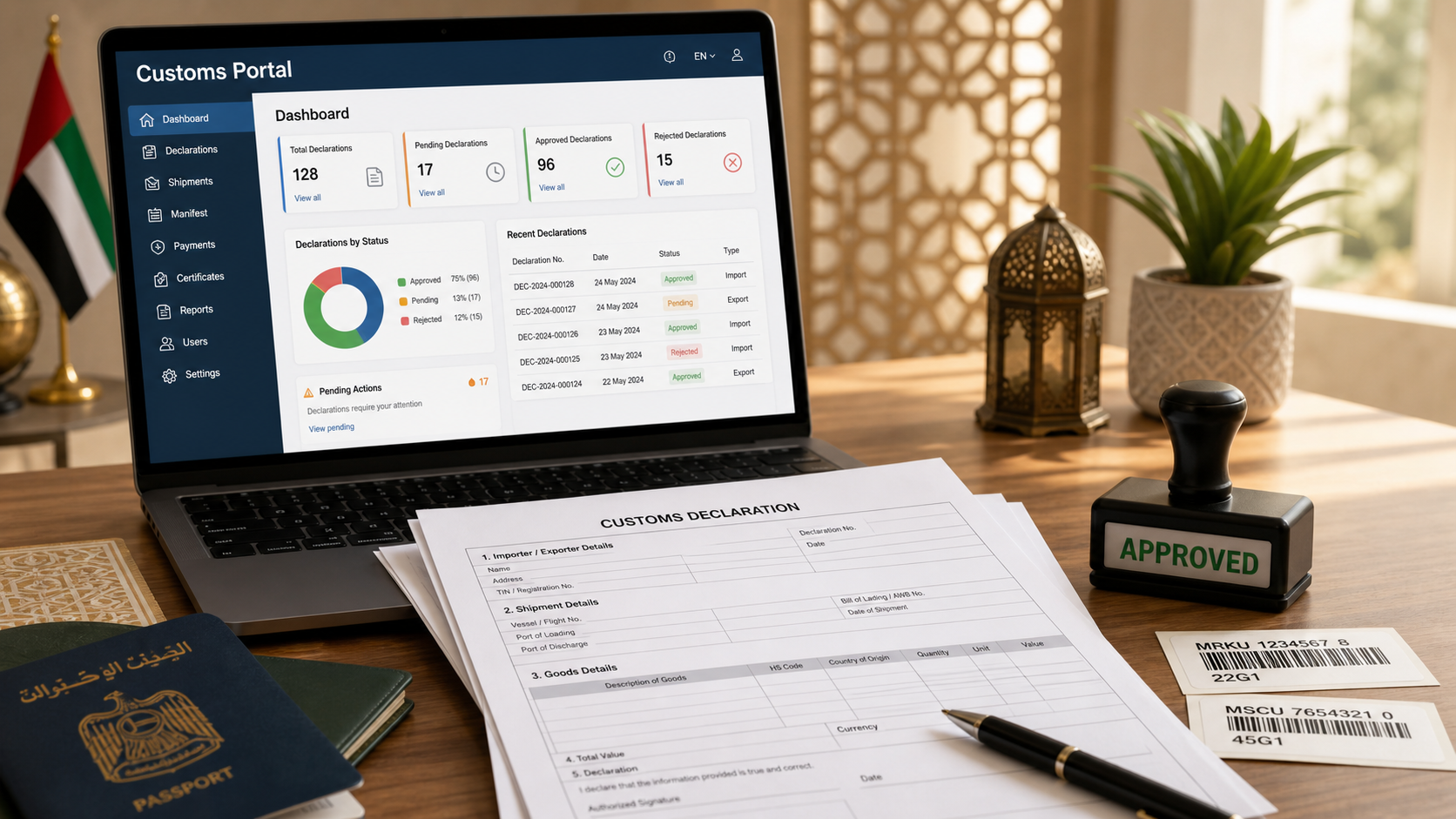
Document checklist and who prepares what
Prepare a consolidated, version-controlled folder so every field across documents matches. Minor mismatches often trigger holds or sampling.
| Document | Prepared by | Purpose/notes |
|---|---|---|
| Commercial invoice & packing list | Exporter/brand | Values, quantities, net/gross weights, HS code alignment |
| Certificate of origin | Chamber/authority in origin | Origin validation; details must match invoice |
| Bill of lading / Air waybill | Carrier / forwarder | Consignment details, consignee, notify party, marks & numbers |
| Health certificate (per shipment) | Competent authority in origin | Confirms sanitary status; align lot dates & product IDs |
| Halal certificate (per shipment) | Recognized Halal body | Mandatory per GCC rules, especially if animal-derived inputs exist |
| Label artwork & ingredient list | Brand/R&D | Arabic labelling check at MOPH; ingredients and allergens |
| Product specification & shelf-life statement | Brand/QA | Supports storage, expiry, and sampling assessments |
| Al Nadeeb customs declaration | Importer/broker | Duty/excise assessment and release workflow |
Labelling and shelf-life expectations in Qatar
Labels are checked at entry by MOPH for Arabic legibility, accuracy, and compliance with GCC/GSO. Use durable labels suitable for port handling, and ensure all mandatory particulars appear consistently across primary and outer packaging.
Do not repeat GCC-wide labelling rules here—consult the consolidated guide instead: GCC beverage import requirements. For Qatar, pay extra attention to date markings (production & expiry), storage conditions, and any claims that could trigger laboratory verification. Keep remaining shelf life and temperature control in mind, as MOPH assesses suitability of products at entry.
Port handling and inspections at Hamad Port and HIA Cargo
Upon arrival, cargo is offloaded to the port or cargo terminal, and Customs plus MOPH coordinate checks. Expect verification of documents, label review, and possible sampling. Maintain cold-chain for chilled beverages from the moment containers are opened to avoid quality concerns during holds.
If samples are drawn, consignments may be placed on a temporary hold pending lab results. Work with your importer to ensure port storage and handling fees remain in check and that first-expiring pallets are delivered first once released.
- Clear release: Documents align, no adverse lab findings, payment confirmed, cargo exits promptly.
- Conditional release: Minor fixes like supervised re-labelling may be allowed by authorities.
- Detention or rejection: Significant non-conformances, missing certificates, or unsatisfactory tests may prevent release.
Duties, excise, and fees in Qatar
Qatar applies customs duties consistent with GCC frameworks and may levy excise taxes on certain beverage categories (e.g., energy or sweetened beverages). These are assessed at declaration time on Al Nadeeb. Confirm HS codes and tax applicability early to avoid pricing surprises on arrival.
Beyond duty and any excise, plan for terminal handling, inspection, storage, and broker fees. Air shipments through Hamad International Airport Cargo are faster but often carry higher logistics costs; sea shipments via Hamad Port can optimize landed cost for stable, high-volume SKUs.
Timelines and common pitfalls
Speed depends on pre-alignment. When your document pack is complete, labels are Arabic-compliant, and the importer has an accurate Al Nadeeb declaration ready before arrival, clearance is far smoother. Sampling adds time; build that contingency into launch plans.
- Label gaps: Missing Arabic fields or inconsistent product names between documents and labels trigger holds.
- Certificate mismatches: Health or Halal certificates with different lot dates or product descriptions cause rework.
- HS classification surprises: Misclassification can lead to unexpected excise or duty assessments.
- Cold-chain lapses: Temperature excursions during inspection windows risk non-release for chilled SKUs.
Align your route-to-market, portfolio, and launch phasing with local realities. For landscape and segment context, see this overview: Qatar beverage market overview.
Coordination tips for brands and importers
Set a single source of truth for product data (name, net content, ingredients, allergens, dates, HS code). Share it with the importer, broker, and forwarder to prevent version drift. Use a pre-shipment checklist and require visual proofs of labels on production packaging.
For first entries, ship a pilot lot to validate paperwork, sampling outcomes, and final shelf-life visibility at Qatar entry points. Once stable, scale with sea freight through Hamad Port to reduce landed cost on core SKUs while keeping air options for seasonal or high-urgency runs.
FAQ
Do I need a local importer to bring drinks into Qatar?
Yes. A Qatar-licensed importer or distributor is required to submit declarations on Al Nadeeb, coordinate with MOPH at entry, and receive goods. Foreign brand owners typically appoint a local importer with an appropriate trade license and customs account.
Are Halal and health certificates mandatory for each shipment?
Yes. A recognized Halal certificate and a shipment-specific health certificate must accompany each consignment, consistent with GCC practice. Ensure details match labels, invoices, and the Al Nadeeb declaration to avoid holds.
Which ports are most common for beverage imports?
Sea freight typically enters via Hamad Port in Doha. Air consignments land through Hamad International Airport Cargo. Trucked goods can enter at the Abu Samra land border with Saudi Arabia. All routes involve Qatar Customs and MOPH controls.
How do I reduce sampling delays?
Pre-align HS codes, ensure Arabic labels meet GCC/GSO, maintain cold-chain where relevant, and submit a complete, consistent document set. Rapid responses to any MOPH or Customs queries help minimize dwell time.
Sources
Ministry of Public Health (Qatar) – Food Safety Department (official regulator for imported food & beverages)
General Authority of Customs (Qatar) – Al Nadeeb single window for customs declarations
Hamad Port (Doha) and Hamad International Airport Cargo – principal entry points for imported beverages