


 Français
 Español
 العربية
 한국어
한국어To import beverages into Ukraine, you must comply with Держпродспоживслужба food-safety oversight, apply Ukrainian-language labels, classify your goods under UKTZED, and clear customs where duties plus 20% VAT typically apply. Rules are progressively aligning with EU legislation under the EU–Ukraine Association Agreement.
This guide explains the exact sequence, documents, and checkpoints so importers, brand owners, and distributors can move from quotation to first shipment with fewer surprises.
Who regulates beverage imports in Ukraine?
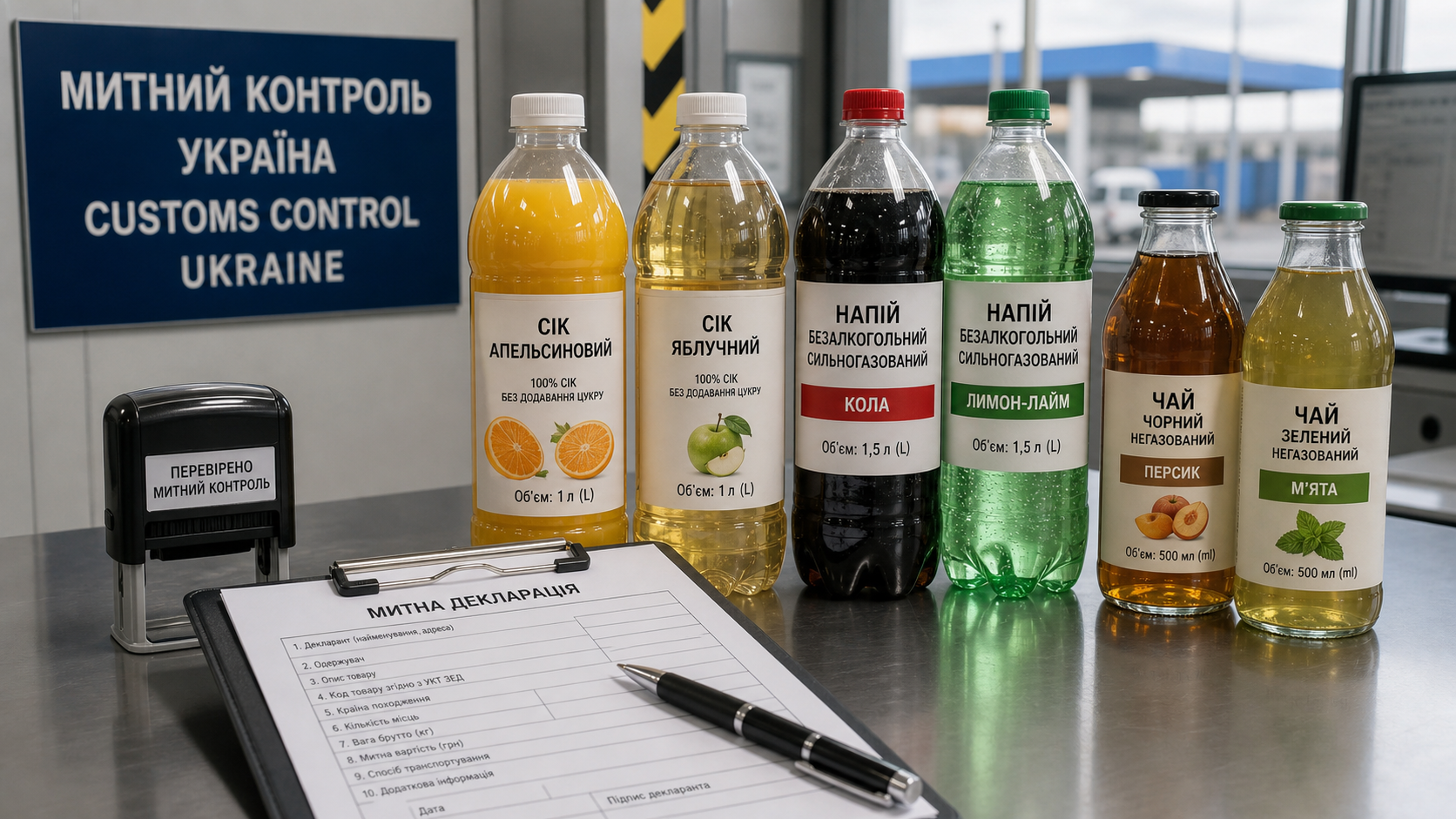
Держпродспоживслужба — the State Service of Ukraine on Food Safety and Consumer Protection (SSUFSCP) — oversees food safety and market surveillance, while the State Customs Service of Ukraine manages customs clearance and border control. Ukraine’s framework is shifting toward EU standards via the EU–Ukraine Association Agreement.
| Authority | Role in beverage imports | When you interact |
|---|---|---|
| Держпродспоживслужба (SSUFSCP) | Food safety oversight, labeling compliance, risk-based border checks, market surveillance | Before import (label & formulation review), at border (controls), and post-market (inspections) |
| State Customs Service of Ukraine | Customs declaration, tariff classification (UKTZED), duty/VAT assessment, release | At import declaration and clearance |
| State Tax Service of Ukraine | Excise control and licensing for alcohol; tax matters | For wine, beer, spirits and other excisable beverages |
What laws and standards apply to beverages in Ukraine?
Ukraine has overhauled food laws to be EU-like. Expect HACCP-based food safety management at the manufacturing site, additive & flavor use aligned with EU lists, and food contact materials requirements comparable to EU rules. Labeling follows an EU-style approach, with mandatory Ukrainian-language consumer information.
In practice, importers and brand owners should prepare documents and labels as if selling in an EU market, then adjust details for specific Ukrainian provisions and SSUFSCP expectations.
What goes on a Ukrainian beverage label?
Ukrainian-language labeling is mandatory. Labels can be pre-printed or applied as compliant sticker overlays before release for sale. Keep translations precise and consistent with your specification and certificate of analysis.
- Name of the food (e.g., 100% apple juice, nectar, carbonated soft drink) and processing where relevant (from concentrate, not-from-concentrate).
- Ingredients list in descending order; allergen indication where applicable.
- Net quantity with legal units; alcohol by volume where relevant.
- Date marking (best before/use by), storage conditions, and shelf-life guidance consistent with stability data.
- Name & address of the business operator in Ukraine (importer or responsible entity).
- Country of origin or place of provenance where required by law or not to mislead.
- Nutrition information if applicable, and any voluntary claims only when supported and permitted. Claims and final wording depend on the finished formula and Ukrainian rules.
Step-by-step: how to import beverages into Ukraine
Follow these ordered steps to plan, document, ship, and clear beverages. The sequence is designed for non-alcoholic drinks, with notes where alcoholic beverages differ.
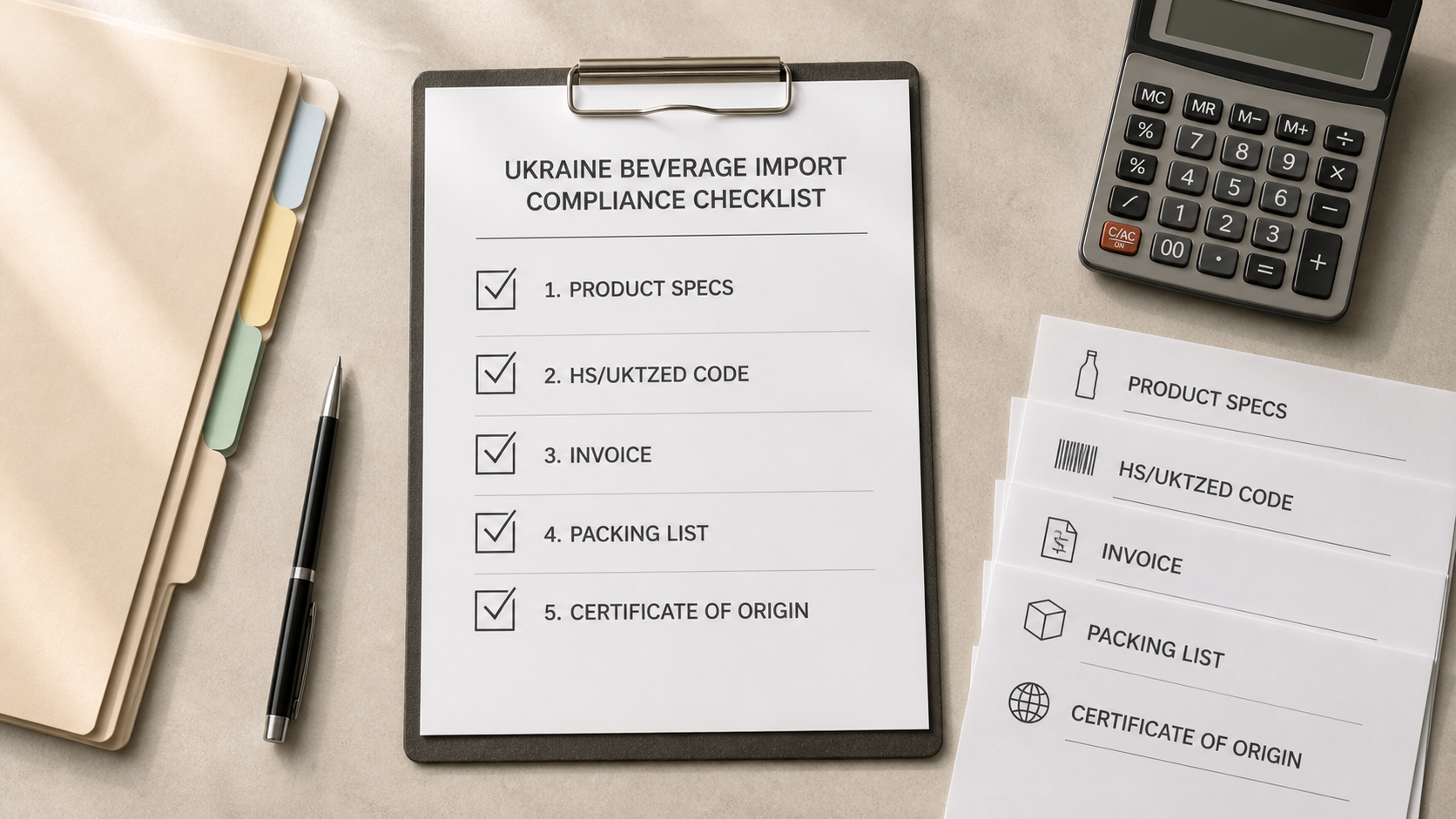
- Define your product and UKTZED code. Identify if it is 100% juice, nectar, juice drink, carbonated soft drink, energy drink, flavored water, iced tea, kombucha, beer, wine, or spirits. Classify under the Ukrainian tariff (UKTZED, HS-based). Alcoholic categories are excisable and require additional permits.
- Confirm importer setup in Ukraine. Work with a Ukrainian-registered company (with ЄДРПОУ/EDRPOU code). Arrange a licensed customs broker for electronic declarations. Non-resident import is possible through a broker or partner, but a Ukrainian responsible operator is typically required for food placed on the market.
- Check Ukraine beverage import requirements against EU-aligned rules. Ensure the formula uses permitted additives/flavors and that the manufacturing site runs HACCP-based controls. For novel ingredients or unusual categories, confirm whether additional authorization applies with SSUFSCP.
- Create compliant Ukrainian labels. Translate product name, ingredients, allergens, net quantity, date mark, storage conditions, importer details, and—if alcoholic—ABV and excise-related elements. If using stickers, plan application before sale and ensure permanence and legibility.
- Build your technical dossier. Prepare product specification, certificate of analysis, microbiological/chemical test results as relevant, shelf-life rationale, allergen statement, and packaging declarations for food-contact safety. Keep version control aligned to the label artwork.
- Collect trade & customs paperwork. Commercial invoice, packing list, UKTZED classification support, and certificate of origin (if seeking tariff preferences under applicable trade arrangements). Add transport documents (CMR, bill of lading, airway bill) depending on the route.
- Address alcohol-specific controls (if applicable). For wine, beer, and spirits: obtain the requisite import license through the State Tax Service of Ukraine and arrange excise stamps per category rules. Coordinate timing so stamps, labels, and customs declarations align.
- Plan the logistics route and Incoterms. Choose sea via Odesa-area ports such as Odesa, Chornomorsk, or Pivdennyi (subject to operational conditions), rail/road entries from the EU, or air to major airports. Match Incoterms, insurance, and lead times to product stability and launch plans.
- Pre-clearance review with your broker. Share draft labels, HS/UKTZED code, and documents early. Validate valuation, duty method, VAT base (customs value plus duty and fees), and any excise obligations. Build a timeline for border checks by SSUFSCP.
- File the customs declaration. Your broker submits the electronic declaration to the State Customs Service of Ukraine with all attachments. Ensure that invoices and packing match physical goods and that pallets/cases carry identifying codes traceable to the documentation.
- Participate in border controls. SSUFSCP may conduct documentary checks and, if risk dictates, identity or physical inspections, including sampling. Provide rapid responses to inquiries and keep batch-level traceability on hand.
- Release, stickering (if needed), and distribution. After clearance and payment of duties/VAT (and excise, if relevant), move goods to the warehouse. Apply and verify any remaining compliant stickers before sale. Maintain recall-ready records and monitor marketplace feedback.
Customs duties, VAT and excise at a glance
Ukraine applies customs duty according to the UKTZED code, then VAT at the standard rate of 20% on the tax base (typically customs value plus duty and eligible fees). Alcoholic beverages are subject to excise controls and rates defined by the State Tax Service of Ukraine. Preferential duty may apply if a relevant trade arrangement and proof of origin are in place.
| Category | Duty | VAT | Excise | Notes |
|---|---|---|---|---|
| Non-alcoholic beverages | Per UKTZED code | Typically 20% | Not generally applicable | Ensure correct classification (e.g., juice vs nectar vs soft drink) |
| Alcoholic beverages | Per UKTZED code | Typically 20% | Applicable | Import license and excise stamps required; category-specific controls |
Quality, stability and packaging considerations
Border checks and early market performance hinge on robust quality evidence and packaging fit-for-purpose. Plan these aspects during product development to avoid rework at labeling or clearance.
- Thermal treatment & shelf life: Match processing (HTST, tunnel pasteurization, retort) and closure integrity to intended distribution and storage conditions.
- Acidity, Brix, and sensory: Keep your spec tight. These parameters drive classification, taste, and stability.
- Food-contact declarations: Obtain declarations of compliance for liners, caps, and multilayer plastics aligned with Ukrainian/EU expectations.
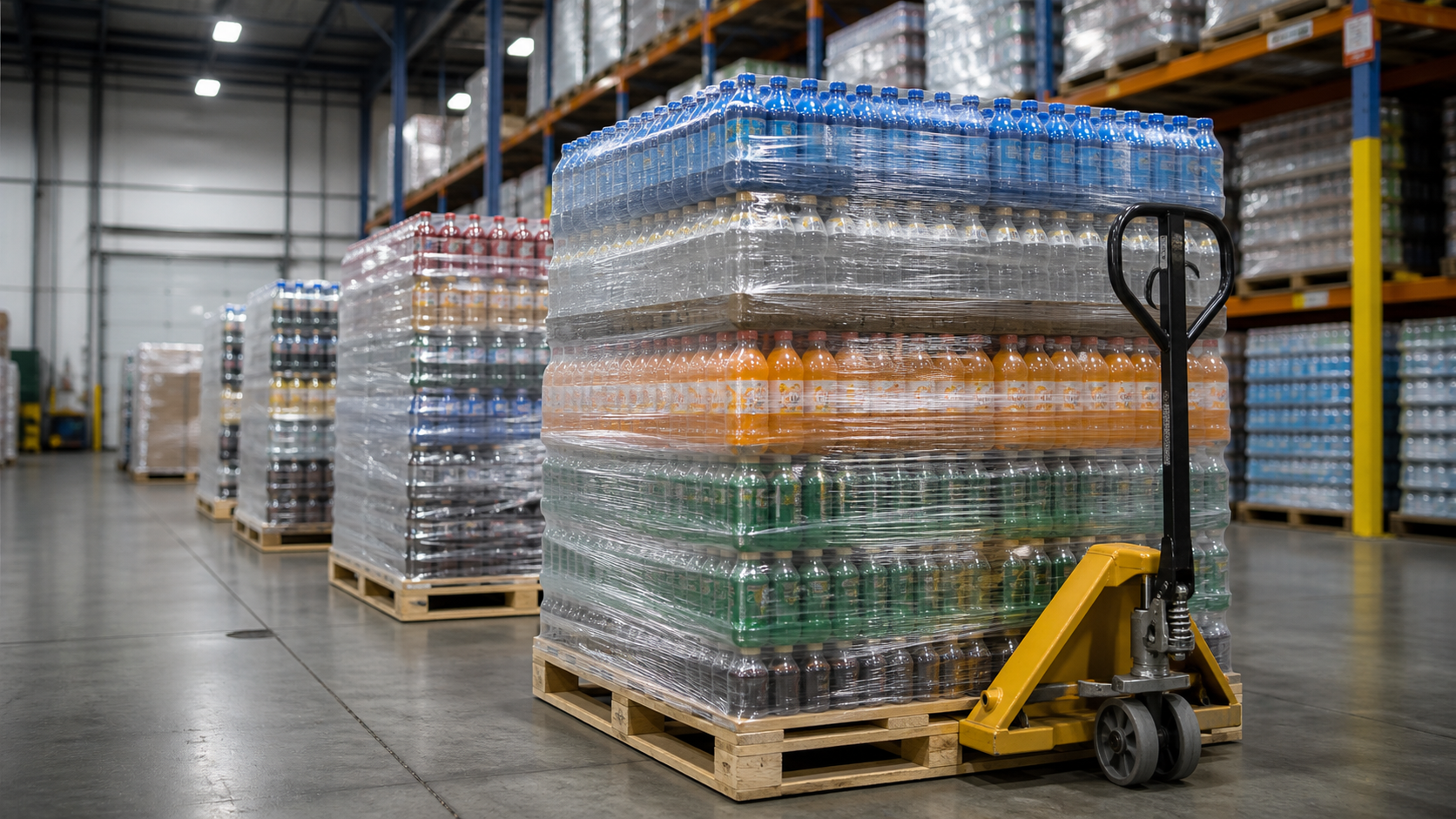
- Transport packaging: Use pallets, corner boards, and wrap meeting warehouse and cross-docking realities along Ukraine’s corridors.
- Traceability: Case and pallet coding that maps back to batch, production date, and formula revision simplifies any SSUFSCP queries.
Information for beverage brands and importers
Ukraine distinguishes 100% juice, nectar, and juice drinks in line with EU-style definitions, so ensure your positioning and artwork match the real fruit content and processing. Carbonated soft drinks, flavored waters, energy drinks, and ready-to-drink teas follow general food rules with category nuances (additives, caffeine statements, sweeteners where used). Claims and labeling must reflect the final, tested formula and the applicable Ukrainian rules.
For market research, distribution norms, and category context, see the dedicated overview of the Ukraine market. If you are planning your first project and want to map out timelines from quotation to delivery, our home page links to contact options and company information.
Common pitfalls & how to avoid them
- Late label translation: Build Ukrainian artwork in parallel with product specs to avoid clearance delays.
- Wrong UKTZED code: Misclassification disrupts duty and VAT; align classification with composition and processing.
- Sticker quality: Low-adhesion or smearing stickers can trigger non-compliance findings; validate substrates and inks.
- Incomplete technical file: Missing additive/flavor support or food-contact documents invites questions at the border.
- Excise oversight for alcohol: Licenses and excise stamps must be synchronized with shipment timing.
FAQ: importing beverages into Ukraine
Is Ukrainian-language labeling always required?
Yes. Beverages sold in Ukraine must carry Ukrainian-language consumer information. Sticker overlays are acceptable if they are durable, legible, and fully compliant before sale.
Who inspects beverages at the border?
SSUFSCP conducts risk-based controls for food safety and labeling, while the State Customs Service handles customs and release. Expect documentary checks and possible sampling.
What taxes should I plan for?
Budget for customs duty according to UKTZED plus 20% VAT. Alcoholic beverages are also subject to excise requirements governed by the State Tax Service of Ukraine.
Which entry points are common?
Logistics often use Odesa-area seaports (Odesa, Chornomorsk, Pivdennyi) when operational, road crossings from the EU, rail, or air cargo. Choose routes that fit your lead time and product stability.
How EU-aligned are the rules today?
Ukraine is actively aligning with EU legislation under the Association Agreement. Many core elements (HACCP, additives, labeling approach) already mirror EU practice, with ongoing updates.
Conclusion
To import beverages into Ukraine efficiently, lock in EU-aligned formulation, create Ukrainian artwork early, verify UKTZED classification, and plan customs plus 20% VAT (and excise for alcohol). Coordinating labels, technical files, brokers, and logistics across Odesa-area ports or EU road corridors reduces clearance friction and accelerates launch.
Sources
- State Service of Ukraine on Food Safety and Consumer Protection (Держпродспоживслужба) — official authority for food safety and market surveillance.
- State Customs Service of Ukraine — official authority for customs and tariff matters.
- State Tax Service of Ukraine — official authority for excise and tax controls.