


 Français
 Español
 العربية
 한국어
한국어Netherlands beverage import duty depends on your HS classification and the origin of the beverage. Under the EU–Vietnam Free Trade Agreement (EVFTA), qualifying Vietnamese goods can receive preferential duty, claimed at first EU entry (e.g., the Netherlands). One customs clearance in the Netherlands enables free movement across 27 EU countries under free-circulation status.
This guide explains how duty works at Dutch entry points, how to claim EVFTA preference for Vietnam-origin drinks, and how to check the exact rate using the 10-digit EU TARIC code—plus Dutch-specific taxes and authorities involved in beverage imports.
What charges apply when beverages enter the Netherlands?
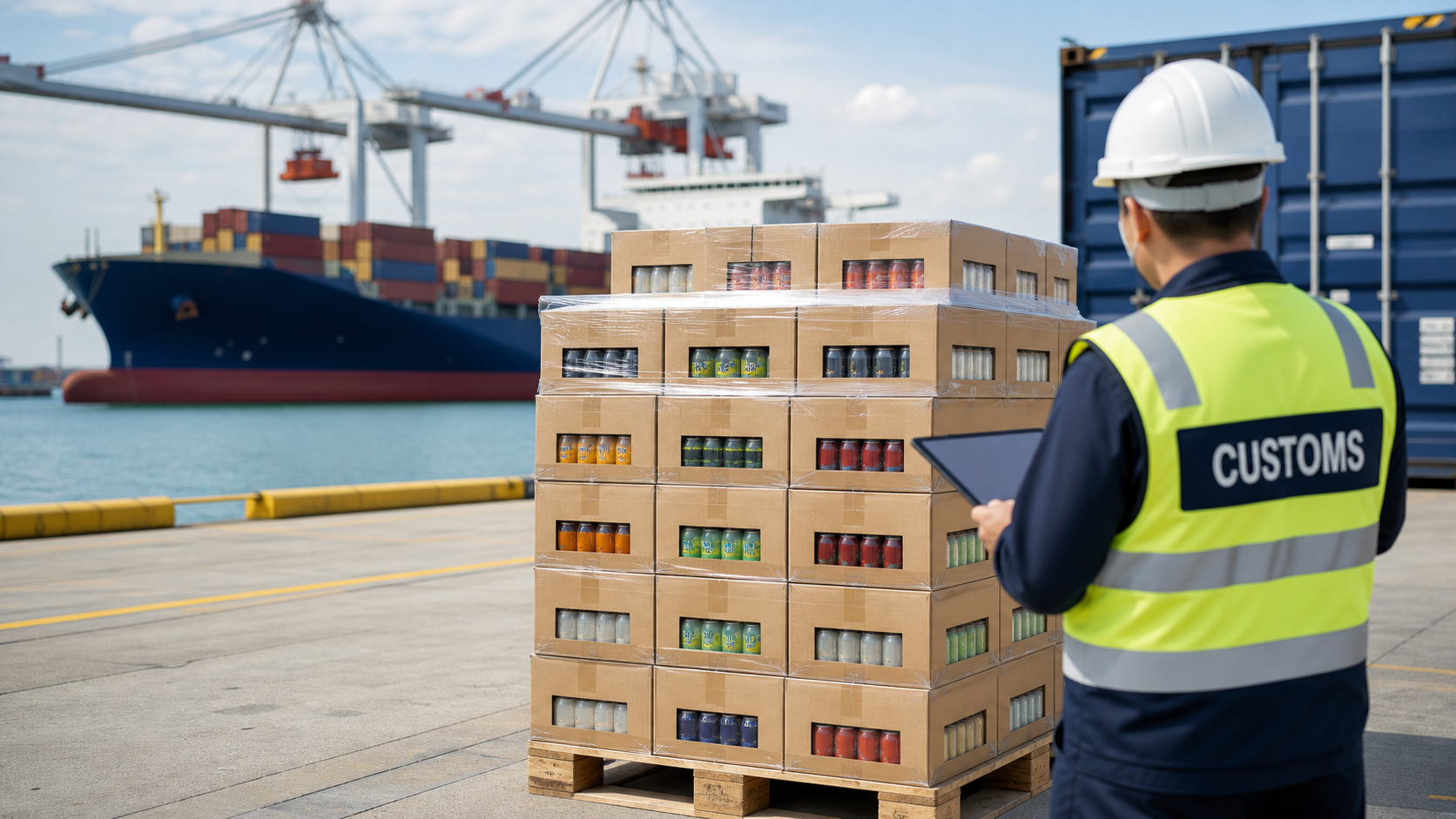
At entry into the Netherlands, total landed cost typically includes EU customs duty (based on HS code and origin), import VAT, and—depending on the product—Dutch excise or consumption taxes. The duty rate itself is read from the EU TARIC for the correct code and origin; EVFTA can reduce that customs duty when rules of origin are met.
- EU customs duty: A tariff applied at the EU’s external border. The exact rate depends on the 10-digit TARIC code and origin (MFN or a preferential FTA such as EVFTA).
- Import VAT (BTW): Charged according to Dutch VAT rules upon import. The applicable rate and treatment depend on product and the importer’s VAT setup.
- Dutch excise or consumption tax: Alcoholic beverages are typically subject to excise (accijns). Many non-alcoholic drinks are subject to a national consumption tax (verbruiksbelasting op alcoholvrije dranken).
- Operational costs: Customs brokerage fees, port/terminal handling, security and inspections, and any warehousing or inland transport.
Because rates vary by product and legal basis, importers should confirm each charge with their broker once the correct TARIC code is determined.
How does EVFTA preferential duty work for Vietnam-origin beverages?
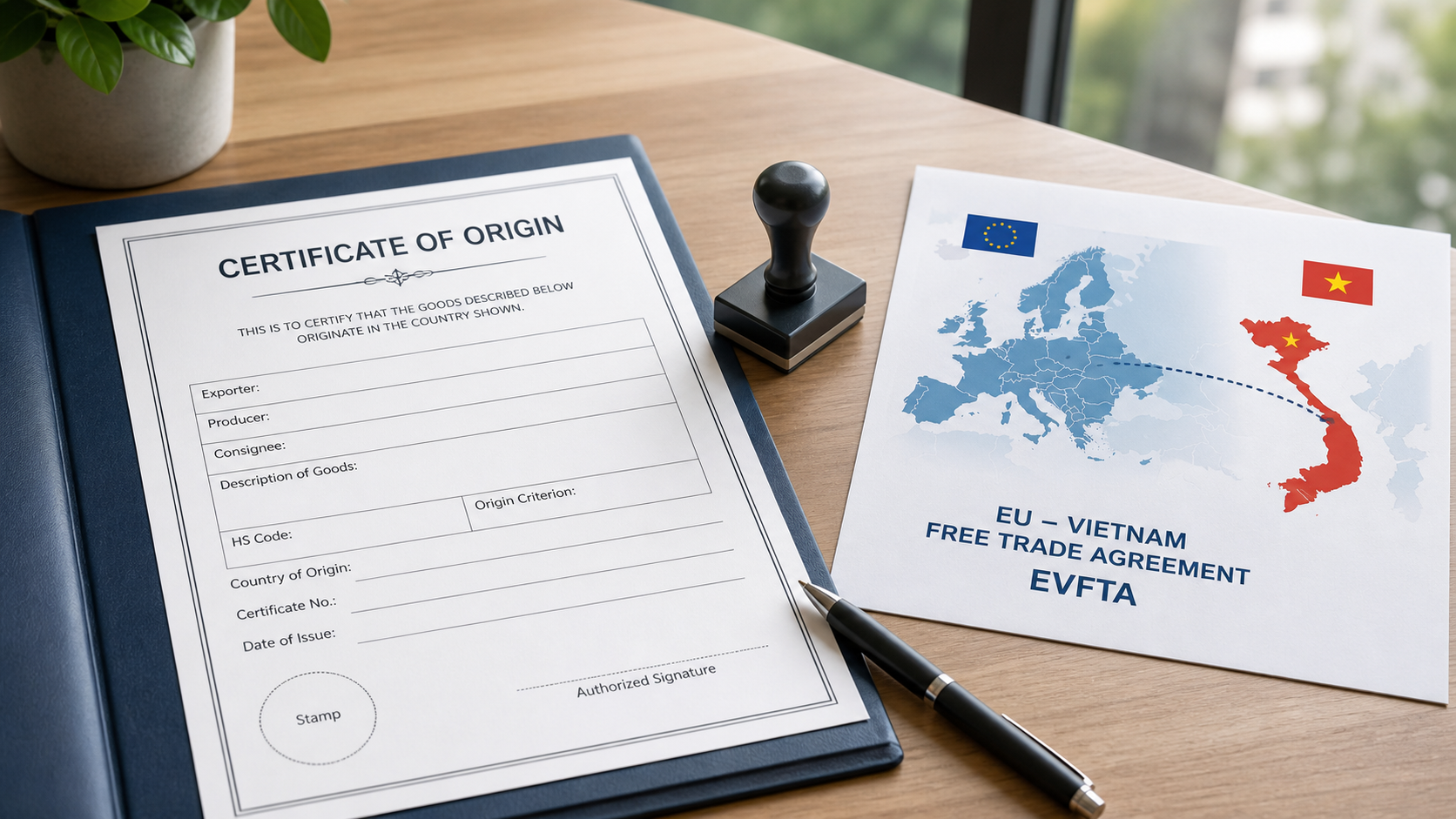
EVFTA allows qualifying Vietnam-origin beverages to receive reduced or zero EU customs duty, provided the product meets the agreement’s rules of origin and the importer presents valid preferential proof of origin at the time of customs declaration in the Netherlands.
Key points for claiming preference on Vietnam-origin beverages (e.g., fruit juices, tea drinks, coffee beverages, waters, soft drinks, beer, wine, spirits):
- Rules of origin (ROO): Your product must satisfy the EVFTA product-specific rule (PSR) for its HS heading/subheading. This may require a change in tariff classification, value-added thresholds, or use of wholly obtained materials.
- Direct transport & non-alteration: Shipments must be transported under conditions that preserve preference eligibility (no processing beyond what is necessary to preserve the goods), with evidence available if requested.
- Preferential proof: Typically an EUR.1 certificate issued by Vietnamese authorities under EVFTA, or an origin declaration where permitted by the agreement’s procedures. Coordinate this early with your supplier.
- Customs declaration: Your broker files the Dutch import declaration selecting the EVFTA preference and matching additional codes/footnotes shown in TARIC for Vietnam.
- One entry, EU-wide movement: When released for free circulation in the Netherlands under EVFTA, the goods can circulate across the EU without further customs duty.
| Topic | EVFTA (Vietnam-origin) | MFN (no FTA preference) | Notes |
|---|---|---|---|
| Duty basis | Preferential duty if ROO is met | Standard EU MFN duty | Check TARIC by 10-digit code + origin |
| Proof of origin | EUR.1 or origin declaration (where allowed) | Not applicable | Ensure details match invoice & HS code |
| Clearance point | First EU border (e.g., Netherlands) | First EU border (e.g., Netherlands) | Same process; different tariff basis |
| Risk of denial | Possible if ROO or documents insufficient | Low (rate is published MFN) | Keep supplier origin records ready |
| Record-keeping | Origin evidence retained as required | Standard customs records | Audit readiness is essential |
If you are evaluating the Netherlands specifically, see the Netherlands beverage market overview to align duty planning with route-to-market and positioning.
How do I look up the exact EU tariff in TARIC using my HS code?
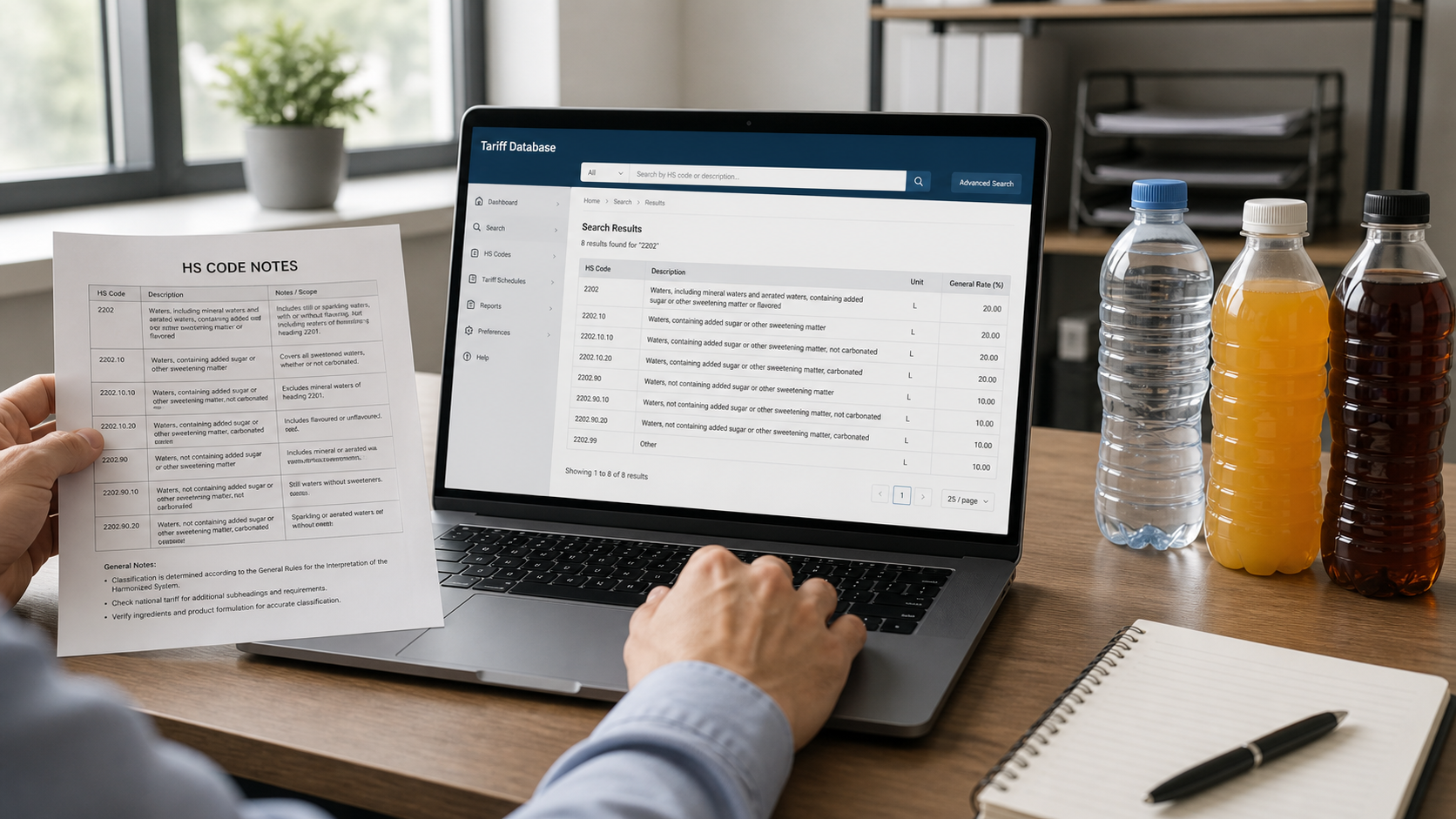
You must identify the correct 10-digit EU TARIC code for your beverage and then query measures by origin. TARIC is the only reliable source for the current legal rate; do not rely on generic lists or assumptions.
- Start with HS: Determine the 6-digit HS based on product composition and presentation.
- Refine to CN: Narrow to the 8-digit EU Combined Nomenclature (CN) description.
- Confirm TARIC: Select the full 10-digit TARIC code, including any required additional codes.
- Set origin = Vietnam: TARIC will display EVFTA preferential measures alongside MFN.
- Read all measures: Check duty, additional codes/footnotes, excise applicability, quotas, surveillance, or other conditions.
- Check non-tariff measures: Review whether product safety, packaging, or labeling measures are listed.
- Document your decision: Keep a written classification rationale and screenshots for audit readiness.
Common beverage tariff families (for orientation; the precise code depends on composition, alcohol content, and processing):
- 2009: Fruit & vegetable juices (including concentrates)
- 2201: Waters (including mineral & aerated)
- 2202: Soft drinks, flavored waters, non-alcoholic beverages
- 2203: Beer
- 2204: Wine & grape must
- 2206: Fermented beverages (e.g., cider, perry)
- 2208: Spirits
When in doubt, request a binding classification opinion from your customs advisor or consider the EU’s binding tariff information (BTI) process via a licensed representative.
Clearing in the Netherlands and free circulation across the EU
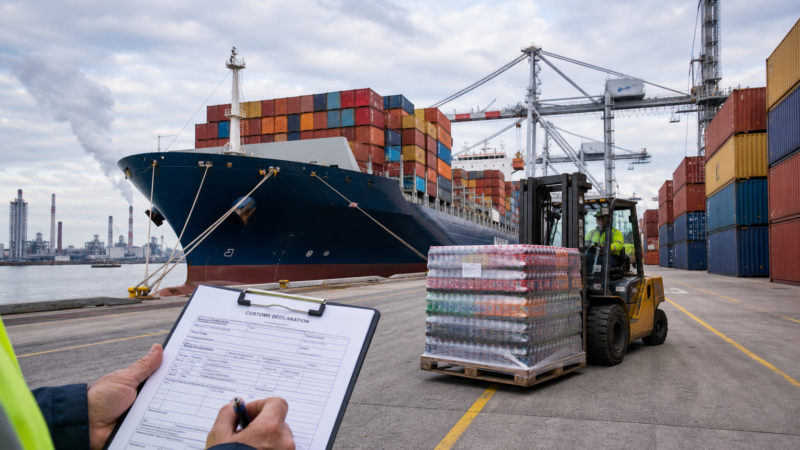
Yes. Once your shipment is released for free circulation in the Netherlands, it can move throughout the EU customs territory without further customs duty. This single clearance model is why many importers route beverages via the Port of Rotterdam or Schiphol Airport before distributing to other EU markets.
Netherlands-specific operational touchpoints to know:
- Belastingdienst Douane (Customs Administration of the Netherlands): The Dutch authority processing import declarations and customs controls.
- DMS – Douaneaangiften Management Systeem: The Dutch customs declaration system replacing legacy AGS. Your broker submits import declarations here.
- Portbase: The Dutch port community system used at Rotterdam/Amsterdam for digital prenotifications and container release processes linked with terminals and customs.
- Main entry points: Port of Rotterdam (deep-sea container hub), Port of Amsterdam (short-sea & bulk), and Schiphol Airport (airfreight).
- Free circulation & documents: Keep the customs decision (release note), C88/SAD data as provided by your broker, and preference documentation (if claimed) for audits.
For process planning beyond duty itself, see our guide to import beverages into the Netherlands step-by-step.
Customs duty is only one part of the total tax burden. The Netherlands applies several national schemes and supervises EU food rules through national authorities. While exact rates depend on product and legal updates, the following framework helps you plan responsibilities early:
- Excise (accijns): Applies to alcoholic beverages. Administration and payment are handled with the Dutch Tax & Customs Administration (Belastingdienst Douane), often via your fiscal representative or warehouse operator if using duty suspension regimes.
- Consumption tax on non-alcoholic beverages (verbruiksbelasting op alcoholvrije dranken): A Dutch national tax that can apply to soft drinks, juices, and certain other non-alcoholic beverages. Scope and calculation depend on legal definitions—confirm applicability for your formulation.
- Import VAT (BTW): Charged at import. Treatment may vary depending on whether you use a fiscal representative, a deferred VAT accounting scheme, or reclaim via your Dutch/EU VAT registration.
- NVWA (Nederlandse Voedsel- en Warenautoriteit): The Netherlands Food & Consumer Product Safety Authority that enforces food safety and market surveillance. Ensure product composition, additives, and claims comply with applicable EU rules as enforced by NVWA.
- Deposit-return (statiegeld): A national deposit scheme for certain bottles/cans. Importers placing packaged beverages on the Dutch market must comply with deposit obligations where applicable.
- Packaging EPR (Afvalfonds Verpakkingen): Producers/importers must register and report packaging placed on the market and pay applicable EPR fees through the Dutch packaging waste fund system.
| Authority / Platform | Applies to | Positioning & notes |
|---|---|---|
| Belastingdienst Douane | Customs, import VAT, excise administration | Primary counterpart for import declarations and tax settlement |
| NVWA | Food safety & market surveillance | Checks compliance with EU food law on the Dutch market |
| Portbase | Port prenotification & container release | Digital workflows at Rotterdam/Amsterdam terminals |
| DMS | Customs declarations in the Netherlands | System used by brokers to lodge import entries |
| Afvalfonds Verpakkingen | Packaging EPR reporting & fees | Importer/producer responsibility for packaging placed on market |
| Statiegeld scheme | Deposit-return for selected beverage packaging | Operational rules vary by pack type and size |
Important: This article focuses on the Netherlands. EU-wide labeling, claims, and compositional rules apply separately at Union level and are enforced in the Netherlands by NVWA. Coordinate with compliance advisors when defining formulations and labels.
Documentation checklist for EVFTA claims and smooth Dutch clearance
To streamline Netherlands beverage import duty procedures and minimize delays, align with your Vietnamese supplier and your Dutch customs broker on the following:
- HS classification memo: Agreed 10-digit TARIC code with reasoning, ingredients list, and any lab/analyte data relevant to classification.
- Preferential origin plan: Bill of materials and costing that demonstrates conformity with the EVFTA product-specific rule.
- Preferential proof: EVFTA EUR.1 certificate or origin declaration (where the agreement allows), issued correctly for the shipment and matching invoice details.
- Commercial documents: Signed commercial invoice, packing list, and sales contract with INCOTERMS noted.
- Transport documents: Bill of lading/air waybill, container numbers, and pre-arrival data for carriers/Portbase.
- Regulatory docs: Any certificates required for specific beverage categories (e.g., analysis certificates), plus label artwork for compliance checks.
- Customs representation: Power of attorney to your Dutch customs broker/fiscal representative and any standing instructions for preference claims.
- Audit file: Organized repository of classification notes, origin evidence, and declaration outputs to support later verification.
Aligning these elements before shipment helps ensure preference is granted at the border and that your goods move quickly into free circulation for EU distribution.
Route, lead times and logistics notes for beverage entries via the Netherlands
While duty is a legal calculation, logistics choices impact cost-to-serve and speed:
- Port of Rotterdam routing: Deep-sea connectivity, reefer capacity, and integrated rail/barge options make it a common first EU entry for beverages.
- Port of Amsterdam: Suitable for select trades, short-sea consolidation, and regional distribution.
- Schiphol Air: Useful for high-value, urgent, or product launch samples with temperature sensitivity.
- Customs timing: Pre-clear where possible; ensure Portbase workflows, inspection bookings, and terminal cutoffs are synchronized with carriers and your broker.
Choose the entry point based on your shelf-life, temperature control needs, and downstream distribution plan across the EU.
FAQs: Netherlands beverage import duty and EVFTA
Does EVFTA remove all taxes for Vietnam-origin beverages?
No. EVFTA only affects customs duty when rules of origin and documentation are met. Import VAT, Dutch excise or consumption taxes, and operational charges still apply according to national law.
Can I clear in the Netherlands and then ship to Germany without further customs duty?
Yes. After release for free circulation in the Netherlands, your beverages can move anywhere in the EU customs territory without additional customs duty. Retain the customs release and preference documents for records.
What proof of origin is accepted to claim EVFTA in the Netherlands?
Typically an EVFTA EUR.1 certificate issued by Vietnamese authorities, or an origin declaration where the agreement allows. The documents must match the goods and satisfy the product-specific rule.
What if my shipment transits a third country before the Netherlands?
Preference can still apply if the non-alteration and direct transport conditions are respected. Keep carrier through bills and warehousing evidence to demonstrate eligibility.
Where can I confirm the exact customs duty for my drink?
Classify the product to the full 10-digit TARIC code and check measures for origin “Vietnam” in the EU’s TARIC system. Review all measures and footnotes, not just the ad valorem line.
Conclusion
To calculate Netherlands beverage import duty correctly, classify your drink to the 10-digit TARIC, check measures for Vietnam under EVFTA, and prepare the right proof of origin to claim preference at first EU entry. Plan for Dutch import VAT, excise or consumption tax where applicable, and comply with NVWA oversight, deposit-return, and packaging EPR when placing products on the Dutch market. With one clearance at Rotterdam or Schiphol, you can distribute across the EU under free circulation—making the Netherlands a strategic gateway for Vietnam-origin beverages.