


 Français
 Español
 العربية
 한국어
한국어To import beverages into Bangladesh, plan for a 10-step workflow overseen by three core regulators—BFSA, BSTI and NBR via two main seaports (Chattogram and Mongla) or air freight. Success depends on Bengali labeling, whether your SKU falls under BSTI’s mandatory list, and clean customs documents.
This guide focuses on practical steps, market-specific rules, and the agencies you must coordinate with. If you are still sizing the opportunity, start with a concise Bangladesh market overview, then return to this checklist to build your import plan.
Who regulates beverage imports in Bangladesh?
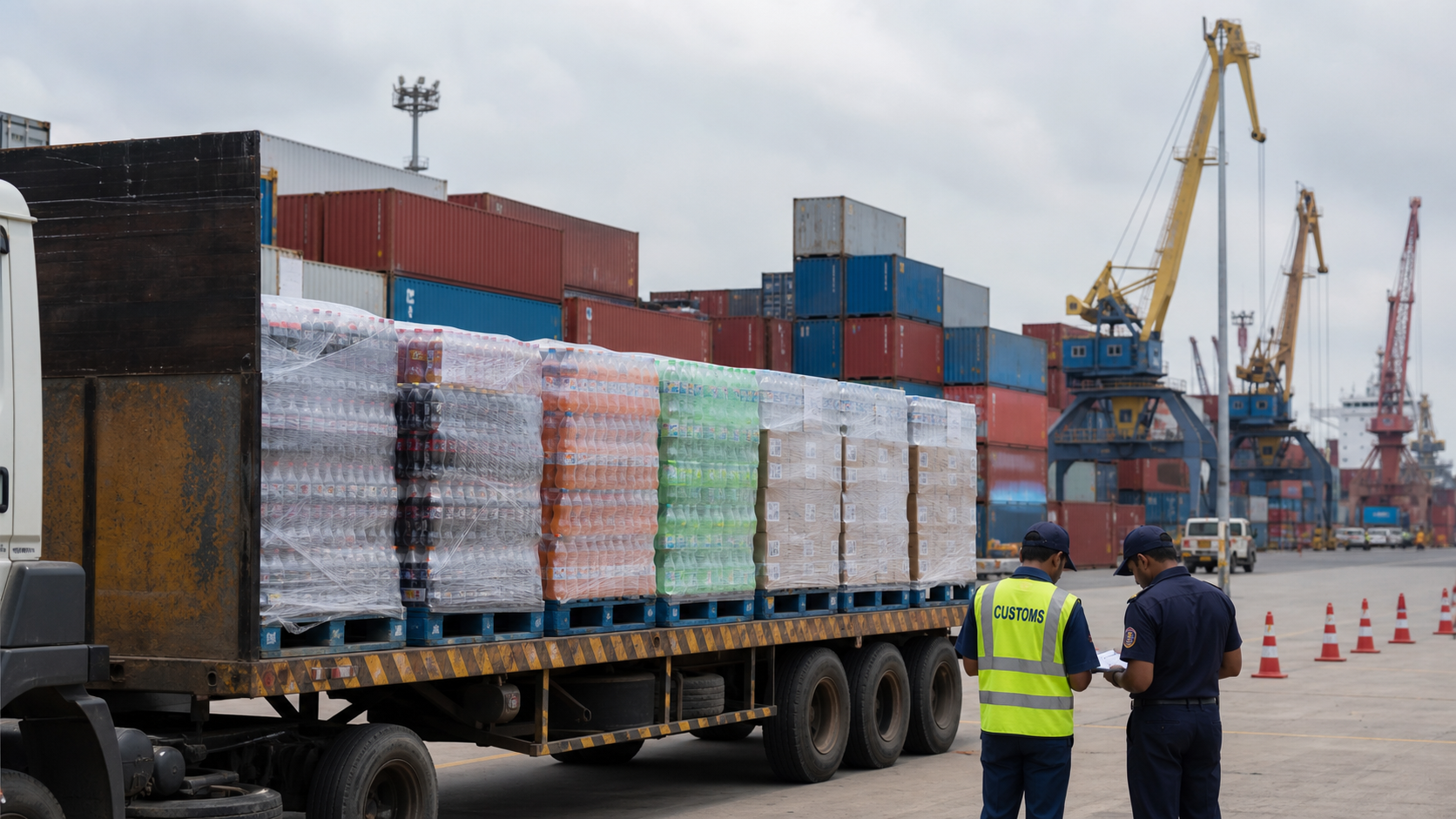
Bangladesh beverage imports are primarily regulated by the Bangladesh Food Safety Authority (BFSA) for food safety oversight, the Bangladesh Standards and Testing Institution (BSTI) for standards and mandatory certification on listed products, and the National Board of Revenue (NBR) for customs, duties and taxes. Certain beverage categories must obtain BSTI certification before retail sale. Retail packs require a Bengali (Bangla) label.
Step-by-step: How to import beverages into Bangladesh
Follow this ordered process to reduce clearance risk and time at Chattogram (Chittagong) Port, Mongla Port, or Hazrat Shahjalal International Airport.
- Define HS code & product scope: Confirm the correct HS code and whether the drink is 100% juice, nectar, carbonated soft drink, functional drink, or water. Check the current Import Policy Order to ensure the product is permitted. Alcoholic beverages are tightly restricted and require special licensing outside the scope of typical FMCG imports.
- Confirm your local importer credentials: The Bangladesh importer needs a valid Import Registration Certificate (IRC) and a Business Identification Number (BIN) for VAT registration. Decide payment terms (commonly letter of credit via Bangladesh Bank) and appoint a licensed customs agent (C&F).
- Check BSTI mandatory certification list: Determine if your SKU falls under BSTI’s compulsory Certification Marks (CM) regime (e.g., categories such as bottled drinking water and certain soft drinks are commonly listed). If yes, obtain BSTI approval before goods are marketed at retail. Plan samples, testing and factory documentation accordingly.
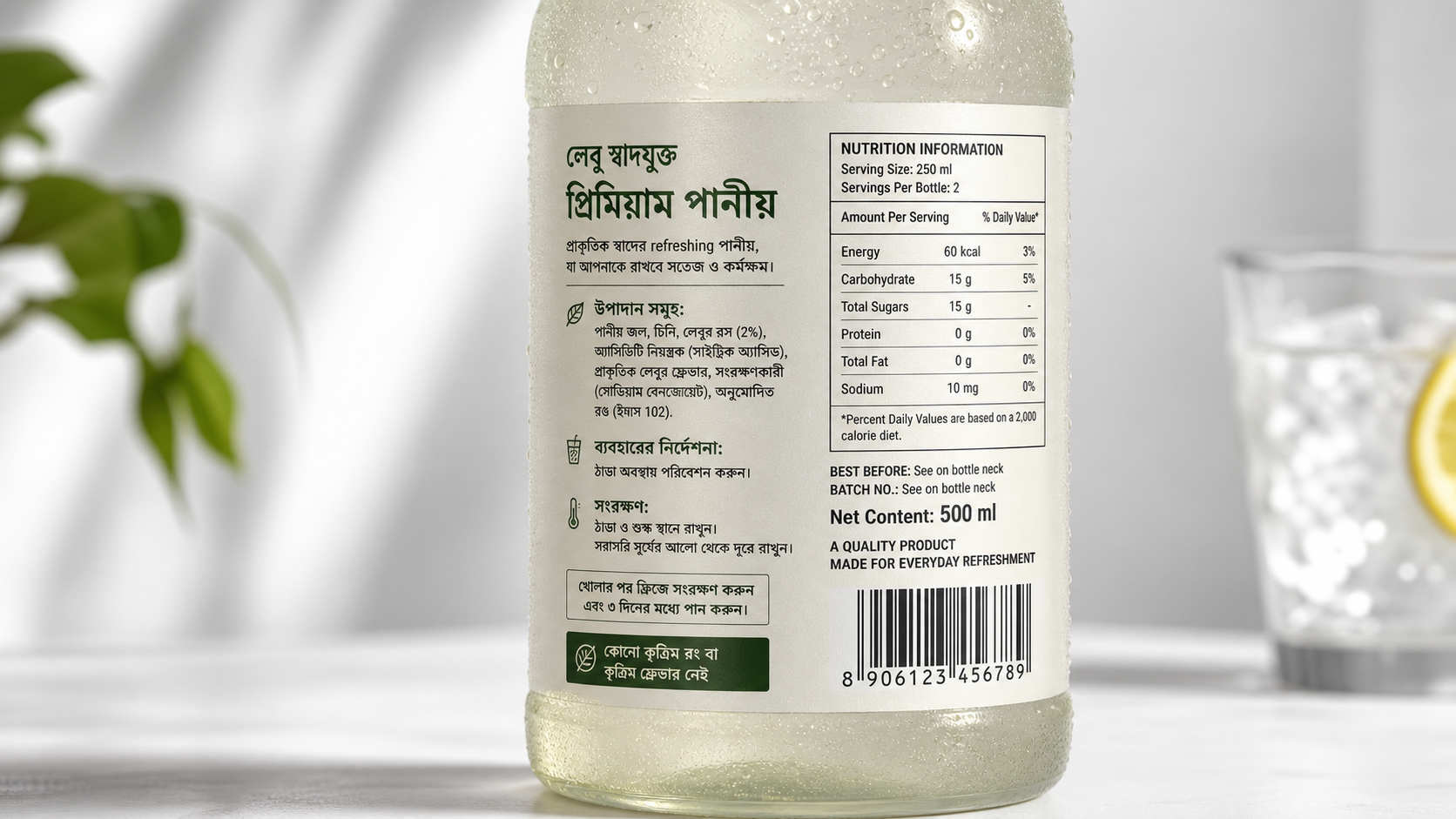
- Design a compliant Bengali label: Prepare label artwork that includes product name in Bengali, ingredient list, net content, batch/lot, manufacturing & expiry/best-before dates, storage, country of origin, and the local importer’s name & address in Bangladesh. Additional languages can appear, but Bengali is required for retail packs.
- Assemble pre-shipment technical documents: Create a complete dossier: product specification, ingredient & additive breakdown, certificates of analysis (CoA), allergen statement (if any), and shelf-life rationale. If pursuing BSTI CM, align test methods and reference standards with BSTI expectations.
- Book freight & choose port/airport: Select routing to Chattogram (the main seaport), Mongla (secondary seaport), or Dhaka HSIA for urgent airfreight. Match Incoterms to your LC or contract, confirm cold chain if required, and pre-alert the importer’s C&F agent with packing lists and schedules.
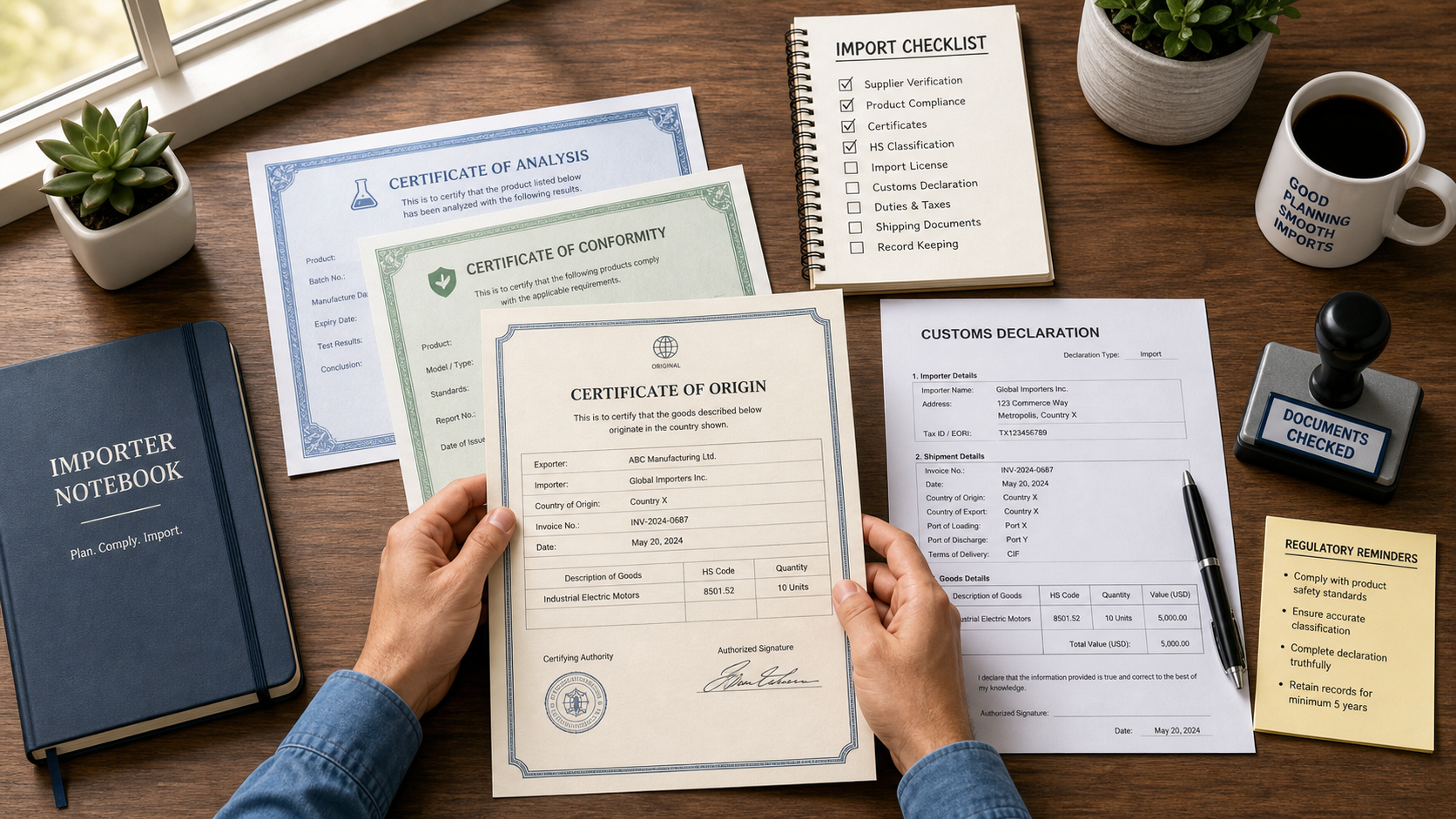
- Prepare core customs documents: Commercial invoice, detailed packing list, bill of lading/air waybill, certificate of origin, insurance, LC/TT documents, and any required health or radioactivity declarations. Keep ingredient disclosures consistent across all files.
- File the Bill of Entry with NBR Customs: The C&F agent submits declarations to NBR, attaches documents, and responds to valuation/classification queries. Be ready to provide clarifications on HS code, composition, and unit pricing if requested.
- Enable inspection, sampling & testing if triggered: Customs, BFSA and/or BSTI may examine shipments. Where sampling is required, cooperate promptly and keep retention samples. Factor potential storage charges during sampling into your landed cost model.
- Pay duties, VAT & any supplementary duty: Bangladesh typically applies customs duty, VAT, and where applicable, supplementary duty on certain categories (e.g., specific soft drinks). The exact mix depends on HS code and current fiscal schedules administered by NBR.
- Clear the goods & move to warehouse: After assessments and payments, arrange immediate transport to your approved warehouse. Maintain temperature controls if specified and keep import files accessible for any post-clearance audit.
- Complete BSTI CM steps (if applicable): For products on the mandatory list, ensure the BSTI Certification Mark is authorized and correctly displayed before retail distribution. Keep licenses current and ready for market surveillance checks.
- Launch with compliant claims & marketing: Avoid medicinal or therapeutic claims. Any nutrition or ingredient statements must reflect the final formula and serving size on label and comply with local rules and standards.
- Monitor shelf life & traceability: Track batch codes, import dates, distributor receipts and retail withdrawals. Establish a recall procedure aligned with BFSA expectations and maintain robust product complaint logs.
Bangladesh beverage label essentials (checklist)
These items commonly appear on compliant retail beverage labels in Bangladesh. Always verify final artwork against current BFSA/BSTI rules and your product-specific standard.
- Product name in Bengali (Bangla) prominent on the principal display panel
- Ingredient list and any permitted additives (descending order by weight)
- Net content in metric; storage and handling instructions
- Batch/lot code; date of manufacture; expiry/best-before date
- Country of origin; name & full address of the local importer
- Allergen notice if relevant; nutrition panel where required/formatted appropriately
- BSTI Certification Mark for items under the compulsory list (only after approval)
Documents you will typically need
- Commercial invoice and detailed packing list
- Bill of lading or air waybill; insurance policy
- Certificate of origin
- Ingredient breakdown, product specification and CoA
- Importer’s IRC and BIN (kept on file; may be requested)
- Letter of credit or payment proof under agreed Incoterms
- Any testing reports required for BSTI CM (if applicable)
Taxes and costs at a glance
At import, Bangladesh commonly levies a combination of customs duty, VAT, and in some categories, supplementary duty. Port handling, storage, C&F fees and any testing/sampling costs may accrue. Work with your customs agent to model landed cost by HS code across best- and worst-case scenarios.
Product formats and compliance differences
Different drink types map to different technical and labeling expectations. Use this qualitative matrix to brief teams and suppliers.
| Format | Label & testing focus | Possible BSTI status | Positioning & notes |
|---|---|---|---|
| 100% juice | Fruit content declaration, additives (if any), shelf-life support | Check list; not all juices are compulsory | Highlight origin and processing; watch sugar content communications |
| Nectar / juice drink | Juice percentage, sweeteners/flavours, colorants | Verify against current BSTI list | Position transparently; keep label claims conservative |
| Carbonated soft drink | CO-, flavour system, permitted additives | Commonly subject to tighter oversight; confirm CM need | Plan for potential supplementary duty; strong QC on carbonation |
| Bottled drinking water | Microbiological and physico-chemical specs | Frequently on the compulsory list; confirm CM | Source water documentation and routine testing are critical |
| Functional/energy drink | Active ingredients, caffeine disclosures, label clarity | Case-by-case; confirm with BSTI | Avoid medicinal framing; substantiate any composition-based statements |
Common pitfalls and how to avoid them
- Missing Bengali label: Even perfect international labels can be rejected without Bengali text for retail packs.
- Assuming BSTI doesn’t apply: Some beverage categories require CM approval before sale; confirm early to avoid relabeling or re-export.
- Inconsistent documents: Ingredient lists must match across spec, invoice description and label to prevent classification disputes.
- Underestimating sampling time: If authorities test, storage and demurrage can rise; build buffers into your cost and timeline.
- Ignoring port choice: Chattogram has capacity and frequent sailings; Mongla can be strategic depending on inland route and congestion.
Coordination timeline: what to line up early
- Confirm HS code and import permissibility under the current Import Policy Order
- Decide on payment route (e.g., LC) and align with Bangladesh Bank requirements
- Start BSTI pathway assessment (mandatory list check, sample/test plan) before artwork freeze
- Freeze Bengali label, then print packaging; keep editable files for any regulator feedback
- Book freight and pre-alert C&F agent with full document pack
Information for beverage brands and buyers
Bangladesh is a price-sensitive, rapidly urbanizing market where on-shelf compliance is non-negotiable. Build your business case with realistic lead times for label localization and any BSTI CM process. Consider pilot imports to validate route-to-market and demand signals before scaling. For broader context on demographics and channels, see the Bangladesh market overview.
FAQ
Do all beverages need BSTI certification before sale?
No. Only products on BSTI’s mandatory certification list require CM approval before retail sale. However, all beverages must still meet applicable standards and labeling rules. Always check the current BSTI list for your exact HS code and product type.
Is a Bengali (Bangla) label compulsory?
Yes, Bengali labeling is required for retail distribution. You may include additional languages, but key information-such as product name, net content and importer details-must appear in Bengali.
Which ports are commonly used for beverage imports?
Most shipments move via Chattogram (Chittagong) Port, with Mongla Port as an alternative. Airfreight typically arrives at Hazrat Shahjalal International Airport (Dhaka) for urgent or high-value consignments.
What taxes should I budget for?
Expect a combination of customs duty, VAT, and where applicable, supplementary duty. Exact liabilities depend on HS code and the current NBR tariff schedule. Your C&F agent can model landed costs for your formulation and pack size.
Are alcoholic beverages covered by this guide?
No. Alcoholic beverages face separate licensing and restrictions in Bangladesh and are not covered here. Consult the latest Import Policy Order and relevant authorities before planning any shipment.
Sources
- Bangladesh Food Safety Authority (BFSA)
- Bangladesh Standards and Testing Institution (BSTI)
- National Board of Revenue (NBR)
- Ministry of Commerce – Import Policy resources
- Bangladesh Bank – trade finance & LC