


 Français
 Español
 العربية
 한국어
한국어For qualifying ASEAN-origin beverages, import duty into Singapore under ATIGA is typically 0%, while a 9% Goods and Services Tax (GST) generally applies on the customs value plus any duty. RCEP may provide an alternative preference when ATIGA is not available. Alcoholic drinks attract excise duty; most non-alcoholic beverages do not incur customs duty.
This guide explains how ATIGA and RCEP preference works for beverages, how to verify the tariff by HS code, which documents and permits you need, and what is unique in Singapore (Singapore Customs, the TradeNet permit system, Singapore Food Agency controls, PSA seaports, Changi Airfreight Centre, and GST on imports).
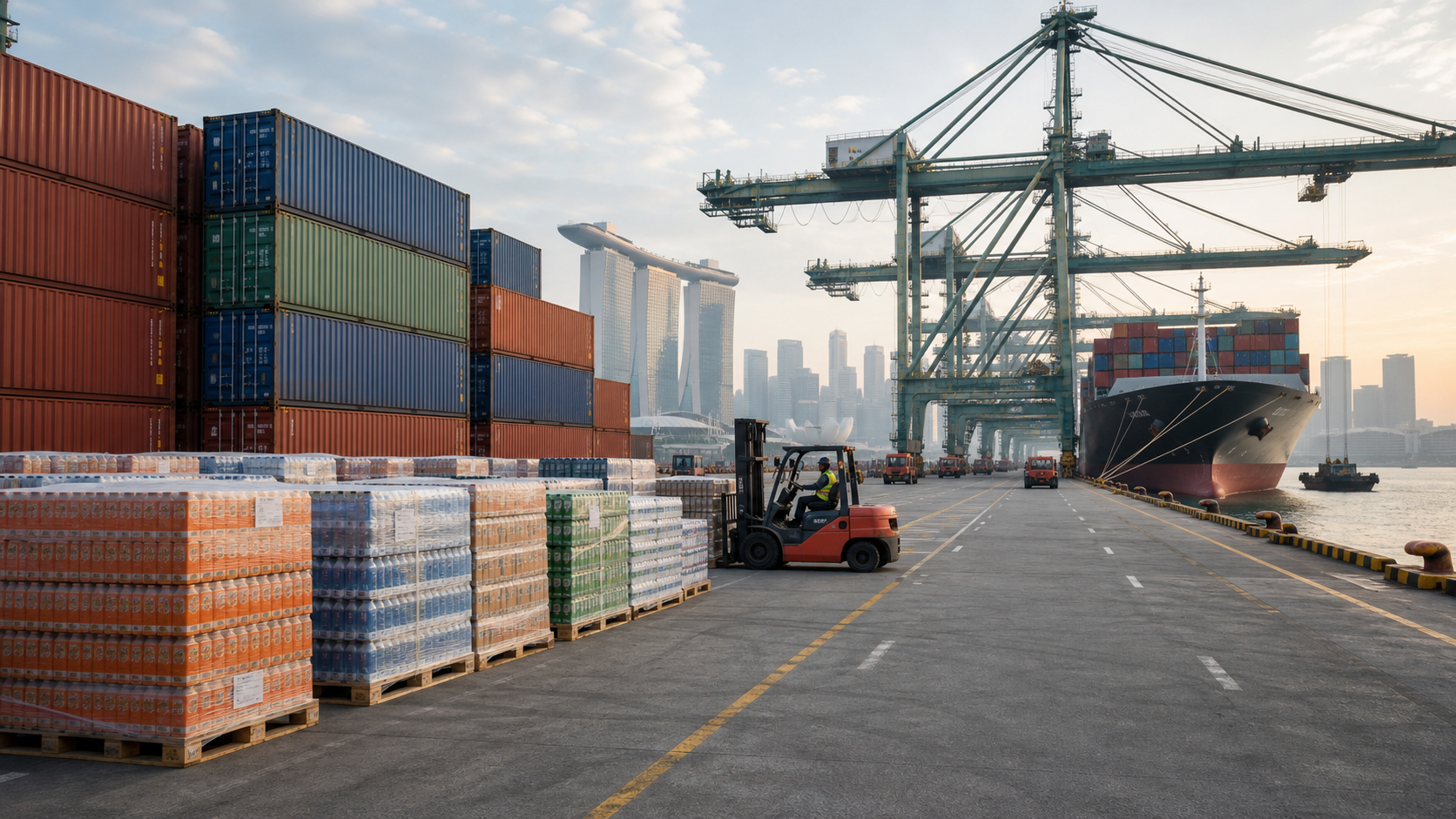
Does Singapore charge import duty on beverages from ASEAN?
Yes for alcoholic beverages (excise duty applies), and usually no customs duty for most non-alcoholic beverages. For ASEAN-origin goods qualifying under ATIGA, the customs duty rate is preferentially 0% for most beverage HS lines; you still pay GST (generally 9%) on the import. Always confirm your HS classification and eligibility before shipment.
Singapore is a highly open economy where many goods enter duty-free, and customs duty is limited to a narrow set of dutiable categories (including alcohol). That said, preferential origin still matters: ATIGA secures a 0% rate for eligible ASEAN-origin products; RCEP can be a useful fallback or planning option for some supply chains.
How do ATIGA and RCEP affect singapore beverage import duty?
ATIGA (ASEAN Trade in Goods Agreement) eliminates customs duties for most intra-ASEAN goods that meet the ATIGA rules of origin and are supported by a valid preferential Certificate of Origin (Form D or e-Form D). For beverages shipped from another ASEAN member (e.g., Vietnam) to Singapore, this often reduces the payable customs duty to 0% if origin criteria are met.
RCEP (Regional Comprehensive Economic Partnership) is a broader agreement that includes ASEAN and several key partners. Where ATIGA cannot be used (for example, due to supply chain structure or insufficient ASEAN origin), RCEP may offer an alternative preference if your product and origin meet RCEP’s rules and documentation requirements. In practice:
- Use ATIGA first for ASEAN-to-Singapore shipments when origin rules are satisfied.
- Consider RCEP if inputs or processing cause your product to miss ATIGA origin tests, but could qualify under RCEP’s rules.
- If neither preference applies, imports generally enter under Singapore’s MFN/NTR rates (often already low for many non-alcoholic beverage lines), plus GST.
How to check the Singapore tariff and excise for your HS code
Do not rely on assumptions. Instead, confirm the tariff and any excise by HS code using official Singapore resources and your customs broker. A practical approach:
- Classify your product accurately. Determine the HS heading and subheading based on composition and presentation. Common beverage chapters: 20 (fruit & vegetable preparations such as juices) and 22 (waters, soft drinks, teas, coffees, and alcoholic beverages). Precise classification depends on formulation and packaging.
- Search the Singapore tariff database. Use the HS/CA Product Code Search on Singapore Customs’ website to find the national code (aligned to the Singapore Trade Classification, Customs & Excise Duties, or STCCED). Review the duties, controls, and permit codes attached to your tariff line.
- Check excise duty for alcohol. Alcoholic beverages are dutiable and also subject to excise. Confirm if your HS line falls under alcohol excise and how the duty is assessed (often by litres of alcohol for certain categories). If in doubt, obtain written clarification from your broker.
- Assess preferential eligibility. With your HS code in hand, look up the ATIGA and RCEP preferential provisions for that line. Confirm whether a valid preferential CoO (ATIGA Form D/e-Form D or an RCEP CoO) would reduce the customs duty to 0% or to a lower rate.
- Confirm GST treatment. In Singapore, import GST is generally charged on the CIF value plus any duty and other applicable charges. Verify the prevailing GST rate before import clearance.
If you are new to the market, our overview of the Singapore market and the step-by-step guide on how to import beverages into Singapore provide complementary context on compliance and logistics.
Which beverages are considered dutiable in Singapore?
In Singapore, alcoholic beverages are dutiable and also attract excise duty, while most non-alcoholic beverages are not subject to customs duty (but GST still applies). Within alcohol, confirm whether your product is classified as beer, wine, sparkling wine, cider, perry, or spirits, as these categories are controlled and taxed differently under local regulations.
For non-alcoholic drinks (for example, juice, nectar, soft drinks, ready-to-drink tea/coffee, coconut water), the customs duty is generally nil whether or not you use a trade agreement—yet ATIGA/RCEP may still be relevant for documentation consistency across ASEAN supply chains and to demonstrate traceable origin where required by buyers.
Certificates of Origin: ATIGA Form D/e-Form D and RCEP CoO
To claim a preferential rate in Singapore, your shipment must qualify under the agreement’s rules of origin and be supported by the required documentation:
- ATIGA Certificate of Origin (Form D or e-Form D): Issued by the designated authority in the exporting ASEAN country. For Vietnam-origin goods, the issuer is typically a competent authority authorized domestically. The e-Form D is widely used within ASEAN for faster validation.
- RCEP Certificate of Origin: Issued by a designated body or via an approved exporter mechanism where available. Use when the supply chain cannot meet ATIGA origin rules but may comply with RCEP requirements.
Rules of origin for beverages typically involve a change in tariff classification and/or a regional value content threshold. Some examples to discuss with your broker:
- Juice reconstituted in Vietnam from non-ASEAN concentrate may or may not qualify under ATIGA depending on the tariff shift and value content achieved during processing in ASEAN.
- Mixing, bottling, or simple repacking may be considered insufficient processing; origin may not confer if the transformation does not meet the agreement’s rules.
- Complex RTD formulations using multi-origin ingredients require a careful bill-of-materials (BOM) analysis to validate origin under ATIGA or RCEP.
Claiming preference at import into Singapore: The importer or their declaring agent submits an In-Payment import permit via TradeNet, attaching or referencing the preferential CoO data, so the system can apply the preferential duty treatment if all conditions are met.
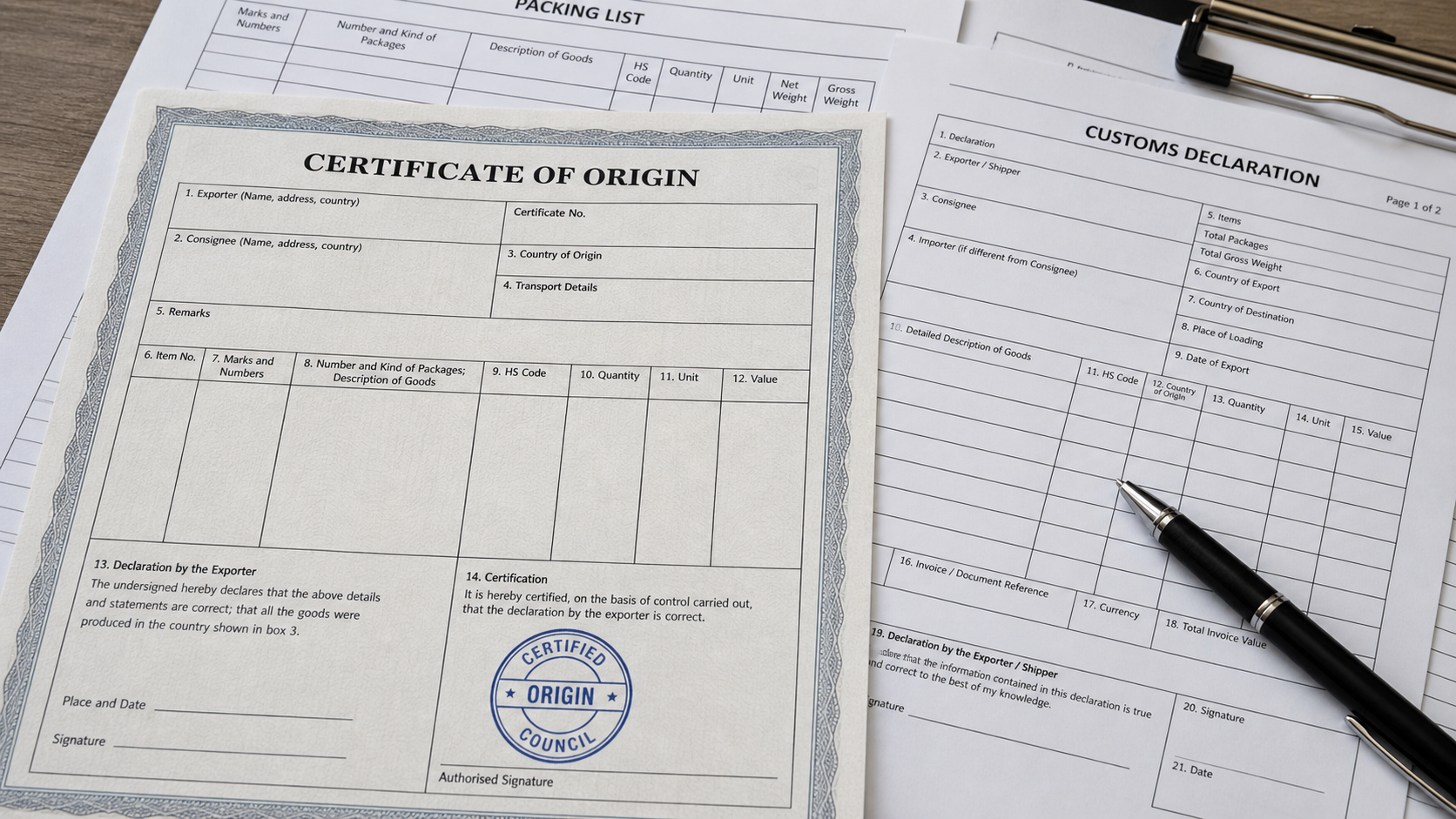
Documents and permits for beverages entering Singapore
Beyond tariff, beverages are controlled goods with food safety and alcohol controls. At minimum, plan for:
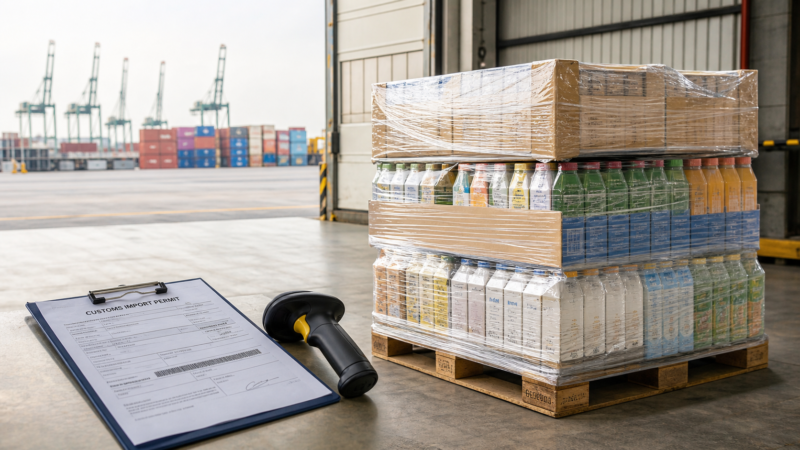
- Import permit via TradeNet: All imports require a customs permit lodged electronically through TradeNet. The permit is issued by Singapore Customs and indicates duties, GST, and any control requirements.
- Food importer registration/licensing with SFA: Most beverages are regulated by the Singapore Food Agency (SFA). Importers of food and beverages generally must be registered or licensed with SFA via the national licensing portal and comply with SFA’s import conditions, including source approvals where applicable.
- Labeling and compositional compliance: Ensure labels meet Singapore’s food labeling requirements. For nutrition, additives, and sweeteners, align with local standards; for health-related statements, check market-specific restrictions.
- Alcohol controls (if applicable): Importers of liquor need to comply with Singapore Customs’ liquor licensing framework and excise controls. Alcohol may require additional controls at bonded facilities until duty is paid.
- Payment facilities: Many importers set up Inter-Bank GIRO (IBG) with Singapore Customs for duties/GST. Discuss arrangements with your declaring agent before the first shipment.
Where goods enter Singapore: Ocean freight typically arrives via PSA Singapore terminals (e.g., Pasir Panjang), while airfreight is handled at the Changi Airfreight Centre. Singapore operates several Free Trade Zones (FTZs) at major ports and the airport, allowing storage and transshipment with facilitated import procedures until goods are released into local circulation.
Valuation, GST, and timing of taxes
Import GST in Singapore is generally calculated on the CIF value (or an equivalent customs value) plus any customs duty and other applicable charges. Alcoholic beverages also incur excise duty; non-alcoholic beverages typically do not. The permit reflects the tax payable, and GST is typically accounted for at permit approval or according to your arrangement with Singapore Customs.
Ensure the commercial invoice, bill of lading/air waybill, and packing list consistently reflect the valuation and shipment details. Discrepancies can delay permit approval or lead to additional queries at clearance—especially for controlled goods like beverages.
Vietnam-to-Singapore: using ATIGA vs RCEP in practice
For Vietnam-origin beverages entering Singapore, ATIGA is usually the first choice if the product meets ATIGA origin rules and you can secure a valid Form D/e-Form D. Consider RCEP when:
- Non-ASEAN inputs are significant and ATIGA origin cannot be achieved.
- The processing in Vietnam and/or ASEAN partners meets RCEP’s change in tariff classification or value content tests.
- Commercial timelines or documentation availability make RCEP more practical for a particular shipment.
Work closely with your customs broker to prepare the BOM origin analysis, ensure your HS classification is properly assigned in the Singapore system, and check if the preferential claim will be recognized on your TradeNet import permit.
Beverage types and typical controls at a glance
The matrix below summarizes how duty, excise, GST, and controls typically apply. Always verify at the exact HS code level before shipping.
| Beverage category | Customs duty | Excise duty | GST | Key controls & notes |
|---|---|---|---|---|
| 100% juice / juice drinks / nectars | Generally non-dutiable | Not applicable | Standard GST on import | SFA-regulated food; check labeling, additives, and compositional rules. |
| Waters & soft drinks (incl. flavored, carbonated) | Generally non-dutiable | Not applicable | Standard GST on import | SFA controls; confirm any sweetener or additive restrictions. |
| Ready-to-drink tea/coffee | Generally non-dutiable | Not applicable | Standard GST on import | SFA labeling for caffeine statements where relevant. |
| Beer & other fermented beverages | Dutiable category | Applies for alcohol | Standard GST on import | Liquor controls by Singapore Customs; bonded storage possible. |
| Wine, sparkling wine, cider/perry | Dutiable category | Applies for alcohol | Standard GST on import | Liquor controls; verify excise assessment method with broker. |
| Spirits & liqueurs | Dutiable category | Applies for alcohol | Standard GST on import | Strict liquor controls; confirm storage and release procedures. |
Common documentation pitfalls and how to avoid them
Preferential duty claims in Singapore are straightforward when documents are accurate. Issues typically arise from:
- Incorrect HS code: Leads to the wrong duty/excise profile or unexpected control conditions. Validate classification with your broker before finalizing labels and invoices.
- Origin proof gaps: ATIGA Form D or RCEP CoO must match the shipment and align with the BOM. Ensure exporter, consignee, description, and HS line references are consistent.
- Mismatched invoice or packing list data: Quantity, net/gross weight, and unit of measure must reconcile across documents to avoid clearance delays.
- Unclear product composition: Especially for mixed RTDs, keep a technical data sheet and ingredient breakdown available for SFA or customs queries.
When planning your market entry and supply chain, see our guide on how to import beverages into Singapore and review the broader Singapore market overview to align your product, labeling, and logistics with local expectations.
Singapore-specific checkpoints you should know
These items are specific to Singapore and matter for beverage imports:
- Singapore Customs is the customs authority and manages the TradeNet permit system for all imports.
- The Singapore Food Agency (SFA) regulates food and beverages, including importer registration/licensing and compliance checks.
- PSA Singapore terminals (such as Pasir Panjang) are the main container gateways; air shipments clear through the Changi Airfreight Centre. Multiple FTZs operate at ports and the airport.
- Import GST is generally 9% (assessed on the customs value plus applicable duties/charges). Confirm the prevailing rate before clearance.
Action plan for importers and beverage brands
To streamline compliance and avoid duty shocks:
- Fix your HS code early: Classify the finished product as it will be sold in Singapore (final formulation and packaging).
- Choose the right agreement: Prioritize ATIGA for ASEAN-origin goods; evaluate RCEP if ATIGA origin cannot be achieved.
- Prepare origin documentation: Arrange ATIGA Form D/e-Form D or an RCEP CoO from the designated authority in the exporting country.
- Align labels and specs: Meet SFA requirements, including ingredient statements and any mandatory nutrition or allergen declarations.
- Set up clearance and tax payment: Confirm your declaring agent workflow in TradeNet and your GST/duty payment method.
- Plan bonded vs direct clearance (alcohol): Decide if you will store in a licensed/bonded facility before excise payment, then release to the domestic market.
FAQ: singapore beverage import duty and trade agreements
Do ASEAN-origin non-alcoholic beverages pay customs duty in Singapore?
Most non-alcoholic beverages are already non-dutiable in Singapore. Under ATIGA, qualifying ASEAN-origin products typically enjoy a 0% preferential rate. You still account for import GST, and you must confirm the HS classification and ensure your documentation is correct.
Which Certificate of Origin should I use—ATIGA or RCEP?
Use ATIGA Form D/e-Form D for ASEAN-to-Singapore shipments when the product meets ATIGA’s origin rules. If ATIGA origin is not achievable due to inputs or processing, assess eligibility under RCEP and obtain an RCEP CoO instead.
How is import GST calculated for beverages in Singapore?
Import GST is generally computed on the customs value (commonly CIF) plus any customs duty and other applicable charges shown on the permit. Verify the prevailing GST rate and ensure all invoice and freight data are consistent with the declaration.
Can simple repacking in an ASEAN country secure ATIGA origin?
Usually no. Minimal operations, such as simple repacking or relabeling, typically do not confer origin. You need to meet the relevant tariff shift and/or regional value content rules specified by ATIGA for your HS line.
What is TradeNet and why does it matter?
TradeNet is Singapore’s national e-permit system used to lodge import declarations and claim preferential duty. Your declaring agent will submit an In-Payment permit via TradeNet, referencing the HS code, duties/GST, and any controls required by authorities like SFA.
Key takeaways and next steps
For most non-alcoholic beverages, singapore beverage import duty is not the main cost driver—GST is. For alcoholic beverages, excise duty applies and must be planned. ATIGA typically ensures 0% customs duty for qualifying ASEAN-origin products, while RCEP offers a useful alternative when ATIGA origin is out of reach. The essentials are correct HS classification, robust origin documentation, SFA compliance, and clean TradeNet permits.
If Singapore is part of your regional strategy, align your formulation, label, and logistics so one SKU can efficiently serve multiple ASEAN markets. Use the how to import beverages into Singapore guide for a step-by-step operational view and consult the Singapore market overview to benchmark route-to-market and channel considerations.