


 Français
 Español
 العربية
 한국어
한국어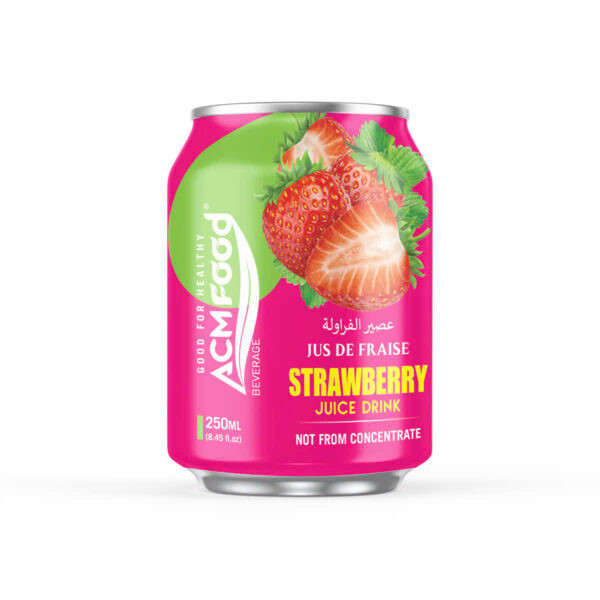











Strawberry juice sold on supermarket shelves is almost always rebuilt from concentrate, and the difference shows in the glass: reconstituted strawberry tends toward a flat, one-note sweetness, while a genuine not-from-concentrate pressing keeps the tartness and depth that make the fruit recognisable. Buyers sourcing for clean-label markets increasingly specify NFC by name rather than accept whatever concentrate blend a supplier defaults to.
What NFC Processing Preserves in Strawberry
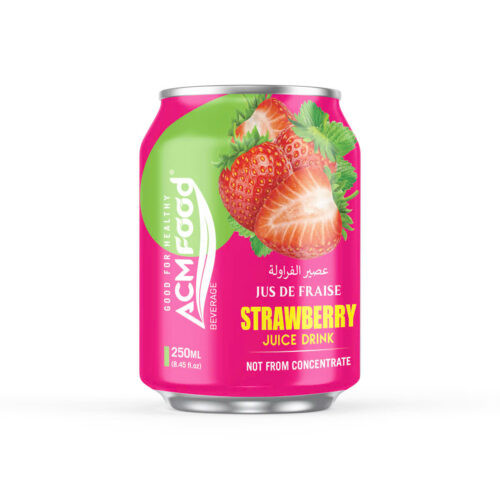
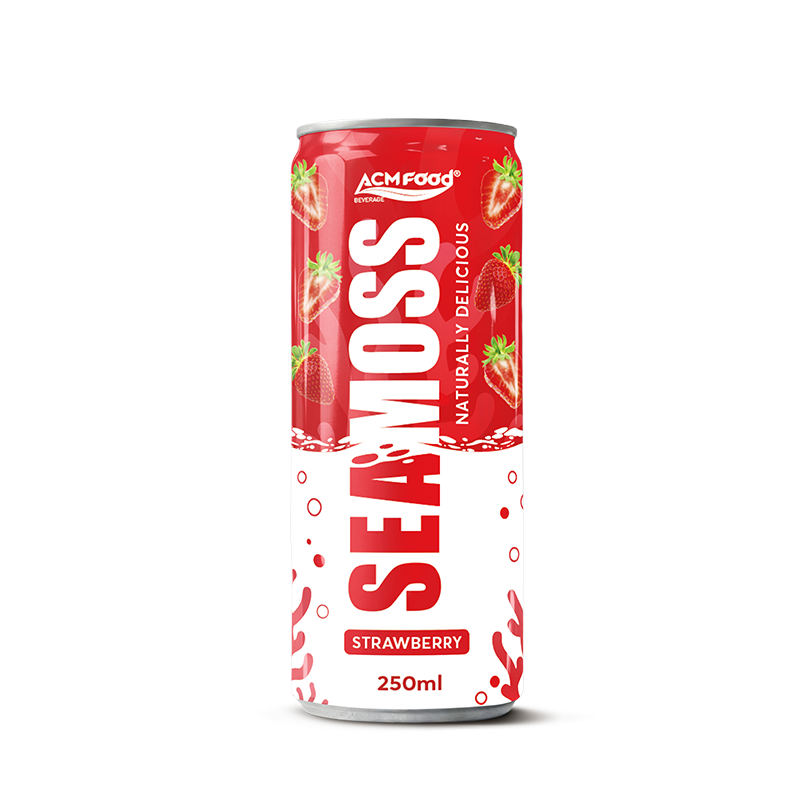
This strawberry juice NFC is pressed and filled directly, without ever being reduced to concentrate and reconstituted. No added sugar and no artificial colouring are needed — the anthocyanin pigments naturally present in the fruit carry the red colour on their own.
Those same pigments are highly light-sensitive, which is where the packaging does its part. Aluminium blocks light completely, so the 250ml can protects colour and flavour across a 24-month ambient shelf life without refrigeration at any stage of distribution.
Built for Convenience Retail and Export Logistics
The short can format fits standard cooler shelving and impulse displays, sized for single-serve pricing. It ships at a fraction of the weight of glass and holds up far better against the knocks of long-distance freight, which keeps damage claims down on mixed-pallet export orders.
Private label buyers get full-surface can printing, with artwork adaptable to any language or labeling requirement.
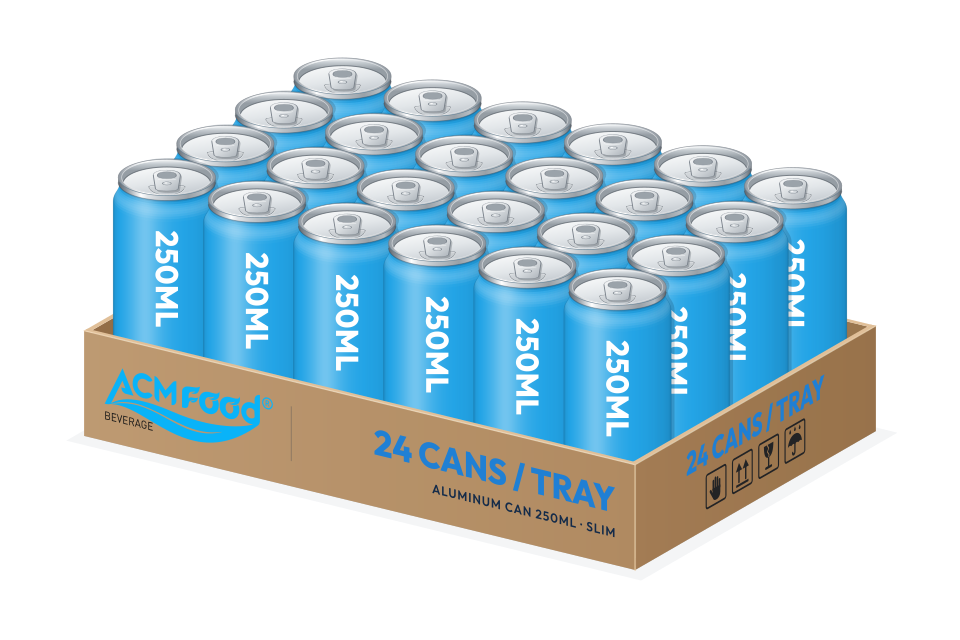
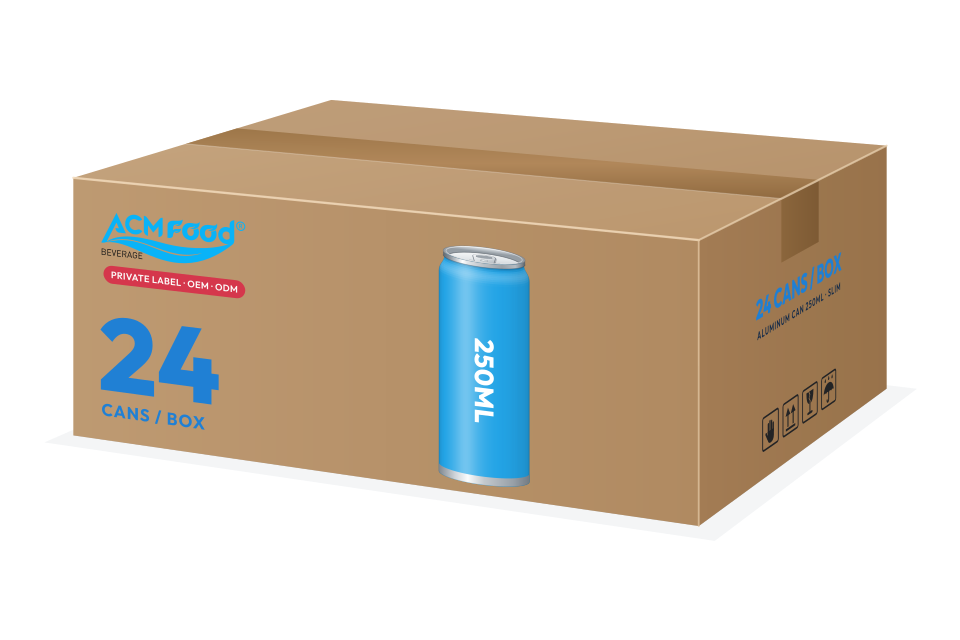
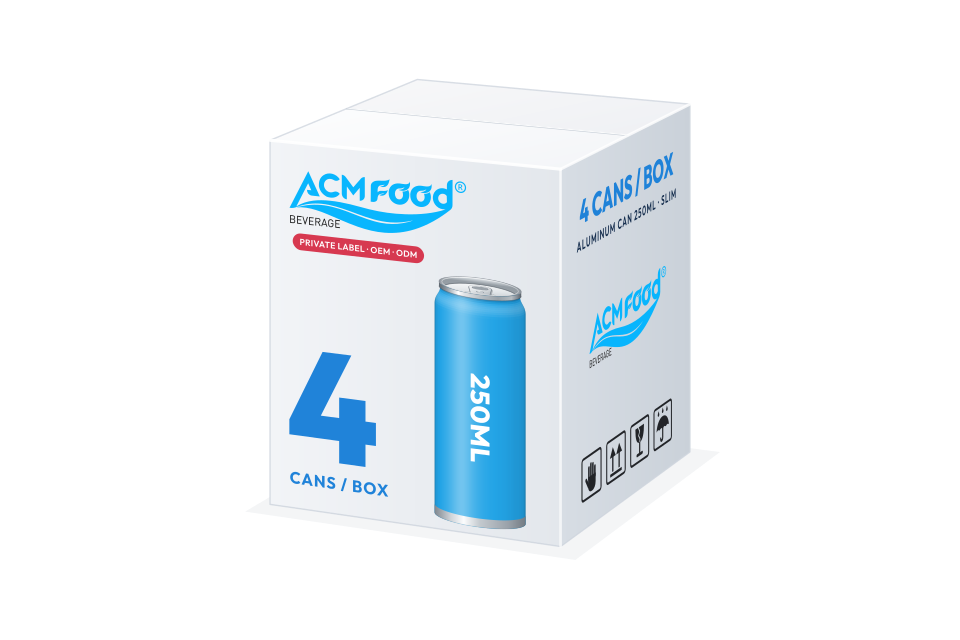
Production capacity runs up to 20,000 cartons per day from a 500-carton minimum, under FSSC 22000, HACCP and ISO 22000 certification, with 15 to 30 day lead times ex Ho Chi Minh City Port. Explore the complete fresh fruit juice range to round out an order.