


 Français
 Español
 العربية
 한국어
한국어To import beverages into China, overseas factories must register with the General Administration of Customs of China (GACC) under Decree 248 and comply with Decree 249; without a GACC registration code, shipments will not clear. This guide explains each step from CIFER registration and Chinese labeling to customs, inspection and post-market duties.
Start with the GACC manufacturer registration, then complete Chinese label compliance and customs declaration at major ports such as Shanghai, Ningbo-Zhoushan or Shenzhen. The ordered checklist below maps the full process and documents you will need.
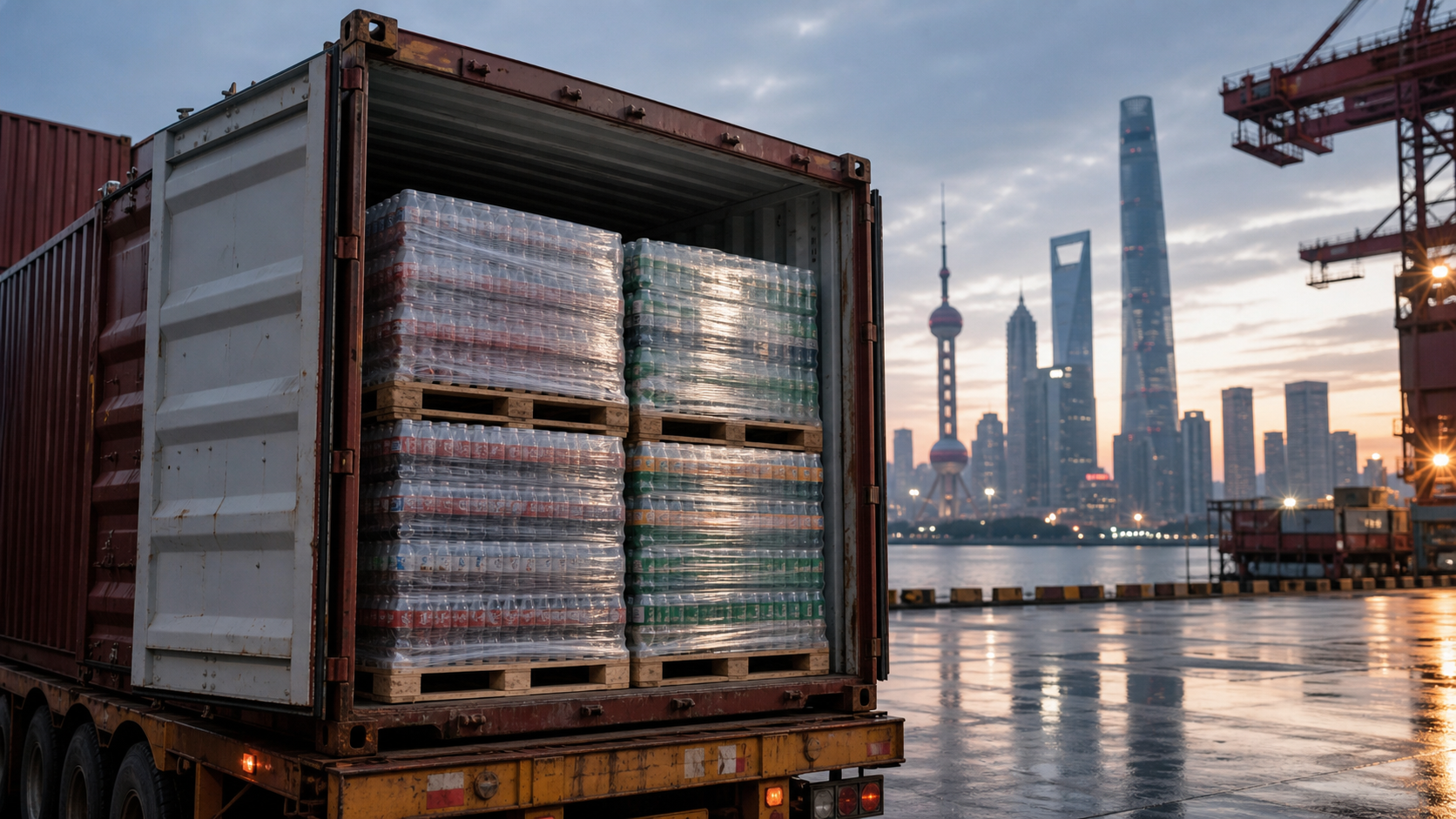
Step-by-step: how to import beverages into China (Decree 248/249 first)
The process begins with factory registration via the CIFER system and ends with post-market recordkeeping. Follow these ordered steps with your Chinese importer and customs broker.
- Confirm HS classification and access requirements. Determine the correct HS code (e.g., 2009 for juices, 2202 for other non-alcoholic beverages). HS classification dictates applicable supervision codes, documentation and any risk controls.
- Obtain overseas manufacturer registration (Decree 248) in CIFER. All overseas food manufacturers must register with GACC. Beverages are typically eligible for self-registration. After approval, you receive a GACC registration code.
- Mark the GACC registration number on packaging. Under Decree 248, print or affix the registration number on the inner and outer packaging before shipment, consistent with what you filed in CIFER.
- Ensure importer/exporter record filing (Decree 249). The Chinese importer must complete required record filings with Customs; your exporting entity may also need exporter filings based on the trade arrangement.
- Build Chinese-compliant labels and formula dossiers. Prepare Chinese labels that meet applicable GB standards and collate formulation and ingredient information so the importer can demonstrate compliance if requested by GACC.
- Conduct pre-import label review. Align with the Chinese importer and, if needed, a recognized lab or inspection agency to pre-check labels for compliance with general labeling and beverage-specific standards.
- Prepare documents for customs and inspection. Typically includes contract, commercial invoice, packing list, bill of lading/air waybill, certificate of origin (as applicable), and any sanitary/health or conformity documents required by the product’s HS code.
- Book shipment to a designated China port. Common entry points for beverages include Shanghai (Yangshan or Waigaoqiao), Ningbo-Zhoushan and Shenzhen (Yantian). Coordinate with your freight forwarder for arrival notice and coordination with the importer’s customs broker.
- Declare via China’s International Trade Single Window. The customs broker submits the import declaration and inspection application to GACC. Goods may be subject to inspection and sampling; duties and taxes are paid before release.
- Post-clearance compliance and traceability. Keep product traceability records, samples where required, and cooperate with any post-market surveillance under Decree 249.
China beverage import requirements under GACC Decree 248 & 249
Importers and exporters must meet GACC Decree 248 (overseas manufacturer registration) and GACC Decree 249 (import/export food safety administration). In practice, you must register your factory in CIFER, mark the registration code on packaging, file importer records, and ensure Chinese labeling and product compliance. Customs may inspect labels, packaging integrity and documents at the border.
- Who enforces: General Administration of Customs of China (GACC)
- Where to register: CIFER platform (China Import Food Enterprise Registration)
- Where to declare: China International Trade Single Window (via a licensed customs broker)
- Typical ports for beverages: Shanghai (Yangshan/Waigaoqiao), Ningbo-Zhoushan, Shenzhen (Yantian)
How to get a GACC registration code in CIFER
For most beverage categories, manufacturers can self-register in CIFER. You will submit basic establishment details, product categories, process information and contacts. Upon approval, GACC issues your registration code.
- Account creation: Register the overseas establishment on the CIFER portal and designate a responsible contact.
- Scope selection: Choose the correct food category for beverages; ensure it matches the products you plan to export.
- Document inputs: Establishment name and address, legal representative, production type, product list, and compliance statements as requested.
- Status tracking: Monitor application status and address any queries. After approval, mark the exact code on both inner and outer packaging as required by Decree 248.
Critical: Shipping without a valid GACC code will halt clearance. Align your factories and co-packers under the correct legal entity; if you change the production address or entity, update CIFER before shipment.
Chinese labeling rules that imported beverages must meet
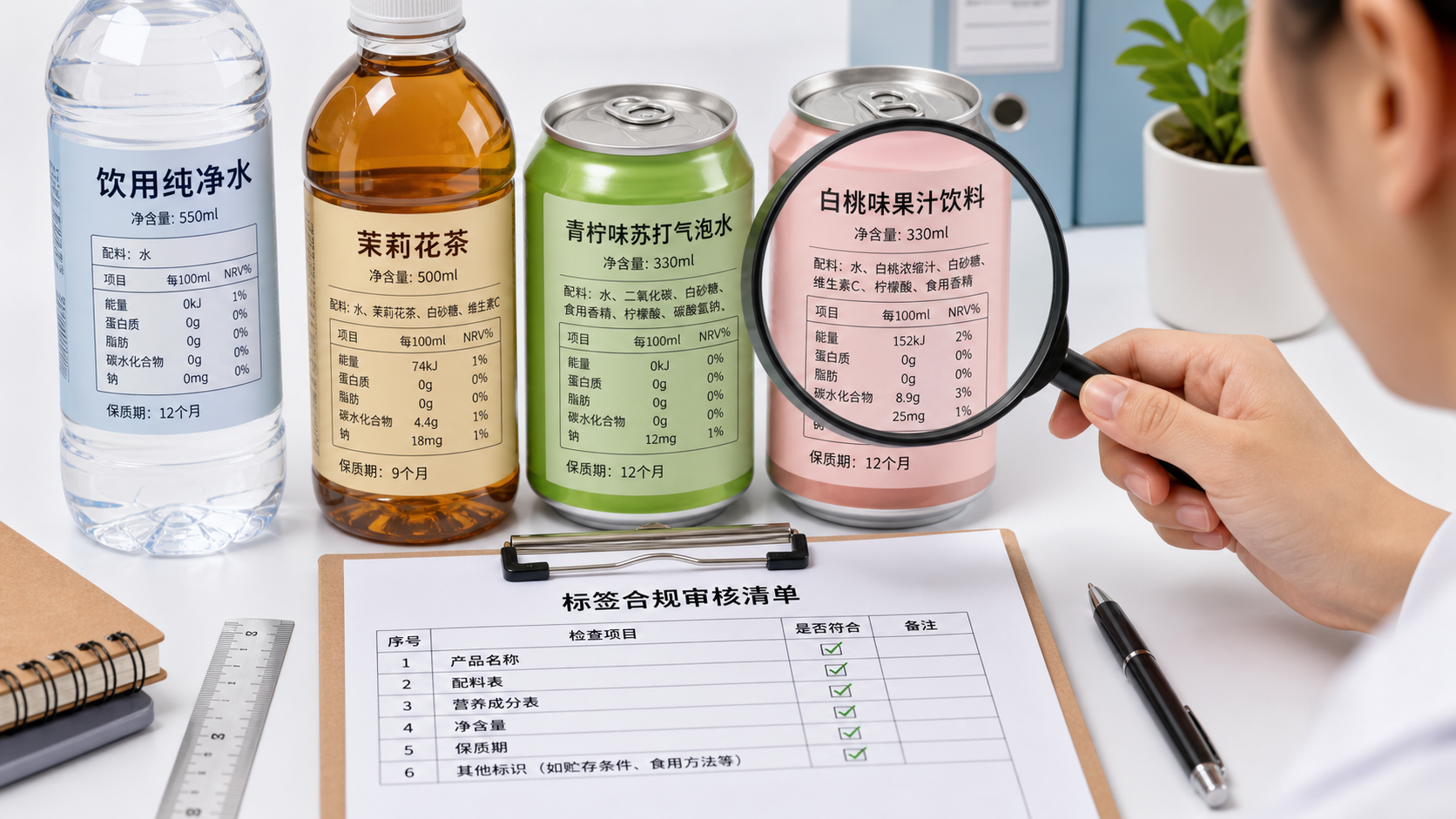
Imported beverages must carry compliant Chinese labels before sale. Many importers arrange label verification prior to shipment; some ports allow relabeling in bonded areas before customs release if coordinated with GACC. Labels generally must include the product name, ingredient list, net content, date marking, storage conditions, country of origin, manufacturer information, Chinese importer’s name/address/contact, and nutrition labeling where applicable under national standards.
- Language: Standard Chinese characters are required for mandatory items.
- Ingredients: List in descending order by weight; declare additives per China’s permitted lists for the product standard.
- Date & shelf life: Follow China’s date format and indicate production date and shelf life/expiration as the applicable standard requires.
- Allergens: Where relevant, declare in accordance with national labeling rules.
- Nutrition labeling: Provide nutrition facts where the standard requires for beverages.
- Importer details: Include the Chinese importer’s name, address and contact.
Work with your importer or a qualified testing/label agency to align labels with the general labeling rules and the beverage product standard used for your category and formula. Mismatched categories (e.g., labeling a sweetened beverage as 100% juice) can prevent release.
Customs declaration, ports and inspection flow in China
The importer’s customs broker typically completes the import declaration via China’s International Trade Single Window. At major beverage entry ports—Shanghai (Yangshan or Waigaoqiao), Ningbo-Zhoushan and Shenzhen (Yantian)—GACC may conduct document checks, label review and sampling.
- At arrival: The carrier/forwarder issues the arrival notice; broker registers the inspection request and customs declaration to GACC.
- Inspection: GACC can examine packaging integrity, verify GACC registration code on packaging, review Chinese labels and, if needed, sample for compliance with applicable standards.
- Duties & taxes: Pay assessed import duties and taxes based on HS classification and valuation before goods are released.
- Release: Upon successful inspection and payment, GACC issues release and goods can enter distribution. Keep label and traceability records for post-market checks.
Key documents to prepare for beverage imports
Below is a practical overview. Actual requirements depend on HS code, port practices and the importer’s filings with GACC.
| Document | Who issues | Stage | Positioning & notes |
|---|---|---|---|
| GACC manufacturer registration (CIFER code) | Overseas manufacturer, approved by GACC | Pre-shipment | Must be printed on inner & outer packaging per Decree 248 |
| Importer/exporter record filings | Chinese importer (and exporter when applicable) | Pre-shipment | Required under Decree 249 to transact food imports |
| Chinese label artwork & compliance dossier | Brand owner/manufacturer; verified with importer/lab | Pre-shipment | Align with beverage product standard used for the formula |
| Commercial invoice, packing list, contract | Exporter | Customs declaration | Must reflect accurate product description and HS |
| Bill of lading / air waybill | Carrier / forwarder | Arrival | Matches consignee/notify with declaration |
| Certificate of origin (if applicable) | Origin authority | Customs declaration | Used for origin compliance or preferential schemes when available |
| Sanitary/health certificates (if required by HS) | Competent authority of origin | Inspection | Depends on product type and supervision code; confirm per HS |
For background on origin procedures, see our guidance on Certificate of Origin for beverages. For a country view, review the China Market overview.
Product classification essentials for beverages
Be sure your formulation and labeling align with the correct category. Misclassification leads to relabeling or rejection.
- 100% juice (HS 2009): Typically no added sugars or sweeteners; single fruit or blend; labeling must reflect actual content.
- Other non-alcoholic beverages (often HS 2202): Includes sweetened drinks, flavored waters, teas, carbonated drinks and energy beverages; additives and sweeteners must be permitted for the specific product standard.
- Waters (HS 2201): Mineral and spring waters have distinct composition and labeling rules.
HS determines supervision codes, testing focus and required certificates. Confirm HS early with your broker and keep technical sheets ready to support the classification.
Practical tips to avoid clearance delays
Small discrepancies often trigger on-hold status. Mitigate risks with these controls:
- Exact code marking: Match the GACC registration number format in CIFER with the number printed on cartons and units.
- Consistent data: Product name, net content, ingredient order and brand description should be consistent across invoice, label and declaration.
- Port coordination: If you plan to apply Chinese labels in a bonded area, confirm the port’s procedures and obtain importer commitments before sailing.
- Sampling readiness: Keep retain samples and specifications available in case GACC requests additional verification.
- Stable formulation: Changing sweeteners, acidity regulators or colorants without updating labels can lead to non-compliance.
Commercial considerations for beverage brands entering China
Compliance is the gate; commercial execution drives sell-through. Pair regulatory readiness with product-market fit.
- Port choice and lanes: Shanghai (Yangshan/Waigaoqiao), Ningbo-Zhoushan or Shenzhen (Yantian) are high-capacity options with established cold-chain and beverage handling services.
- Consumer fit and flavor strategy: Localize flavor profiles and sweetness. See ideas in choose the right juice flavors.
- Category momentum: Monitor innovation waves across APAC and what may resonate in China; read APAC beverage trends 2026.
- Origin narrative: If origin adds value, align packaging, origin marking and documents; inconsistency undermines customs and marketing.
Plan your import calendar around promotions and seasonal windows, building in time for label verification, possible inspection and port congestion contingencies. Coordinate early with your broker to confirm HS, supervision codes and any testing focus likely for your SKU.
What happens if you skip Decree 248 registration?
Without a valid GACC manufacturer registration code, the declaration cannot proceed to release. Cargo may be held until you complete registration and correct packaging. For first-time exports, schedule CIFER approval and label checks well before production to avoid rework on printed packaging.
Frequently asked questions

FAQ
Do all beverage factories need GACC registration to import into China?
Yes. Under Decree 248, all overseas food manufacturing establishments must obtain a GACC registration code. For most beverage categories, self-registration in CIFER applies. Without a code, shipments will not clear.
Where should the GACC registration number be shown?
Mark the GACC registration number on both the inner and outer packaging before shipment, consistent with your CIFER filing. Customs may check the markings during inspection.
Can we add the Chinese label in a bonded warehouse after arrival?
Some ports allow relabeling in bonded areas before customs release if coordinated in advance with the importer and GACC. Confirm the exact procedure with your port and customs broker before shipping.
How is HS classification decided for beverages?
It depends on product composition and function. 100% fruit juice is commonly classified under Chapter 20, while sweetened or flavored non-alcoholic beverages often fall under Chapter 22. Provide formulas and technical sheets to support the broker’s classification.
Do I need a sanitary or health certificate for soft drinks?
Requirements vary by HS code and supervision codes. Some processed beverages do not require a health certificate, while others do. Confirm document needs early with your importer and broker for your specific HS line.
Sources
- General Administration of Customs of China (GACC): http://english.customs.gov.cn/
- CIFER – China Import Food Enterprise Registration: https://cifer.singlewindow.cn/
- China International Trade Single Window: https://www.singlewindow.cn/
For more on the China route and the broader APAC context, review our China Market overview and regional APAC beverage trends 2026. When you are ready to import beverages into China, align your CIFER registration, Chinese labels and HS documentation early to reduce clearance risks.