


 Français
 Español
 العربية
 한국어
한국어To import beverages into France, you must clear EU customs, meet French market rules, and plan taxes. Expect France’s standard VAT of 20% to apply in many cases, plus excise for alcohol and a national soda tax for certain soft drinks. DGCCRF and French Customs enforce checks at the border and on the market.
This step-by-step guide focuses on France-specific requirements: French-language labelling, packaging EPR with the Triman logo and Info-tri, DGCCRF oversight, sugar tax, and excise administration via French Customs. For the shared EU layer (labelling, nutrition claims, additives, hygiene), use the reference page on EU rules linked below.
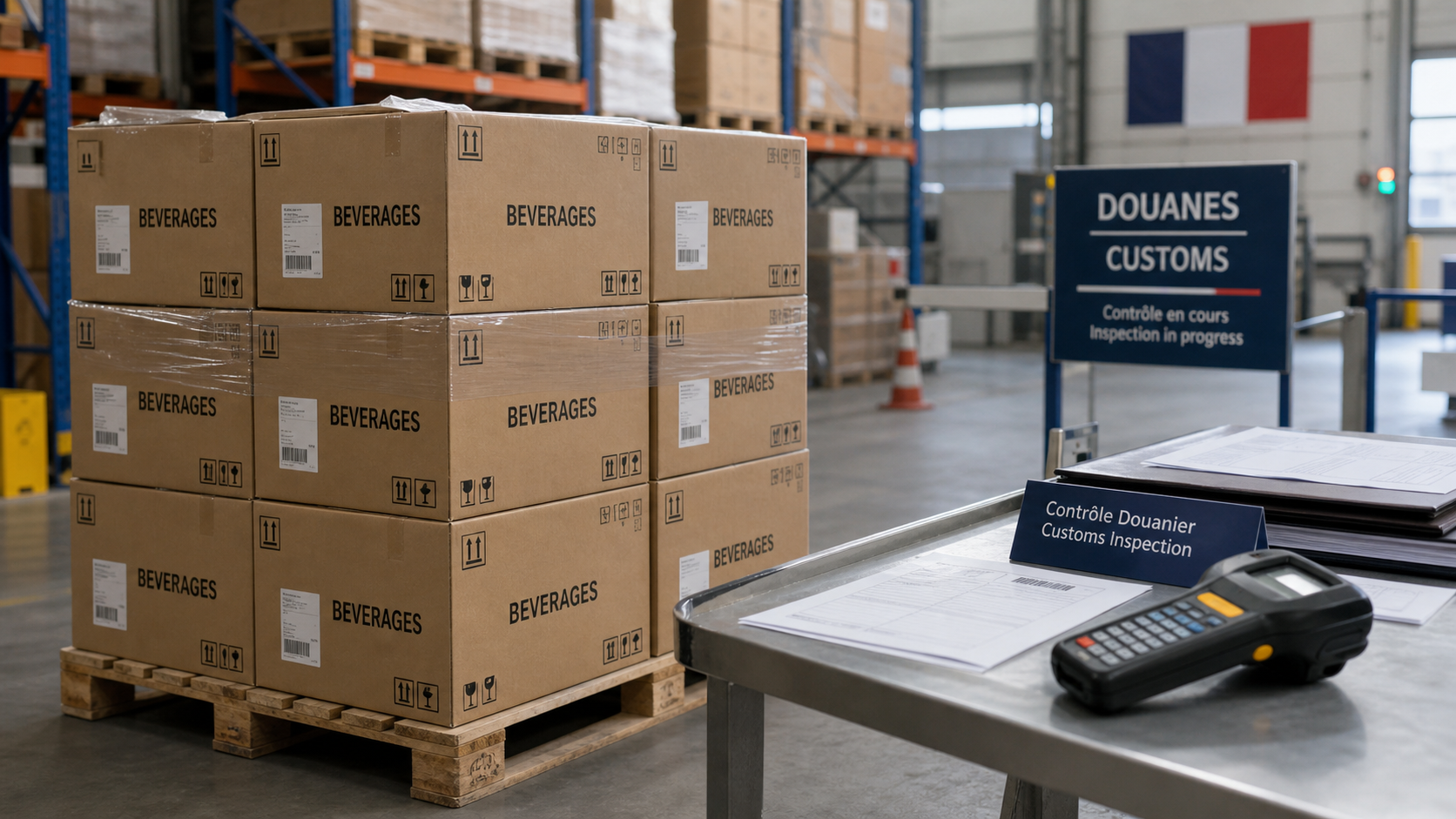
What does importing beverages into France involve?
In short: classify your drink, prepare EU-compliant documentation, add France-specific labelling in French, register for packaging EPR (Triman & Info-tri), file customs in France (often via a broker), pay duties, VAT and applicable national taxes, and be ready for DGCCRF market surveillance after release for free circulation.
Step-by-step: how to import beverages into France
The sequence below helps beverage brands, importers of record (IOR) and distributors move from compliance planning to first shipment and beyond.
- Define the importer of record and legal footprint in France. Decide who takes liability on French soil (your local subsidiary, your distributor, or a customs fiscal representative). Ensure the chosen IOR can handle tax filings, EPR reporting and post-market obligations.
- Obtain an EORI number (EU Economic Operators Registration and Identification) for customs declarations. Your customs broker can confirm the status and use it in the French DELTA customs system.
- Classify your beverage (alcoholic vs. non-alcoholic; HS code) to determine EU duty, French excise (for alcohol) or soda tax exposure. Alcohol strength, sugar content, and packaging format often influence the tax treatment.
- Confirm the EU-wide regulatory baseline for labelling, ingredients/additives, claims and nutrition formats. Rather than duplicating EU rules here, see the consolidated summary at EU beverage labelling and import rules and then return to apply the French overlays below.
- Prepare France-specific labelling overlays. Consumer-facing information must be in French. Ensure the legal name of the food appears in French; translate ingredient lists, allergen emphasis, net quantity, storage, best-before/use-by, and importer details. For alcohol, ensure ABV declaration; check any additional mandatory mentions specific to the category under French consumer law.
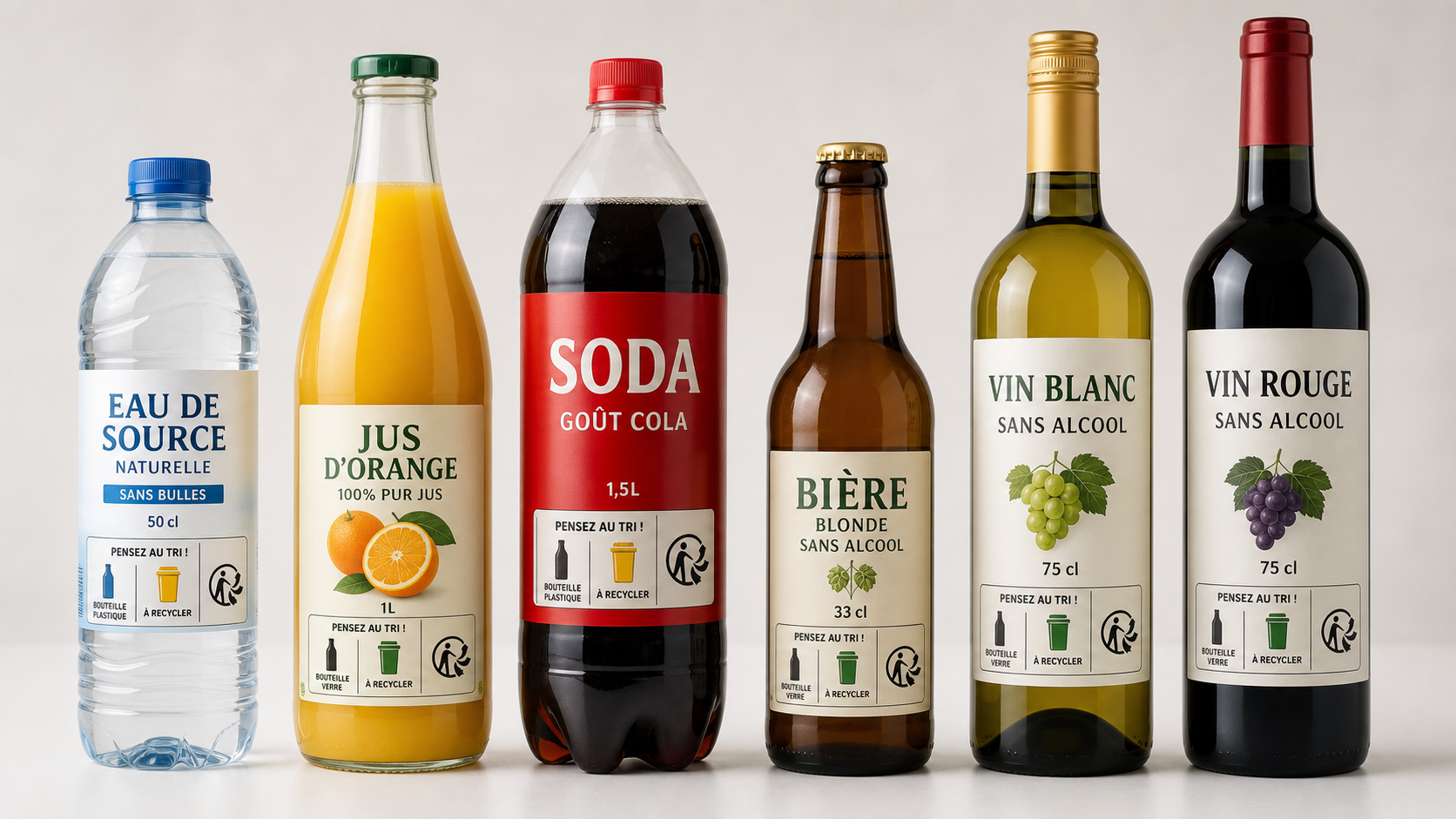
- Register for French packaging EPR and prepare Triman & Info-tri. Before placing packaged goods on the French market, you must join an approved producer responsibility organization (commonly CITEO), obtain the identifiant unique issued via ADEME systems, and print the Triman logo with sorting instructions (Info-tri) on pack or via permitted alternatives. Plan artwork lead time.
- Assess French taxes. Alcoholic beverages are subject to excise administered by French Customs (DGDDI). Many imports attract VAT on import (France’s standard VAT is 20%), and certain soft drinks are subject to the national taxe sur les boissons sucrées or édulcorées. Confirm final liability and declaration flows with your fiscal representative.
- Assemble your import documentation. Typical files include commercial invoice, packing list, transport document (B/L or AWB), product specs, shelf-life, lot traceability, certificates of origin (if using preferential tariffs), and—if applicable—organic import certificates or other attestations required for specific categories. Keep everything consistent and in line with French language needs for the consumer label.
- Choose your French entry point and logistics. Pick a suitable port (e.g., Le Havre, Marseille–Fos, Dunkirk) or airport (e.g., Paris CDG) considering lead time and cold chain. Align on Incoterms and broker responsibilities to avoid delays.
- File the French customs declaration. Your broker will submit via the national customs system (DELTA), present supporting documents, and coordinate any container or pallet inspection. Be prepared for sampling, especially for alcohol and new-to-market SKUs.
- Settle duties, VAT and applicable national taxes. Arrange payment mechanisms (deferred accounts, guarantees). For alcohol, ensure excise warehouse or duty-paid arrangements are in place. For soft drinks within scope of the soda tax, confirm registration and reporting cadence.
- Release and transport to warehouse. Once cleared, move cargo to your facility or third-party logistics partner. Protect shelf-life with appropriate storage conditions and maintain traceability by lot/batch in case of a recall.
- Post-market vigilance. DGCCRF conducts market surveillance and can request documentation, inspect labels in retail/e-commerce, and take samples. Keep an internal dossier with specs, lab reports, and proof of EPR registration and tax compliance ready.
- Iterate with each production run. Re-check label artwork whenever formulations, pack sizes or claims change; update EPR reporting; reconcile tax declarations; and keep records aligned with French consumer law and customs requirements.
France-specific requirements you must plan for
France adds several obligations beyond the EU baseline. These affect artwork, taxes, and who is responsible after goods land.
- French-language labelling is mandatory. Consumer information must be in French on-pack or by permitted means. This covers the legal sales name, ingredients, allergen emphasis, net quantity, storage/use, date marks, and business name/address of the importer/distributor in France.
- Packaging EPR, Triman and Info-tri are required. Producers/importers must enroll in a packaging scheme (commonly CITEO), obtain an identifiant unique, and apply the Triman logo with French sorting instructions (Info-tri). Artwork and pack sizes must allocate space for these marks.
- Soda taxes apply to certain soft drinks. France levies national taxes on beverages with added sugars and on beverages with sweeteners. Importers placing such products on the French market are liable for declaration and payment. Scope depends on formulation and sugar/sweetener content.
- Excise on alcohol. Beer, wine, cider and spirits each follow defined excise rules administered by French Customs. Excise can apply at import or under duty-suspension with an excise warehouse arrangement. ABV and product category drive the calculation.
- DGCCRF oversight and French Customs controls. DGCCRF oversees consumer protection and can verify labels in French, fair information, and product safety. DGDDI (French Customs) handles border declarations, duties and excise administration.
Customs, ports and clearance options in France
You can route beverages through France’s major seaports and airports depending on mode, lead time and cold chain needs. Work with a broker experienced in beverages to manage DELTA declarations and any excise formalities for alcohol.
| Entry point | Typical uses | Positioning & notes |
|---|---|---|
| Port of Le Havre | Deep-sea container traffic | Large cold-chain capacity; frequent beverage flows into northern France & Paris region |
| Port of Marseille–Fos | Med routes, reefer, containers | Efficient for Mediterranean & North Africa links; proximity to southern distribution hubs |
| Port of Dunkirk | Containers & bulk | Alternative northern gateway; links to Benelux and UK-facing logistics |
| Paris Charles de Gaulle (CDG) | Air freight | Fast entry for short shelf-life SKUs and urgent launches; higher cost |
Document checklist for beverage imports into France
Organize documents before booking freight. Align descriptions across all files to avoid queries or holds.
- Commercial invoice (accurate HS codes, Incoterms, currency, consignee/importer details)
- Packing list (per SKU, lot numbers, net/gross weights, palletization)
- Transport document (B/L or AWB) and arrival notices
- Product specification dossier (ingredients, allergens, ABV if applicable, storage, shelf-life)
- Artwork proofs showing French-language label and Triman/Info-tri placement
- Certificates of origin (preferential, if applicable) and any attestations needed for category claims
- Organic certificates for EU import, if the product is certified organic
- Broker authorization and power of attorney for customs and excise filings
- Evidence of EPR registration (identifiant unique)
Cost elements and taxes in France
Estimate landed cost early. Tax treatment depends on classification, alcohol strength, formulation and channel.
- Customs duty: Based on the EU Common External Tariff and HS code. Preferential rates may apply under trade agreements when supported by correct origin documentation.
- VAT: Import VAT is generally due at French clearance. France’s standard VAT rate is 20%. Reduced rates exist for certain categories and channels; verify your exact rate with your broker or fiscal representative.
- Excise (alcohol only): French Customs administers excise on beer, wine, spirits and other alcoholic beverages. The rate depends on ABV and category. Excise-suspension regimes may be available for bonded storage.
- France’s soda taxes: National taxes apply to beverages with added sugars and to beverages with sweeteners. Calculate liability from the final formulation and volumes placed on the French market.
- EPR eco-contributions: Annual fees to the packaging scheme (e.g., CITEO) are due by producers/importers, based on material, weight and volumes reported.
- Logistics and compliance: Cold chain surcharges, laboratory testing (if commissioned), translation and artwork updates for French requirements.
Labelling and claims: operating in France
Start from the EU baseline for beverage labelling and claims and then apply French overlays. For the shared EU layer, see EU beverage labelling and import rules.
- Language: France requires consumer information in French. Multilingual labels are fine, but French must be present and legible.
- Legal name and category terms: Use the correct French product name (e.g., jus de fruits, boisson rafraîchissante, or a category-specific term for alcohol). Avoid translations that mislead.
- Mandatory mentions by category: For alcohol, declare ABV and any category-defined particulars (e.g., for wines and beers). Follow EU allergen emphasis, translated to French.
- Triman & Info-tri: Place the Triman logo and French sorting instructions according to the approved formats and deadlines set in France.
- Nutrition and health claims: Only use claims permitted under EU rules and ensure the French translation matches the authorized wording and conditions. Avoid implying medical benefits.
Choosing partners and models for France
France is a mature beverage market with strong retail, on-trade and e-commerce channels. Decide whether to sell under your own brand, private label for a retailer, or via a distributor. Review typical risk-sharing, MOQs, and who carries import liabilities (EPR, soda tax, excise, VAT).
- Define responsibilities in contracts: importer of record, tax filings, artwork sign-off, recalls and DGCCRF interactions.
- Use a customs broker experienced in beverages and, for alcohol, in excise regimes and bonded warehousing.
- Stress-test artwork timelines for French language and Triman/Info-tri integration before print.
- Plan demand for seasonal peaks and factor port selection (Le Havre vs. Marseille–Fos) into lead time.
For strategic options beyond pure importing, see B2B beverage business models. To understand France’s retail structures and buyer expectations, review the France beverage market overview.
Risk management and DGCCRF market surveillance
DGCCRF can check labels online and in stores, review documents, and sample products. Prepare for this by maintaining an internal compliance file in French, including:
- Specifications, lab reports (if any), and formulation history
- Final approved label PDFs with Triman & Info-tri
- EPR enrollment proof and identifiant unique
- Evidence of tax filings: excise, soda tax (if applicable), and VAT mechanisms
- Recall/withdrawal procedure and complaint logs
Align with your broker and distributor on who responds to authority queries and who controls corrective actions (re-labelling, withdrawal, or communications).
Practical tips to speed up first shipments
Small process improvements reduce delays and rework.
- Artwork first: Lock the French label and Triman/Info-tri before booking production to avoid reprints.
- Broker pre-check: Have your customs broker validate HS code, duty/VAT scenarios and, for alcohol, excise treatment prior to PO confirmation.
- Consolidate by category: Clear pallets of similar tax treatment together to simplify declarations.
- Temperature plan: Document the cold chain if required by the product and retailer’s specs.
- Keep alternatives: Maintain a second port/airport option to bypass congestion.
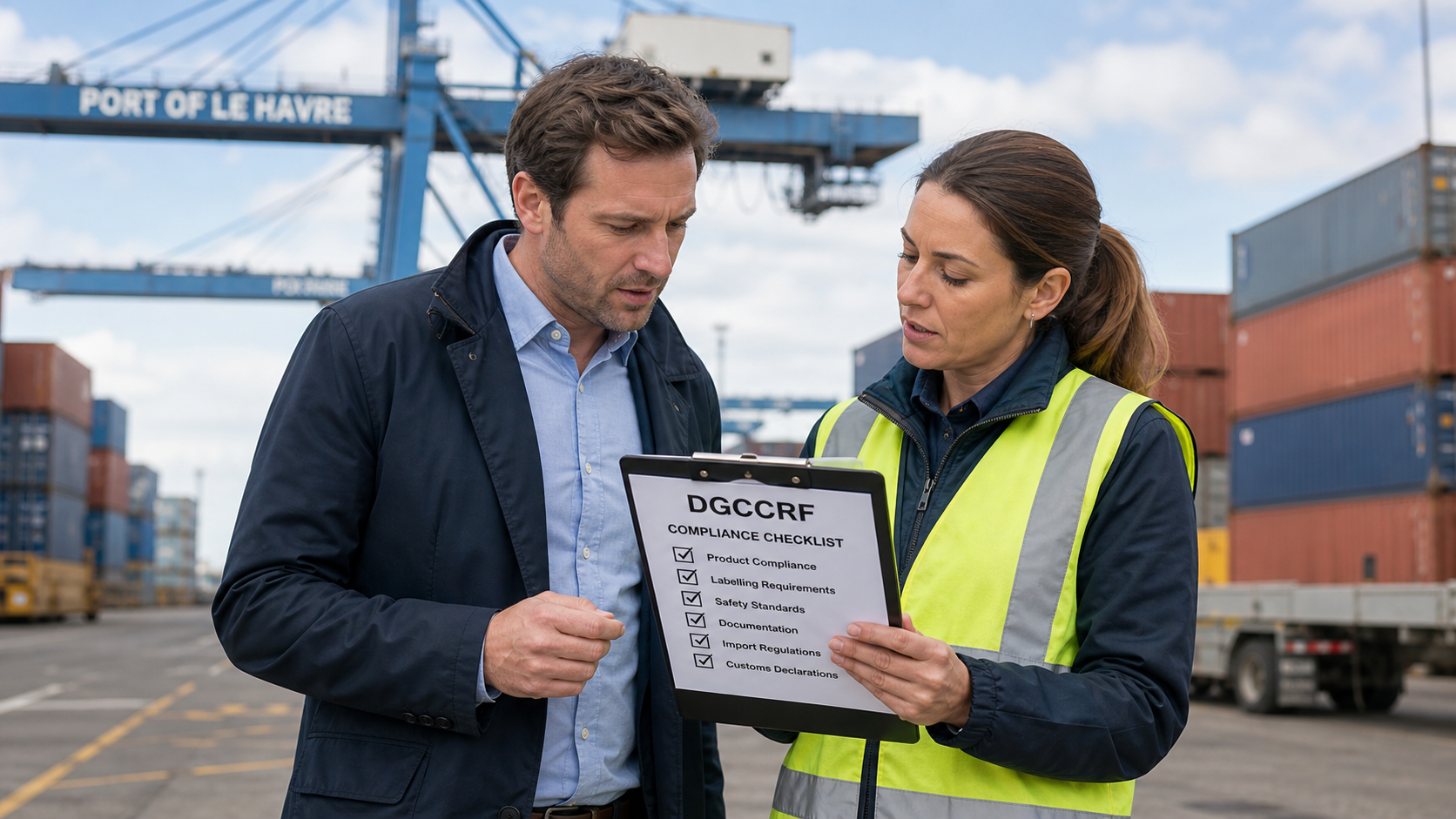
For duty rates, EVFTA preferences and French beverage taxes in detail, see import duty and trade agreements for beverages entering France.
FAQ
Do I need a French company to import beverages into France?
No, but you need an importer of record established or represented in the EU to handle customs and taxes in France. Many brands appoint a French distributor or a customs fiscal representative. Confirm who holds liability for EPR, soda tax and excise in your contracts.
Is French language mandatory on beverage labels?
Yes. Consumer information must be in French. You can keep multilingual designs, but the French text must be complete and legible, including the legal name, ingredients, allergens, quantity, dates, storage, and importer address.
Who enforces beverage rules in France?
Border clearance and excise are handled by French Customs (DGDDI). DGCCRF (Direction générale de la concurrence, de la consommation et de la répression des fraudes) oversees consumer protection, labelling accuracy and market surveillance.
Are samples treated differently?
Product samples may still require customs declarations and must comply with labelling and tax rules when distributed to consumers. Confirm duty/VAT relief thresholds and ensure any alcohol samples follow excise provisions.
Conclusion
To successfully import beverages into France, build on the EU baseline and add the French overlays: French-language labels, packaging EPR with Triman/Info-tri, DGCCRF market surveillance, soda tax for certain soft drinks, and excise for alcohol. Choose the right entry port, line up a capable broker, and agree in writing who owns IOR, EPR and tax obligations. With those foundations in place, first shipments can move predictably through Le Havre, Marseille–Fos, Dunkirk or CDG.
If you are mapping your EU compliance baseline, start with the consolidated reference: EU beverage labelling and import rules, then adjust for France-specific overlays highlighted in this guide.
Sources
Official authorities and programs referenced: DGCCRF (France’s consumer protection authority), French Customs (DGDDI), ADEME and CITEO for packaging EPR, and France’s soda tax framework. Consult their official portals for current procedures and rates.