



 Français
 Español
 العربية
 한국어
한국어To import beverages into India, you need an Indian importer with a valid 14‑digit FSSAI license, an IEC from DGFT, compliant labels, and clearance through FSSAI’s Food Import Clearance System at the port. Below is a practical, step‑by‑step process and document checklist tailored for drinks, juices and ready‑to‑drink products.
This guide focuses on non‑alcoholic beverages (HS 2009 and 2202). Alcoholic drinks involve additional excise rules and are not covered here.
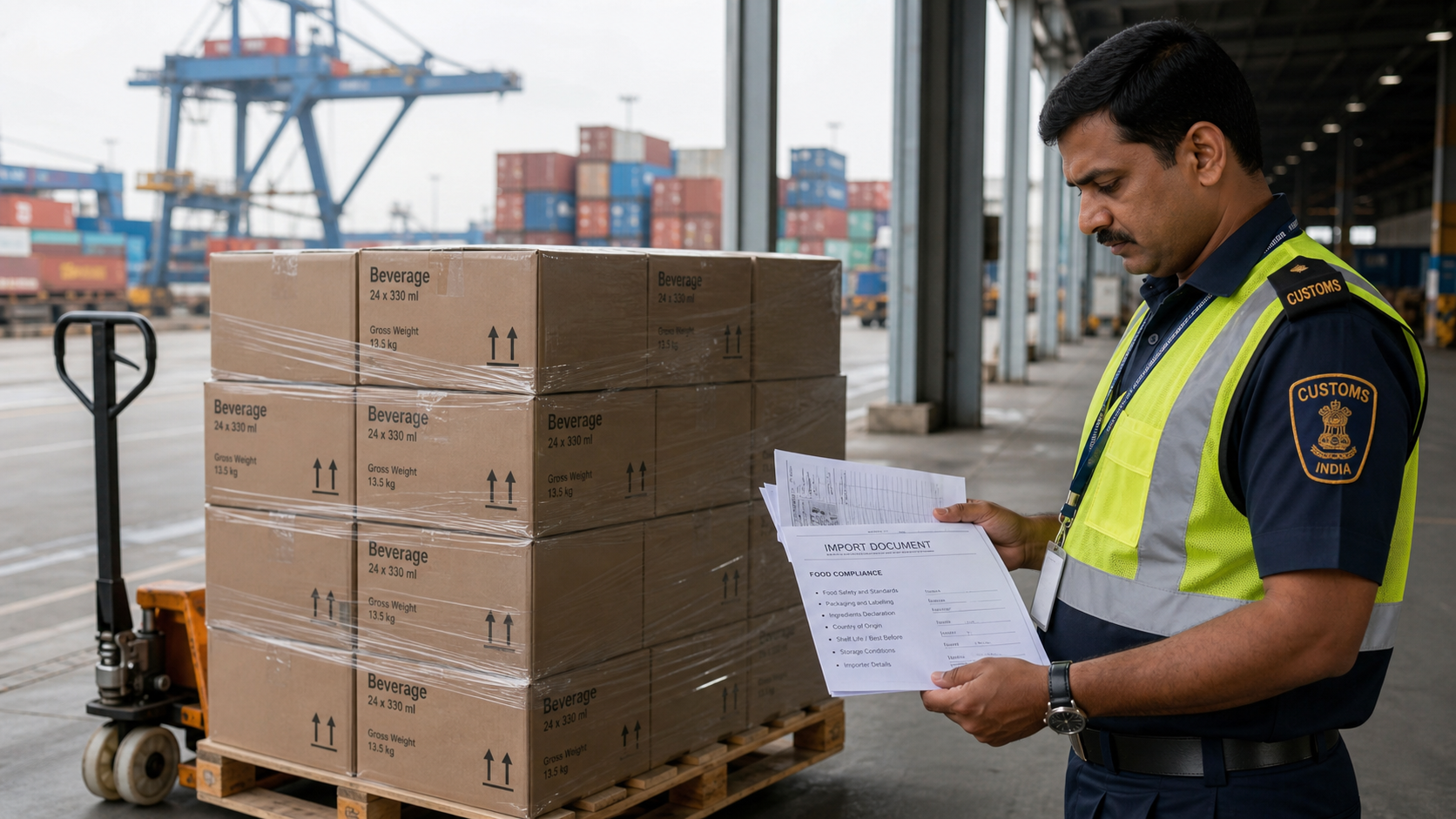
What does it take to import beverages into India?
You need a licensed Indian importer, correct HS classification, compliant labelling under FSSAI and Legal Metrology, shipment documents, and successful clearance through customs and FSSAI’s port inspection and testing. India is not part of RCEP, so RCEP tariff preferences are not available for beverage imports.
India’s key authorities and frameworks include: Food Safety and Standards Authority of India (FSSAI), Food Safety and Standards (Import) Regulations, 2017, Legal Metrology (Packaged Commodities) Rules, 2011, and Indian Customs via ICEGATE. Major entry points include JNPT/Nhava Sheva (Mumbai), Mundra (Gujarat), Chennai (Tamil Nadu) and ICDs such as Tughlakabad (Delhi).
Step-by-step: How to import beverages into India
The following ordered steps reflect how shipments are commonly planned, documented, and cleared. Use them as a working checklist when you import beverages into India.
- Define product scope & HS codes. Confirm whether your SKU is fruit/vegetable juice (HS 2009) or other non‑alcoholic beverages (HS 2202). Align product name, ingredients, and additives with FSSAI standards for the applicable category.
- Confirm importer credentials. Ensure the Indian entity holds an IEC (Importer–Exporter Code) from DGFT and a valid FSSAI Central License for import. The FSSAI license is identified by a 14‑digit number and is mandatory for food imports.
- Check standardization status. If your drink falls under a defined FSSAI standard, follow it. If it is a non‑standardized food, consult FSSAI early to understand the acceptance path before shipping.
- Align additives and fortificants. Verify any sweeteners, colors, preservatives, caffeine, or vitamins/minerals comply with FSSAI limits and are permitted for your category. Keep technical data sheets and certificates ready.
- Prepare India‑compliant labels. Labels must meet FSSAI Labelling and Display Regulations, 2020 and Legal Metrology (Packaged Commodities) Rules, 2011. Include declarations in English (Hindi acceptable too), mark veg/non‑veg symbol, net quantity in SI units, batch, manufacturing/packing date, best‑before/use‑by, importer’s name & address, and FSSAI license number.
- Plan shelf life & storage. FSSAI requires imported food to have at least 60% of shelf life remaining at the time of import. Choose shipping modes and buffers to protect time‑temperature‑sensitive SKUs.
- Arrange the document set. Typically include commercial invoice, packing list, bill of lading/air waybill, insurance, product composition, ingredients list, allergen info, certificate of analysis, and certificate of origin (for applicable FTAs). Note: India is not in RCEP, so there is no RCEP preference.
- Book routing to a suitable port/ICD. Common gateways for beverages are JNPT/Nhava Sheva (Mumbai), Mundra (Gujarat), Chennai (Tamil Nadu), and ICD Tughlakabad (Delhi) for inland clearances.
- File the Bill of Entry via ICEGATE. Your customs broker files electronically on ICEGATE. Be precise with HS codes and descriptions to reduce queries.
- FSSAI appointment in FICS. At arrival, the FSSAI Authorized Officer (AO) registers the consignment in the Food Import Clearance System (FICS), performs visual checks, verifies documents and labels, and draws samples for lab testing as needed.
- Testing & NOC issuance. Samples go to an FSSAI‑notified laboratory. If results conform, the AO issues a No Objection Certificate (NOC). Keep in contact with your broker to track test outcomes and timelines.
- Customs assessment & duty payment. Customs assesses Basic Customs Duty, Social Welfare Surcharge (if applicable) and IGST as per the tariff schedule. Pay duties and retrieve Out of Charge (OOC) for release.
- Sticker any permitted declarations in bond. If allowed under Legal Metrology, apply permitted stickers (e.g., MRP, importer FSSAI number) in the bonded area without obscuring original information before goods enter commerce.
- Post‑clearance compliance. Maintain records, track batch traceability, and be ready to cooperate with any market surveillance by FSSAI or Legal Metrology authorities.
What documents are required to import drinks into India?
Core documents combine trade paperwork with safety and regulatory proofs. The matrix below helps you brief suppliers and brokers.
| Document | Issued by | Stage of use | Notes |
|---|---|---|---|
| Importer–Exporter Code (IEC) | DGFT (India) | Pre‑import & customs filing | Mandatory for all imports into India |
| FSSAI Central License (Importer) | FSSAI (India) | Pre‑import, FSSAI clearance | 14‑digit license number; required for food imports |
| Commercial Invoice & Packing List | Exporter/Supplier | Customs, FSSAI | Ensure accurate HS description and net/gross weights |
| Bill of Lading / Air Waybill | Carrier | Customs clearance | Must match invoice/packing data |
| Certificate of Origin | Authorized body in origin country | Tariff preference (if applicable) | RCEP not applicable; check other FTAs separately |
| Ingredients list & allergen info | Exporter/Supplier | FSSAI review | Ensure alignment with FSSAI permitted additives |
| Certificate of Analysis (COA) | Manufacturer or third‑party lab | FSSAI evaluation | Include microbiological and relevant chemical parameters |
| Label artwork (India compliant) | Brand/Manufacturer | Pre‑import & FSSAI | Include veg/non‑veg symbol, importer FSSAI number, MRP plan |
| BIS license (specific cases) | BIS (India) | Pre‑import | Required for packaged drinking water/natural mineral water (IS 14543/IS 13428) |
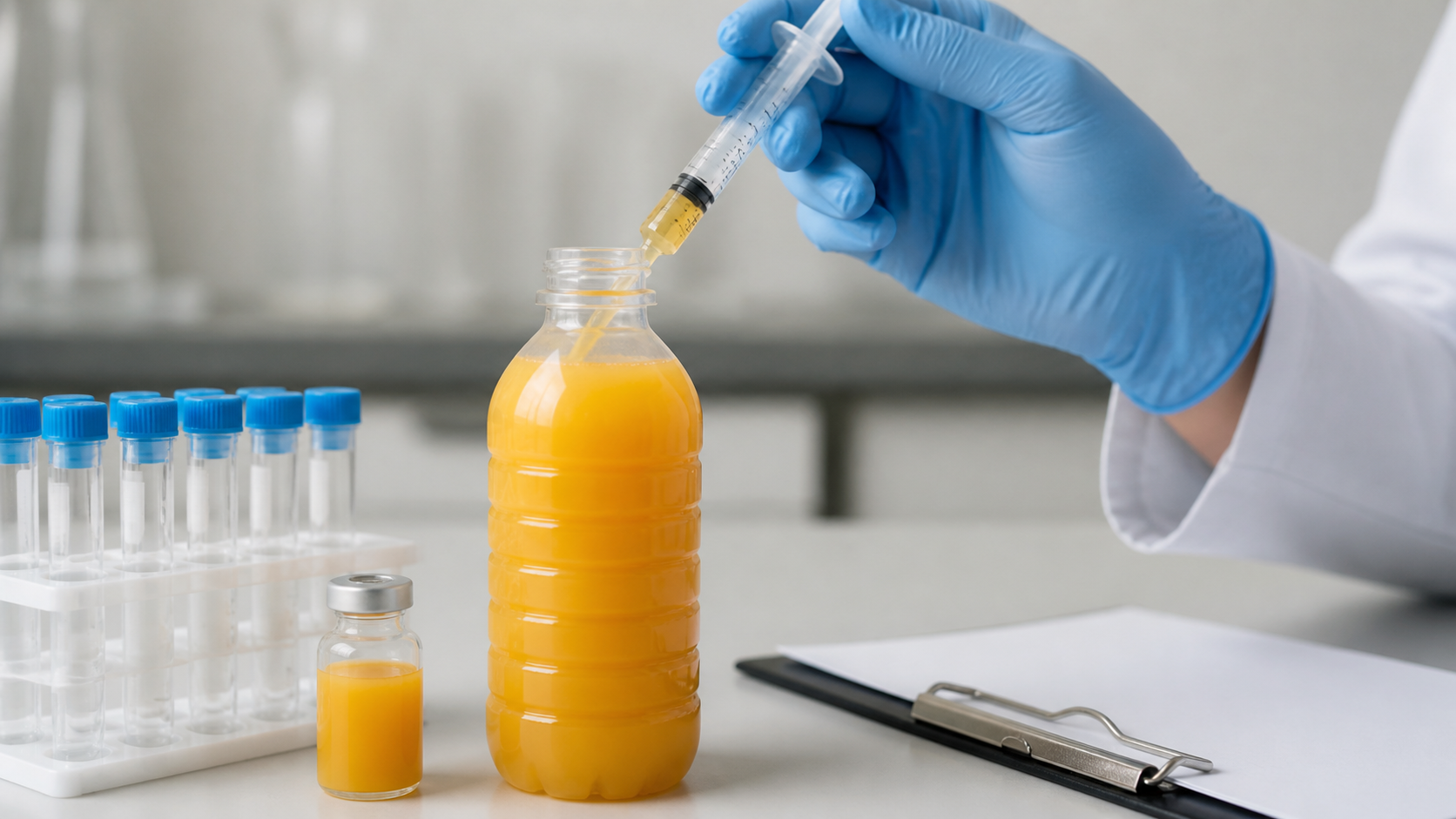
How does FSSAI clearance at the port work?
On arrival, the FSSAI Authorized Officer registers your lot in FICS, conducts visual inspection and label verification, then draws samples for testing if required. Clearance is granted via a No Objection Certificate only after conformity with FSSAI standards and the 60% residual shelf‑life rule at import.
- System: Food Import Clearance System (FICS) is the FSSAI workflow at ports/ICDs.
- Inspection: Focus on labelling compliance, packaging integrity, shelf‑life remaining, and cleanliness of lots.
- Sampling: Samples sent to an FSSAI‑notified laboratory; tests depend on category and risk profile.
- NOC: Issued if results conform; otherwise goods may be rejected or directed for re‑export/destruction.
Labelling rules for beverages in India
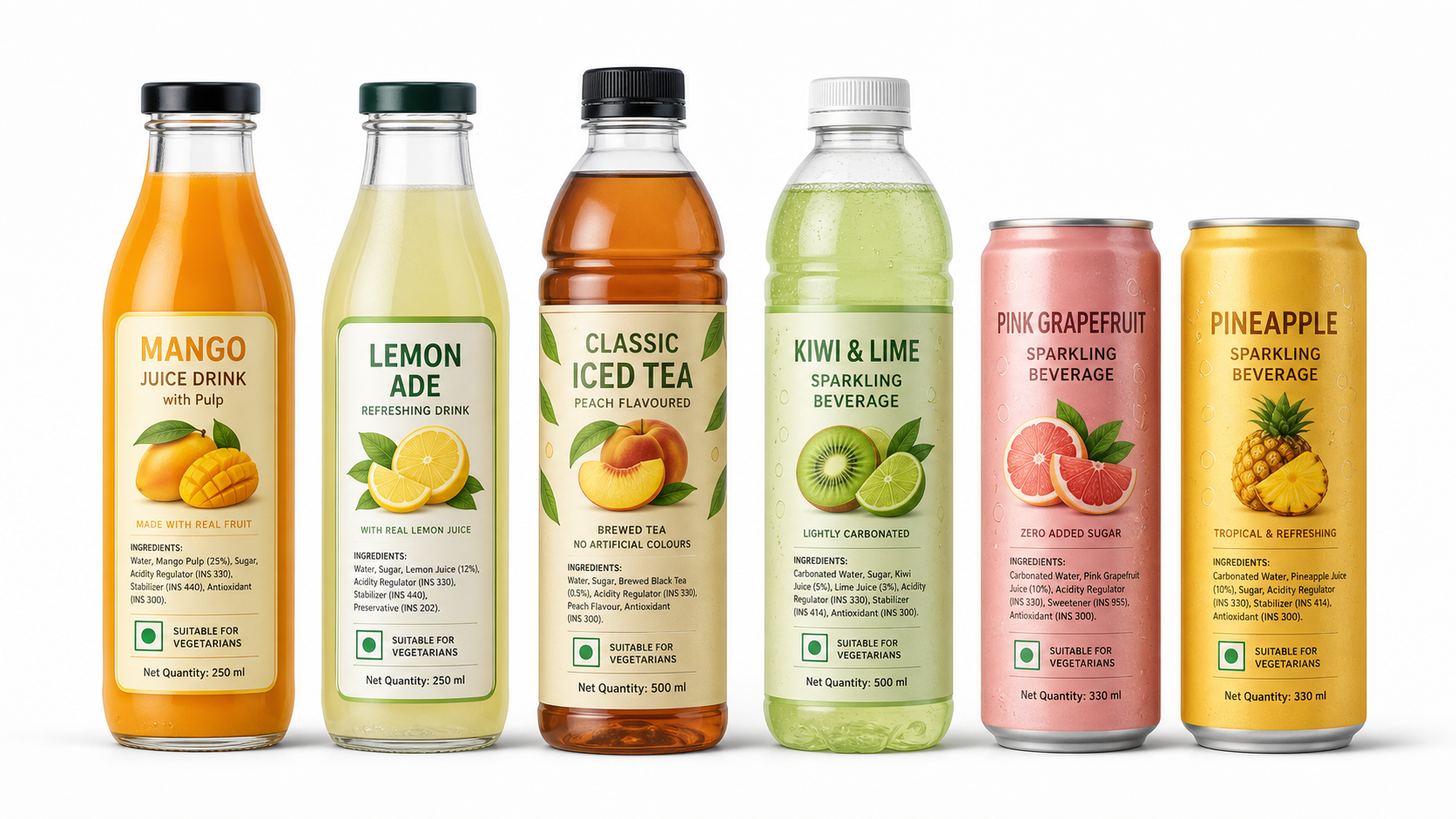
Labels must satisfy both FSSAI Labelling and Display Regulations, 2020 and Legal Metrology (Packaged Commodities) Rules, 2011. Key beverage‑specific points include:
- Language: English is required (Hindi also accepted). No overwriting of mandatory particulars.
- Veg/Non‑veg logo: Green or brown symbol as per FSSAI, placed clearly.
- Importer details: Name, full address, and FSSAI 14‑digit license number.
- Net quantity: In SI units (e.g., mL, L) under Legal Metrology rules.
- Date coding: Manufacturing/packing date and Best Before/Use By.
- Ingredients & additives: Listed in descending order; class names and INS numbers where required.
- Allergen declaration: If applicable to your formulation.
- MRP: Maximum Retail Price declared as per Legal Metrology; permitted to affix as a sticker before sale (in line with current rules) without obscuring original printing.
Customs duties, GST and trade agreements
Customs calculates Basic Customs Duty (BCD), Social Welfare Surcharge (SWS, if applicable) and Integrated GST (IGST) on the assessable value per India’s tariff. Specific rates depend on HS code and notifications in force on arrival.
- RCEP does not apply: India is not a member of RCEP; you cannot use RCEP tariff preferences.
- Other FTAs: Evaluate eligibility under any applicable Indian FTAs via DGFT/CBIC notifications and provide the correct Certificate of Origin if you qualify.
- Valuation & description: Accurate descriptions and supporting invoices reduce queries and delays.
Ports and logistics routes commonly used for beverage imports
Select your gateway based on transit time, reefer capacity (if needed), and broker coverage. Leading options are:
- JNPT/Nhava Sheva (Mumbai): India’s busiest container port with broad FSSAI and customs presence.
- Mundra (Gujarat): Major private port with competitive transit options for West/North India.
- Chennai (Tamil Nadu): Gateway to South India with good access to retail hubs.
- Kolkata & ICDs (e.g., Tughlakabad, Delhi): For East/North India and inland consumption points.
For a macro view of demand drivers before you ship, see our India beverage market overview and broader APAC beverage trends to 2026. For category‑specific logistics examples, our guide on trade terms, documents and logistics for coconut water highlights practical shipping paperwork you can adapt.
Product format and positioning: 100% juice, nectar, or juice drink?
India’s retail shelves carry distinct formats. Use the table below to plan label names, sweetener strategies, and consumer positioning without over‑promising.
| Format | Typical composition | Positioning & notes |
|---|---|---|
| 100% Juice | Reconstituted or not‑from‑concentrate, no added sugars (unless permitted by category) | Perceived as more natural; check FSSAI standard for the named juice; avoid misleading claims |
| Nectar | Juice/pulp with water; permitted sweeteners/additives per standard | Balanced taste at accessible price; ensure label clearly says “nectar” |
| Juice Drink/Flavoured Beverage | Lower juice content; added flavors, colors as permitted | Mainstream refreshment; name must not imply 100% juice; confirm additive permissions |
Common pitfalls that delay beverage imports—and how to avoid them
- Incorrect labels: Missing veg/non‑veg symbol, importer FSSAI license number, or SI units leads to relabelling orders or rejection.
- Insufficient shelf life: Shipments arriving with less than 60% residual shelf life are at risk of non‑clearance.
- Non‑permitted additives: A color, sweetener, or nutrient outside FSSAI permissions triggers test failures.
- Misclassification: Wrong HS code or ambiguous descriptions create valuation queries and delays.
- Assuming RCEP benefit: No RCEP preference exists for India—don’t plan landed cost models on it.
- Inadequate cold chain: Heat‑sensitive drinks without proper reefer arrangements may fail on quality parameters.
Information for beverage brands and importers (B2B considerations)
Before you import beverages into India at scale, align your product brief with India‑specific compliance and retail realities:
- Label adaptability: Build space for the veg/non‑veg symbol, importer FSSAI number, and MRP without crowding design.
- SKU engineering: Consider ambient‑stable formulations or aseptic packs to ease storage and reduce clearance risks.
- Format fit: Decide early if a SKU will be 100% juice, nectar, or a drink; each triggers different consumer expectations and label language.
- Test print & mock audits: Run pre‑shipment label checks against FSSAI and Legal Metrology and do a mock AO inspection to surface gaps.
- Plan shelf‑life buffers: Back‑calculate transit and testing time so shipments still exceed the 60% rule on arrival.
- BIS exceptions: If you sell packaged drinking water or natural mineral water, budget time for BIS certification (e.g., IS 14543/IS 13428).
- Route choice: Pick ports/ICDs with strong broker support for food cargo and predictable FSSAI lab access.
FAQ
Do I need an FSSAI license to import beverages into India?
Yes. The Indian importer must hold a valid FSSAI Central License for food import. The 14‑digit license number must also appear on labels alongside the importer’s name and address.
Is RCEP tariff preference available for beverage imports into India?
No. India is not a member of RCEP, so RCEP preferences are not available. If any other FTA applies, use the corresponding Certificate of Origin per DGFT/CBIC notifications.
How does FSSAI test imported drinks?
FSSAI’s Authorized Officer registers the lot in FICS, visually inspects and draws samples. A notified lab tests as per category parameters. If compliant, an NOC is issued to enable customs release.
What is the minimum shelf life required at import?
At least 60% of the product’s shelf life must remain at the time of import, per FSSAI’s import requirements.
Which Indian ports are common for beverage imports?
JNPT/Nhava Sheva (Mumbai), Mundra (Gujarat) and Chennai (Tamil Nadu) are popular seaports; ICD Tughlakabad (Delhi) is widely used for inland clearances.
Sources
- Food Safety and Standards Authority of India (FSSAI)
- Directorate General of Foreign Trade (DGFT)
- Indian Customs Electronic Gateway (ICEGATE)
- Central Board of Indirect Taxes & Customs (CBIC)
- Bureau of Indian Standards (BIS)
- Department of Consumer Affairs – Legal Metrology