


 Français
 Español
 العربية
 한국어
한국어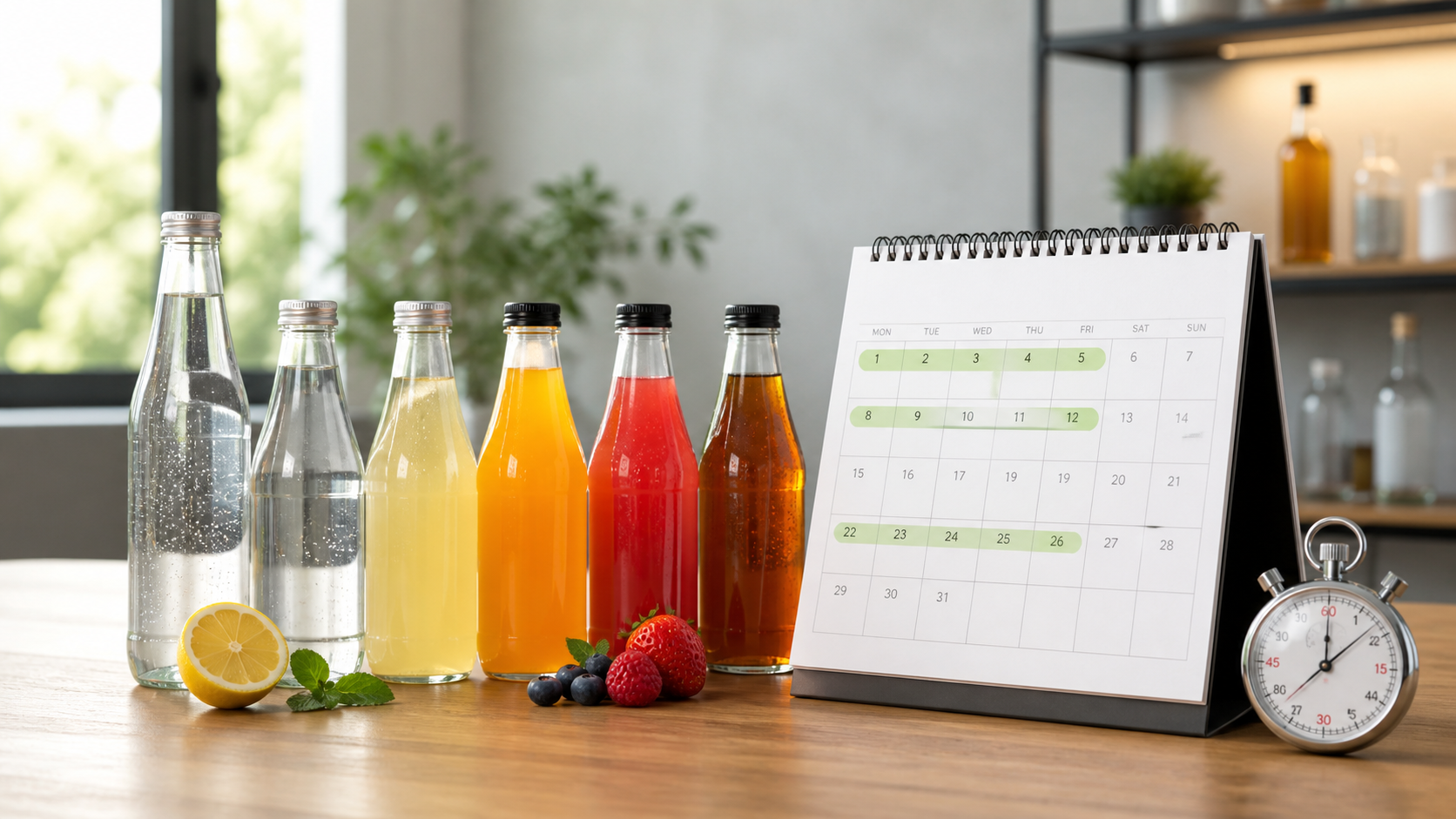
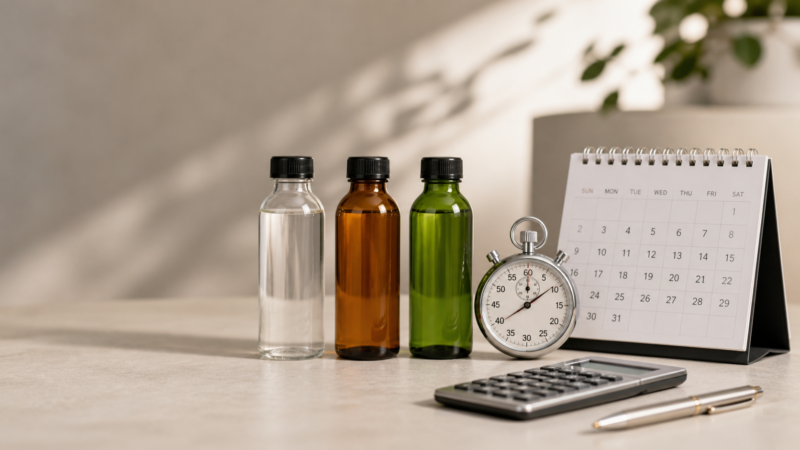
Beverage production lead time is the total calendar time from a confirmed, production-ready order to finished goods ready to ship. For most commercial runs, this window commonly lands around 15 to 30 days because multiple phases must line up: ingredient procurement, printed packaging, lab checks, line scheduling, and final release for dispatch.
This article breaks that 15–30 day window into practical steps, explains what slows it down, and shows how buyers can plan an achievable production schedule. It also clarifies how “lead time” differs from “delivery time” and where your team can accelerate without compromising product safety or label compliance.
What does a 15–30 day beverage production lead time include?
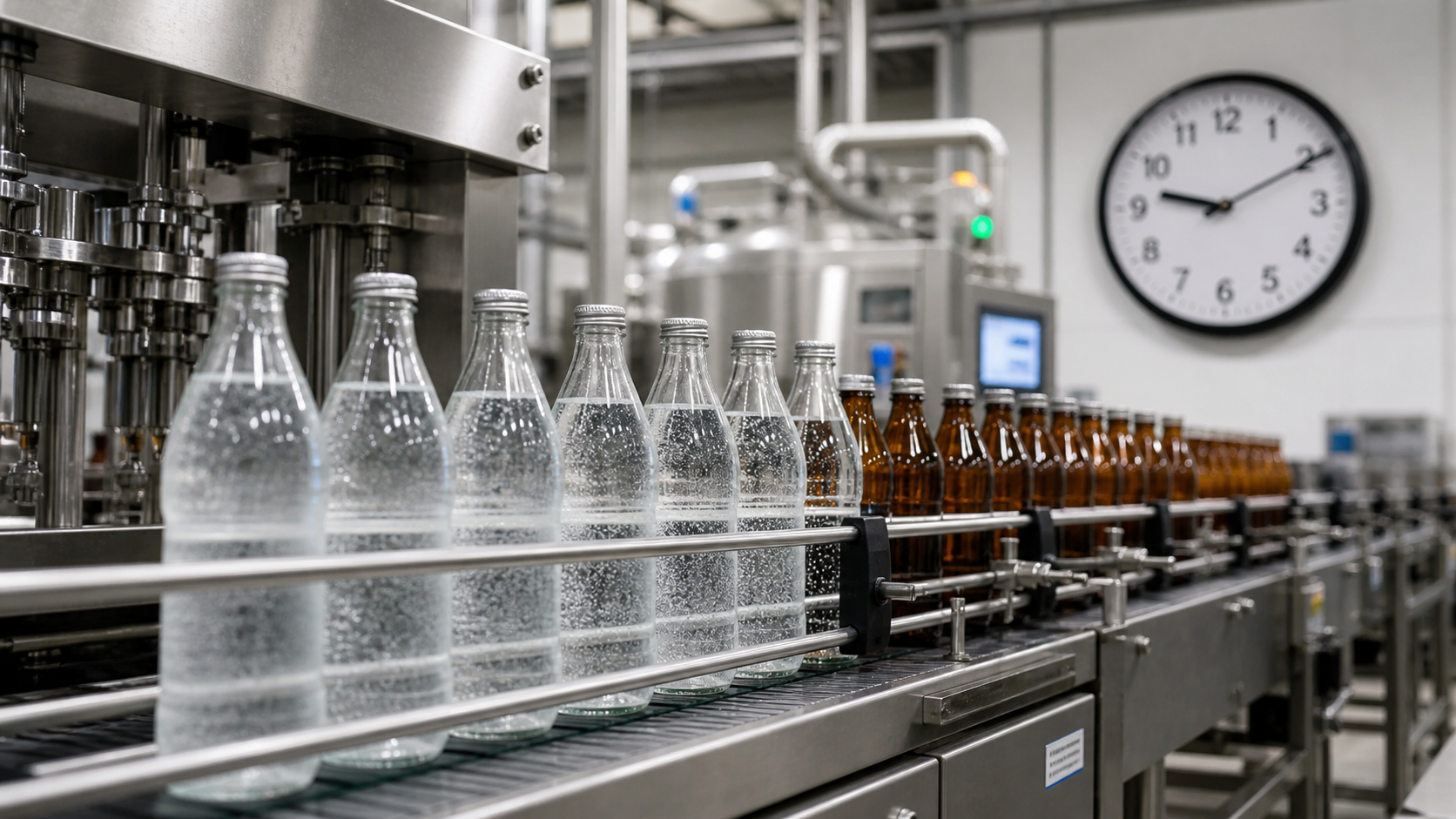
In most cases, the 15–30 day window covers final specification lock, inbound materials (ingredients and packaging), pre-production checks, the scheduled production slot, post-fill quality release, and handover to logistics. Depending on the project, some tasks overlap while others are strictly sequential.
Here is how the phases typically stack and depend on each other. Exact durations vary by formula, packaging, lab workload, and manufacturing queue, so think in terms of sequence and dependencies rather than fixed day counts:
- Commercial lock-in: Purchase order, deposit, final formula, packaging specs, and delivery terms. This is the trigger for procurement and scheduling.
- Raw material procurement: Concentrates, flavors, sweeteners, functional ingredients, and processing aids are confirmed, ordered, received, and checked for quality.
- Printed packaging: Labels, sleeves, cartons, and film move through artwork approval and printing; closures and bottles are confirmed and delivered.
- Pre-production QA: Bench or pilot samples as needed, plus compatibility checks (acidity, color, sediments), and micro/shelf-life planning.
- Line scheduling: Your run is slotted among other products with similar formats to minimize changeovers and ensure CIP/allergen controls.
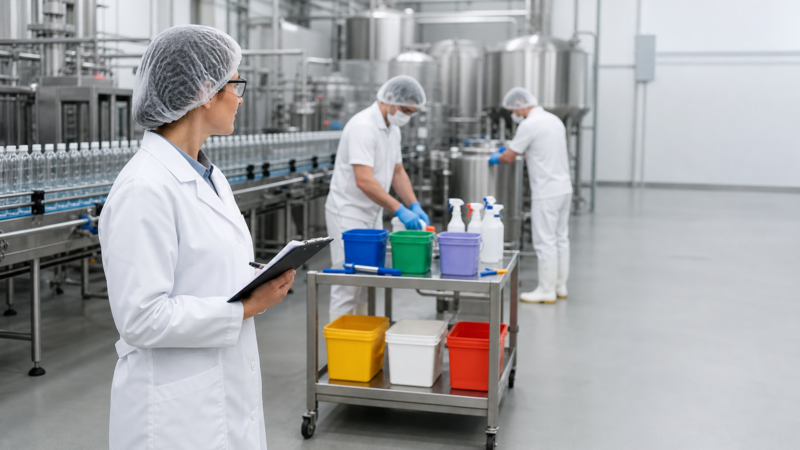
- Production day(s): Batching, thermal treatment as applicable, filling, capping, coding, and secondary packing.
- Post-fill release: QA holds and micro checks where required, documentation completion, and release for shipment.
Lead time vs delivery time: what’s the difference?
Lead time ends when finished goods are released for dispatch at the factory. Delivery time covers transportation to your warehouse or port of entry, including truck booking, port cutoffs, customs, and last-mile arrangements. Many buyers blend these into one expectation, but separating them helps you manage risk: a production-ready 15–30 day lead time is different from how long international freight and customs may take afterward.
Which phases most often extend the schedule?
Manufacturing teams can batch and fill quickly once everything is ready. The longest and most variable parts of the timeline are usually upstream:
- Printed packaging lead time: New or revised artwork, die-lines, color approvals, and prepress can push printing into later weeks. If printers have MOQs or plate setups, they often consolidate runs.
- Ingredient availability: Seasonal sourcing, import clearance for specific extracts, or made-to-order blends can add waiting time.
- Lab testing queues: Microbiology, stability screens, and specific-method assays depend on lab capacity and required protocols.
- Production queue and changeovers: Lines are scheduled to reduce downtime; allergen controls and CIP add constraints that affect slot availability.
- Regulatory and label checks: Barcodes, nutrition panels, and claims require review; corrections can ripple back to artwork.
- Payment timing: Many suppliers and printers release materials or start runs only after commercial milestones are met.
- Holidays and seasonality: Public holidays, high-harvest seasons, and year-end peaks can extend normal turnaround.
What can buyers do to accelerate beverage production lead time?
You can meaningfully compress the 15–30 day window by removing uncertainty early and aligning deliverables to the plant’s critical path. Practical actions include:
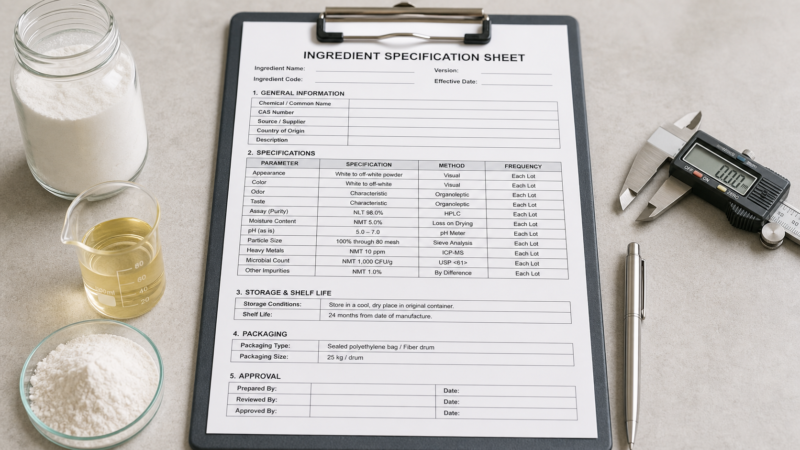
- Freeze specs early: Lock the formula, flavor house codes, primary and secondary packaging, and all coding requirements before issuing the PO.
- Approve print-ready artwork: Submit final, barcoded, printer-verified files (with die-lines) at PO, not later. Avoid last-minute copy edits.
- Pre-clear ingredients: Confirm that every component is approved for the destination market and is available within your target window.
- Align with the line format: Choose bottle sizes, closures, and materials that match existing line setups to reduce changeovers.
- Provide a complete product brief: Include version codes, allergen statements, labeling languages, and shipment terms so procurement and QA can start immediately.
- Book logistics in parallel: Coordinate trucks, pallets, and export docs so finished goods can move as soon as QA releases them.
If you are new to the category, review the high-level beverage production process to understand where your decisions have the greatest schedule impact. For buyers who want off-the-shelf speed with controlled customization, consider ODM beverage development. If your project demands a bespoke formula from the ground up, see OEM beverage manufacturing.
How to set an achievable production schedule in your contract
A realistic schedule is a shared document, not just a date. Build these elements into your PO and project plan:
- Critical path map: List long-lead packaging and ingredients, lab checkpoints, and the earliest available line slot.
- Go/no-go gates: Artwork approval, prepress sign-off, ingredient release, and pre-production sample acceptance are decision points that must be dated.
- Alternates: Pre-approve backup caps, labels, or cartons that match the same regulatory text; this keeps you moving if a component slips.
- Regulatory ownership: Clarify who approves claims, translations, and nutrition formats for the target market to avoid last-minute rework.
- Buffer time: Include contingency for lab queues and shipping handoffs, especially in peak seasons.
- Communication cadence: Set weekly check-ins with a single owner for procurement, QA, and logistics updates.
At-a-glance: phases, dependencies, and buyer actions
The matrix below summarizes where delays arise and how to mitigate them without compromising safety or compliance.
| Phase | Key dependencies | Risks that prolong | Buyer actions to accelerate |
|---|---|---|---|
| Commercial lock-in | Final formula, packaging specs, PO, deposit | Spec changes after PO; unclear coding or claims | Freeze specs; provide complete brief and coding instructions |
| Ingredient procurement | Supplier stock, import status, QA approvals | Seasonal shortages; import clearance; made-to-order blends | Confirm availability; pre-approve alternates that meet the spec |
| Printed packaging | Artwork, die-lines, prepress, printer queue | Copy edits; color proof rework; MOQ consolidation | Submit printer-validated files; sign color proofs promptly |
| Pre-production QA | Bench/pilot samples, stability checks | Additional trials for color, acid, or sediment issues | Decide on acceptance criteria; avoid late formula tweaks |
| Line scheduling | Changeovers, CIP, allergen planning | Queue congestion; incompatible formats on the same day | Select line-friendly formats; confirm slot early |
| Production & packing | Verified materials on-site; staff; utilities | Short shipments; coding errors; unplanned downtime | Ensure complete delivery; double-check codes and cartons |
| Post-fill release | Micro checks; documentation | Lab backlogs; missing records | Align on test plan; prepare documents in advance |
| Dispatch | Truck booking; export docs | Holiday closures; port cutoffs | Book transport in parallel; keep carrier options open |
Why printed packaging often sets the pace
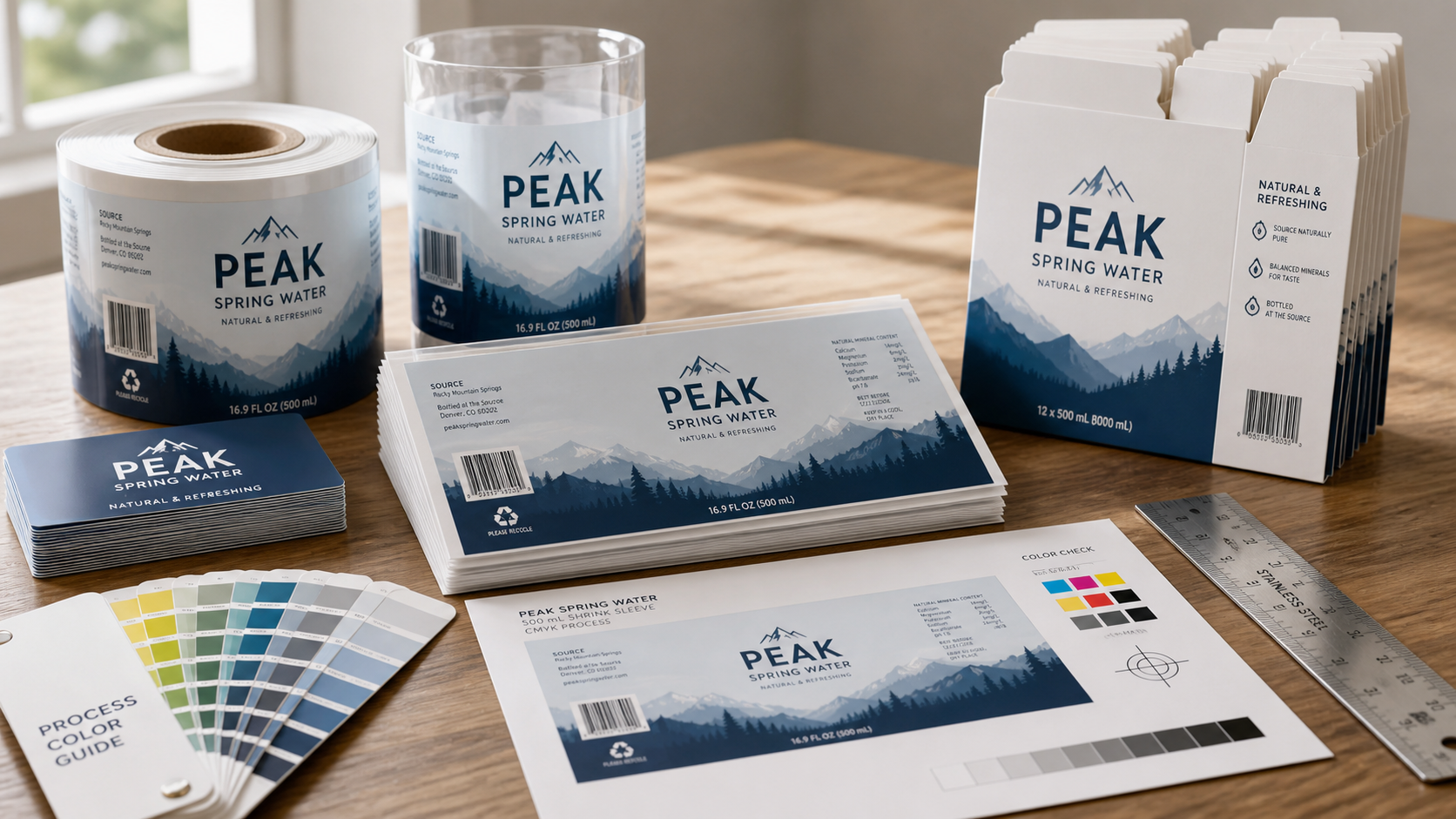
Among all inputs, printed components most frequently control the schedule. A label or sleeve seems simple until you line up the real steps: precise die-lines, legal text in multiple languages, barcodes, ingredients lists, and nutrition tables that must match the final formula and serving size. Prepress adds color management, trapping, bleed, and substrate-specific adjustments; printers then book a slot based on MOQs and plate or cylinder setup.
Three practical ways to keep packaging off the critical path:
- Submit print-ready, verified files: Have your printer or converter review die-lines, barcode quiet zones, and substrate fit before the PO is issued.
- Lock copy and claims across markets: Avoid parallel edits by agreeing on a single source of truth for ingredients, allergens, and nutrition formats.
- Approve proofs quickly: Treat color-accurate proofs and carton mockups as time-sensitive; same-day approvals can protect your slot.
If you are launching with store-brand packaging, see how private label beverages are typically organized to streamline artwork and compliance.
How formulation scope changes the timeline
The development path you choose shapes the schedule inside the 15–30 day band:
- ODM (ready-to-customize) formulas: Using a proven base reduces risk of compatibility or stability surprises. Flavor or sweetness tweaks are common and usually lighter weight than full re-formulation. Explore options via ODM beverage development.
- OEM (fully custom) formulas: New ingredient systems or processing targets can require pilot trials and additional QA checks before greenlighting a full run. See expectations in OEM beverage manufacturing.
- Private label adaptations: When adopting a validated house recipe with your branding, the main time variable shifts to artwork and packaging supply, which you can often pre-stage. Learn how programs are scoped in private label beverages.
Sample scenarios inside a 15–30 day window
While every project is unique, these patterns are common:
- Repeat order with approved artwork and stocked inputs: Materials are on-hand, labels unchanged, and the run is slotted at the next compatible opening. This usually sits at the shorter end of the window, assuming QA release proceeds as planned.
- First production with new artwork: Ingredients are straightforward, but labels and cartons are new. Artwork, prepress, and printer scheduling place the project in the mid-range of the window.
- New custom formulation: Additional pilot work or stability checks move the project toward the longer end of the window, particularly if any ingredient is made-to-order or imported.
Regulatory and labeling: avoid rework loops
Regulatory sign-off is less visible than pallets of labels arriving at the dock, but delays here are just as real. Ensure nutrition facts layout, ingredient statements, allergens, and barcodes are consistent with the final formula and target market. If you are planning U.S. distribution, review the U.S. food label checklist before artwork reaches the printer.
Production schedule mechanics: how plants allocate slots
Factories balance dozens of variables when creating the weekly schedule. Understanding these mechanics helps you pick feasible dates and avoid costly resets:
- Format families: Lines prioritize runs with similar bottle sizes and closures to minimize changeovers and material waste.
- CIP and allergens: Cleaning protocols and allergen segregation dictate run order to protect food safety.
- Staffing and utilities: Certain formats require specific operator skills or thermal processing capacity, which are booked in advance.
- Material completeness: A run cannot be scheduled firm until all critical materials are on-site and cleared by incoming QA.
If you want a deeper overview of services surrounding planning, QA, and logistics orchestration, browse core beverage manufacturing services.
Payment, documentation, and release
Commercial steps also govern the clock. Deposits, insurance instructions, coding approvals, and final pack lists are all gates. Many suppliers will not print packaging or release goods until those gates are satisfied. Clarify the exact documents and sign-offs needed for release so finance and operations work in parallel, not in sequence.
How holidays and seasonality affect your plan
Public holidays compress printing and lab capacity. Harvest peaks can lengthen inbound ingredient timelines. If you operate in categories with strong seasonality (for example, specific tropical fruit bases), secure allocations early and add buffer to your printed packaging schedule so you do not miss a factory slot over a component that could have been pre-staged.
Quality holds: what to expect
Finished goods often pass through a brief QA hold for record checks and micro verification before release. The hold length depends on product type, processing method, and agreed test plans. Build this into your plan so your carrier is booked after QA release, not before.
Dispatch handoff and delivery time
Once QA releases goods, dispatch can occur quickly if trucks, pallets, and documents are ready. International delivery time then depends on routing, port schedules, and customs processing. Treat dispatch and delivery as a separate workstream with its own buffers, coordinated in parallel with production.
Putting it all together: a practical checklist
Use this quick checklist to keep your project on the shorter side of the 15–30 day band:
- Lock formula, codes, and packaging specs before issuing the PO.
- Send printer-validated, barcoded artwork files with the PO.
- Confirm ingredient availability and pre-approve qualified alternates.
- Choose formats aligned with the plant’s line family to reduce changeovers.
- Agree on QA test plans and documentation requirements upfront.
- Book transport contingent on QA release, not only on planned fill dates.
For a category-by-category overview of how these steps map into a run, revisit the beverage production process.

FAQ
Is the 15–30 day beverage production lead time counted in calendar days?
Yes. Unless your contract specifies business days, lead time is typically counted in calendar days. Holidays and plant closures can affect the count, so align on a shared calendar in your PO.
Does lead time include shipping to my warehouse?
No. Lead time usually ends at QA release and readiness to dispatch. Delivery time from the factory to your destination is planned separately through your logistics provider.
What single factor most often causes delays?
Printed packaging is the most common driver of delays, especially when artwork changes after the PO or when color proofs require rework. Pre-approve files and proofs to keep your printer slot.
Can I pay to expedite production?
Expediting sometimes helps with prepress or material freight, but it cannot bypass lab checks, QA holds, or changeover constraints that protect food safety. Discuss options early to see what is realistically compressible.
Do lab tests always happen after filling?
Not always. Many checks happen before production (ingredients, water, packaging contact), and some verification happens after filling. Your agreed test plan determines the timing of release.
If my formulation is unchanged, why does the first run still take longer?
The first run still needs artwork, printer approval, and full documentation setup. Once those are in place, repeat orders typically fit the shorter end of the 15–30 day window.
Conclusion
Beverage production lead time clusters around 15–30 days because multiple moving parts must align: printed packaging, ingredient readiness, lab checks, and line scheduling, followed by QA release and dispatch. Most delays arise before filling, not on the line itself. By freezing specs, submitting printer-verified artwork with your PO, confirming ingredient availability, and aligning with the plant’s schedule logic, you can reliably plan within that window.
Ready to translate your brief into a realistic timeline? Explore beverage manufacturing services and align scope, packaging, QA, and logistics to land a feasible production schedule. Keeping lead time distinct from delivery time—and planning both in parallel—will give your launch the best chance to ship on target.